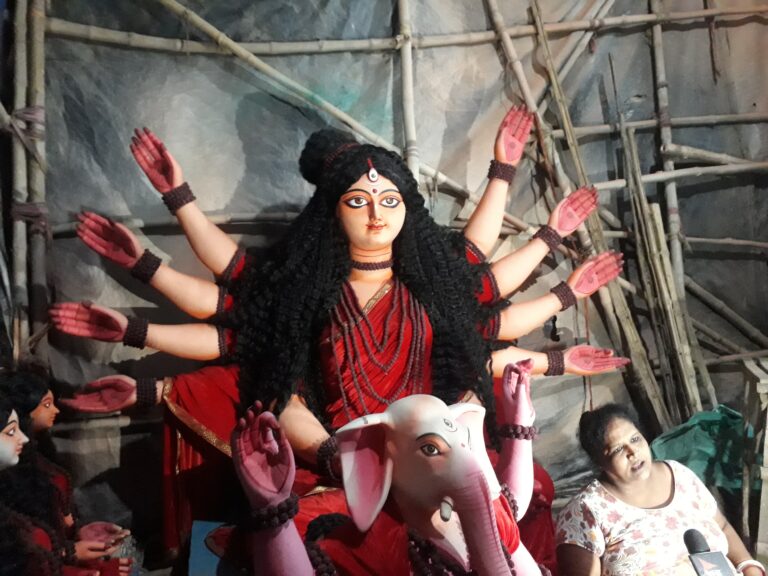
There is a stretch of India’s west coast, running roughly from Udupi in Karnataka south through Mangaluru and Kasaragod to Kannur in northern Kerala, where the nights belong to the gods. In temple courtyards and village shrines, under strings of lights or the glow of oil lamps, performers in towering headdresses and painted faces become kings, demons, heroes and deities. Two great traditions dominate this coast: Yakshagana, the dance-drama of coastal Karnataka, and Theyyam, the ritual worship of northern Kerala. Follow them on a single journey down the coast and you will understand, better than any book can explain, what folk performance means in India.
Why this coast
The narrow strip between the Western Ghats and the Arabian Sea has long been densely settled, rich in rice, coconuts, spices and trade, and dotted with temples, sacred groves and family shrines. Its languages, Tulu, Kannada, Konkani, Beary and Malayalam among them, mix and overlap. So do its performance traditions. Yakshagana and Theyyam are quite different, but both grew from this landscape of village shrines, seasonal festivals and the long, warm nights of the dry season.
Starting in Udupi: Yakshagana
Udupi is best known for the Sri Krishna Matha and for the vegetarian cuisine that bears its name. It is also one of the heartlands of Yakshagana. The form combines dance, music, dialogue and elaborate costume to tell stories mostly drawn from the Ramayana, the Mahabharata and the Puranas. A performance is led by the bhagavata, the singer-narrator, accompanied by drums such as the chende and maddale and by cymbals. The actors improvise much of their dialogue, often with sharp wit, which means two performances of the same episode can be very different.
Traditionally, Yakshagana troupes, called melas, are attached to temples and tour villages through the dry season, from roughly November to May, performing all night. Some performances are sponsored by families as an offering. There are two broad styles, often described as the northern and southern schools, known as Badagutittu and Tenkutittu, with differences in costume, drumming and dance. The Yakshagana Kendra associated with the MGM College in Udupi has worked for decades to train artists and document the form.
How to see it: ask locally, at your hotel or at the temple, whether a mela is performing nearby. Performances are often announced on posters and in local newspapers. Be ready for a very late night; the best scenes may begin after midnight.
Down to Mangaluru
From Udupi, the road south runs about 55 to 60 kilometres to Mangaluru, through towns, paddy fields and coconut groves. Mangaluru is a good base for exploring both Yakshagana and the Tulu traditions of bhuta kola, or daiva worship, in which spirit deities are invoked through elaborate costume, dance and ritual. Bhuta kola is closely related in spirit to Theyyam across the border, and it reminds you that these traditions grew from the same soil. These are sacred rituals rather than performances, and visitors should attend only where welcome, keep a respectful distance and follow the lead of the community.
Spend time in Mangaluru’s markets and eat the coastal food: fish curries with coconut and kokum, neer dosa, kori rotti, and the many variations of the region’s famous chicken ghee roast.
Into Kerala: Kasaragod and the Theyyam country
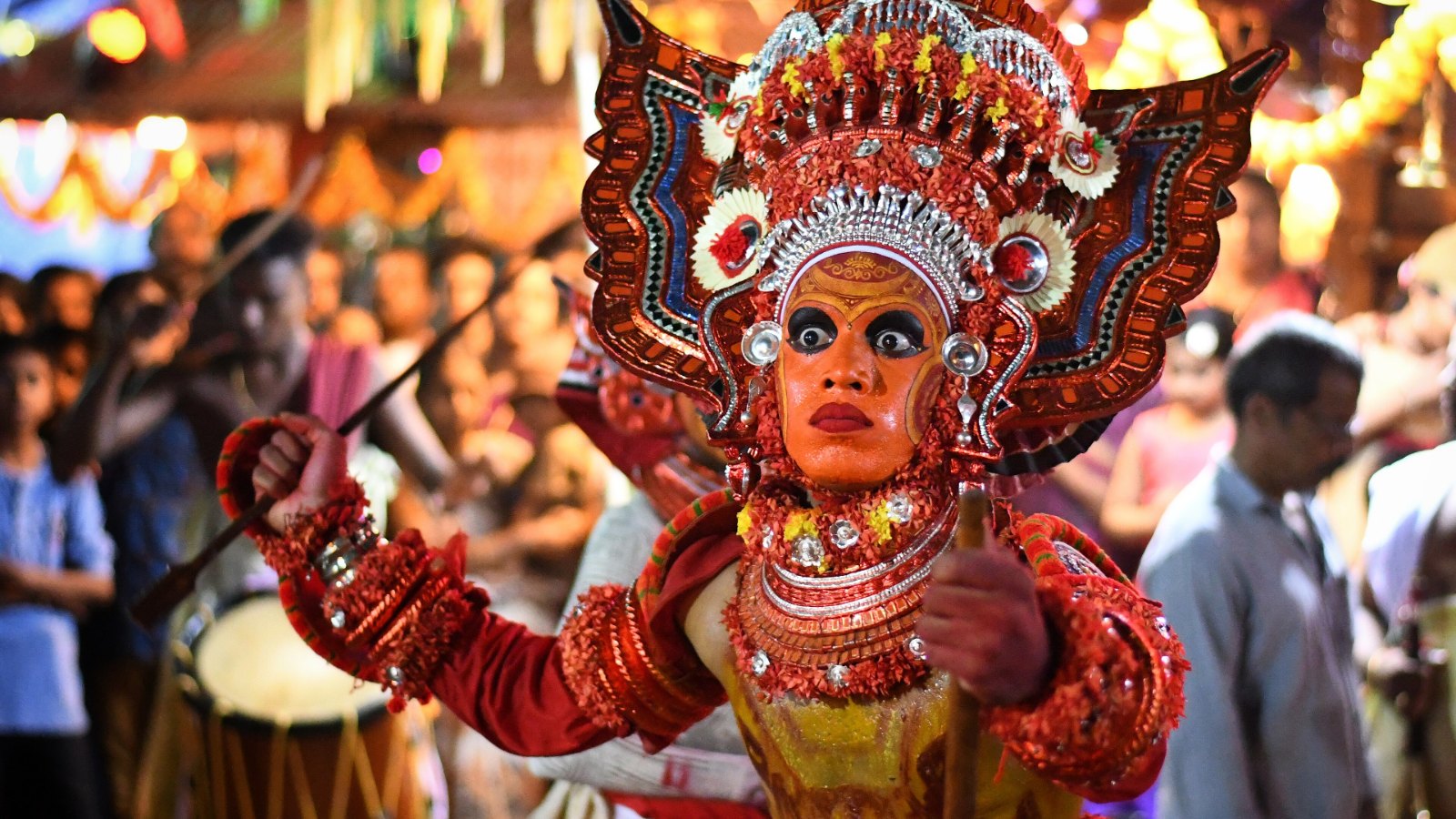
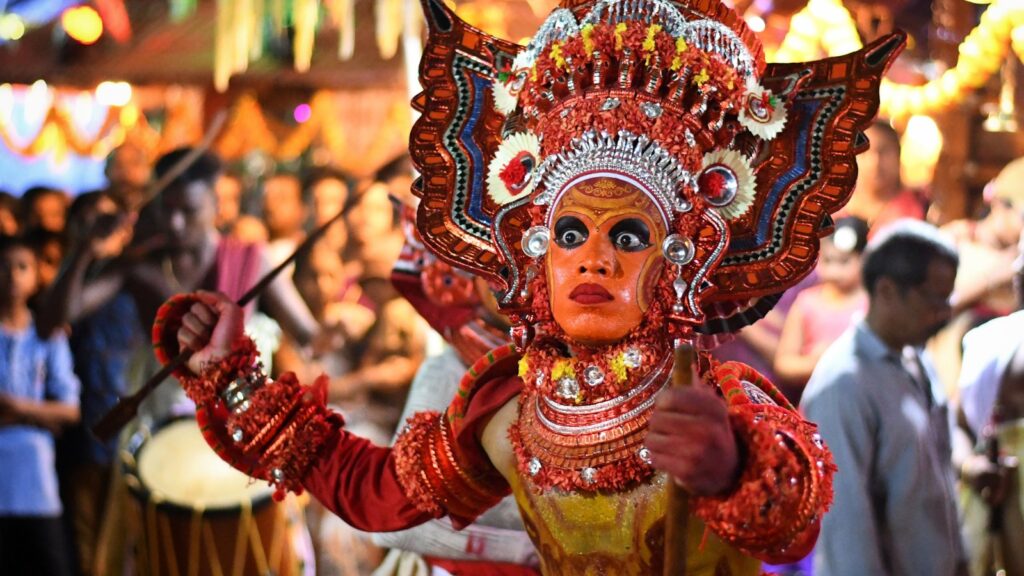
Crossing into Kerala at Talapady, you enter Kasaragod district, and soon after, Kannur. This is the heartland of Theyyam. The word is often explained as derived from daivam, meaning god. In a Theyyam, the performer, after long preparation, fasting and ritual, is understood by devotees to become the deity for the duration of the performance. Devotees approach him for blessings and advice. There are said to be hundreds of different Theyyams, each with its own story, costume and face painting, from fierce goddesses to deified heroes and ancestors.
Theyyams are performed in kavus, or sacred groves and shrines, often attached to particular families or communities. The traditional season runs from around October or November to May, following the Malayalam calendar. Performances may last through the night and into the morning, beginning with the thottam, a narrative song, before the performer dons the full costume, sometimes with enormous headdresses many feet tall, or, in some Theyyams, walks through fire.
How to see it: lists of upcoming Theyyams are often circulated locally and through the district tourism offices, and many guesthouses in the Kannur area help guests find one. The Parassinikadavu Muthappan temple, on the banks of the Valapattanam river near Kannur, is known for holding Theyyam-related rituals very frequently, often daily; check timings locally.
Kannur: the end of the road
Kannur itself is worth a few days. The Portuguese-built St Angelo Fort looks out to sea. The beaches, including Payyambalam, are relatively quiet. And the region is known for its handloom weaving. Above all, Kannur gives you the chance to attend more than one Theyyam, which helps you begin to understand the variety and meaning of the tradition.
How long, and when
To see both Yakshagana and Theyyam properly, give this route at least five or six days, travelling between December and March if you can, when the weather is relatively dry and festivals are frequent. Roads and trains connect all the major towns; the Konkan and coastal rail lines link Udupi, Mangaluru, Kasaragod and Kannur.
Etiquette
- These are sacred events. Dress modestly and remove footwear where asked.
- Ask before taking photographs, never use a flash at a ritual, and never step into the performance space.
- Sit where locals sit, often on the ground; bring a small mat.
- Make an offering or donation if appropriate, and thank your hosts.
- Do not touch the costume, headdress or the performer unless invited.
What the route teaches
By the end of this journey you will have seen two very different kinds of folk performance. Yakshagana is theatre, a public storytelling art with wit and spectacle. Theyyam is worship, in which the boundary between performer and god dissolves. Yet both come from the same coast, the same village shrines and the same long nights, and both are kept alive by communities that care deeply about them. That is the real lesson of India’s folk dances: they are not relics, but living conversations between people, their gods and their land.