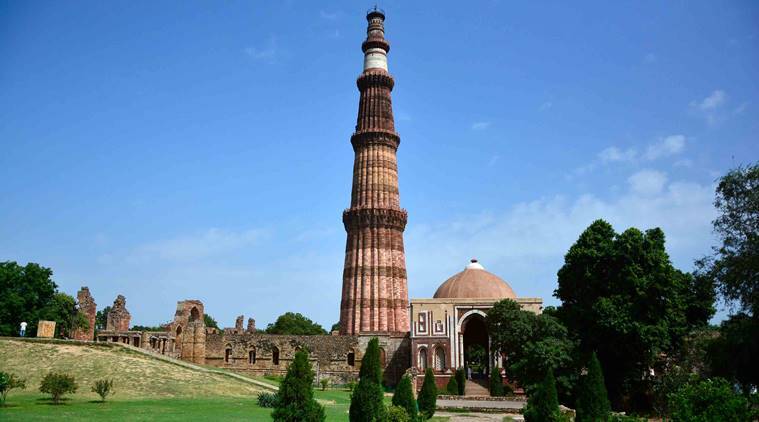
 This most famous landmark of Delhi towering above the Lal Kot monuments is one of the World Heritage Sites of UNESCO. It is 72.5 meters tall and tapers from a base diameter of 14.4 meters to a peak diameter of 24 meters. The five-storeyed minar has three stories built of red sandstone and two of marble and sandstone. Each story is clearly distinguished from the outside because of its projecting balconies. Its foundation was laid by Qutub- ud-din Aibak (1193) and was completed by his son-in-law and successor Shamsuddin Iltumish. The Devanagari inscriptions on the minar mention that it was damaged in 1326 and repaired by Muhammad-bin Tughlak and in 1368, Firoz Shah replaced the upper story and added two floors, making liberal use of marble stone.
A unique 7 meters high Iron Pillar in the courtyard of Quwwat-ul-Islam mosque was perhaps a flagpole of a 4th – 5th century Vishnu temple. It has remained completely rust ree for over 1500 years and is a tribute to ancient Indian metallurgy. Other attractions nearby are – the Tombs of the Sultans Iltumish (1235), Alauddin, Balban, and of Adham Khan, son of the emperor Akbar’s wet nurse.
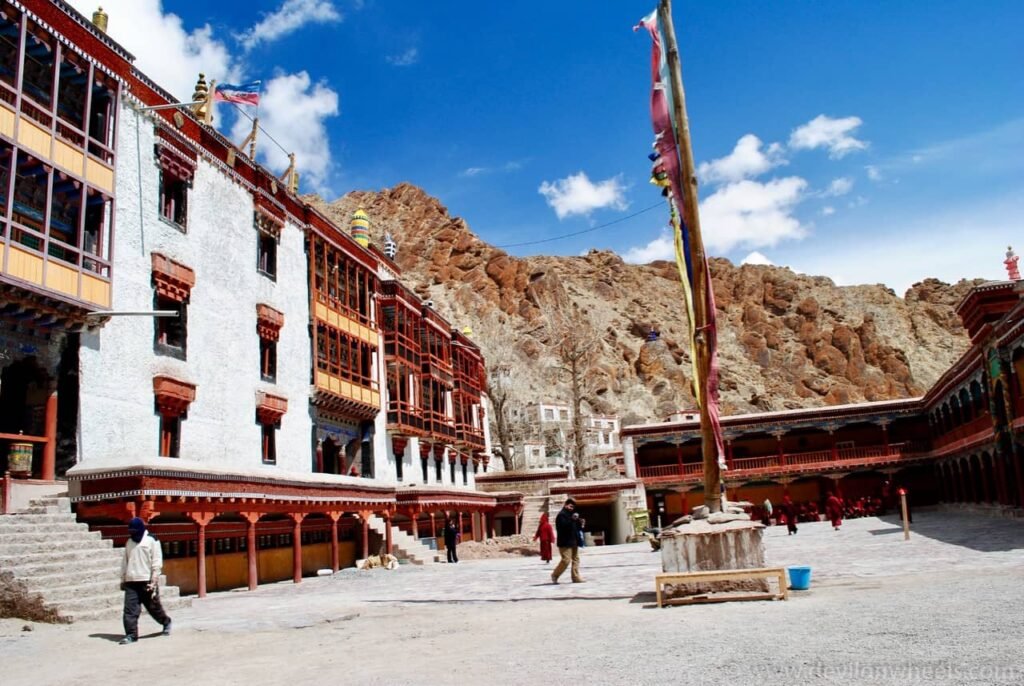
Top 5 Buddhist Temples In Leh Ladakh

Darjeeling, the “Queen of Himalayas”
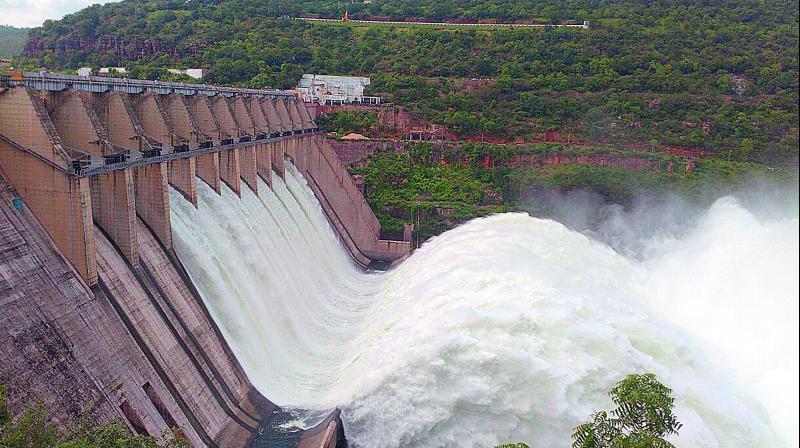
Nagarjuna Sagar Dam- Nagarjunakonda

Destinations with Magical June 21st Sunrises
The morning of June 21st isn’t just another sunrise, it’s the year’s longest day, the summer solstice. Across cultures and


Explore Southeast Asia with Less Rain, More Fun

Why Japan’s Early Cherry Blossoms Make March a Dream
Journeys Worth Discovering
Explore inspiring destinations, memorable journeys and travel stories from across India and beyond.
Explore destinations