
There is a photograph almost everyone takes in Gulmarg. A gondola cabin hanging over a white slope, the Pir Panjal range behind, a gloved hand in the corner of the frame. It is a good photograph. It is also, for many visitors, the entire trip: a day drive from Srinagar, a long queue, a ride, the picture, and back down the valley before dark.
This piece is for the other kind of visitor. The one who has a few days, does not need to prove anything to a phone, and wants to know what Gulmarg is like when the day-trippers have gone.
A meadow before it was a resort
Gulmarg means something like “meadow of flowers”, and in summer that is exactly what it is: a broad, rolling bowl of grass at roughly 2,650 metres, ringed by fir and pine. The name is usually linked to the Kashmiri sultans and later the Mughals, who came here to escape the heat of the valley. Under the British it became a hill retreat with a golf course and a small church, and in the second half of the twentieth century it grew into India’s best-known ski destination.
In winter the bowl fills with snow, and the shape of the meadow becomes the shape of the place. Hotels sit around its edges. Paths cross the middle. Above it all, the gondola climbs in two stages towards Apharwat, the high ridge that gives Gulmarg its serious skiing.
Knowing this helps. Gulmarg is not a town in the usual sense. There is no old bazaar to wander, no maze of lanes. It is a meadow with buildings around it. The pleasure is in the space itself.
The best hour is the first one
The day-trippers from Srinagar usually arrive from mid-morning. Before that, Gulmarg belongs to people who slept there.
Go out just after sunrise. The snow on the meadow is untouched or nearly so, the air is still, and on a clear day the light comes over the ridge and turns the slopes pink, then gold, then a hard bright white. You will hear very little: a dog, a shovel, someone clearing a hotel path, a crow. St Mary’s Church, the small stone church on a rise near the middle of the meadow, looks its best in this light. It is an old building and a reminder of Gulmarg’s colonial hill-station years; please treat it as a church, not a prop.
Then go back for breakfast. By the time you have finished your second cup of kahwa, the cars from the valley are arriving.
Doing the gondola sensibly
You probably will ride the gondola, and you should. But a little planning makes it much more pleasant.
The first phase runs from Gulmarg to Kongdoori, a shoulder of the mountain with its own small slope and views back over the meadow. The second phase continues to near the top of Apharwat, at close to 4,000 metres. That upper station is very high for someone who drove up from Srinagar the same morning, and the upper phase can close when wind or visibility is poor.
A few suggestions:
- Book through the official channels. Tickets for the gondola are run by the state tourism cable car corporation and are sold online and at the station. Be cautious about people offering to “skip the queue” for a fee.
- Go early, or late in the morning after the first rush has gone up.
- Do Phase 1 on your first day and Phase 2 later, once you have slept at altitude.
- Do not wander off the marked areas at the top. The Apharwat bowls are serious avalanche terrain. Skiers who go there off-piste do so with guides, transceivers and training. A tourist in snow boots should not follow their tracks.
Read our Avalanche, road and permit notes before you go up on a day of heavy snowfall.
What to do between the gondola and dinner
This is where staying makes the difference.
Walk the meadow loop. A broad track runs around much of the Gulmarg bowl. On a clear day you can spend a slow hour or two walking a section of it, watching the light change on the ridges. Stay on packed paths; the snow off-track can be deeper than it looks.
Watch the skiers. Even if you have no intention of skiing, the beginner slopes near the base are full of entertainment: children on their first day, instructors calling out in Kashmiri, Hindi and English, the occasional confident adult who is about to be humbled.
Try a short lesson. If you are curious, a beginner lesson on the gentle slopes near the base is a good way to understand what all the fuss is about. Use an instructor registered with the local authorities, and ask about equipment before you agree a price.
Sledges and ponies. You will be offered sledge rides and pony rides constantly. These are a significant part of the local winter economy. If you take one, agree the route and price clearly at the start, do not overload the sledge, and treat the people pulling it, and the animals, decently.
Sit still. Many hotels have a sunny terrace or a window seat facing the slopes. On a cold afternoon, with a book and something hot to drink, this may be the best activity Gulmarg offers.
Staying warm and well
Gulmarg in January is cold. Nights well below freezing are normal, and the wind on the upper gondola can be brutal. Pack properly:
- Thermal base layers, a fleece or down mid-layer and a windproof outer shell.
- Waterproof boots with good grip. Snow boots and gumboots can often be hired locally, but your own will fit better.
- Gloves, a warm hat, sunglasses and high-SPF sunscreen. Snow glare at altitude burns faster than you expect.
- A small thermos. Hot water is precious on a cold walk.
Power cuts are not unusual in Kashmir in winter, and the cold can make them uncomfortable. Ask your hotel how rooms are heated and whether there is backup power before you book.
Altitude matters too. Gulmarg itself is high enough that some visitors feel breathless or get headaches on the first day. Go slowly, drink water and avoid alcohol on your first night.
Respect the place
Gulmarg is beautiful because it is a meadow. More visitors, more vehicles and more construction put pressure on it every season. You can help in small ways: carry your rubbish out, avoid single-use plastic, do not feed the dogs junk food and do not drive or ride snow vehicles into areas where they are not permitted.
Remember too that this is a place with a complicated recent history. Locals depend heavily on the winter season, and good, patient, respectful visitors matter more than any amount of money spent.
Getting there
Gulmarg is a drive of roughly 50 kilometres from Srinagar, usually a couple of hours depending on snow and traffic. The final climb from Tangmarg can need chains or four-wheel drive after a heavy fall, and the road is sometimes closed for clearing. Srinagar has year-round flights from several Indian cities, and rail links into the Kashmir valley have improved recently; check current schedules before planning around them.
If Gulmarg itself is cut off for a day, do not panic. Our piece The town to skip if the road is shut has thoughts on what to do instead.
A slower Gulmarg
The photograph is fine. Take it. Then put the phone in your pocket and walk out onto the meadow at dawn, before anyone else, and listen to the snow. That is the Gulmarg you will remember.
More from Issue 81
- Issue 81 index: Snow Destinations of India
- Editor's letter: Snow Destinations
- Skiing in Auli
- Auli for people who do not ski all day
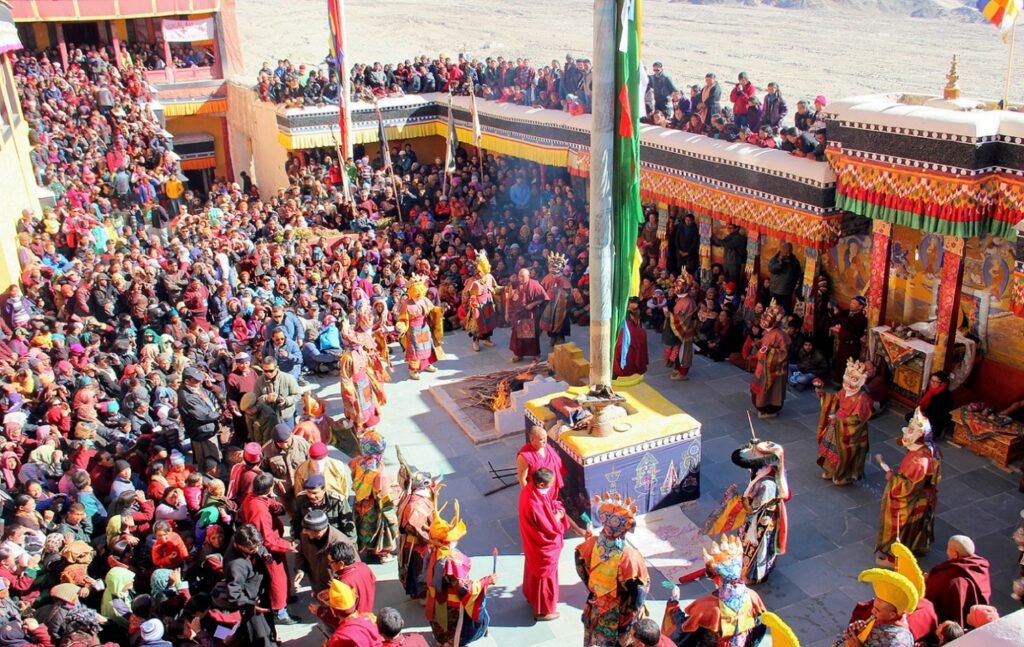
Karsha Gustor Festival
Food, Stay and Getting Around: India in April
Independence Day Road Trips: August 2025 Issue Index
The Town You Sleep In
Why the base town shapes a monsoon waterfall trip more than any single fall, what to look for, and towns in Karnataka, Kerala and Goa worth considering.
One village ghat upriver
Train versus road that week
Markets before the 20th, not on it
Journeys Worth Discovering
Explore inspiring destinations, memorable journeys and travel stories from across India and beyond.
Explore destinations




