
Dear reader,
There is a particular kind of quiet that settles over a lake city in the hour before sunrise. The water is flat, the boats are still tied up, and the town around it has not yet decided what kind of day it will be. I have felt that hour in Srinagar, in Udaipur, in Nainital and, more than once, in places whose lakes are not on any postcard. This issue is built around that feeling, and around the simple idea that a city which grows up around water ends up organised very differently from one that grows along a road or a river.
Why lake cities, and why now
May is the month when much of India starts looking for water. The plains are hot, schools are closing, and families begin to plan their escape to somewhere cooler. Many of the destinations they choose happen to be lake towns, and that is not an accident. A lake moderates the air around it, attracts trees and birds, and gives a settlement a natural centre. Rulers and planners understood this long before tourism existed. Several of the lakes you will read about in this issue are artificial or heavily engineered, built centuries ago to store water for drier months, and the cities that grew up around them have kept that relationship with water at their core.
That history is the thread running through this issue. A lake is never just scenery. It is a reservoir, a commute, a market, a place of worship, a source of income for boatmen and fishermen, and increasingly a fragile ecosystem under pressure from the very visitors who come to admire it. I wanted our writers to keep both halves of that picture in view.
What is in this issue
We open with six city portraits that many of you will already know from our archive: Srinagar, Udaipur, Nainital, Shillong, Bhopal and Kodaikanal. Each one takes a different angle on the same question of how a city lives with its lake. Srinagar’s houseboats and floating gardens on Dal Lake, Udaipur’s chain of palaces and ghats, Nainital’s crowded mall road curving around its pear-shaped lake, Shillong’s highland reservoirs, Bhopal’s Upper and Lower Lakes in the heart of a state capital, and Kodaikanal’s star-shaped lake in the Palani Hills. Read them together and the contrasts become as interesting as the similarities.
Around those portraits sit four new pieces. The first follows a route through Hyderabad, a city most travellers associate with biryani, IT parks and the Charminar rather than water. Yet Hyderabad and its twin city Secunderabad were shaped by a series of large reservoirs, and following them from Hussain Sagar out to Osman Sagar explains a great deal about how the city grew and what it now struggles with.
The second is a slow, three-day plan for Srinagar’s lakes, written deliberately as the opposite of a checklist. Instead of trying to see every Mughal garden in a single afternoon, it spends real time on the water, at the edges of Nigeen and the quieter channels, and in the old city where the lake meets daily life.
The third is a candid piece on what to skip on a first trip to Kodaikanal. Every popular hill town gathers a set of rushed habits over the years: the overcrowded viewpoint at the wrong hour, the boat queue on a holiday weekend, the long drive to tick off one more spot. We asked our writer to be honest about which of those are worth your limited time and which are not.
The fourth takes you to Jaisamand, the large lake in the hills south-east of Udaipur. It is often described as one of the largest artificial lakes in Asia, though you should treat such superlatives with care, and it receives a small fraction of Udaipur’s visitors. If Udaipur is the lake city everyone photographs, Jaisamand is where you might go to hear the water.
A word on responsibility
It is impossible to edit an issue like this without thinking about what our enthusiasm costs the places we write about. Many Indian lakes face real problems: shrinking catchments, encroachment on their banks, sewage, weeds, and plastic left behind by visitors. Some city lakes have needed long and expensive clean-up drives, and the results are uneven. None of this is a reason to stay away, but it is a reason to travel thoughtfully.
A few habits make a genuine difference. Carry your own water bottle and refill it rather than buying plastic. Choose a shikara or rowing boat over a motorboat where you have the option. Do not feed fish or birds with packaged snacks. Stay in locally run guesthouses when you can, so that the money you spend stays near the water you came to see. And be patient with rules on boating hours or restricted shorelines; they usually exist for a reason.
How to use this issue
As always, the facts in these pieces were correct to the best of our writers’ knowledge when we prepared them, but boat fares, entry rules, timings and road conditions change, sometimes from one season to the next. Please check with local tourism offices or your accommodation before you set out, especially in Srinagar, where travel advisories and seasonal conditions can shift quickly. We have avoided quoting prices wherever they are likely to be out of date by the time you read this.
You will also notice that our new pieces lean towards slower travel. That is a deliberate choice. Lake cities reward people who stay an extra night, who walk the shoreline at dawn and again at dusk, and who are willing to sit still for an hour and watch how the town uses its water. They punish people who arrive at noon, take a boat ride and leave before dinner.
Thank you
Finally, thank you to everyone who wrote in after last month’s issue on the folk dances of India. Several of you shared memories of watching Garba circles, Bihu performances and village festivals, and a few of you pointed out details we should look at again. Please keep those letters coming. They make this magazine better, and they remind all of us at Travel Viewpoint that the best travel writing is a conversation rather than a lecture.
If you visit any of the lakes in this issue, I would love to hear what you found there: the hour of day you liked best, the boatman who told you a story, the small café on the far shore that nobody else seemed to know about. Write to us, and we may share your notes in a future issue.
Until next month, travel slowly and leave the water a little better than you found it.
A few practical reminders before you go
May is also the month when popular lake towns are at their busiest. If you can, travel midweek, book your room before you set off, and plan to be on the water early in the morning, when the light is soft and the boat jetties are quiet. Keep an eye on weather forecasts as the pre-monsoon season approaches in the south and east, and carry a light layer even in summer, because evenings beside a hill lake can turn cool quickly.
Warm regards,
Khushi Anand, Editor
More from Issue 49
- May 2023
- Srinagar – The Mesmerizing Lake City
- Udaipur – The Venice of the East
- Nainital – The City of Lakes
- Shillong – The Lake City of Northeast
- Bhopal – The City of Lakes
- Kodaikanal – The Lake City
- Hussain Sagar to Osman Sagar: The Route That Explains Hyderabad’s Lakes
- Three Days on Srinagar’s Lakes, Not a Checklist
- What to Skip on Your First Trip to Kodaikanal
- Jaisamand: The Quieter Lake Beside Udaipur
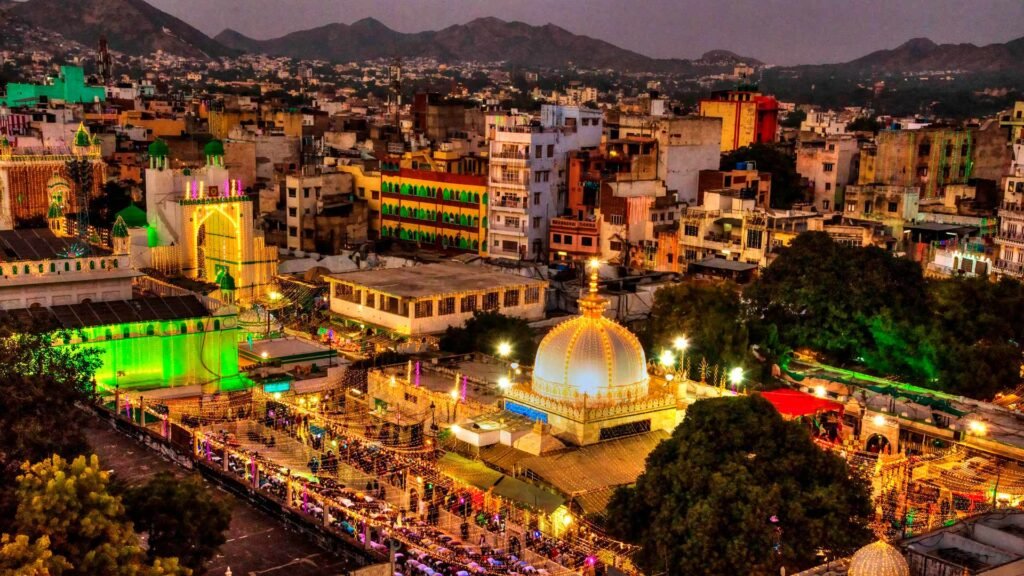
Meet The Sacred Town “Ajmer”
Kathgodam to Munsyari: The One Road That Explains Kumaun
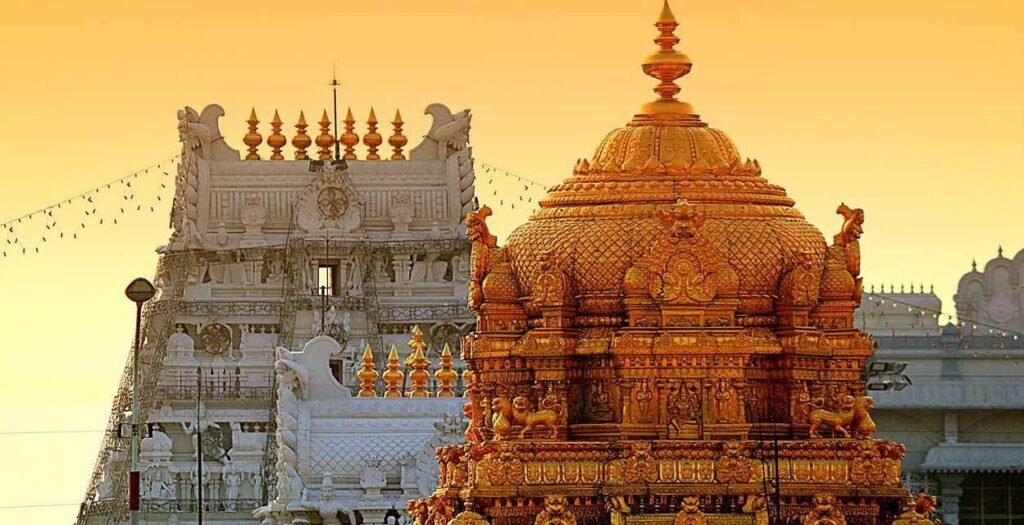
Tirupati Venkateswara Temple
The Town You Sleep In
Why the base town shapes a monsoon waterfall trip more than any single fall, what to look for, and towns in Karnataka, Kerala and Goa worth considering.
One village ghat upriver
Train versus road that week
Markets before the 20th, not on it
Journeys Worth Discovering
Explore inspiring destinations, memorable journeys and travel stories from across India and beyond.
Explore destinations




