
I have a confession to make before you read a single page of this issue. For years, my idea of Holi in Braj came almost entirely from photographs: a woman in a bright sari with a raised lathi, a cloud of pink powder hanging over a temple courtyard, a man laughing behind a leather shield. They are beautiful images, and they are true. But they are also the loudest few seconds of a festival that, in Braj, lasts for weeks. This March issue is our attempt to fill in everything that happens between those frames.
A festival that is also a homecoming
For most of India, Holi is a day, perhaps two. In Braj it is a season. The Rangotsav begins around Basant Panchami, when temples start including Holi songs in their daily service, and builds slowly through Phalgun. By the time the full moon arrives, the region has already celebrated with laddoos in Barsana, sticks and shields in Barsana and Nandgaon, flowers in the temples of Vrindavan and switches in Gokul. In 2026, the Lathmar days fell on 25 and 26 February, Holika Dahan on the evening of 3 March and Rangwali Holi on 4 March. Next year the dates will move with the lunar calendar, which is exactly how it should be.
What struck our team most, while researching this issue, was how many of the people in those famous crowds are not tourists at all. They are families from Agra, Aligarh, Hathras, Bharatpur and Delhi who come back every year, the way people return to an ancestral village for a wedding. For them, Braj Holi is a homecoming to Krishna’s childhood, and colour is a form of prayer. That changes how a visitor should behave. You are a guest at someone else’s celebration, not an audience at a show.
Why we chose Braj for March
We could have filled March with beaches before the summer heat, or the last of the hill-station snow. We chose Braj because Holi here asks something of the traveller. It asks you to plan, to read a little, to understand why the women of Barsana hold the sticks and why the men of Nandgaon do not hit back. It asks you to think about consent in a crowd, about what to wear and where to stand, about which photographs are yours to take. Few trips in India teach you as much in as short a time.
We also chose it because Holi in Braj is often written about badly. Viral clips make it look like a riot. Tour listings make it look like a theme park. Neither is fair to the people who live here and keep the tradition going. We wanted to offer something more honest: a guide that celebrates the joy without pretending the crowds are easy, and that respects the devotion without making it feel off-limits.
What we hope you take away
If I could ask readers to remember one thing from this issue, it would be this: the best Holi in Braj is rarely the most crowded moment. It is the hori being sung in a temple courtyard at dusk a week before the main day. It is the quiet lane in Vrindavan the morning after, washed pink and smelling of wet earth. It is the moment a family on a rooftop in Barsana waves you up to stand with them because the street below has become too tight. Our writers kept coming back to those moments, and you will find them across these pages.
You will also find practical advice. Our base-town guide compares Mathura, Vrindavan, Govardhan and Barsana as places to sleep. Our two-day plan is for those who cannot take a week off. Our train piece explains why the timing of your arrival matters as much as the train you choose. And our safety piece speaks plainly, especially to women travelling with friends or family, about how to enjoy the colour without being swept into situations you did not choose.
A note on what we left out
You will notice that this issue contains very few prices and no phone numbers. That is deliberate. Room rates, taxi fares and guide fees in Braj can change several times over in Holi week, and we would rather tell you how to plan than print numbers that may be wrong by the time you read them. Where a date matters, check the current year’s official calendar, which is usually announced by the Mathura district administration and the Uttar Pradesh tourism department in the weeks before the festival.
We have also avoided naming individual homes, families and small guesthouses. Braj is a place where hospitality is generous, and we did not want our pages to turn private generosity into a commercial queue.
The people who made this issue
This issue was shaped by many voices: writers who walked the parikrama paths, photographers who learned to ask before they clicked, and a guest contributor who spent Holi week inside a Braj family’s kitchen. Their pieces do not agree on everything. One of our writers swears by Barsana before anything else; another believes the real magic lives in Vrindavan’s lanes the morning after. We have kept those disagreements in, because Braj is big enough to hold all of them, and because your perfect Holi will not look exactly like anyone else’s.
Thank you
To everyone in Mathura, Vrindavan, Barsana and the villages around Govardhan who shared their time, songs, kitchens and rooftops with our contributors: thank you. To our readers, thank you for travelling with care. And to anyone planning their first Braj Holi: start early, carry less, keep your phone in a sealed pouch and your sense of humour within easy reach.
Happy reading, and Holi hai.
Khushi Anand
Editor, Travel Viewpoint
In this issue: Holi in Braj
- Holi in Braj 2026: a guide to Mathura, Vrindavan & Barsana
- Barsana before Mathura: start Braj Holi on the hill
- Vrindavan lanes the morning after Holi
- What Lathmar Holi actually asks of a visitor
- Colour, consent and where to stand
- Two days of Braj Holi, not a week of chaos
- A guest who went with a local family
- Train timings into the Holi crowd
- The town to use as a base for Braj Holi
- A quieter Holi in a Braj village
- The photograph of the street, not the face

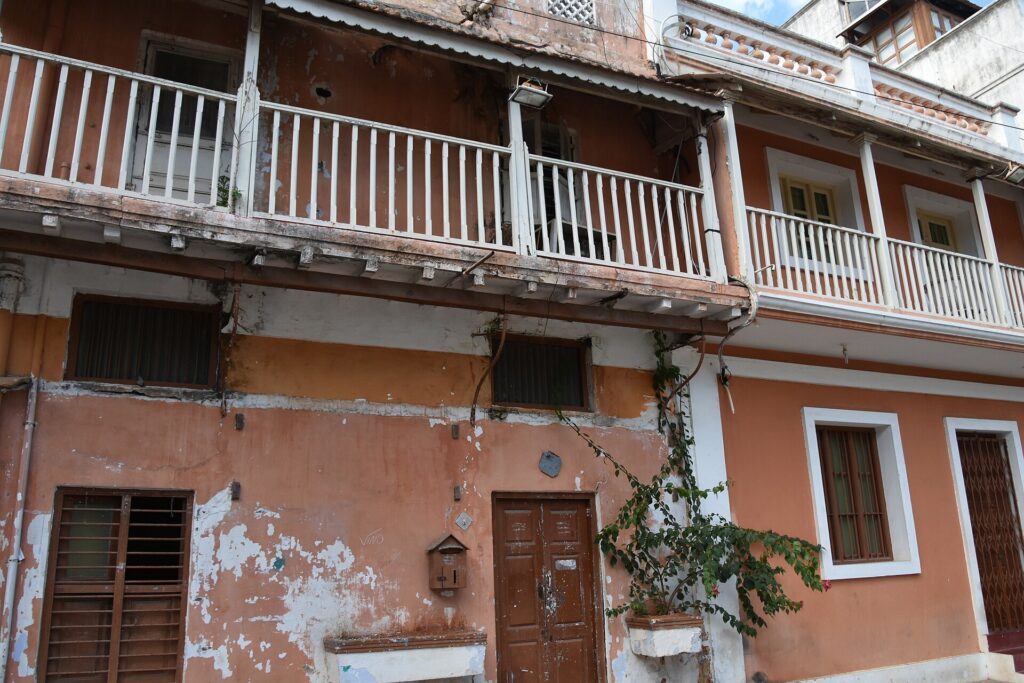
White Town Wonders: Explore Pondicherry’s French Quarter
Issue 88: The 72-Hour Itinerary — Inside This Issue

Women-Only Wellness Getaways Worth Taking
The Town You Sleep In
Why the base town shapes a monsoon waterfall trip more than any single fall, what to look for, and towns in Karnataka, Kerala and Goa worth considering.
One village ghat upriver
Train versus road that week
Markets before the 20th, not on it
Journeys Worth Discovering
Explore inspiring destinations, memorable journeys and travel stories from across India and beyond.
Explore destinations




