
Dear reader,
Every January, as the year turns and the fog settles over the plains of the north, I find myself thinking about water. Not water as a resource or a statistic, but water as a presence: the slow brown sweep of a river at dawn, the sound of bells carried across it, the way an entire town seems to lean towards its banks. This issue of Travel Viewpoint is about the holy rivers of India, and I want to explain, in this letter, why we chose to begin a new year with them.
Why rivers, and why now
India is a country that has always organised itself around rivers. Cities grew where rivers could be crossed or where they met. Pilgrimage routes followed river valleys up into the mountains. Festivals are timed to the rise and fall of the water, and to the movement of the sun and moon above it. When people speak of a river as a mother, as they so often do of the Ganga, the Narmada or the Kaveri, they are not only speaking in metaphor. They are describing a relationship that has fed, carried and consoled people for thousands of years.
For a traveller, that relationship is the key to understanding a place. You can visit a temple town and see its architecture. But if you sit by its river for an evening, you begin to see how the town actually lives: who comes to bathe, who sells marigolds, who rows the boats, who comes simply to sit in silence. January is also a gentle month for river travel in much of the country. The monsoon floods have long gone, the water is clearer, and the cool, dry weather in the north and the pleasant warmth in the south make long walks along the ghats a pleasure rather than an ordeal.
What you will find in this issue
We have tried to cover the great rivers from the Himalaya to the Deccan and the far south. There are essays on the Ganga and the Yamuna, the two rivers that most people think of first, and which shape the plains of the north from the hills of Uttarakhand to the confluence at Prayagraj. We follow the Alaknanda and the Mandakini, two of the Himalayan headstreams that feed the Ganga, through valleys that pilgrims bound for Badrinath and Kedarnath have walked for centuries.
Moving south, we look at the Narmada, which flows west across the middle of the country and is circled on foot by devotees on the long parikrama. We look at the Godavari, often called the Ganga of the south, and at the Krishna, whose waters sustain a huge part of the Deccan. And we end at the Kaveri, the river that gives life to so much of Karnataka and Tamil Nadu, with its temple towns, its delta and its rice fields.
Alongside these portraits, we have two practical features. One follows a single route, from Rishikesh up to Devprayag, where the Bhagirathi and the Alaknanda meet and take the name Ganga. It is a short journey, but it explains a great deal about how Indians think of their rivers: as living things with sources, confluences and personalities. The other is a three-day guide to the Narmada at Maheshwar and Omkareshwar that tries to resist the temptation of a checklist and instead suggests a slower rhythm, built around the river rather than around a list of sights.
A note on respect
Writing about sacred places carries a responsibility. These rivers are not backdrops for photographs. They are places of prayer, of grief and of celebration. At the burning ghats of Varanasi, families are saying goodbye to the people they loved. At the bathing ghats of Haridwar, people are fulfilling vows they may have made years ago. As travellers, we are guests in these moments.
So I would ask you, as you read and as you travel, to carry a few simple habits with you. Ask before you photograph people, and accept a refusal gracefully. Dress modestly near temples and ghats. Take your rubbish away with you, and refuse the plastic bags that are still too often pressed into your hands. Do not treat a ritual as a performance staged for your benefit. If you are invited to join in, join in with sincerity, or politely decline.
There is also a harder truth that I do not want to skip over. Many of these rivers are under enormous strain. Pollution, dams, sand mining and changing rainfall patterns have changed them, sometimes beyond recognition. Cleaning campaigns have made a difference in places, and the work of local communities deserves far more credit than it gets. But no honest issue about India’s rivers can pretend that all is well. We have tried to celebrate these rivers without looking away from what they face.
Travelling slowly
If there is one idea that ties this issue together, it is slowness. Rivers reward the patient traveller. A boat ride at sunrise, an unhurried walk along the ghats, a cup of tea at a riverside stall while the light changes: these are the moments that stay with you long after you have forgotten the names of the temples.
So do not try to see every river in a single trip. Choose one. Spend a few days with it. Learn the name of the boatman who rows you across, and the time the evening aarti begins, and the quiet stretch of bank where you can sit without being disturbed. Let the river set the pace.
Thank you
As always, this magazine is made by a small team of writers and editors who travel, ask questions and write with care. Thank you to everyone who contributed to this issue, and thank you to you, our readers, for your letters, your suggestions and your corrections. Several of the ideas in these pages began as messages from readers who wanted to share a river they love.
Facts about religious calendars, timings and access change, so please check locally before you plan around them. And if you visit any of the places we describe, write to us. Tell us what you found, what surprised you and what we got wrong. That is how a travel magazine stays honest.
Here is to a year of journeys that begin, as so many good things in India do, at the water’s edge.
Warmly,
Khushi Anand, Editor
More from Issue 45
- January 2023
- The Ganga River
- The Yamuna River
- The Narmada River
- The Godavari River
- The Kaveri River
- The Mandakini River
- The Alaknanda River
- The Krishna River
- Rishikesh to Devprayag: The One Route That Explains India’s Holy Rivers
- Three Days on the Narmada at Maheshwar and Omkareshwar, Not a Checklist

Hot Air Ballooning
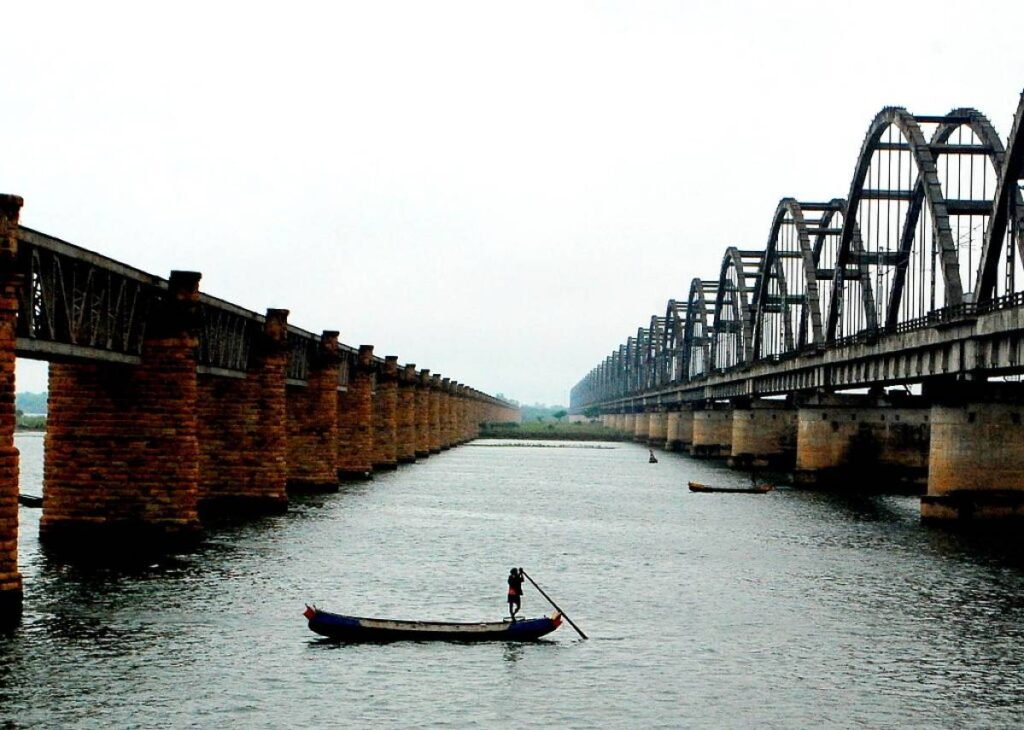
The Godavari – India’s Second Longest River
Kochi to Munnar to Alappuzha: The Route That Explains Kerala
The Town You Sleep In
Why the base town shapes a monsoon waterfall trip more than any single fall, what to look for, and towns in Karnataka, Kerala and Goa worth considering.
One village ghat upriver
Train versus road that week
Markets before the 20th, not on it
Journeys Worth Discovering
Explore inspiring destinations, memorable journeys and travel stories from across India and beyond.
Explore destinations




