
The culinary identity of Udaipur is a direct translation of its unforgiving topography. Set within the dry, deciduous ridges of the Aravalli mountains, the historical kingdom of Mewar forced a highly specific evolution of food. In an arid landscape where fresh green vegetables were scarce and water was a precious commodity, the local palate adapted by turning to ingredients with long shelf lives: lentils, wild berries, sun-dried chillies, stone-ground flours, and clarified butter (ghee). The result is a gastronomic architecture as layered and complex as the city’s stone palaces, divided neatly between the opulent legacy of the royal hunting camps and the hyper-efficient, heavily spiced ecosystems of the old city streets.
The Architecture of Survival: Lentils, Desert Beans, and Ghee
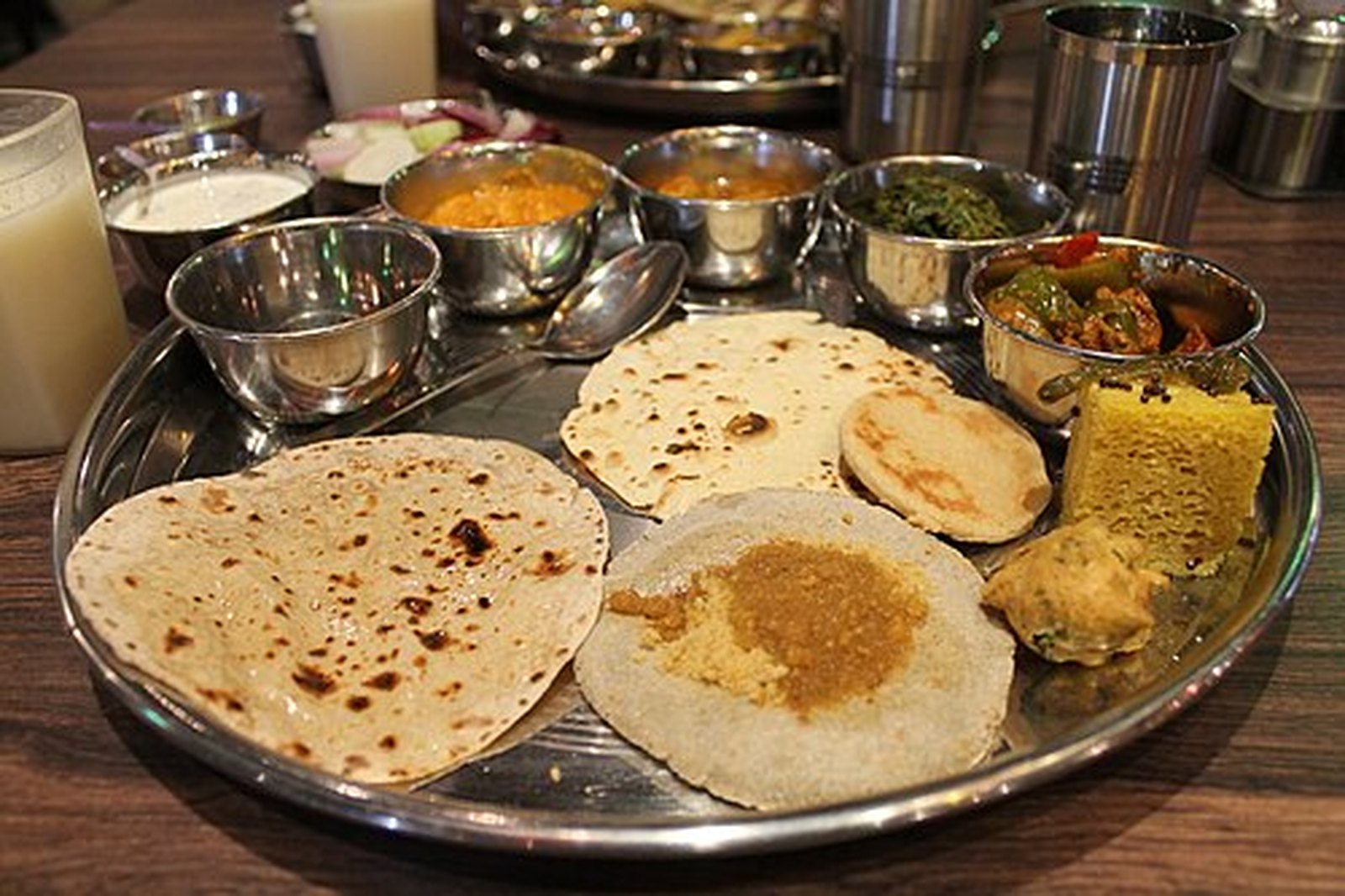
To understand traditional Mewari food, one must first look at what the earth naturally provided. The historic reliance on dairy, milk, buttermilk, and ghee, served as a crucial substitute for water in cooking. Gram flour (besan) became the foundational building block for daily sustenance, engineered into dense, spiced dumplings known as gatte, which could be boiled and simmered in rich yogurt gravies.
The crown jewel of this survivalist agriculture is Ker Sangri. Harvested from wild desert shrubs and trees that thrive in parched, sandy soil, ker (a tart berry) and sangri (a long bean) are sun-dried and stored for months. When rehydrated and cooked together with sharp mustard oil, dried red chillies, and raw mango powder (amchoor), they create a uniquely earthy, intensely tangy dish that speaks directly to the history of desert survival. It is a flavor profile built on preservation, designed to outlast long, punishing summers.
The Warrior’s Ration: The Evolution of Dal Baati Churma
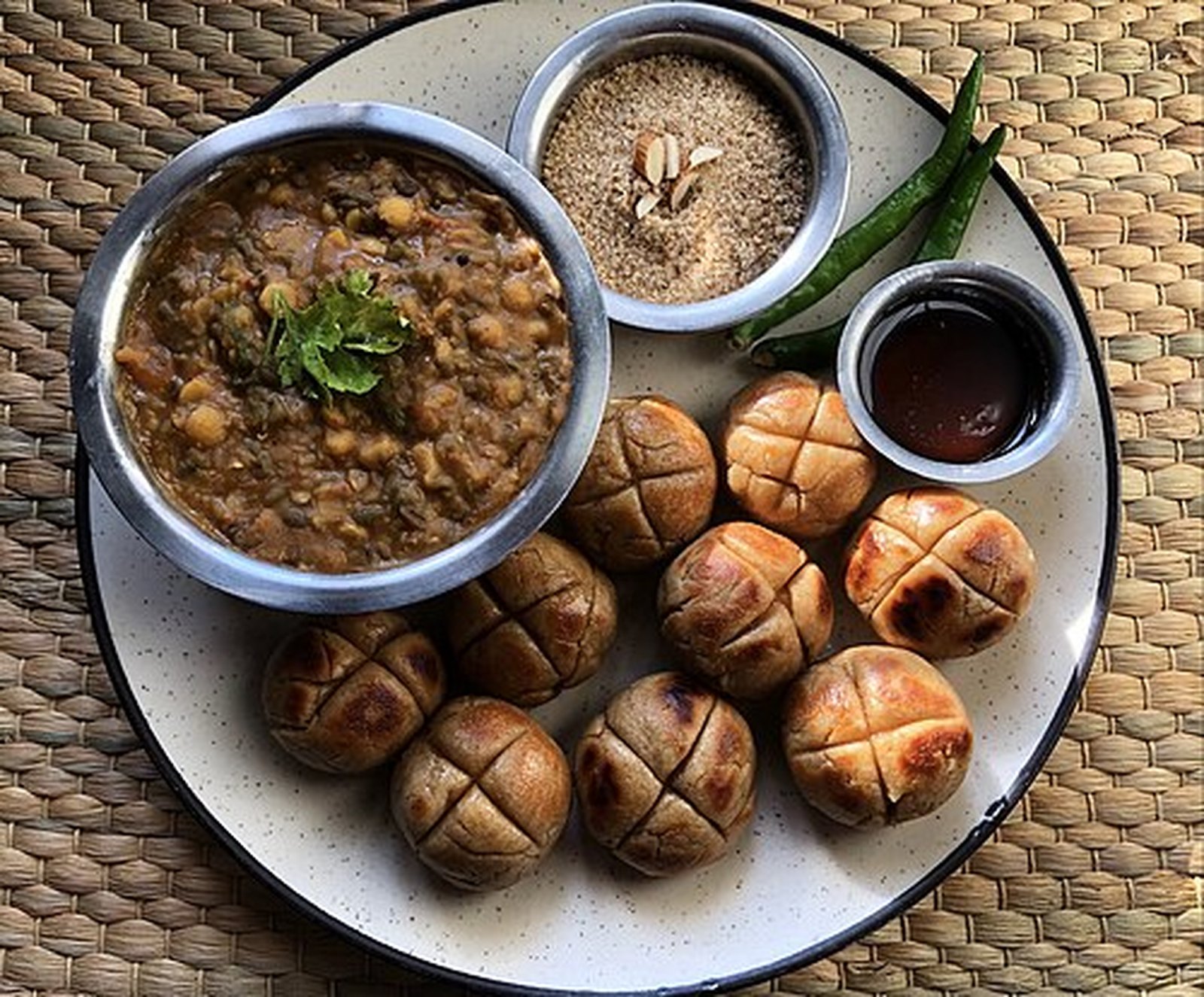
No dish defines the region quite like Dal Baati Churma, a culinary invention born directly out of military necessity and nomadic travel. During the era of constant territorial skirmishes, Rajput soldiers required high-calorie, non-perishable rations that could be prepared with minimal equipment in the wilderness.
The baati, a dense, unleavened bread roll made from coarsely ground whole wheat, was traditionally buried beneath the hot desert sand or placed directly into the smoldering embers of cow-dung fires. This baking method produced a hard, impenetrable crust that kept the interior soft and prevented spoilage over long journeys. Today, the baati is cracked open by hand and submerged in a bowl of panchmel dal, a slow-simmered stew of five distinct lentils tempered with cumin, garlic, and heavy doses of ghee.
The meal is invariably completed with churma, a sweetened counterpart made by crushing unsalted baatis and mixing them with unrefined cane sugar (jaggery), cardamom, and chopped nuts. Consuming a traditional Mewari thali centered around Dal Baati Churma is not a light undertaking; it is a heavy, sleep-inducing feast originally designed to sustain men wearing chainmail in the desert heat.
The Royal Rasowara: Game Meat and Mathania Spice
While the general populace perfected vegetarian ingenuity, the royal kitchens (rasowaras) of the Maharanas operated under a different paradigm, heavily influenced by the Rajput tradition of the shikar (royal hunt). Hunting in the surrounding Aravalli hills yielded wild boar, venison, and game birds, requiring robust cooking techniques to tenderize the tough, wild meat.
This lineage survives today in Laal Maas (red meat). Originally prepared in hunting camps, this fiery mutton curry derives its signature blood-red color and smoky heat from Mathania chillies, a specific variety grown only in a small district near Jodhpur. The meat is slow-cooked for hours over wood fires with thick yogurt, whole spices, and copious amounts of garlic to mask the gaminess of the catch. A crucial, traditional finishing technique involves dhungar—placing a piece of burning charcoal in the center of the dish, pouring a spoonful of ghee over it, and sealing the pot tight to infuse the meat with a deep, lingering woodsmoke flavor.
The Morning Ecosystem: Street Carts and Kulhad Chai
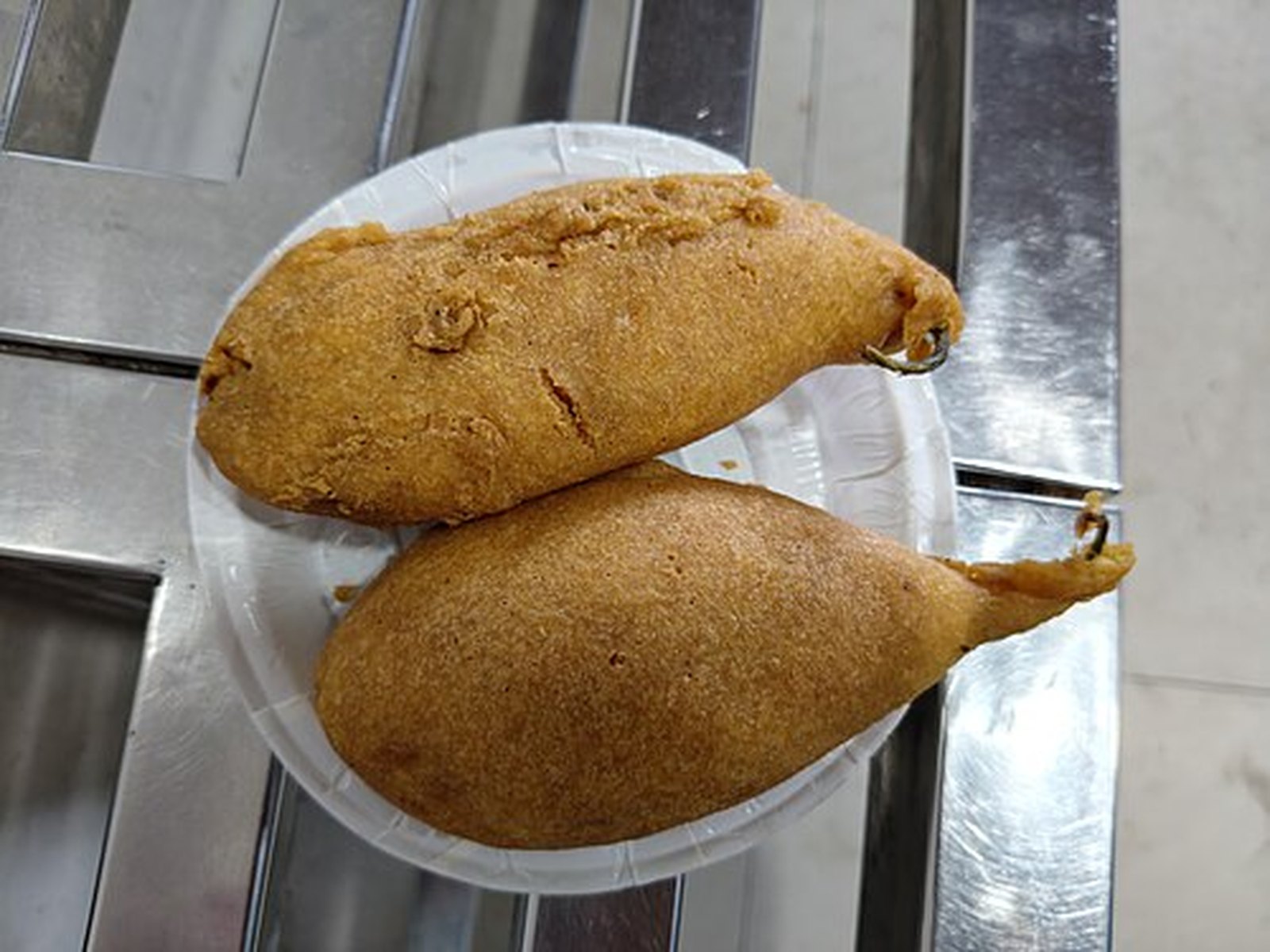
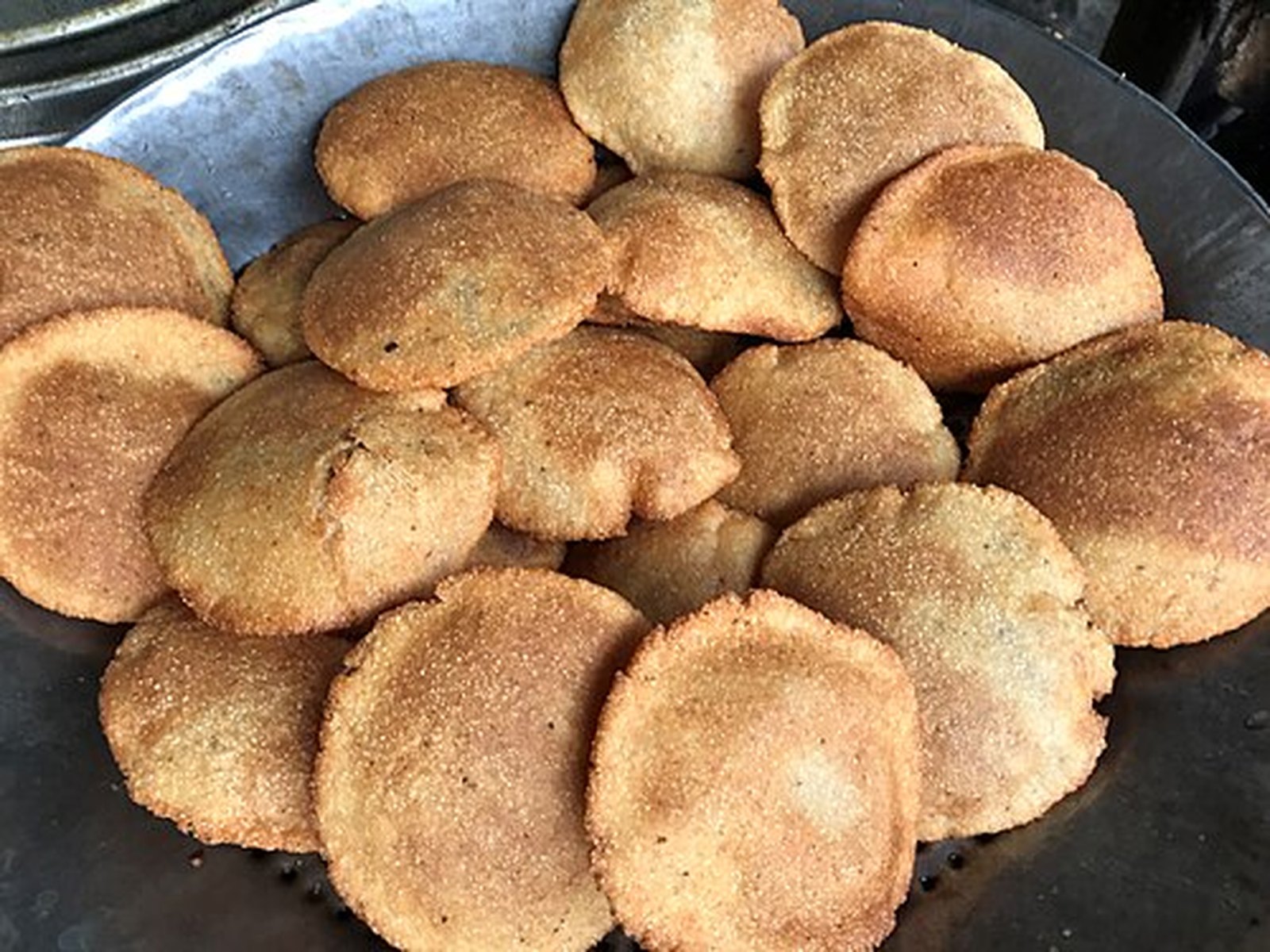
Descending from the heritage dining rooms into the labyrinthine alleys of the Old City reveals an entirely different gastronomic rhythm. The culinary day in Udaipur begins at the street level, long before the sun hits the lake. Around the dense intersections of Hathipole and the clock tower, the air is thick with the scent of boiling sugar and frying oil.
The working-class breakfast is defined by speed, texture, and immediate caloric payoff. Giant iron woks (kadhai) bubble with hot oil, producing thousands of pyaaz ki kachoris, flaky, deep-fried pastry shells stuffed with heavily spiced, caramelized onions and potatoes. These are smashed by hand and drenched in contrasting chutneys: one made from sharp green coriander, the other from sweet, dark tamarind.
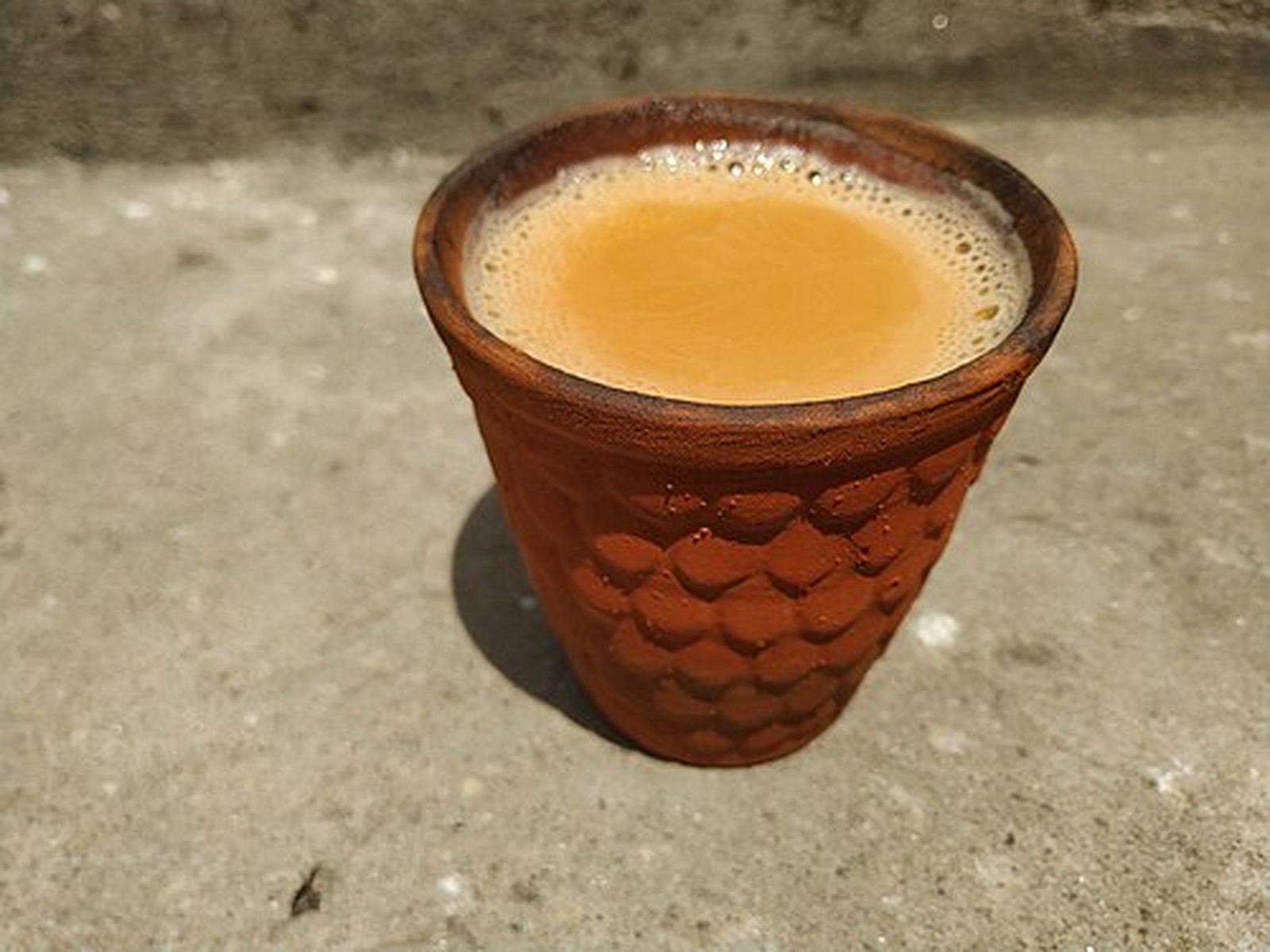
Directly beside the fry cooks sit the poha vendors. Poha (flattened rice) in Mewar is a masterclass in textural contrast. The soft, turmeric-stained rice is steamed with curry leaves and mustard seeds, then aggressively topped with crunchy chickpea noodles (sev), fresh pomegranate seeds, and a squeeze of sharp lime. This is invariably washed down with spiced masala chai served in a kulhad (an unglazed clay cup). The porous clay imparts a faint, earthy taste of baked mud to the tea—a sensory detail that glass or porcelain completely fails to replicate.
High-Altitude Vistas and Evening Stillness

As the afternoon heat breaks, the culinary geography of the city shifts vertically. Navigating the steep, winding lanes near Lal Ghat or Hanuman Ghat leads to some of the most sought-after dining spaces in the region. Securing a table at one of the top 5 rooftop cafes with palace views becomes the central objective for the evening.
Dining aloft in Udaipur is as much about atmospheric immersion as it is about the food. As dusk falls, the visual theater of the city takes over. The royal lake goes completely silent after dark. The daytime tourist boats vanish, the ripples settle into black glassy water, and warm golden lights stretch across the surface. From a high vantage point, with a plate of slow-cooked paneer rajwadi and hot garlic naan, the city below transforms.
There is no city traffic and no noise, just water and heritage. The monumental facade of the City Palace Udaipur glows brightly against the darkening sky. The combination of ancient Mewari spices, the cool night wind sweeping off Lake Pichola, and the illuminated 400-year-old architecture creates a dining environment that cannot be replicated anywhere else on the subcontinent. The culinary map of Mewar ultimately proves that flavor in this city is inextricably bound to the stone, the water, and the quiet night sky.
