
Daylight in the capital of Mewar is defined by motion. The narrow alleys of the Old City vibrate with the constant hum of auto-rickshaws, the municipal ferries carve deep white wakes across the surface of the water, and the marble corridors of the palaces echo with the footsteps of thousands. Udaipur under the sun is a brilliant, chaotic canvas of color and commerce. But to genuinely comprehend the psychological weight of this centuries-old settlement, one must observe the profound shift that occurs when the sun drops below the Aravalli ridges. As twilight deepens into night, the intense kinetic energy dissipates, leaving behind an architectural landscape defined entirely by shadow, illuminated stone, and absolute stillness.
The Glassy Expanse of Lake Pichola
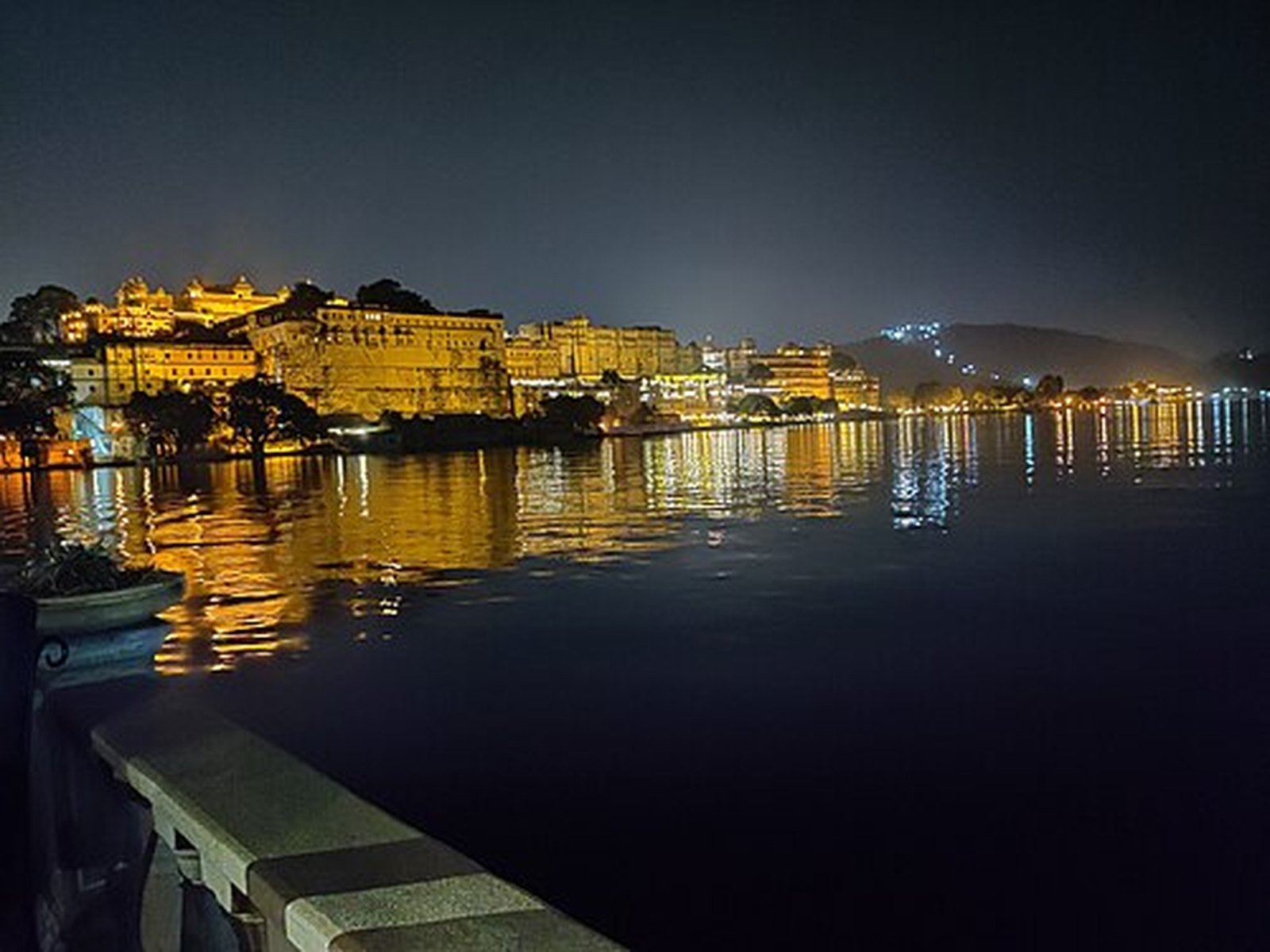
The psychological anchor of the city is its central body of water, which undergoes a dramatic metamorphosis at dusk. During peak hours, the water is a thoroughfare, but as evening sets in, the royal lake goes completely silent after dark. The transformation is visceral. The daytime tourist boats vanish, the ripples settle into black glassy water, and warm golden lights stretch across the surface.
Without the roar of outboard motors, the auditory landscape shifts from mechanical noise to delicate, organic sounds. The night air cools, and far off, a single temple bell echoes. The monumental facade of the City Palace and the delicate white marble of the Taj Lake Palace no longer look like active hubs of tourism; they become glowing golden silhouettes suspended in the dark. For the observer standing on the eastern banks, the realization is immediate: there is no city traffic, no noise, just water and heritage.
The Elemental Edge at Ambrai Ghat
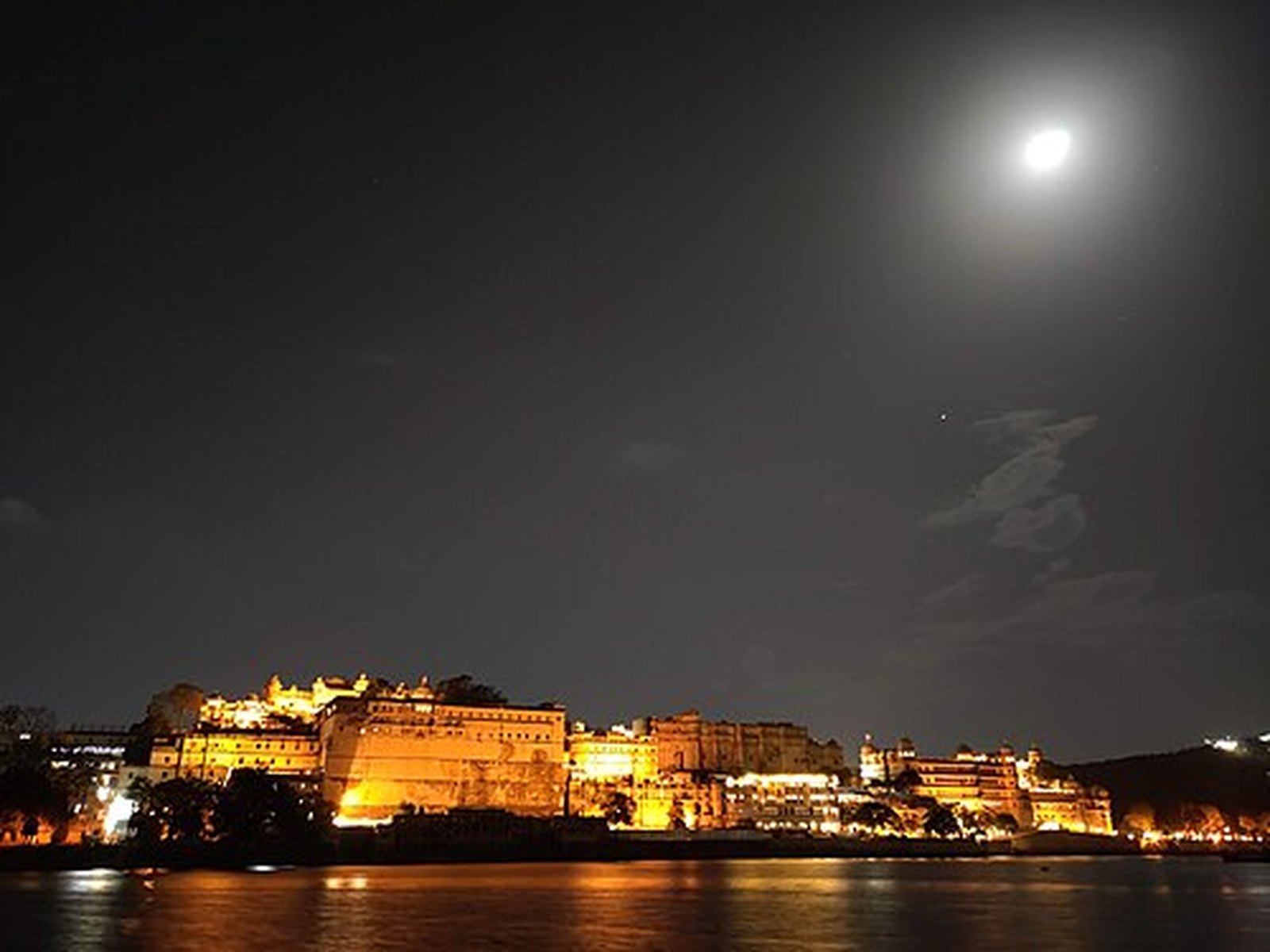
To touch the physical history of Udaipur is to sit on the stone embankments that mediate the boundary between the rising architecture and the deep lakes. Ambrai Ghat, positioned directly across from the City Palace, serves as the ultimate vantage point. By late afternoon, it is crowded with individuals seeking the perfect sunset photograph, but patience yields a solitary reward.
As blue hour descends, the ancient ghats go completely silent after dark. The sunset crowds vanish, and a vast canopy of stars emerges over the floating palaces. The heavy stone steps, worn smooth by generations of foot traffic, slowly cool against the night air. The visual theater shifts entirely to the illuminated architecture across the water. The palace lights glow brightly, and far off, the gentle lap of water meets the stone. Surrounded only by the warm yellow glow of vintage streetlamps against the dark blue sky, one is left with an unfiltered, elemental connection to the city.
The High-Altitude Sentinel
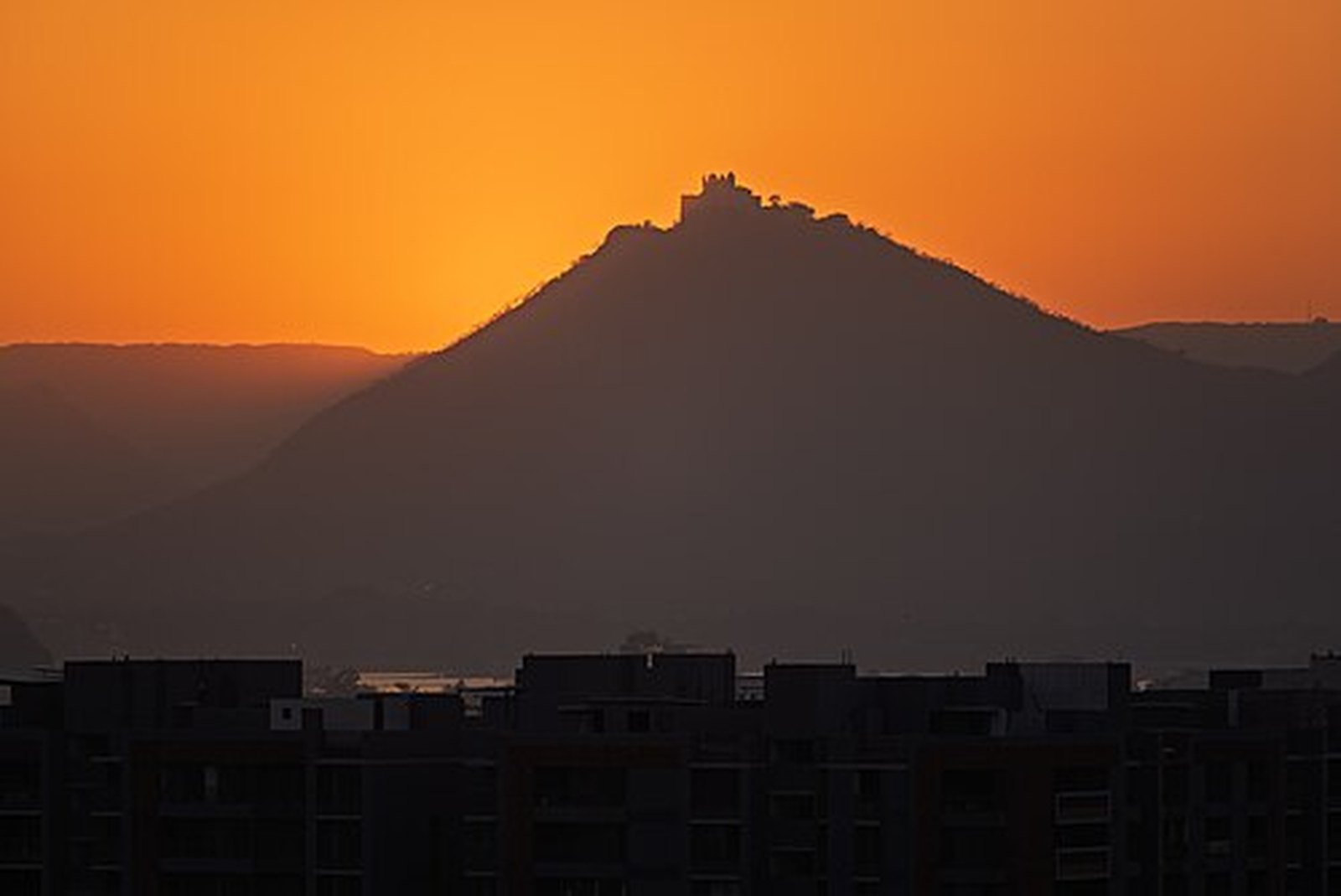
Far above the water, perched at an elevation of 3,100 feet, the Monsoon Palace (Sajjangarh) commands a different kind of nocturnal reverence. Built as a towering astronomical center and seasonal retreat, the white marble fortress spends its days battered by harsh sunlight and heavy winds. Yet, as night reclaims the Aravalli range, the atmospheric pressure of the mountain shifts.
The hilltop palace goes completely silent after dark. The daytime winds drop, the marble courtyards settle under a pitch-black canopy, and the city below glows like scattered gold dust. Standing on the western retaining wall, the sheer scale of the landscape becomes apparent. To the east lies the glittering urban center; to the west, the absolute darkness of the untamed wilderness. Ancient walls sit in shadow, and far off, the faint hum of Udaipur fades into the valley. It is an isolation so complete that it strips away the centuries, leaving a landscape that looks exactly as it did when the foundations were first laid.
The Inner Sanctuaries of the Ancestral Havelis
Descending from the high peaks and the open lakes into the dense, labyrinthine streets of the Old City reveals the most intimate nocturnal spaces in Udaipur. The historic havelis, the 300-year-old aristocratic townhouses, were engineered to turn inward, blocking out the chaos of the public streets to protect the private central courtyards, or chauks.
When the heavy wooden doors are bolted shut for the evening, the grand haveli goes completely silent after dark. The daytime chatter vanishes, the carved archways cast long shadows, and warm vintage lamps illuminate the painted frescoes. The design of these central courtyards allows the trapped heat of the day to escape, pulling a refreshing coolness down into the lower levels. The night breeze sets in, and far off, the faint sound of a traditional flute drifts across the dark. Enclosed within thick stone walls, surrounded by centuries-old artwork illuminated only by flickering flame, the modern era ceases to exist.
The Wilderness at the Outer Limits
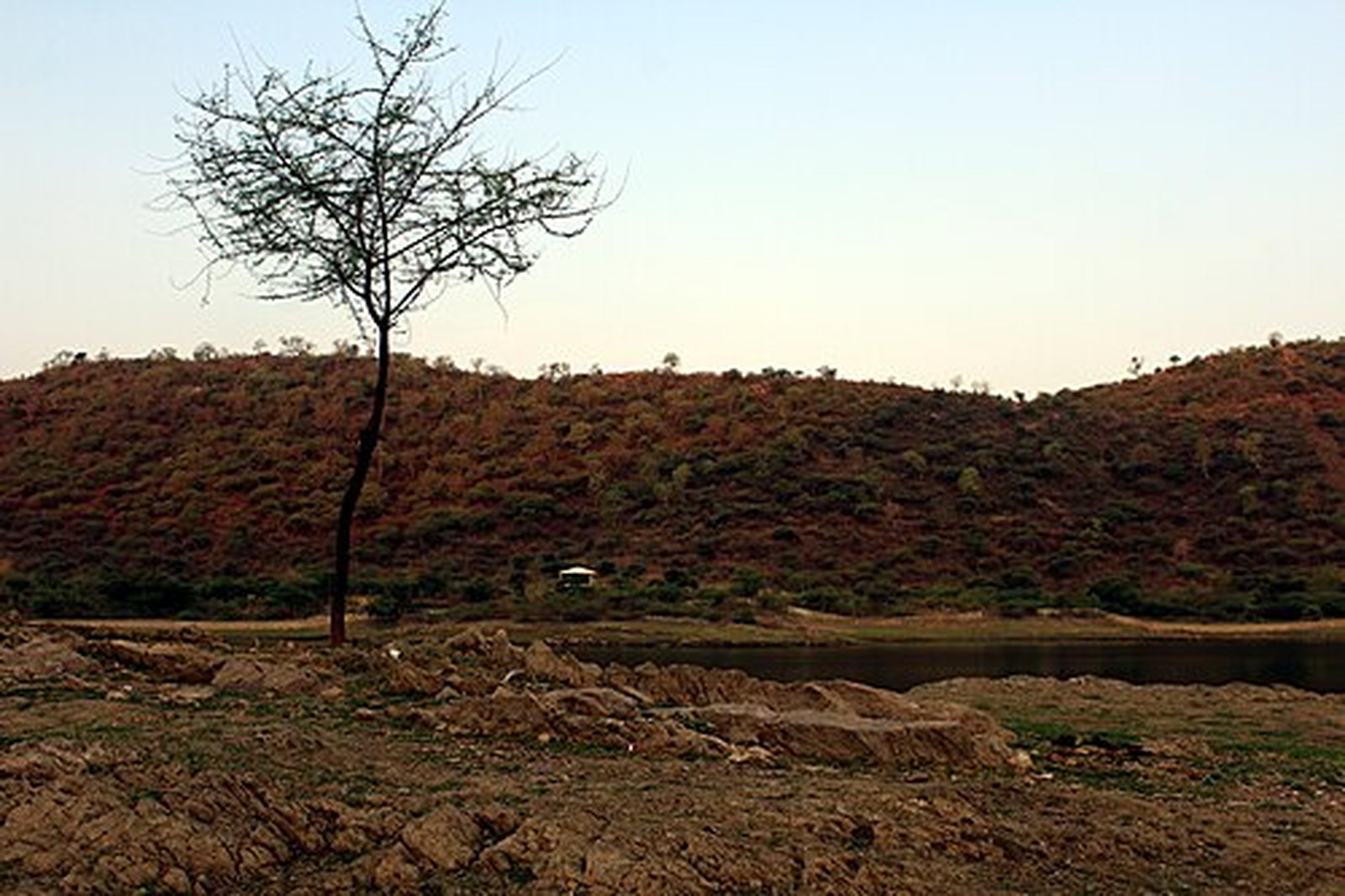
Beyond the illuminated palaces and the intricate townhouses lies the final, essential piece of Udaipur’s nocturnal identity: the natural buffer zones that protect the city. Lake Badi, situated 12 kilometers off the main grid, offers a stark contrast to the manicured shores of Pichola. Framed by rugged, dry-deciduous hills and entirely devoid of commercial development, this reservoir represents the raw, untamed ecology of the region.
As evening overtakes the valley, the wilderness lake goes completely silent after dark. The daytime heat drops, the surrounding Aravalli hills settle under a pitch-black canopy, and the stars glow brightly enough to reflect on the water. The three intricately carved stone pavilions that mark the shoreline recede into the blackness. The historic pavilions sit in shadow, and far off, the faint call of a night owl echoes. There are no floodlights, no passing rickshaws, and no distant temple bells. Out here, nature reclaims the landscape entirely.
Udaipur after dark is not a city shutting down for sleep; it is a city returning to its original state. Stripped of the overwhelming crowds and the blinding daytime sun, the architecture, the water, and the surrounding mountains breathe together in absolute quiet.
