
To navigate Udaipur is to be surrounded by the monumental permanence of stone. The City Palace, the ancient ghats, and the hilltop fortresses were engineered to withstand centuries of monsoons and sieges. Yet, the history of Mewar is not solely preserved in static granite and lime plaster. A parallel, temporal architecture exists, one built entirely of rhythm, breath, and motion. The folk dances, puppetry, and musical traditions of Rajasthan constitute a living heritage, passed down through rigid generational lineages. These performing arts are not merely aesthetic spectacles; they are kinetic records of desert survival, martial pride, and deep spiritual devotion.
The Architecture of Balance: The Bhavai Dance
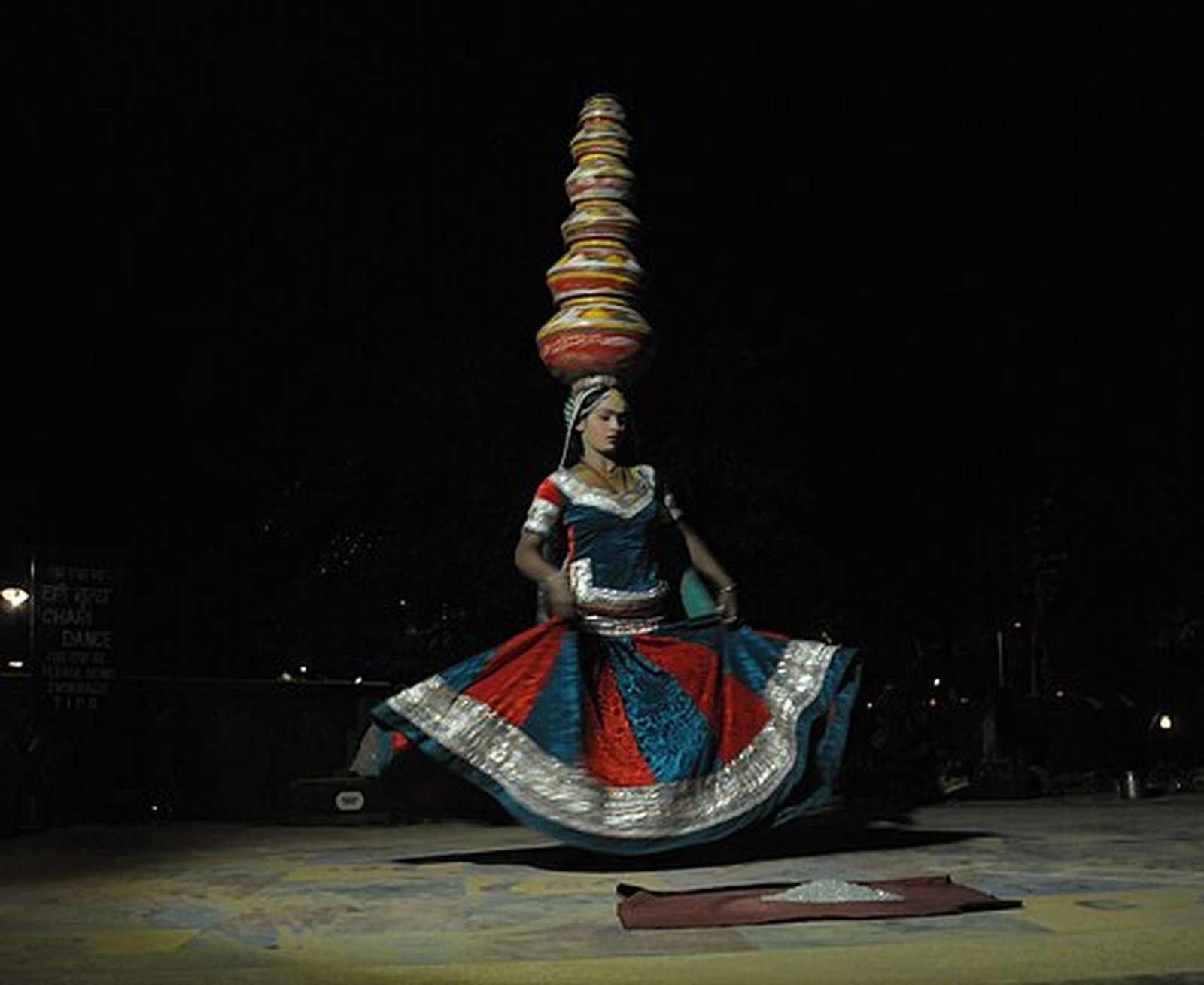
Perhaps no performance encapsulates the historic reality of the Rajasthani landscape quite like the Bhavai dance. To a casual observer, the act of a woman balancing up to nine stacked brass or earthen pots on her head while executing complex footwork is a feat of circus-like acrobatics. However, the origin of this discipline is fundamentally rooted in the harsh geography of the region.
Historically, in the arid stretches of the Thar Desert and the Aravalli hills, women were tasked with securing water for their households. This daily requirement often involved walking miles in blistering heat, carrying multiple heavy water vessels stacked upon their heads to maximize efficiency. Over generations, this grueling physical necessity evolved into an art form.
The Bhavai performance is a masterclass in tension and core equilibrium. The dancer, dressed in a vibrant, heavy ghagra (skirt), moves with fluid grace while keeping the towering stack of pots perfectly stationary. The physical stakes are often raised as the performance progresses, with the dancer stepping onto the razor-sharp edge of a brass thali (plate) or balancing on the rims of glass bottles. The juxtaposition of the serene, smiling performer against the severe physical danger of the choreography creates a deeply compelling visual narrative, honoring the stoic resilience of the desert woman.
The Courtly Swirl: Ghoomar and Rajput Identity
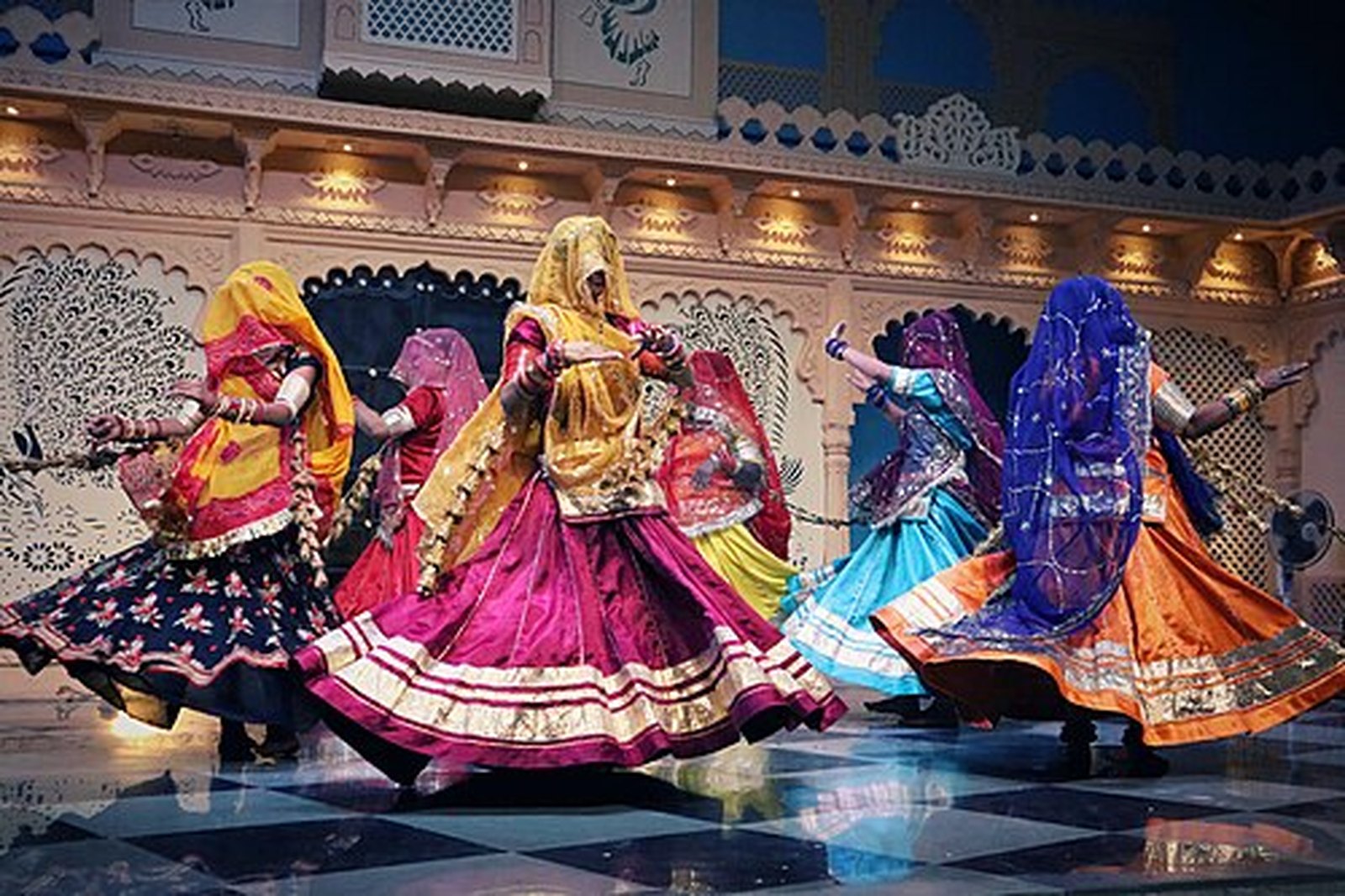
If Bhavai represents the struggle of the landscape, Ghoomar represents the refined elegance of the royal courts. Originally developed by the indigenous Bhil tribe as a ritual devotion to the goddess Saraswati, the dance was seamlessly adopted by the Rajput nobility and integrated into the fabric of courtly life.
Ghoomar is performed exclusively by women, characterized by measured, graceful pirouettes that cause the heavily embroidered ghagras to flare out in perfect, hypnotic circles. The mechanics of the dance are deceptively complex; the footwork is subtle and grounded, while the hands and wrists trace delicate, flowing patterns in the air. The face is traditionally veiled by a translucent odhni, maintaining the strict cultural parameters of purdah (seclusion) while still commanding the space.
The auditory component of Ghoomar is just as critical as the visual. The rhythmic jingling of silver anklets strikes precisely against the beat of the dhol (double-headed drum). It is a communal celebration, often performed during weddings or the arrival of a new bride, serving as an unbroken thread of feminine solidarity that has survived centuries of shifting empires.
The Serpent’s Movement: The Kalbeliya Nomads
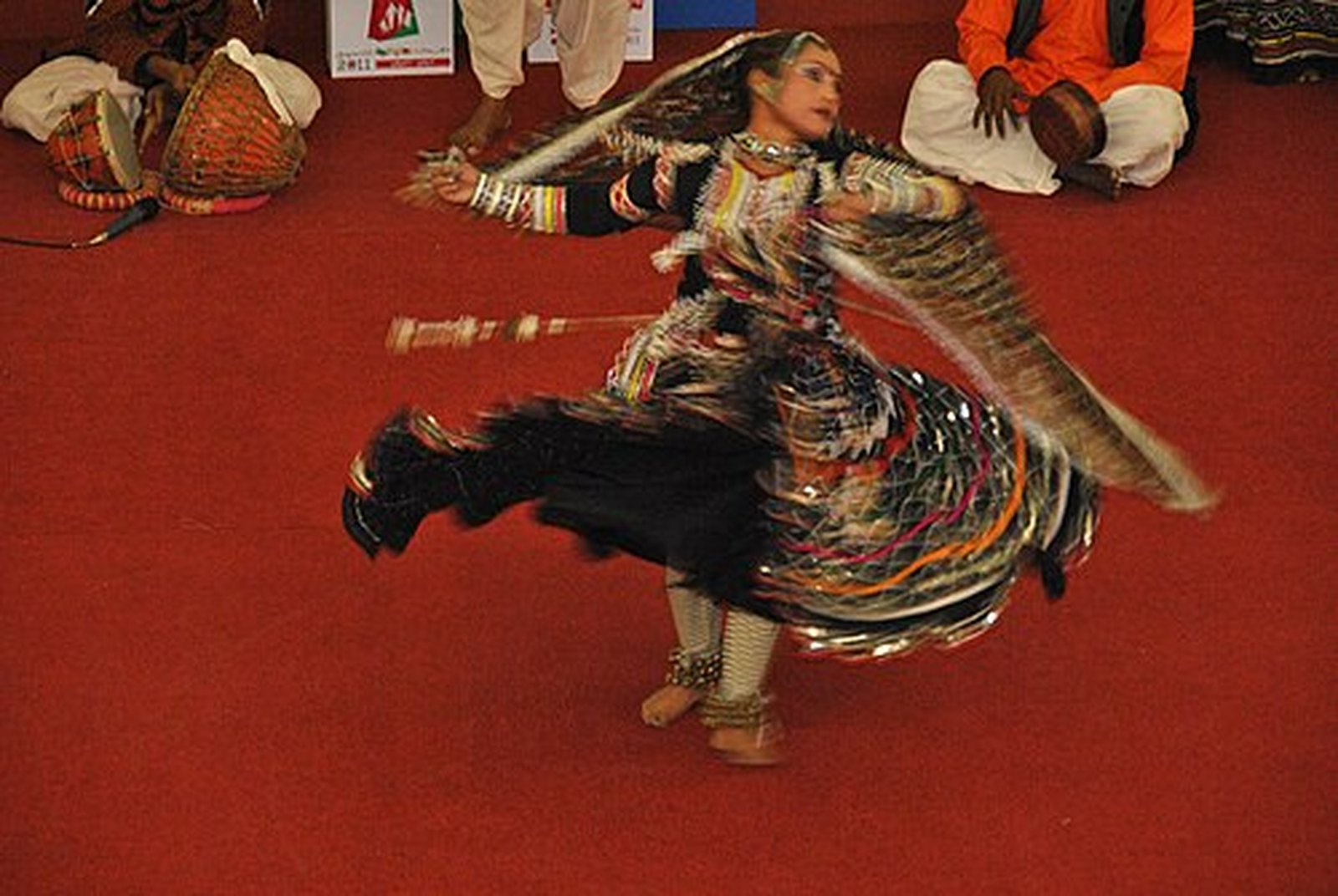
Descending from the royal courts into the nomadic fringes of the desert introduces the Kalbeliya. The Kalbeliya community historically operated as professional snake catchers and venom traders, a dangerous and highly specialized profession that heavily influenced their cultural expression.
The Kalbeliya dance is the kinetic manifestation of the serpent. The women perform in striking black skirts heavily embroidered with silver ribbons and tiny mirrors—costuming designed specifically to catch the light of a campfire. The movements are incredibly fluid, elastic, and entirely serpentine. The dancers drop to their knees, bending backward with astonishing flexibility, mirroring the sudden strikes and coiled tension of a cobra.
The driving force behind this movement is the been, a traditional woodwind instrument originally used to charm snakes, accompanied by the sharp, percussive crack of the daf (tambourine). The rhythm constantly accelerates, pushing the dancers into a trance-like frenzy. Recognized by UNESCO as an Intangible Cultural Heritage, the Kalbeliya dance represents the fierce, independent spirit of Rajasthan’s nomadic tribes, translating their intimate understanding of the region’s deadliest fauna into high art.
The Wood and String Narrators: Kathputli
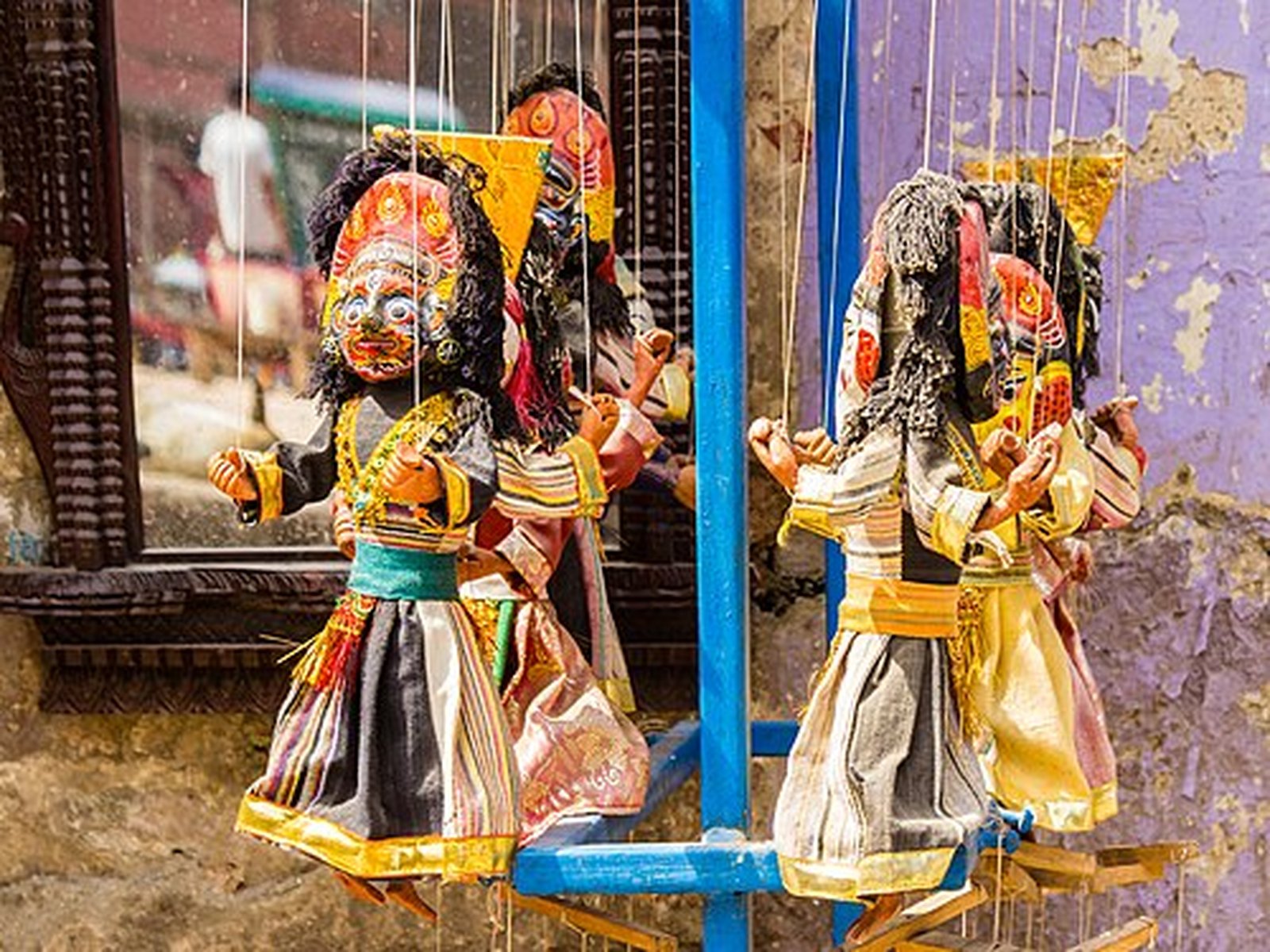
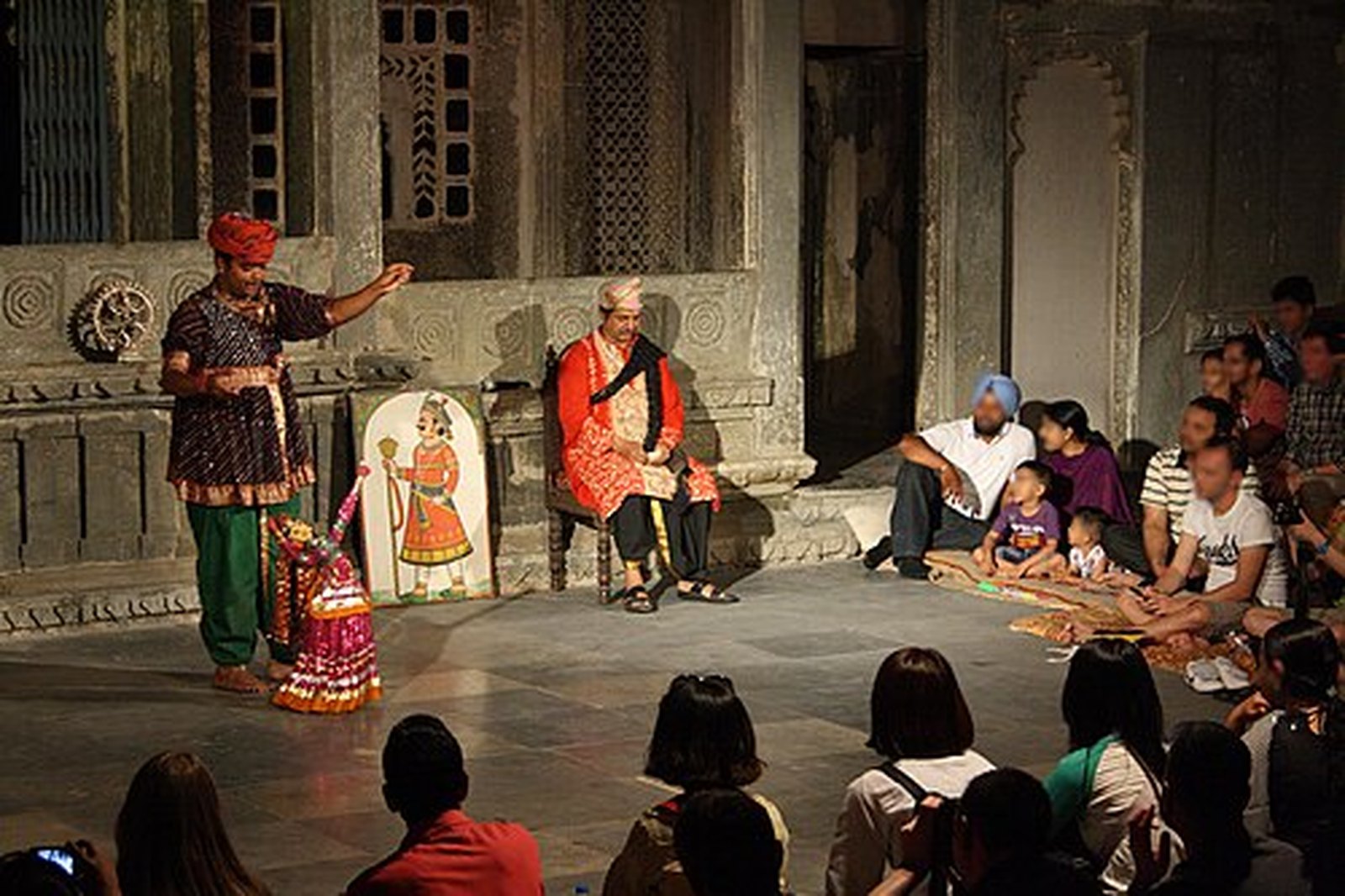
Before the advent of modern media, the dissemination of history, mythology, and social commentary fell to the traveling Bhat community, the master puppeteers of Marwar. The Kathputli (derived from kath meaning wood, and putli meaning doll) is a string puppet carved from a single piece of mango wood and dressed in bright, traditional textiles.
Unlike highly articulated western marionettes, the traditional Rajasthani Kathputli is manipulated with only a single string looping from the head to the waist, requiring immense skill from the puppeteer to convey emotion and action. The performances historically functioned as a mobile theater, traveling from village to village to recount the legendary exploits of local heroes like Amar Singh Rathore, moral fables, and satirical commentaries on local governance.
The auditory signature of a Kathputli show is the shrill, bird-like voice of the puppeteer, produced by a boli, a bamboo reed held in the mouth. This sharp, otherworldly dialogue is translated in real-time by a companion playing the dholak (hand drum) at the front of the stage. The puppets clash in miniature battles, dance, and even perform miniature Bhavai routines, preserving the oral history of the region in a highly accessible, engaging format.
The Nocturnal Stage: Bagore Ki Haveli
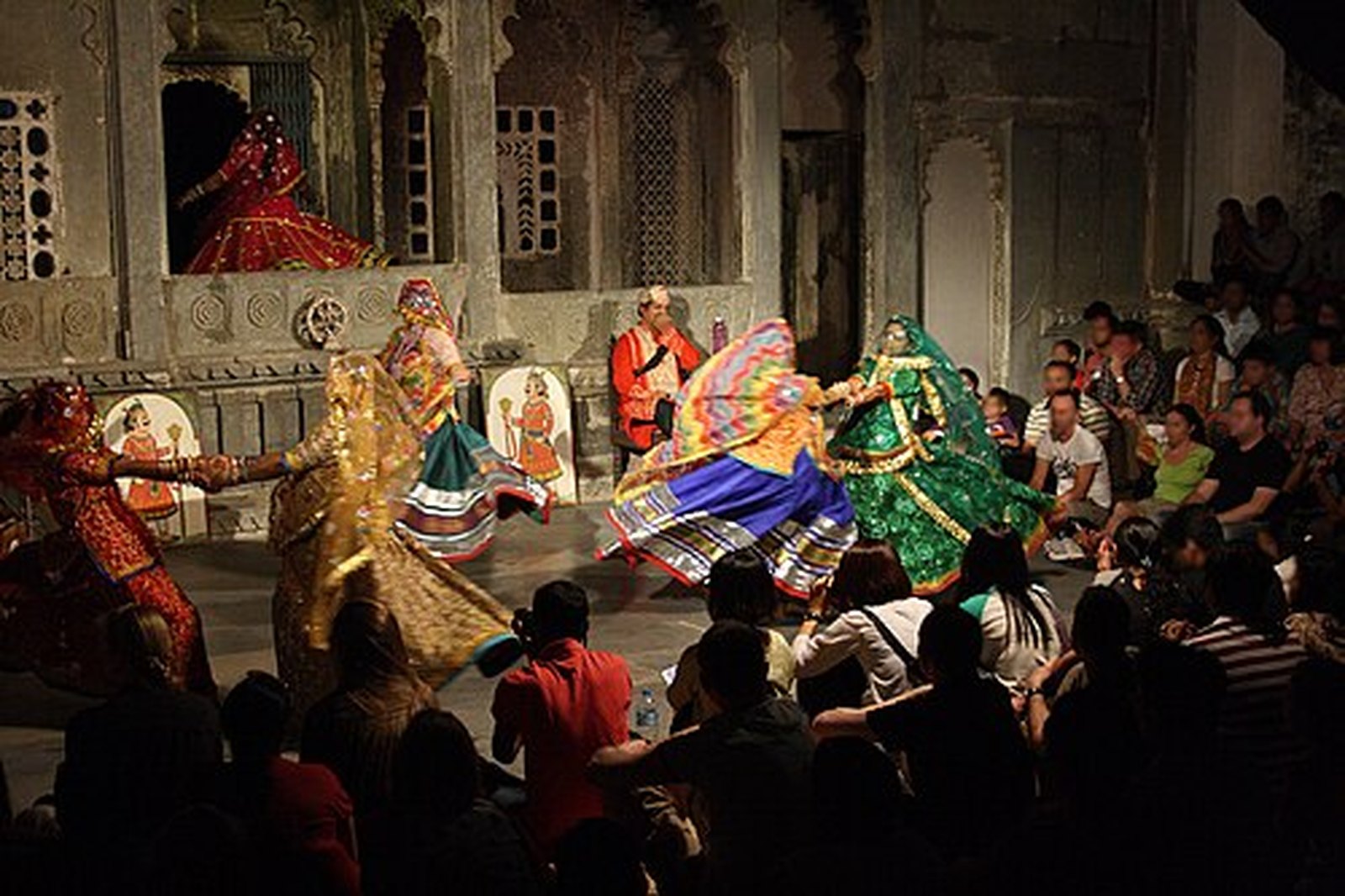
To experience this living heritage in Udaipur without the clinical detachment of a modern auditorium, one must seek out the historic courtyards of the Old City. Bagore Ki Haveli, the 18th-century aristocratic townhouse on the edge of Lake Pichola, serves as the definitive venue for these traditions.
The transition of the performance space is deeply atmospheric. The grand haveli goes completely silent after dark. The daytime chatter of the narrow alleys vanishes, the carved archways cast long shadows, and warm vintage lamps illuminate the painted frescoes. The audience sits on floor cushions arranged around the central chauk (courtyard), looking up at the overhanging jharokha windows.
As the performances begin, the architecture itself becomes an instrument, trapping and amplifying the heavy beat of the drums and the sharp chime of ankle bells. The night breeze sets in, and far off, the faint sound of a traditional flute drifts across the dark. There are no modern crowds, no noise, just heritage and art. To sit in this centuries-old courtyard and watch the kinetic traditions of Mewar unfold is to witness a civilization actively refusing to let its history become purely ornamental. The stone of Udaipur provides the foundation, but the rhythm of its people provides the pulse.
