
Forget the ranked list. In Kolkata you eat by the room: the cabin, the sweet shop, the stall, the club and the home kitchen. Learn the rooms and you can eat well anywhere in the city.
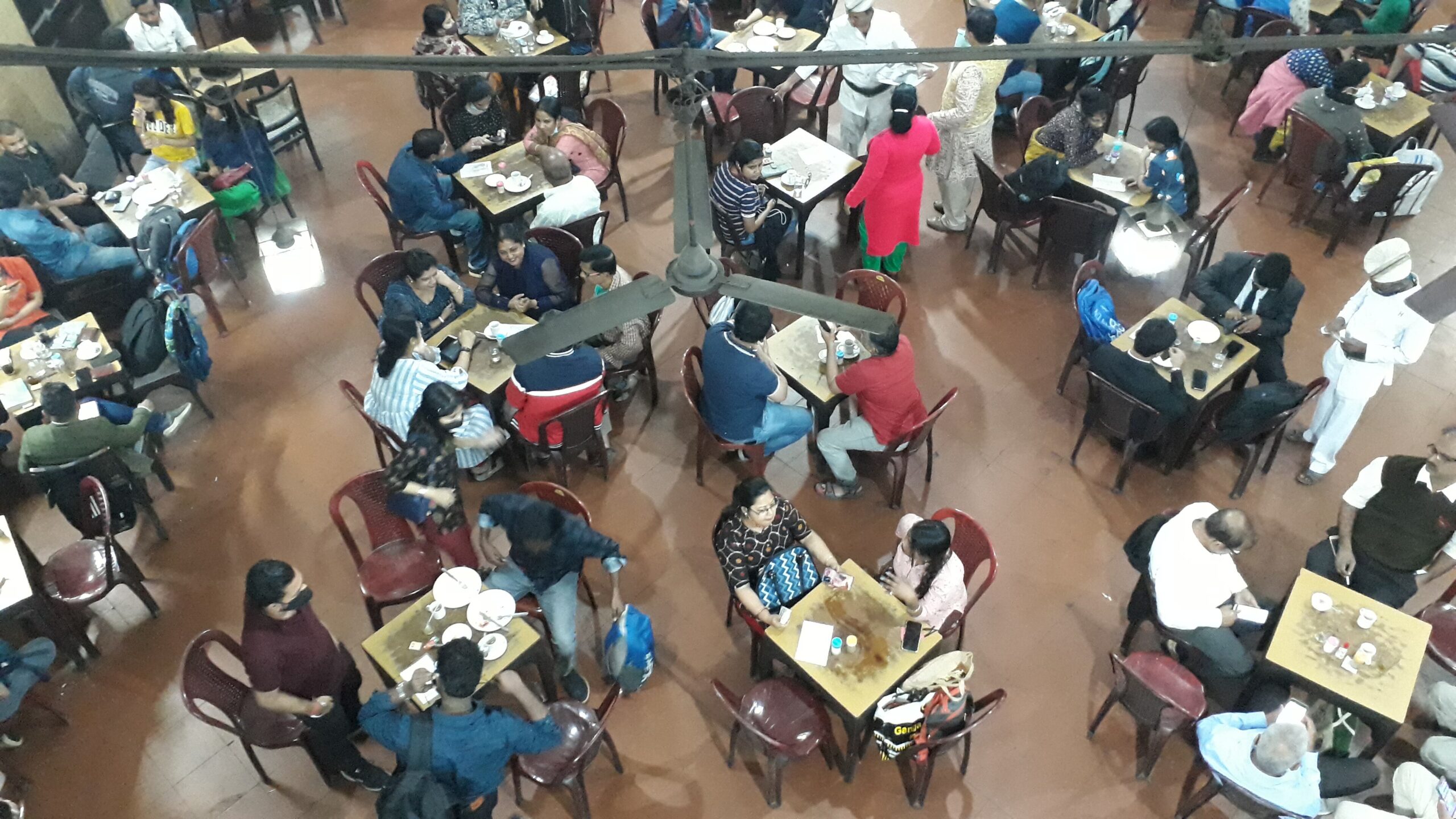
Every city gets a top-ten list, and Kolkata’s lists are mostly accurate. They are also missing the point. The pleasure of eating here is not in tracking down a famous name; it is in understanding the different kinds of places where Kolkata eats, each with its own hours, its own etiquette and its own menu that barely changes from one decade to the next. Once you know what a “cabin” is, or when to arrive at a sweet shop, or what a pice hotel serves at lunch, you can walk into any neighbourhood and find a good meal without a guidebook.
So this is not a list of restaurants. It is a field guide to rooms.
The cabin
Kolkata’s cabins are small, often old-fashioned eating houses that grew up in the early and mid twentieth century around colleges, offices and markets. The name is a clue: many had curtained booths, partly for privacy in a more conservative age. They serve what Bengalis call “Moglai” and “continental” snacks, a cuisine of the city’s own invention: fish fry coated in breadcrumbs, kabiraji cutlet in its lacy egg net, mutton chop (which is actually a potato croquette with mince inside), Moglai parota stuffed with egg, and strong sweet tea.
Look for them in north Kolkata, around College Street and Shyambazar, and in the older parts of central Kolkata. They are at their best in the late afternoon and early evening, when students and office workers stop in. Sit where you are put, order one thing at a time, and do not expect speed.
The coffee house
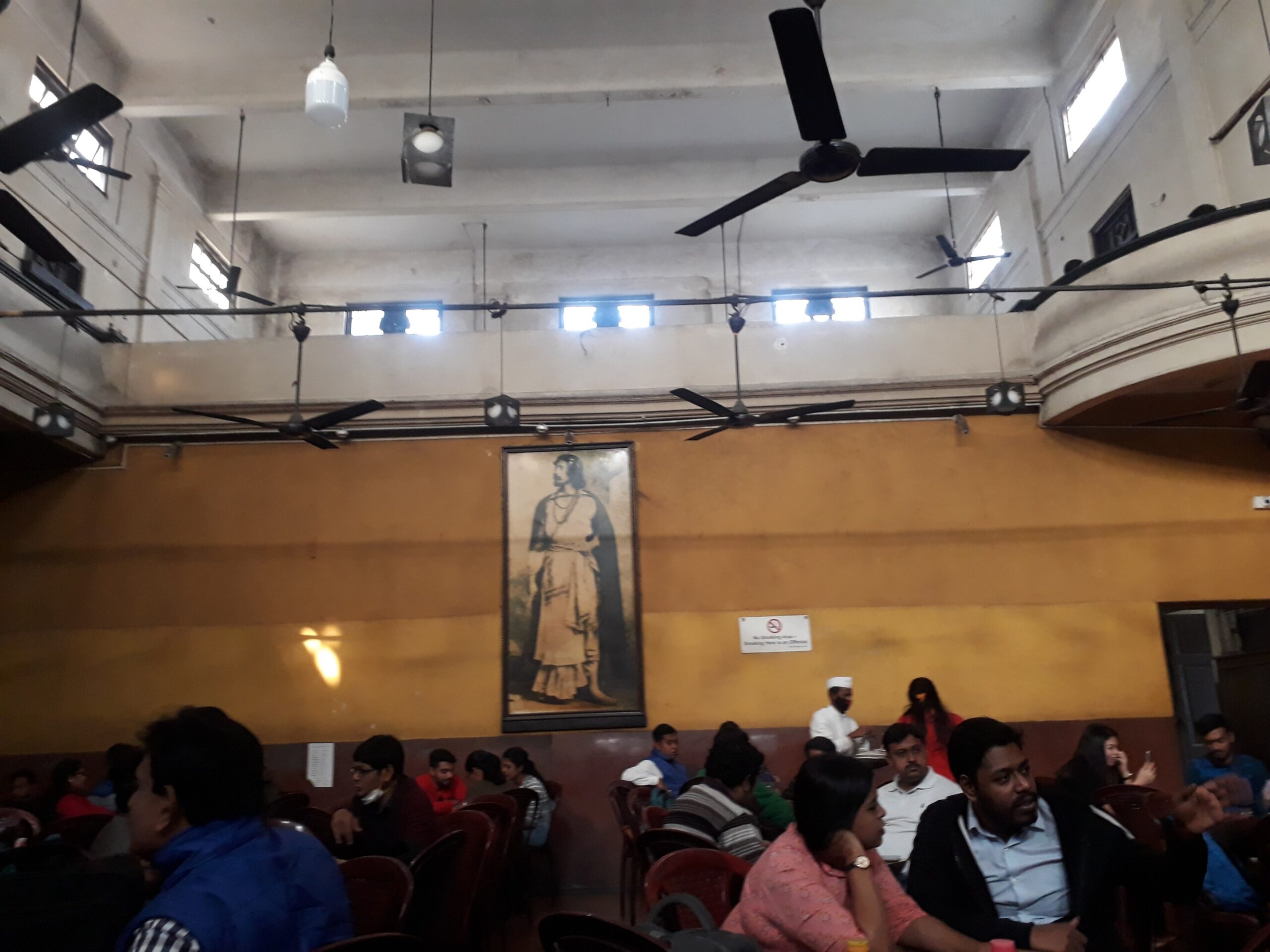
A cousin of the cabin, the coffee house is less about food than about time. The Indian Coffee House on College Street, up a flight of stairs into a high, fan-cooled hall, has hosted students, poets, filmmakers and political firebrands for generations. The menu is short: coffee, cold coffee, cutlets, sandwiches, pakoras. You come to sit for two hours over one cup and argue. In May, it is one of the best places in the city to wait out the afternoon. Our north Kolkata walk ends here.
The sweet shop
Bengal’s sweet shops, mishtir dokan, are a religion. Behind glass counters sit trays of rosogolla, sandesh, mishti doi in clay pots, chomchom, langcha and seasonal specials. Most are made from chhena, fresh cottage cheese, and many are best eaten the same day.
Go in the morning or late afternoon when trays are freshly filled. Order by the piece; staff will hand you a sweet on a small leaf or plate to eat standing at the counter. In May, look for sandesh flavoured with mango, a summer favourite. Every neighbourhood has its own beloved shop, and families argue over which is best. Ask a local which one they go to.
The stall
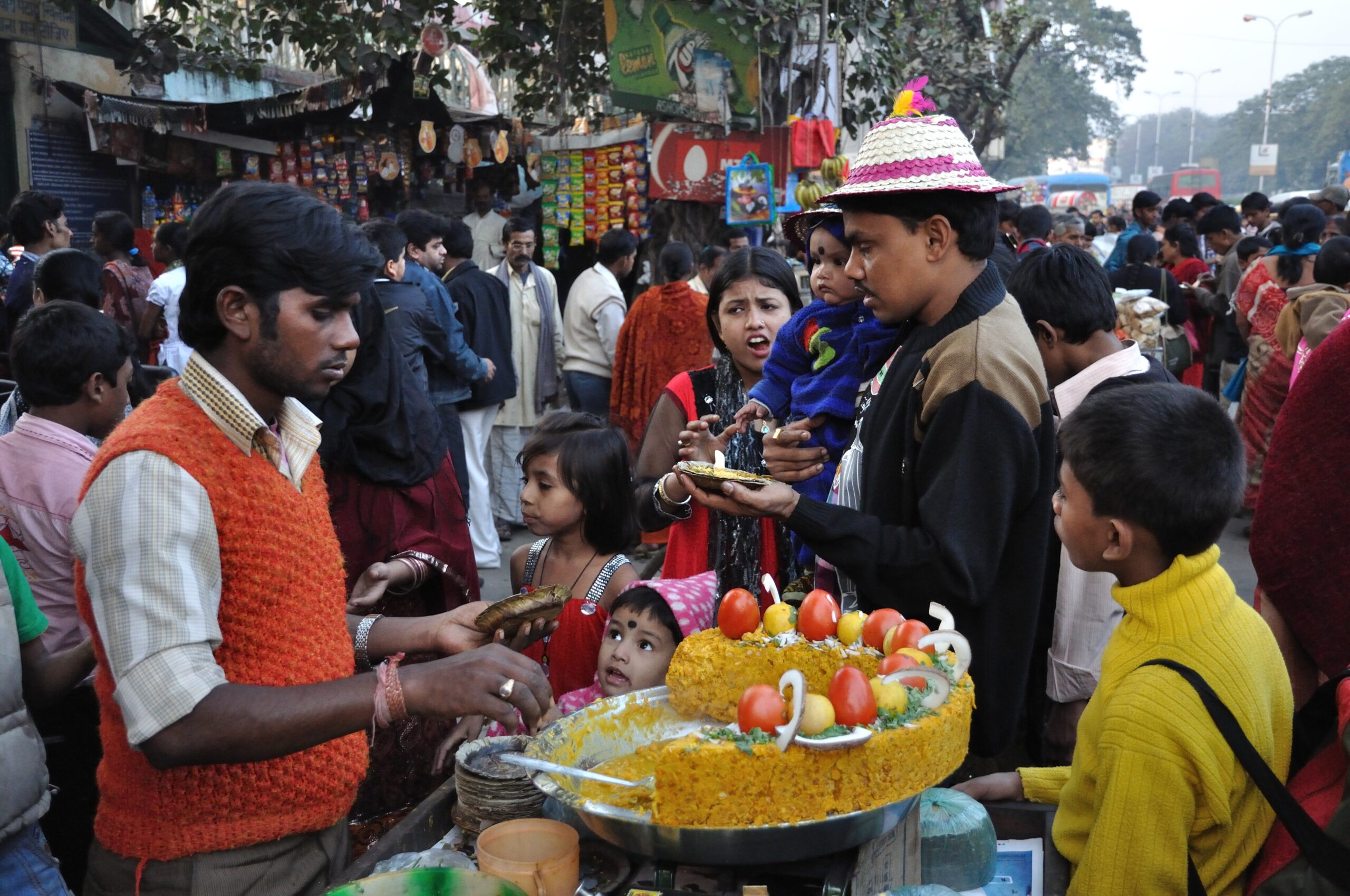
Kolkata’s streets feed millions every day, and the stalls are where the city’s appetite is most democratic. Office districts like Dalhousie and the lanes around Esplanade have rows of lunchtime stalls selling rice, dal, fish curry and ghugni. In the evening, the city turns to snacks: phuchka (the Bengali take on pani puri, with a tangier tamarind water and a mashed-potato filling), jhalmuri tossed in mustard oil, telebhaja fritters, and the famous Kolkata roll, a paratha wrapped around egg, chicken or mutton kebab, with onion and lime.
Pick stalls with a steady crowd and a fast turnover. Watch how the food is handled. In the heat of May, choose things cooked hot in front of you.
The pice hotel
A dying breed worth seeking out, the pice hotel is a simple rice-and-curry lunch room, named for the smallest coin of old. You sit at long tables, a banana leaf or steel plate is set before you, and a server comes round with rice, dal, a fry, a vegetable, fish and chutney, each charged separately. It is the closest a visitor gets to a Bengali home lunch. A handful still operate in central and north Kolkata; ask locally. They serve lunch, not dinner.
The Chinese breakfast and the Anglo-Indian kitchen
Kolkata has India’s oldest Chinese community, and its influence runs deep. In the early mornings at Tiretta Bazaar, the old Chinatown near Bowbazar, Chinese families sell dumplings, buns and soups on the pavement for an hour or two before the city wakes. We spent a morning there in Tiretta Bazaar at breakfast. The later Chinese community at Tangra in the east of the city is known for “Indian Chinese” restaurants, the source of chilli chicken and Hakka noodles as the rest of India knows them.
The city’s Anglo-Indian and Armenian heritage survives in Christmas cakes, bakeries around the New Market and Park Street areas, and a few old-school restaurants serving dishes such as devilled eggs and roast chicken.
The home kitchen
The best Bengali food is cooked at home, and the restaurant world has never quite caught up. A meal follows a sequence: something bitter (shukto), then dal with fries, then vegetables, then fish (macher jhol, shorshe ilish, chingri malai curry), then meat if it is a special day, then chutney, then something sweet. Some Bengali restaurants in the city follow this order; a home-cooked meal, through a homestay or a food walk, is better still.
How to reach and get around
Kolkata’s eating districts are spread out. College Street and north Kolkata are on the Blue Line Metro (Mahatma Gandhi Road, Central, Shobhabazar); Esplanade and Park Street are central; Tangra is a taxi ride east.
Best time
Winter, from November to February, is the classic food season, with Christmas bakes, nolen gur (date-palm jaggery) sweets and fresh vegetables. May brings mangoes, aam pora shorbot (a smoky raw-mango cooler) and lighter summer cooking. See Kolkata in May.
Where to stay
Central Kolkata, around Park Street, Esplanade and Chowringhee, puts you within reach of the widest range of food rooms, with accommodation from grand hotels to budget guesthouses.
Tips
- Eat where the crowd is local and the turnover fast.
- Drink bottled or filtered water; skip ice from unknown sources in May.
- Sweets are best fresh; buy what you will eat that day.
- Carry small change for stalls.
- Many old cabins and pice hotels close one day a week. Check locally.

Sydney-Australia

Sao Joao Festival
Issue 86: Spiti, Slowly — Inside This Issue
The Town You Sleep In
Why the base town shapes a monsoon waterfall trip more than any single fall, what to look for, and towns in Karnataka, Kerala and Goa worth considering.
One village ghat upriver
Train versus road that week
Markets before the 20th, not on it
Journeys Worth Discovering
Explore inspiring destinations, memorable journeys and travel stories from across India and beyond.
Explore destinations




