
Escaping Overcrowded Observation Decks to Discover Sacred Peaks, Shola Forests, and Hidden Valleys
On any given weekend, the mountain roads leading to Mullayanagiri—the highest peak in Karnataka—are lined with bumper-to-bumper tourist vehicles. Visitors travel from across South India to stand on concrete observation decks, snap quick photos above the cloud line, and purchase packaged snacks before battling heavy traffic on the drive back down. Yet, just a few kilometers beyond these crowded tourist hotspots lies a dramatically different Chikmagalur: a silent, majestic wilderness of sacred mountain shrines, ancient temperate grasslands known as sholas, hidden waterfalls, and centuries-old coffee estates nestled in quiet, misty valleys.
To truly experience Chikmagalur is to venture beyond the popular viewpoints. The district’s true character is found not on crowded platform railings, but along remote mountain trails where wind whistles through high-altitude grasslands, inside quiet Sufi shrines where pilgrims of all faiths gather, and across deep forest valleys where streams run crystal clear under the Western Ghats canopy.
The Sacred Mountain: Baba Budan Giri and Its Interfaith Heritage
Long before Chikmagalur became a popular weekend destination for hill station tourists, it was a sacred pilgrimage site. The Baba Budan Giri mountain range, named after the seventeenth-century Sufi saint who brought the first coffee seeds to India from Yemen, holds a unique place in the spiritual and cultural landscape of South India.
At the heart of the range sits the cave shrine of Dada Hayat Mir Qalandar (also revered as Baba Budan). For centuries, this sacred site has served as a symbol of syncretic harmony, attracting both Muslim and Hindu pilgrims who come to offer prayers in the cool subterranean chamber.
Exploring the historical and spiritual significance of the Baba Budan Giri shrine reveals several distinct facets:
- The Legend of the Seven Seeds: According to centuries-old tradition, Baba Budan planted seven raw green coffee seeds around his mountain hermitage, initiating India’s rich coffee cultivation heritage.
- Syncretic Worship: The shrine represents a shared spiritual space where religious boundaries blur, embodying a tradition of mutual respect and harmony that has endured for hundreds of years.
- Ancient Cave Architecture: The shrine is housed inside a natural limestone cave structure, providing a cool, solemn sanctuary far removed from modern commercial developments.
- Pilgrimage Walking Trails: Traditional footpaths used by pilgrims for generations still wind through the surrounding forests, offering peaceful walking routes through pristine mountain country.
The Shola-Grassland Ecosystem: A Rare Botanical Treasure
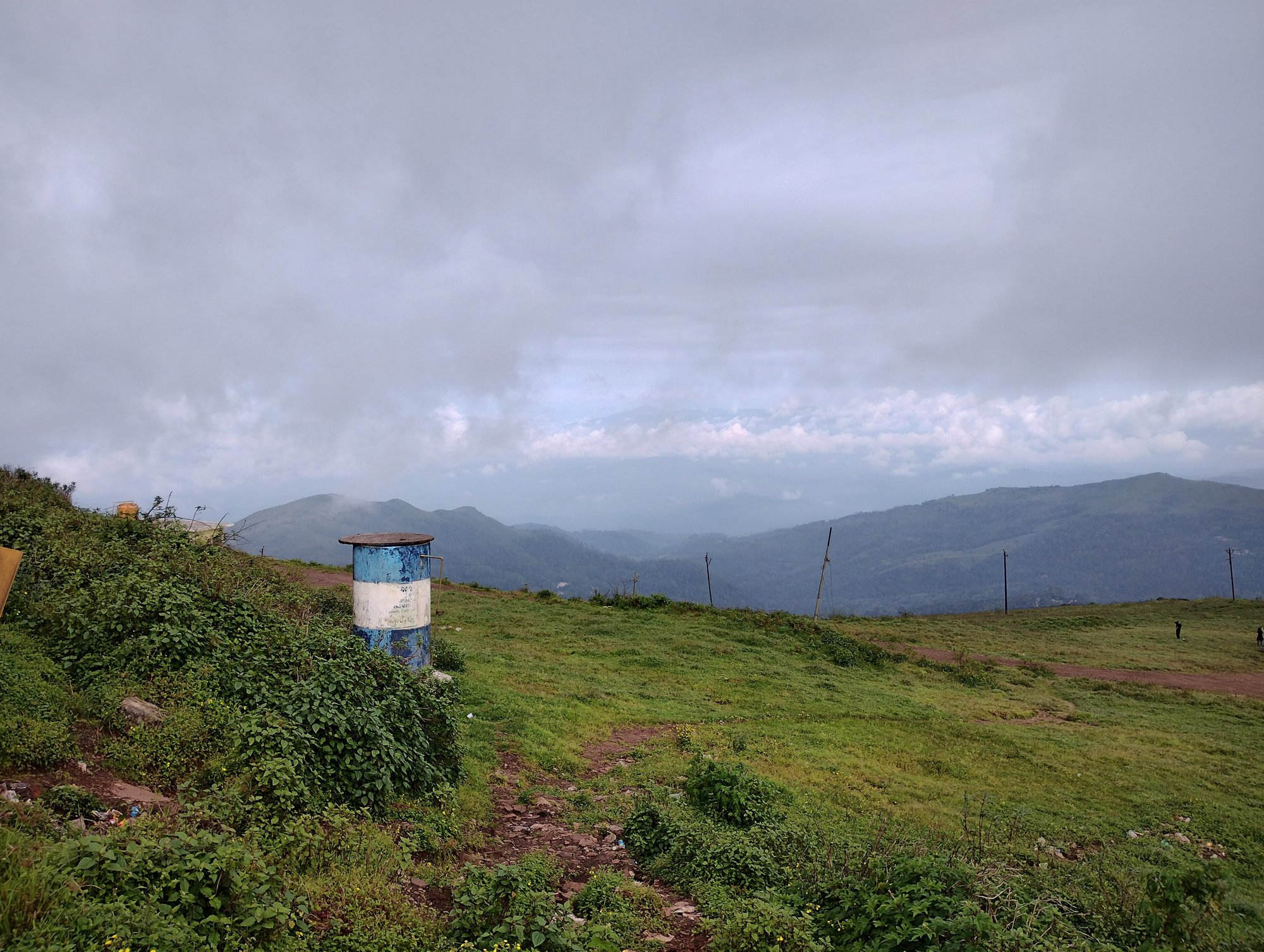
Rising above the upper line of coffee estates, the highest elevations of the Baba Budan Giri range give way to one of the rarest and most ecologically fragile biomes in Asia: the Shola-Grassland complex.
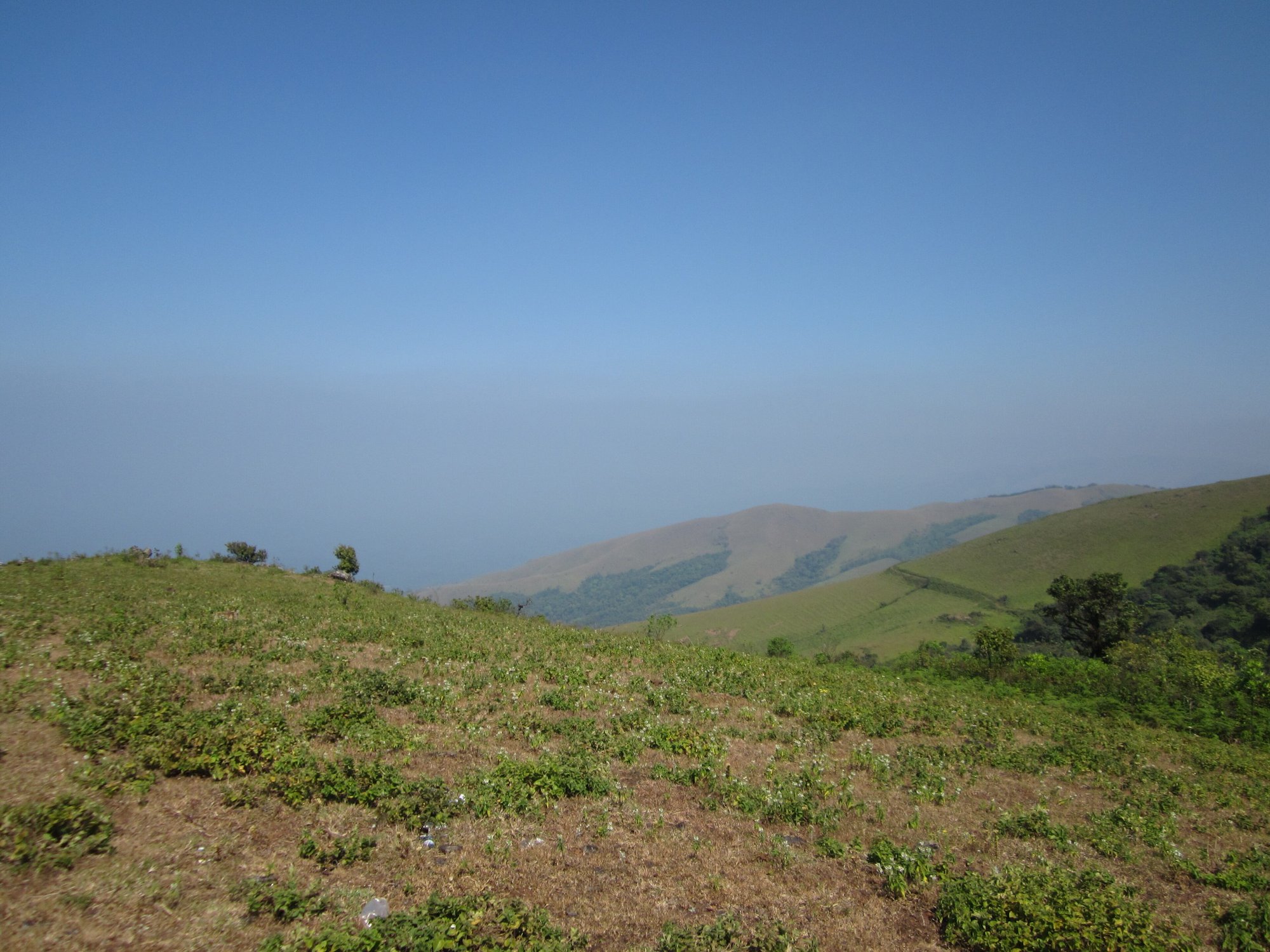
Found exclusively at high altitudes in the Western Ghats of South India, this unique landscape consists of undulating rolling grasslands interspersed with dense patches of stunted evergreen forest sheltered in mountain valleys and hollows. The dwarf trees within these forest patches—known locally as sholas—are draped in thick mosses, lichens, and wild orchids, creating a miniature fairytale forest environment adapted to survive fierce high-altitude winds and monsoon storms.
Key ecological functions of the Shola-Grassland complex include:
- Water Sponge Mechanism: The deep mossy soil and thick root systems of shola forests act as natural sponges, absorbing monsoon rains and releasing water slowly throughout the dry season to feed downstream river basins.
- Endemic Biodiversity: Shola patches shelter rare flora and fauna found nowhere else on Earth, including the endangered Nilgiri Tahr, the elusive Nilgiri Marten, and delicate flowering plants.
- Microclimate Moderation: The high-altitude grasslands regulate local mountain temperatures, preventing extreme thermal fluctuations and protecting lower-lying coffee valleys.
- The Neelakurinji Phenomenon: Every twelve years, sections of these high-altitude grasslands erupt in a magnificent blanket of purplish-blue Neelakurinji flowers (Strobilanthes kunthiana), transforming entire mountain slopes.
Exploring the Hidden Valleys: Kemmangundi and Bhadra Wilderness
For travelers seeking quiet wilderness exploration away from overcrowded observation decks, Chikmagalur offers vast, serene valleys that remain remarkably untouched by mass tourism.
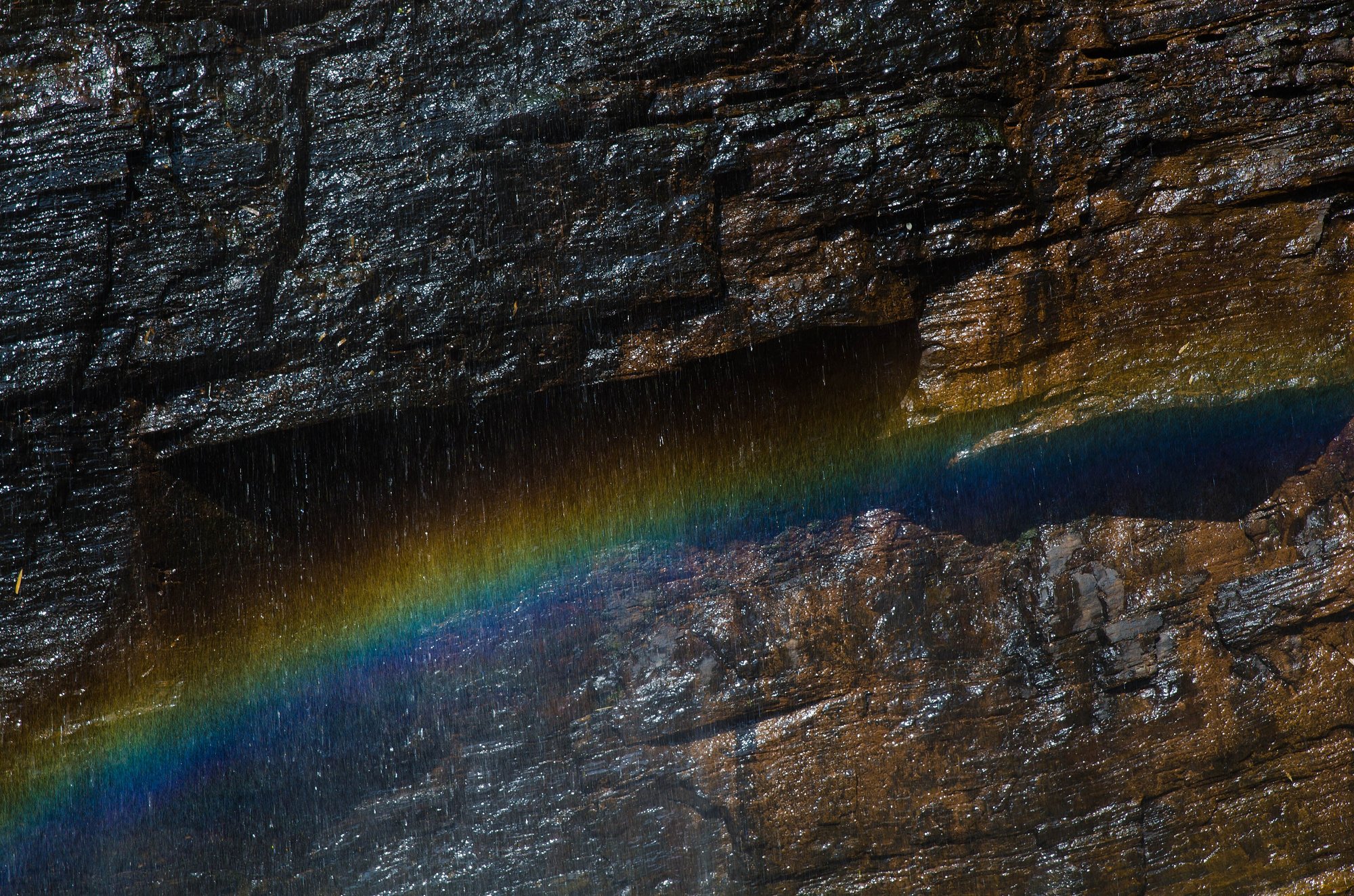
To the north of the main mountain crest lies Kemmangundi, a historic hill station established as a summer retreat for the Royal Family of Mysore. Surrounded by dense forests and mineral-rich hills, Kemmangundi features quiet walking trails that wind past hidden waterfalls like Hebbe Falls and Kalhatti Falls. Here, water cascades over dark basalt rocks surrounded by dense forest foliage, offering a tranquil natural setting far superior to paved tourist platforms.
Further west, the mountains drop dramatically into the dense tropical rain forests of the Bhadra Tiger Reserve. This vast protected wilderness encompasses deep river valleys, bamboo brakes, and towering teak forests.
Highlights of exploring Chikmagalur’s quieter forest valleys include:
- Trekking to Hebbe Falls: A scenic forest trek leading down into a secluded canyon where mountain streams cascade down a two-tiered rock face into a natural pool.
- Wilderness Safaris in Bhadra: Exploring deep forest reserves where herds of wild Asian elephants, gaur (Indian bison), sambar deer, and elusive leopards roam undisturbed under dense canopies.
- The Iron-Rich Slopes of Kemmangundi: Walking along rust-colored mountain paths shaped by rich iron-ore deposits, surrounded by manicured royal gardens and misty forest valley views.
- Stream-Side Forest Walks: Following clear mountain rivulets through quiet estate valleys where wild orchids bloom along mossy tree trunks.
The Art of High-Altitude Coffee Tasting
Moving beyond viewpoints also means discovering the distinct flavor profiles of high-altitude Chikmagalur coffee. Because the estates surrounding Baba Budan Giri sit at elevations exceeding 1,200 to 1,500 meters above sea level, the coffee cherries mature much slower than those grown in warmer lowland regions.
This slow ripening process allows fruit sugars to concentrate deeply within the bean, resulting in complex Arabica coffees characterized by bright acidity, delicate floral aromas, and notes of dark chocolate and stone fruit. Many small estate owners in these higher valleys have established small micro-roasteries where visitors can sample single-origin coffees brewed using pour-over and French press techniques, connecting the beverage directly to the specific soil, climate, and altitude of the mountain on which it grew.
Practical Wisdom for the Offbeat Explorer
To truly appreciate Chikmagalur beyond the popular tourist viewpoints, travelers should adopt a thoughtful, well-prepared approach to exploring the region.
Visiting high-altitude mountain trails requires respecting local ecological regulations and weather conditions. September brings unpredictable mountain weather, where bright sunshine can transform into thick mountain fog within minutes. Travelers should carry sturdy walking shoes, lightweight rain gear, and adequate water while ensuring they remain on established trails to avoid disturbing fragile grassland soil.
Essential recommendations for an offbeat Chikmagalur journey:
1. Avoid Peak Weekend Hours: Plan visits to popular mountain roads early in the morning or on weekdays to bypass heavy vehicular traffic and enjoy peaceful mountain views.
2. Hire Local Forest Guides: Engage knowledgeable local guides for mountain treks to learn about regional ecology, indigenous bird species, and safe trail routes.
3. Respect Sacred Sites: Maintain a quiet, respectful demeanor when visiting religious shrines like Baba Budan Giri, dressing modestly and adhering to local cultural customs.
4. Leave No Trace: Ensure all personal waste and plastic containers are packed out, keeping high-altitude shola grasslands pristine for wildlife and future travelers.
Choosing Wilderness Over Crowds
The decision to step away from crowded viewpoints transforms a trip to Chikmagalur from a routine sightseeing drive into a memorable journey of discovery. While most tourists spend hours waiting in traffic along Mullayanagiri road, offbeat explorers can spend that same time walking through silent shola glades, listening to the rushing waters of hidden mountain streams, or learning about the region’s botanical history from local guides.
Chikmagalur’s true charm lies in its quiet spaces—the places where human commercial noise fades away, replaced by the rustle of wind through high-altitude grasslands and the distant call of forest birds. These off-the-beaten-path destinations provide a authentic perspective on what makes the Western Ghats one of the world’s most cherished natural ecosystems.
The True Mountain Identity
Chikmagalur’s true beauty is not found in a rushed photo taken from an overcrowded observation railing. It is discovered in the quiet moments: standing on a windy mountain ridge surrounded by rolling shola grasslands, listening to the call of a Malabar whistling thrush echoing across a misty canyon, walking through a centuries-old cave shrine, and sipping a cup of single-origin coffee in a secluded estate valley.
By stepping off the beaten tourist path and venturing into the deeper, quieter pockets of the Baba Budan Giri range, travelers unlock an authentic mountain wilderness—a landscape where history, ecology, and spiritual tradition remain deeply intertwined under the high skies of the Western Ghats.

The Mighty Rohtasgarh Fort in Bihar

Haridwar Travel Guide

Kanha National Park
The Town You Sleep In
Why the base town shapes a monsoon waterfall trip more than any single fall, what to look for, and towns in Karnataka, Kerala and Goa worth considering.
One village ghat upriver
Train versus road that week
Markets before the 20th, not on it
Journeys Worth Discovering
Explore inspiring destinations, memorable journeys and travel stories from across India and beyond.
Explore destinations




