
Sacred Sites Of Delhi

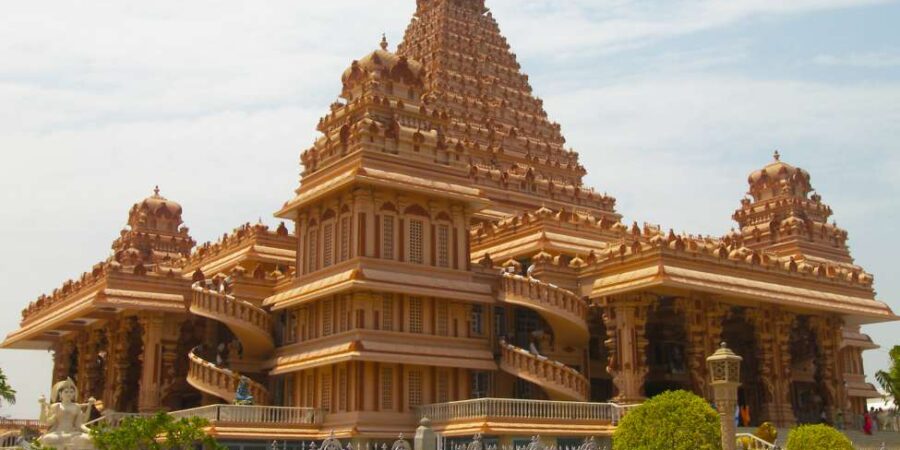
Akshardham Temple The massive temple complex of the Swaminarayan sect is set amidst 100 acres of well laid out lawns and lotus-shaped water bodies, on the banks of river Yamuna. It was inaugurated on November 7, 2005, by the President and Prime Minister of India and has become a must-visit site of Delhi. Akshardham is
Red Fort (Lal Qila)

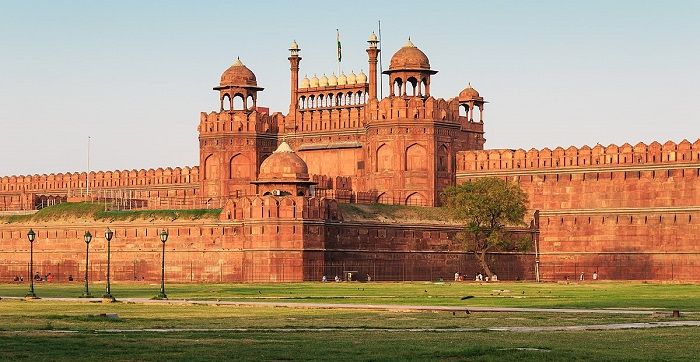
It was built in the 17th century by Shah Jahan when the Mughal capital was shifted from Agra to Delhi. Shaped like an irregular octagon, the fort is about 2 kms. in circumference. The river Yamuna once flowed besides its battlements. Its handsome gates Lahore, of Delhi and Elephant, are masterpieces of builder’s art. Within

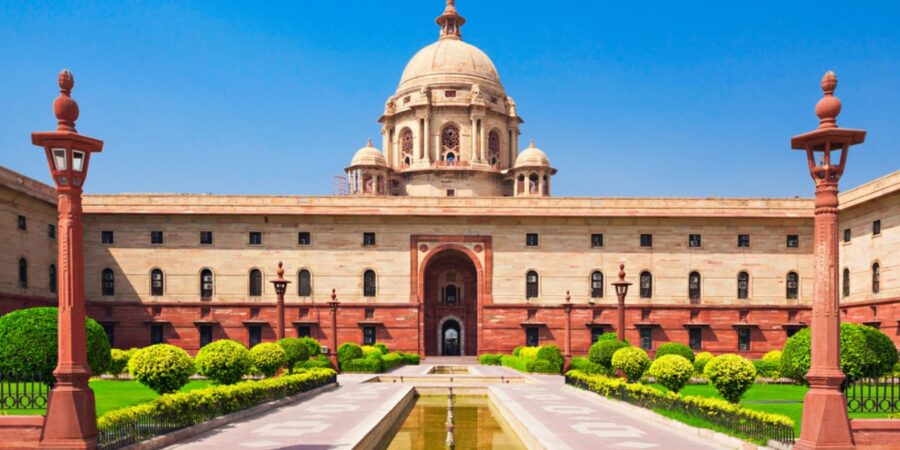
Rashtrapati Bhavan

The spectacular official residence of the President of India set on the eminence of the Raisina Hill, sprawls over an area of 330 acres. It was designed by Sir Edwin Lutyens and is one of the largest residential buildings in the world with 340 rooms, 37 salons, 74 lobbies, and loggias, one km. a long

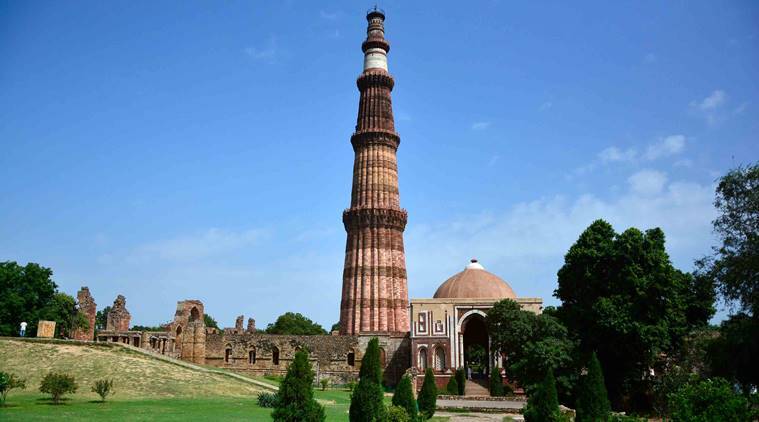
Qutub Minar

This most famous landmark of Delhi towering above the Lal Kot monuments is one of the World Heritage Sites of UNESCO. It is 72.5 meters tall and tapers from a base diameter of 14.4 meters to a peak diameter of 24 meters. The five-storeyed minar has three stories built of red sandstone and two of

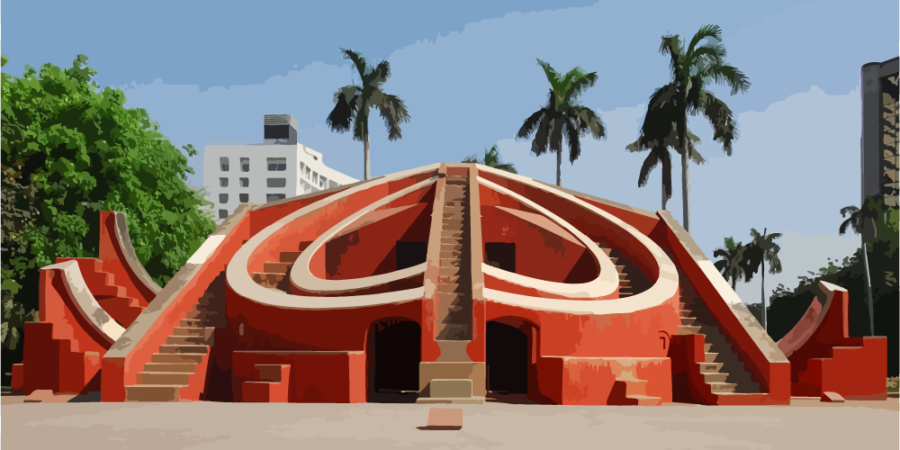
Jantar Mantar

This unique observatory was designed and built by Mirza Raja Jai Singh II of Jaipur in 1719. It is surrounded by stately palm trees and has a number of masonry instruments that were used to study the movement of constellations and stars in the sky. The Samrat Yantra, a huge sun-dial shaped like a right-angled

Purana Qila (Old Fort)

The grand old fort, one of the most spectacular monuments in Delhi, is believed to have been built by the Afghan ruler Sher Shah Suri (1538 – 1545). As one enters from the Zoo side, one sees at the far end a small octagonal red sandstone tower, the Sher Manzil. A little ahead is the

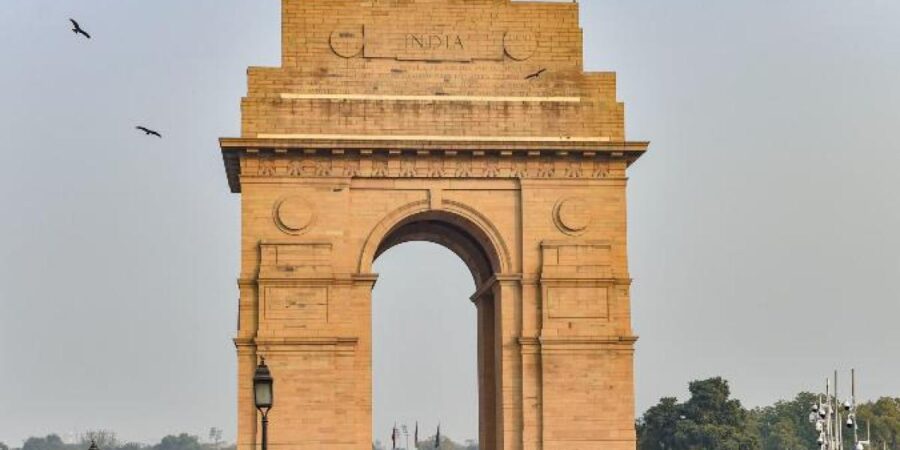
India Gate

India’s Arc d’ Triomphe’s’ stands majestically at the eastern end of Rajpath, the great avenue with wide lawns on either side of it, that leads to Rashtrapati Bhavan. Formerly known as the All India War Memorial, the 42-meter high arch was designed by Lutyens and built in 1931, in the memory of soldiers of the

Humayun’s Tomb

This World Heritage Monument built by Haji Begum, the widow of emperor Humayun and designed by Persian architect Mirak Mirza Ghiyas, served as a model for the world-renowned Taj Mahal. It was completed in 1565, eight years after the death of Humayun, and is the first great example of the Mughal tomb – in –

The Capital Of India, Delhi

The Capital Of India, Delhi

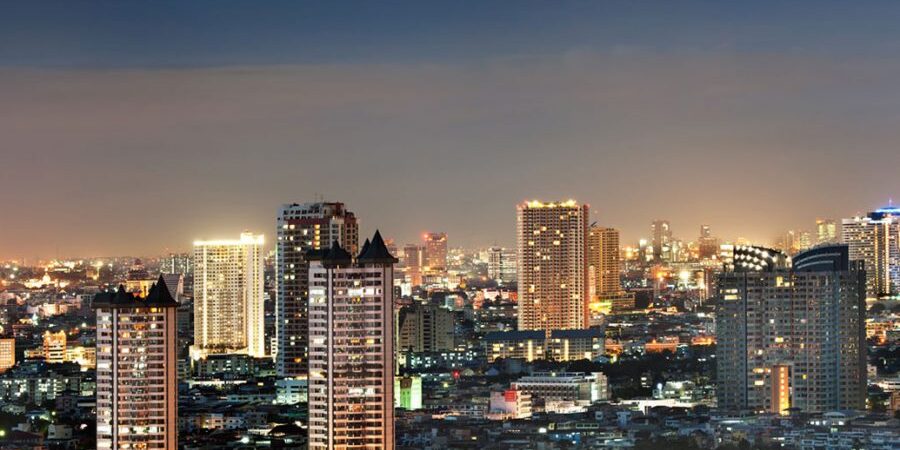
Delightful Delhi, the capital city of India, has traditionally been the seat of administrative power of India. It is a bustling metropolis that is known to be devastated and rebuilt many times in written history. Here several dynasties rose and fell, leaving monumental gifts to posterity. The Qila Rai Pithora, bequeathed by a Rajput King;

Gurgaon, Industrial Center of Haryana

According to mythological legends, the ashram of Dronacharya, the Guru of Pandavas and Kauravas of Mahabharta epic was located here. The place was gifted to Dronacharya by Yudhistar, the Pandav prince as Guru Dakshina’ and it came to be known as Gurugram’, which later on became ‘Gurgaon’. Today, Gurgaon is one of the major corporate