
When the sun drops, Kolkata turns towards its river. Here is how to join it.
The Hooghly is the reason Kolkata exists. In the late seventeenth century the English traders who settled at Sutanuti, Gobindapur and Kalikata chose these villages for their position on the river, a navigable arm of the Ganga close enough to the sea. For three centuries the river carried the city’s trade, its migrants and its dead. Today the city often seems to turn its back on it, and the water slides past hidden behind warehouses, railway lines and the Strand Road traffic.
But in the evening, especially in May, that changes. As the day’s heat breaks, people drift down to the ghats in their thousands: couples, families, office workers loosening their ties, boys playing cricket on the steps. The breeze off the water is the coolest air in the city. This is the Kolkata evening, and you should spend at least one of yours here.
Prinsep Ghat
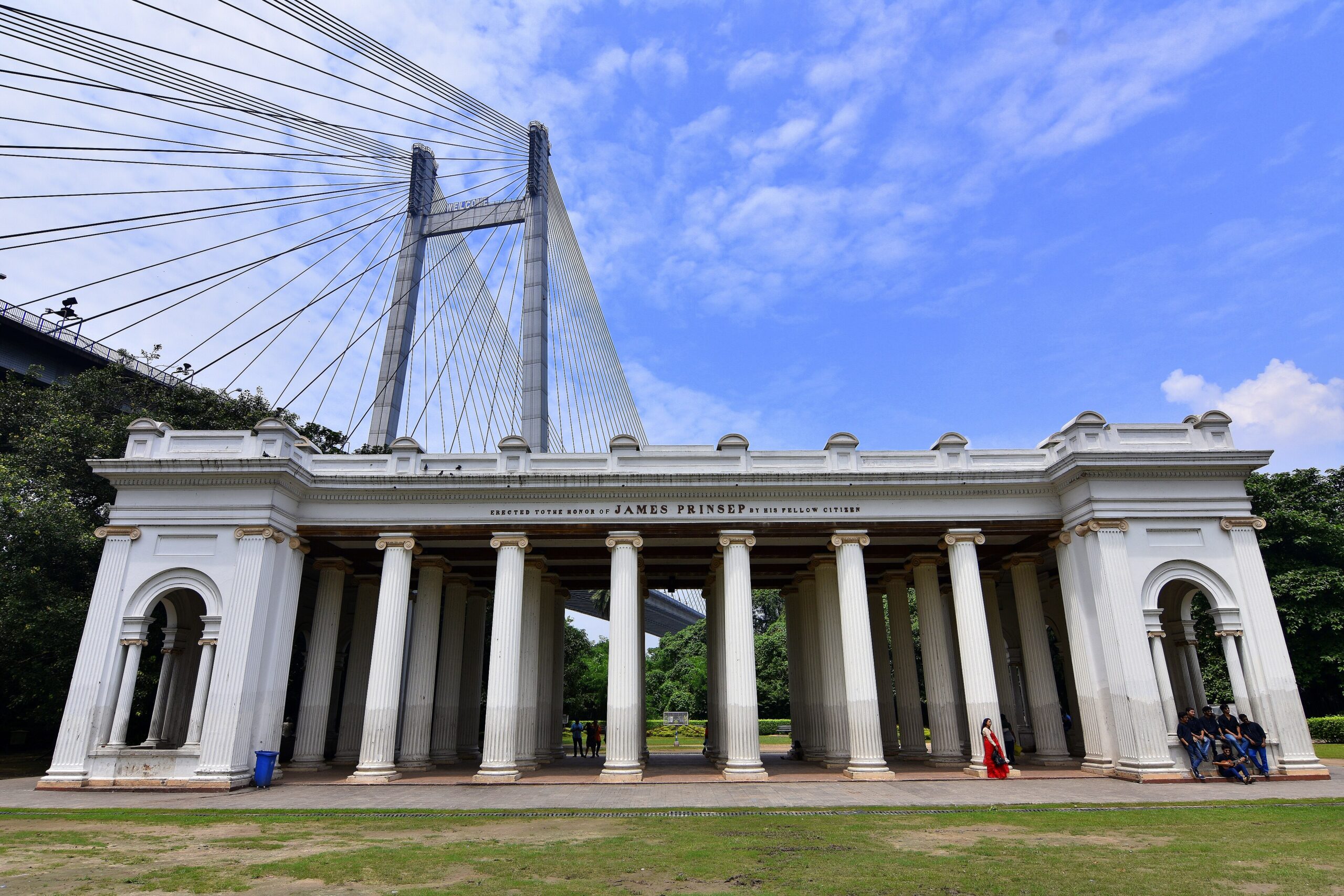
Begin at Prinsep Ghat, just south of Fort William. The white Palladian pavilion was built in the 1840s in memory of James Prinsep, the scholar who deciphered the Brahmi script of the Ashokan inscriptions. Its columns frame a view that has become one of Kolkata’s signatures: the Vidyasagar Setu, the long cable-stayed bridge that opened in 1992, sweeping across the river behind.
Come about an hour before sunset. The riverside promenade between Prinsep Ghat and the nearby ghats fills with walkers, snack sellers and photographers. Small country boats wait at the steps, and boatmen offer short trips on the water; agree the fare and duration before you step in, and use only boats that carry life jackets.
The ferry: the cheapest river cruise in India
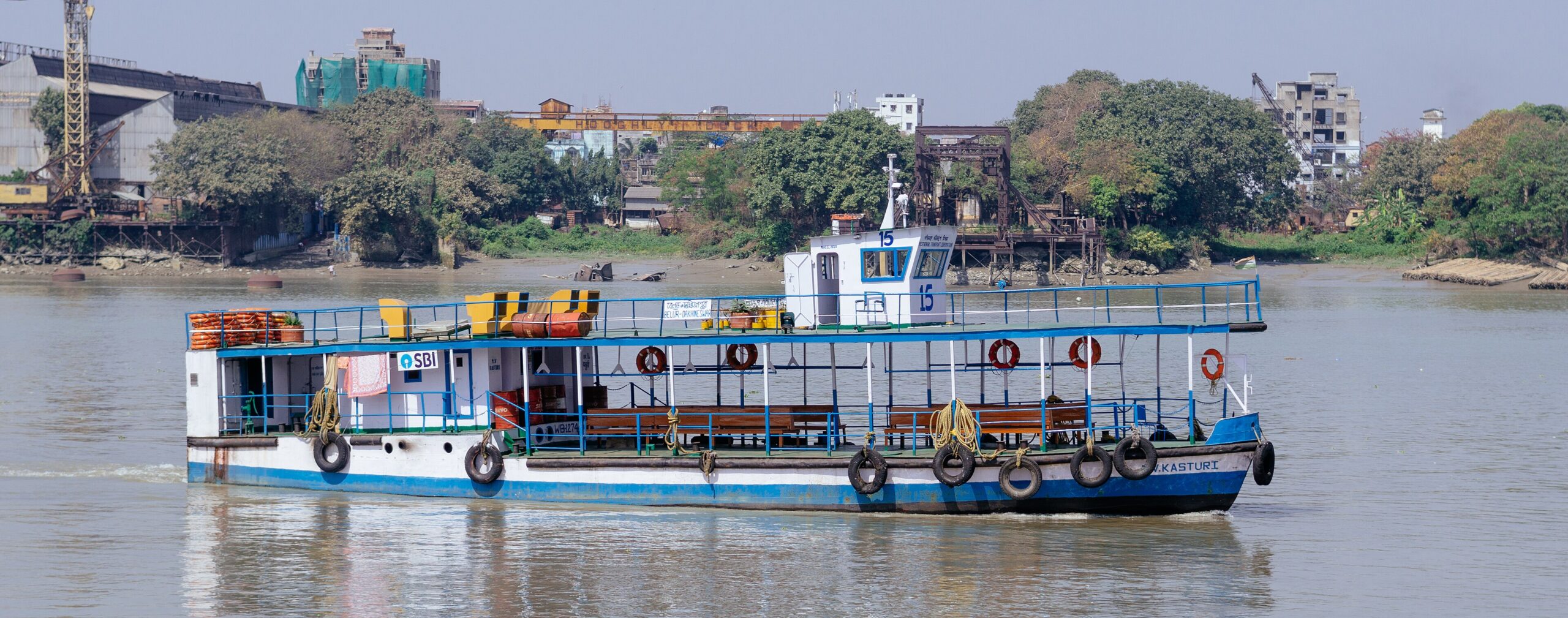
The best way to see the Hooghly is the way Kolkatans cross it every day: on a public ferry. Services run across and along the river between ghats on both banks, linking the city to Howrah and to points north and south. Babughat, Chandpal Ghat, Fairlie Place, Howrah station and Bagbazar are among the busier jetties, though routes and timetables change, so check locally on the day.
Take a short crossing from the city side to Howrah in the late afternoon. From the deck you get the classic view of Howrah Bridge, the great steel cantilever completed in 1943 that carries an astonishing amount of foot and road traffic every day, and the old warehouses and temples of both banks. The fare is a token amount and the experience is priceless.
Ghats and evening rituals
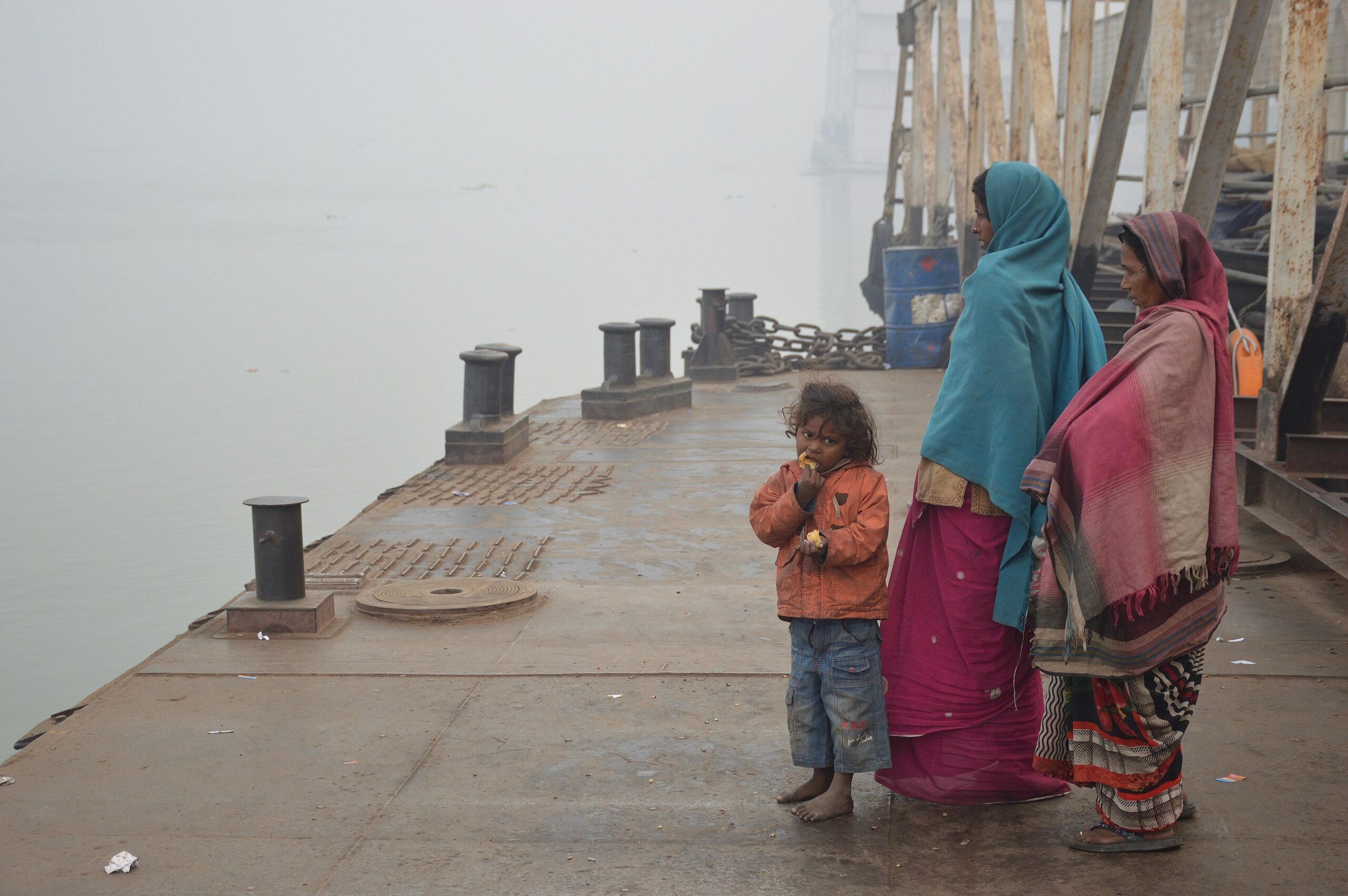
Further north along the city bank, older ghats line the water. At Babughat, built in the nineteenth century in memory of Babu Raj Chandra Das, pilgrims bathe and priests sit under umbrellas. Near Howrah Bridge, the Mullick Ghat flower market hums from before dawn; our piece on the ghats at dawn covers the morning walk in detail.
In the evening, some ghats hold small aarti ceremonies, lamps swung over the water as conch shells sound. They are less grand than the riverside aartis of Varanasi or Haridwar, which makes them more intimate. Watch quietly from the steps.
Upriver to Dakshineswar
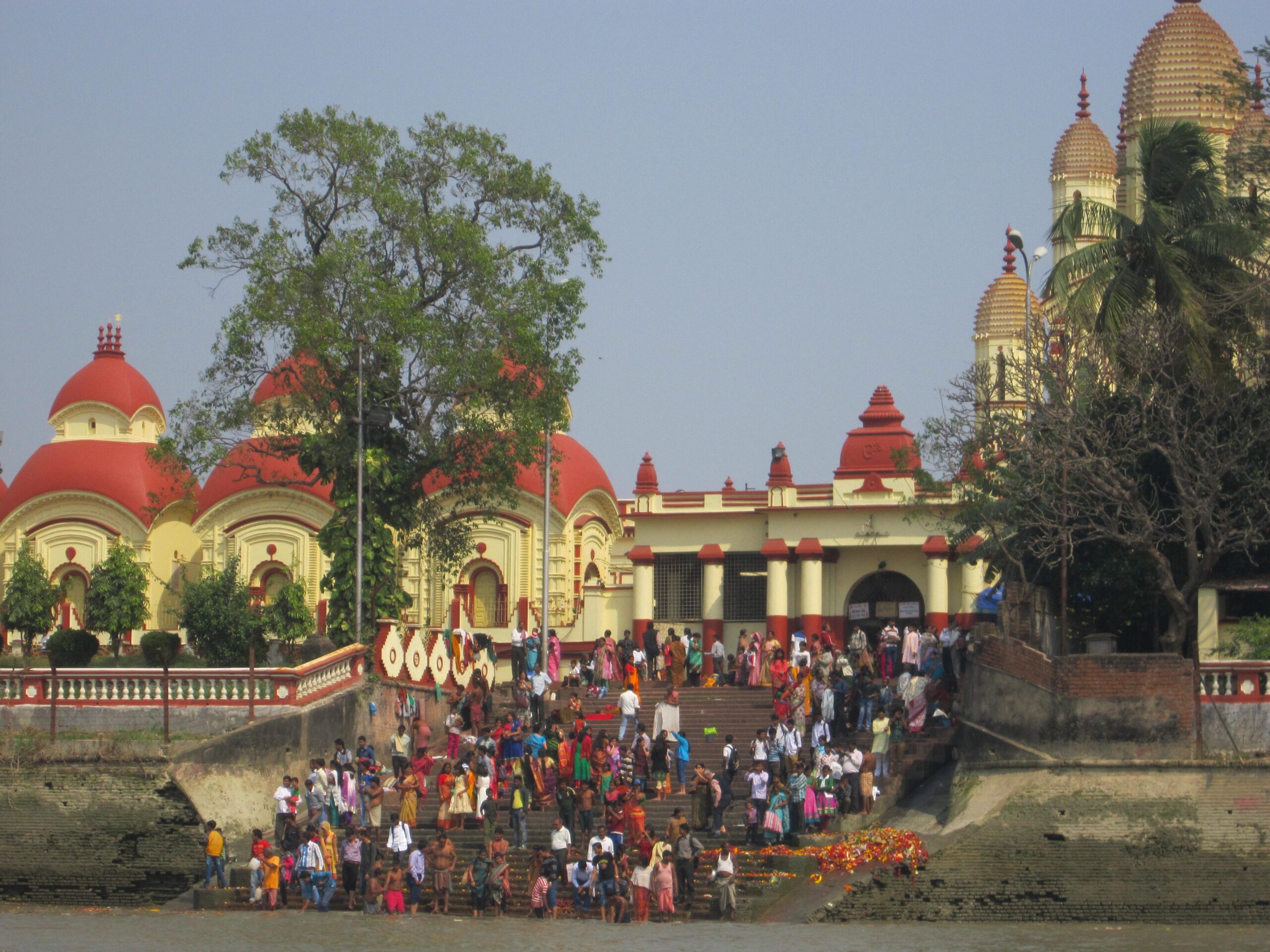
If you have a longer evening, go north to Dakshineswar, where the nine-spired Kali temple founded by Rani Rashmoni in 1855 stands on the east bank. Ramakrishna Paramahamsa served as a priest here. Across the river lies Belur Math, headquarters of the Ramakrishna Mission, founded by Swami Vivekananda. The two are linked by ferry, and the riverside temples at dusk are deeply atmospheric. Both have strict rules; photography is restricted inside the Dakshineswar temple compound, and footwear must be left at the gates.
A sunset plan
For a single evening, this order works well. Reach Prinsep Ghat about ninety minutes before sunset and walk the promenade. Take a taxi or the Circular Railway north to Babughat or Chandpal Ghat and catch a ferry across to Howrah as the light turns gold, then ride back with Howrah Bridge lit up ahead of you. Finish with a walk along the Strand and dinner in central Kolkata. If you prefer to stay on one bank, simply sit on the Prinsep Ghat steps and let the evening happen around you; the parade of people is as interesting as the view.
How to reach
Prinsep Ghat is in central Kolkata near Fort William and is easily reached by taxi or app cab; the Prinsep Ghat station on the Circular Railway line is right beside it. The Circular Railway itself runs along the river and is a scenic way to move between ghats. Dakshineswar has its own Metro station on the Blue Line and is also on the suburban railway.
Best time
Late afternoon through sunset, year-round. In May the hour before sunset is the most comfortable time of day. Avoid being on the water if a nor’wester is building; these storms come up fast, and boats return to shore. Winter evenings, from November to February, are cooler and often hazy, which makes for soft photographs.
Where to stay and eat
Hotels in central Kolkata, around Park Street, Chowringhee and the Esplanade, put Prinsep Ghat a short ride away; a few hotels on the river offer water views. Around the ghats, snack stalls sell jhalmuri, phuchka, roasted corn and tea in clay cups. For dinner afterwards, read our guide to Kolkata’s food rooms.
Tips
- Agree fares for private boats before boarding; insist on life jackets.
- Keep phones and wallets secure in crowds on the ghat steps.
- Respect bathers and rituals; ask before photographing people.
- Bring a light scarf; the river breeze can carry dust.
- Combine with an afternoon at the Victoria Memorial or the Maidan; see Kolkata in May.
The river is the city
Spend an hour on the Hooghly and Kolkata makes more sense: why its oldest buildings face the water, why its festivals end with idols carried to the ghats, why its people still come here at dusk. The river is not a sight. It is where the city goes to breathe.
Talwandi Sabo: A Quieter Baisakhi Beside Amritsar
January 2021
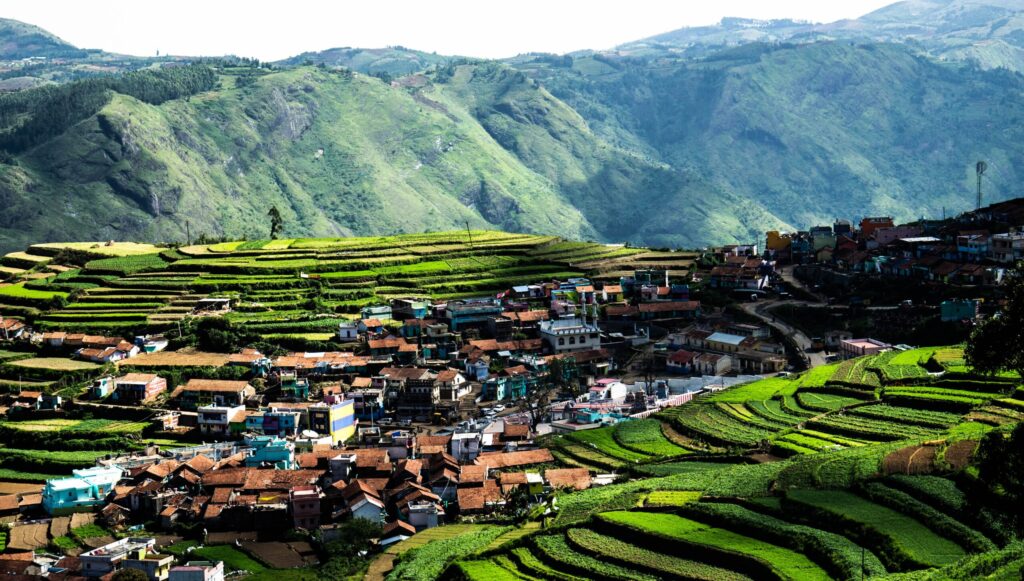
The Poombarai Village in Tamil Nadu
The Town You Sleep In
Why the base town shapes a monsoon waterfall trip more than any single fall, what to look for, and towns in Karnataka, Kerala and Goa worth considering.
One village ghat upriver
Train versus road that week
Markets before the 20th, not on it
Journeys Worth Discovering
Explore inspiring destinations, memorable journeys and travel stories from across India and beyond.
Explore destinations




