
Before the traffic, before the heat, before the tour coaches park on Strand Road, the Hooghly’s ghats belong to bathers, priests, wrestlers and flower sellers.
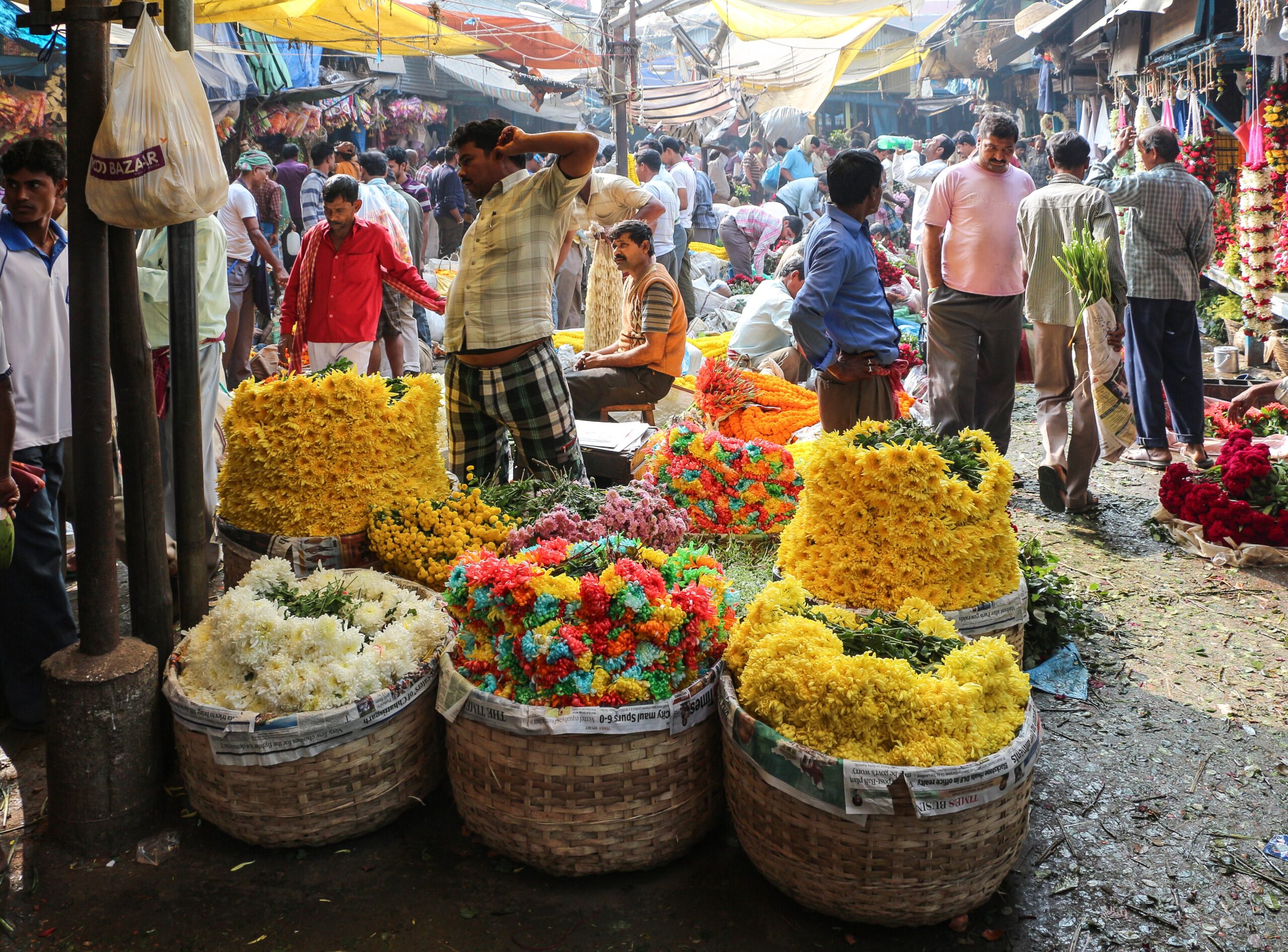
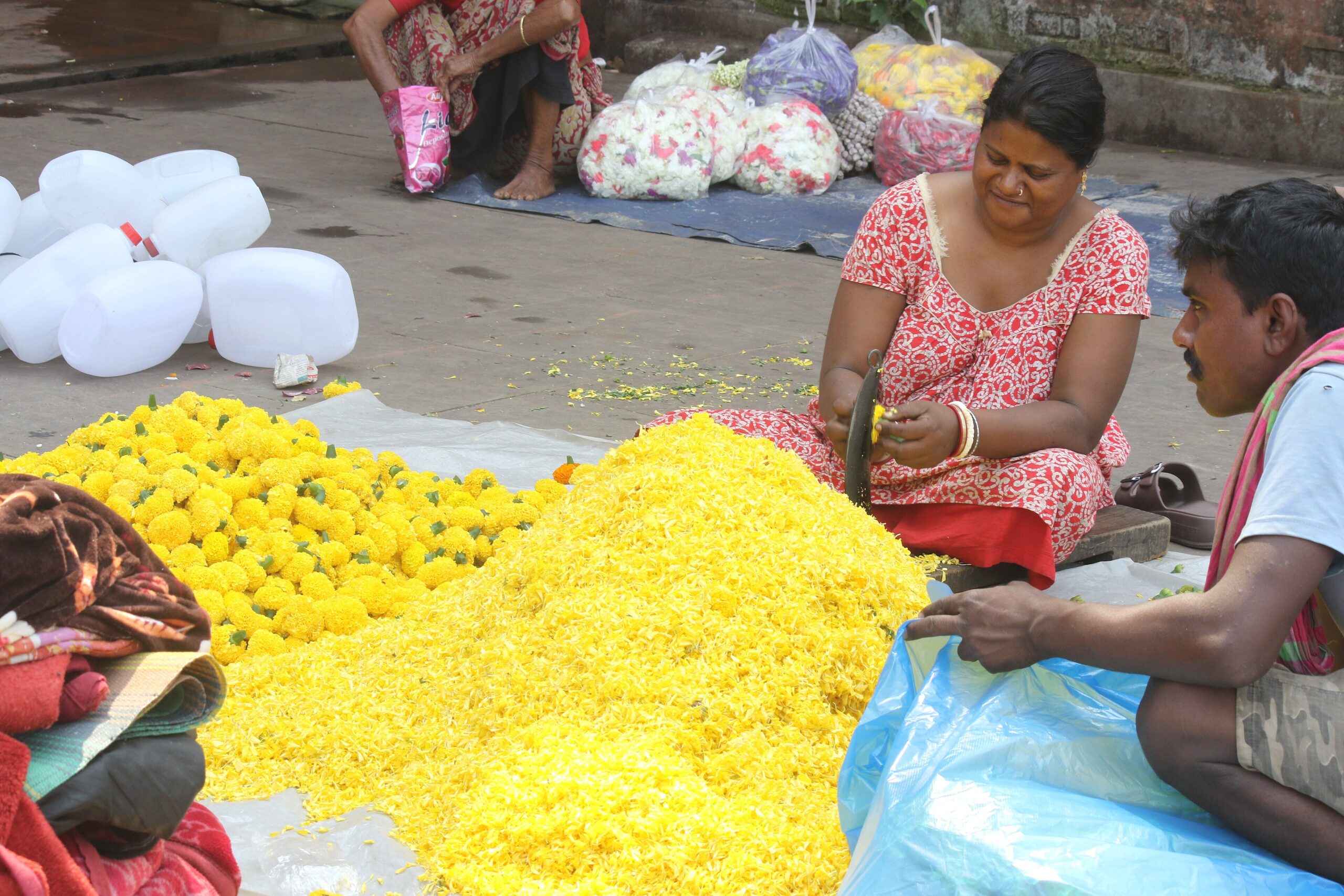
At five in the morning, under the eastern end of Howrah Bridge, the air smells of marigolds and river mud. Men stagger past with sacks of flowers on their heads. Women sit cross-legged threading garlands, their fingers moving faster than you can follow. Down the steps, a priest pours water from a brass pot, a man scrubs himself with mustard oil, and a ferry sounds its horn somewhere in the mist. By nine, the day’s heat will settle over all of this, and coaches will be dropping visitors for a quick photograph. Right now, it is just the city and its river.
A ghat is a flight of steps leading down to water, and the stretch of the Hooghly’s east bank between Howrah Bridge and the Maidan is lined with them: bathing ghats, burning ghats, ferry ghats, ghats built by merchants in memory of their parents. Walking them at dawn is one of the great experiences of Kolkata, and in May, it is the only sensible time to do it. This is a walk of about two to three kilometres, from Mullick Ghat in the north to Babughat in the south, and it can be stretched in either direction.
Mullick Ghat Flower Market
Start at the Mullick Ghat Flower Market, at the foot of Howrah Bridge on the city side. It is often described as one of the largest wholesale flower markets in Asia, and it feels like it. Mountains of orange and yellow marigolds, sacks of jasmine and tuberose, bundles of lotus and rose arrive from the farms of rural Bengal by truck, train and boat, and are traded in a tumbling, shouting mass from before sunrise.
Walk slowly, keep to the edges, and give way to porters: they are carrying heavy loads and they will not stop for you. Most sellers do not mind being photographed if you ask with a smile, but some will wave you away, and that is their right. The market is busiest in the early morning and winds down as the day heats up.
Under the bridge
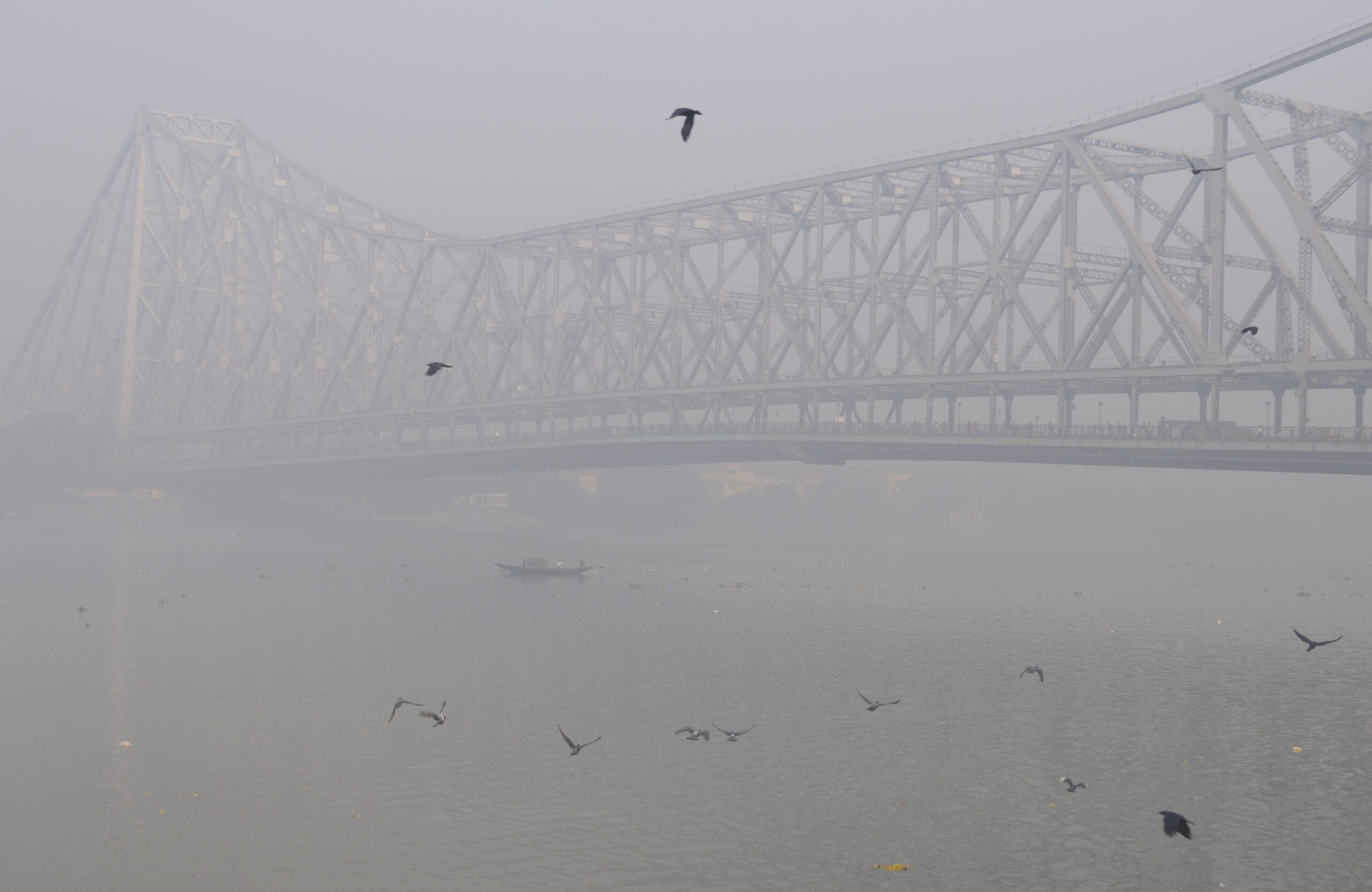
From the flower market, walk down to the river steps beside it. The view upstream is of Howrah Bridge, now officially Rabindra Setu, a great steel cantilever opened in 1943. From below, its scale is overwhelming: a web of girders swallowing the sky, the rumble of buses overhead. On the ghat, wrestlers sometimes train in the open-air akhara traditions of the city’s riverfront, and bathers wade in for their morning dip.
Along the Strand
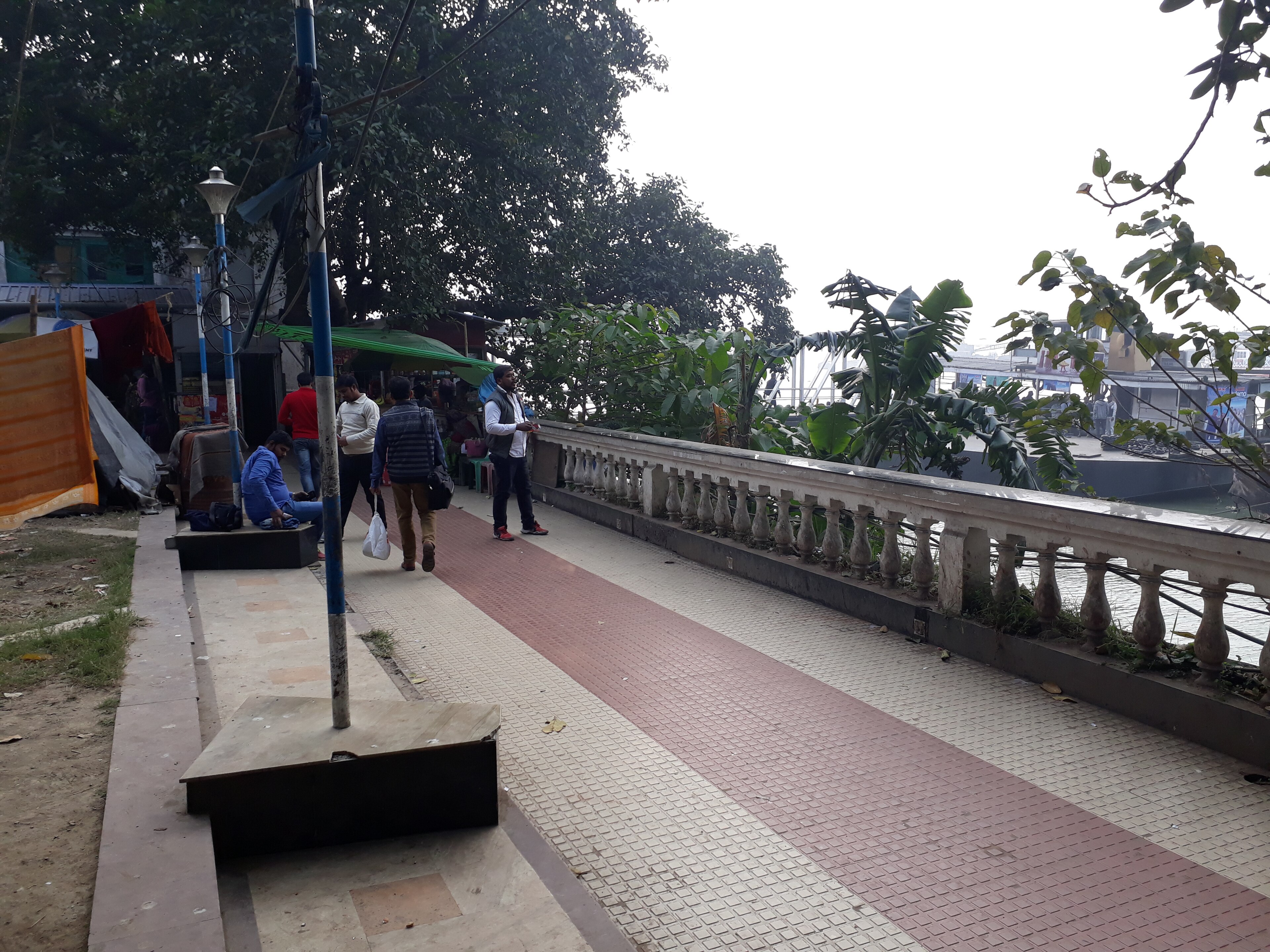
Head south along the river. Between the road and the water, a string of older ghats appears, some grand, some crumbling, each with its own story. The riverside promenade around Millennium Park, a landscaped strip along the bank, is a pleasant place to walk in the cool hours. Ferries leave from jetties along this stretch, including Chandpal Ghat and Fairlie Place, linking the city to Howrah and to points along the river; the commuter rush begins early.
Babughat
At the southern end of this walk is Babughat, built in the 1830s in memory of Babu Raj Chandra Das, husband of Rani Rashmoni, the remarkable Kolkata landowner and philanthropist who later founded the Dakshineswar Kali temple. Its colonnaded pavilion, white columns and all, faces the river with an old-fashioned dignity.
At dawn the steps are alive. Pilgrims bathe and offer prayers. Priests sit under umbrellas, ready to perform rituals. Barbers shave customers on the steps. During festivals, especially Ganga Sagar Mela in January, when pilgrims travel south to where the Hooghly meets the sea, the ghat becomes a transit camp.
A note on respect
These are places of worship, bathing and, at some ghats, cremation. Behave as you would in a temple. Do not photograph people bathing without asking, and never photograph funeral rites. Dress modestly. If someone offers to perform a ritual for you, a polite “no, thank you” is enough.
What the ghats tell you
Walk the ghats and you understand how Kolkata’s rich and religious once used the river: building steps for public bathing as an act of piety and remembrance, naming them for parents and patrons. The British built warehouses, jetties and the Strand Road along the same bank. The two histories sit side by side, and every morning the city still comes down the steps to the water.
How to reach
Mullick Ghat Flower Market is at the city end of Howrah Bridge, near the Burrabazar area. The Circular Railway runs along the river with stations including Burrabazar, Babughat and Eden Gardens, making it easy to hop between ghats. Taxis and app cabs can drop you at either end; at dawn, the roads are clear. Howrah railway station is on the other side of the bridge, a short walk or ferry ride away.
Best time
Dawn, any time of year. In May, aim to be at the flower market by first light and to finish by about nine, before the heat builds. Winter mornings, from November to February, are often misty and very atmospheric. Monsoon mornings can be wet and muddy underfoot, but the light is beautiful.
Where to stay and eat
Central Kolkata, around Esplanade, Dalhousie and Park Street, is a short ride from the ghats and has hotels at every budget. Burrabazar’s lanes, near the flower market, are full of stalls selling tea, kachori and sweets from early morning. For a proper breakfast afterwards, see Kolkata’s food rooms or head to Tiretta Bazaar for its early-morning Chinese breakfast.
Tips
- Wear shoes with good grip; ghat steps are slippery.
- Keep valuables secure in crowded markets.
- Ask before photographing people; never photograph cremations.
- Carry water; even at dawn May is humid.
- Come back in the evening for a different mood; see The Hooghly in the Evening.
- Combine with Kumartuli, a short ride north; see Kumartuli off season.
March 2022
Delhi to Kasauli on the Old Grand Trunk Road: The One Route That Explains the Weekend Escape
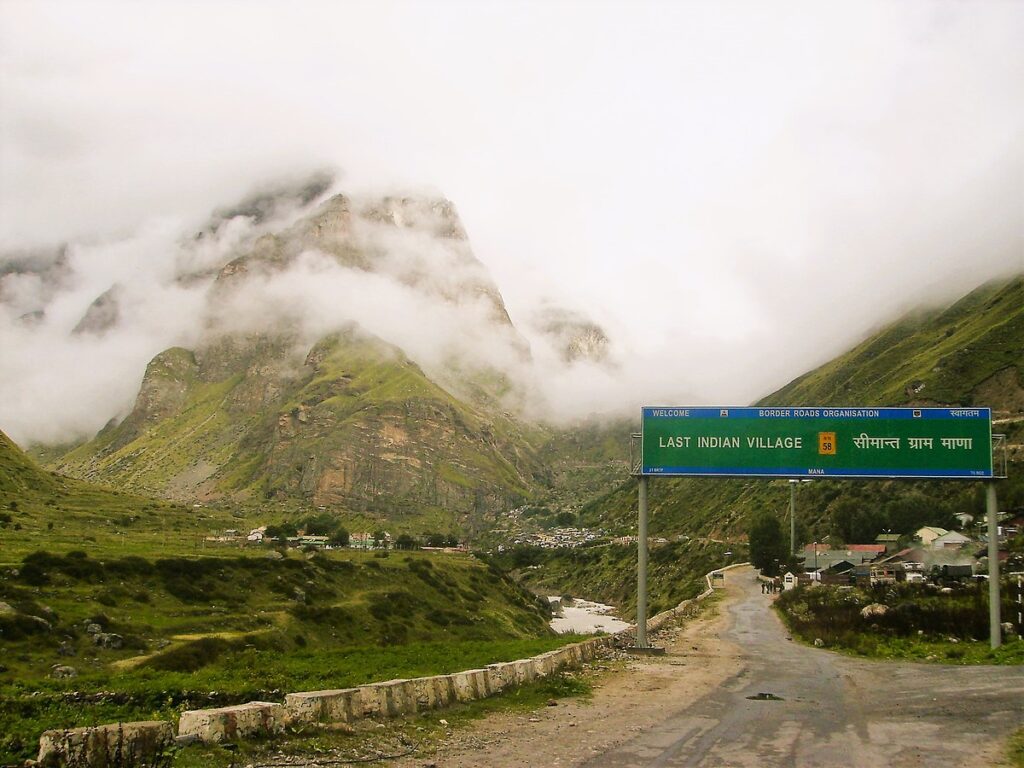
The Mana Village in Uttarakhand
The Town You Sleep In
Why the base town shapes a monsoon waterfall trip more than any single fall, what to look for, and towns in Karnataka, Kerala and Goa worth considering.
One village ghat upriver
Train versus road that week
Markets before the 20th, not on it
Journeys Worth Discovering
Explore inspiring destinations, memorable journeys and travel stories from across India and beyond.
Explore destinations




