
On a map they look like neighbours: Jaisalmer on the western edge of Rajasthan, the Great Rann of Kutch just to the south in Gujarat, both part of the great arid belt that runs into Pakistan. In February, both are at their most festive. Jaisalmer’s Desert Festival typically falls around the Magh full moon, which in 2026 meant 30 January to 1 February, and Gujarat’s Rann Utsav runs for most of the winter, with the 2025–26 festival period listed by Gujarat Tourism as 23 November 2025 to 20 February 2026 and the tent city staying open into March.
So the temptation is obvious: see both. The honest truth is that this is possible in three nights, but only if you accept that one day goes mostly to travel and you plan around it. Here is how we would do it, and how to stretch it if you can.
The distance problem
Jaisalmer and Bhuj, the gateway to Kutch, are a long way apart by road, a full day’s drive through Barmer and northern Gujarat, typically somewhere between ten and twelve hours depending on stops and road conditions. There is no short cut across the border region. Rail connections between the two are limited and indirect. Flights, where available, usually route through a larger hub. Check current schedules carefully before you commit; they change from season to season.
That means you have three choices:
- Drive it in a day with a hired car and driver, leaving early and arriving in Kutch by evening.
- Fly out of the region and back in, which can take as long once connections are counted.
- Split the trip over two visits, which is the slow-travel answer but not always practical.
The plan below assumes a hired car and driver. It is tiring, but it shows you the change in the land, which is a part of the story.
Night one: Jaisalmer
Arrive in Jaisalmer by midday if you can. Settle in, then spend the late afternoon walking up to the fort as the light softens. The lanes inside are still home to families, and the place is at its best when you treat it as a neighbourhood; we describe how in Jaisalmer When the Fort Is Still a Neighbourhood. Watch sunset from a rooftop café or from Gadisar Lake below. Eat early and sleep well, ideally just outside the fort walls.
If your dates match the Desert Festival, check the official programme: some events take place in the city and others out on the dunes at Sam, so the order of your days may need to flex.
Day two: the Thar, then onward
Start early. Drive west to the dunes around Sam or Khuri for the morning, when they are quieter, cooler and kinder to both you and any camels. Walk up a dune rather than straight into a ride; our piece Camels Are Optional has ideas. If the Desert Festival is on, this is your day for the dune programme.
Here is the hard part: if you are going on to Kutch the same day, you would need to leave by around midday, which squeezes the desert into a few hours. The better option is to keep a second night in Jaisalmer, sleep in a quiet desert camp near the dunes, and leave for Kutch at dawn the following morning. That is what the full plan below assumes.
Night two: under the stars
Choose a small camp or homestay away from the main strip at Sam. After dinner, ask for the lights to be dimmed and let your eyes adjust to the sky. The Thar’s winter nights can be cold and remarkably clear.
Day three: the long drive south
Leave early with water, snacks and layers. The route takes you through Barmer and into northern Gujarat, and you will watch the golden dunes give way to scrub, then fields, then the flat grasslands of Banni at the edge of the Rann. Break the drive every couple of hours. Aim to reach the Dhordo area, where the tent city sits, by late afternoon. If you have pre-arranged your White Rann entry permit through Gujarat’s official portal, you may be able to reach the salt for sunset; if not, sort the permit first and rest.
Night three: at the edge of the Rann
Sleep at the tent city or a village homestay near Dhordo. If the evening programme is on, it introduces the music and crafts of Kutch. Go to bed early; the next morning is the reason you came.
Day four: the empty hour, then home
Set the alarm for well before sunrise and go out onto the White Rann while it is still blue and nearly empty. Our The Hour the White Desert Is Empty explains how and why. After breakfast, visit a craft village nearby, then head to Bhuj for your onward connection.
If you have more time
With five or six nights, the trip transforms. Add a second Kutch night for Kalo Dungar and the Banni villages, a day in Bhuj for its palaces and markets, and perhaps a detour to Dholavira, the Harappan city site. In Jaisalmer, add a morning for the havelis of the old town and an afternoon at Bada Bagh.
Practical notes
- Book early: festival weeks fill fast in both places.
- Keep cash in small notes; connectivity can be patchy in rural areas.
- Carry your ID for the Rann permit and check the latest rules.
- Pack for heat by day and real cold at night.
Reversing the route
The plan works just as well in the other direction. Fly or train into Bhuj, start with the Rann and its villages, then drive north to finish with the golden dunes and the fort. Choose whichever order lets your festival dates fall in the middle of the trip rather than on a travel day.
Is it worth it?
Three nights for two deserts is a sprint, and slow travellers may wince. But the contrast is extraordinary: gold one morning, white the next, two very different ways that people have learned to live with very little rain. If this is the only February you have, it is worth the long drive. Just do not try to squeeze in anything else.
More from Issue 82
- Issue 82 index: Desert Festivals
- The hour the White Rann is empty
- Camels are optional
- A guest night in a family haveli
A boat you should not book
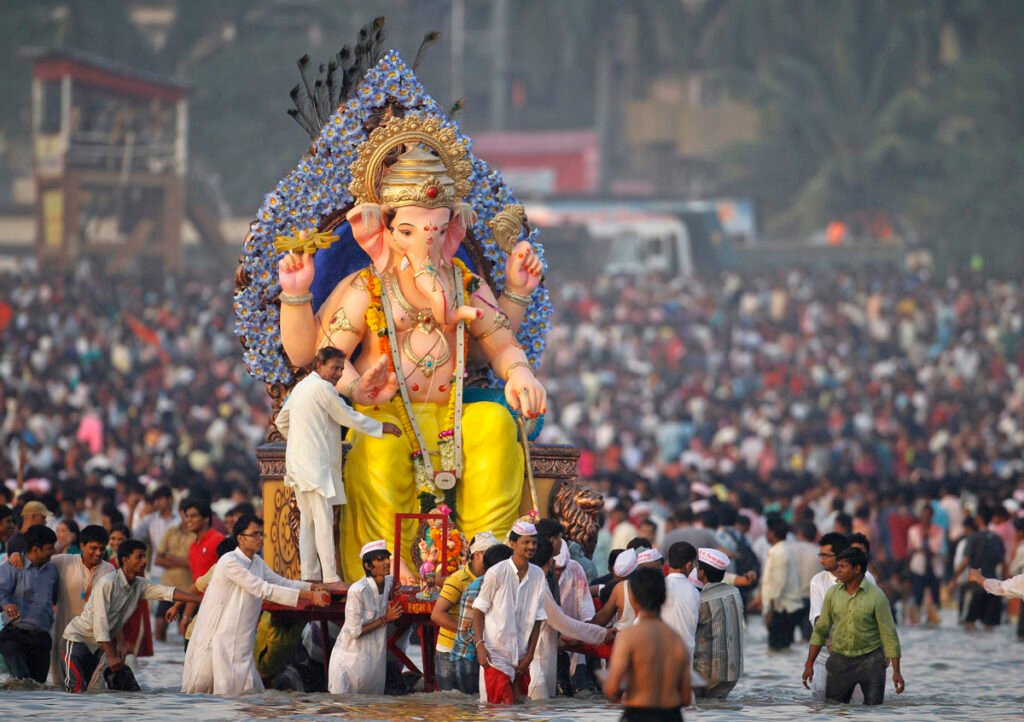
Ganesh Chaturthi

Ahmedabad – The Commercial Hub
The Town You Sleep In
Why the base town shapes a monsoon waterfall trip more than any single fall, what to look for, and towns in Karnataka, Kerala and Goa worth considering.
One village ghat upriver
Train versus road that week
Markets before the 20th, not on it
Journeys Worth Discovering
Explore inspiring destinations, memorable journeys and travel stories from across India and beyond.
Explore destinations




