
Most visitors experience Agra as a series of disconnected stops: a car drops them at the Taj, then at the Fort, then at a marble shop, and finally at the railway station. It is efficient, but it leaves the city in pieces. There is a better way. Follow one route, from the old neighbourhood of Taj Ganj along the river to Agra Fort, across the Yamuna to the gardens of the east bank, and finally out to Akbar’s capital at Fatehpur Sikri, and the story of Mughal Agra falls into place. You see how the empire grew, how its builders thought and how the city still lives around their monuments.
Stop one: Taj Ganj at first light
Begin before sunrise in Taj Ganj, the neighbourhood that grew up to the south of the Taj Mahal to house the workers, craftsmen and traders who built and served it. Its narrow lanes, guesthouses and rooftop cafes still press close to the monument’s walls, and walking through them in the half-light, as tea stalls open and shutters rattle up, is the best possible preparation for what lies ahead.
The Taj itself opens around sunrise and closes on Fridays to general visitors. Enter as early as you can, through one of the gates where security checks are carried out, and give yourself at least two or three unhurried hours. Watch the marble change colour as the sun rises. Walk the length of the charbagh garden, with its water channels dividing the space into quarters in the classic Mughal pattern. Look closely at the pietra dura inlay, semi-precious stones set into marble in flowing floral designs, and at the calligraphy around the arches, which appears uniform from below because the letters were cleverly enlarged as they rise higher.
The Taj was built by Shah Jahan as a mausoleum for his wife Mumtaz Mahal, who died in 1631. Work on the complex continued for many years, and it is often said that thousands of artisans from across the empire and beyond worked on it. Standing on the platform and looking out over the Yamuna, you understand that it was designed to be seen from the river as well as from the garden. That river view is the thread that links the rest of this route.
Stop two: Agra Fort, the seat of power
From the Taj, head north-west along the river to Agra Fort, about two and a half kilometres away. If the Taj is the city’s heart, the Fort is its spine. Akbar began rebuilding it in red sandstone in the 1560s, and successive emperors added palaces, mosques and audience halls. It is a UNESCO World Heritage Site in its own right, and many visitors find it as rewarding as the Taj.
Inside, you will move from the robust sandstone of Akbar’s era to the white marble refinement of Shah Jahan’s additions. Look for the Diwan-i-Aam, the hall of public audience, and the Diwan-i-Khas, where the emperor met nobles and ambassadors. Above all, find the Musamman Burj, the octagonal marble tower overlooking the river. According to tradition, this is where Shah Jahan spent his last years after he was deposed by his son Aurangzeb, gazing across the water at the tomb of his wife. Whether or not every detail of the story is true, the view makes the link between the Fort and the Taj unforgettable.
Stop three: across the river to the east bank
In the afternoon, cross the Yamuna to the east bank, where the Mughals laid out a chain of riverside gardens. Here you will find Itimad-ud-Daulah, the exquisite tomb built by Nur Jahan for her father, often nicknamed the Baby Taj. Built in the 1620s, it was one of the first Mughal buildings to use white marble inlaid with stone on such a scale, and it is often seen as a forerunner of the Taj itself. Its delicate screens and painted interiors reward a slow look.
Further along, the remains of Ram Bagh, associated with Babur and considered one of the earliest Mughal gardens in India, remind you that the Mughals’ story in Agra began with gardens long before it reached its climax in marble. Nearby, the Chini ka Rauza, with traces of glazed tilework on its facade, shows the Persian influences that shaped Mughal design.
End the day at Mehtab Bagh, the garden directly across the river from the Taj. Archaeologists believe it was laid out as part of the Taj’s original plan, so that the mausoleum could be enjoyed from the opposite bank. At sunset, with the dome glowing above the water and the crowds of the south bank far away, it is one of the most peaceful places in Agra.
Stop four: Fatehpur Sikri, the city Akbar built
Set aside the next day for Fatehpur Sikri, about 40 kilometres west of Agra. In the 1570s Akbar built a new capital here, near the hermitage of the Sufi saint Sheikh Salim Chishti, whose blessing he believed had brought him a son. For roughly a decade and a half the city was the heart of the empire. Then the court moved away, and the city was largely abandoned, leaving one of the best-preserved Mughal royal complexes in India.
Walk through the palace courtyards and you will see Akbar’s ideas made visible. The Panch Mahal rises in five storeys of open pillared halls. The Diwan-i-Khas contains a remarkable central pillar carved with motifs drawn from different traditions, reflecting Akbar’s interest in dialogue between faiths. The Jama Masjid is entered through the towering Buland Darwaza, built to commemorate a military victory, and inside its courtyard the white marble tomb of Salim Chishti draws pilgrims who tie threads on its screens as they make a wish.
Fatehpur Sikri explains what came before the Taj: the confidence, curiosity and red sandstone grandeur of Akbar’s reign. Seeing it after the Taj completes the story, from the first gardens of Babur to the abandoned city of Akbar to the marble perfection of Shah Jahan.
Making the route work
- Start at the Taj as early as possible, and remember it is closed to general visitors on Fridays.
- Use official ticket channels and licensed guides with identification.
- Combine Agra Fort and the east-bank monuments on the same day, and finish at Mehtab Bagh for sunset.
- Give Fatehpur Sikri at least half a day; early morning is cooler and quieter.
- Carry water, wear comfortable shoes and dress modestly for the mosque and shrine at Fatehpur Sikri.
- Check current opening hours and entry rules on the Archaeological Survey of India website before you go.
What the route teaches
Followed in this order, Agra stops being a single monument and becomes a story told along a river. Taj Ganj shows you the people who served the monument. The Fort shows you the power behind it. The east-bank gardens show you how the Mughals thought about landscape. Fatehpur Sikri shows you the ambition of the dynasty at its height. And through it all runs the Yamuna, which links every stop and still reflects the dome at dusk.
More from Issue 58
- February 2024
- Editor’s Letter: Agra, Beyond the Single Photograph
- Exploring the Majestic Taj Mahal
- Discovering the Mughal Marvels of Agra
- Agra Odyssey: Tongas Ride, Culture, Shopping, & Cuisine
- Food history through Agra’s cuisine
- Three Days in Agra, Not a Taj-and-Go Checklist
- What to Skip on Your First Trip to Agra
- Itimad-ud-Daulah and Sikandra: The Quieter Agra Beside the Taj
- Food, Stay and Getting Around in Agra
- A Week Inside Agra: Living Slowly Beside the Taj
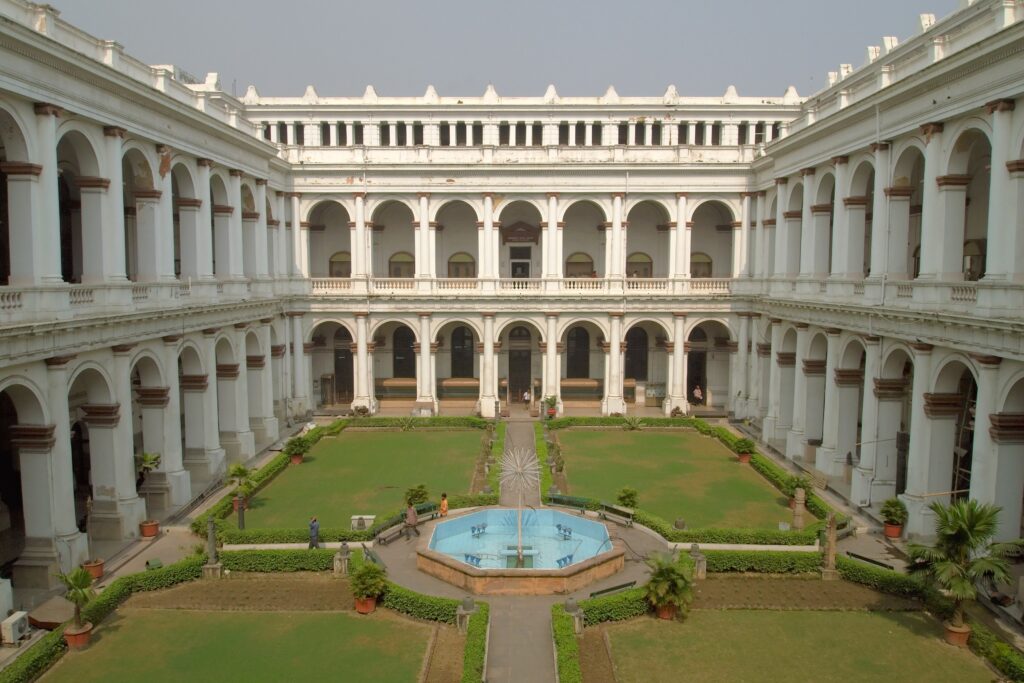
Heat, Rain and Rooms with Fans: Kolkata’s Cool Interiors in May

Gardens & Parks of Delhi
December 2020
The Town You Sleep In
Why the base town shapes a monsoon waterfall trip more than any single fall, what to look for, and towns in Karnataka, Kerala and Goa worth considering.
One village ghat upriver
Train versus road that week
Markets before the 20th, not on it
Journeys Worth Discovering
Explore inspiring destinations, memorable journeys and travel stories from across India and beyond.
Explore destinations




