
To understand Udaipur is to understand its water. Long before it was marketed to travelers as the “Venice of the East,” the capital of Mewar was a brilliant exercise in survival hydro-engineering. Set against the dry, deciduous ridges of the Aravalli mountains, the city’s founders recognized that without capturing the seasonal monsoon rains, securing a permanent capital would be impossible. The result is not a series of natural geographic accidents, but a meticulously planned, interconnected cascade of artificial lakes, dams, and spillways that have sustained the city for nearly five centuries.
From the heavily trafficked royal shores of the city center to the absolute silence of the outer wilderness, the lakes of Udaipur offer entirely different emotional and visual landscapes.
Lake Pichola: The Crown Jewel and the Imperial Core
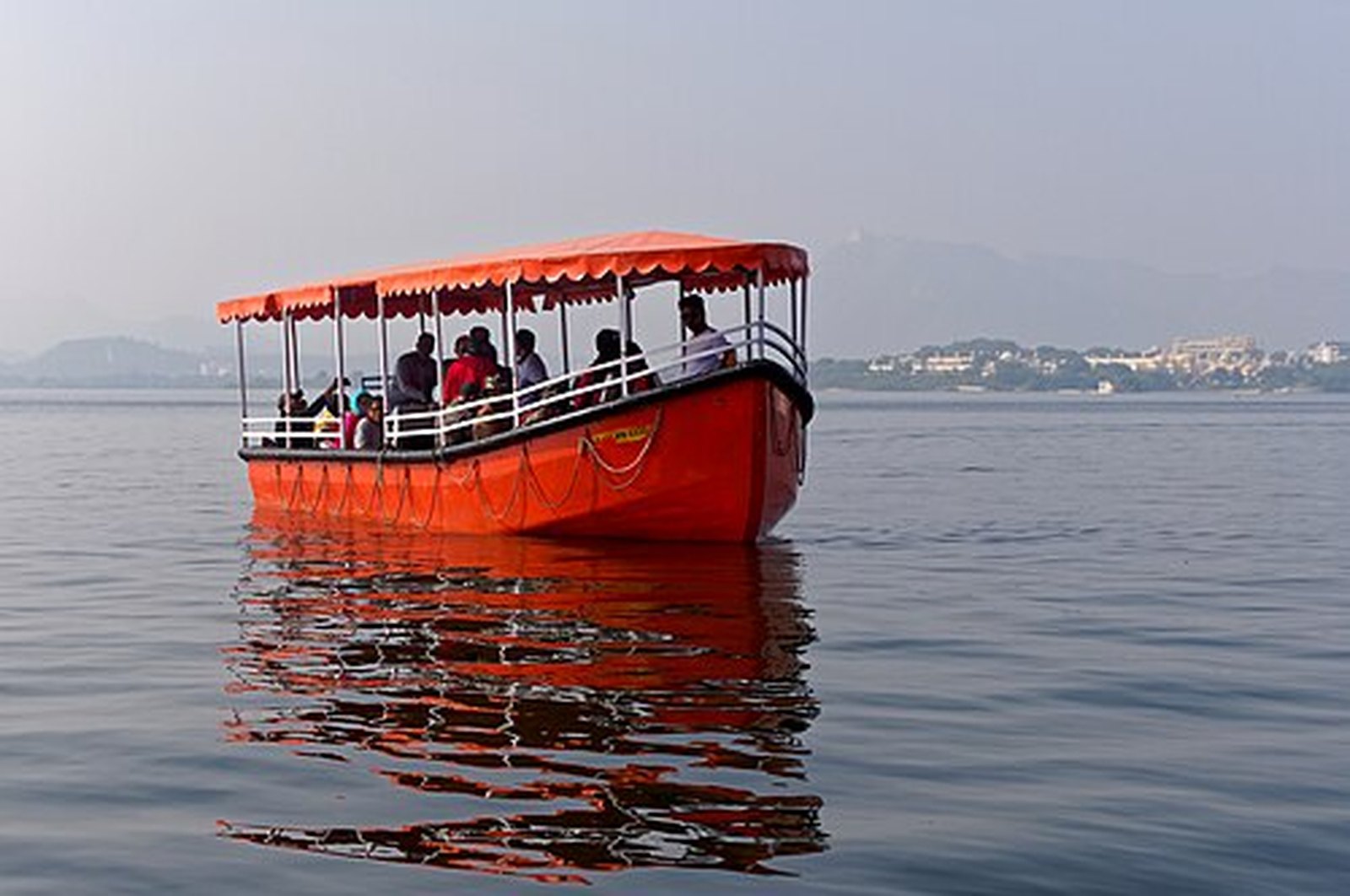
Lake Pichola is the psychological and historical anchor of Udaipur. Created in the 14th century by a Banjara tribesman to transport grain across the valley, it was later expanded by Maharana Udai Singh II when he founded the city. Pichola is shallow, sprawling, and entirely dominated by the architectural titans that rise directly from its waters.
By day, Pichola is a flurry of kinetic energy. Municipal ferries slice through the water, shuttling hundreds of tourists to Jag Mandir, while heritage hotels along the eastern edge of the Lal Ghat quarter buzz with rooftop diners. But to truly experience Pichola’s character, one must wait for the transition of dusk.
As the sun sets behind the western ridges, the royal lake goes completely silent after dark. The daytime tourist boats vanish, the ripples settle into black glassy water, and warm golden lights stretch across the surface. The monumental facade of the City Palace and the floating white marble of the Taj Lake Palace glow gold, perfectly reflected on the calm, dark water. Standing at Ambrai Ghat or looking out from a quiet heritage balcony, the night air cools and the heavy city traffic fades, leaving no noise—just water and heritage.
Fateh Sagar: The Civic Heart and the Engineering Marvel
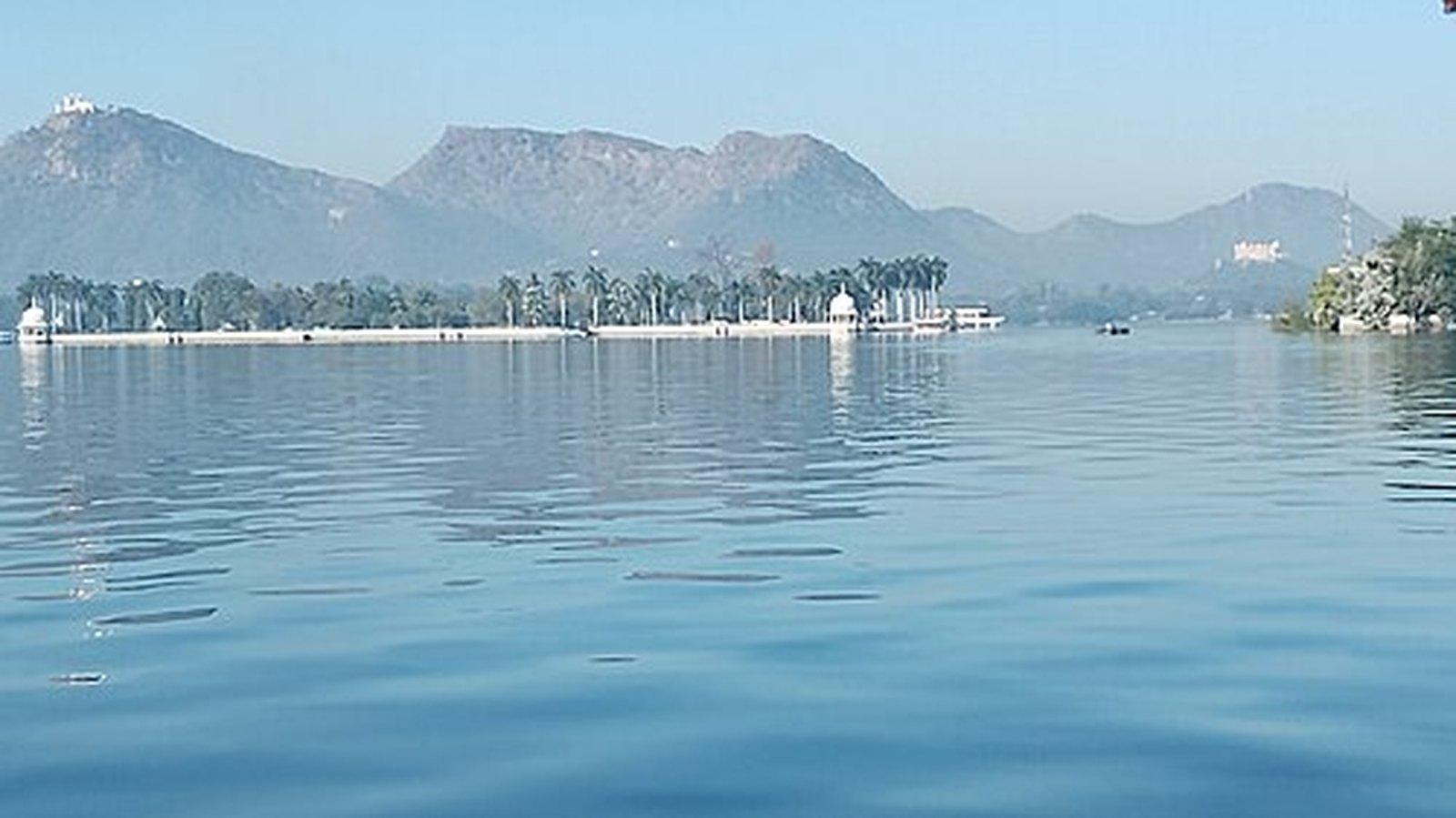
Connected to Pichola via a narrow canal and a smart system of lock gates at Swaroop Sagar, Fateh Sagar Lake sits directly to the north. While Pichola is defined by royalty, Fateh Sagar is defined by local civic life. Originally built in the 1680s and later reconstructed by Maharana Fateh Singh after heavy floods, this pear-shaped lake is flanked by the winding Bombay Market promenade on one side and steep, forested hills on the other.
Fateh Sagar is the lifeblood of Udaipur’s localized microclimate. Its waters feed the gravity-based fountains of Saheliyon Ki Bari and cool the evening breezes that sweep across the Moti Magri (Pearl Hill). The lake features three distinct islands, the most prominent housing the Udaipur Solar Observatory, one of the best solar observing sites in Asia, capitalizing on the clear skies and minimal dust over the water.
For the modern traveler, Fateh Sagar is best experienced on a rented bicycle at 6:00 AM, riding along the completely empty promenade as the morning mist burns off the water, long before the kulhad coffee stalls fire up their stoves.
Badi Lake (Jiyan Sagar): The Offbeat Wilderness
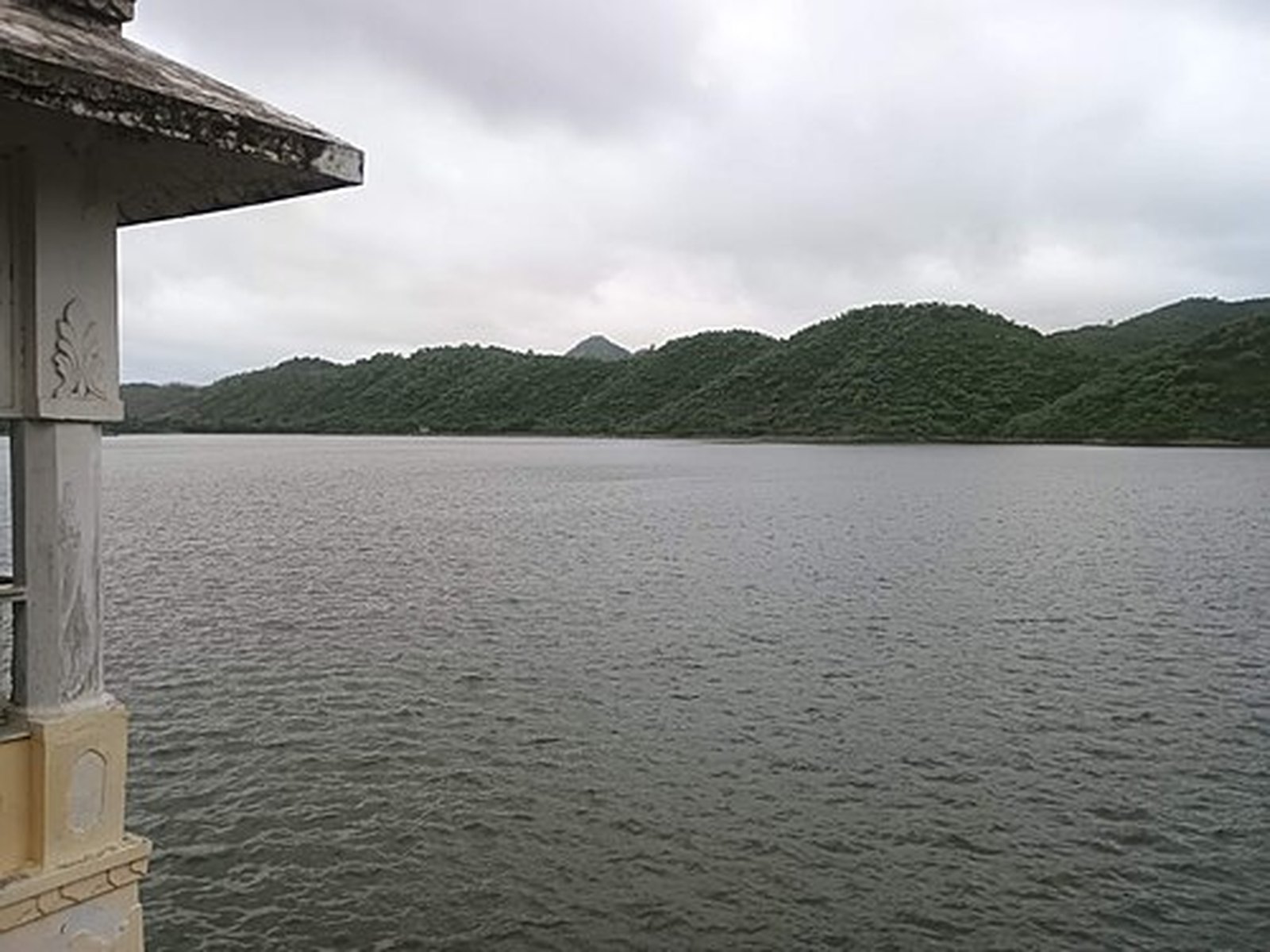
While Pichola and Fateh Sagar draw the crowds, Lake Badi remains the wilderness lake in Udaipur that nobody tells you about. Located 12 kilometers off the main grid, this reservoir was commissioned in the 17th century by Maharana Raj Singh as a drought relief project. It was an engineering triumph meant to sustain the kingdom if the primary lakes ever ran dry.
Today, Badi Lake is a masterclass in isolation. It is framed by jagged, dry Aravalli peaks and entirely devoid of commercial development, fast-food stalls, or motorized boat traffic. The perimeter is marked by three exquisitely carved historic pavilions, which now sit in quiet isolation on the stone embankments.
Badi Lake is at its most powerful at the extremes of the day. In the early morning, taking the short trek up to the Bahubali Hills viewpoint offers a dramatic, fjord-like perspective of the water cutting through the mountain ridges. But at night, the wilderness lake goes completely silent. The daytime heat drops, the surrounding Aravalli hills settle under a pitch-black canopy, and the stars glow brightly enough to reflect on the water. The historic pavilions sit in shadow, and far off, the faint call of a night owl echoes through the valley. Out here, there are no city lights and no noise, just nature and stars.
The lakes of Udaipur are not merely backdrops for Instagram photographs; they are a 500-year-old technological triumph that allowed a civilization to flourish in a dry mountain valley. By navigating from the illuminated palaces of Pichola to the dark, silent waters of Badi, you trace the exact lifeline of Mewar.
