
The visual legacy of Udaipur is most obviously written in its monumental architecture, the massive granite bastions of the City Palace and the floating marble pavilions on Lake Pichola. However, the true textural history of Mewar is not found on a macro scale. It exists at the micro-level, hidden within the labyrinthine alleys of the Old City, where centuries of craftsmanship are preserved in the hands of independent artisans.
The bazaars radiating outward from the Jagdish Temple and the clock tower are not merely commercial centers; they are living repositories of courtly arts. To navigate these narrow, shaded streets is to witness a continuous lineage of production that has survived royal decrees, British colonialism, and modern industrialization. For the discerning traveler, understanding how to read these markets, how to identify genuine natural pigments, recognize the weight of tribal silver, and appreciate hand-cured leather—elevates shopping from simple consumption to an act of historical preservation.
The Alchemy of Miniature Paintings (Bhatiyani Chohatta)
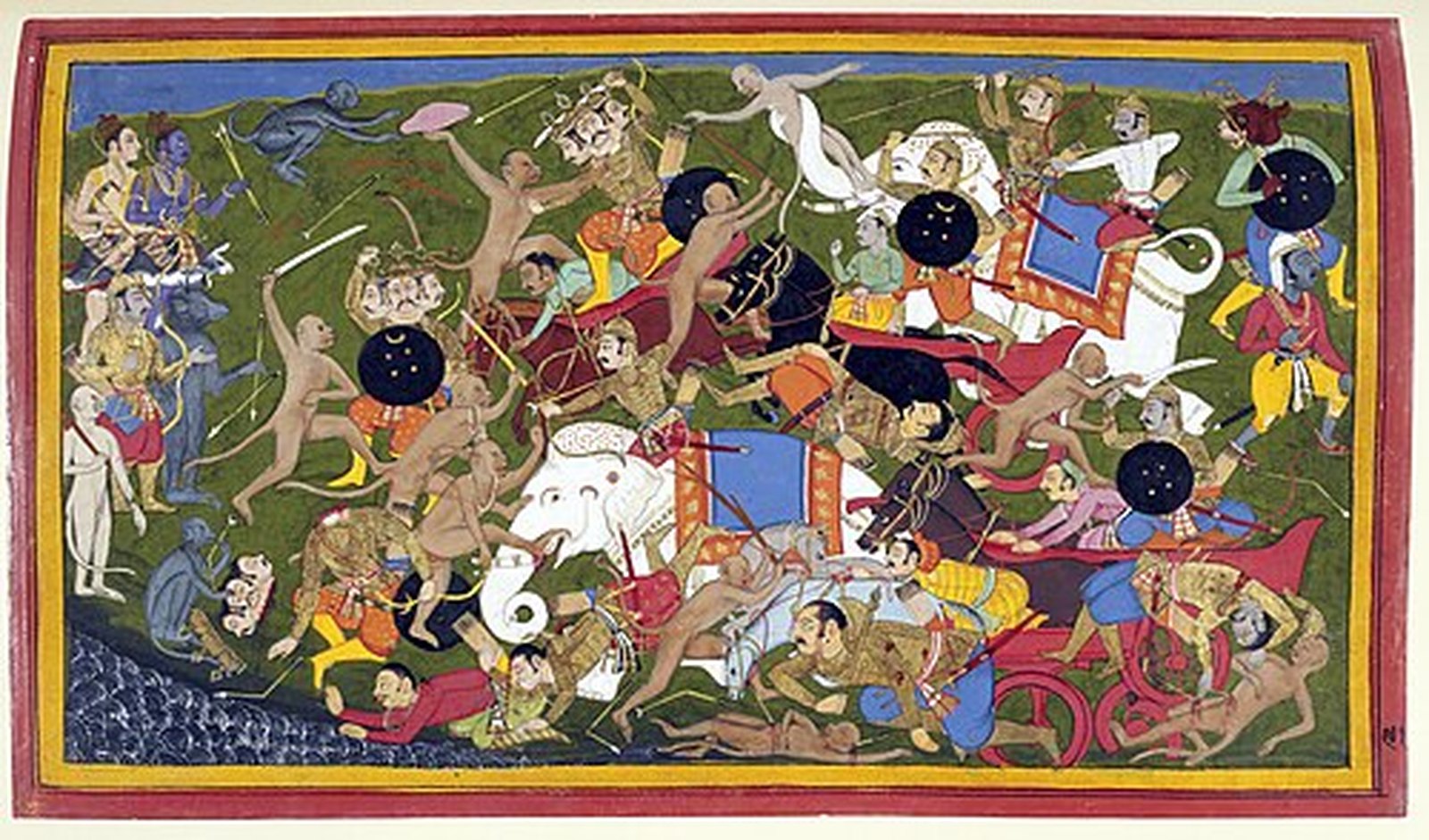
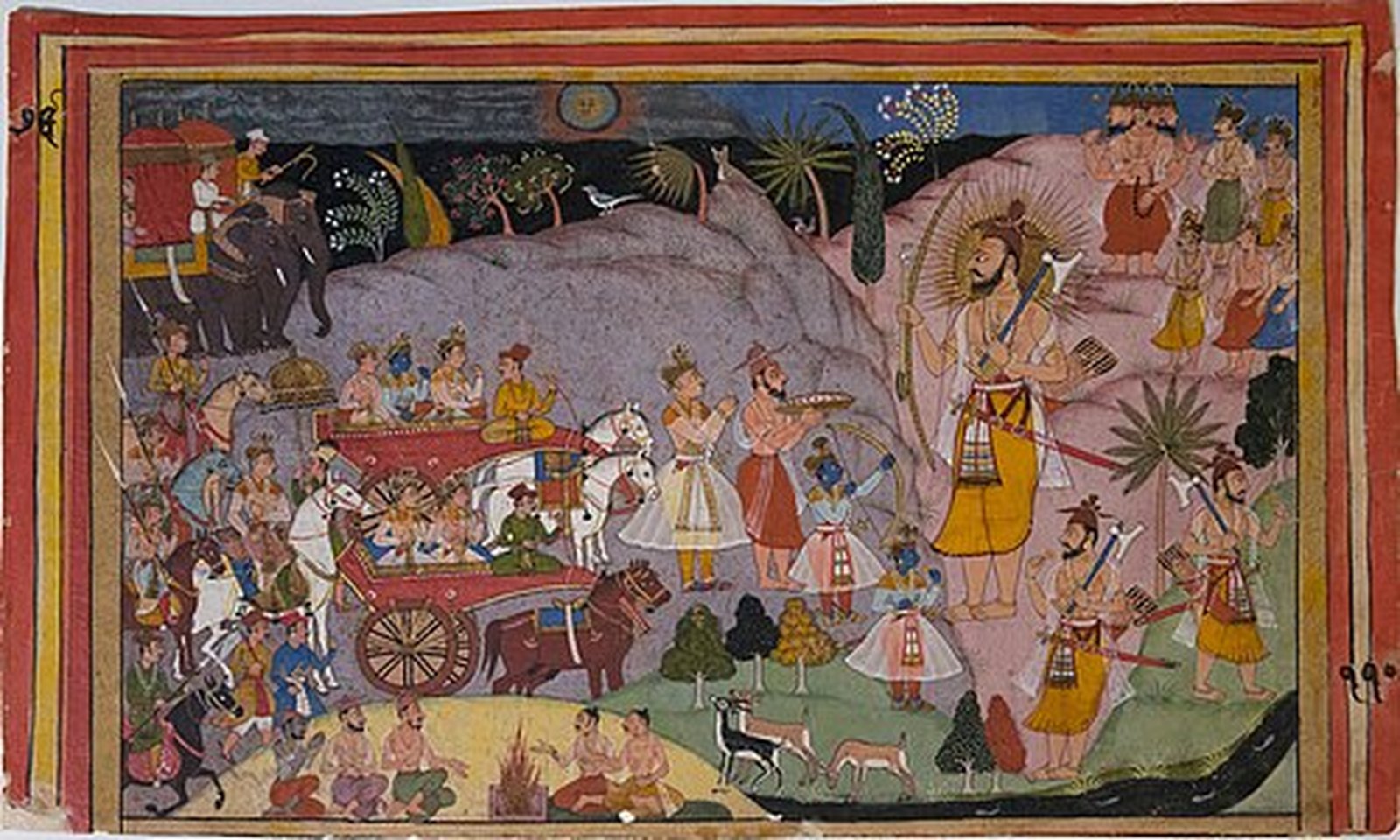
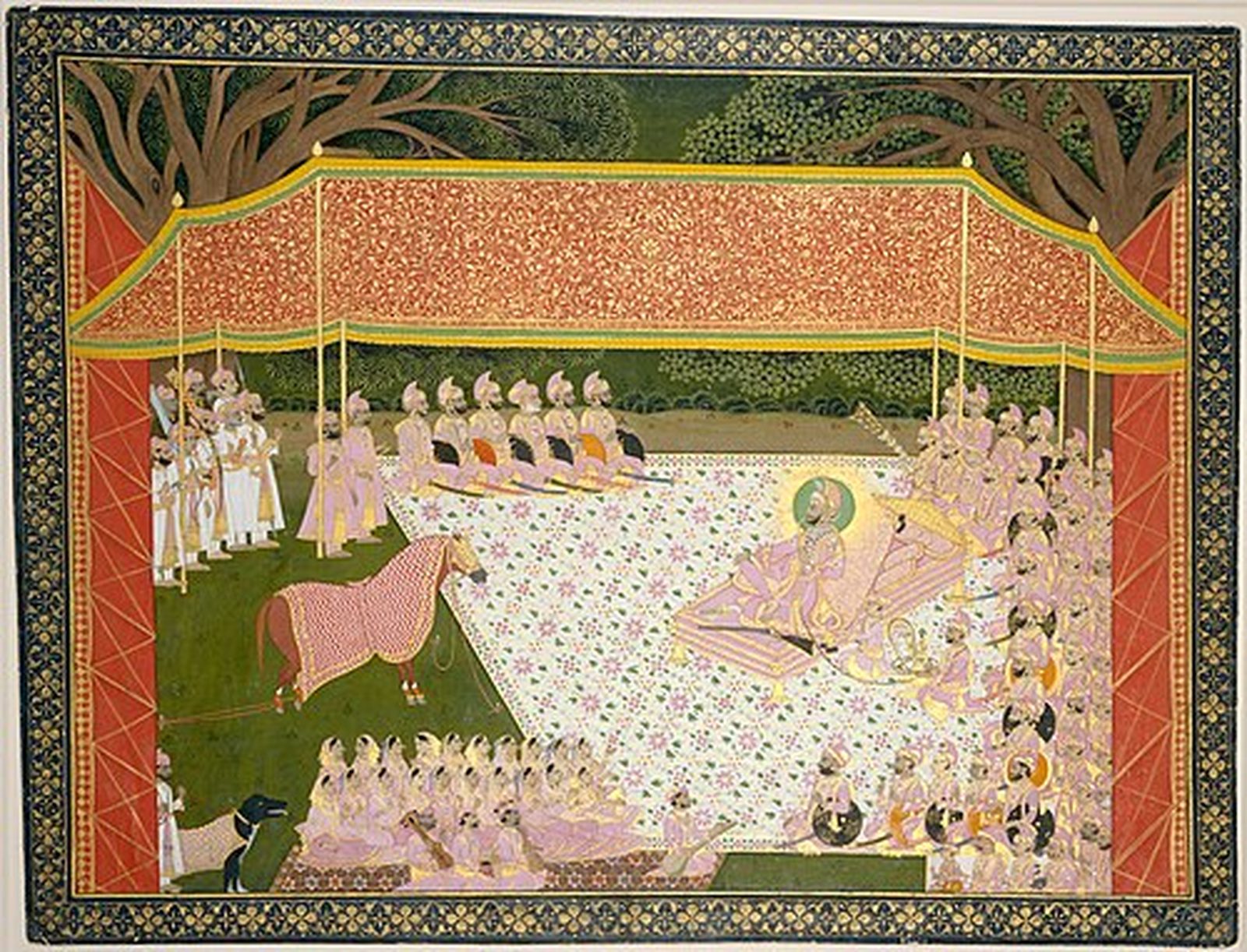
The tradition of Mewari miniature painting is deeply intertwined with the architectural evolution of the city. Historically, the ancestors of today’s painters were commissioned by the nobility to decorate the interiors of the aristocratic townhouses. In these private spaces, warm vintage lamps illuminate the painted frescoes that cover the walls, depicting intricate scenes of royal processions and flora. As the era of constructing grand residences faded, the artists compressed their vast frescoes into highly detailed, handheld miniatures.
Today, the epicenter of this craft is located along the winding street of Bhatiyani Chohatta. Entering an authentic painter’s studio here is akin to stepping into an alchemist’s workshop. True Mewari miniatures completely reject synthetic colors, relying instead on a precise, laborious process of grinding natural minerals and precious stones. Lapis lazuli is pulverized to achieve a deep, striking blue; malachite yields rich greens; conch shells are crushed for brilliant white; and pure gold leaf is applied for the jewelry and garments of royal figures.
The application requires an almost meditative discipline. Master artisans use brushes constructed from a single squirrel hair to paint details so microscopic they often require a magnifying glass to fully appreciate. When sourcing a painting, one must look closely at the opacity of the colors and the precision of the linework. Factory-produced replicas sold in souvenir shops will exhibit the flat, uniform dot-patterns of modern printing, while an authentic miniature will showcase the subtle raised texture of mineral paint and the organic, microscopic variations of a human hand. Authentic pieces are traditionally painted on antique government stamp paper, silk, or ethically sourced camel bone, offering a tangible connection to the historical trade routes of Rajasthan.
The Weight of Heritage: The Silversmiths of Mochiwada
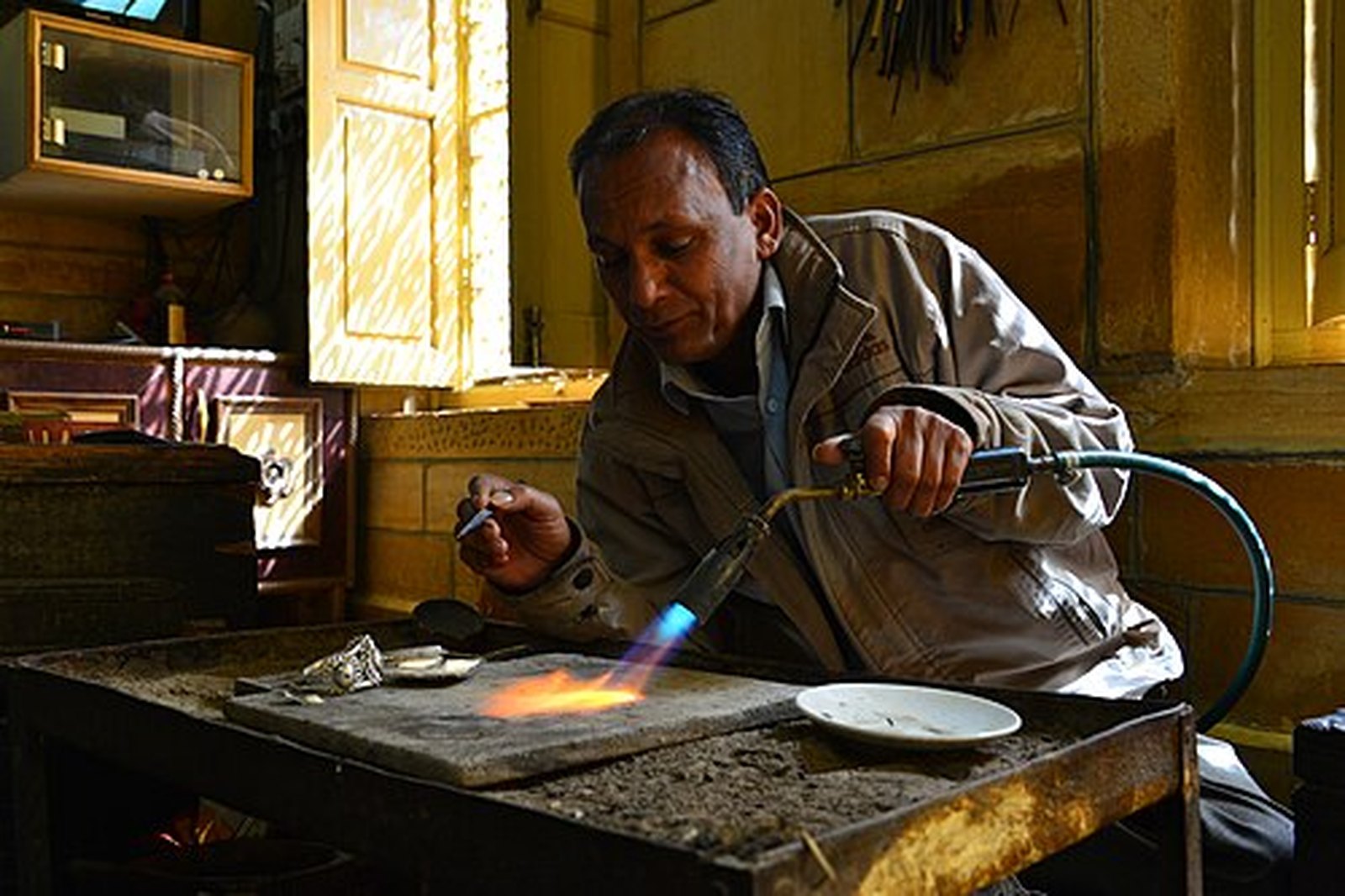
Moving westward toward the dense intersections of Mochiwada and Ghantaghar, the auditory landscape of the bazaar shifts. The hum of street traffic is pierced by a sharp, rhythmic metallic tapping. This is the domain of the Udaipur silversmiths, whose families have worked the metal for generations.
Rajasthan possesses one of the richest silver traditions on the subcontinent, heavily influenced by both the royal courts and the indigenous Bhil and Rabari tribes of the surrounding Aravalli mountains. The aesthetic here favors substantial, heavily oxidized pieces over delicate, high-polish contemporary jewelry. The hallmark of Mewari silver is its intentional ruggedness—a dark patina that highlights deeply chased geometric patterns and floral motifs.
The most iconic piece of local silverwork is the hansuli, a solid, rigid collar necklace originally worn by tribal women to denote marital status and protect the collarbone. Today, smaller, adaptable versions of these tribal designs, along with heavily articulated anklets and intricately stamped rings, dominate the glass cases of the old city shops. Sourcing genuine silver requires moving past the street-facing stalls, which often trade in german silver or nickel alloys, and entering the deeper, family-run workshops where the metal is still weighed on mechanical scales and tested for purity with traditional acid stones.
The Cobblers of Hathipole: Camel Leather and Silk Thread
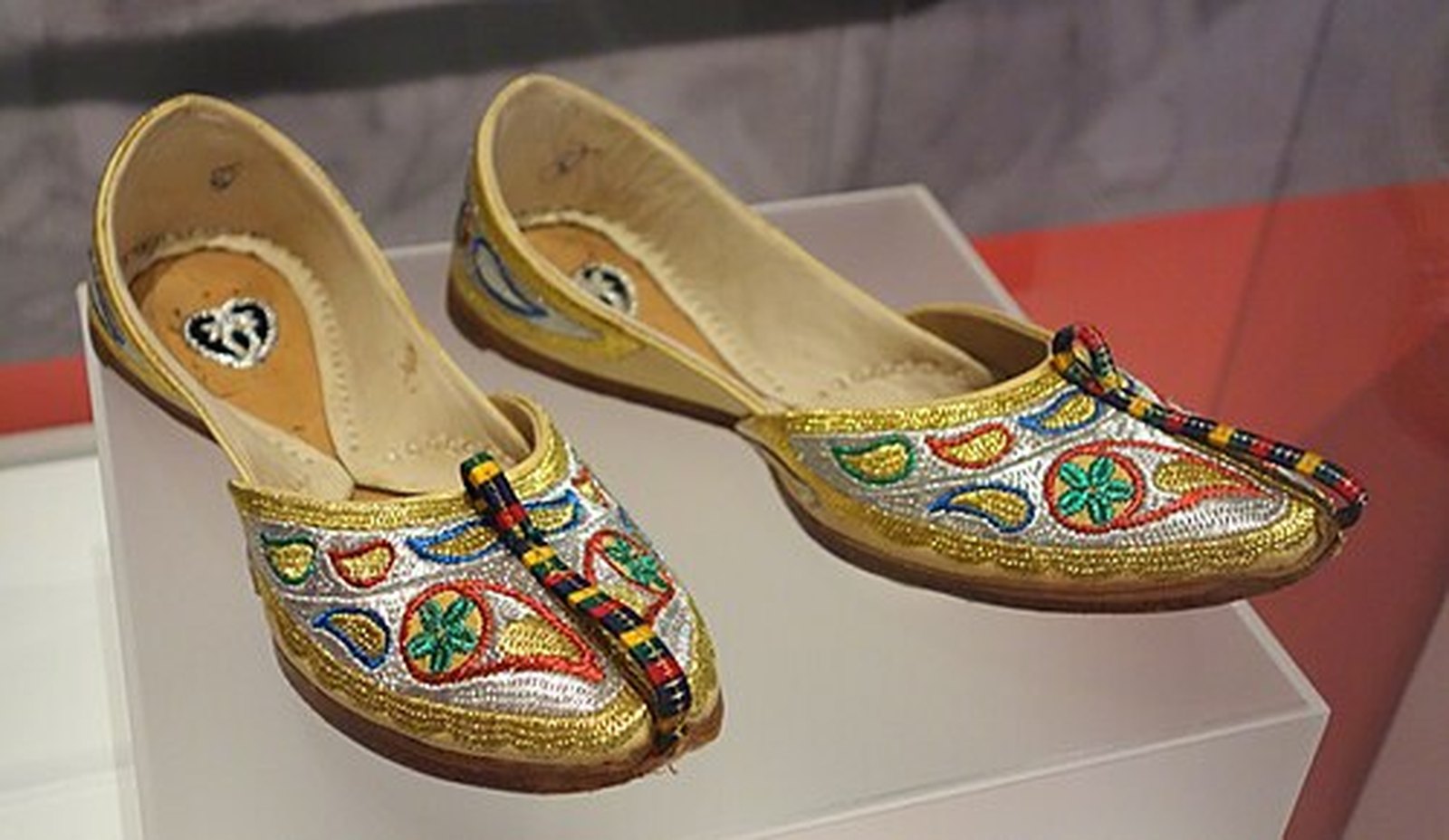
Further north lies Hathipole, the primary artery for textiles and traditional footwear. The scent of the street changes abruptly here, dominated by the rich, earthy aroma of cured leather and raw indigo dye. The focus for the artisan trail in this quarter is the mojari, the traditional Rajasthani slip-on shoe that features a distinctive curled toe and elaborate embroidery.
The construction of a genuine mojari is a masterclass in functional art. The soles and uppers are crafted from heavily cured camel or buffalo leather, materials chosen for their exceptional durability in the harsh, rocky terrain of the desert. Unlike modern, mass-produced footwear, a traditional mojari has no left or right distinction when first purchased; the leather is designed to mold precisely to the wearer’s foot over time through the heat and moisture of daily use.
The aesthetic value lies in the embroidery. Artisans, often women working from the courtyards of their homes, use vibrant silk threads to stitch complex geometric patterns directly into the tough leather. When navigating Hathipole, distinguishing a high-quality mojari involves examining the tightness of these stitches and the suppleness of the leather upper. A well-crafted pair will bend almost completely in half without cracking the sole, signaling a slow, natural curing process rather than a rushed chemical tan.
The Descent into Evening
The sensory intensity of the Udaipur bazaars demands a slow, deliberate pace. Engaging with the artisans requires patience; it involves sitting on floor cushions, drinking heavily spiced cardamom tea out of small glass cups, and listening to the generational history of the materials.
As the afternoon light fades, the chaotic rhythm of the commercial streets begins to slow. The heavy wooden shutters of the workshops are pulled down, and the intricate silver, leather, and mineral paints are locked away. The grand haveli goes completely silent after dark, sealing off the central courtyards from the public alleys. The daytime chatter vanishes, the carved archways cast long shadows, and the ancient stone pathways empty out. Taking a piece of miniature art or hand-hammered silver from these streets is not merely acquiring a souvenir; it is carrying a fragment of this profound, enduring silence and centuries-old discipline out into the modern world.
