
Every winter a small city of tents rises at Dhordo, at the edge of the Great Rann of Kutch. It is the base for Rann Utsav, Gujarat’s long White Desert festival, and for many visitors it is the entire trip: a comfortable tent, cultural programmes in the evening, a buggy or camel cart out to the salt, and back for dinner. It is a fine, well-organised experience. But the tent city is a stage set at the edge of something much bigger. If you give yourself even one extra day, the Rann and the villages around it open up in a way the festival programme cannot quite manage.
First, understand what the Rann is
The Great Rann is a vast seasonal salt marsh. In the monsoon much of it floods; as the water evaporates through autumn, it leaves behind a crust of salt that by mid-winter forms the dazzling white plain people travel to see. It is not sand desert like the Thar near Jaisalmer. It is flat, hard in places, soft in others, and so open that your sense of distance stops working. Its condition changes from year to year depending on rains, and early in the season some areas can still be damp.
The White Rann near Dhordo lies in a border district, and visitors need an entry permit. Gujarat’s official permit portal (rannpermit.gujarat.gov.in) is the place to apply, and local check-posts can also process permits. Rules and fees can change, so check them close to your dates rather than relying on an old blog.
The villages around Dhordo
Kutch’s Banni grasslands and the settlements around Dhordo, Hodka and further towards Khavda are home to pastoral and craft communities whose work is the real treasure of the region. You will see bhungas, the round mud houses with conical thatched roofs, often decorated inside with mirror-work and mud relief. You will see embroidery so dense with stitches that a single piece can take months, and leatherwork, lacquerware and block printing in different villages.
How to visit well:
- Go with a local guide or through a recognised craft organisation if possible; they know which families welcome visitors and when.
- Remember that a home that sells crafts is still a home. Wait to be invited inside.
- Buy directly when you can, and do not bargain a hand-embroidered piece down to the price of a printed one.
- Ask before photographing people, especially women.
Organisations in Bhuj and the surrounding area work with artisans and can help you understand which pieces are handmade, which techniques belong to which community, and what fair pricing looks like.
Kalo Dungar: the black hill
North of the White Rann, Kalo Dungar is the highest point in Kutch and the best viewpoint over the salt. From the top, on a clear afternoon, the Rann stretches out like a frozen sea, and you understand for the first time how huge it really is. There is a small temple at the summit with a long tradition of feeding jackals, and the area is known for a so-called magnetic hill effect on the road, which is a nice story for the drive up. Road access and timings near the border area can be regulated, so ask locally before setting out.
The salt flats at the far edges
The watchtower area near Dhordo is where the festival’s crowds gather at sunset and on full moon nights. Walk ten minutes in any direction from the main paths and the noise falls away surprisingly fast. You do not need to go far, and you should not wander out alone after dark; the flatness that makes the Rann beautiful also makes it disorienting. But even a short walk beyond the busiest zone changes the experience completely. The salt crunches, the light turns pink and then blue, and the horizon disappears. Our piece on the empty hour is about exactly this.
Bhuj, Dholavira and the longer view
If you have time, Bhuj is worth a full day for its old palaces, museums and markets, and as a base for craft villages to the north. Further east, Dholavira, the great Harappan city site, is one of India’s UNESCO World Heritage Sites and gives the region a depth of time that few desert trips can match. The 2025–26 Rann Utsav season extended its programme to include a tent city near Dholavira as well, though the distances between sites are long and you should plan the drive honestly.
The tent city, used well
None of this means skipping Dhordo. The tents are comfortable, the evening performances introduce music and dance from across Kutch, and the organised transport to the White Rann takes the stress out of the logistics. The trick is to treat the tent city as a base rather than the destination. Use the mornings for villages and crafts, the late afternoons for the salt, and the evenings for the programme. If you are pairing Kutch with Jaisalmer, our three-night itinerary suggests how.
Food on the edge of the salt
Kutchi food is simple, filling and built for a dry land: millet rotla, buttermilk, khichdi, kadhi and seasonal vegetables, with sweets that vary from village to village. Some homestays and village kitchens near Dhordo and Hodka serve home-style thalis, and eating one is a better introduction to Banni life than any stage show. Ask your host what is local and what has been added for visitors, and you will usually get an honest, often funny, answer.
What to bring
- Layers: Kutch winter days can be warm and the nights properly cold.
- Sunglasses and sunscreen: the white salt reflects harsh light.
- Closed shoes you do not mind getting salty.
- Cash in small notes for village purchases, as connectivity and card machines can be patchy.
- Your permit and ID, with copies.
The edge is the point
The tent city closes each spring and the land returns to its herders, its craftspeople and its birds. What lasts is not the stage but what surrounds it: a woman bent over a square of cloth bright with mirrors, the black hill, the salt going blue at dusk. Go to the festival. Then walk to its edge, and keep going a little further.
More from Issue 82
- Issue 82 index: Desert Festivals
- Jaisalmer Fort
- Jaisalmer when the fort is still a neighbourhood
- The hour the White Rann is empty

Mapping Diwali Celebrations Across India
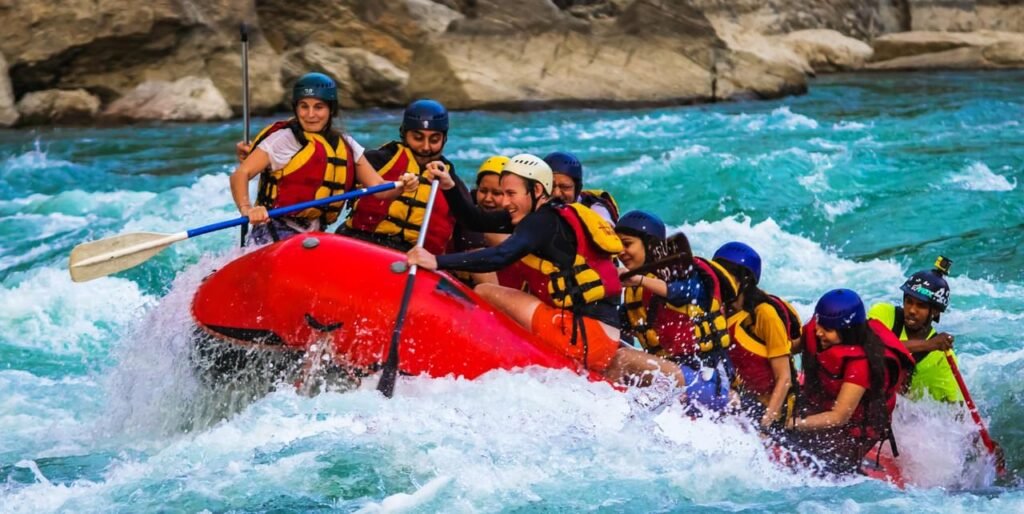
A Tapestry of Adventure in Rishikesh
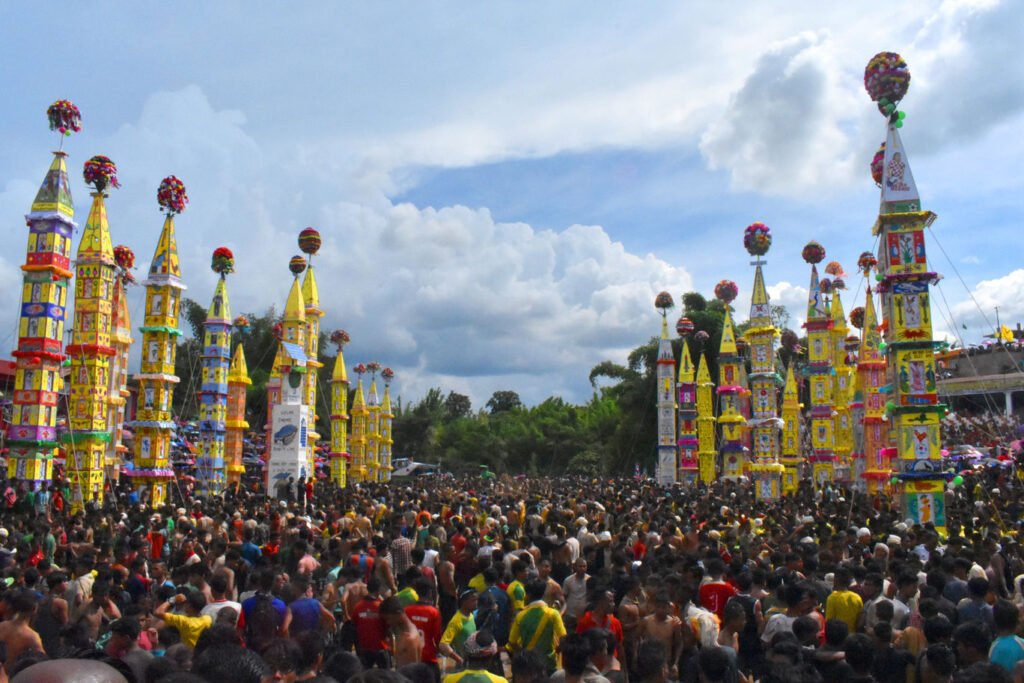
Meghalaya’s Behdienkhlam Festival is all about colours and prosperity
The Town You Sleep In
Why the base town shapes a monsoon waterfall trip more than any single fall, what to look for, and towns in Karnataka, Kerala and Goa worth considering.
One village ghat upriver
Train versus road that week
Markets before the 20th, not on it
Journeys Worth Discovering
Explore inspiring destinations, memorable journeys and travel stories from across India and beyond.
Explore destinations




