
Kyoto in cherry blossom season is one of the great sights of the travelling world, and also one of the most crowded. Less than an hour away by train lies Nara, Japan’s ancient capital, a city of temples, deer and wide green parkland where spring can feel noticeably calmer. Nara is no secret, and it has its own busy moments, but it rewards the traveller who stays overnight and walks at the edges of the day. If Kyoto is the famous one, Nara is the quieter place beside it.
A city older than Kyoto
Before Kyoto became the imperial capital, Nara held that role in the eighth century, during what is now called the Nara period. Many of the city’s great temples and shrines date their origins to that time, and together with the surrounding landscape they are recognised by UNESCO as the Historic Monuments of Ancient Nara.
That age is something you feel here. The buildings are spread out across open parkland rather than packed into dense streets, and there is a sense of space that Kyoto’s busiest districts rarely offer in spring.
Getting there
Nara is an easy trip from both Kyoto and Osaka. From Kyoto, the Kintetsu line runs to Kintetsu-Nara Station, which is close to Nara Park, while JR trains run to JR Nara Station, a little further from the main sights. Journey times are typically under an hour, depending on the service. Check current timetables, and remember that an IC card works on these lines.
Most visitors come as a day trip and leave by late afternoon. That is your opportunity.
Spring in Nara Park
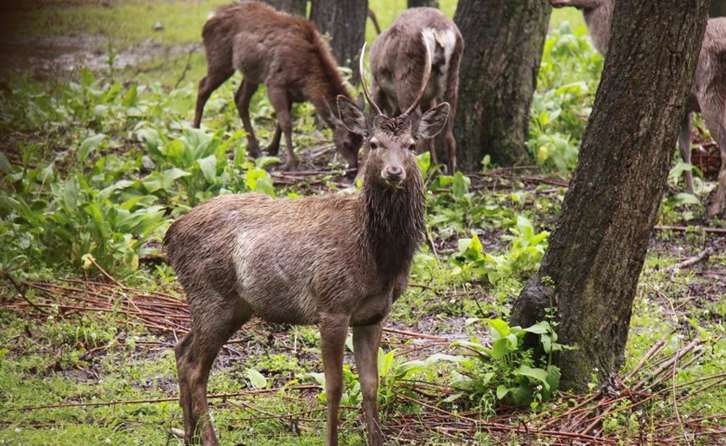
Nara Park is the heart of the city, a vast space of lawns, woodland and temple grounds. It is home to hundreds of free-roaming sika deer, considered sacred messengers in Shinto tradition and protected as a national natural treasure. They are the city’s most famous residents.
In spring, the park’s cherry trees bloom around the same time as Kyoto’s, though exact dates vary every year. Because the park is so large, the blossoms are spread out, and even on busy days you can usually find a quieter corner by walking a little further from the main paths. The area around Nara Park’s ponds, the slopes near Wakakusayama, and the grounds of smaller temples are worth exploring.
Meeting the deer, responsibly
Nara’s deer are wonderful, and they can also be pushy. They are wild animals, and they can nip, butt or kick, especially when they think you have food. Vendors in the park sell special deer crackers, shika senbei, which are the only food you should give them. Do not feed them anything else, and keep plastic bags and paper out of reach, as eating litter can harm them.
Some deer have learned to bow, and many visitors enjoy bowing back. Be gentle, be patient with children around them, and give the deer space, particularly in spring when some are pregnant or protective.
Todai-ji and the Great Buddha
Todai-ji is Nara’s most famous temple and one of the most impressive sights in Japan. Its main hall, the Daibutsuden, houses a giant bronze seated Buddha and is often described as one of the largest wooden buildings in the world, even though the current structure is smaller than the original.
Arrive at opening time if you can. In the morning light, with mist sometimes still lingering over the park, the approach through the Nandaimon gate, guarded by towering wooden figures, is unforgettable. By late morning, school groups and tour buses arrive in force.
Kasuga Taisha and the lantern paths
A short walk through the forest from Todai-ji brings you to Kasuga Taisha, a Shinto shrine famous for its vermilion buildings and its thousands of lanterns, stone ones lining the paths and bronze ones hanging in the corridors. The walk through the primeval forest that surrounds the shrine is one of the most peaceful experiences in Nara, especially early or late in the day.
Naramachi: the old merchant quarter
South of the park lies Naramachi, the old merchant district, with narrow lanes and traditional wooden townhouses, some converted into cafés, galleries and small shops. It is a lovely place to wander in the late afternoon, when the day-trippers are heading back to the station. Look for small museums and preserved houses that show how merchant families once lived.
Why stay the night
The single best thing you can do in Nara is to stay overnight. In the evening, the park empties. The deer settle down. The temple roofs are silhouetted against the sky, and the city becomes quiet in a way that Kyoto rarely does in blossom season.
Then, the next morning, you can be at Todai-ji or Kasuga Taisha at opening time, before the trains from Kyoto and Osaka start arriving. Nara has a range of places to stay, from business hotels near the stations to traditional inns. Book ahead in spring.
Beyond the centre
If you have more time, consider one of the temples further from the centre. Horyu-ji, in the town of Ikaruga south-west of Nara, is home to some of the oldest surviving wooden buildings in the world and is part of a separate UNESCO World Heritage Site. It takes some planning to reach, but its sense of age and calm is extraordinary.
To the south, the mountains of Yoshino are among Japan’s most celebrated cherry blossom destinations, with slopes of trees that typically bloom in stages from lower to higher elevations, often in early to mid-April. Yoshino gets very busy at peak bloom, so go early and check the forecast.
Eating in Nara
Nara has its own food traditions. Kakinoha-zushi, pressed sushi wrapped in persimmon leaves, is a local speciality and makes a perfect picnic in the park. Look out for nara-zuke, vegetables pickled in sake lees, and for mochi pounded fresh in front of you at some shops, a lively bit of theatre. Spring brings sakura-flavoured sweets here as elsewhere in Japan.
The quieter choice
Nara will not replace Kyoto on a first trip to Japan, and it does not need to. But by giving it a night, or two, you balance the intensity of Kyoto’s blossom season with something slower and older. You will walk among deer under the cherry trees, stand before the Great Buddha in the morning hush, and wander lantern-lined paths through ancient forest, all without the crowds of the more famous city next door.
Sometimes the best way to see the famous place is to step a little to one side of it.
More from Issue 71
- March 2025: Inside This Issue
- Editor’s Letter: March, the Month the World Opens Its Doors
- Affordable International Destinations with Perfect March Weather
- Why Japan’s Early Cherry Blossoms Make March a Dream
- Explore Southeast Asia with Less Rain, More Fun
- Cultural Experiences in Morocco, Spain & Egypt This Month
- Packing Tips & Travel Hacks for March Travel Abroad
- Seville to Marrakech: The One Route That Explains March Travel
- Three Days in Kyoto at Blossom Time, Not a Checklist
- What to Skip on Your First March Trip Abroad
- Food, Stay and Getting Around: Travelling Abroad in March
Unveiling Kashmir’s Wildlife

The Himalayan Char Dham Yatra

Buddha Jayanti
The Town You Sleep In
Why the base town shapes a monsoon waterfall trip more than any single fall, what to look for, and towns in Karnataka, Kerala and Goa worth considering.
One village ghat upriver
Train versus road that week
Markets before the 20th, not on it
Journeys Worth Discovering
Explore inspiring destinations, memorable journeys and travel stories from across India and beyond.
Explore destinations




