
Editor’s note: This is a guest slot. The piece below is presented as a guest contributor’s first-person account of a morning spent with a family of ghat priests in Varanasi. Names have been left out at the contributor’s request. The guest byline and final details should be confirmed before publication.
I met Panditji, as everyone called him, on my second morning in Varanasi, on a small ghat south of Dashashwamedh. I had come down before sunrise to watch the river, and he was already there, sitting beneath a large bamboo umbrella on a wooden platform, arranging small brass pots, flowers, sandalwood paste and a worn notebook. He looked up, asked where I was from, and invited me to sit. I stayed for the whole morning.
Before the sun
Ghat priests, sometimes called pandas or ghatias, have served pilgrims on the riverfront for generations. Many families have hereditary rights to particular stretches of the ghats, and some keep records of the families they have served for decades, even centuries, often organised by district or village of origin. Panditji explained that his family had sat on this ghat “since before anyone can remember”, and that his notebook, and older ones at home, recorded the names of pilgrims whose ancestors had come to his ancestors.
He began his day before dawn with his own bath in the river, then his own prayers, before the pilgrims arrived. By the time I joined him, he was ready.
The pilgrims
The first pilgrims came as the sky turned grey. A family from a village in Bihar, the grandmother leading, wanted to perform rituals for a relative who had died some months earlier. Panditji asked their names, their village, their lineage, and looked through his notebook. He found an entry from many years before. The grandmother nodded, as if this was what she had expected.
The ritual took perhaps half an hour. Panditji recited, the family repeated, offerings were made into the river. I did not understand most of the Sanskrit, but I understood the care with which he guided them, prompting gently when they forgot a line, adjusting the flowers in a son’s hands. At the end the family gave him a dakshina, an offering, and he blessed them. There was no fixed price that I could see; he told me later that people give what they can.
Between rituals
Between pilgrims, Panditji talked. He spoke of the river in flood, when the water rises far up the steps and his platform has to be moved. He spoke of the changes he had seen: more visitors from abroad, more cameras, the new corridor at the Vishwanath temple, the boats with engines. He did not complain, exactly. He said the river had seen everything and would see more.
He also spoke of Dev Deepawali, which was a few days away. For him it was the busiest time of year, with pilgrims coming to bathe on Kartik Purnima, and his family would light lamps on their stretch of the ghat in the evening. His grandsons, he said, would do most of the work; he would sit and watch.
The sun
When the sun rose over the far bank, everything on the ghat changed colour. The river turned gold, then silver. Pilgrims stood in the water, palms together, offering water to the sun. Panditji paused, faced the river and prayed silently. I put my camera away. Some things, I felt, should not be photographed by a stranger.
What I learned
I came to Varanasi expecting the spectacle of the ghats and found something more ordinary and more profound: a man doing his work, as his father and grandfather had done, helping people make sense of loss and devotion in the oldest ways they knew. The rituals were for the pilgrims, not for me, but Panditji’s willingness to let me sit and watch, and to explain, was a gift.
For readers who want a similar morning
If you are drawn to the ghats in the early morning, you will see priests at work under their umbrellas on most ghats. Here are a few suggestions from my own experience.
- Go early, before sunrise, when the rituals are most active and the ghats quietest.
- Sit at a respectful distance unless invited closer.
- Never photograph a ritual, especially a funeral or ancestral rite, without explicit permission, and accept a refusal gracefully.
- If you are invited to participate in a ritual, understand that a dakshina is customary; agree on an amount in advance if a priest proposes one, to avoid misunderstandings.
- Be wary of anyone who approaches you insistently offering a “special puja” for good fortune at a set price. The priests I met did not chase visitors.
- Remove your shoes on the ghat platforms where others do, and dress modestly.
The other priests on the ghat
Panditji was not alone. Along the steps, other priests sat under their own umbrellas, each with a small group of pilgrims or a regular devotee. Some were young men who had studied Sanskrit at one of the city’s traditional schools; others were elderly, like him. There were barbers, too, shaving the heads of mourning sons, and boys selling flowers and leaf-boats with tiny lamps. Together they formed a working community of the riverfront that most visitors walk past without noticing. Watching it for a morning gave me a sense of how much of Varanasi’s life is not performance at all, but routine, service and inherited duty, carried out every single day whether or not anyone is watching or taking pictures.
The morning’s end
By mid-morning the pilgrims thinned. Panditji folded his notebook, wrapped his brass pots in a cloth and stood up, his knees cracking. He said he would be back tomorrow, as he was every day. I thanked him, and he waved my thanks away. “Ganga brought you,” he said. “Come back for Dev Deepawali.”
I did. On the night of the lamps, I found his stretch of steps glowing, his grandsons lighting diya after diya, and Panditji sitting under his umbrella in the dark, watching, exactly as he had said he would.
More from Issue 79
- Dev Deepawali index
- Editor’s letter: Varanasi & Dev Deepawali
- The ghats the night before, not only the night of
- A boat you should not book
- The old city in the afternoon
- What the lamps do to the lanes
- Three nights is the whole trip
- A priest’s morning, told by a guest
- Silk, not a shopping list
- Dates and the crowd calendar
- One village ghat upriver
- The photograph from the steps
Three nights is the whole trip
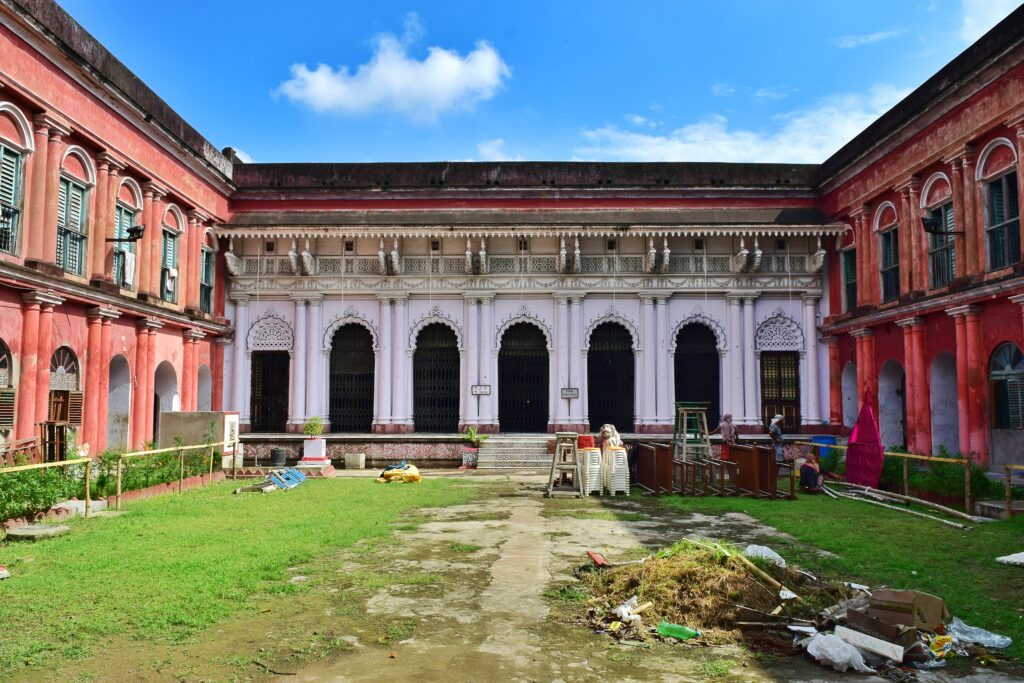
A North Kolkata Walk: Shobhabazar to Jorasanko
Editor’s Letter: Waterfalls of India
The Town You Sleep In
Why the base town shapes a monsoon waterfall trip more than any single fall, what to look for, and towns in Karnataka, Kerala and Goa worth considering.
One village ghat upriver
Train versus road that week
Markets before the 20th, not on it
Journeys Worth Discovering
Explore inspiring destinations, memorable journeys and travel stories from across India and beyond.
Explore destinations




