
Murshidabad is the kind of place that rewards people who arrive without a checklist. On paper it is a small town on the banks of the Bhagirathi river, a few hours north of Kolkata. In history, it was the capital of Bengal under the Nawabs in the eighteenth century, one of the richest regions of the Mughal empire, and the setting for events that changed the course of Indian history. The Battle of Plassey in 1757, fought not far from the town, led to the defeat of Nawab Siraj ud-Daulah and the rise of the East India Company’s power in Bengal.
Today, the town is quiet and a little faded. Palaces, mosques, gardens and cemeteries are scattered along both banks of the river, some well maintained, others crumbling. Three days gives you enough time to see them without rushing and to feel the gap between what the town once was and what it is now.
Getting there and getting around
Murshidabad can be reached by train from Kolkata, with several services stopping at Murshidabad or nearby Berhampore, and by road. The journey usually takes around four to six hours. Berhampore, the district headquarters, has more accommodation options; Murshidabad town itself has a smaller range of simple hotels and guesthouses.
Getting around is easiest by hired auto-rickshaw, tonga or cycle-rickshaw. Many sites are spread out, and a local guide can make a real difference, both for the stories and for navigating the lanes. Agree on prices and an itinerary in advance.
Day one: Hazarduari and the riverfront
Start with the Hazarduari Palace, the town’s best-known building. Built in the 1830s under the Nawab Humayun Jah, it was designed in a European neo-classical style by an architect associated with the British, according to most sources. Its name means palace of a thousand doors, though many of them are said to be false doors, perhaps meant to confuse intruders. Today it houses a museum, run by the Archaeological Survey of India, with weapons, paintings, furniture and other objects from the Nawabi period. Check opening days and timings in advance, and be aware that photography inside has generally been restricted.
Facing Hazarduari is the Nizamat Imambara, one of the largest imambaras in India, rebuilt in the nineteenth century after a fire. Between them stands a small clock tower and the Madina mosque. The lawns between these buildings, sloping towards the river, are a pleasant place to rest in the afternoon.
In the evening, walk along the riverbank and watch boats crossing the Bhagirathi. The light here at dusk is soft and the town feels very far from the bustle of the city.
Day two: Katra Masjid, Kathgola and the Jain heritage
Begin early at the Katra Masjid, built in the early eighteenth century by Murshid Quli Khan, the first Nawab of Bengal, after whom the town is named. It is a large, imposing mosque with a vast courtyard and corner towers. Murshid Quli Khan is said to be buried beneath the stairs at the entrance, so that worshippers would pass over his grave, according to local tradition.
Next, visit the Kathgola Bagan, a garden palace built by a wealthy Jain merchant family in the nineteenth century, with a mansion, a temple and gardens. Murshidabad’s Jain merchant families, sometimes called Sheherwali, played an important role in the town’s commerce, and their temples and mansions are an often-overlooked part of its heritage. The nearby Jagat Seth’s house recalls the great banking family who were among the most powerful financiers in eighteenth-century Bengal.
In the afternoon, head to Motijheel, a horseshoe-shaped lake associated with Ghaseti Begum, aunt of Siraj ud-Daulah. The area has been developed as a park, and parts of it can feel artificial, but it is still a calm place to sit.
Day three: across the river and Khushbagh
On your final day, take a boat across the Bhagirathi to Khushbagh, the garden of happiness. This is where Siraj ud-Daulah and several members of his family are buried. The cemetery is quiet and shaded, and it is a moving end to the story that began at Plassey.
Back on the eastern bank, stop at the Nashipur Rajbari, a nineteenth-century palace of a zamindar family, and the Kiriteshwari temple, an old Shakti shrine in the area, if time allows. The Jahan Kosha cannon, a large bronze cannon cast in the seventeenth century, sits near the Katra Masjid and can be fitted into any day.
If your train leaves late, spend the last hours in the market. Murshidabad has long been known for silk, and the town and district have a tradition of weaving. Buy from reputable shops and ask about the fabric.
A note on Plassey
The battlefield of Plassey, or Palashi, lies some distance south of Murshidabad, and a memorial marks the area. There is little to see beyond the monument and fields, but for those interested in history, a brief stop on the way to or from Kolkata can add context to everything you see in the town. The story is complicated: the battle is often remembered as much for the betrayal of the Nawab by some of his own commanders, including Mir Jafar, as for the fighting itself. Your guide in Murshidabad will almost certainly have opinions about it.
Food
Murshidabad’s food reflects its Nawabi heritage, with biryanis and meat dishes, alongside Bengali staples and sweets. The district is also known for its mangoes in summer, and many accounts say the Nawabs grew dozens of varieties. Restaurants are simple; ask locals where they eat.
When to go
The cooler months from November to February are the most comfortable. Summers are hot and humid, and the monsoon months can be wet, though the river is at its fullest then. Weekends and holidays can bring large crowds of day-trippers.
Why three days
You could see Hazarduari and a few other sites in a single day trip, and many people do. But Murshidabad is a town whose stories need time to sink in. Three days lets you visit both banks, return to the river in the evening, talk to a guide about the history, and notice the quiet details: a carved door, an old tomb, a family mansion with a crumbling facade. That is when the past begins to feel present.
More from Issue 52
- August 2023
- Editor’s Letter: West Bengal, From the Hills to the Delta
- Darjeeling: A Symphony of Nature, Culture, & Colonial Charm
- Darjeeling’s Tea Tourism: A Symphony of Senses in the Champagne of Teas
- Explore Darjeeling’s Multicultural Delights
- Uncover Darjeeling’s Adventurous Heart
- Darjeeling: A Cultural Maestro
- Siliguri to Darjeeling Along the Toy Train Line: The Route That Explains North Bengal
- What to Skip on Your First Trip to Darjeeling
- Kalimpong: The Quieter Hill Town Beside Darjeeling
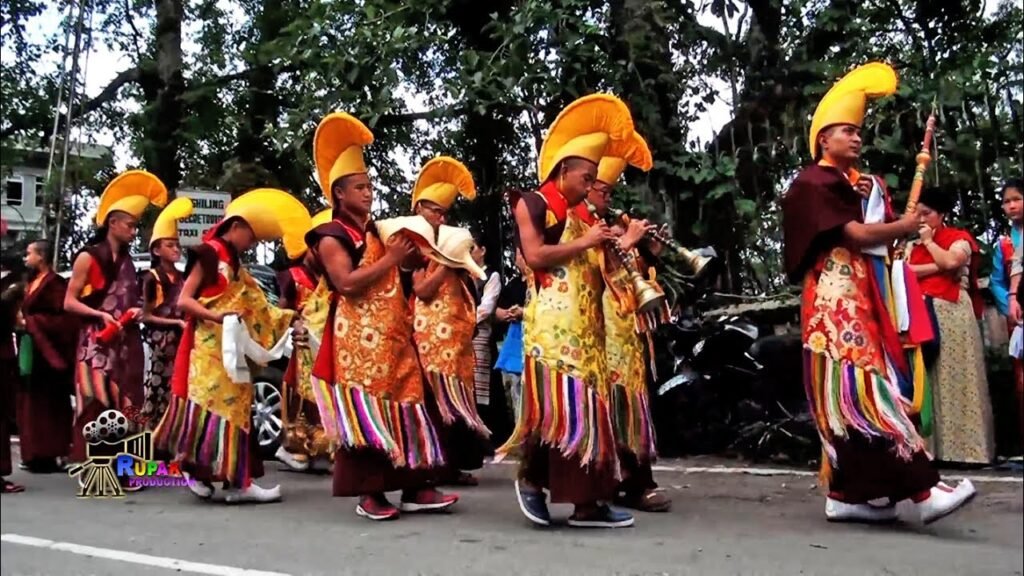
Saga Dawa

Best Spiritual Places to Visit in India in January for Peace and Renewal

US Says Chandrayaan 2 Mission “A Huge Step Forward For India”
The Town You Sleep In
Why the base town shapes a monsoon waterfall trip more than any single fall, what to look for, and towns in Karnataka, Kerala and Goa worth considering.
One village ghat upriver
Train versus road that week
Markets before the 20th, not on it
Journeys Worth Discovering
Explore inspiring destinations, memorable journeys and travel stories from across India and beyond.
Explore destinations




