
To fully comprehend the historical weight of Udaipur, one must eventually leave it. The delicate lakeside palaces, the intricately painted havelis, and the elaborate fountain gardens represent the luxurious culmination of the Mewar dynasty. However, this artistic and architectural flourishing was only made possible by a brutal, unyielding perimeter of defense located miles away. The true foundation of the kingdom was not built on the calm waters of Lake Pichola; it was carved into the jagged, unforgiving ridges of the Aravalli mountains. Undertaking a journey beyond the city limits to Kumbhalgarh Fort and the Ranakpur Jain Temple reveals the stark duality of the region: the absolute militaristic defiance required to hold the territory, and the profound spiritual devotion that flourished within its protected valleys.
The Topographical Buffer: Navigating the Aravallis
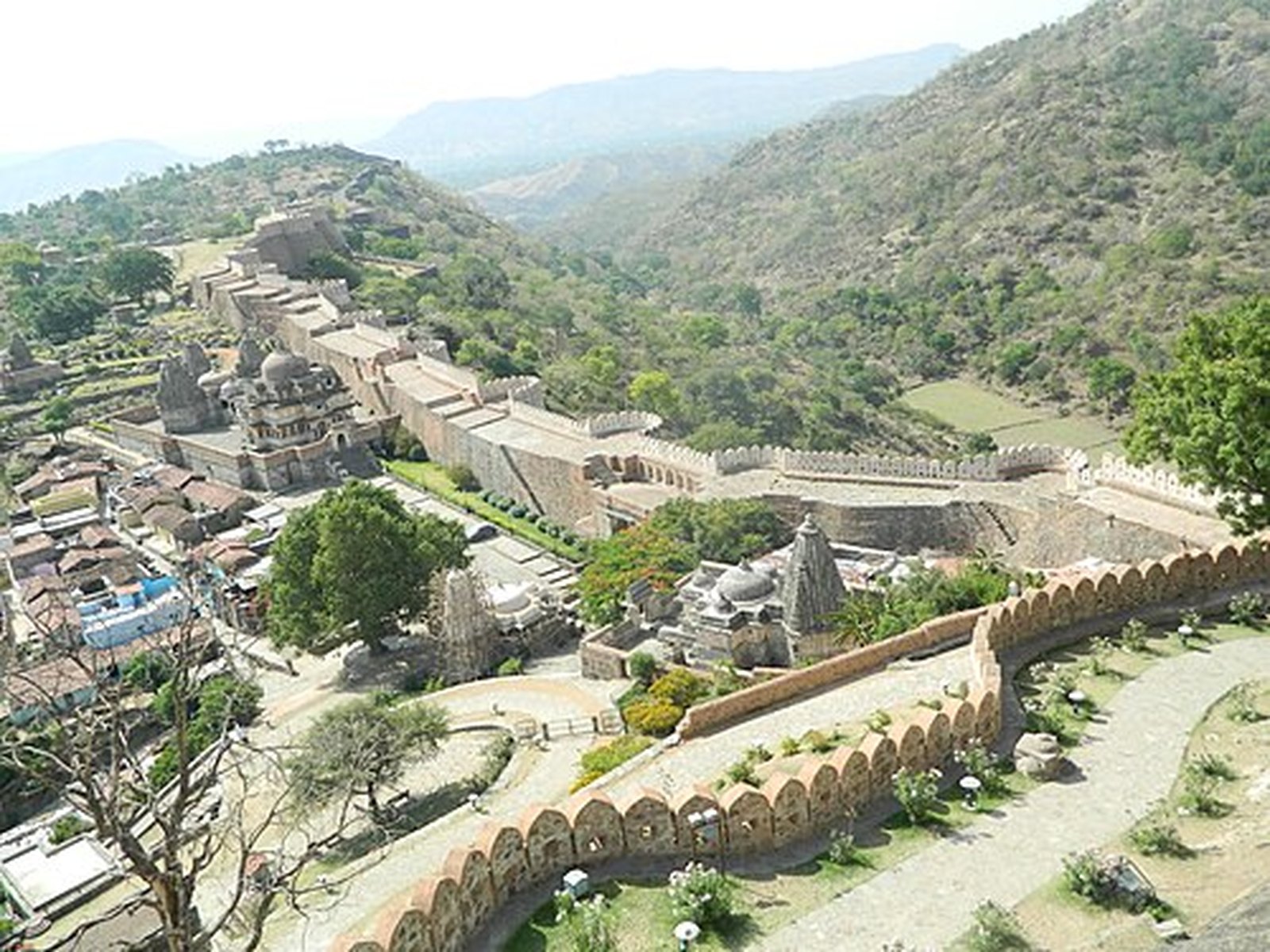
The journey northwest from Udaipur strips away the manicured aesthetics of the city almost immediately. The landscape transitions into a severe, dry-deciduous ecology dominated by the ancient Aravalli range. This terrain is not merely a scenic backdrop; it was the ultimate strategic weapon of the Rajput kings. The winding, single-lane roads cut through steep ravines and dense scrub forests that, for centuries, thwarted the heavy cavalry and artillery of invading Mughal and Sultanate armies.
Traveling this route offers a visual regression into a much older version of Rajasthan. The modern urban sprawl quickly yields to isolated agrarian hamlets where Persian water wheels, known as rahats, are still operated by slow-moving oxen to draw water from deep stone wells. Herds of Marwari goats and camels navigate the thorny brush, guided by Rabari herdsmen wearing the vivid red turbans that have defined the regional dress for generations. The sheer isolation of these mountain roads sets a psychological stage, making it clear that whatever structures lie at the end of this difficult terrain were built by a society obsessed with seclusion and survival.
Kumbhalgarh: The Architecture of Defiance
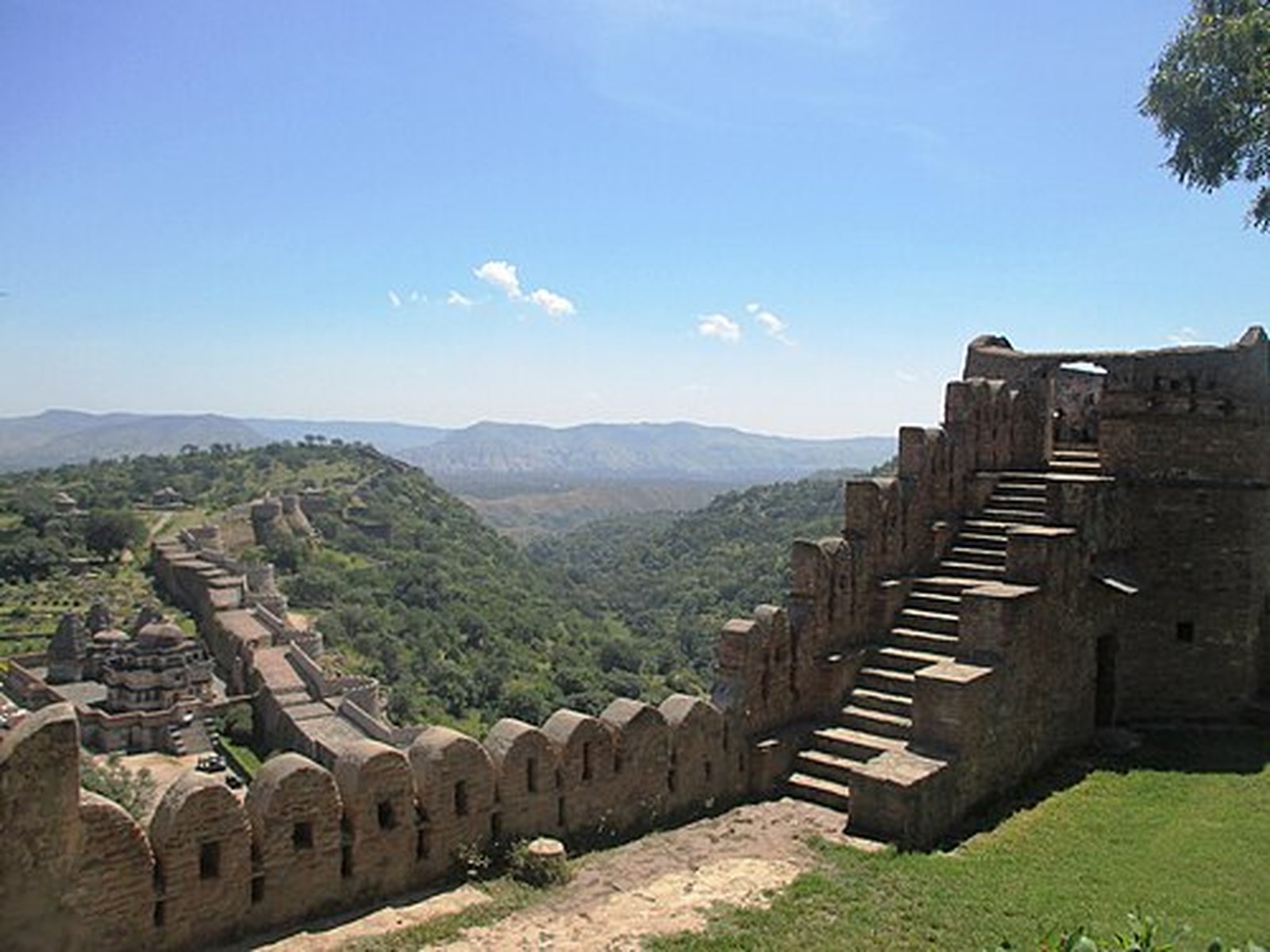
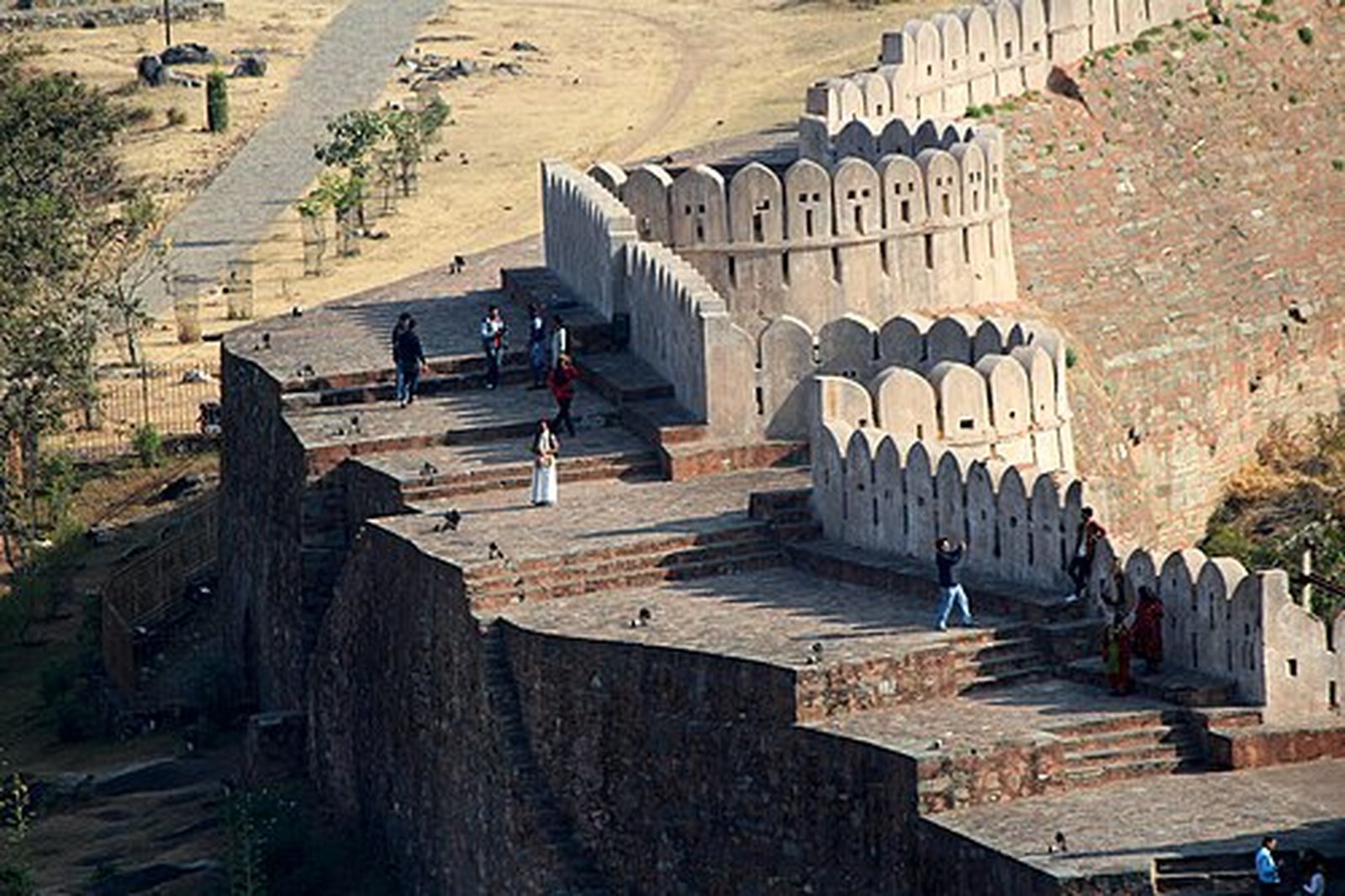
Emerging from the dense forest canopy, the first sight of Kumbhalgarh Fort defies logical scale. Built in the 15th century by Rana Kumbha, the fortress does not merely sit on a mountain; it consumes it. The defining feature of Kumbhalgarh is its perimeter wall, a staggering 36-kilometer continuous fortification that undulates wildly over the peaks and valleys, earning its reputation as the second longest continuous wall on the planet, surpassed only by the Great Wall of China.
The military engineering here is uncompromisingly brutal. The outer walls, constructed from massive, unmortared blocks of local granite, measure over 15 feet thick at the base, wide enough, historical records note, for eight horses to ride abreast. The rounded bastions swell outward like the muscles of a giant, designed specifically to deflect cannon fire. To breach this perimeter required not just a massive army, but the ability to sustain a siege in a hostile, resource-scarce mountain environment. It is a historical testament to its design that the fort was only captured once in its entire existence, and only after the defenders ran out of drinking water.
Passing through the Ram Pol, the main entrance, requires navigating a steep, switchbacking ascent engineered to break the momentum of a charging war elephant. Inside the perimeter, the vastness of the compound is startling. The fort enclosed an active, self-sustaining city containing over 360 individual temples, residential quarters, and deep stepwells designed to harvest the monsoon rains.
The physical toll of ascending the inner citadel culminates at the Badal Mahal, the Palace of Clouds. Perched at an elevation of nearly 3,600 feet, this is the highest point of the fortress. The architecture here finally shifts from defensive granite to painted, airy chambers designed to catch the powerful mountain winds. Standing on the western terraces of the Badal Mahal provides an unparalleled, commanding view over the Marwar plains. On a clear afternoon, looking out over the endless expanse of the Thar Desert extending toward Jodhpur, the absolute strategic dominance of this location is undeniable. It is an architecture engineered purely to intimidate.
Ranakpur: The Mathematics of Devotion
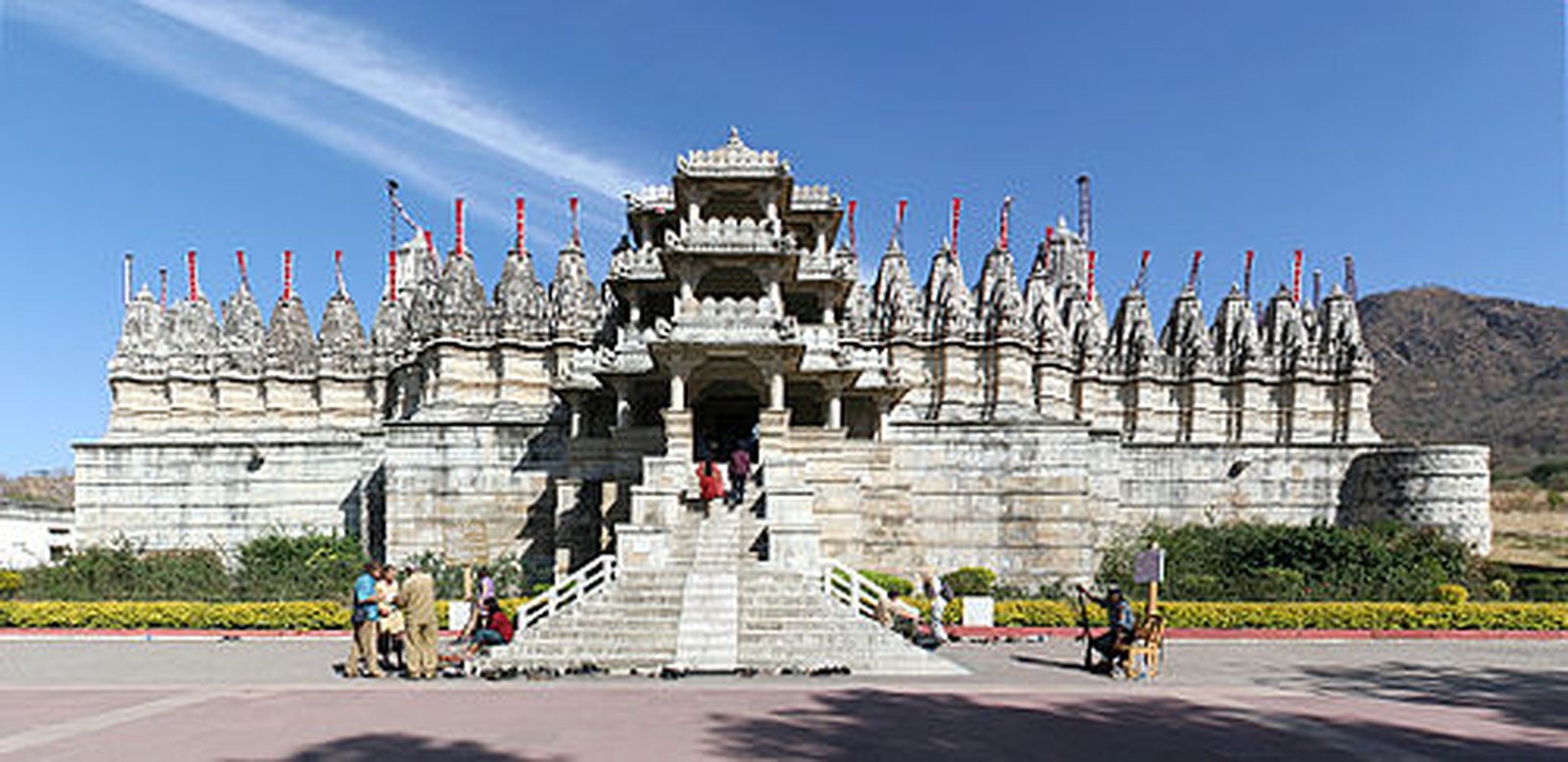
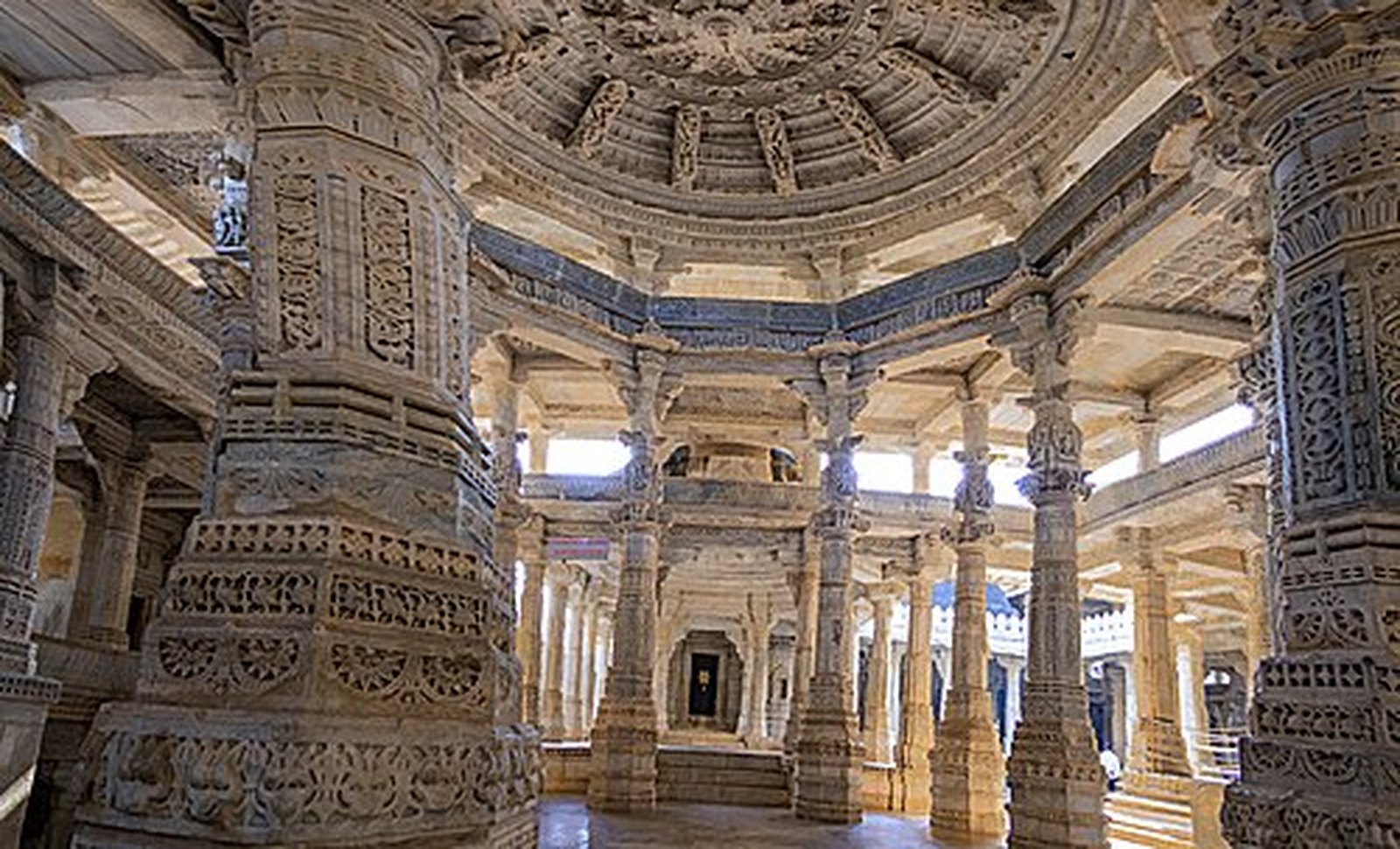
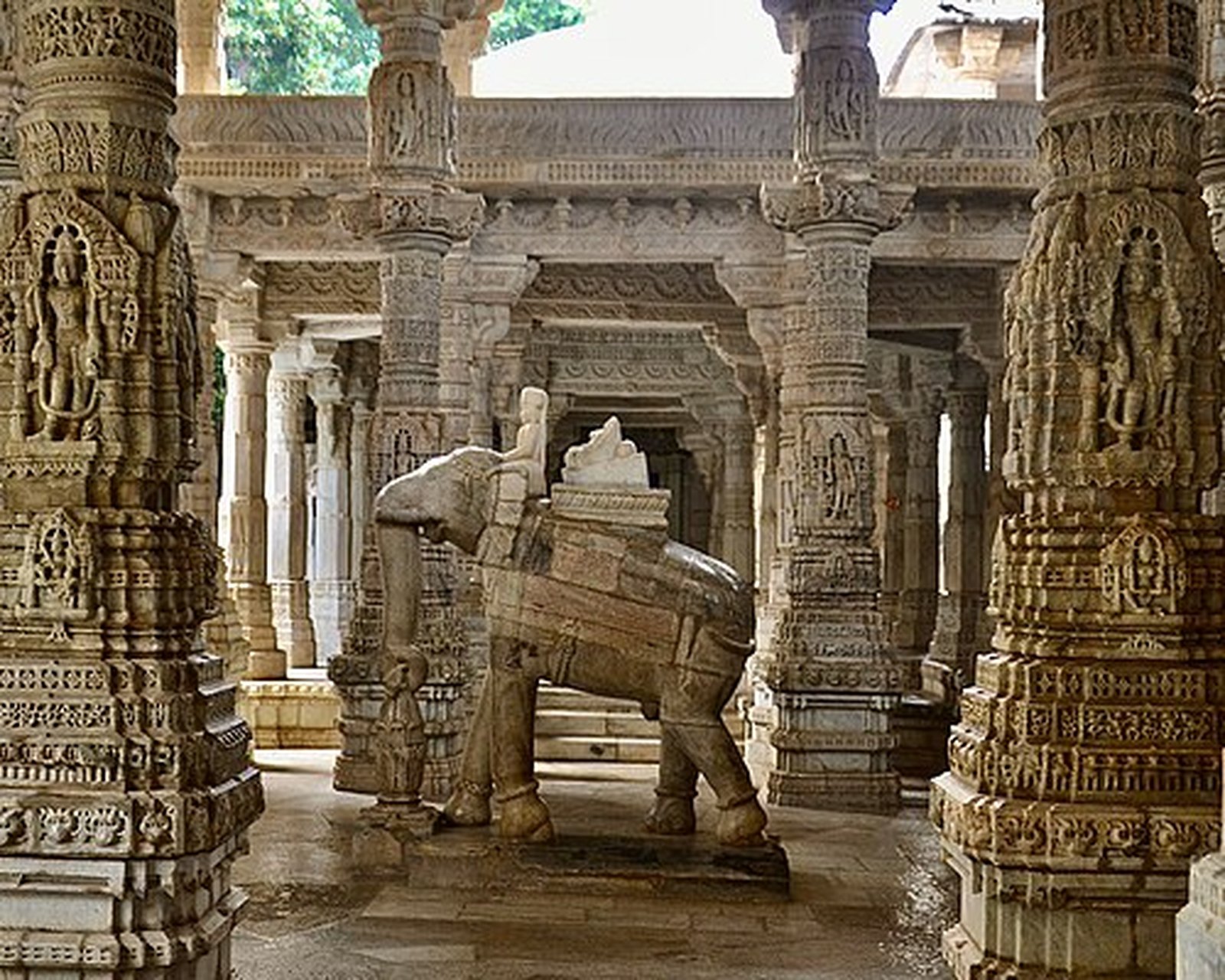
Descending from the martial high ground of Kumbhalgarh and driving deeper into a lush, shaded gorge brings an entirely different architectural paradigm into view. If Kumbhalgarh represents the heavy, impenetrable mass of granite, the Ranakpur Jain Temple represents the impossible fragility of carved marble. Built in the mid-15th century by a wealthy Jain merchant named Dharna Shah, with the direct patronage of Rana Kumbha, this temple complex is a staggering study in geometry, light, and spiritual philosophy.
Constructed from light-colored marble sourced from the surrounding quarries, the main Chaumukha (four-faced) temple is dedicated to Adinatha, the first Jain Tirthankara. The spatial layout of Ranakpur completely rejects the linear, hierarchical design found in many Western religious structures. Instead, the architecture is intentionally labyrinthine. The temple is supported by 1,444 distinct marble pillars, each standing over 40 feet tall. The most astonishing feature of this engineering feat is that no two pillars are carved with the same design. The stonemasons spent over fifty years carving microscopic floral motifs, geometric mandalas, and mythological figures into the stone, turning structural supports into towering works of art.
The environment inside the temple forces a meditative pause. The stone floors are remarkably cool, and the dense arrangement of the 1,444 columns creates a unique acoustic dampening effect. Despite the vast size of the structure, sounds do not echo harshly; instead, they are absorbed by the complex carvings. The architecture is engineered to manipulate sunlight. Because the temple features an open-courtyard design with multiple stories and shifting elevations, the natural light changes continuously throughout the day. As the sun moves across the sky, the color of the marble transitions from stark, brilliant white at midday to a warm, glowing amber in the late afternoon. The columns cast shifting, complex shadows across the interior, giving the cold stone an illusion of kinetic life.
The spiritual philosophy of Jainism, which centers on non-violence and equality, is baked directly into the blueprints. There are no dark, secluded inner sanctums reserved only for high priests. The four-faced design ensures that the central idol can be viewed from all four cardinal directions, emphasizing that the divine is accessible from every path. To walk through Ranakpur is to experience a masterclass in architectural mathematics acting as a vessel for faith.
The Nocturnal Return to the Valley
The journey back toward the city provides the final, essential perspective on the region. As the vehicle winds back through the Aravalli passes, the harsh daytime sun drops below the craggy peaks. The mountains go completely silent after dark. The rural hamlets vanish into the shadows, the temperature plummets, and the dense, dry-deciduous forest reclaims the landscape. The sheer isolation of the valleys becomes absolute, illuminated only by a vast, unpolluted canopy of stars.
Breaking through the final mountain pass and seeing the distant, scattered lights of Udaipur glowing in the valley below feels like a return to civilization. Re-entering the city limits as the heavy traffic dies down and the municipal lakes settle into black, glassy stillness provides a profound sense of context. The floating palaces and delicate havelis of the urban core are undeniably beautiful, but their existence was paid for by the towering granite bastions of Kumbhalgarh and blessed by the mathematical devotion of Ranakpur.
The story of Mewar cannot be told exclusively through its lakes and palaces. By traveling beyond the outer gates, navigating the brutal topography, and witnessing the monumental achievements hidden within the hills, the true scale of this ancient kingdom is finally laid bare.
