
Behind the Quiet Green Scenery Lies a Finely Tuned Agricultural Engine Running Under the Canopy
Coorg is often celebrated as a serene hill station—a realm of rolling mist, historic bungalows, and quiet winding roads tucked into the Western Ghats of Karnataka. For the casual traveler arriving in September, the landscape appears almost entirely passive. The heavy monsoon downpours that battered Kodagu district from June through August begin to taper off, leaving behind washed roads, roaring waterfalls, and valleys drenched in green. However, behind this tranquil scenery lies a bustling, highly organized agricultural enterprise. A working coffee estate in Coorg does not rest when rains soften; it shifts into one of the most critical maintenance windows of the agricultural calendar.
While peak coffee harvesting does not begin until late November or December, September is the month when estate managers, supervisors, and local labor forces lay the groundwork for a successful crop. Every acre of a plantation represents a delicate balance between rain, light, soil chemistry, and plant health. Understanding how a Coorg coffee estate operates during this transitional month reveals that the region’s famous greenery is not wild forest, but a carefully nurtured agroforestry system.
The Early Bell: Canopy Management in a Multi-Tiered Forest
The workday on a Coorg estate begins long before morning mist clears from the valley floor. By six o’clock, workers gather near the estate shed for daily muster, where tasks are assigned based on rainfall levels, ground moisture, and sector priorities. One of the most urgent tasks in September is canopy management—a process unique to shade-grown coffee systems.
Unlike coffee grown on vast, unshaded monoculture plantations in South America, coffee in Coorg grows under a complex, two-tiered canopy of native forest trees and planted silver oaks. This traditional shade system protects delicate coffee bushes from harsh sun during dry months and torrential downpours during monsoons. By late monsoon, however, the tree canopy can become too dense, blocking sunlight from reaching developing coffee cherries below.
To restore balance, skilled workers climb tall silver oaks and native hardwoods using bamboo ladders and ropes. Armed with sharp billhooks and saws, they prune overhead branches to allow dappled sunlight to filter down to coffee bushes.
The primary functions of canopy management during this transitional window include:
- Sunlight Regulation: Opening overhead branches allows sunlight to dry out excess ground moisture, preventing fungal growths and mold on coffee leaves.
- Berry Maturation: Adequate light reaching coffee bushes accelerates the development of growing cherries as they transition toward ripening.
- Windbreak Protection: Trimming unstable or dead branches prevents heavy limbs from snapping during windstorms and damaging coffee shrubs underneath.
- Microclimate Control: Maintaining balanced canopy density regulates ground temperatures, ensuring soil remains moist without becoming waterlogged.
This operation requires physical skill and deep knowledge of tree biology. Cutting too much foliage exposes coffee plants to scorching heat later in the year, while cutting too little leaves the plantation dark, damp, and vulnerable to rot.
Pepper, Cardamom, and the Inter-Cropping Ecosystem
A common misconception among visitors is that a coffee estate produces only coffee. In reality, a Coorg plantation is a highly diversified multi-crop ecosystem where every vertical layer of space is utilized to maximize agricultural yield and ecological stability.
Climbing up the tall trunks of silver oak trees are thick, dark-green vines of black pepper. The relationship between coffee and pepper is one of the most successful examples of natural inter-cropping in South Asian agriculture. While coffee bushes occupy the lower layer, pepper vines utilize the vertical structure of shade trees. September is an intensive month for pepper vine maintenance.
Workers move through estate rows with long bamboo poles and coconut-fiber twine. Their primary objective is to inspect pepper vines after months of rain. Loose vines peeled away from tree bark are gently tied back to trunks, ensuring they continue climbing upward. Workers also clear away weeds, wild creepers, and moss accumulating around the base of each tree, preventing parasitic plants from choking roots.
Beneath coffee bushes, in the dampest and most shaded pockets of the estate, lies yet another high-value crop: cardamom. Known as the queen of spices, cardamom thrives in the cool, humid understorey of the Western Ghats. In September, workers clear fallen leaves from around cardamom plants to expose flowering shoots and seed pods to air circulation.
The integrated multi-crop model delivers several distinct operational advantages:
- Risk Diversification: If weather anomalies or global market fluctuations hurt coffee yields, pepper and cardamom crops provide essential financial stability for the estate.
- Soil Health Enhancement: Combining deep-rooted shade trees, medium-rooted coffee bushes, and shallow-rooted spices creates a natural root network that locks soil together.
- Labor Efficiency: Maintenance activities such as weeding, pruning, and drainage management simultaneously benefit all three crops, optimizing daily labor use.
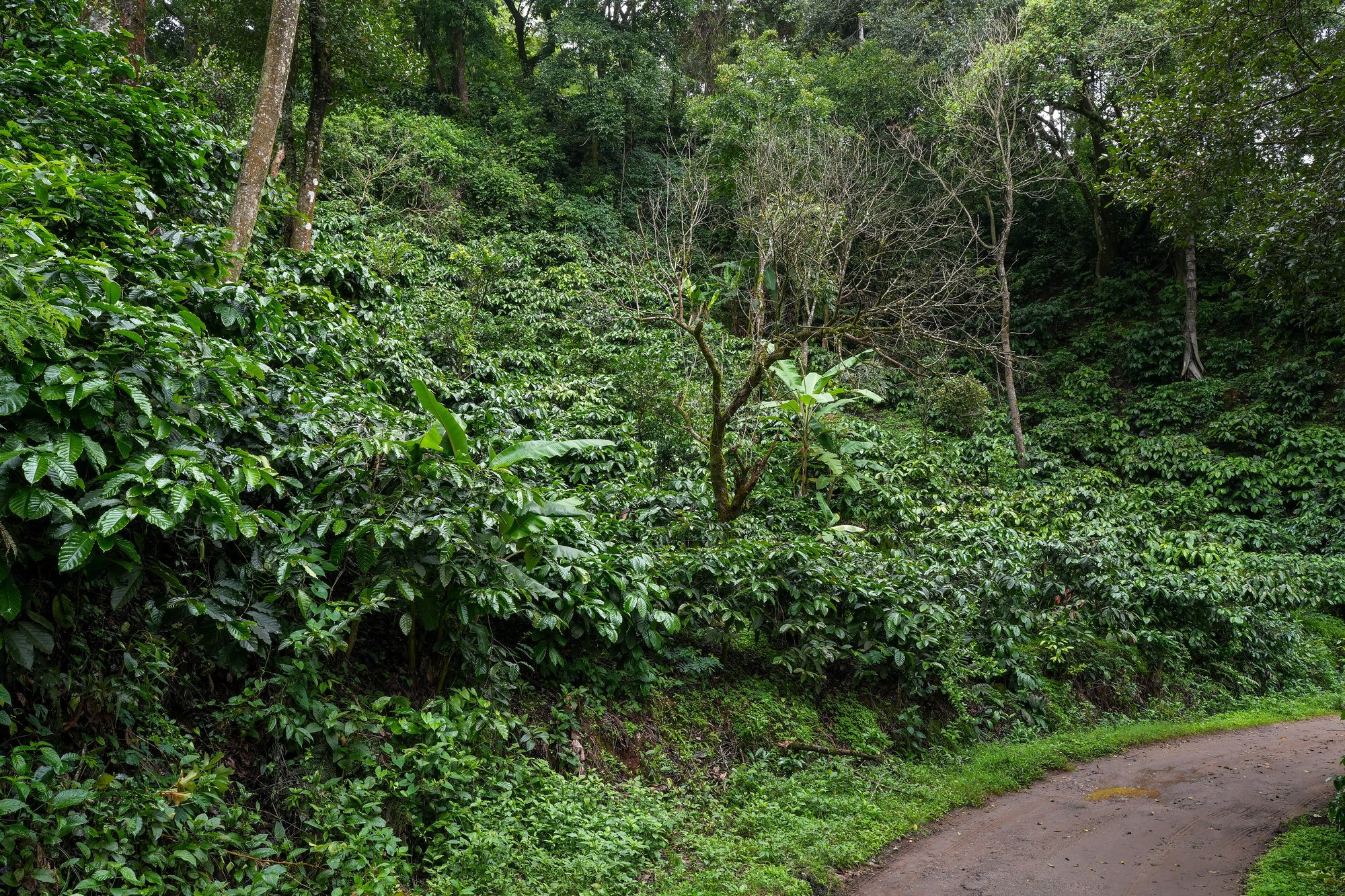
Soil Preservation: The Battle Against Western Ghats Erosion
The topography of Kodagu is defined by rolling hills and steep valleys. While these elevation changes create the ideal microclimate for premium Arabica and high-grade Robusta coffee, they also present a severe environmental threat: soil erosion. Coorg receives between 2,500 and 4,000 millimeters of rainfall annually, with the vast majority falling between June and September. Without constant soil management, tons of fertile topsoil would wash into river basins.
To combat this, estate operations rely on a network of hand-dug earthworks known as catch-trenches or contour pits. These long, narrow trenches are dug perpendicular to hill slopes between rows of coffee bushes.
During heavy downpours, rainwater running down the hillside is captured by these trenches rather than sweeping across topsoil. The trenches trap rich organic matter, leaf litter, and displaced soil particles. As trapped water slowly percolates into the ground, it recharges subterranean water tables while leaving behind a rich layer of organic compost.
In September, as rain subsides enough to permit earthwork, estate crews walk slopes with spades and hoes to clear and re-excavate catch-trenches. Silt and decaying leaf debris accumulated over the monsoon are scooped out and spread around nearby coffee bushes as natural fertilizer.
Navigating muddy slopes is tough physical work. Workers wear heavy rubber boots or thick cloth wraps to protect against leeches, which thrive in damp leaf litter during post-monsoon months. A small pouch of salt or tobacco dust is standard equipment for every worker in the field, used to detach leeches without causing skin infections.
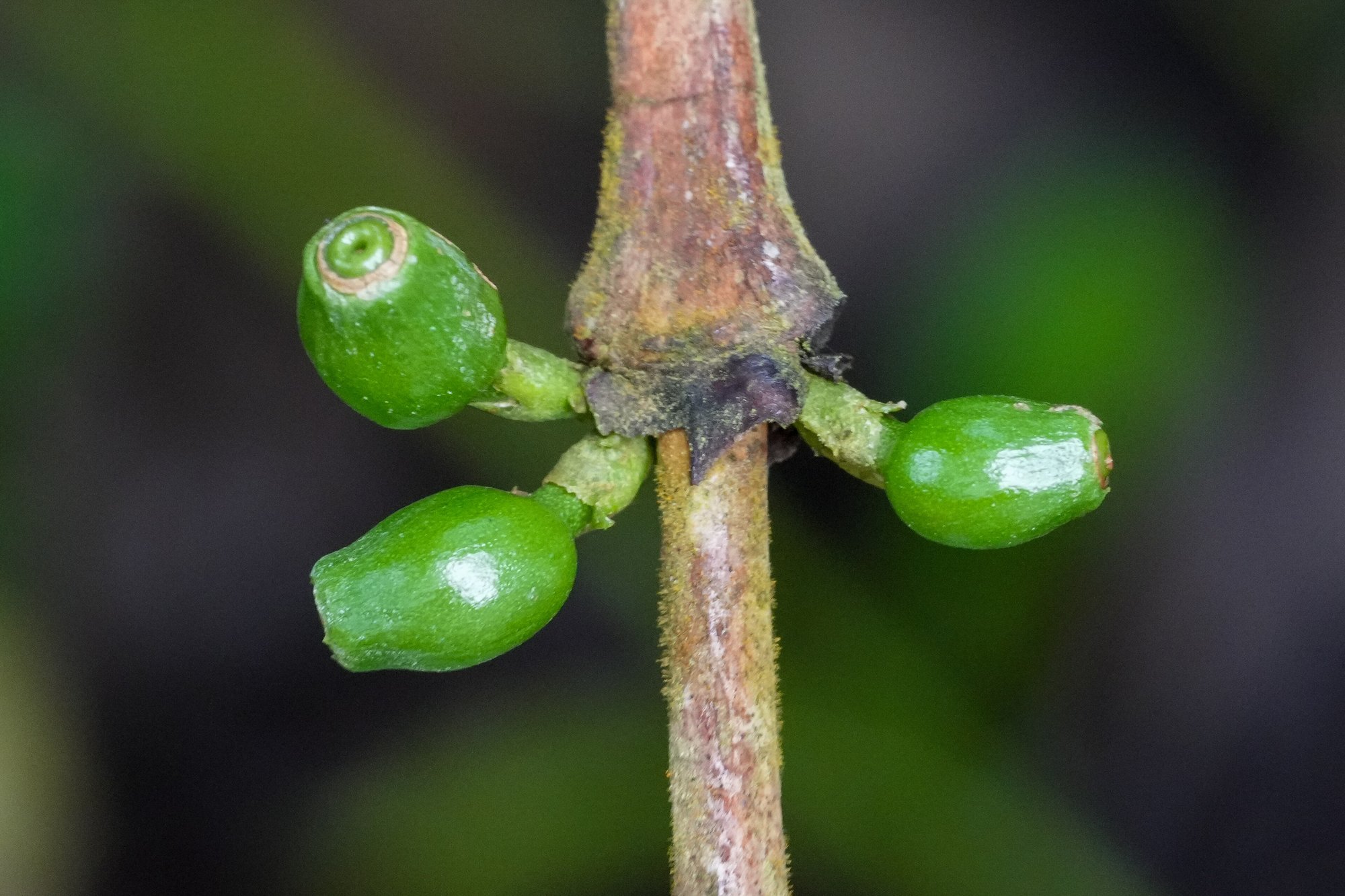
Pre-Harvest Inspection: Assessing Crop Health and Fruit Yield
While field crews manage canopy shade and soil structures, estate managers and supervisors conduct daily inspections of coffee bushes. September is the crucial window when the success of the upcoming harvest can first be accurately estimated.
By early autumn, coffee bushes are heavy with clusters of green berries, known in plantation terminology as “cherries.” Supervisors walk systematically through designated estate blocks, selecting random bushes to count cherries per node and evaluate fruit density.
This period also requires vigilant disease control. Months of continuous humidity create ideal conditions for Hemileia vastatrix, commonly known as coffee leaf rust—a fungal disease that can defoliate entire plantations if left unchecked. Supervisors inspect undersides of leaves for orange-yellow powdery spots. Where fungal activity is detected, targeted organic copper sprays are applied to protect foliage before berries enter their final ripening phase.
Key field checks performed during September inspections include:
- Berry Firmness: Ensuring growing green cherries are firm and free from internal insect damage caused by pests like the coffee berry borer.
- Foliage Health: Verifying that bushes retain healthy green leaves capable of synthesizing sugars necessary for fruit development.
- Nutritional Application: Spreading balanced organic fertilizers or wood ash around bush drip-lines as soon as heavy rains stop washing surface nutrients away.
- Drainage Verification: Confirming that waterlogging is not occurring around root systems, which can lead to root rot and premature berry drop.
The Human Network Behind the Harvest
It is easy to admire the scenic perfection of a Coorg coffee estate, but the landscape is fundamentally defined by human effort. Kodagu produces over 30 percent of India’s total coffee supply—more than 140,000 metric tonnes annually. This massive output is sustained entirely by generations of skilled plantation workers, including local Kodava communities and migrant worker families who have lived on these estates for decades.
Living on the estate in dedicated housing quarters, worker communities maintain an intimate relationship with the land. Their deep familiarity with specific hillsides, soil variations, and plant behaviors allows estate managers to operate complex agricultural cycles with remarkable precision.
A walk through a working coffee estate in September offers far more than fresh air and scenic views. It provides a rare glimpse into a living agro-ecological system where human labor, seasonal rhythms, and forest ecology operate in close harmony. When the morning work whistle blows across the valley, it signals the start of another day dedicated to protecting one of India’s most cherished agricultural traditions—long before the first coffee bean ever reaches a cup.

Museums & Art Galleries of Delhi

Vaishali, an archaeological site!
Hornbill index
The Town You Sleep In
Why the base town shapes a monsoon waterfall trip more than any single fall, what to look for, and towns in Karnataka, Kerala and Goa worth considering.
One village ghat upriver
Train versus road that week
Markets before the 20th, not on it
Journeys Worth Discovering
Explore inspiring destinations, memorable journeys and travel stories from across India and beyond.
Explore destinations




