
Welcome to Issue 80 of Travel Viewpoint, our December 2025 issue, dedicated to Nagaland and the Hornbill Festival. This page is the table of contents for the issue: a short guide to every story, what it covers and who it is for. Read it from top to bottom, or jump to the piece that answers the question you have right now.
The Hornbill Festival is generally held from 1 to 10 December each year at the Naga Heritage Village in Kisama, roughly 10 to 12 km from Kohima. It brings together the Naga tribes in one place, each with its own morung, food, songs, dances and crafts. It is one of the most photographed festivals in India, and one of the most misunderstood. This issue tries to help you see it clearly, travel to it sensibly and look beyond it to the state that surrounds it.
Start here
Editor’s letter: Nagaland & the Hornbill Festival. Why we chose Nagaland for our final issue of 2025, what we hope you take from it and the kind of traveller we hope you will be when you get there. If you read only one piece before you book, make it this one.
Arriving and understanding
Kohima before the stadium. Most visitors treat Kohima as a bed for the night between festival days. We argue for an unhurried afternoon in the city: the War Cemetery and its famous epitaph, the old Kohima Village and its gate, the market and the views from the ridges. Kohima has its own story, and knowing it changes how you see the festival.
Permits and the inner line. The practical piece you need before anything else. We explain the Inner Line Permit, who needs one, how Indian visitors usually apply online, and what foreign visitors should check. Rules have changed several times in recent years, so we tell you where to confirm the current position rather than pretending to give the final word.
What December roads do. Distances in Nagaland look short on a map and take far longer in practice. This piece covers the Dimapur to Kohima road, festival traffic, early darkness, fog and the sensible way to plan your days so you are not on a hill road after dark.
At the festival
Kisama, and the hour you should leave. An honest guide to the festival ground: how the morungs and the arena work, when the crowds peak, where to stand and, importantly, when to call it a day and head back before the roads clog.
The morning the festival is quiet. The best hour at Hornbill is often the first. Arrive early and you will find performers getting ready, fires being lit in the morungs and mist lifting off the hills. This piece explains why the quiet morning is worth the early alarm.
Food you will not find on the poster. Smoked pork, fermented bamboo shoot, axone, river fish, sticky rice and the famous king chilli. A guide to eating well at the festival and beyond, with notes for vegetarians and a reminder about Nagaland’s rules on alcohol.
A first Hornbill, written by a guest. Our guest post this month: a first-time visitor’s account of the festival, with its excitement, its small mistakes and the lessons learned. If you have never been, this is the closest thing to a preview.
Beyond the main stage
A village night that is not the main stage. The festival is a showcase; a village is home. We make the case for spending at least one night in a village such as Khonoma, with a family kitchen, a hearth and a slower kind of evening.
One tribe’s explanation, not a costume list. Instead of trying to catalogue every Naga tribe by its dress, we try to understand one: the Angami of the Kohima region, with their villages, khels, carved gates, terraced fields, Sekrenyi festival and faith.
A portrait with permission. How to photograph people at Hornbill and in Nagaland respectfully: greeting first, asking clearly, taking care with children and elders, thinking about money, and captioning honestly.
How to use this issue
If you are planning a first trip, we suggest reading in this order: the editor’s letter, permits, roads, Kohima, then Kisama and the quiet morning. Read the food and photography pieces on the way there. Save the village and Angami pieces for the evenings, when you are deciding how to spend the days after the festival.
If you have been before, start with the village night and the Angami piece. They are the stories most likely to change your next trip.
Planning at a glance
- When: the festival usually runs 1 to 10 December; confirm the year’s dates officially.
- Where: Naga Heritage Village, Kisama, near Kohima.
- Getting there: most visitors arrive via Dimapur, by air or rail, then continue by road to Kohima.
- Permits: Indian visitors from outside the state generally need an Inner Line Permit; foreign visitors should check current rules.
- Stay: book early in Kohima or nearby villages, as rooms fill fast in festival week.
- Pace: allow at least two festival days and one or two days beyond it.
A final suggestion: do not try to see everything. Pick a few morungs, a few performances and one village, and give each of them time. Nagaland rewards the traveller who stays put long enough to be recognised, greeted and invited to sit by the fire.
A note on facts
Festival dates, permit rules, road conditions and timings can change from year to year. We have tried to hedge where we are uncertain and to avoid giving prices or business names that may go out of date. Before you travel, please confirm the latest details with the Nagaland tourism department and the official festival channels.
Write to us
If you go to Hornbill this December, we would love to hear from you: what surprised you, what you wish you had known and what we should add next year. This is our last issue of 2025. Thank you for travelling with us.
More from Issue 80
- Editor’s letter: Nagaland & the Hornbill Festival
- Kohima before the stadium
- A village night that is not the main stage
- Kisama, and the hour you should leave
- Food you will not find on the poster
- Permits and the inner line
- A first Hornbill, written by a guest
- What December roads do
- The morning the festival is quiet
- One tribe’s explanation, not a costume list
- A portrait with permission
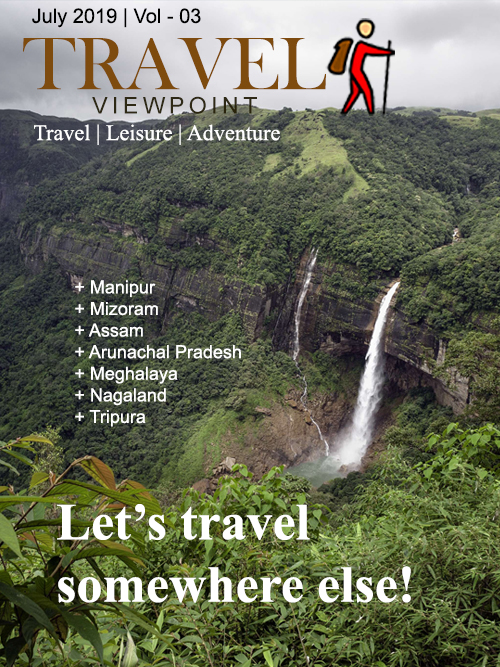
July 2019

Top 5 Monasteries in Sikkim : Buddhist Pilgrimage Sites

And Here’s The Nepalese Culture!
The Town You Sleep In
Why the base town shapes a monsoon waterfall trip more than any single fall, what to look for, and towns in Karnataka, Kerala and Goa worth considering.
One village ghat upriver
Train versus road that week
Markets before the 20th, not on it
Journeys Worth Discovering
Explore inspiring destinations, memorable journeys and travel stories from across India and beyond.
Explore destinations




