
How a Single Golden Scene Captures the Art, Science, Light, and Human Heritage of Post-Harvest Season
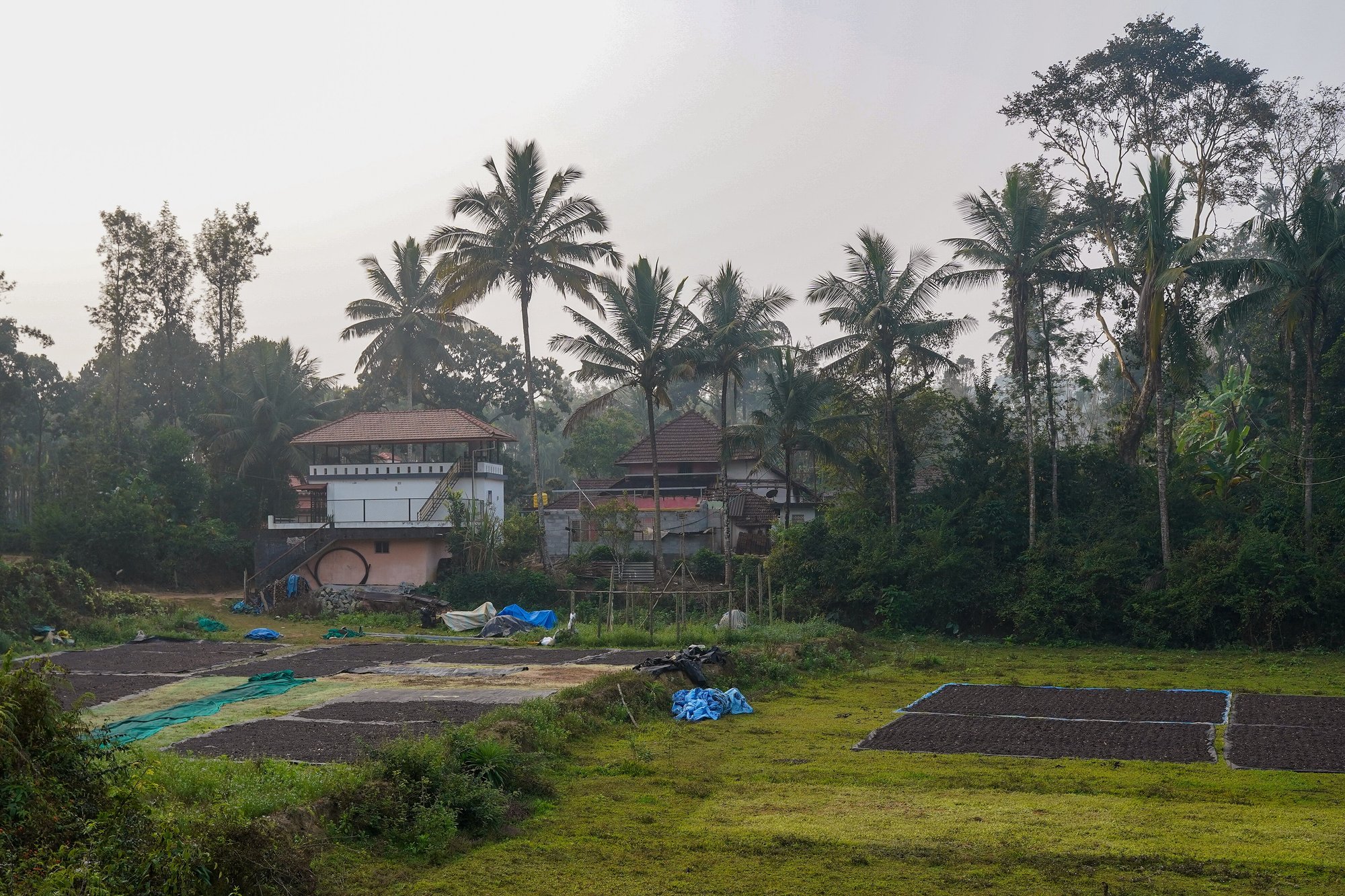
When people recall their journeys through Karnataka’s coffee highlands, specific visual images linger in memory: a mist-shrouded mountain peak, a winding red-clay road framed by towering silver oaks, or a steaming cup of dark filter coffee served on an open veranda. Yet, among planters and seasoned travel photographers, there is one iconic image that captures the absolute essence of life in coffee country: a photograph of a sunlit estate drying yard during the post-harvest season.
At first glance, a coffee drying yard—known locally as the kalla—appears simple enough: a wide, flat concrete or tiled courtyard surrounded by green forest canopy, where thousands of coffee beans lie spread out under a bright winter sky. But look closer through the lens of an observant traveler, and that single scene reveals a captivating world of agricultural science, sensory beauty, light and shadow, and generations of human heritage.
The Architectural Heart of the Estate
In the spatial layout of a traditional coffee plantation, the drying yard occupies a position of central importance. It is typically constructed on an elevated, open plateau or north-facing slope to maximize daily sun exposure while ensuring rapid drainage during unexpected rain showers.
Paved with smooth concrete, terracotta tiles, or hand-set granite flags, the drying yard must be meticulously maintained. Before the harvest season begins in late November, the surface is scrubbed clean, sealed, and inspected for cracks to prevent dust, dirt, or moisture from contaminating drying beans.
Key structural features of a traditional estate drying yard include:
- Slight Slope Calibration: Engineered with a subtle 1 to 2 percent slope to allow rainwater to drain instantly into surrounding perimeter channels.
- High Thermal Mass: Thick concrete or stone flooring absorbs solar heat during the day, radiating warmth slowly from below to ensure even bean drying.
- Retractable Canvas Cover Systems: Heavy waterproof tarpaulins stacked along yard borders, ready to be rolled out rapidly over drying crops if sudden rain clouds gather.
- Central Location: Positioned directly adjacent to the pulping house, storage godowns, and manager’s office for efficient labor coordination and security monitoring.
The Geometry of Color: The Visual Composition of the Yard
From a photographic and aesthetic perspective, a coffee drying yard during harvest season offers an extraordinary composition of color, texture, and geometric form.
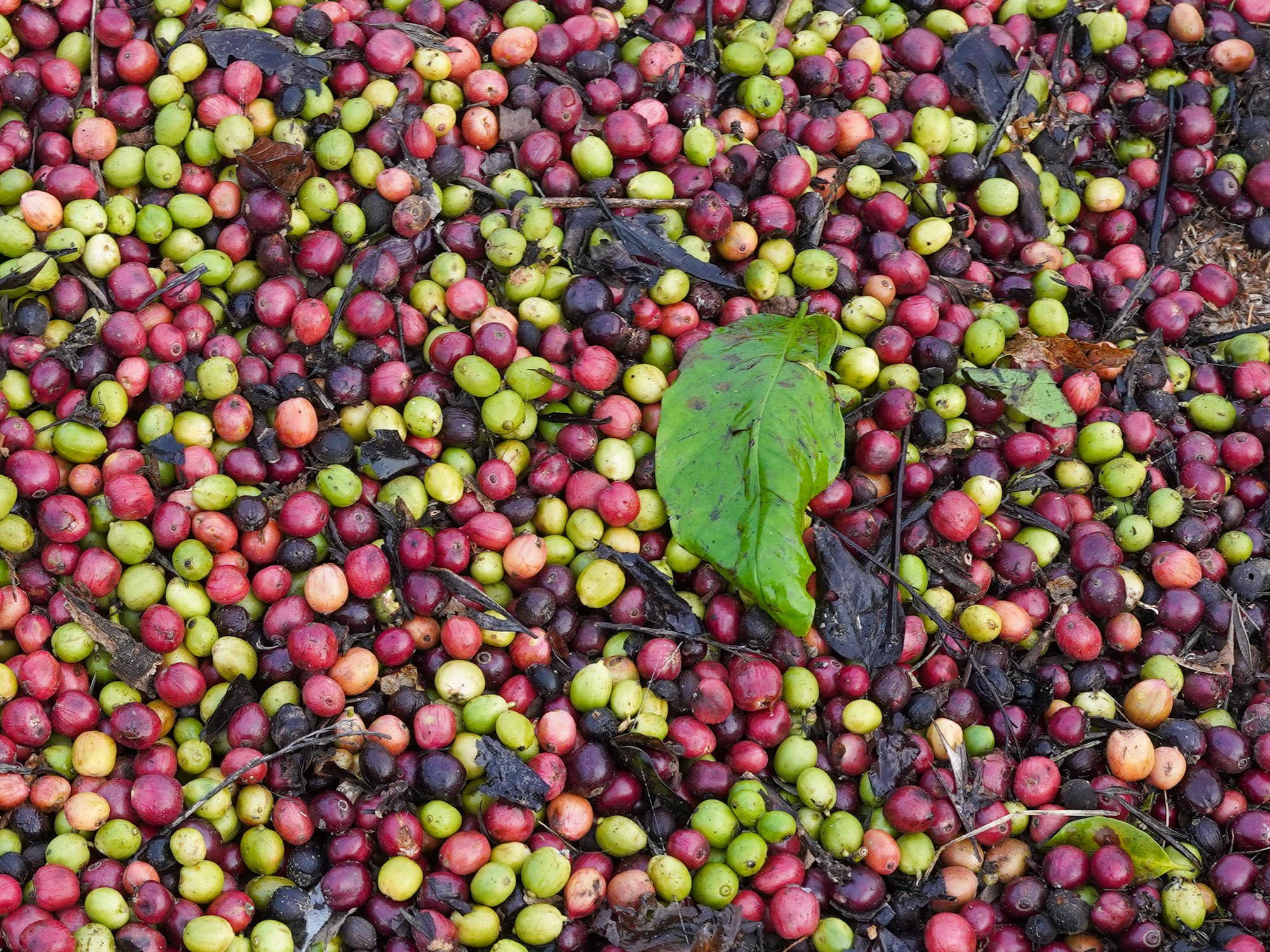
When freshly harvested coffee cherries arrive at the yard, they present a brilliant spectrum of color. Unwashed “cherry” coffee spreads out in thick, gleaming carpets of deep crimson red, burgundy, and dark purple. Washed “parchment” coffee—pulped and fermented to remove fruit skin—spreads across the yard in smooth, pale ivory and golden-yellow layers.
As workers move through the yard using wooden rake-like tools called paras, they carve precise, undulating parallel lines through the golden beans to ensure uniform sun exposure.
Visual elements that make the drying yard a photographer’s paradise:
- Striking Color Contrasts: The rich golden and crimson tones of drying beans set against the deep emerald-green forest canopy and bright blue winter sky.
- Rhythmic Patterns: Symmetrical, wave-like ridges raked through bean beds, creating dynamic light and shadow patterns that shift as the sun moves across the sky.
- Human Motion: Skilled workers moving gracefully across the golden field, dressed in vibrant headscarves, their movements capturing a sense of timeless agricultural rhythm.
- Atmospheric Light Quality: Crisp, clear winter sunlight reflecting off millions of smooth parchment beans, creating a luminous, golden glow across the entire courtyard.
The Science of Sun-Drying: Precision Hydrology
Behind the visual beauty of the drying yard lies a delicate, high-stakes scientific process. When coffee cherries are freshly picked or pulped, their internal moisture content hovers around 50 to 55 percent. To prepare green coffee beans for long-term storage and international export, that moisture content must be reduced uniformly to a precise target between 10.5 and 11.5 percent.
Drying coffee too quickly under extreme heat causes bean skins to crack, ruining delicate flavor compounds. Drying too slowly or allowing beans to remain damp encourages mold growth and sour fermentation, destroying the commercial value of the entire harvest.
The master planter monitors the drying yard continuously throughout the day, conducting precise physical and sensory checks:
- Frequent Raking: Beans are turned every 30 to 45 minutes to prevent bottom layers from trapping heat and moisture against the concrete floor.
- Heap Protection: At midday, when direct sun heat becomes too intense, workers rake beans into long, tall ridges to protect delicate flavor oils from scorching.
- Nighttime Heaping and Covering: Before evening dew descends, beans are gathered into central heaps and covered tightly with waterproof canvas tarpaulins to prevent night moisture reabsorption.
- The Moisture Meter Test: Planters test drying progress using electronic moisture meters or traditional methods—biting a dried bean to check its hardness and internal fracture line.
The Evolution of Drying Yard Technology
While traditional concrete and tile yards remain the gold standard across historic estates, modern innovations have subtly enhanced post-harvest drying efficiency without losing the human touch.
Key modern adaptations in drying yard management include:
- Raised Mesh Drying Beds: Elevating parchment coffee on breathable wire mesh tables improves airflow around beans, accelerating drying during humid weather.
- Poly-Tunnel Solar Dryers: Enclosing sections of drying yards under UV-stabilized plastic canopies protects beans from unexpected rain showers while intensifying solar heat.
- Moisture-Sensing Probes: Digital moisture sensors allow planters to verify precise internal water percentages instantly across various yard sections.
- Eco-Friendly Scrubbing Systems: Utilizing natural bio-degradable cleaning solutions ensures drying floors remain sterile without chemical contamination.
The Sensory Atmosphere of Harvest Season
Walking past an active drying yard during peak harvest season engages all five senses in a celebration of agricultural abundance. The air is heavy with a unique, sweet aroma—a blend of fermenting fruit skin, warming parchment, and crisp mountain air.
Underfoot, the smooth concrete floor radiates warmth absorbed from the winter sun. The visual contrast of golden beans framed by green forest shade creates a striking spectacle that stays in memory forever.
Sensory hallmarks of the drying yard atmosphere:
- The Aromatic Bouquet: A rich, fruity fragrance combining notes of sweet honey, dark chocolate, and warm earth.
- The Soundscape of Labor: The rhythmic scraping of wooden rakes, friendly conversation among workers, and the rustle of turning beans.
- The Tactile Connection: Feeling the warmth and firmness of sun-dried parchment beans as they reach optimal export moisture.
The Human Heritage Captured in Frame
A photograph of a coffee drying yard is ultimately a portrait of human connection, shared labor, and intergenerational heritage. It captures a moment in time where ancient human traditions intersect with natural seasonal rhythms.
In many family-owned estates, the drying yard is where generations meet. Children play along the smooth concrete borders; experienced elders share weather wisdom accumulated over fifty harvests; and work crews share laughter and hot filter coffee during afternoon breaks.
Capturing the essence of the drying yard in a photograph:
- The Story of Labor: Honoring the calloused hands, sun-bronzed faces, and physical dedication of workers who rake tons of coffee under the open winter sky.
- The Spirit of Seasonality: Documenting the culmination of an entire year of agricultural effort—from monsoon trenching to bloom showers—finally gathered into golden proof on the stone floor.
- The Timeless Atmosphere: Evoking a sense of quiet permanence, showing that despite a changing modern world, the essential human art of sun-drying coffee remains beautifully unchanged.
An Image That Outlasts the Journey
Long after a traveler has packed their bags, left the Western Ghats, and returned to the fast-paced routines of city life, the memory of the drying yard remains vibrant and clear.
Whenever they look at that photograph hanging on a wall or saved on a digital screen, they are transported back to that precise golden moment in the hills. They smell the rich, sweet aroma of drying fruit; they feel the warm winter sun on their face; they hear the gentle scraping sound of wooden rakes moving across concrete; and they feel a deep, lasting connection to the wonderful, sun-drenched world of Coffee Country.
A Final Reflection on the Golden Yard
Standing at the edge of a sunlit drying yard at four o’clock in the afternoon, as workers sweep the final golden ridges into neat mounds for the night, one realizes that this single space holds the soul of the entire region. It is where months of patient cultivation, rain, sun, and human sweat culminate in a product celebrated around the world. The photograph taken here is more than a souvenir; it is a timeless tribute to the land, the people, and the quiet beauty of South India’s coffee heartland.

Orissa is fun!
Delhi to Kasauli on the Old Grand Trunk Road: The One Route That Explains the Weekend Escape

Setting up cafes at Yamuna riverfront is on the cards
The Town You Sleep In
Why the base town shapes a monsoon waterfall trip more than any single fall, what to look for, and towns in Karnataka, Kerala and Goa worth considering.
One village ghat upriver
Train versus road that week
Markets before the 20th, not on it
Journeys Worth Discovering
Explore inspiring destinations, memorable journeys and travel stories from across India and beyond.
Explore destinations




