
Three palaces, a poet’s house, a market of books, and no reason to hurry. A morning on foot through the old Black Town.
North Kolkata does not announce itself. There is no single monument to aim for, no ticket gate, no view from a tower. Instead there is a grid of narrow lanes off Chitpur Road where eighteenth- and nineteenth-century mansions lean towards each other, their green shutters closed against the sun, their courtyards hidden behind heavy doors. This was the “native town” of colonial Calcutta, where the Bengali merchant families who grew rich alongside the East India Company built their houses, staged their festivals and, in time, started the Bengal Renaissance.
This walk links four of its landmarks, Shobhabazar Rajbari, the Marble Palace, Jorasanko Thakur Bari and College Street, in a loop you can finish before the May heat becomes unbearable. Distances are short; it is the detours that take time.
Before you set out
Start early. By about ten in May, walking becomes hard work, and the lanes are at their best in the first soft light, when the milk carts and the tea stalls are just getting going. Wear comfortable shoes, carry water, and keep small change for tea. The Shobhabazar Sutanuti Metro station on the Blue Line drops you at the start.
Opening days and hours for the houses on this route change, and some close one day a week. The Marble Palace in particular needs a permit arranged in advance, which has traditionally been issued through the West Bengal tourism office. Check the current arrangements before you go.
Shobhabazar Rajbari
Raja Nabakrishna Deb, a powerful figure in the early years of British Calcutta, built this palace in the eighteenth century. Its fame rests on a single event: in 1757, after the Battle of Plassey, the family is said to have held a grand Durga Puja here with Robert Clive as a guest, and the household puja has continued ever since. It is often described as one of the oldest bonedi bari (aristocratic household) pujas in the city.
The heart of the house is the thakurdalan, the raised, arched hall where the goddess is installed each autumn, facing a wide open courtyard where guests once sat to watch music and dance. Two branches of the family occupy houses on either side of the lane. In May the courtyard is quiet, the pillars cool, and you can imagine the rest. We return to this space in The Photograph of a Courtyard.
Into the lanes
From Shobhabazar, walk south along the roads that run parallel to Chitpur Road. Look up. The facades mix Corinthian columns with Bengali carved wooden doors, cast-iron balconies with tiny shrines. Some houses have been beautifully kept by their families; others are crumbling, a fig tree growing from a cornice. Both are part of the story.
You are close here to Kumartuli, the potters’ quarter by the river, which makes an easy detour; see our day in the idol-makers’ lanes.
The Marble Palace
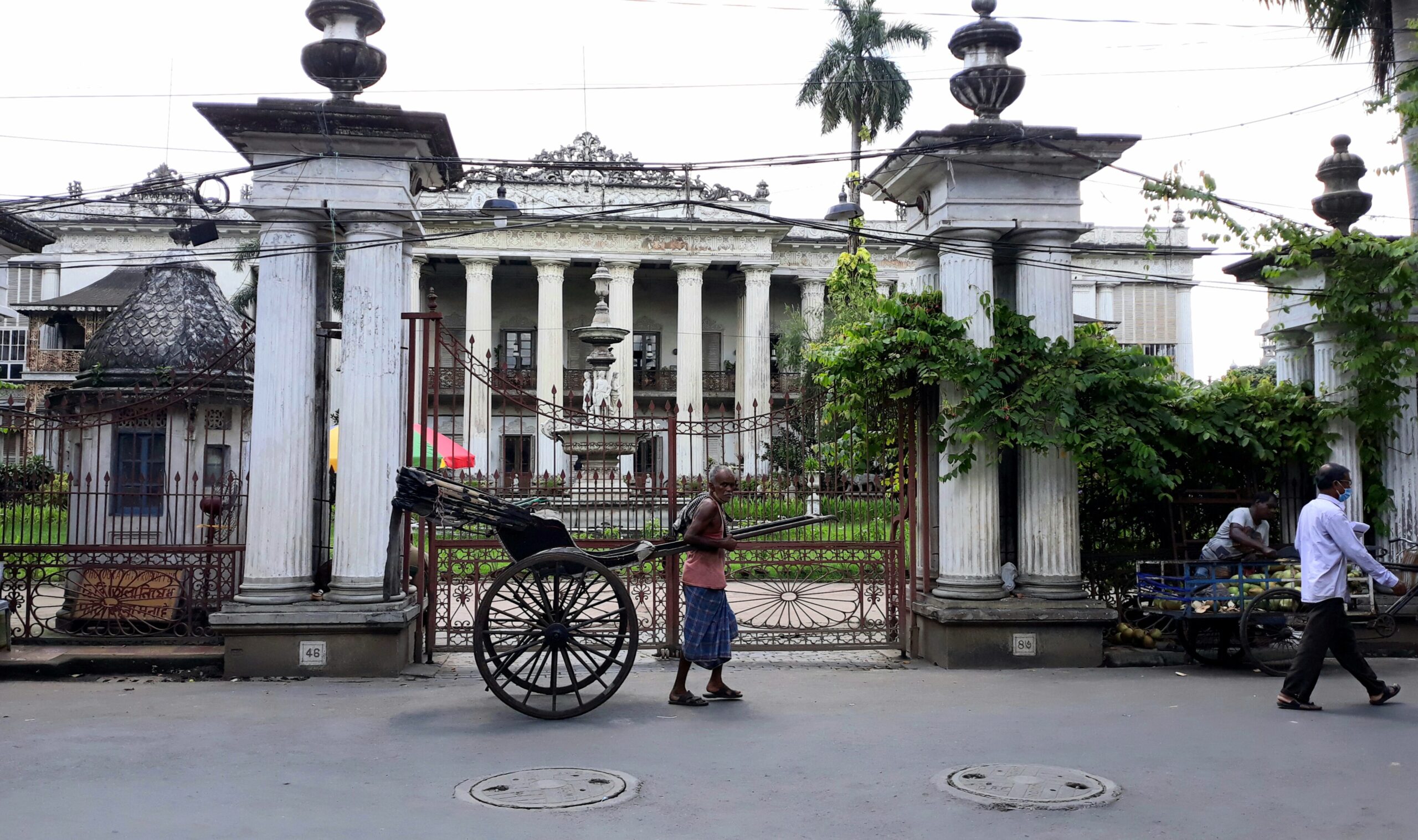
Raja Rajendra Mullick built this extraordinary mansion in 1835 off Muktaram Babu Street. It is a white neoclassical palace stuffed with the collections of a merchant prince: European paintings, chandeliers, clocks, Victorian furniture and statues, all floored with dozens of varieties of marble. The family still lives in part of the house, and there is a small private zoo and aviary in the grounds.
Visits are guided, short and come with rules: you will need the advance permit, and photography inside is not allowed. Leave your camera in your bag and just look. It is one of the strangest and most memorable interiors in India.
Jorasanko Thakur Bari
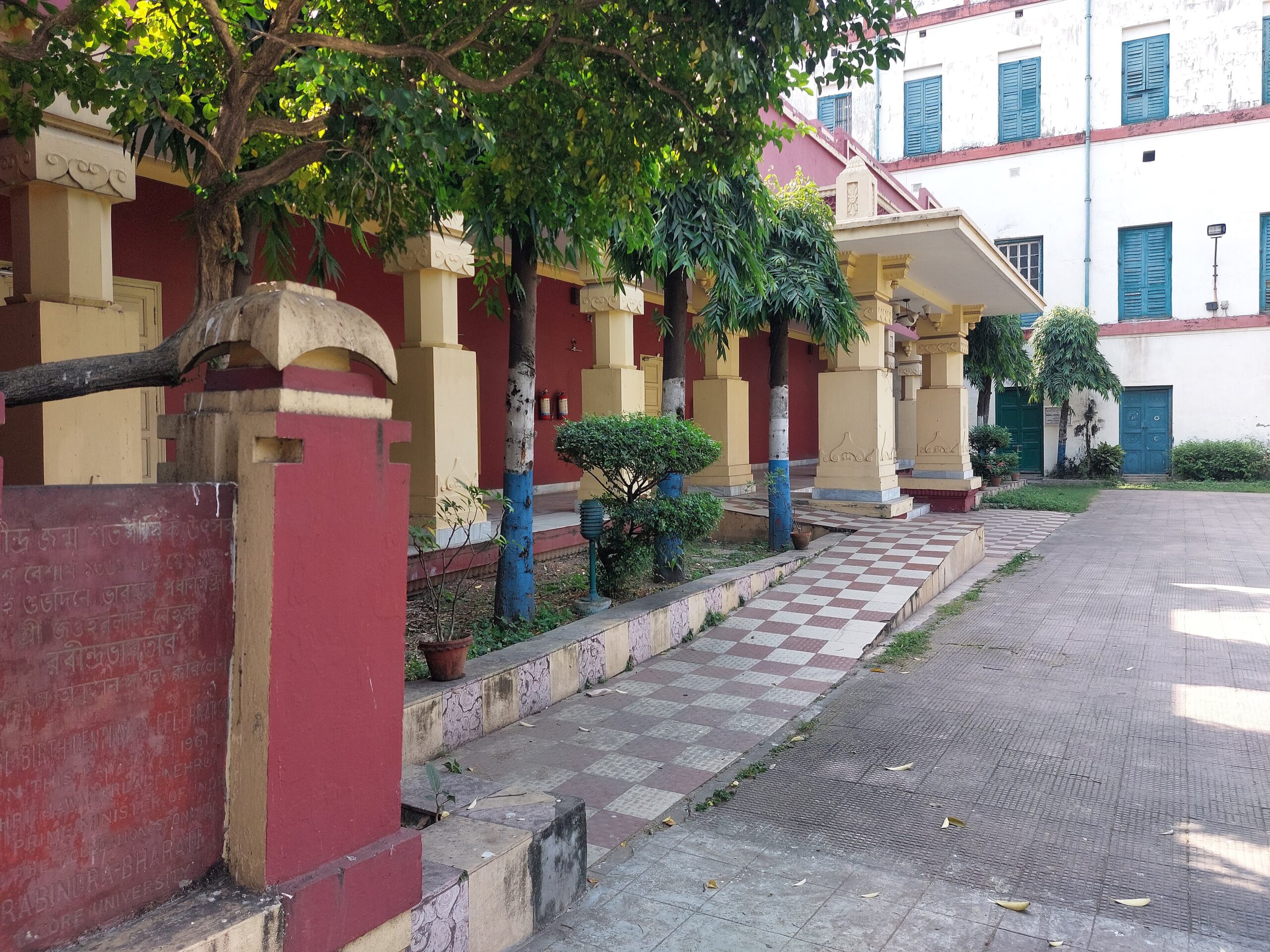
A short walk away is the ancestral home of the Tagore family, where Rabindranath Tagore was born in 1861 and died in 1941. The great red house around its courtyard is now part of Rabindra Bharati University, and its rooms hold a museum on the poet’s life and the remarkable family around him: philosophers, painters, musicians and reformers.
If you happen to be here around Rabindra Jayanti, Tagore’s birth anniversary in early May by the Bengali calendar, the courtyard fills with song. Check museum opening days before you go; it usually closes one day a week.
College Street
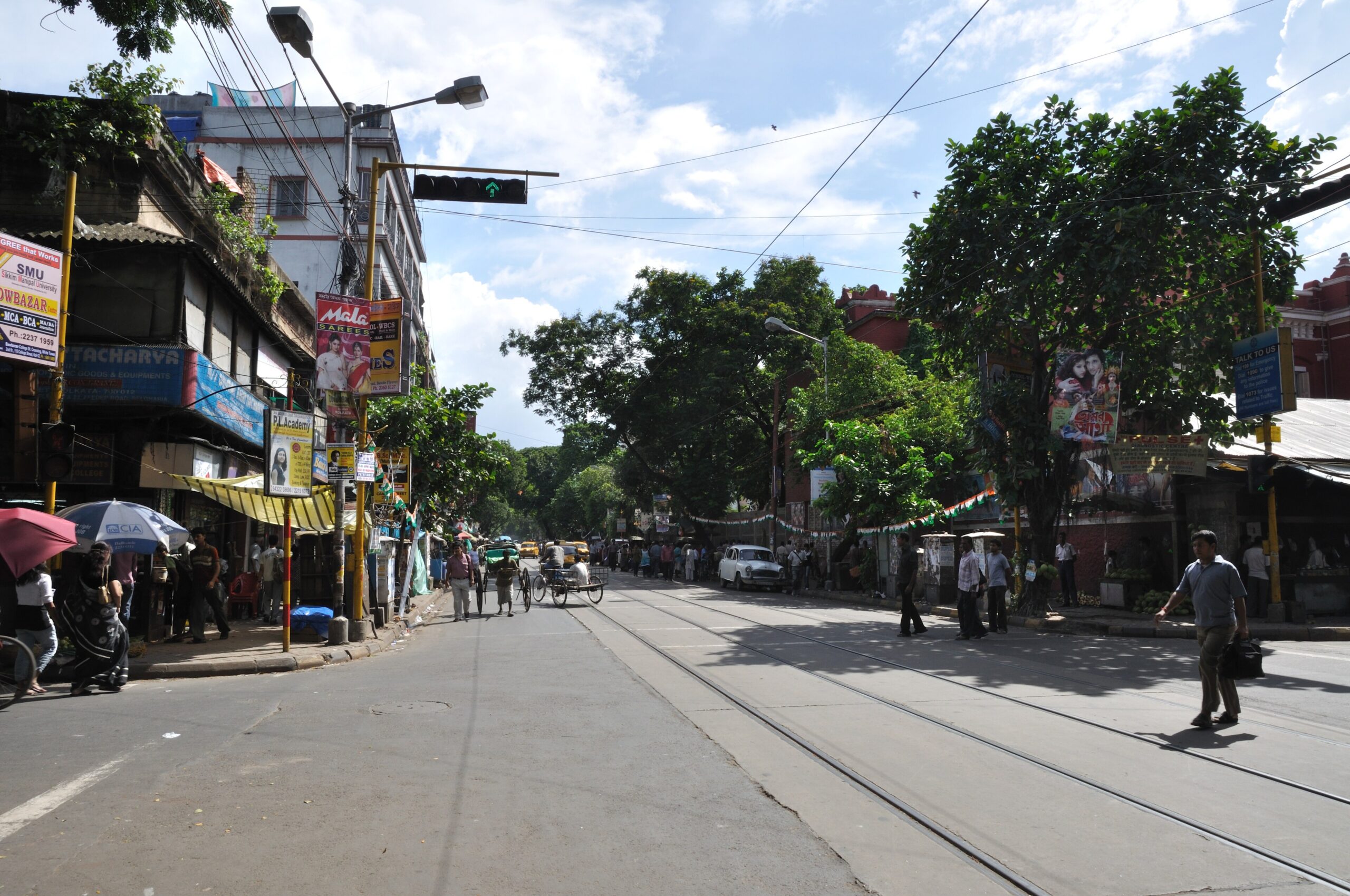
End the walk where north Kolkata thinks. College Street, home to the University of Calcutta, Presidency University and the Hindu School, is lined for the best part of a kilometre with bookstalls, publishers and booksellers, new and second-hand, academic and obscure. Shopkeepers will find you anything if you give them time.
Climb the stairs to the Indian Coffee House on Bankim Chatterjee Street, a high-ceilinged hall with turbaned waiters where generations of students, writers and filmmakers have argued over coffee. It is the right place to sit out the noon heat. More on rooms like this in Kolkata’s food rooms.
A suggested route
This is a loop of roughly four to five kilometres if you walk it all. Begin at Shobhabazar Rajbari soon after first light, spend half an hour in the lanes towards Kumartuli if you like, then work south to the Marble Palace for the first permitted visit of the day. Jorasanko Thakur Bari is a few minutes’ walk from there. From Jorasanko, a short taxi or a walk down Chitpur and through the busy wholesale lanes brings you to College Street in time for a late breakfast at the Coffee House. If the heat is too much, there is no shame in hopping into a yellow taxi between stops.
How to reach
Shobhabazar Sutanuti and Girish Park Metro stations (Blue Line) are both close to the route; Mahatma Gandhi Road and Central stations serve College Street. Yellow taxis and app cabs will drop you at any of the landmarks, though the inner lanes are often too narrow for cars.
Best time
October to March is the classic season. In May, walk at dawn and finish by mid-morning. Around Durga Puja the Rajbari courtyards come alive, but the lanes are packed.
Where to stay and eat
Central Kolkata, with its range of hotels, is a short Metro ride away. A few heritage homestays operate in north Kolkata for those who want to wake up in the old town. For food, look for the neighbourhood sweet shops, the old “cabins” serving cutlets and fish fries, and street stalls selling kachori and tea.
Tips
- Dress modestly; these are family homes and places of worship.
- Ask before photographing people and inside private houses.
- Keep the Marble Palace permit with you.
- Combine with an afternoon indoors; see rooms with fans.

Planning a Trip to Andaman, Lakshadweep or Diu

May Day, Gujarat
Top 5 Buddhist Temples In Leh Ladakh
The Town You Sleep In
Why the base town shapes a monsoon waterfall trip more than any single fall, what to look for, and towns in Karnataka, Kerala and Goa worth considering.
One village ghat upriver
Train versus road that week
Markets before the 20th, not on it
Journeys Worth Discovering
Explore inspiring destinations, memorable journeys and travel stories from across India and beyond.
Explore destinations




