
In October, Kumartuli is a crush of cameras. In May, the idol-makers have time to show you how a goddess is made.
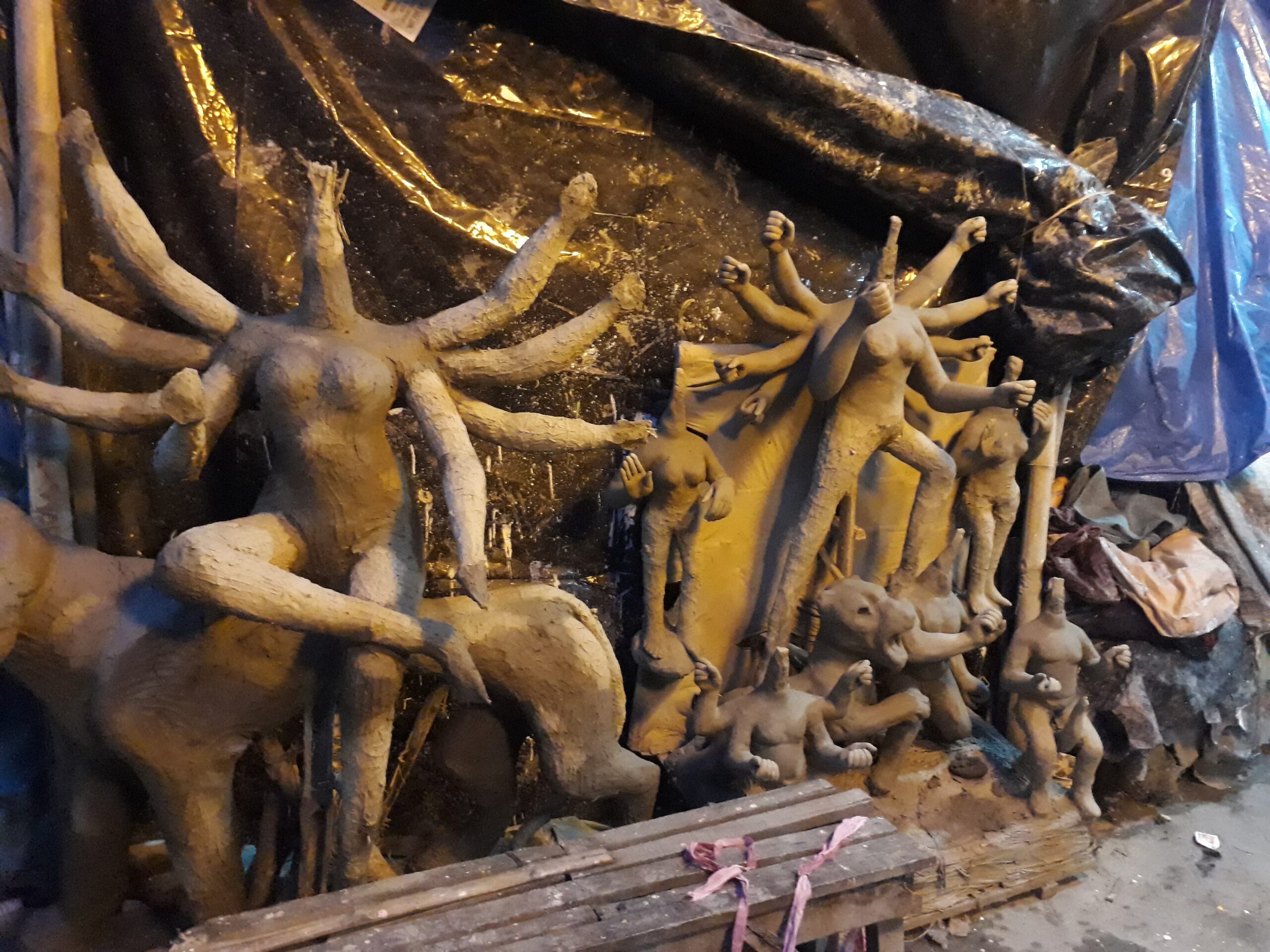
Walk north along the river from Shobhabazar and the lanes narrow, the roofs drop to corrugated tin and bamboo, and everywhere you look there are bodies. Straw bodies tied with jute, clay bodies drying in the sun, heads without faces, hands without arms, a row of ten-armed figures waiting under plastic sheets for a festival five months away. This is Kumartuli, the potters’ quarter of north Kolkata, where for more than two centuries families of kumors (potters and idol-makers) have shaped the images worshipped across Bengal.
Most visitors come in September and early October, in the frantic final weeks before Durga Puja, when the lanes are jammed with photographers and trucks hauling finished idols to pandals across the city. It is spectacular, and almost impossible to move. Come in May instead. The work has begun, the pace is human, and the people who make Kolkata’s gods are happy to explain what they do.
A little history
As British Calcutta grew in the eighteenth century, potters from rural Bengal, many originally from Krishnanagar in Nadia district, settled by the river in the north of the city. Wealthy households, including the families of Shobhabazar, commissioned images for their pujas, and the community thrived. Today Kumartuli is home to hundreds of workshops and is often described as the largest idol-making cluster in the country. Its artisans send images all over India and abroad.
What you will see in May
The making of an image follows the same steps it has for generations, and in May you see the early ones.
- The frame: bamboo and wood are lashed together to form the skeleton.
- The straw body: bundles of straw are tied onto the frame with jute rope to build up the figure’s shape.
- The first clay: a coarse clay mixed with rice husk is pressed over the straw. The clay traditionally comes from the banks of the Hooghly.
- The fine clay: a smoother layer is applied and polished. Hands and feet are often cast separately from moulds.
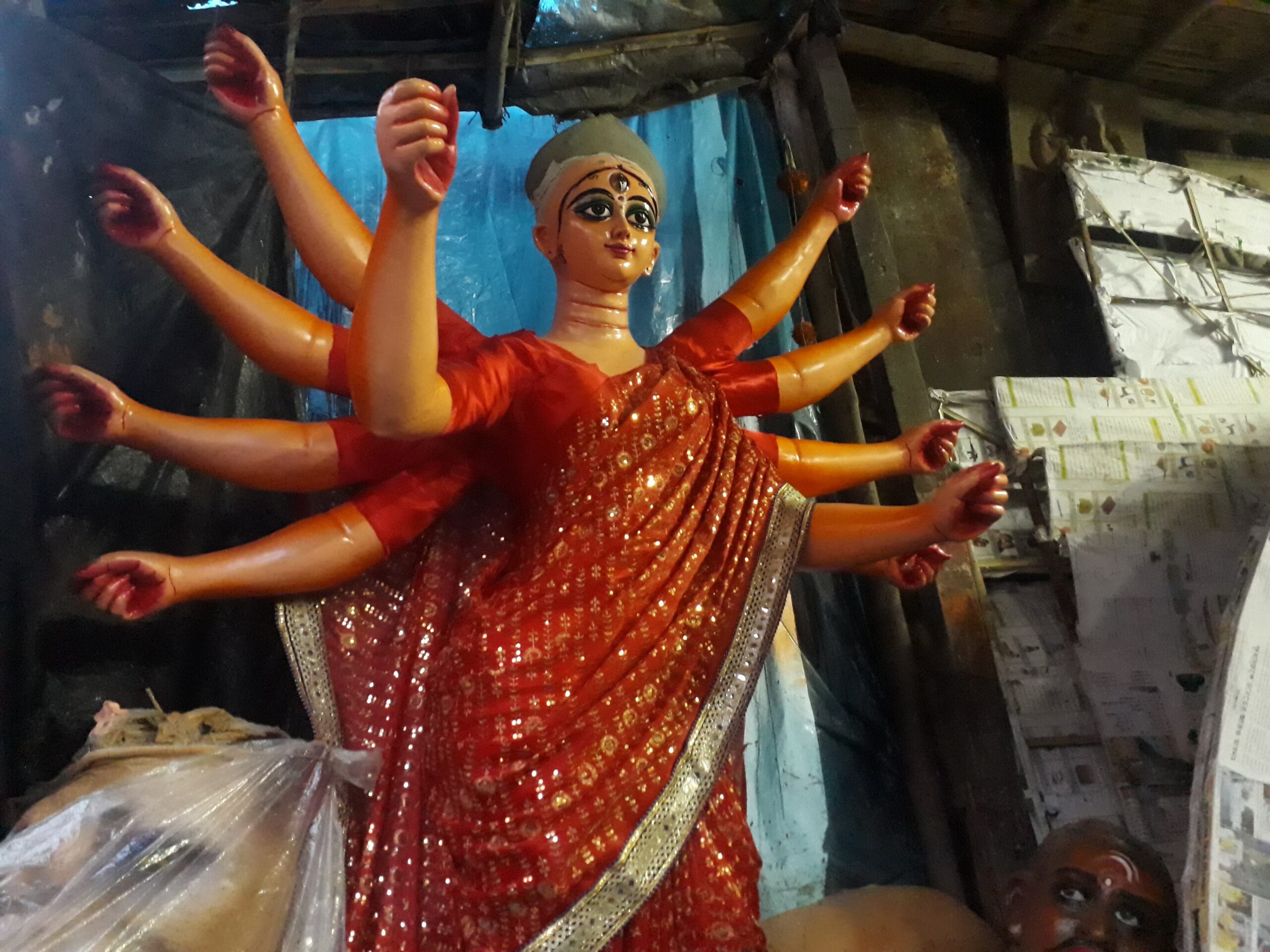
- Faces: heads are frequently made from moulds, then finished by hand by the senior craftsmen.
Painting, eyes and the elaborate costumes and ornaments come much later, in the weeks before the festival. Through the year, workshops also make images for other occasions: Saraswati in late winter, Kali and Lakshmi in autumn, Vishwakarma in September, and figures for weddings, films and exhibitions.
Walking the lanes
There is no ticket and no official route. Enter from Rabindra Sarani or from the river side near Kumartuli Ghat and wander. The workshops open onto the lanes; you can stand at a respectful distance and watch. Many artisans are glad to talk if you show genuine interest, and some speak English. Others are working against a deadline and would rather not be disturbed. Read the room.
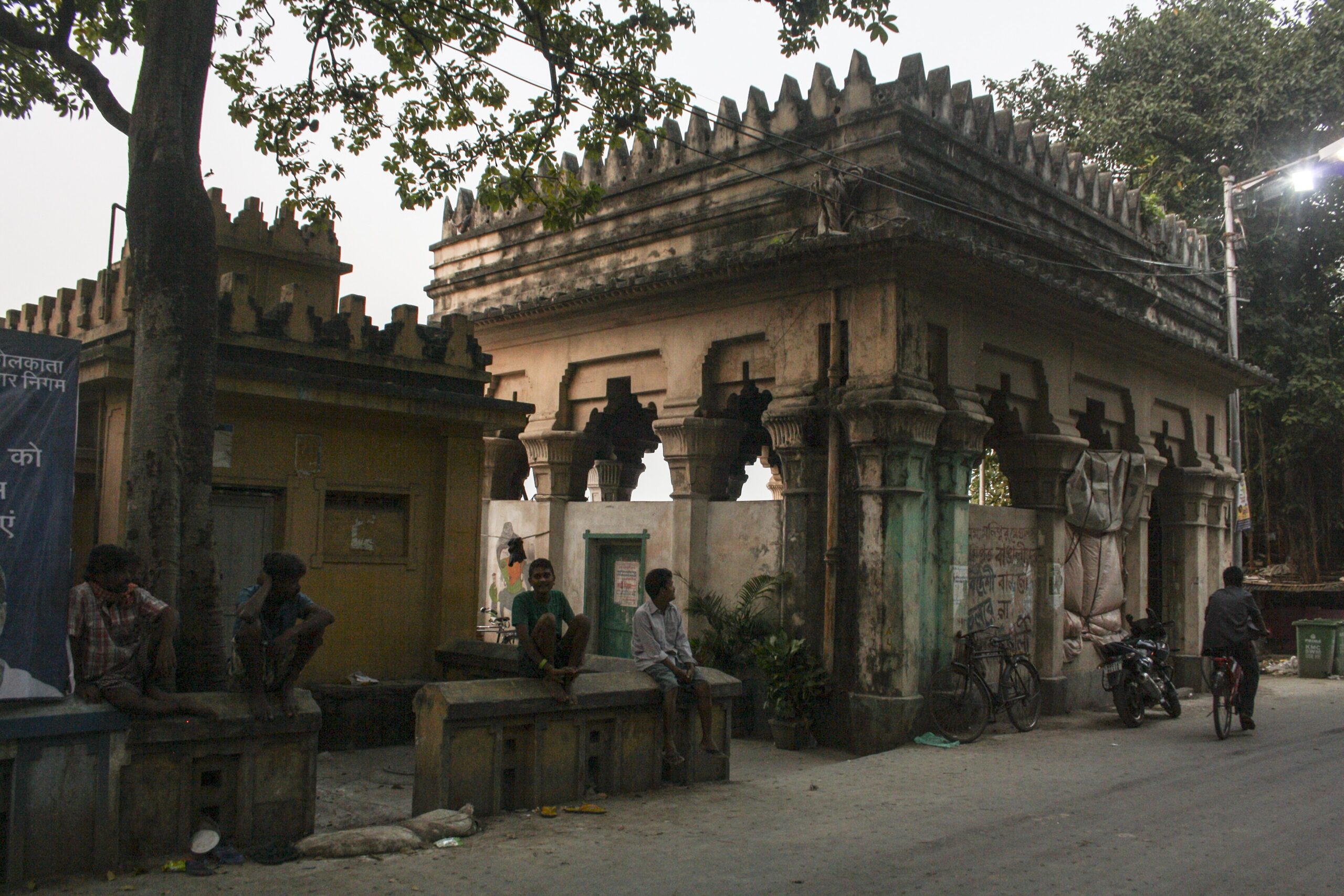
Look out for the small Kumartuli temple and for workshops making daaker saaj, the delicate white ornaments of shola pith that adorn the images. Towards the ghat, finished frames are sometimes laid out to dry in the sun.
The people behind the images
Idol-making here has long been a family trade, passed from father to son, and increasingly to daughters too; a few women artisans have made names for themselves in a craft once closed to them. Many of the hands at work, though, belong to seasonal labourers who come from rural districts of Bengal for the busy months. Conversations in the lanes often turn to the same concerns: rising costs of clay, straw and bamboo, cramped workshops, the threat of monsoon damage, and a younger generation weighing the craft against steadier jobs. Listening is part of the visit. So is understanding that the price of an image reflects weeks of skilled work.
The ghat
Kumartuli Ghat, at the river end, is a working ghat where clay and supplies are landed. Ferries cross to the west bank from the ghats along this stretch. Sit on the steps for a while; the river breeze is welcome on a May morning. Our piece on the ghats at dawn covers the river south from here.
Photography etiquette
Kumartuli is a workplace, not a museum. In recent years some workshops have put up signs restricting or charging for photography, a response to the crowds of the festival season. Always ask before you photograph a person or step inside a workshop. Do not touch the images. If someone gives you time, a small purchase from the shops selling miniature clay idols is a good way to say thanks.
How to reach
Shobhabazar Sutanuti Metro station on the Blue Line is the nearest, a short walk away. The Circular Railway’s Kumartuli and Bagbazar stations are close to the river. Taxis can drop you on Rabindra Sarani. Combine with our north Kolkata walk, which starts at Shobhabazar.
Best time
For quiet, May to July, early in the morning. For drama and crowds, the weeks before Durga Puja, usually September to October. The monsoon months can be muddy, and workshops cover their images with plastic sheets.
Where to stay and eat
Stay in central Kolkata or at one of the few heritage homestays in north Kolkata. Around Kumartuli, look for tea stalls, sweet shops and simple cabins serving fish fry and kachori; see Kolkata’s food rooms.
Tips
- Go early, before the heat and before the working day is in full swing.
- Ask before photographing; respect any signs.
- Wear shoes you do not mind getting muddy.
- Keep to the edges of the lanes; carts and labourers need the space.
- Come back in October if you can and see the same images finished.
The off-season gift
In the festival rush, Kumartuli is a spectacle. In May, it is a craft. You see the patience behind the goddess: the straw tied knot by knot, the clay smoothed by thumb. When you stand in a pandal in October looking up at a finished Durga, you will know where she began.
The Hooghly in the Evening: Ferries and Prinsep Ghat

Flows of India
Beautiful Halebid
The Town You Sleep In
Why the base town shapes a monsoon waterfall trip more than any single fall, what to look for, and towns in Karnataka, Kerala and Goa worth considering.
One village ghat upriver
Train versus road that week
Markets before the 20th, not on it
Journeys Worth Discovering
Explore inspiring destinations, memorable journeys and travel stories from across India and beyond.
Explore destinations




