
Nainital is beautiful, and that is precisely its problem. The lake town in Uttarakhand’s Kumaon hills, built up as a British hill station in the nineteenth century, now draws large crowds in summer and on long weekends. The Mall Road can feel more like a city street than a hill walk, and finding quiet by the lake can take effort. Yet a long day’s drive further into Kumaon lies a village that still offers what many people go to the hills for: snow peaks filling the window, cold clear mornings, and the sense of being somewhere at the edge of things. That village is Munsiyari.
Where it is
Munsiyari is in Pithoragarh district, in the eastern part of Kumaon, at an altitude usually given as around 2,200 metres. It sits on a ridge above the Gori Ganga valley, directly facing the Panchachuli massif, a group of five peaks whose name is linked in local tradition to the five Pandava brothers of the Mahabharata. On a clear morning, the view from Munsiyari is one of the finest mountain panoramas you can see from a motorable village anywhere in the Indian Himalaya.
The town has long been a gateway to the Johar valley and to the Milam glacier region, and in the past it was a stop on trade routes between Kumaon and Tibet. Bhotiya communities, including the Shauka people of Johar, traded across the passes for generations before the routes closed in the twentieth century. That history gives Munsiyari a character quite different from a colonial hill station.
Getting there
From Nainital or Kathgodam, the drive to Munsiyari is long, often taking the best part of a day or more depending on the route, road conditions and stops. Most travellers break the journey at a place such as Chaukori, Binsar, Almora or Bageshwar. The road passes through pine and oak forest, terraced fields and river valleys, and climbs over the Kalamuni ridge before Munsiyari. Driving times vary greatly with weather, and landslides are possible in the monsoon, so build in slack.
This distance is exactly why Munsiyari remains quiet. Day-trippers do not come here. The people you meet are mostly trekkers, birders, families who have travelled for the view, and local residents.
What to do
The main reason to come is the mountains, and the best thing to do is look at them. Wake before dawn, wrap up warmly, and watch the first sun hit the Panchachuli peaks, turning them gold and then white. Many homestays and guesthouses are positioned for exactly this view.
Beyond that, there are gentle walks and longer treks. The Khaliya Top trek, through forest and up to high meadows, is a popular day or overnight hike with views of the Panchachuli and other peaks; it is often done with a local guide, and conditions depend heavily on season. Walks to nearby villages, temples and viewpoints such as the Nanda Devi temple area give a sense of daily life. Birdwatchers come for Himalayan species in the surrounding oak and rhododendron forests.
A small tribal heritage museum in Munsiyari has, for years, been run privately to document the history and material culture of the Johar valley communities. If it is open when you visit, it is well worth an hour. Ask locally for timings.
For more serious trekkers, Munsiyari is the base for longer routes towards Milam glacier and the Ralam valley, which require permits, preparation and experienced guides.
When to go
Many visitors prefer spring, roughly from March to May, when rhododendrons bloom in the forests, and autumn, from about October to November, when post-monsoon skies are often at their clearest. Winter brings snow and very cold nights, and access may be affected. The monsoon months bring cloud, rain and a higher risk of landslides on the long approach roads, so peak views are less reliable.
Where to stay and eat
Munsiyari has a range of small hotels, government guesthouses and homestays. Homestays are a good way to experience local life and food, and many hosts can arrange guides and transport. We do not recommend specific establishments, as they change, but look for recent reviews and ask about heating, hot water and power backup, since outages are common.
Food is simple and warming. Look for Kumaoni dishes such as bhatt ki churkani, made with black soybeans, aloo ke gutke, a spiced potato dish, madua roti from finger millet, and seasonal greens. Rajma from the high valleys is often praised. Local honey and woollens, including shawls and thulmas, are traditional, and buying from local weavers supports the community.
Why choose Munsiyari over Nainital
This is not to say you should never visit Nainital. Its lake, its old buildings and its ridges have real charm, especially outside peak season. But if what you are looking for is space, silence and a direct view of high Himalayan peaks, Munsiyari offers far more of it. You exchange a short drive for a long one, and convenience for remoteness. In return, you get mornings that feel like the start of the world.
Responsible travel
Munsiyari is still relatively small, and its growth is a challenge as well as an opportunity. Carry your waste back to a larger town where possible, use refillable water bottles, and choose locally run stays. Respect village privacy and temples, and ask before taking photographs. When trekking, stick to trails and hire local guides and porters, who know the terrain and the weather.
A sample three-night stay
On the first evening, arrive, rest and eat early; the drive will have tired you. On the first full day, rise for the sunrise on the Panchachuli, then walk to a nearby village or temple and spend the afternoon reading on a sunny terrace. On the second full day, if you are fit and the weather is good, go with a local guide towards Khaliya Top or another forest walk, carrying water, snacks and warm layers. On the final morning, take one more look at the peaks before starting the long drive back, ideally with a night’s break on the way.
The one thing to remember
Give it time. Munsiyari takes effort to reach, and it would be a shame to arrive, take a photograph and leave. Stay at least two or three nights. Let the clouds come and go. Somewhere in that time, the Panchachuli will appear in full, perfectly clear, and you will understand why people make the long journey.
More from Issue 47
- March 2023
- Editor’s Letter: Travel in Mountains
- Malshej Ghat – A Mountain Pass in Maharashtra
- Zanskar Valley – The Hidden Gem of Ladakh
- The Kangchenjunga Mountain Range
- Nilgiris Hills – The Blue Mountains
- The Mahuli Duduma Mountain Range, Malkangiri in Odisha
- The Garhwal Mountain Range in Uttarakhand
- Manali to Leh: The One Road That Explains India’s Mountains
- Three Days in Tawang, Not a Checklist
- What to Skip on Your First High-Altitude Trip in India

Around Fatehgarh Sahib

Eco-Stays and Jungle Resorts Worth Exploring
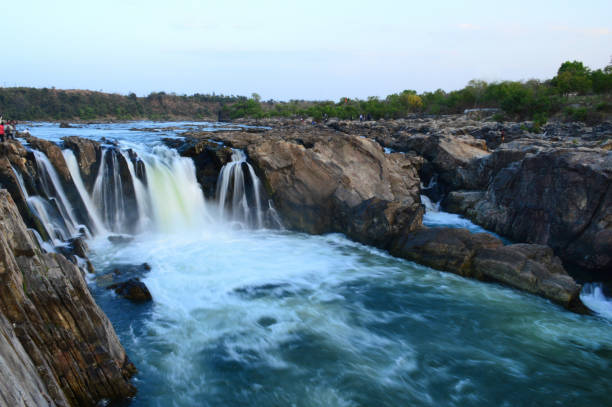
The Narmada River
The Town You Sleep In
Why the base town shapes a monsoon waterfall trip more than any single fall, what to look for, and towns in Karnataka, Kerala and Goa worth considering.
One village ghat upriver
Train versus road that week
Markets before the 20th, not on it
Journeys Worth Discovering
Explore inspiring destinations, memorable journeys and travel stories from across India and beyond.
Explore destinations




