
Most people meet Chittorgarh at midday. They arrive on a bus or in a car from Udaipur, climb out into the heat, walk quickly between the famous towers and palaces, and leave. They see a great deal. But they miss the hour that makes the place make sense.
Come at opening time instead. In August, after the monsoon has filled the fort’s reservoirs and painted its plateau green, the first hour at Chittorgarh is one of the quietest and most beautiful experiences in Rajasthan.
Why Chittorgarh
Chittorgarh Fort sits on a long, high plateau above the plains of southern Rajasthan. It was for centuries a capital of the Sisodia rulers of Mewar, and it is one of the six hill forts of Rajasthan listed together by UNESCO as a World Heritage Site. Its sheer size is the first surprise; the fort area covers several hundred hectares, and it is often described as one of the largest forts in India.
Its story is one of sieges. Chittorgarh was attacked repeatedly, most famously by Alauddin Khalji in the early 14th century, by Bahadur Shah of Gujarat in the 16th century, and by the Mughal emperor Akbar in 1567–68. These sieges are associated in Rajput tradition with jauhar, the self-immolation of women within the fort, and saka, the last charge of the men. Some of the most famous stories, including that of Rani Padmini, blend history and legend, and historians continue to debate which details are historical.
Getting in early
To reach the plateau you drive up a winding road through a series of gates, or pols. The climb is part of the experience: each gate marks a stage in the old defences, and by the time you reach the top, the town below has receded.
Check the current opening hours with the Archaeological Survey of India or locally before you go, since they can change. Aim to be at the entrance as close to opening as you can manage. If you are staying in Chittorgarh town, this is easy. If you are driving from Udaipur, it means an early start, but on an empty morning road it is a pleasant drive.
A route for the first hour
The fort is too large to see properly in a single hour, so think of the first hour as your quiet window and plan to stay on afterwards.
Rana Kumbha’s Palace
Start near the ruins of the Rana Kumbha Palace, one of the oldest structures on the plateau. It is atmospheric rather than intact, with roofless halls and stone corridors. In the early light, with no crowds, it is easy to imagine the court that once lived here.
Vijay Stambh
Walk on to the Vijay Stambh, the Tower of Victory, built in the 15th century by Rana Kumbha. Its nine storeys are covered in sculpture, with Hindu deities and scenes carved into almost every surface. In the low morning sun the carvings stand out in relief. Whether visitors are allowed to climb inside the tower varies, so ask at the site.
Gaumukh Kund
Nearby is the Gaumukh reservoir, fed by a spring that flows from a rock carved in the shape of a cow’s mouth. After the monsoon the kunds of Chittorgarh are full, and their stillness at dawn, with reflections of temples and walls, is one of the reasons to come in August.
Rani Padmini’s Palace
Further along the plateau, the palace associated with Rani Padmini sits beside a pool, with a small pavilion in the water. It is one of the most photographed spots in the fort, and the early hour is the best time to see it without a crowd.
Kirti Stambh
Then head to the Kirti Stambh, the Tower of Fame, an older and smaller tower associated with the Jain tradition and dedicated to the first Tirthankara, Adinath. Its carving is delicate and less visited than the Vijay Stambh.
The monsoon plateau
What makes August special is the plateau itself. In winter it is dusty and pale. After the rains, grass covers the open ground between the monuments, the old walls are dark with moisture, and on some mornings mist lifts off the reservoirs as the sun climbs. Birds are everywhere, and the ramparts give long views over a green, patchwork plain.
The trade-off is weather. A monsoon morning can turn to rain without much warning. Bring a light rain jacket and shoes with good grip; the stone paths and steps can be slippery.
Practical notes
- Getting there: Chittorgarh is well connected by road and rail. By road it is roughly a two-hour drive from Udaipur, depending on traffic.
- Getting around: The plateau is large. Many visitors drive or take an auto-rickshaw between groups of monuments and walk within each group.
- Guides: Licensed guides are available at the fort and can bring the stories to life. Agree the scope and fee clearly before you start.
- Tickets: Entry is managed by the ASI. Check current fees and whether online booking is available before you go.
- Food and water: Carry water. There are limited options on the plateau itself; eat in town before or after.
Stay for the evening too
If you enjoyed the morning, consider staying for the evening. Many visitors combine Chittorgarh with a sound-and-light show where it is running; check locally for current timings and languages. Or simply return to a rampart at sunset and watch the plain darken.
The point of opening hour
Forts like Chittorgarh were built to impress. In the crowded middle of the day it is easy to see that intent. In the quiet first hour, you feel something else: the loneliness of the plateau, the weight of its sieges, and the beauty that has survived them. On an Independence Day road trip, it is a fitting place to think about what freedom has cost, across many centuries.
Combining Chittorgarh with the rest of Mewar
Chittorgarh fits naturally into a longer Mewar loop. From Udaipur, many travellers drive out to Chittorgarh for a day, but staying a night lets you see the fort at both ends of the day. Kumbhalgarh, the other great Mewar hill fort, lies on the opposite side of Udaipur, and the two make a fine pair for a long weekend if you have a car and are happy to spend time on the road between them.
More from Issue 76
- Independence Day Road Trips: August 2025 Issue Index
- Editor’s letter: The Independence Day Road Trips
- Delhi to Kumbhalgarh in three days
- Bengaluru toward Hampi after the rain
- What the highways actually do on 15 August
- A night in a highway town worth stopping
- The route to skip because of convoys
- A guest note from the passenger seat
- Fuel, FASTag and fog
- A less-driven spur off the main highway
- Packing for a hot car

Ballimaran Street For Opticals
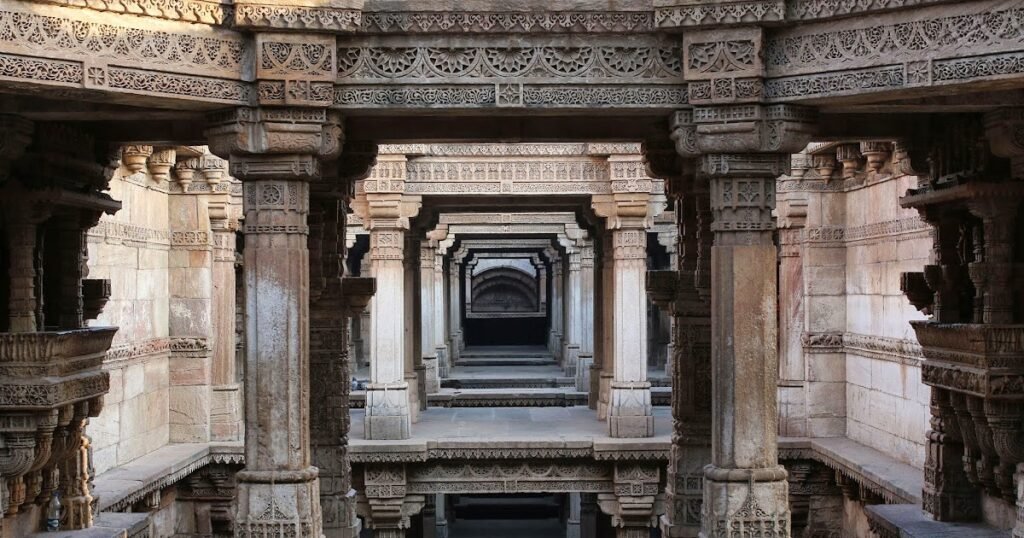
The Adalaj Stepwell in Ahmedabad, India
Kohima before the stadium
The Town You Sleep In
Why the base town shapes a monsoon waterfall trip more than any single fall, what to look for, and towns in Karnataka, Kerala and Goa worth considering.
One village ghat upriver
Train versus road that week
Markets before the 20th, not on it
Journeys Worth Discovering
Explore inspiring destinations, memorable journeys and travel stories from across India and beyond.
Explore destinations




