


Dalhousie: A Beautiful Himalayan Retreat in Himachal Pradesh
April 3, 2024 in Himachal Pradesh, Destinations, Hill Station
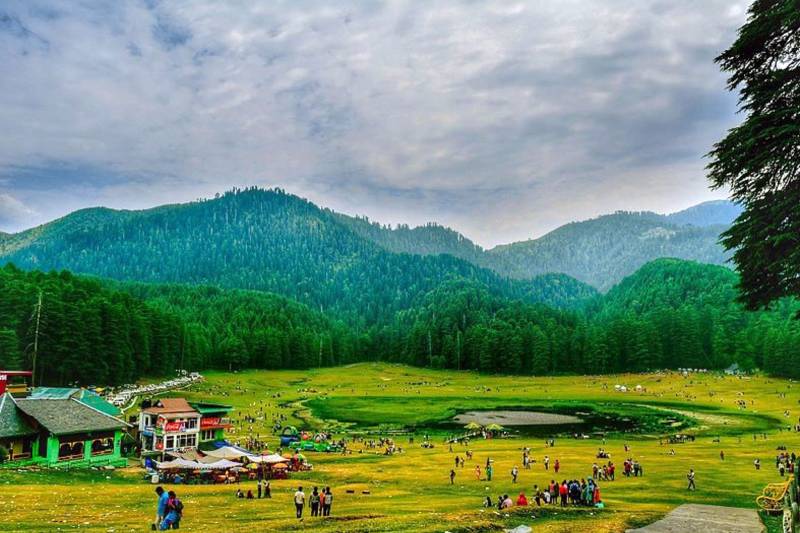
The city of Dalhousie, which is located in the middle of Himachal Pradesh, is a shining example of tranquilly and natural beauty. It is surrounded by the Himalayan foothills, which are characterised by towering pine forests and lush green valleys. The picturesque hill station that bears the name of Lord Dalhousie, who served as the British Viceroy of India during the 19th century, exudes an old-world charm that is both enduring and captivating. In the midst of the chaos that is modern life, Dalhousie provides a haven for weary travellers who are looking for solace. Its colonial architecture, breathtaking vistas, and peaceful atmosphere make it an ideal destination.
The journey to Dalhousie is an adventure in and of itself, as it requires travellers to navigate their way through winding mountain roads that wind their way through breathtaking landscapes of snow-capped peaks, cascading waterfalls, and lush forests. A new panorama of natural beauty is revealed at every turn and twist, serving as a testament to the unbridled power and majesty of the Himalayas. The fresh mountain air invigorates the senses, and the call of a Himalayan eagle can be heard in the distance, reverberating through the valleys and welcoming travellers to continue on their journey to their destination.
It is possible to say that the history of Dalhousie is as colourful and rich as the tapestry of its landscape. The town was established by the British in the middle of the nineteenth century as a summer retreat for their officials and soldiers. It quickly developed into a bustling hill station that was dotted with grandiose government buildings, churches, and stately mansions. A good number of these buildings, which date back to the colonial era, are still standing today. The ornate architecture and sophisticated facades of these buildings serve as proud reminders of Dalhousie’s legendary past. From the imposing St. John’s Church to the iconic Mall Road, where echoes of history reverberate through the cobbled streets, the legacy of British rule is palpable in every corner of the town. This is the case from the very beginning of the town to the very end.
Nevertheless, hidden behind its colonial exterior is a world of natural wonders that are just waiting to be discovered. The city of Dalhousie is blessed with an abundance of breathtaking landscapes, ranging from the verdant meadows of Khajjiar to the tranquil shores of the Chamba River. Aspiring adventurers flock to these untouched wildernesses to take part in a wide variety of exhilarating activities, ranging from horseback riding and hiking to paragliding and camping. The landscape of Dalhousie is transformed into a kaleidoscope of colours and textures that never fails to amaze, and each season brings its own special allure to the city.
The Dainkund Peak, which is the highest point in the town of Dalhousie and provides breathtaking views of the mountains and valleys that are located in the surrounding area, is one of the most recognisable landmarks in the city. According to legend, Dainkund, also known as the “Singing Hill,” is said to produce a melodious sound when the wind blows through its ancient trees, thereby producing an otherworldly atmosphere that captivates all those who come to visit. Pholani Devi Temple is a sacred site that is dedicated to the goddess Kali. It is a place where pilgrims gather to seek blessings and offer prayers amidst the tranquil surroundings of towering deodar trees and fragrant rhododendron bushes. It is also the location of the Pholani Devi Temple.
Dalhousie is home to a plethora of ancient temples and shrines that serve as a haven apart from the chaos of the modern world, making it an ideal destination for those who are looking for spiritual solace. As a tranquil body of water that is nestled among the mountains, Chamera Lake is a popular pilgrimage site for devotees of Lord Shiva. These devotees come to the lake to bathe in its sacred waters and seek blessings from the divine. A priceless collection of artefacts and relics that offer insight into the rich cultural heritage of the region can be found in the Bhuri Singh Museum, which is situated in the nearby town of Chamba. These artefacts and relics include everything from intricate wood carvings and textiles to ancient sculptures and manuscripts.
However, it is possible that the people of Dalhousie are the true essence of the city. They are friendly, welcoming, and filled with a profound reverence for the natural environment that surrounds them. The people who live in the area, who are referred to as Dalhousians, have a great deal of pride in their town and its history, and they are always eager to educate tourists about their customs and stories. Each and every interaction that takes place in Dalhousie is infused with a sense of warmth and camaraderie, whether it be the experience of savouring traditional Himachali cuisine at a local eatery, bargaining for souvenirs at the bustling Gandhi Chowk market, or simply engaging in idle conversation with a friendly stranger.
During the time that the sun is setting below the horizon and the stars are beginning to dance in the night sky, Dalhousie takes on a mystic air, as if time itself has come to a complete halt. It is a place where the past integrates with the present in a seamless manner, where nature is king, and where the soul is able to find solace amidst the chaos that is the modern world. When in Dalhousie, one cannot help but feel a profound sense of awe and reverence for the beauty and grandeur of the natural world. This is because the majestic peaks and whispering pines are all in close proximity to one another.
The conclusion is that Dalhousie is more than just a location; it is an experience, a journey into the heart of the Himalayas and into the very essence of India itself. The place is a place where history, culture, and nature come together to create a tapestry of beauty and wonder that is unmatched by anything else. Dalhousie will captivate your imagination, revitalise your spirit, and leave an indelible mark on your soul, regardless of whether you are a seasoned traveller or a first-time visitor to the area. We invite you to visit Dalhousie, where you can immerse yourself in the enduring allure of the town and uncover the enchantment that is concealed within the mountains.
Travel through Dharamshala & McLeod Ganj
April 3, 2024 in Himachal Pradesh
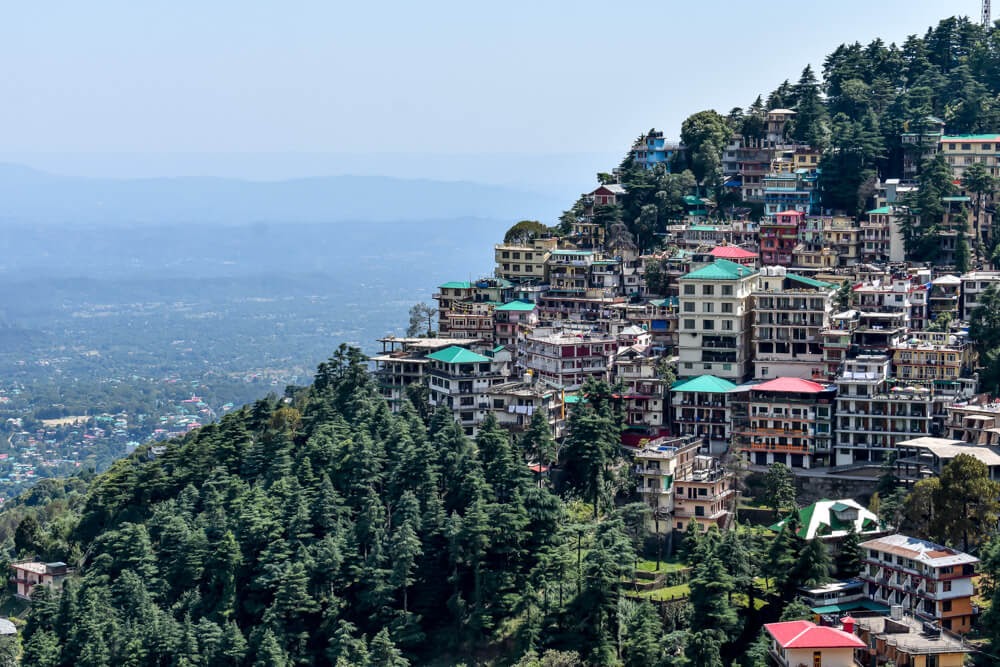
Both Dharamshala and McLeod Ganj are twin towns that can be found in Himachal Pradesh. You can find them tucked away in the tranquil valleys of Himachal Pradesh, surrounded by the majestic peaks of the Himalayas. These hamlets in the Himalayas have caught the hearts and minds of travellers from all over the world because they are revered as sanctuaries of tranquilly and enlightenment. As a result of their breathtaking vistas, vibrant culture, and spiritual atmosphere, Dharamshala and McLeod Ganj provide a haven for individuals who are looking for peace, adventure, and the opportunity to discover themselves.
As travellers make their way to Dharamshala and McLeod Ganj, they make their way through winding mountain roads that snake their way through breathtaking landscapes of lush forests, cascading waterfalls, and towering peaks. The journey itself is an adventure in and of itself. A new panorama of natural beauty is revealed at every turn and twist, serving as a testament to the unbridled power and majesty of the Himalayas. The fresh mountain air invigorates the senses, and the call of a Himalayan eagle can be heard in the distance, reverberating through the valleys and welcoming travellers to continue on their journey to their destination.
Dharamshala, the larger of the two towns, is the administrative headquarters of the Kangra district and is home to a wide variety of cultures and traditions. It is also the larger of the two towns. Lower Dharamshala, which is the commercial hub of the region, and Upper Dharamshala, which is home to the Tibetan community and serves as the spiritual heart of the town, are the two distinct areas that make up the town. Lower Dharamshala is the more commercially significant of the two. The streets of Lower Dharamshala are lined with bustling markets, vibrant temples, and buildings that date back to the colonial era, all of which are a reflection of the town’s rich history and heritage. Upper Dharamshala, on the other hand, is characterised by its tranquil monasteries, peaceful gardens, and expansive views of the mountains that are located in the surrounding area. Here, one can experience a sense of introspection and tranquilly.
McLeod Ganj is a charming hill station that is located in the centre of Upper Dharamshala. It is known as the “Little Lhasa” of India due to its reputation. In honour of Sir Donald Friell McLeod, a British lieutenant-governor of Punjab, McLeod Ganj is the location of the residence of His Holiness the 14th Dalai Lama as well as the temporary residence of the Tibetan government that is currently in exile. The town is a vibrant melting pot of cultures, where modern Indian sensibilities and traditional Tibetan customs and rituals blend together in a seamless manner. At the same time that the aroma of Tibetan cuisine fills the air, tantalising the taste buds and igniting the senses, prayer flags flutter in the breeze, their vibrant colours offering prayers of peace and prosperity to all those who pass beneath them.
The Tsuglagkhang Complex is a sprawling temple complex that serves as the spiritual and cultural centre of the Tibetan community. It is considered to be one of the most recognisable landmarks in the McLeod Ganj neighbourhood. Both the Tsuglagkhang Temple, which serves as the official residence of the Dalai Lama, and the Namgyal Monastery, which is a place where monks and nuns congregate to study, meditate, and pray, are located within the complex on the same premises. The presence of His Holiness is said to infuse the town with a sense of peace and enlightenment, which is why pilgrims from all over the world bring themselves to this holy site in the hopes of receiving blessings and receiving direction from Him.
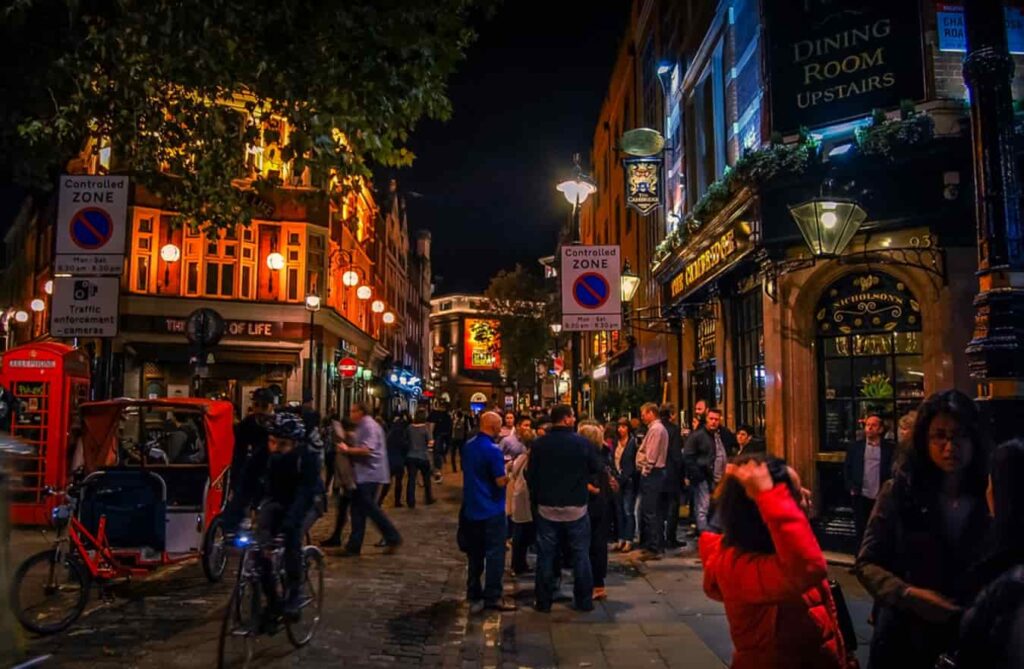
But beyond its spiritual significance, McLeod Ganj is also a hub of artistic and intellectual activity, with its vibrant cafes, galleries, and bookstores serving as gathering places for artists, writers, and thinkers from across the globe. The town’s bohemian atmosphere and laid-back vibe make it a magnet for creative souls who are looking for inspiration and camaraderie. Additionally, the town’s breathtaking natural beauty provides the ideal backdrop for artistic expression and introspection.
Those who are looking for an exciting experience will find that Dharamshala and McLeod Ganj provide a plethora of opportunities to discover the incredible natural beauty of the Himalayas. Trekking enthusiasts can embark on epic journeys through remote valleys and alpine meadows, and adrenaline junkies can test their mettle on thrilling whitewater rafting expeditions down the icy waters of the Beas River. Both of these activities are available in the region. Skiers and snowboarders descend upon the slopes of the towns during the winter months to carve new tracks in the powdery snow, transforming the towns into a winter wonderland.
It is impossible to resist the allure of Dharamshala and McLeod Ganj as they take on a magical air as the sun sinks behind the towering peaks, casting a golden glow upon the landscape. Monks and pilgrims are gathering in the temples and monasteries to offer prayers and perform rituals. The air is filled with the aroma of incense and the sound of chanting as they do so. It is a time for introspection and contemplation, with the purpose of appreciating the splendour and awe of the world that surrounds us, as well as discovering tranquilly and comfort in the midst of the chaos that is modern life.
Dharamshala and McLeod Ganj are more than just towns; they are sanctuaries of tranquilly and enlightenment, where the splendour of the Himalayas meets the richness of Tibetan culture and the vitality of Indian life. In conclusion, these two towns are more than just towns. Whether you come to Dharamshala and McLeod Ganj for the natural beauty, the spiritual enlightenment, or the sense of adventure, you will find that both of these places have something to offer everyone. Therefore, make your way to these Himalayan havens, allow yourself to be enchanted by the enduring beauty that they possess, and uncover the enchantment that is concealed within their snow-capped peaks and verdant valleys.

Manali: A Himalayan Haven in Himachal Pradesh
April 3, 2024 in Himachal Pradesh, Destinations, Hill Station
The enchanting town of Manali can be found tucked away in the midst of the verdant valleys of Himachal Pradesh, ensconced within the embrace of the mighty Himalayas. The place known as Manali, which is revered as a sanctuary of natural beauty and spiritual tranquilly, has the ability to enchant anyone who ventures into its vicinity. The timeless allure of the Himalayan landscape is demonstrated by this idyllic destination, which is characterised by snow-capped peaks, rivers that wind through the valleys, and forests that are thick with vegetation.
The journey to Manali is an adventure in and of itself, as it requires travellers to traverse winding mountain roads that wind their way through picturesque hamlets and breathtaking vistas. At each and every bend in the road, a fresh panorama of rugged cliffs, cascading waterfalls, and emerald-green meadows is revealed, creating a scene that is reminiscent of something from a Disney storybook. The fresh mountain air invigorates the senses, and the call of a Himalayan eagle can be heard in the distance, reverberating through the valleys and welcoming travellers to continue on their journey to their destination.
There are stories of ancient sages and celestial beings that are woven throughout the folklore of Manali. Manali’s history is steeped in mythology and legend. The valley of Manali is said to have been the dwelling place of the wise man Manu, who is said to have survived a massive flood and prevented the extinction of humanity. This is according to the regional legend. The name of the town comes from the place where Manu took up residence, and his legacy is honoured in the numerous temples and shrines that are scattered across the landscape.
Over the course of more recent history, Manali played an important role as a trading post along the ancient Silk Route, which connected India with the kingdoms of Central Asia. In the pursuit of wealth and excitement amidst the towering peaks, merchants from faraway lands would travel through perilous mountain passes while carrying valuable goods. The town’s bustling markets and ancient trading posts, where merchants barter for goods amidst a cacophony of languages and cultures, are still places where remnants of this illustrious past can still be seen.
In the midst of the breathtaking beauty of the Himalayas, Manali has evolved into a bustling centre of activity, representing a place where tradition and modernity coexist in seamless harmony. In the midst of towering pine trees and snow-capped peaks, the streets are bustling with the activity of daily life, providing a backdrop for the locals as they go about their business. There are vibrant Tibetan prayer flags that flutter in the breeze, and their vibrant colours offer prayers of peace and prosperity to anyone who passes beneath them.
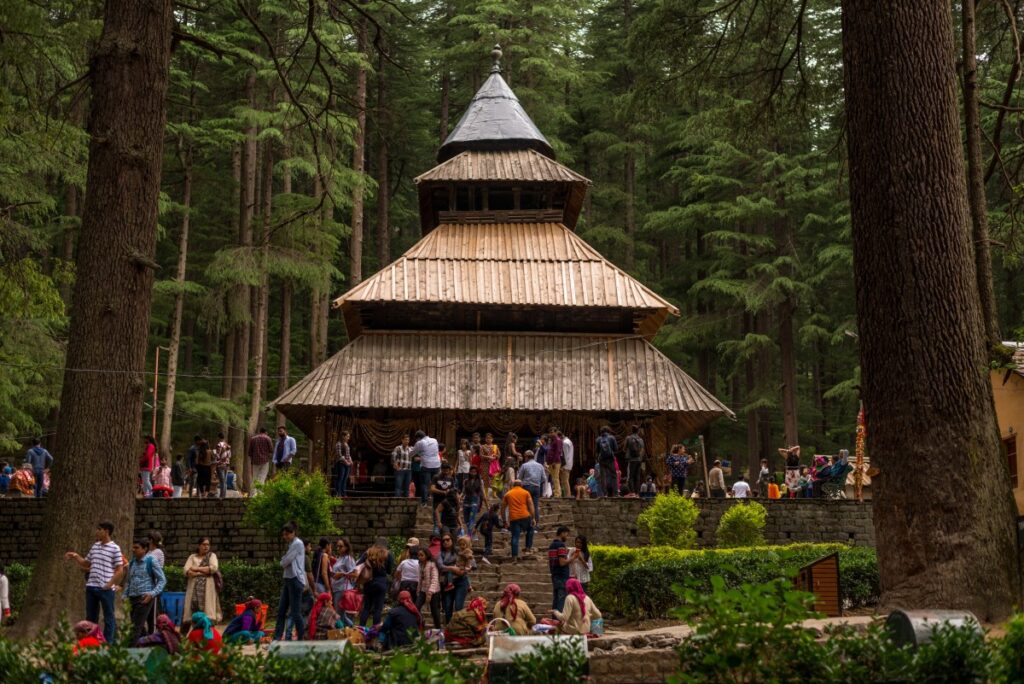
However, despite the commotion and activity of daily life, there are opportunities for quiet contemplation and reflection on spiritual matters that can be found in the numerous temples and monasteries that are located in Manali. With its intricately carved wooden facades and ornate pagoda roofs, the ancient Hadimba Temple is a testament to the region’s rich cultural heritage. The temple is dedicated to the goddess Hadimba and was built in the ancient times. In the midst of the serene atmosphere created by the towering cedar trees and fragrant incense, pilgrims make their way to this holy site in order to pray and seek blessings.
Those who are looking for an exciting experience will find that Manali provides a plethora of opportunities to discover the natural splendour of the Himalayas. Trekking enthusiasts can embark on epic journeys through remote valleys and alpine meadows, and adrenaline junkies can test their mettle on thrilling whitewater rafting expeditions down the icy waters of the Beas River. Both of these activities are available in the region. As the winter season approaches, the town is transformed into a winter wonderland, with skiers and snowboarders flocking to its slopes to carve new tracks in the powdery snow.
In the moment that the sun sinks behind the towering peaks, casting a golden glow upon the landscape, Manali takes on a magical aura that is impossible to resist. As the locals gather around the crackling bonfires to tell stories and sing songs beneath the clear night sky, the air is filled with the aroma of wood smoke and the sound of laughter. It is a time for celebration and introspection, a moment to take this opportunity to appreciate the splendour and awe that the world around us possesses.
The conclusion is that Manali is more than just a location; it is an experience, a journey into the heart of the Himalayas and into the very essence of India itself. In Manali, there is something for everyone, whether you come for the natural beauty, the rich cultural heritage, or the adrenaline-fueled adventure. Manali has something to offer everyone. Discover the enchantment that is concealed within the Himalayan haven’s snow-capped peaks and emerald valleys by coming here and allowing yourself to be entranced by the timeless beauty of this Himalayan haven.

Shimla: The Enigmatic Jewel of Himachal Pradesh
April 3, 2024 in Himachal Pradesh, Destinations, Hill Station
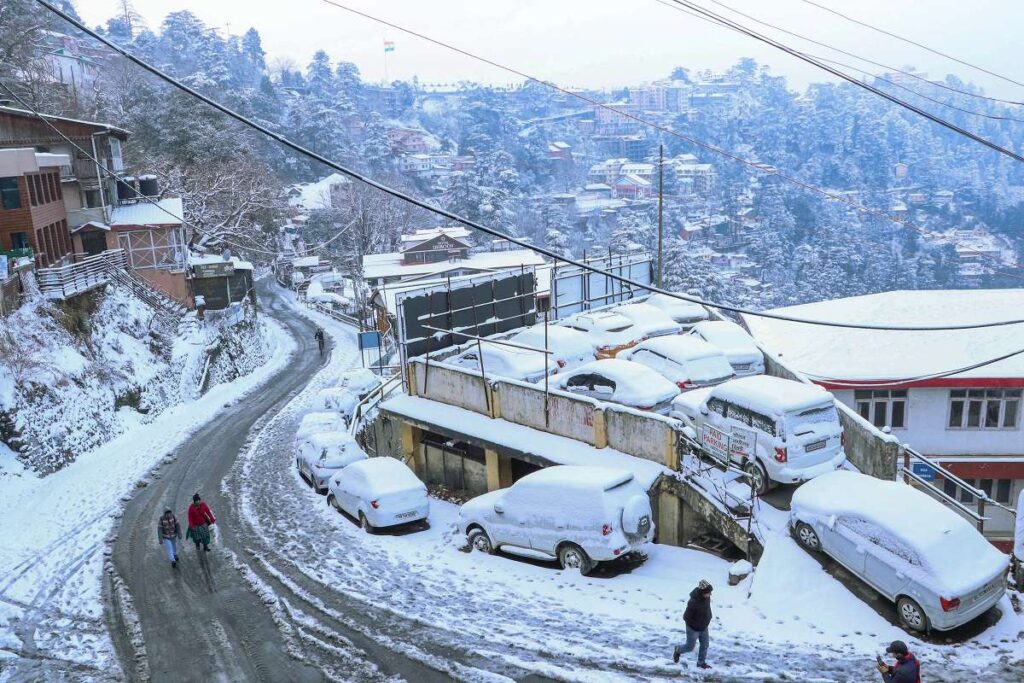
Shimla, the crown jewel of Himachal Pradesh, is a haven of peace and natural beauty that can be found tucked away in the depths of the Himalayan foothills, surrounded by verdant folds. Once the summer capital of British India, this ethereal hill station has been revered for a very long time due to the breathtaking views it offers, the colonial charm it exudes, and the invigorating climate it provides. One cannot help but be enthralled by the enduring allure of this Himalayan haven as they make their way through its winding streets, which are adorned with architecture from the Victorian era and adorned with pine forests.
The hues of Shimla’s sunsets are compared to the richness and vibrancy of the city’s history. Originally inhabited by the indigenous Pahari people, the region eventually became a haven for British officers who were looking for a place to escape the sweltering heat of the Indian summers. During the time of the colonial era, Shimla flourished into a bustling hill station that was dotted with grandiose government buildings, churches, and stately mansions. Many of these buildings are still standing today as proud relics of a bygone era. In every nook and cranny of Shimla, the legacy of British rule is palpable. From the imposing Vice Regal Lodge to the iconic Mall Road, where echoes of history reverberate through the cobbled streets, Shimla is a city that is replete with historical reverberations.
However, hidden beneath its colonial exterior is a rich tapestry of natural wonders that are just waiting to be discovered. The city of Shimla is blessed with an abundance of natural beauty, ranging from snow-capped peaks to verdant valleys that beckon those who are interested in nature and people who enjoy adventurous activities. The verdant slopes of the mountains that surround the area are covered in dense forests of oak, pine, and deodar, which serve as a safe haven for a wide variety of flora and fauna. Trekking trails wind their way through these untouched forests, providing daring explorers with the opportunity to completely submerge themselves in the unspoiled wilderness of the Himalayas.
Ridge is a sprawling open space that provides breathtaking views of the mountains and valleys that are located in the surrounding area. It is considered to be one of the most recognisable landmarks in Shimla. It doesn’t matter if you’re basking in the warm radiance of the morning sun or the ethereal light of the moon; this picturesque promenade is the ideal spot to take in the splendour of Shimla’s natural surroundings. It is also the location of a number of buildings that date back to the colonial era, such as the Christ Church and the Gaiety Theatre, both of which continue to serve as enduring symbols of Shimla’s illustrious history.
Shimla is home to a number of ancient temples and shrines that are steeped in history and mythology, making it an ideal destination for those who are looking for spiritual solace. The Jakhu Temple, which is devoted to the monkey god Hanuman, is situated on a hill that overlooks the town and provides breathtaking views of the landscape that is all around it. He is said to have rested there while searching for the legendary Sanjeevani herb, and the temple is said to have been constructed on the spot where he did so. Those who are seeking blessings and paying homage to the revered deity make their way to this holy site in large numbers.
However, it is possible that the people of Shimla are the true essence of the city. They are friendly, welcoming, and filled with a profound reverence for the natural environment that surrounds them. The people who live in Shimla, who are referred to as Shimlaites, are extremely proud of their town and its history, and they are always eager to share their tales and customs with tourists. Whether it be savouring traditional Himachali cuisine at a local eatery, bargaining for souvenirs at the bustling Lakkar Bazaar, or simply engaging in idle conversation with a friendly stranger, every encounter in Shimla is imbued with a sense of warmth and camaraderie. Shimla is a city that is known for its friendly people.
At the moment when the sun sinks below the horizon and the stars begin to dance in the night sky, Shimla takes on an ethereal air, as if time itself has come to a complete halt. It is a place where the past integrates with the present in a seamless manner, where nature is king, and where the soul is able to find solace amidst the chaos that is the modern world. When in Shimla, one cannot help but feel a profound sense of awe and reverence for the beauty and grandeur of the natural world. This is because Shimla is surrounded by majestic peaks and pine trees that whisper to one another.
In conclusion, Shimla is not merely a location; rather, it is an experience, a journey into the heart of the Himalayas and into the very essence of India itself. The place is a place where history, culture, and nature come together to create a tapestry of beauty and wonder that is unmatched by anything else. Your imagination will be captivated, your spirit will be rejuvenated, and an indelible mark will be left on your soul when you visit Shimla, regardless of whether you are a seasoned traveller or going there for the first time. We invite you to visit Shimla, where you can immerse yourself in the enduring allure of the city and uncover the enchantment that is concealed within the mountains.

Discovering the Mughal Marvels of Agra
February 24, 2024 in Uttar Pradesh, Monuments
Fatehpur Sikri:
Fatehpur Sikri is a stunning reminder of the magnificence and magnificence of the Mughal period that is interwoven into India’s historical fabric. Located on the outskirts of Agra, this UNESCO World Heritage site tells stories of ancient civilizations and reverberates with the footsteps of royalty who have entered its sacred grounds.
Entering Fatehpur Sikri is like stepping into a bygone age, when the Indian subcontinent was under the dominion of the Mughal Empire. Founded in the late 16th century by Emperor Akbar, this once-thriving metropolis briefly but gloriously served as the capital of the empire.
Every turn leads to a new architectural and design wonder at Fatehpur Sikri, instilling a feeling of wonder as one makes their way through the maze-like streets. The city’s magnificent palaces, elaborate mosques, and beautifully carved gates portray a harmonic fusion of Persian, Hindu, and Islamic art.
One of the biggest mosques in India, the magnificent Jama Masjid is located in the middle of Fatehpur Sikri. It is a work of Mughal grandeur. An astonishing symphony of colour and texture is achieved by the mosque’s construction from red sandstone and white marble, which is embellished with intricate carvings and inlaid with valuable stones.
Across the street from here you can see the towering Buland Darwaza, also known as the “Gate of Magnificence,” which is the entry to the city. The Buland Darwaza, constructed to mark Akbar’s triumph over Gujarat, is a monument to the majesty and military might of the Mughal emperor.
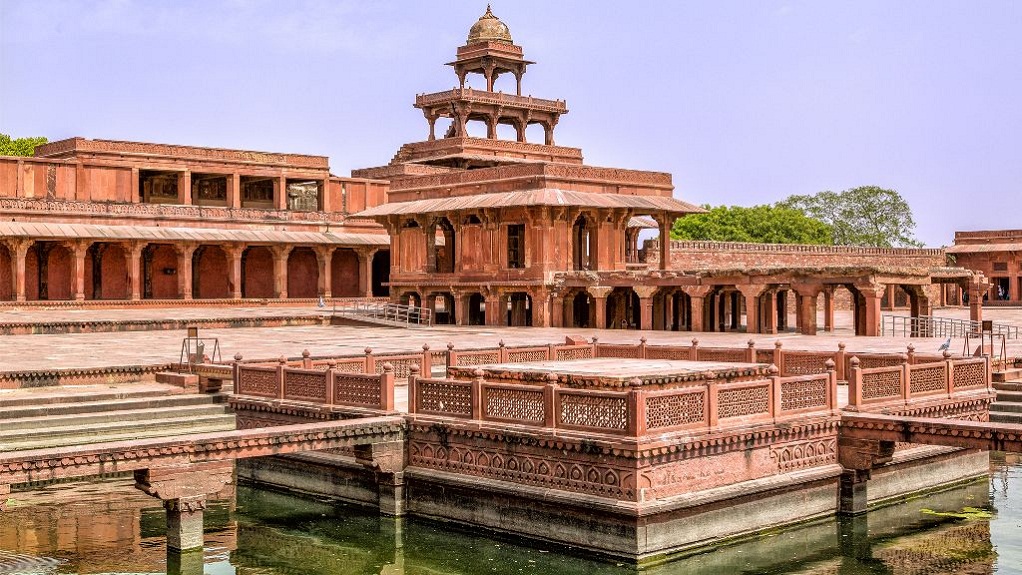
As one continues their exploration, they come across the magnificent Panch Mahal, a palace with five stories that was formerly the emperor’s and his courtiers’ refuge. The Panch Mahal showcases the Mughals’ architectural genius with its open pavilions and elaborately carved columns, providing breathtaking vistas of the landscape beyond.
The nearby Diwan-i-Khas, also known as the “Hall of Private Audience,” is a sight to behold because to its ornately carved jali screens and marble pillars. In this palatial setting, befitting an emperor, Akbar had secret meetings with his advisors to discuss state affairs.
One can’t help but feel awe and respect for the rich history and tradition that surround Fatehpur Sikri as the sun sets, bathing the ancient stones in a golden light. Even though Fatehpur Sikri is in ruins now, the memory of it will always be with those lucky enough to have walked in its footsteps.
Last but not least, Fatehpur Sikri is an enduring symbol of India’s cultural legacy and a tribute to the magnificence and splendour of the Mughal century. This old city is a veritable time machine, with imposing mosques and opulent palaces that tell stories of glory past and entice tourists to step into another era.
Itmad-ud-Daulah’s Tomb:
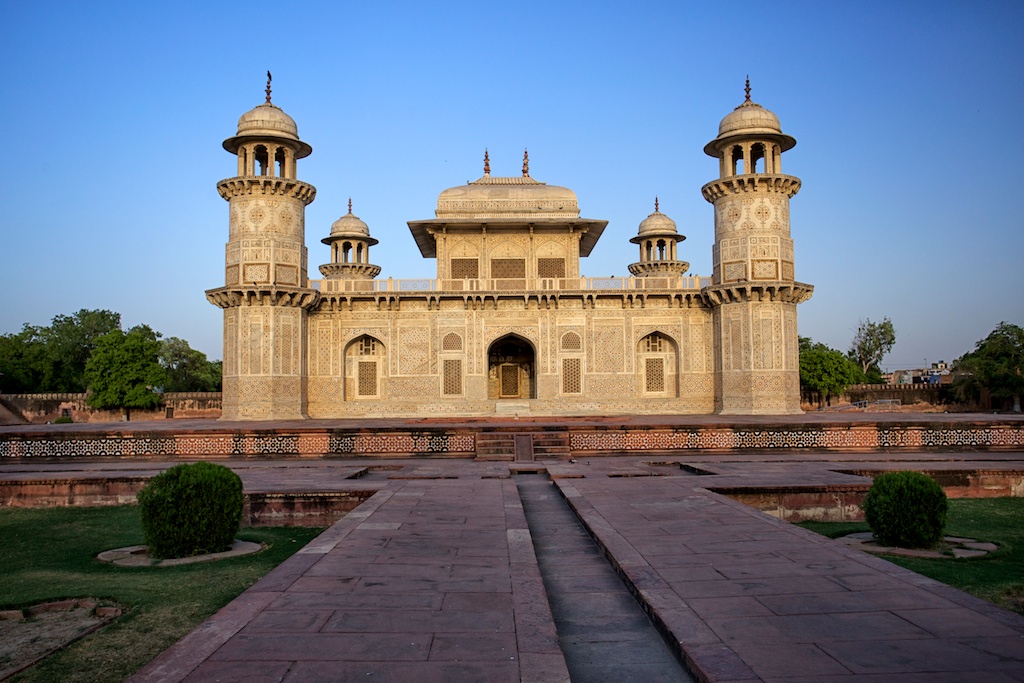
The Itmad-ud-Daulah’s Tomb, a magnificent example of Mughal architecture, is located in the old city of Agra on the banks of the peaceful Yamuna River. This mausoleum, which gives visitors a look into the luxurious Mughal Empire, is a popular attraction in Agra and is affectionately called the “Baby Taj” due to its delicate beauty and skilled construction.
The Itmad-ud-Daulah’s Tomb is a magnificent piece of Agra’s architectural legacy; Nur Jahan, wife of Emperor Jahangir, commissioned it to honour her father, Mirza Ghiyas Beg. Among the many Mughal mausoleums in the area, this immaculate marble structure stands out for its exquisite proportions, delicate inlays, and elaborate sculptures. Construction began in 1622 and lasted until 1628.
As one draws near the tomb, a sunlit symphony of intricate decorations and white marble awaits. Craftspeople painstakingly carved elaborate floral designs, arabesques, and calligraphic inscriptions into the mausoleum’s façade, achieving an air of ethereal beauty and harmony.
One feels a profound sense of peace and respect as they enter the mausoleum through its arched entryway. Beautiful jalis, which are lattice screens made of marble, embellish the inner chambers and filter the sunlight to provide a captivating interplay of shadows and light. Intricate inlays made of valuable stones like jasper and onyx glisten like jewels in the gentle afternoon light, and delicate flower designs adorn the walls and ceilings.
The main tomb of Mirza Ghiyas Beg is encircled by lesser tombs that are erected in honour of his relatives. The exquisite dome that tops the central chamber is a testament to the skill and artistry of the Mughal artisans who worked relentlessly to produce this architectural marvel. Its elaborate geometric patterns and floral motifs are a true reflection of their work.
Fragrant flowers and cascading fountains embellish the well-kept gardens that surround the monument. As one walks along the lush walkways, the calming sound of the Yamuna River provides a tranquil background, lulling tourists into a state of tranquilly.
Even though it is dwarfed by the neighbouring Taj Mahal, the tomb of Itmad-ud-Daulah stands tall as a monument to unending dedication and affection. In order to honour her late father and ensure that his legacy would live on for years to come, Nur Jahan supposedly gave her all to the building of this mausoleum.
As a final point, the Itmad-ud-Daulah’s Tomb provides evidence of the Mughal Empire’s architectural and creative prowess. Its delicate beauty and classic grace are a constant reminder of Agra’s cultural wealth and the lasting impact of the Mughal rulers who formerly lived here.
Agra Fort:
The Agra Fort, a magnificent reminder of the might and magnificence of the Mughal Empire, is situated on the banks of the Yamuna River. This UNESCO World Heritage site in India’s ancient city of Agra is a monument to the enduring power of human spirit in the face of adversity; it stands as a testament to the ebb and flow of empires and the passage of centuries.
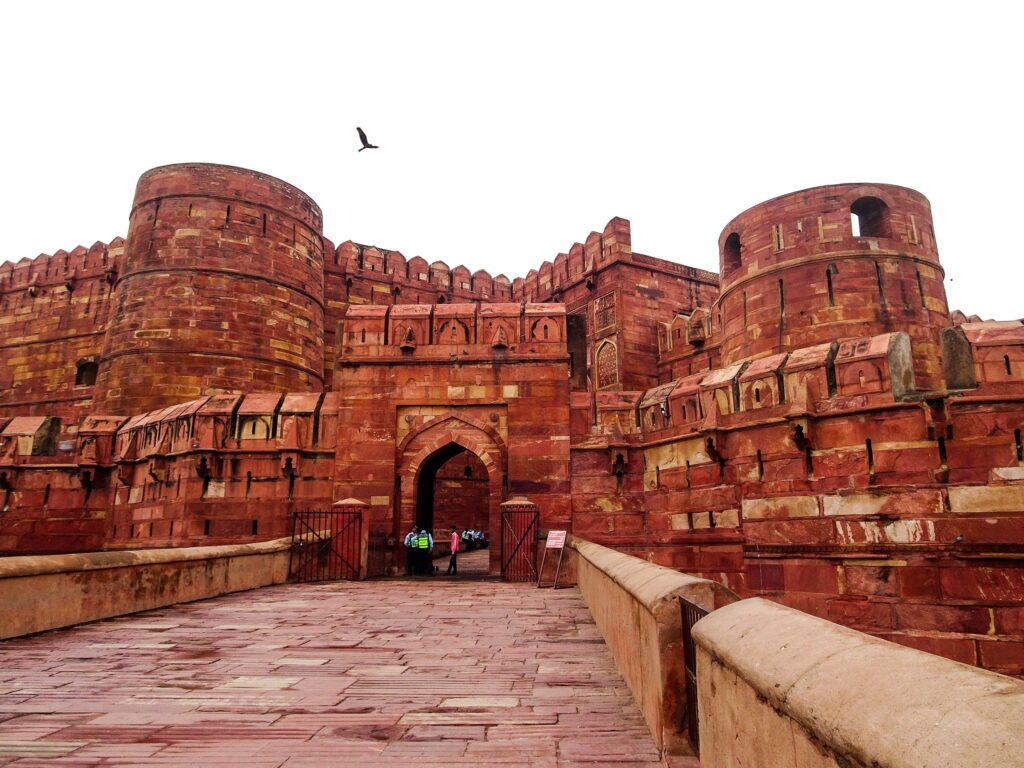
Impressive walls, magnificent gateways, and elaborate palaces define the Agra Fort, a wonder of Mughal architecture built mostly of red sandstone. The Mughal emperors’ primary home, built by Akbar in the 16th century and later enlarged upon by his successors, notably Shah Jahan, offered both protection and riches to those who dwelled behind its imposing walls for generations.
The fort’s enormous walls, which extend over two km in circumference, make an impressive first impression as tourists approach. Stepping through the majestic gates—including the world-famous Delhi Gate and the equally famous Amar Singh Gate—transports one to a bygone age of mighty empires, where the very stones bear witness to the tales of conquest and triumph.
Inside the fort, sightseers are treated to a kaleidoscope of architectural beauty. In the expansive courtyard known as the Diwan-i-Aam, also known as the Hall of Public Audience, the emperor would hold court and address the complaints of his subjects. While providing breathtaking views of the cityscape, its pillared halls and beautifully carved arches testify to the ostentation and grandeur of Mughal court life.
Next to the Diwan-i-Aam is the Diwan-i-Khas, also known as the Hall of Private Audience, where the emperor would privately meet with foreign dignitaries to discuss state affairs. The hall is a reflection of the opulence and refinement of the Mughal court, with its marble pillars, precious stone inlay, and elaborate decorations.
Delving deeper into the fort reveals a maze of pavilions, gardens, and palaces that were formerly the personal quarters of the Mughal emperors and their family. The Private Palace, also known as the Khas Mahal, is an architectural marvel that exemplifies Mughal perfection. Its magnificent floral designs, delicate marble screens, and elaborate balconies convey an air of classic beauty.
The Sheesh Mahal, also known as the Palace of Mirrors, is close by and is sure to impress with its glistening walls decorated with hundreds of miniature mirrors that reflect the light in a spectacular display of glimmer and lustre. Legend has it that the palace would beg people to look upon it on a moonlit night because of the hypnotic spell it cast.
You can’t help but be humbled by the rich legacy and historical significance of the Agra Fort as you watch the sun go down over the Yamuna River and illuminate its walls with a golden light. Despite the passage of time, the fort continues to stand as a representation of India’s cultural heritage and a monument to the lasting impact of the Mughal Empire.
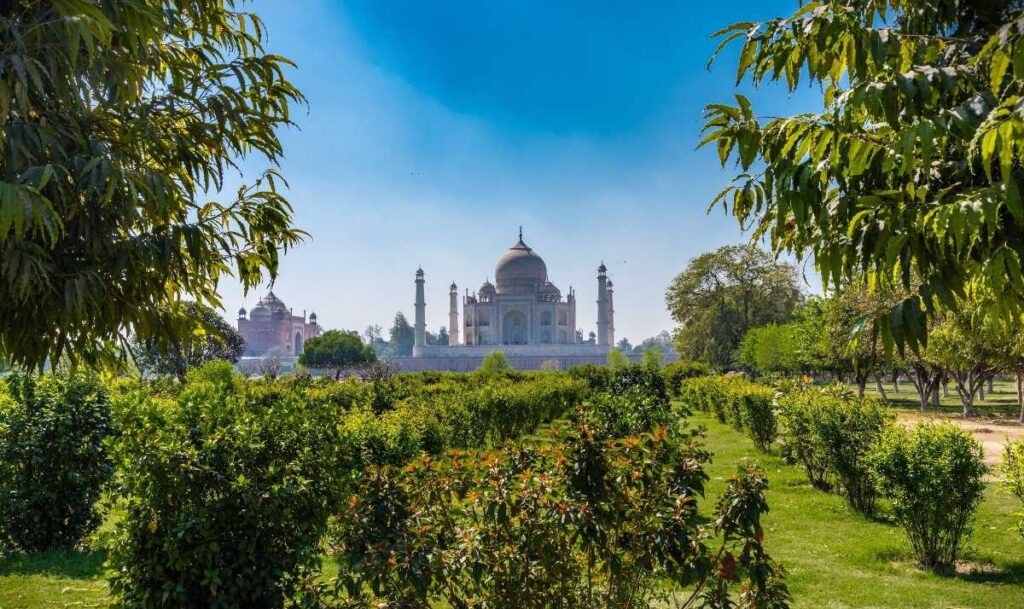
The Mehtab Bagh:
The Mehtab Bagh is a little-known jewel in Agra that sits peacefully on the banks of the Yamuna River, just next to the famous Taj Mahal. The “Moonlight Garden,” a lush haven, is a reflection of the Mughal love of order, aesthetics, and careful landscaping.
There is an immediate feeling of calm and peace when entering the Mehtab Bagh. As they look out into the carefully tended gardens, they can make out the verdant foliage and bright pops of colour from the many flowers in bloom. Cool shade from towering trees and the delicate aroma of roses and jasmine waft through the air.
Undoubtedly, the Mehtab Bagh’s most prominent feature is its breathtaking vista of the Taj Mahal, which is situated across the river. A picture of unmatched beauty and serenity unfolds as the sun rises over the horizon, lighting up the marble mausoleum with its golden light. The Yamuna River reflects the Taj Mahal, adding to the serene setting.
The Mehtab Bagh was initially intended to be one of eleven gardens that extended along the riverfront and was built during Emperor Babur’s reign in the early 1600s. However, the garden was enlarged and ornamented to provide the ideal vantage point for admiring the famed structure during the time of Emperor Shah Jahan, who built the Taj Mahal.
As one makes their way around the Mehtab Bagh, they will come across a number of pavilions, fountains, and water channels that were formerly the location of magnificent Mughal garden celebrations and ceremonies. Shaded from the sun and offering breathtaking views of the scenery, the pavilions are adorned with delicate lattice screens and elaborate marble carvings.
As the day goes on and the sun goes down, the Mehtab Bagh gets even more magical. As the sun sets and the sky turns a beautiful shade of pink and gold, the Taj Mahal is illuminated by the gentle light of the setting sun, which creates a mesmerising radiance on its shimmering white marble exterior. In the late afternoon and early evening, the Mehtab Bagh takes on an otherworldly quality that makes its natural beauty and romanticism stand out.
The Mehtab Bagh has been a representation of the everlasting devotion that served as the impetus for building the Taj Mahal for many years. Here, the grandeur of the Mughal Empire’s architecture harmonises harmoniously with the majesty of nature, and it appears as though time has stood still.
Leaving the Mehtab Bagh and its breathtaking views brings back thoughts of a place where love is in the air and where beauty has no limits. In this symphony of colour, scent, and everlasting beauty, the past and present meet, and Agra’s enduring charm is on full display.
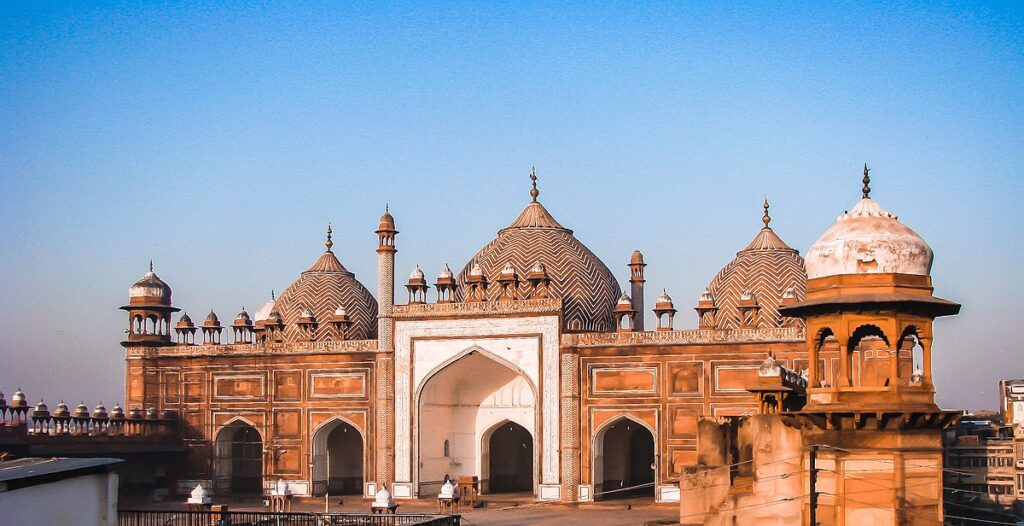
The Jama Masjid:
The Jama Masjid stands tall in the middle of Agra, amid the old lanes and crowded streets, representing the city’s spiritual and architectural beauty. As a symbol of India’s cultural wealth and the lasting influence of the Mughal Empire, this famous mosque is a work of art in Mughal architecture.
Jama Masjid is an exquisite example of 17th-century symmetry, proportion, and design, and it was commissioned by Emperor Shah Jahan. The mosque, which is mostly made of white marble and red sandstone, has an air of majesty and grandeur that draws everyone who sees it.
As one draws near the Jama Masjid, the sight of its majestic domes, towering minarets, and elaborately carved arches is enough to take one’s breath away. With its exquisite flower themes and elaborate writing, the main entryway leads you into a realm of architectural beauty and spiritual enlightenment.
There is an air of quiet reverence the moment one steps inside the Jama Masjid courtyard. With its expansive marble pavement, graceful water channels, and shady alcoves, this hallowed space beckons worshippers to pause and reflect.
Intricate marble screens, called jalis, refract the sunlight to produce a captivating dance of light and shadow in the prayer hall, a vast chamber in the centre of the mosque. As worshippers direct their prayers towards the Almighty from the mihrab, or prayer niche, they are greeted by intricate carvings and Quranic inscriptions.
Intricate marble carvings and beautiful calligraphy adorn each of the smaller chambers and alcoves that surround the prayer area. These rooms, which the faithful previously utilised for prayer and reflection, now stand as a tribute to the skill and artistry of the Mughal builders who toiled away at this architectural marvel.
Ascending the Jama Masjid’s minarets offers breathtaking views of the city below and beyond, including the beautiful domes and spires of Agra in the distance. This is the best spot to take in the mosque’s massive size and the ever-changing splendour of the city that surrounds it.
The Jama Masjid is filled with believers who gather to offer prayers to the Divine as the call to prayer sounds through the halls. A spiritual transcendence that knows no bounds permeates the atmosphere as the aroma of incense and the sound of recitation fill the air.
The Jama Masjid has been a unifying symbol and a lighthouse of faith for the Agra community for generations. People from many walks of life gather there to pray and find comfort, wisdom, and direction from the Divine.
As visitors leave the Jama Masjid, they take with them the memory of a sacred space where architecture and religion harmonise in a harmonious display of reverence. This monument stands as a symbol of the Mughal Empire’s lasting influence and the irresistible charm of Agra, a city where religion, culture, and history come together to form a magnificent tapestry.

Exploring the Majestic Taj Mahal
February 24, 2024 in Uttar Pradesh, Monuments
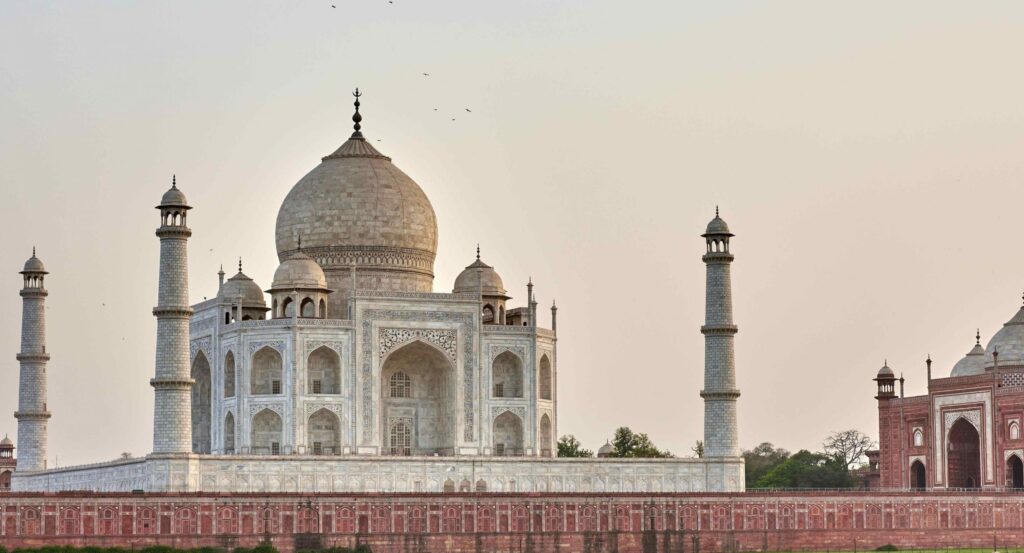
Certain structures have stood the test of time as enduring representations of beauty, devotion, and majesty throughout the annals of human history. The Taj Mahal is the most revered of all, as it is a monument that transcends both time and place, and it is a monument to love that lasts forever. In the city of Agra, which is known for its gorgeous setting, the Taj Mahal, which is located on the banks of the Yamuna River, is a destination that attracts tourists from all over the world who wish to witness its magnificent splendour.
An excursion to the Taj Mahal is comparable to going on a pilgrimage to the very centre of human intellect and invention. This is because the Taj Mahal is such a magnificent structure. The Taj Mahal is more than simply a monument; it is a testament to the enduring power of love. As one approaches the threshold of this architectural marvel, a sense of anticipation begins to rise within the soul with the realisation that the Taj Mahal is more than just a monument.
After entering the towering gate that is commonly referred to as the Darwaza-i-Rauza, tourists are confronted by a vista that is absolutely absolutely stunning. The gate, which is made of sandstone that has been intricately carved and is decorated with arabesques and inscriptions from the Quran, acts as a prelude to the splendour that is located beyond it. As soon as one passes through its magnificent arches, they are immediately transported into a realm of stunning perfection, where each and every element has been painstakingly created to evoke feelings of awe and amazement.
When the visitors emerge from the shade cast by the gate, they are confronted by a sight that cannot be adequately characterised. A huge expanse of verdant vegetation, interrupted by gardens that have been painstakingly manicured and tranquil reflecting lakes that glisten in the sunlight, is in front of them. A sense of harmony and balance is created by the symmetrical layout of the garden, which is divided into quadrants by flowing walkways bordered with fragrant flowers. This plan inspires a sense of equilibrium and harmony that is mirrored in the construction of the Taj Mahal itself.
The distinctive silhouette of the Taj Mahal emerges as one travels through the leafy walkways that crisscross the garden. It arises against the blue sky like a vision from a dream, and it is a sight to behold. The glistening white marble of the mausoleum emanates an ethereal beauty that captivates the soul. It is as if it were cloaked in a shroud of early morning mist or drenched in the golden hues of the sunset sun.
As one gets closer to this architectural wonder, one cannot help but be awed by the meticulous decorations that are adorning every surface of the building. The beautiful marble façade, embellished with delicate floral motifs and elaborate geometric patterns, gives tribute to the extraordinary workmanship of the artisans who laboured ceaselessly to bring Emperor Shah Jahan’s vision to life.
Upon ascending the stairs of the marble platform upon which the Taj Mahal is situated, tourists are welcomed by the sight of the central tomb, which is characterised by its magnificent dome that extends upwards towards the realm of heaven. There is an air of timeless elegance and grace that emanates from the tomb, which is surrounded by four tall minarets that serve as silent sentinels guarding the sacredness of the monument.
When one enters the sacred halls of the Taj Mahal, they are surrounded by a sense of reverence and a sense of peace. The cool marble flooring beneath one’s feet echo with the murmurs of generations past, while shafts of sunlight filter through the latticed screens, casting beautiful patterns of light and shadow across the walls.
The cenotaph of Mumtaz Mahal, the cherished wife of Emperor Shah Jahan and the inspiration behind this magnificent ode to love, may be found at the very centre of the tomb. The cenotaph is carved from a single block of perfect marble, and it is embellished with beautiful inlays of semi-precious stones. These inlays show floral motifs and passages from the Quran that speak of eternal devotion and remembering.
At the moment when tourists stop to pay their respects at the grave of Mumtaz Mahal, they are filled with a sense of solemnity and reverence for the enduring power of love that is not limited by the constraints of time or distance. When one is confronted with such great beauty in this holy place, where the human and the supernatural meet, it is impossible not to experience a tremendous sense of humility.
Visitors are hesitant to tear themselves away from the mesmerising embrace of the Taj Mahal as they emerge from the hallowed chambers of the Taj Mahal. Nevertheless, when they say their goodbyes to this world-famous structure, they take with them memories that will remain in their hearts for the rest of their lives. This is a witness to the enduring legacy of love and beauty that the Taj Mahal embodies.
When it comes down to it, a trip to the Taj Mahal is not just a trip to a historical monument; rather, it is a voyage to the very core of what it is to be human. At the same time as it allows travellers to immerse themselves in the splendour of the past while pondering the eternal truths that connect us all together, it is an experience that transcends the bounds of time and distance. In the moment when the sun is setting over the placid banks of the Yamuna River and laying its golden glow upon the marble walls of the Taj Mahal, one cannot help but experience an overwhelming sense of thankfulness for the privilege to be a witness to such sheer splendour.

Food history through Agra’s cuisine
February 3, 2024 in Uttar Pradesh
Agra is a city that is steeped in history, culture, and culinary delights. It is located in the heart of Uttar Pradesh, India, along the banks of the Yamuna River. The cuisine of Agra, which was once the capital of the Mughal Empire, is a testament to centuries of cultural exchange. It combines the flavours of indigenous Indian cuisine with those of Persian, Central Asian, and Turkish cuisines. In Agra, the culinary landscape is as diverse and vibrant as the city’s rich heritage, ranging from the traditional street food to the iconic Mughlai delicacies.
The Mughal Empire left behind a distinctive culinary legacy
It is impossible to erase the imprint that the Mughals, who were known for their lavish way of life and refined taste, left on the cuisine of Agra. Rich and fragrant gravies, which are infused with a wide variety of spices and herbs, are the foundation of Mughlai cuisine. These gravies create a symphony of flavours that excite the taste buds and keep them coming back for more.
Tandoori Delights, at Number One: In Mughlai cuisine, the tandoor, which is a traditional clay oven, is given a significant amount of importance. A wide variety of tandoori delicacies, ranging from succulent kebabs to smoky naans, can be found on the streets of Agra, which are lined with several restaurants. The famous Tandoori Chicken, which is prepared by marinating the chicken in yoghurt and a mixture of spices, is a dish that is always a favourite among both locals and tourists.
Biryanis and Pulao: the second option The Mughal inclination for lavish feasts is reflected in the biryanis and pulao that are served in Agra. In order to create a dish that is fit for royalty, fragrant basmati rice, tender meat, aromatic spices, and saffron are blended together and cooked. The Dum Pukht Biryani is a culinary masterpiece that exemplifies the essence of Mughlai cuisine. It is prepared by slow-cooking the rice in a pot that is sealed tightly until it reaches perfection.
Shahi Kormas and Curries: in the third place When in Agra, it is impossible to leave without indulging in the decadent Shahi Kormas and the rich, creamy curries that are available there. In a velvety gravy that is enriched with nuts, cream, and aromatic spices, tender chunks of meat or vegetables are simmered for a sufficient amount of time. One dish that exemplifies the splendour of Mughlai cuisine is the famous Murgh Musallam, which consists of a whole chicken that has been marinated in a spiced yoghurt mixture and then roasted to perfection.
Mithais and desserts for number four: The desserts that Agra has to offer are just as decadent and opulent as the city’s savoury dishes. The mithais of Agra are a celebration of sweetness and tradition. From the velvety Shahi Tukda to the decadent Petha, a translucent sweet made from ash gourd and flavoured with saffron and cardamom, the mithais of Agra are a wonderful example of this.
Traditional delicacies: preserving the culinary heritage of the American people
In addition to the splendour of Mughlai cuisine, the culinary tapestry of Agra is woven with traditional delicacies that have endured the test of time and been handed down from generation to generation.
- Bedai and Jalebi: [Traduction] The bedai and jalebi that is considered to be the quintessential breakfast dish of Agra is a culinary match made in heaven. Bedai, which is a bread that is stuffed with urad dal or moong dal and is deep-fried, is served with jalebis that are served at a high temperature. Jalebis are crispy on the outside and syrupy sweet on the inside. A steaming cup of chai is the perfect accompaniment to this hearty breakfast, which is best enjoyed in the early hours of the morning, when the city is just beginning to come to life.
- Petha: Petha, the most well-known sweet in Agra, has consistently been regarded as a delectable treat for centuries. Petha is a type of candy that is made from the winter melon, also known as the ash gourd. It is composed of pieces that are translucent and resemble candy, and it is flavoured with a variety of ingredients, such as saffron, rose water, and cardamom. Petha is a sweet indulgence that manages to capture the essence of Agra’s culinary heritage, regardless of whether it is consumed in its plain form or stuffed with nuts and dried fruits.
- Chaat and other types of street food: Street vendors in Agra are serving a tantalising variety of chaats and other types of street food, making the city’s bustling streets a veritable treasure trove of culinary delights. Agra’s street food scene is a riot of flavours and textures that reflect the city’s vibrant spirit. From the spicy tang of Aloo Tikki to the crispy goodness of Pani Puri, the city’s street food scene is a culinary explosion.
Dalmoth, number four: Dalmoth is a crunchy mixture of lentils, nuts, and spices that is fried to golden perfection. It is a spicy snack that is popular throughout the northern region of India. The version of Dalmoth that is served in Agra is well-known for its robust flavours and crunchy texture, making it the ideal accompaniment to a leisurely evening spent with friends and family.
Here in Agra, where culinary tradition and contemporary innovation come together
Despite the fact that Agra’s culinary landscape is steeped in tradition, the city also embraces innovation, fusing traditional recipes with modern twists in order to cater to the ever-changing preferences of its residents.
- Examples of Fusion Cuisine: Fusion cuisine is a growing trend that is being witnessed by Agra’s vibrant dining scene. Fusion cuisine is a style of cooking in which traditional recipes are reimagined using modern techniques and ingredients. The chefs in Agra are pushing the boundaries of culinary creativity by offering diners a taste of tradition with a contemporary twist. This can be seen in the Mughlai-inspired pizzas and the Tandoori Momos that they are creating.
- Dining at Farm-to-Table Restaurants: Restaurants in Agra are leading the way in the farm-to-table movement by placing an increasing emphasis on being environmentally responsible and using ingredients that are sourced from the immediate area. In order to showcase the region’s abundant produce and traditional culinary techniques in a manner that is both creative and innovative, chefs are cultivating relationships with local farmers and artisans.
- Obtaining Experiences in the Kitchen: Agra provides a plethora of culinary experiences that extend beyond the confines of restaurants for those who are interested in exploring the city’s gastronomic heritage. Visitors to Agra are invited to embark on a culinary journey unlike any other, with options ranging from immersive cooking classes led by local chefs to guided food tours through bustling markets and hidden alleyways during their time in the city.
The culinary landscape of Agra is a testament to the city’s rich history, cultural diversity, and innovative spirit, as stated in the conclusion. The city of Agra provides a gastronomic experience that is as varied and lively as the city itself, ranging from the opulence of Mughlai feasts to the unassuming pleasures of street food. By indulging in age-old recipes that have been passed down through generations or by embracing modern twists on traditional dishes, visitors to Agra are certain to embark on a culinary journey that not only satisfies the senses but also nourishes the soul.
Agra Odyssey: Tongas Ride, Culture, Shopping, & Cuisine
February 1, 2024 in Uttar Pradesh, Destinations
Tonga Ride in Agra:

Embark on a journey through time and tradition with a tonga ride in Agra, an experience that encapsulates the city’s nostalgic charm and rich heritage. As you step into the horse-drawn carriage, you’ll find yourself transported to a bygone era, where leisurely rides through cobbled streets and bustling markets were the norm. The rhythmic clip-clop of the horse’s hooves sets the pace for your adventure, as you set off to explore Agra’s enchanting landscapes and iconic landmarks.
As you traverse the city’s winding streets and narrow alleyways, you’ll be greeted by a sensory symphony of sights, sounds, and smells. Pass by majestic monuments such as the imposing Agra Fort, with its towering walls and intricate architecture, or catch a glimpse of the gleaming white marble dome of the Taj Mahal rising majestically against the skyline. Each turn reveals a new facet of Agra’s storied past, from the vibrant markets of Kinari Bazaar to the serene gardens of Mehtab Bagh, offering a glimpse into the city’s rich tapestry of history and culture.
But it’s not just the landmarks that captivate your senses; it’s the journey itself that holds the magic. Feel the gentle sway of the carriage as it rolls along the cobblestones, the creak of the wooden wheels adding a nostalgic soundtrack to your ride. The soft breeze carries the scent of spices from nearby food stalls, mingling with the fragrance of jasmine and marigold flowers that adorn the streets. In the distance, the call of the muezzin mingles with the tinkling of temple bells, creating a harmonious cacophony that is uniquely Agra.
As you meander through the city’s bustling lanes and vibrant neighborhoods, you’ll encounter a kaleidoscope of life unfolding before your eyes. Watch as artisans ply their trade in tiny workshops, crafting intricate marble carvings and delicate embroidery with skilled hands passed down through generations. Marvel at the vibrant colors and bustling energy of the local markets, where vendors hawk their wares with animated enthusiasm, and bargaining is an art form in itself.
But perhaps the most enchanting aspect of the tonga ride is the opportunity to connect with Agra’s people, who welcome you with open arms and warm smiles. Strike up a conversation with your tonga wallah, the jovial driver who regales you with tales of Agra’s history and lore, or exchange smiles with curious children who wave from doorways and street corners. In Agra, every encounter is a chance to forge a connection, bridging the gap between past and present, tradition and modernity.
As your tonga ride comes to an end, you’ll find yourself reluctant to say goodbye to the enchanting world you’ve discovered. But as you alight from the carriage and bid farewell to your trusty steed, you carry with you memories that will last a lifetime – memories of a journey through time and tradition, where the simple act of riding a horse-drawn carriage becomes a magical adventure through the heart and soul of Agra.
Cultural Shows in Agra:
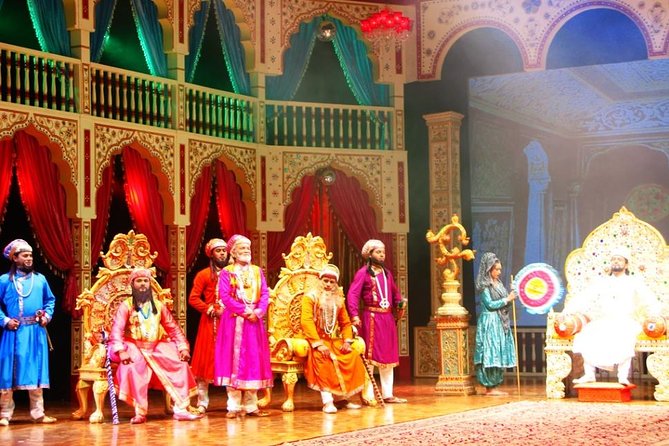
Step into a world of enchantment and wonder as you immerse yourself in the vibrant tapestry of Indian culture through mesmerizing cultural shows in Agra. These captivating performances serve as windows into the rich artistic heritage of the region, showcasing a dazzling array of traditional music, dance, and theatrical arts that have been passed down through generations.
As you enter the venue, whether it’s an opulent palace courtyard, a historic amphitheater, or a modern auditorium, you’re greeted by an atmosphere alive with anticipation and excitement. The air is thick with the scent of incense and the soft strains of traditional music, setting the stage for an unforgettable evening of cultural immersion.
The performances themselves are a feast for the senses, with skilled artists taking center stage to showcase their mastery of various art forms. Marvel at the intricate footwork and graceful movements of Kathak dancers as they tell stories of love, devotion, and mythology through their enchanting performances. Feel your heart stir to the soul-stirring rhythms of Sufi music, as singers and musicians transport you to a realm of spiritual ecstasy and transcendence.
But it’s not just the technical brilliance of the performers that captivates your attention; it’s the passion and emotion that infuse every note, every step, every gesture. Each artist brings their own unique interpretation to the stage, infusing the performances with a depth and authenticity that resonate with audiences on a profound level.
As you watch these skilled performers weave their magic before your eyes, you find yourself drawn into their world, where time seems to stand still and the boundaries between performer and audience blur. You laugh, you cry, you feel a sense of connection and belonging that transcends language and culture.
But perhaps the most magical aspect of these cultural shows is the sense of community they foster. As you sit side by side with fellow audience members, you’re united by a shared appreciation for art and beauty, forging connections that transcend differences and bring people together in celebration of our common humanity.
As the final notes fade away and the performers take their bows, you’re left with a profound sense of gratitude for the experience you’ve just shared. In a world where so much divides us, these cultural shows serve as reminders of the power of art to unite, inspire, and uplift the human spirit. So, immerse yourself in the magic of Indian culture and let the rhythms of the tabla, the twirls of the dancers, and the melodies of the musicians transport you to a realm of enchantment and wonder.
Shopping in Agra:

In the bustling markets of Agra, where every turn exposes a treasure trove of treasures waiting to be explored, you are about to embark on a sensory trip that will leave you with wonderful memories. With its diverse assortment of handicrafts, textiles, jewellery, and other items, Agra is a city that attracts shopaholics and people who are looking for souvenirs alike. Its colourful bazaars and picturesque lanes are just two examples.
Kinari Bazaar is a place where you can enter a realm of enchantment, where the pathways are labyrinthine and bordered with a kaleidoscope of colours and textures. A bewildering assortment of embroidered fabrics, exquisite jewellery, and brilliant trinkets that speak to India’s rich cultural heritage will surround you here. You will find yourself surrounded by this environment. As you traverse the racks of colourful sarees, delicate dupattas, and ornately adorned lehengas, each item is a work of art in its own right. Allow yourself to become engrossed in the sights and sounds of this bustling marketplace. From sparkling zardozi to delicate chikankari, each thread is a tribute to centuries-old traditions that have been passed down through generations. As you explore delicately embroidered textiles, you may admire the skilled artistry of artists. It is also important to remember to adorn oneself with traditional Indian jewellery, which includes a wide variety of pieces, ranging from dazzling bangles and jhumkas to intricate necklaces and maang tikas. Each piece is a shining monument to the wealthy cultural legacy of India.
Enter the bustling aisles of Sadar Bazaar, where traders sell a diverse assortment of things that are priced to accommodate a wide range of preferences and budgets. However, the shopping experience does not end there. Your senses will be captivated by the tantalising odours of exotic spices and herbal medicines, which will float through the air and entice you to investigate more what they have to offer. There are miniature copies of the Taj Mahal, finely detailed sculptures, and ornamental pieces that are great for souvenirs of your time spent in Agra. Marvel at the wonderful craftsmanship of these marble artefacts that have been meticulously carved. Furthermore, do not overlook the opportunity to revel in the opulence of fine leather goods, which range from supple leather wallets and bags to delicately created footwear that combines fashion and heritage in equal measure.
The experience of shopping in Agra is a pleasant excursion that promises to tantalise your senses and leave you with treasured keepsakes of your vacation. Whether you are bartering for a deal or simply drinking in the sights and sounds of the bustling marketplace, shopping in Agra is a must-do. Consequently, allow the enchantment of shopping to take you to a realm of splendour and awe, and immerse yourself in the brilliant tapestry of colours, textures, and fragrances that denote the busy markets of Agra.
Cuisine Exploration in Agra:

In Agra, you are about to go on a culinary journey through the world of Mughlai cuisine, which is a world of rich and flavorful cuisine. Each dish is a masterpiece of taste and texture that will leave you wanting more. Rich spices, juicy meats, and aromatic herbs are combined to produce a symphony of flavours that tantalise the taste buds and please the senses. Mughlai cuisine, which is distinguished for its luxury and grandeur, is a reflection of the culinary prowess of the Mughal emperors who ruled over India.
An abundance of restaurants, ranging from simple street stalls to opulent fine-dining establishments, each presenting its own distinctive interpretation of Mughlai specialties, will provide you with an abundance of options to choose from when you visit Agra. Take the first step on your journey through the world of cuisine by paying a visit to one of the city’s most famous restaurants. The air is filled with the tantalising scent of kebabs and curries that are boiling, luring you to indulge in a feast that is fit for a king or queen.”
Seekh kebabs are soft slices of beef that have been marinated and skewered before being grilled to perfection. Their smokey flavour is accentuated by a blend of aromatic spices and herbs. Sink your teeth into these juicy seekh kebabs. It is a sumptuous dish that features juicy chunks of chicken that are stewed in a rich and velvety tomato-based gravy. The gravy is laced with a variety of spices that dance on the taste with each mouthful. Savour the creamy goodness of butter chicken.
The city of Agra is known for its famous biryanis, which are rice meals that are piled with soft bits of meat, fragrant spices, and aromatic herbs and are cooked to perfection in a traditional clay pot. A trip to Agra would not be complete without tasting these types of dishes. Each bite is a revelation of flavour and texture that will leave you wanting more, regardless of whether you favour the luscious flavours of chicken biryani or the goodness of mutton biryani that has the ability to melt in your mouth.
Not to mention the sweet treats that are waiting for you in Agra, with Agra ka Petha being the most famous dessert in the city. Let’s not forget about these! The agra ka petha is a delectable treat that is made from transparent slices of ash gourd and is delicately flavoured with aromatic essences such as rose, saffron, and cardamom. It is the ideal way to round off your culinary journey because it melts in your mouth.
To embark on a culinary adventure through the flavorful streets of Agra, where every meal is a celebration of extravagance, flavour, and tradition, you need do the following: loosen your belt, sharpen your appetite, and start on a culinary adventure. Each bite is an invitation to explore the rich culinary heritage of Mughlai cuisine and to savour the spirit of Agra’s dynamic culinary culture. This is true whether you are dining in the midst of the grandeur of ancient buildings or savouring street food delights from tiny roadside shops where you are dining.
