

Member Type Contributor


New York-US
January 19, 2020 in City Guide
New York City is a classic destination for New Year’s Eve, with festive parties, dinners, and the opportunity to attend one of the biggest New Year’s Eve parties to end all parties: the ball drop live in Times Square. Whether you’re looking for a big party, a fancy, intimate dinner, or a change of scenery, check out a variety of ideas for your New Year’s Eve celebration in New York City.

Watch The Ball Drop In Times Square
If your New Year’s Eve in New York City fantasy involves watching the ball drop in Times Square, you are not alone—approximately a million revelers fill Times Square each year to watch the ball drop at midnight. Be prepared for the weather and the other things you should bring to the ball drop in Times Square. You might want to check out a few tips for attending the ball drop.
Enjoy A Great Concert Or Show On New Year’s Eve
New York City venues pull out all the stops on New Year’s Eve. It’s a great night to catch a top live act performing at one of New York City’s great performance venues. From Lincoln Center to music halls in the Lower East Side, review a round-up of great concerts and shows happening on New Year’s Eve.
Feast Your Way Into The New Year
One of the best ways to celebrate the New Year is through your stomach, with a hearty or refined, delicious meal. Check out some restaurants that usually serve up special New Year’s Eve menus. Consider early seatings if you want to toast in the New Year elsewhere. Or, if you plan to clink glasses at your table, find just the spot for a midnight toast.

Dance Or Drink The Night Away At These Clubs And Bars
From all-inclusive to very exclusive, New York City clubs and bars
are experts at hosting New Year’s Eve parties. Details vary from place to place. Make sure to ask what’s included—for instance; some tickets may include unlimited open bar, others may offer food, while others may give you free drink tickets, or only a free champagne toast. You usually get what you pay for, so if you hear of a very good bargain, scrutinize the offer closely. You may just luck out and get a great deal.
Ring In The New Year From The New York Harbor
Celebrate the New Year aboard one of New York City’s many New Year’s Eve cruises. You have different options to choose from. You can experience an elegant evening aboard a yacht in formal attire. You can join others on a New Year’s Eve booze cruise or a family-friendly sailing around New York Harbor.
Looking For Something Different For New Year’s Eve?
Maybe the same-old, same-old is not how you want to start the New Year. For more unique ideas about how to start your new year, consider these more unusual ways to celebrate the New Year in New York City, including a New Year’s Eve race and a Brooklyn Bridge walking tour.

France
January 19, 2020 in City Guide
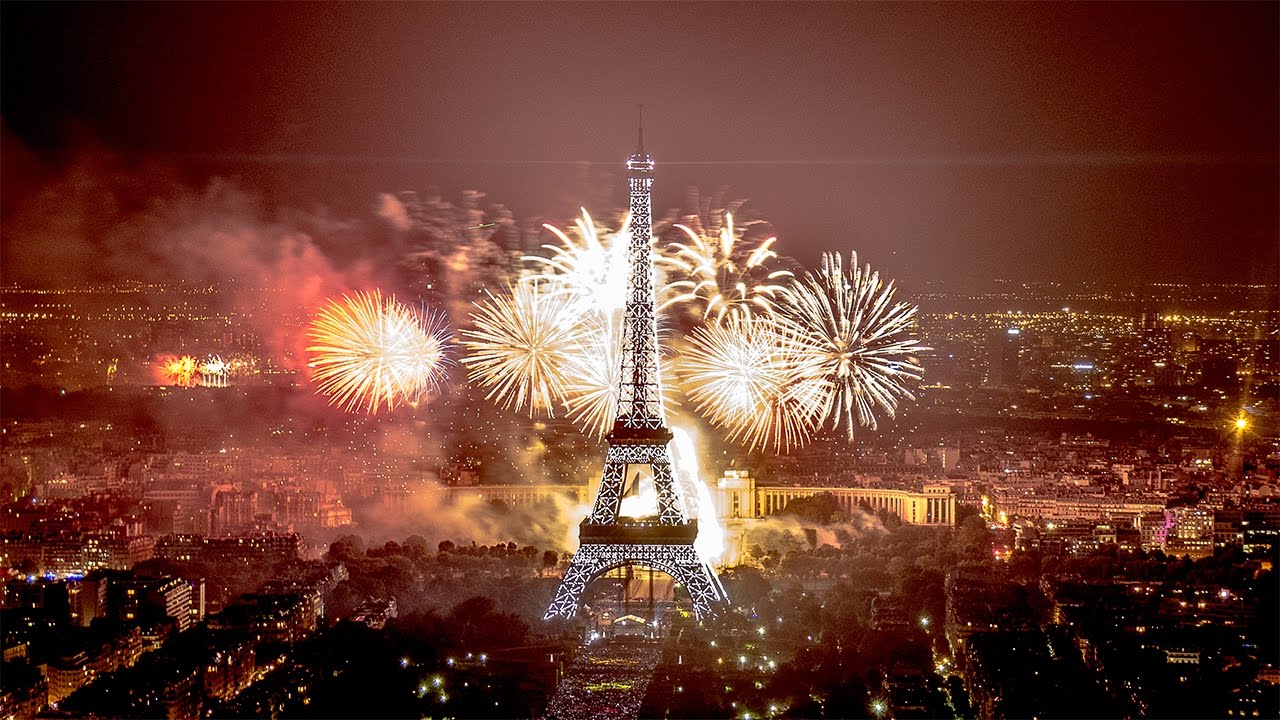
In France, the New Year’s celebration begins on the evening of December 31 and carries through January 1. Traditionally, it’s a time for people to gather with family, friends, and community. New Year’s Eve is also known as La Saint-Sylvestre because December 31 is the feast day of Saint Sylvestre. France is predominantly Catholic, and as in most Catholic or Orthodox countries, specific days of the year are designated to celebrate specific saints and are known as feast days. Individuals who share a saint’s name often celebrate their namesake’s feast day like a second birthday.
 French New Year’s Eve Traditions
There aren’t too many traditions specific to New Year’s Eve in France however, one of the most important ones is kissing under the mistletoe and counting down to midnight. While there’s no equivalent to the ball dropping in Times Square, in larger cities, there may be fireworks or a parade and there’s usually a big variety show on television featuring France’s most famous entertainers.
New Year’s Eve is most often spent with friends—and there may be dancing involved. Many towns and communities also organize a ball which is often a dressy or costumed affair. At the stroke of midnight, participants kiss and hug one another two or four times. People may also throw confetti and streamers, shout, applaud, and generally make a lot of noise. And of course, the French make “les résolutions du nouvel an” (New Year’s resolutions).
French New Year’s Meal
There’s no single food tradition for the French New Year’s celebration. People may choose to serve anything from a formal meal to something buffet style for a party—but no matter what’s being served, it’s sure to be a feast. Champagne is a must, as are good wine, oysters, cheese, and other gourmet delicacies. Just be careful not to drink too much or you may end up with a serious hangover.
Typical New Year’s Gifts In France
In France, people don’t generally exchange gifts for the New Year, although some do. However, it’s traditional to give monetary gifts to postal workers, deliverymen, the police, household employees, and other service workers around Christmas and the New Year. These gratuities are called “les étrennes,” and how much you give varies greatly depending on your generosity, the level of service you got, and your budget.

Jaipur “The Pink City”
December 13, 2019 in Rajasthan
Jaipur, the ‘Pink City’ of India was the former capital of the Kachhawahas. It was founded in 1727, by Sawai Jai Singh and was named after him. Jai Singh’s various talents and tastes are well exhibited in his dream city. The designing of the city was entrusted upon a young and talented Bengali architect, Vidyadhar Bhattacharya. Jaipur is perhaps the first planned city of India and was laid with great precision based on principles of ‘Shilp Shastra’, the ancient Hindu treatise on architecture. The city was built in the form of a rectangle divided into blocks (Chowkries) with roads and avenues running parallel to the sides. In 1863, Jaipur dressed in pink to welcome Prince Albert, consort of Queen Victoria and the color became an integral part of the city. Today, the city is a fine fusion of antiquity and modernity, excellent planning, unique architecture and colorful lifestyle of the city can excite even the most seasoned tourist. Jaipur is a shopper’s delight too, as a wide range of excellent handicrafts is available in the city.
 City Palace Complex: It was built between 1729 and 1732 by Sawai Jai Singh in the heart of the old city area. The complex is surrounded by a high wall and is divided into a series of courtyards, gardens and other buildings. It is a splendid fusion of Rajput and Mughal styles of architecture. The magnificent Chandra Mahal occupies the center stage and is still the residence of the erstwhile ruling family. The outer courtyards have architectural beauties like Mubarak Mahal, Sarvatobhadra, Diwan Khana and Pritam Niwas. These have been converted into a museum known as the Maharaja Sawai Man Singh II Museum. The most interesting exhibits at the city palace include the two huge silver urns known as urns Gangajalis, which are placed outside the Diwan-i-Khas or the ‘Hall of Private Audience’. These were used by Sawai Madho Singh during his trip to England in 1902. The silver urns find mention in “Guinness Book of World Records”, as being the largest silver objects in the world.
Govind Devji Temple: Near Chandra Mahal is dedicated to Lord Krishna.
Jantar Mantar: This open-air observatory is set outside the gateway of the City Palace Complex. It was built in 1728, by Sawai Jai Singh Il and is one of the five observatories built by him. The first being at Delhi in 1724, followed by observatories at Jaipur (1728); Ujjain (1734); Varanasi (1737) and Mathura (1738).
 Hawa Mahal or ‘the Palace of Winds’: It was built in 1799, by the poet king Sawai Pratap Singh for the royal ladies to enjoy the procession and day to day activities from the cool confinement of this majestic facade. The five-storeyed semi-octagonal structure has 953 niches and 152 windows, with overhanging latticed balconies, curvilinear roofs, domes, and spires.
Swargasuli or Isar Lat: This imposing minaret was built by Sawai Ishwari Singh in 1749, to commemorate a grand victory. It dominates the skyline on the western side of the Tripolia Bazar and affords a fine view of the city.
Ram Niwas Garden: The beautiful garden near Ajmeri Gate was built by Sawai Ram Singh in 1868. It sprawls across an area of four acres and has a zoo, a bird park, a playground, an exhibition ground, and a gymnasium.
Govt. Central Museum (Albert Hal): The magnificent building built in Indo-Saracenic style is set in the lush m Ram Niwas Garden. It was designed by Sir Swinton Jacob and inaugurated in 1863, by Prince Albert. Albert Hall was opened in 1887 as a public museum and now functions as the State Museum of Rajasthan.
Ravindra Manch: It is also located within the Ram Nivas gardens. Rajasthani dance music and plays are held here in the evenings. There is also a small art gallery exhibiting works of well known modern artists and the sculptors of Rajasthan.
Dolls Museum: It is situated on the J L Nehru Marg, Near Police Memorial and has a rich collection of beautiful dolls from all over the world.
Birla Planetarium, Birla Auditorium &Convention Centre: It is the part of the Birla Science and Technology Centre at Statue Circle. The Audio-Visual display at the planetarium with the help of a computerized projection system is educative and entertaining. There is an interactive science museum, a library, a computer center, an information processing, and dissemination cell, etc. The state-of-the-art main auditorium is one of the largest in the country, with a seating capacity of 1,350.
 Galtaji: This ancient Hindu pilgrim site associated with sage Galava nestles amidst low hills. The sacred site is studded with temples, pavilions, and holy kunds. The temple of Sun God built by Diwan Kriparam is the most important shrine of Galtaji.
Birla Mandir or Lakshmi Narayan Temple: The magnificent temple just below Moti Doongri is noted for its excellent architecture and exquisite carvings on white marble.
Gaitor: The royal crematorium at the foothills of Nahargarh fort has cenotaphs and memorials of various distinguished members of the royal family of Jaipur.
Maharani ki Chhatri: It is the funeral place for royal ladies and is located just before the Ramgarh road crossing. Some exquisitely carved cenotaphs can be seen here.
Kanak Vrindavan Garden Complex: The beautiful temple-garden complex lies on Jaipur – Delhi highway, near Jal Mahal. It is a popular excursion and picnic point.
Ghat ki Guni: This scenic narrow gorge along the Agra road has beautifully landscaped gardens built during the 18th and 19th centuries. The important ones are – Sisodia Rani Gardens & Palace and Vidhyadhar Garden.
Jal Mahal or ‘The Water Palace’ (6 kms.): This summer resort of the erstwhile royal family was built by Sawai Pratap Singh in 1799, amid picturesque Man Sagar lake on the way to Amber.
 Around Jaipur:
Amber (11 kms.)
It was the capital of Kachhwaha’s of the old state of Dhundhar for over six centuries, before the birth of Jaipur. The mighty Amber fort stands atop a range of craggy hills overlooking the Jaipur Delhi Highway. The fort is a fine blend of Rajput and Mughal styles and is noted for its sturdy battlements and beautiful palaces. The original palace was built by Raja Man Singh, while the successive rulers contributed to the development of the place in their way. The majestic Amber Palace complex Is approached through an imposing gateway called ‘Ganesh Pol”‘. It has magnificent halls, pavilions, gardens and temples built by Raja Man Singh, Mirza Raja Jai Singh and Sawai Jai Singh, over a span of about two centuries. The main sites here include Diwan-i-Am or the Hall for the Public Audiences’, Sukh Niwas or the Hall of Pleasure, Jai Mandir or the Hall of Victory’, Sheesh Mahal or ‘HaH of Mirrors, Diwan-i-Khas or the Private Meeting Hall’ and Jas Mandir or ‘Hall of Glory’ etc. The sacred Shila Mata Temple adjacent to the Singh Pole is dedicated to Shila Mata (an aspect of Goddess Kali), the patron goddess of the royal family.
Jagat Shiromani Temple: The beautifully carved shrine is located at the foothills of the Amber Palace. It enshrines an idol of Lord Krishna and is regarded as one of the marvels of Indian temple architecture.
Jaigarh (15 kms.)
This hill-top fortress overlooks the palaces and the old town of Amber. It was built by Maharaja Jai Singh II in 1726 and is among the few fortresses of medieval India which are still preserved, almost intact. Within its rugged bastions are beautiful palaces, and gardens. Jai Ban’, the world’s biggest cannon on wheels is placed here. It has a 20 ft long barrel and the wheels are 9 ft. in diameter.
Nahargarh (15 kms.)
It is the third hilltop fort guarding the Jaipur city and was initially built by Sawai Jai Singh in 1734 and later enlarged by Sawai Ram Singh.
Sanganer(12 kms.)
The small town is famous for the beautifully carved Jain temples and palace ruins. It is also renowned for hand block printed textiles and hand -made paper.
Samode (40 kms.)
This quaint village is known for the Samode Palace of the Nathawat family. It is now a famous heritage hotel. Other attractions are Samode Garden and Samode Haveli.

Meet The Sacred Town “Ajmer”
December 13, 2019 in Rajasthan
Ajmer, the sacred-secular town was founded in the 7th century by Raja Ajaipal Chauhan and became the famous bastion of the Chauhan Rajputs. The Chauhans dominated the region until the end of the 12th century. After the defeat of Prithviraj Chauhan, the most distinguished Chauhan ruler, at the hands of Muhammad Dargah Khwaja Sahib Ghauri in 1193, the glory of Chauhans waned. Subsequently, the town witnessed many upheavals until Akbar annexed it to the Mughal empire in 1556. He made it the headquarters for the operations in Rajputana and Gujarat. Ajmer is associated with many important historical events of national importance. Sir Thomas Roe, the ambassador of King James I of England, presented his credentials to Jehangir in Ajmer, on 10th Jan. 1616. Dara Shikoh, the eldest son of Shah Jahan was born here and the war of succession between the sons of Shah Jahan was won in 1659, by Aurangzeb in the battle of Dorai near Ajmer. From 1818 onwards, it came under the domain of the British, who left behind a legacy of excellent educational institutions.

Dargah Khwaja Sahib: This 13th century Dargah is one of the holiest Muslim shrines in the country. It is the final resting place of the great Sufi saint – Khwaja Moinuddin Chishti, the ‘Bestower of Boons’ popularly known as ‘Garib Nawaz’ or the ‘protector of the poor’. Millions of pilgrims from all over the world flock here to seek the blessings and pay homage to the Khwaja, by offering chadars at the grave of the holy soul. The dargah has a massive gate with silver doors, which were built by the Nizam of Hyderabad. The tomb richly adorned with gold and silver lies in a magnificent domed chamber in the center of the second courtyard. Qawwals from all over the world come here to sing in the praise of the saint. On the right side of the courtyard is the Akbari Masjid built in white marble by Akbar. There is another impressive mosque built by Shahjahan. Other attractions in the shrine are the two massive dogs (cauldrons) in which the ritual rice is cooked. The smaller deg has a capacity of about 2240 kg. and the larger er one can hold 4480 kg. of rice. The looting” of deg is a unique ritual, as professional looters’ empty the deg in minutes and even jump in the steaming deg. This ‘loot’ is then sold as tabarruk (sanctified food) by the ‘looters’. The six-day celebrations of the or death anniversary of Khwaja are the most important event of Ajmer. During this time millions of devotees from all sects and religions gather here.
Adhai-Din-ka-Jhonpra or “Two and a half day shed”: The relics of an old mosque lies to the west of dargah. It was originally a Sanskrit college, within a temple enclosure and was destroyed by Mohammad Ghauri in 1193. It is said that he ordered, the mosque to be made ready on this site for his prayer within two and a half days. The archways are adorned with intricate carvings depicting Kufi and Jughra inscriptions from the holy Koran.
Magazine: This innermost portion of the fort constructed by Akbar is the most important relic of Mughal history in the city. The main entrance to the building faces Naya Bazar and is provided with balconies (jharokhas) on both sides. Sir Thomas Roe, the British envoy, presented his credentials to Jahangirover here.
Rajputana Museum: It was set up by the Govt. of India for preservation and study of unique and rare relics collected from the various states of Rajputana.
 Nasiyan (Red Temple): The famous Digambar Jain temple was constructed in 1865. The Svarna Nagari Hall, behind the shrine, exhibits gilt wooden representations of scenes from Jain mythology.
Mayo College: This elite public school was established in 1875, for providing education to the children of the royal families in the country. Today, it is one of the premier educational institutions of India and is open to everybody. There is a museum displaying historical objects of interest and biological preservation.
Circuit House: It overlooks the Ana Sagar lake and was formerly the British Residency. Nearby, is the cenotaph and shrine of Swami Dayanand Saraswati, the founder of Arya Samaj movement, who breathed his last at Ajmer.
Ana Sagar: This beautiful 12th-century artificial lake is named after Anaji Chauhan. Its huge embankment was erected with people’s help, while the ‘Baradari’ or pavilions were constructed by Shah Jahan and the Daulat Bagh Gardens were laid by Jehangir.
Visal Sar: The pristine lake amidst sylvan surroundings was built by King Visaldeva (1152 1163 AD.) and is designed like the sacred Pushkar lake.
Prithviraj Chauhan Smarak: The memorial on the way to Taragarh Fort commemorates Prithviraj Chauhan, the last Hindu emperor of India. A life-size statue of the king is erected amidst well laid -out gardens.
Taragarh Fort or the ‘star fort’ (8 kms.): The 7th-century fort built by Ajaipal Chauhan is perched atop a hill and was earlier known as Ajaya-Meru-Durg. It is nearly 2 -3 kms. in circumference and Road has 9 impregnable gates.
 Around Ajmer:
Pushkar (12 kms.)
This picturesque pilgrim center nestling amidst the rugged Aravali hills is considered to be one of the most sacred pilgrimages for Hindus and is referred to as “Tirth Raj’ or the king of pilgrim centers’. It is believed that a pilgrimage to the sacred ‘Char Dhams’ (Badrinath at Uttaranchal, Jagannath at Orissa, Rameshwaram at Tamil Nadu and Dwarka at Gujarat) is incomplete without a holy dip in the sacred waters of Pushkar. According to Padam Puran’, Lord Brahma was in search of a suitable place for a Vedic yagna. While contemplating, a lotus petal fell from his hand on the earth and water spurted from three places one of them was Pushkar and Brahma decided to perform his yagna over here. The sleepy town comes to life during the annual Pushkar fair held on Kartik Purnima. It has emerged as a major tourist attraction of the region, as tourists from all parts of the world gather here for this colorful fair.
Jagat Pita Shri Brahma Mandir: There are over 400 sacred shrines in and around Pushkar, but the most important is the temple of Lord Brahma, which is only one of its kind in the country. The 14th-century shrine set on a high plinth enshrines a four-faced image of Lord Brahma, known as ‘Chaumurti’. Nearby is a small image of milkmaid Gayatri. Steps in the corner lead to a small cave dedicated to Lord Shiva. The temple walls are also adorned with graceful peacocks, the celestial vehicle of Goddess Saraswati, the Goddess of wisdom and consort of Lord Brahma.
Warah Temple: This second most important shrine of Pushkar is dedicated to Lord Vishnu in the form of Warah, the wild boar. It is said to be built by Chauhan King Anaji (1123 -1150) but was destroyed by Muhammad Ghauri after his victory over Ajmer. In 1806, Gokul Chand Parikh, a Scindia minister renovated the shrine.
Savitri Temple: The shrine of Lord Brahma’s first wife is set on the hill behind the Brahma temple. It can be reached by a long flight of steps and affords a bird’s eye view of the lake and surrounding areas.
Temple of Rangji or Shri Vaikunthnath Ji: This magnificent shrine built in South Indian style is noted for its towering ‘Gopuram’ (gateway). Other important temples are – Apteshwar Mahadeo Temple, Baiji ka Mandir, and Man Mandir, etc.
Pushkar Lake: The sacred reservoir is said to be created by the falling of lotus petal from the hand of Lord Brahma. The lake is considered to be as old as the creation and one of the sacred Panch Sarovar’ or Five Lakes, the other four are Man Sarovar, Bindu Sarovar, Narayan Sarovar, and Pampa Sarovar. There are 52 bathing ghats around the lake, devotees believe that a dip in the waters of the lake washes away the sins, especially during Kartik Poornima (Oct./Nov.).
Man Mahal: It was built by Raja Man Singh I of Amber, as a royal guest house. The guest house has been converted into a hotel and provides a fine view of the ghats.
Pushkar Palace: The 400-year-old palace of Maharaja of Kishangarh has also been converted into a hotel.

Alwar
December 13, 2019 in Rajasthan
 Alluring Alwar, set in the lap of Aravalli ranges, presents a perfect picture postcard settings and seems to be carved out of jagged, craggy rocky outcrops. The ancient city is one of the oldest in the State and its numerous prehistoric and historic sites are archaeologists delight. It is also a paradise for nature lovers and wildlife enthusiasts. The antiquity of Alwar can be traced back to 1500 BC when it was a part of Matsya Desh. The present town was founded in the 11th century by Maharaja Alguhraj. Its strategically important location lured the foreign powers, but, the adventurous and valiant people of Alwar always guarded their freedom zealously.
Government Museum: It has probably the richest treasure of Rajput and Mughal paintings of18th and 19th centuries and some rare and ancient manuscripts.
Vinav Vilas Palace: This magnificent garden palace was the residence of Maharia Vinay Singh. Today, the palace houses a college.
Bala Quila: This ancient fort perched on a steep cliff is said to be constructed by Nikumbh Rajputs in 928 AD. The huge fort extends about 5 kms. from north to south and 1.6 km from east to west. It provides a breathtaking view of the city below.
 City Palace: The 14th-century palace set in the heart of the old city is a fine blend of Mughal and Rajput architectural styles. The palace museum housed in one of its apartments exhibits a rich collection of rare manuscripts, paintings, objects made out of jade, ivory, silver, etc. and a large collection of weapons.
Moosi Maharani Chhatri: The impressive cenotaph (chhatri) on the banks of Sagar lake was built in the memory of Bakhtawar Singh’s mistress. The picturesque Sagar lake is a concrete catchment, with a pattern of stairs and tiny kiosks in perfect symmetry along the sides.
Purjan Vihar or Company Garden: The beautiful garden was laid during the reign of Maharaja Shiv Dan Singh in 1868.
 Around Alwar:
Siliserh Lake & Palace (13 km.)
This summer retreat of the erstwhile royal family lies on the Jaipur road, amidst sylvan surroundings replete with natures bounty. The tranquil lake sprawls over an area of about 10.5 sq. Sariska Palace kms and is surrounded by thick forest. Magnificent cenotaphs grace the embankment of the lake. A royal Hunting Lodge Palace was built by Maharaja Vinay Singh for his queen Shila in 1845, which has now been converted into the Hotel Lake Palace. Boating and sailing facilities are available.

Bikaner
December 13, 2019 in Rajasthan
Bikaner, a beacon of rich culture and heritage amidst the harsh desert surroundings was founded in 1488, by the Rathore prince, Bika, the son of Rao Jodha of Marwar. It was located 1! directly on the ancient caravan Lalgarh Palace routes, which linked West / Central Asia and North India with the seaports of Gujarat. The city studded with forts, palaces, and mansions was once surrounded by a 7 kms. long embattled wall with five gateways. Today, Bikaner is also famous for its delicacies like bhujias, papads, and rasgullas.
 Junagarh Fort: The impregnable fort built by Raja Rai Singh in 1593, is encircled by a moat and has many palaces, pavilions and temples. Suraj Pol or ‘Sun Gate is the main entrance to the fort. Within the ramparts are fine monuments like Anup Mahal, Ganga Niwas, Rang Mahal, Har Mandir, Chandra Mahal, Durbar Hall, Gaj Mandir, and Sheesh Mahal, etc. The fort also has an excellent museum.
Lalgarh Palace: The magnificent red sandstone palace was built by Maharaja Ganga Singh, in memory of his father Maharaja Lal Singh. It has now been converted into a luxury hotel. Sri Sadul Museum is housed in one part of the palace.
Rajasthan State Archives: The department is internationally acclaimed for its rich collection of administrative records of the Mughal period, which were created during the administration of the princely States of Rajasthan.
Ganga Government Museum: It is one of the best museums in the State, with rnen treasure of antiquities from Harappan civilization, Gupta and Kushan era, etc.
Bhandeshwar Jain Temple: The 15th-century shrine is the oldest existing monument of Bikaner. It is adorned with rich mirror work, decor, frescoes, and gold leaf paintings.
Raj Ratan Bihari & Rasik Siromani Temple: The 19th-century palatial shrine within Ratan Bihari Park was built by Ratan Singhji and Sardar Singhji.
 Havelis: Bikaner is also known for its ornately carved red sandstone Havelis and mansions belonging to reputed business houses of the region.
Shiv Bari Temple (6 km): This 19th century Shiva temple was built by Maharaja Doongar Singhji. It is fortified with high walls and has beautiful paintings.
Devi Kund (8 km): It is the crematorium of the Airport: Jodhpur (243 kms.) royal family. The graceful white marble Chhatri Railhead: Well connected by rail (cenotaph) of Maharaja Surat Singh is a fine piece with Jodhpur, Jaipur, Delhi, of architecture. Kalka, Kolkata, and Mumbai.
Camel Research Farm (8 km.): The farm is only Road Connected by good one of its kind in entire Asia. the network of roads.
 Around Bikaner:
Deshnok (30 kms.)
The small town on the road to Jodhpur is known for the unique shrine of Goddess Kami Mata. The shrine is famous for the rats, who are venerated over here.

Chivalrous Chittaurgarh is here!
December 12, 2019 in Rajasthan
Chivalrous Chittaurgarh, the citadel of the brave, reverberates with tales of valor and romance. The massive fort atop a hill is perhaps the best in the country and could be singled out for its glorious past. It is said that Bappa Rawal, the legendary founder of the Sisodia clan, conquered Chittaur from Mauryas in the middle of the 8th century. Chittaurgarh remained the capital of Mewar till 1567, when Akbar, sieged Chhitaur and Udaipur became the new capital of Mewar.
 The Fort: The formidable fort perched atop a 180-meter high hillock covers a huge area of 700 acres. It is said to be originally built by the Mauryans in the 7th century and later developed by the successive Mewar rulers. The citadel was ravaged thrice, but each time the indomitable spirit of Chittaur rose like a phoenix and regained its lost glory. In 1303, it was first sacked by Allaudin Khilji, who is said to have been lured by the legendary beauty of Rani Padmini. But, Rani Padmini preferred death to dishonor and committed Jauhar (self-immolation), along with other ladies of the court. Chittaurgarh was plundered again in 1535, by Bahadur Shah of Gujarat and finally in 1567, by the Mughal emperor Akbar. The fort is approached through seven huge g ateways or ‘pols’, which are guarded by watchtowers and massive iron spiked doors. Some of the important monuments inside the fort are:
Vijaya Stambh or ‘Victory Tower’: It was erected by Rana Kumbha in 1440, to commemorate his victory over the combined forces of the kings of Malwa and Gujarat. The nine-storeyed tower rises to a height of 120 ft (36.5 mts.) and has a girth of 30 ft. at the base. It is ornately carved with splendid sculptures of Hindu deities.
Kirti Stambh or ‘Tower of Fame’: The 22-meter high tower was built in the 12th century and is dedicated to Lord Adinath Rishabdeo, the first Jain tirthankar. The intricately carved structure is full of figures from Jain Pantheon.
Rana Kumbha’s Palace: Rani Padmini is said to have committed Jauhar in one of the underground cellars of the palace. The palace although in ruins, reflects the tastes of Rana Kumbha, one of the greatest Mewar rulers.
 Padmini Palace: The Zanana Mahal’ of the palace overlooks a pond of water, where Allaudin Khilji is said to have seen the reflection of Rani Padmini.
Meera Temple: It is dedicated to Meera Bai, a mystic poetess and a great devotee of Lord Krishna. She was married to Bhojraj, the son of Rana Sanga of Mewar.
Kumbha Shyam Temple: The temple of Varah (Boar), an incarnation of Lord Vishnu was built by Rana Kumbha in 1448. It is also associated with Meera Bai.
Kalika Mata Temple: The temple of Goddess Kali was originally built as a Sun Temple by Bappa Rawal in the 8th century.
Gov. Museum, Fateh Prakash Mahal: It exhibits a rare and rich collection of sculptures from the fort and the temples.

Jaisalmer, The Golden Citadel
December 12, 2019 in Destinations, Rajasthan
Jaisalmer, the golden citadel of the Thar desert has emerged as one of the most popular tourist destinations in this part of the world. Few places can match the magnificence and grace of this museum city’.
 The Fort or Sonar Killa: The golden-hued fort perched atop the Jaisalmer Fort 76 meter high Trikuta Hill was built in 1156, by Rawal Jaisal, a Bhatti Rajput, and descendant of the Yadav clan. The fort built in Jurassic sandstone has its base encircled by a wall of solid stone blocks, above which the hill protects and supports the ramparts, forming a double line of defense. The bastions are in the form of half towers surrounded by high turrets and joined by thick walls. The entire living area is well protected inside the ramparts of the fort. It is approached through the Ganesh Pol or the Elephant Gate from the main market, followed by the Suraj Pol or the ‘Sun Gate’, Bhoota Pol or the Haunted Gate’ and finally the Hava Pol or the Wind Gate’. The Hava Pol stands sentinel to the royal palaces and leads to the main enclosure, the Hall of Public Audience. The palaces of the rulers built atop the main entrance form an imposing edifice crowned by a huge umbrella of metal mounted on a stone shaft. The fort IS dotted with many intricately carved haveli’s (mansions), which have become the major attraction of the museum city. Some of the important ones are-
 Patwon ki Haveli: This largest and most elaborate haveli of Jaisalmer is a classic example of Rajputana architecture. It was built by the five sons of Guman Chand Patwa, a rich brocade merchant. The construction began in 1800 and was completed in 50 years. The fabulous five-storeyed structure has extensive corridors and chambers which are supported by intricately carved pillars.
Nathmalji ki Haveli: It was the haveli of Nathmalji, the Prime Minister of the erstwhile State in the 19th century. The magnificent mansion was ornately carved by two brothers Lalu and Hathi and displays excellent craftsmanship. The brothers worked separately, one on the right side and other on the left side epitomizing the side-by-side symmetry during construction.
 Salim Singhji ki Haveli: This conspicuous mansion belonged to Salim Singh Mohta. the tyrannical Prime Minister during 18th century. Its upper story has an elaborate projecting balcony supported by carved brackets in cantilever style. The fort is also studded with several Hindu and Jain temples dating back to the 12th -15th centuries. Rishabdevji Temple is one of the finest temples of the walled city. Other important Jain temples are Sri Sambhavnath Temple, Sri Ashtapadi Temple. Chintamani Paraswanathji temple, Sri Sheetalnath temple, Sri Shantinath temple, etc. The Gyan Bhandar or Library established as a part of Jain temples of the fort has some of the oldest and rarest manuscripts in the country.
Badal Vilas – Mandir Palace: This excellent palace complex near the Amar Sagar Gate is the present home of the erstwhile royal family. Tazia Tower, the pagoda-shaped tower rising from the Badal pagoda Vilas palace complex is an architectural marvel and landmark of the town. The Muslim craftsmen of Jaisalmer built it as a token of love’ and gift before migrating to Pakistan in 1947.
 Gadisar or Gadsisar Lake: The rain fed of the artificial lake was an important source of drinking water in the past. It is a facility by gardens and sacred shrines. Boating facility is also available. The Tilon – ki – Pol, a beautiful gateway to the lake and the ghats (steps) were built by a renowned courtesan and singer.
Folklore Museum or ‘Sanskritik Sangrahalaya: It is set on the banks of Gadisar Lake in Mehar Bagh garden and exhibits the rich cultural heritage of Jaisalmer.
 Government Museum: It is located on Police Line road and has a large collection of wood and marine fossils as well as sculptures dating back to the 12th century from ancient townships of Kiradu and Ludarva.

Around Jaisalmer:
Ludarva (16 kms.)
This ancient capital of Bhatti rulers is an important Jain pilgrim center. The magnificent Jain shrines here testify the glory of the bygone era. An ornamental gateway Toran’, at the entrance of the main temple, is a masterpiece of craftsmanship.
Sam Sand Dunes (42 kms.)
No visit to Jaisalmer is considered complete without a trip to the Sam sand dunes. Exciting camel safari amidst the dunes and viewing sunset from here is an unforgettable experience.
Desert National Park (45 kms.)
It is set in the backdrop of rugged terrain, Sam Sand Dunes with sweeping sand dunes and scrub-covered hills. The park is home to chinkara, blackbuck, desert fox, wolf and desert cat, etc. But, the star attraction is the Great Indian Bustard, the tall and heavy endangered bird. Other birds seen here are sandgrouse, partridges, bee-eaters, larks, and shrikes. Migratory birds like demoiselle crane or ‘Kurjan’ also visit the park. Spiny-tailed lizard monitor lizard, vipers, kraits, etc. can also be spotted in the park. Sudashri Forest Post (75 km.), is the ideal site for observing the wildlife of the park.
Wood Fossil Park, Aakal (17 kms.)
The unique fossil park, on the Barmer Road, is a paleontologist’s delight.

Jodhpur
December 12, 2019 in Rajasthan
A valiant sentinel in the desert, on the eastern fringe of the Thar desert, was founded in 1459, by Rao Jodha, the chief of Rathore clan of Rajputs, who claimed descent from Rama, the epic hero of the Ramayana. A high stone wall nearly 10 kms. in length and eight gates once protected the city. Within, stands an imposing fort on a low range of sandstone hills, about 125 m above the surrounding plains.
 Mehrangarh Fort: Magnificent Mehrangarh crowning a perpendicular cliff, was built by Rao Jodha in 1459 when he shifed his capital from Mandore. It houses a palace intricately adorned with long carved panels and latticed windows exquisitely wrought from red sandstone. The apartments within have their own magic- the Moti Mahal (Pearl Palace), Phool Mahal (Flower Palace), Sheesh Mahal (Mirror Palace), Sileh Khana and Daulat Khana with a rich collection of palanquins, howdas, royal cradles, miniature paintings of various schools, costumes, furniture and an impressive armoury. The display of cannons on the ramparts is among the rarest in India.
Jaswant Thada: This imposing white marble memorial was built in the memory of Maharajaa Jaswant Singh II, in 1899. It houses portraits of successive Marwar rulers.
Umaid Bhawan Palace: The beautiful palace- built by Maharaja Umaid Singh (1929-1942) is a splendid example of Indo-colonial and art deco style of the ’30s. The palace has been converted into a luxury hotel and a portion of it remains on view to visitors in form of an excellent museum.
Govt. Museum: It lies in the middle of the Umaid public garden and has a rich collection of armory, textiles, local arts and crafts, miniature paintings and portraits.
Girdikot & Sardar Market: The narrow lanes near Clock Tower is dotted with shops selling exquisite Rajasthani handicrafts.
Mahamandir Temple (2 kms.): The great temple has 84 pillars ornately carved with designs and figures depicting various postures of Yoga.
Kailana Lake (11 kms.): Popular picnic site and sunset point.
Mandore Gardens (9 kms.): Mandore, the old capital of Marwar is known for its extensive gardens with high rock terraces. The garden is dotted with ornately carved cenotaphs or “Devals” of Jodhpur rulers set on a high plinth and crowned with souring spires. Another attraction is the “Hall of Heroes” which has sixteen gigantic figures of Hindu and folk deities chiseled out of one single rock.
 Around Jodhpur:
Osian (60 kms.)
The medieval town of Thar was great trading The center between the 8th -12th century. Today, it is a desert oasis with Hindu and Jain temples, beautifully sculpted. The largest of these are Sachchiya Mata temple nad Mahavir Jain temple which is both functional. There rows of dunes on the western end of the village, where one can enjoy lovely sunsets and camel rides.
Phalodi-Khichan (135 kms.)
Phalodi, the city of richly carved Havelis and temples is 75 kms. beyond Osian. Khichan Village nearby attracts a large number of migratory Demoiselle Cranes locally called as Kurjan’ during winters. Marny folk songs are based on the beautiful birds who keep on coming here year after year and are greeted by the villagers with great enthusiasm and love.

Kota
December 9, 2019 in Rajasthan
 Colorful Kota, a treasure house of history is set on the eastern bank of river Chambal. It is said to be named after a Bhil chieftain Koteya, who was defeated by Jait Singh of Bundi. It is believed that Jait Singh raised the first battlement or the “Garh’ (Fort of Kota) over the severed head of Koteya. During the 12th century, the Hada chieftain Rao Deva conquered the territory and founded Bundi and Hadoti. Today, the beautiful town has emerged as an important industrial and education center and is a fine blend of traditions and modernity. Kota is also famous for its Dussehra celebrations.
Maharao Madho Singh Museum: It is housed in an old palace and has a rich collection of Rajput miniature paintings of the Kota school, frescoes, sculptures, arms, and other valuable antiques. It also exhibits items used by the former rulers of Kota.
Government Museum: It is located in the Brijvilas Palace, Kshar bagh near Kishore Sagar Lake. A rich collection of rare coins, manuscripts and representative selection of Hadoti sculpture are exhibited here.
Kotah Fort: This large sprawling structure overlooks the Kota barrage and the Chambal river. It is famous for the elegant Durbar Hall’ adorned with exquisite paintings and mirror work. The doors of the ‘Durbar Hall’ are of ebony and ivory.
Kishore Sagar – Jag Mandir: The beautiful lake set in the heart of Kota was constructed in 1346, by prince Dheer Deh of Bundi. Jag Mandir, noted for its aesthetic beauty was built around 1740, by Maharani Brij Kunwar on a small island in the lake. The Kshar Bagh, located nearby is dotted with excellent cenotaphs.
 Chambal Garden: This beautifully landscaped garden set near the Amar Niwas Palace is a popular picnic spot. One can also enjoy boating in the river Chambal.
Umed Bhawan: The beautiful palace designed by Sir Swinton Jacob is the residence of the Rajmata. One half of it has been converted into a heritage hotel.
Haveli of Devtaji: The haveli of Devta Shridharji is worth visiting for its fine frescoes and rooms adorned with beautiful miniature paintings.
Kota Barrage: It is a part of the irrigation canal system on the Chambal river. The beautiful surroundings make it a perfect place for evening strolls and outings.
Kansua Temple: The sacred Shiva temple enshrines a rare four-faced Shivalinga.
Around Kota:
Bundi (36 kms.)
The beautiful town nestled in a town verdant valley is surrounded by the nestled in Aravalli hills on three sides and on three sides and enclosed by huge walls with  gateways. A picturesque lake in the center adds to the beauty of Bundi. A medieval fortress stands sentinel to this city a mute witness to history and time. Within the ramparts are majestic palaces, haveli s, temples and intricately carved cenotaphs. Bundi is also very well known for its exquisite paintings and murals.
Bundi Durgor Taragarh: The white-colored ‘Star fort’ atop a thickly wooded hill was built in 1411, by Rao Raja Bar Singh. There are several interesting monuments and a huge reservoir within the fort.
Garh Palace: The palace set elegantly down the hillside and is one of the finest examples of Rajput architecture. It is approached by a steep, paved carriageway, through the Hazari Pol or the “Gate of the Thousand’. The Naubat Khana and the Hathi Pol are some of the places of interest inside the palace.
Chhatra Mahal: It was built by Maharao Shatrusal Singhji and is famous for its murals in the miniature style. The beautiful small pool and “Hathiya Sal’ (each pillar with four wooden elephants) are also notable. Phool Mahal and Badal Mahal are worth visiting for their paintings. Prior permission of the secretary at Motimahal is required for the visit.
Chitrashala: The walls of this famous arcaded gallery are adorned with elaborate paintings depicting scenes from the ‘Ragmala’ and Raslila’. It is a must-visit site.
Nawal Sagar: The serene square-shaped artificial lake is interspersed by islets. A temple of Varuna (God of the Wind) stands half-submerged in the middle of the lake.
Raniji – ki – Baori: The 46 m. the deep step well (Baori) outside the city walls has a high arched gate and carved pillars. Beautiful murals adorn its pillars, torans, and gates. Raniji – ki – Baori: The 46 m. deep step well (Baori) outside the city walls has a high arched gate and carved pillars. Beautiful murals adorn its pillars, torans, and gates.
Sukh Mahal: The summer palace surrounded by a garden was built during the reign of Rao Raja Vishnu Singh on the banks of Sukh Sagar Lake.
Jait Sagar Lake: The pristine lake nestled amidst lush hills was built by Jaita Meena. The fleeting fountain in the lake is quite spectacular at night. Terrace gardens and Smriti Kunj are the other attractions around the lake.
Phool Sagar: The 20th-century palace graced by formal gardens and an artificial tank is the residence of the erstwhile ruler.
Shikar Burj: The royal hunting lodge amid lush woods is a beautiful picnic spot.
Kshar Bagh: This ancient garden near the Shikar Burj cenotaphs of the Bundi royal family. The cenotaphs are noted for their rich architectural splendor.
Eighty Four Pillared Cenotaph: This majestic memorial was built by Rao Rajaa Anirudh in the memory of his foster brother. The cenotaph with 84 pillars along with a Shivlinga’is an architectural marvel.
