

Member Type Contributor

The Incredible Bandra Worli Sea Link of Mumbai
July 8, 2022 in City Guide, Maharashtra
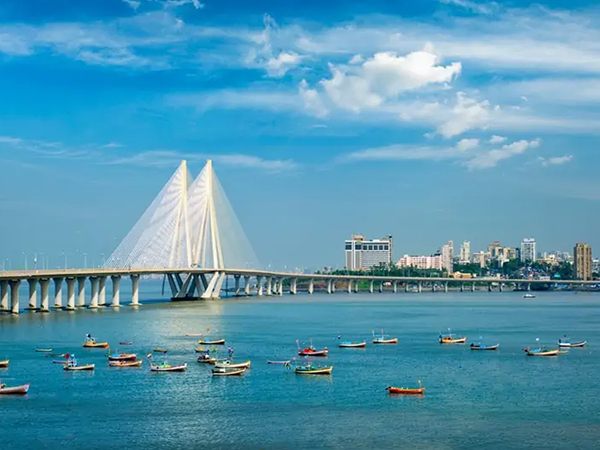
The Bandra Worli Sea Link of Mumbai, which was officially named ‘Rajiv Gandhi Sea Link’, is 5.6 kilometers long, 8-lane architectural, engineering, and infrastructural marvel of India. It is the first cable-stay bridge built on open seas in India.
The Bandra Worli Sea Link has become one of the prominent landmarks of Mumbai and has also made it to the top 10 Trip Advisor’s Traveller’s Choice awards of 2018, under the category of architecture and modern infrastructure structures.
When it comes to driving through Mumbai’s roads, the first thing that comes to one’s mind is the Bandra Worli Sea Link. The bridge was designed in such a way that it can allow a little over 37,000 vehicles per day.
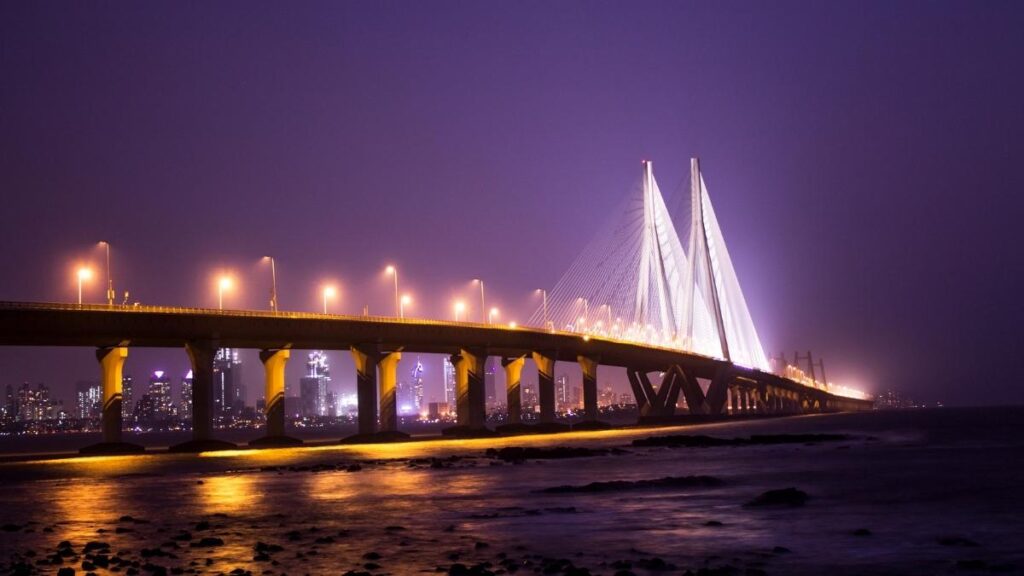
The view and beauty of the bridge at night is a sight to behold as the stay cables are entirely lit and the vehicles running on the bridge make an amazing photo opportunity for all photography enthusiasts.
History of Bandra-Worli Sea Link Mumbai:
Earlier, Mumbai’s central suburbs, main business district, and the western suburbs were connected only by the Mahim Causeway. That being the only road connecting the two business districts of Mumbai, added to the woes of the commuters during peak hours when moving from one end to another took a minimum of 70- 90 mins. To reduce the inconvenience caused due to the traffic congestion at Mahim Causeway, the construction of a sea link was proposed.
The proposed bridge would connect Bandra and Worli, reducing the traveling time from 60- 90 minutes to 10 minutes. The Bandra Worli Sea link to Mumbai was planned to be built over Mahim Bay which would serve as the alternative route to Mahim Causeway.
The contract for the construction of the sea link was awarded to the Hindustan Construction Company (HCC) by the Maharashtra State Road Development Corporation (MSRDC). The management of the project was headed by the multidisciplinary consulting organization, Dar Al- Handasah, from their UK offices.
The then Shivsena supremo, Balasaheb Thackeray had laid the foundation stone of the sea link in 1999. What had started as a project plan with an estimated cost of INR 6.6 billion and to be completed in 5 years went downhill due to several public interest litigations. This led to the project being delayed by 5 years and costs soaring to a whopping INR 16 billion.
The Bandra Worli Sea Link Mumbai was the first project where seismic arresters were used to make the structure strong enough to withstand earthquakes measuring up to 7.0 on the Richter scale.
The sea link was finally opened to vehicular traffic in mid-2009 in June 2009, with only 4 functioning lanes out of 8. The fully functional sea link was opened in March 2010. The bridge was inaugurated by UPA Chairperson, Smt. Sonia Gandhi.
The architecture of the Bandra-Worli Sea Link
The marvel that Bandra Worli Sea Link is was built by Hindustan Construction Company (HCC).
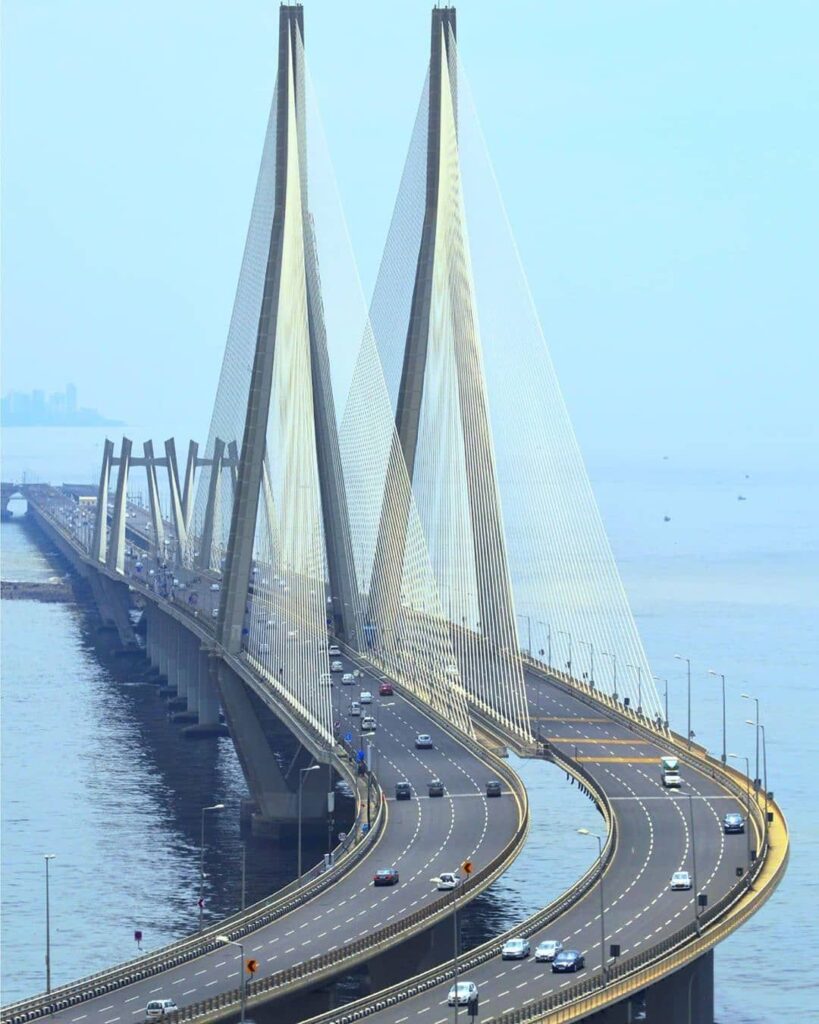
The structure of the bridge is defined in 3 parts namely, the north end viaduct, the central cable-stayed spans, and the south end viaduct.
The construction of the Sea Link was a joint effort of talents wherein engineers from all over the world came together to create the marvel that it is today. The construction was carried out in five phases, right from the construction of the flyover above Love Grove junction in Worli to modifications to Khan Abdul Gaffar Khan Road.
The seabed that fell under the route of the proposed bridge was surveyed even before designing the bridge structure. The geology of the seabed was a mix of basaltic boulders volcanic tuffs weathered fractured rocks and calcareous sandstone with a thin bed of coarse grainy mix of the same.
Looking at the complex geology, it was clear that the design of the bridge pylons would have to be sturdy with complex geometric engineering. This was the greatest challenge faced by the design team as they also had to match their design complexities with the aesthetics of the bridge.
As a result, the concrete deck span over the Bandra channel, which is also the main span, is the longest of the spans attempted, while the pylon towers have a complex geometry. A total of 0.1 million metric tonnes of cement was utilized for the project. The Bandra end concrete deck span alone weighs 20,000 tonnes and is supported by high-tension stay cables. The highest pylon towers measure 128 meters with their heights gradually decreasing in cross-section.
The viaducts on either side are the heaviest concrete-steel mix precast superstructure segments built in India using the span by span method.
The length of the cable-stayed span portion towards the Bandra end measures 600 meters with a total of 264 cable stays and that of the Worli end measures 250 meters with a total of 160 cable stays.
Visit MakeMyTrip for bookings. Also, have a look at our various monthly issues.

Visit Mumbai’s Famous Marine Drive
July 8, 2022 in City Guide, Maharashtra
The iconic Marine Drive in Mumbai is a landmark in itself and needs no introduction. Being the face of Mumbai and Bollywood alike, it becomes a must-visit place for everyone who is in the city. The 3.5-kilometer curved or C-shaped Boulevard with six laned road runs along the south coast of the city right from Nariman point to Girgaum Chowpatty.

What was once a quiet coastal promenade in the 20th Century, has now become the most bustling part of the city. Marine Drive is also called ‘Queen’s Necklace’ as the bird-eye view of the curved boulevard at night resembles a necklace due to the yellow lights lined along the curve.
Another prominent thing that goes unnoticed is the tetrapods lined along the entire length of the promenade. The tetrapods were imported from Australia in 1958. There are nearly 6,500 tetrapods at Marine Drive, each of that weighing two tonnes and costing upwards of INR 5000 each.
The reason these tetrapods were placed along the coast is to protect the promenade from being harmed by strong waves. The tetrapods absorb the energy of the waves and let the water flow around them avoiding direct contact with the promenade.
The Art Deco buildings of Marine Drive were given the status of UNESCO World Heritage, as a part of the Victorian Gothic and Art Deco Ensembles of Mumbai.
History of Marine Drive Mumbai :
The history of Marine Drive goes back to the 1860s with the idea of building a promenade by reclaiming more land by dredging the sea and dumping stones to create land. This plan was abandoned after American Civil War took over soon after the great economic crash that crippled trades at the turn of the 19th Century.
The idea was once again taken up as an inspiration after the establishment of the Cuffe Parade, a reclamation project that was completed by The Bombay City Improvement Trust. In 1919, when the Backbay reclamation scheme was conceived by the then administrators to decongest the city after the outbreak of the plague, the project took shape with the push of private investors chipping in their money. The plan was to connect Nariman Point and Malabar Hill through a promenade.
Out of 1500 acres of the original land that was under the plan of reclamation, Marine Drive currently is on a mere 17 acres of land. The rest of the land went under the dispute of wars and defective plans and military possession.
There is an inscription on a lamp post at Girgaum Chowpatty that states that the construction of Marine Drive had been initiated there and the place was originally called Kennedy Sea Face. It was named after Sir Michael Kavanagh Kennedy, Secretary of the Bombay Public Works Department and a General in the British Army.
The residential buildings around Marine Drive were financed by the who’s who of the city from the 1930s to 1940s. The residents of the area were mostly European and Indian elites. Soona Mahal, the building that is now home to the famous ‘Pizza By The Bay’ restaurant, was one of the posh residential buildings of the time built by a Parsi liquor businessman, Kawasji Fakirji Sidhwa who named his home after his grandmother, Soona Bai Kawasji Sidhwa.
Marine Drive has also been home to the Kuwaiti Royal family as they owned the Al-Sabah and Al-Jabreya Court buildings as their holiday homes. Apart from the Parsis, the owners of the majority of the buildings at Marine Drive were wealthy Hindus who had migrated from Pakistan after the great partition of 1947.
There is much history associated with the hotels on Marine Drive too. The Sea Green Hotel used to be a residential apartment for British Army officials during the Second World War. What used to earlier be an exclusive Europeans-only Bombay Club went on to become the famous ‘The Intercontinental’. The old club was taken down and a hotel named ‘Natraj’ was built there, which had an ice-cream parlor (alleged to be Mumbai’s first ice-cream parlor) named Yankee Doodle.
The nightlife at Marine Drive started thriving during the 1960s thereby becoming the epicenter of the city’s nightlife because of its proximity to prominent restaurants, bars, and jazz clubs.
The most interesting fact about the promenade is that the structure was made so sturdy that it did not need any repairs for 72 years. As a safety measure, a resurfacing project was conducted out of a need in 2012 to check for potential damages if any.
Things to do at Marine Drive Mumbai:

- Art Deco Buildings: The art deco buildings run along one-third of the stretch of the seafront. Art deco is a unique architectural style feature followed during the colonial times in what was then called Bombay and has prominence all over the city. The major chunk of art deco buildings in Mumbai is in Fort, Churchgate, and Marine Drive. Soona Mahal is the best-preserved Art Deco building on Marine Drive which was built in 1937 and opened as a restaurant named ‘Talk of the Town’ in 1968, which is now famously known as ‘Pizza by the Bay.
- Experience Art and Culture at NCPA: The National Centre for Performing Arts (NCPA) in Mumbai is the country’s premier institution dedicated to arts and culture and the first of its kind in entire South Asia. The institution was inaugurated in 1969. One can book a play, dance show or live music show, or even a film screening.
- Chowpatty Beach and Street Food: Located at the northern end of Marine Drive and commonly called Girgaum Chowpatty, Chowpatty beach is famous for its line-up of local eateries and street food. Chowpatty Beach is one of the oldest seafronts. One can also enjoy water sports on the beach.
- Hanging Gardens: The hanging gardens are terraced gardens on top of Malabar Hill, and are also known as Pherozeshah Mehta Gardens. One gets a beautiful view of the entire Marine Drive and is the best place to watch sunsets from.
- Taraporewala Aquarium: Maintained by the Department of Fisheries themselves, Taraporewala Aquarium is India’s oldest aquarium and host to numerous marine and freshwater fishes. One must visit the aquarium while visiting Marine Drive. After it was re-opened in 2015 after undergoing a renovation, the aquarium started attracting more visitors. The aquarium is named after famous Parsi philanthropist, DB Taraporewala, who donated the entire amount required to build it in 1951.
- Babulnath Temple: Babulnath Temple is an ancient temple dedicated to Lord Shiva and is visited by millions of devotees on the Mahashivratri festival day. The premise of the temple is quite peaceful. The deity is in the form of the Lord of Babul tree and hence the name, Babulnath.
- Nilambari Open Deck Bus Tour: One can book the Nilambari Open Deck bus tour that takes around all prominent places of South Bombay including Marine Drive. This tour is an initiative of Maharashtra Tourism.
Visit MakeMyTrip for bookings. Also, have a look at our various monthly issues.
Famous Tourist Attractions In Mumbai
July 8, 2022 in City Guide, Maharashtra
Here’s a list of Top Attractions In Mumbai where you can relish the mystic beauty of the hill stations; watch the mesmerizing sunrise and sunsets at the beaches; indulge in outdoor adventure activities; seek blessings at pilgrimage destinations; enjoy nature walks and jeep safaris at wildlife sanctuaries; marvel at the medieval architectural beauty and witness a unique festival where millions of fireflies dance.
Chhatrapati Shivaji Terminus

Chhatrapati Shivaji Terminus (CST) is popular railway station and is a spitting image of Victorian-Gothic style of architecture in India. Located in the heart of Mumbai, the CST is also a ‘World Heritage Site’ declared by UNESCO in 2004. Built in 1888, the station is the grand reminder of the British Raj pre-independence and is still one of the most historical landmarks within the Central Business District (CBD) of Mumbai. A bustling terminus, the CST is well-connected by rail to all parts of the country. It stands as the final result of great industrial revolution technology, merged with Victorian/Gothic revival styles based on late-Italian model architecture.
The structure represents the heart of the mercantile facet of the city and also symbolizes the British Commonwealth. Apart from being Victorian-Gothic in architecture, parts of this grand edifice also contain remnants of Mughal styled architecture. An outstanding example of the late 19th century designs, the CST is associated with the city of Mumbai since time immemorial. The city flourished, businesses boomed and a thriving film industry grew, with the Chhatrapati Shivaji Terminus being the core witness to it all. Scroll down to know more about this treasured structure.
Asiatic Society of Mumbai Town Hall
Town Hall is one of the most majestic structures among the other heritage buildings in the city of Mumbai. One can say that this building represents one of the last architectural remnants of the Victorian Bombay (Mumbai). The Town hall was colloquially called as ‘Tondal’ during the 19th century. The Town Hall houses the ‘Asiatic society of Bombay’ (Mumbai), which is a public state library in the city. For this reason, the structure is considered a storehouse of information. The objective behind the conservancy of Town Hall is to inspire research and to treasure the literatures, sciences and oriental arts. Churchgate Station is the nearest railway station. The Chhatrapati Shivaji Terminus is very close to the Town Hall venue. Town Hall is well-connected by roads, so one can hire autos or travel by bus to reach the site. Truly an architectural marvel, the Town Hall is a popular tourist attraction.
Gateway of India

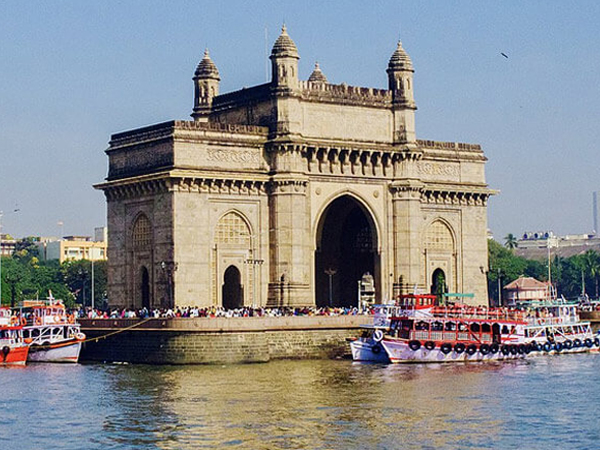
The Gateway of India is one of India’s most unique landmarks situated in the city of Mumbai. The colossal structure was constructed in 1924. Located at the tip of Apollo Bunder, the gateway overlooks the Mumbai harbor, bordered by the Arabian Sea in the Colaba district. The Gateway of India is a monument that marks India’s chief ports and is a major tourist attraction for visitors who arrive in India for the first time. At one point of time, this monument represented the grandeur of the British Raj in India. The total construction cost of this monument was approximately 21 lakhs and the whole expense was borne by the Indian government. A favourite spot for tourists, nowadays, this monument attracts vendors, food stalls and photographers. The passing of the ‘First Battalion of the Somerset Light Infantry’ was recorded as the first main event that took place at the Gateway of India. This ceremony was conducted on February 28, 1948, when the last set of British troops and divisions left India, post-independence.
Mani Bhavan
Situated on the tree-laden streets of Gamdevi Mumbai is the Mani Bhavan, famously known as Mumbai home to the great leader Mahatma Gandhi. A retro-styled, double storied building, belonging to the then Indian National Congress supporter and a famous diamond merchant, Raveshankar Jagjeevan Jhaveri, the Mani Bhavan is a simple Gujrati home in downtown Mumbai.
Mahatma Gandhi lived there for seventeen long years from 1917 to 1934 and initiated a number of famous movements like Satyagraha against the Rowlatt Act and Dandi March from here.
Mani Bhavan served as Bombay home to mahatma Gandhi for seventeen long and very crucial years of his life. He had immense faith in the people of Bombay and led several non-violence movements from Mani Bhawan. These include Hindu-Muslim Unity, Khadi Movement, Swadeshi Movement along with Satyagraha. Being the inception home to these movements and Gandhiji’s immense love for this place, Mani Bhavan is now converted to a museum as a tribute to him.
Every inch of this place tells millions of stories about Mahatma Gandhi and his lifestyle. It is highly depictive of how he grew as an individual and a national leader all the years he stayed at Mani Bhavan. The place imbibes a sense of belongingness since being used and lived in by the leader himself and also promotes the use of swadeshi to date. Mahatma Gandhi learned how to use a spinning Wheel at Mani Bhavan only.
The corridors and rooms are filled with scriptures, court orders and other important documents dating back to 1917 and earlier years, which Mahatma Gandhi used to study.
Mani Bhavan is also famous as the place from where Mahatma Gandhi got arrested on January 4th, 1932 while he was standing at the terrace. The terrace, the room Gandhiji lived in and all other places are open to the public for viewing and admiring legendary lifestyle he led.
Bombay High Court

Bombay High Court in Mumbai is one of the oldest High Courts in India. And today, entire Maharashtra and Goa falls under its jurisdiction. Bombay High Court also takes care of the matters in two Union Territories of India – Daman and Diu, and Dadra and Nagar Haveli.
Bombay High court is famed for its architecture too. It was built in the 19th century, by the British, in the eye-catching Gothic Revival style. This High Court is a UNESCO-recognised site, which remains packed with judges and other people who are waiting for their legal appointments.
Chhatrapati Shivaji Maharaj Vastu Sangrahalaya
Mumbai’s most comprehensive and famous museum is the formerly named Prince of Wales Museum. Since the year 1998 though, it has been renamed to Chhatrapati Shivaji Maharaj Vastu Sangrahalaya or CSMVS. With an astounding number of exhibits, close to 50 thousand, the galleries of this museum are guaranteed to keep you occupied for more than just a couple of hours. Built-in the early 20th century, the halls of this mansion have items dating back to the 2nd century A.D. The museum keeps expanding its collection and over the years, objects on Indian culture, history, and art have made this a nice hangout for the keen-minded.
Visit MakeMyTrip for bookings. Also, have a look at our various monthly issues.
Magnificent Temples To Visit Around Mumbai
July 7, 2022 in City Guide, Pilgrimages
Mumbai, a city that has it all, has a rich history with Hinduism and is filled with many temples all with their beautiful and unique aspects. The city is home to almost seven hundred temples, each specific to the culture of those who built them and the deity they worship. Visiting some of these temples is sure to be an eye-opening experience for any tourist and a window into Hinduism. Here’s a list of some of the temples in and around Mumbai:

Siddhivinayak Temple
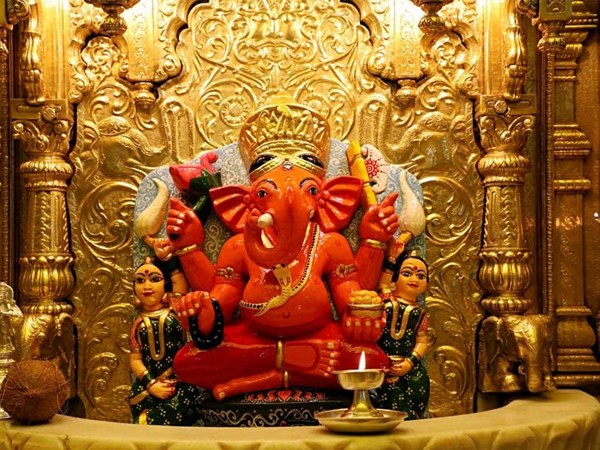
One of the most famous temples in Mumbai, Siddhivinayak is dedicated to the lord of good fortune and beginnings – Lord Ganesha. In the Hindu religion, one appeases the elephant-headed god before starting any new task.
Opened in the year 1801 by Devbhai Patil and Laxmi Vithu, the temple is one of the eight Ashtvinayak temples spread across the entire state of Maharashtra. A visit to the temple will educate you about the story of this beautiful god and why he is revered deeply by Hindu people (and often by other religions as well).
The temple has an astounding statue of the lord along with his two consorts – Ridhi and Sidhi. Complete with lotus, a small ax, his favorite sweet dish – modaks, and prayer beads, the statue of this deity has four hands and looks resplendent at all times of the day.
Visit the temple to seek Lord Ganesha’s blessing. However, if you would like to see a fervent celebration of people’s beliefs, Tuesdays are the best time as a lot of tourists flock to the temple on this day and every ceremony is a little different.
Iskcon Temple
ISKCON temple is one of the most peaceful temples in Mumbai and it is spread across the entire country. Dedicated to Lord Krishna, the temple was founded to preserve the rich heritage and mythological stories behind the life of Shri Krishna and how his presence had an impact on Mahabharat, one of the greatest mythological stories to be ever told.

Started by the Acharya Bhaktivedanta Swami Prabhupada in the year 1978, the temple is perfect for spending an evening listening to the chants of Hare Krishna, and Hare Ram, and immersing in the splendor of the evening aarti and bhajans.
Moreover, the pristine white marble and beautiful architecture of the temple is another thing that will keep you here for a couple of hours. A lot of people simply come here to admire the temple’s beauty and meditate.
Mumbadevi Temple
Unlike other temples, this one is dedicated to a goddess of a particular community and not the entire religion. Goddess Mumba is the patron goddess of the Somavanshi Kshatriya, Koli, and Agri communities residing in Maharashtra. According to the legends of this community, Goddess Mumba is a powerful guardian and an incarnation of Goddess Parvati.
Located on the Bhuleshwar Road, the temple was first opened in the year 1675 and has been relocated once to its current place. Inside the temple, you will find the statue of the deity which is made of black stone with an orange face. While the statue itself doesn’t have a mouth – to symbolize earth – and is simple and beautiful, the entire altar on which it stands is decorated by the devotees.
Since Tuesday is of utmost importance in Hindu mythology, be ready to face a lot of crowds if you visit on this particular day of the week. The rush is fine on the other days.
Tip: After visiting one of the most powerful temples in Mumbai, we recommend you explore the nearby markets as well and try the Mumbadevi Jalebis.
Babulnath Temple
Another ancient temple in Mumbai, this one has located a short distance from the famous Girgaon Chowpatty Beach. Also, it is easily accessible from the Marine Lines Railway Station and attracts a good footfall of tourists and devotees. Dedicated to Lord Shiva, the temple is of great significance to the Marwari and Gujarati communities living in Mumbai.

With the beautiful interiors and intricate carvings on the walls, the temple is bound to awe-struck you. The temple is built in such a manner that it feels like you have descended on Mount Kailash – the abode of Lord Shiva.
If you wish to visit the temple on Mondays, make sure you are prepared to brace the crowd of devotees that come here because Monday is the day of Lord Shiva.
Mahalaxmi Temple
Unlike other temples in Mumbai, Mahalaxmi Temple is located next to the seashore. Unique and beautiful, the temple is dedicated to goddesses Laxmi, Saraswati, and Durga.
Each idol of the different deities is ethereal and carved out of stone. People say that all the statues are ‘swayambhu’ which means they have been carved in the most realistic form of the goddess herself. Each goddess is adorned with a golden mask as well and bathed every morning.
The temple is not only a religious place but it also has archaeological significance as several manuscripts and relics will educate you about the distinct and beautiful stories of our past.
Tip: You can visit the temple during Navratri and Diwali as both the festivals are celebrated with much pomp and gusto here.

Balaji Temple
A popular South Indian temple in Mumbai, the Balaji Temple is a replica of the Tirupati temple. Devoted to Lord Balaji, it is huge and has statues of various other deities that are worshipped by South Indians.
Some of the other temples which are housed within the premises of the complex are Lakshmi Narasimha Temple, Ramanuja Temple, Vishwaksena Temple, Padmavati Devi Temple, Hanuman Temple, and Vidya Ganapati Temple. You can either spend the entire day exploring the intricacies and details of each temple or simply take a stroll out in the garden. Click here to know more about Churches in Mumbai
The temple is beautiful and has a huge 60 feet Rajagopuram which is an integral feature of all the temples of South India.
Swaminarayan Temple
Almost 100 years old, the Swaminarayan Temple is also among the most visited temples and is integral to the people of its neighborhood. Along with the temple’s exterior, the intricate carvings and details are something that one cannot miss when praying in the halls.
Apart from the different deities and idols, the temple also has three spires on top. An audience hall is also present on the premises of the temple which has paintings on its walls. The paintings are a treat to the eyes of the visitors and devotees of Lord Krishna because it depicts his entire life.
The main deities of the temple are Narayan, Lakshmi, and Ghanshyam Maharaj. The temple has a flower market adjacent to it and sees a lot of visitors. If you want to see the temple in all its glory, visit it during Janmashtami, Mahashivratri, and Ram Navmi.
Babu Amichand Panalal Adishwarji Jain Mandir
One of the most popular and beautiful Jain temples in Mumbai, this one is stunningly beautiful and complete with intricate detailing, carvings, and even paintings. At the entrance of the temple, you will find two beautiful sculptures of elephants which is also one of the major attractions of the temple.

Built in the year 1970, the temple has similar structures of elephants prominently placed on the pillars and the ceilings. Dedicated to Adishwar, the very first Tirthankar of the Jain religion, the temple is ideal for spending a few hours.
Mini Sabarimala Temple
Mini Sabarimala, situated on a hillock surrounded by hills and valleys within the precincts of NCH Colony, Kanjurmarg (West), Mumbai, is the first ancient Ayyappa Temple outside Kerala State.
As revealed by the astrologer Shri Karuvatta Kochugovindan, there was a big Devi temple and a small Ayyappa temple at this place, where today stands the temple of Shree Mini Sabarimala. These temples were destroyed by foreign invaders.[clarification needed] The remnants of these can be seen even today. The invaders also killed the priests of these temples.
Since then the devotees used to worship Shri Ayyappa in the same dilapidated temple. Therefore after the formation of the temple trust in 1960, a need was felt to perform certain purification rites or the Dosha Parihara Kriyas like Astha Mangala Deva Prashanam. These rites were the prerequisites for starting the main construction work and re-installation of images.

Accordingly in 1980, after performing Ashta Mangala Deva Prashanam, the temple trust started the construction work as per the details in Tantra Vidhi and Thachu Shastra of Kerala. They reconstructed the main Ayyappa temple in the center and the temples of Devi Bhuvaneshvari and Shri Ganesha to their left and right respectively. Sarpakavu or the Nagadevatas were also installed in the Northeastern corner.
Punahpratishtha or the reinstallation of Shri Ayyappa image and other images made of Panchaloha was done on Pushya Nakshatra day of the Kerala Hindu calendar, in the Midhunam (June–July) month by Shri Pullamvazhi Devan Narayanan Namboothiri, Pullamvazhi illam, Haripad, the famous Vedic and Tantra scholar from Kerala.
During the year 2000, again the Ashta Mangala Deva Prashanam was performed. Various Poojas and Homams and Kalashabhishekam were performed by Mahatanthri Shri Devan Vasudevan Namboothiri.
Walkeshwar Temple
Walkeshwar temple is quite an ancient temple in the city of Mumbai. It has over time gained a heritage status for its popularity amongst pilgrims and also the beautiful architecture. It is said to be originally made by the Shares. It was built around 1050 years ago in the beautiful area of Malabar Hill. Walkeshwar is a derivation of Valuka Ishwar which means the sands of God.
You will encounter a really old structure here in the form of Venkateshwar Balaji Mandir. This particular temple is a temple from the Peshwa era and has a wooden canopy that dates back to 1789. Another structure to look out for is the Rameshwar Mandir, which is estimated to be built in 1825. All the structures though are in dire need of getting repaired and restructured.
Legends also say that this temple was made by Ram who had sent his brother to get a shiva linga with the purpose of establishing it here. Before it could be brought here, he got another one built from sand.
Visit MakeMyTrip for bookings. Also, have a look at our various monthly issues.
What’s Mumbai Without Its Beaches?
July 7, 2022 in Beaches, City Guide
Blessed with a long coastline, Mumbai is home to many picturesque beaches that range from energetic, carnival-like seashores to tranquil oases unexpected in the city that never sleeps. To get away from the hustle-bustle of the city, there are countless beaches close by to cool off minds. Here’s a list of some of the beaches in Mumbai:

Juhu Beach
The Juhu Beach in Mumbai is one of the most famous Indian beaches. This beach is known to be one of the most-visited beaches in India and is situated in ‘Ville Parle. It is located approximately 18 km from the city center and is the desired location for most film shootings. Juhu Beach borders a posh locality where most celebrities stay and therefore, it is quite common to find famous celebrities jogging along the sands of this popular beach in Mumbai. Tourists visit this beach because of its peaceful atmosphere and its scenic beauty. Juhu Beach is also famous for its local delicacies and street food. The food stalls set up here offer excellent cuisines and snack items. People in Mumbai visit this beach to relax and enjoy after a long, tedious day. There are extravagant hotels and apartments located at the southern end of the beach. Watching the sunset in this wonderful place, guarded by the vast Arabian Sea, is a dream-like vision for anyone who visits the beach.

Chowpatty Beach
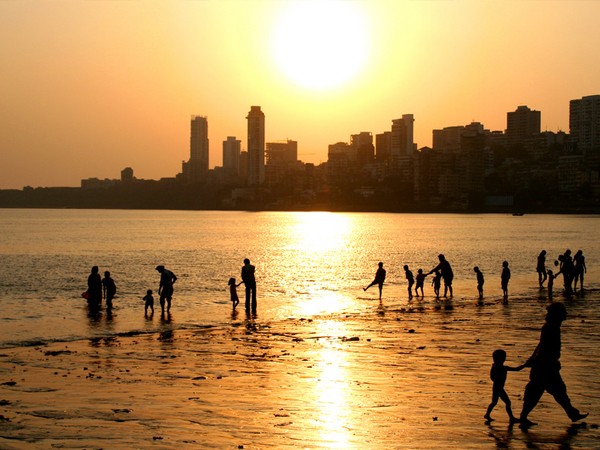
Chowpatty Beach is one of the most famous beaches in Mumbai. Located in the heart of the city, this beach is most popular for its local delicacies which most people enjoy whenever they visit Chowpatty Beach. Watching the glorious sunsets from this beach is a sight worth seeing! This beach is a retreat from a tedious routine for many. Most people visit this beach to relax after a long, tiring day. People of all age groups come here to enjoy the scenic beauty offered by the beach. The sea, adorned by its long stretch of white sand in addition to the magnificent sky above, is like a heavenly dream for anyone who visits this beach. One can find beach vendors selling balloons, toys, and local dishes such as spicy raw mango, roasted peanuts, and Mumbai fast food (or chaats). Tourists who visit Mumbai make it a point to visit this beach to experience the peaceful and serene atmosphere. People come here with their friends and families to spend several hours in this relaxing spot. A stroll on Mumbai’s Chowpatty Beach will guarantee you an experience of a lifetime.

Versova Beach
Versova Beach is another popular beach located in Mumbai. This fascinating coast, which is a continuation of the Juhu Beach and separated by a creek, is situated in the suburbs of Andheri. The Versova village is home to a large community of fishing folk known as ‘Kolis’. This beach/village is famous for its fish market auctions which are held every day. During ancient times, Versova was one of the main ports used for port-side transactions in Mumbai. Apart from the scenic beauty of the coast, gigantic rocks bordering the beach act as a buffer, protecting the village from the enormous waves of the never-ending Arabian Sea. As the shoreline faces the vast Arabian Sea, watching the magnificent sunsets from this beach is a blissful experience. What is even more surreal is watching the fishermen heading out into the big blue and catching fresh fish. People in Mumbai visit this beach to escape from their tedious work life and to enjoy moments of peace. If you are looking for a whole new adventure or some solace, then Versova beach might just be the place for you. Read on for more.

Madh Island Beach
Madh Island Beach is one of the most famous beaches in Mumbai. Apart from being a renowned tourist spot, the beach is also one of the cleanest in the state. This beautiful beach is actually made of a cluster of little villages and farmlands situated on the North-Western coast of Mumbai. The shore is surrounded by mangroves which not only adds to its scenic beauty but also separates the beach from the mainland. To take a break from the hustle and bustle of city life, people in Mumbai often visit this heavenly beach with friends and families. This tranquil beach also serves as an ideal venue for lavish parties hosted by Mumbai’s elite society. Many Bollywood movies and soap operas have also been shot at this magnificent venue. A perfect destination for anyone who wishes to take a break from the city, Madh Island Beach attracts a large crowd of people due to its calm waters and soothing scenery.
Visit MakeMyTrip for bookings. Also, have a look at our various monthly issues.

Journey To The Famous Caves Near Mumbai
July 7, 2022 in City Guide
The majestic caves in Mumbai are a popular tourist attraction site for the localities as well as the tourists. These caves near Mumbai are dated back several centuries and are a real architectural masterpiece. Most of the man-made caves are carved out of a single stone and were used by ancient Buddhists as a place of worship and shelter. Here is the list of 5 spectacular caves near Mumbai that you should definitely visit:
Mahakali Caves
Beautifully carved out of black basalt rock, the Mahakali caves just outside Mumbai are one of the few places in the world to see ancient cave dwellings within the borders of a bustling metropolis. These rock-cut caves have existed since the ancient Ashoka empire, used by Buddhist monks as dwellings and meditation chambers as much as 2,000 years ago.
There are 19 caves in total, believed to have been carved between the first and sixth centuries. There are also several cisterns cut from the same rock. Most of the caves are simple and small, with minimal carvings or ornamentation—stark chambers were used as dwellings for the monks and a place to meditate. The exception is the chaitya, the main Buddhist shrine and prayer hall, which is adorned with stupas and large carved statues of Buddha idols. Some of the cave walls have scriptures carved in pali, a language considered older even than Sanskrit.

Strangely, the modern name of these Buddhist caves, Mahakali, refers to the Hindu goddess kali. This is something of a misnomer and likely comes from the fact that there is a Hindu temple to kali nearby. The site is also known as the kondivite caves, after the nearby kondivite village. Interestingly, one of the stupas originally erected as a Buddhist monument is now revered as a Hindu lingam statue.
The Mahakali caves are located in the Andheri East suburb of Mumbai. From Mumbai, take the train to Andheri railway station or Jogeshwari railway station, or several bus lines will drop you close by. The site is open every day from 9 a.m. From 4 p.m.
Many of the low-lying rock caves have collapsed over the centuries or have been poorly maintained and are in a state of disrepair. The archaeological survey of India and the committee on caves are making efforts to protect the caves from encroaching on human development.
Elephanta Caves
The local Marathi folks popularised this island as Gharapuri, but Elephanta became common parlance after the Portuguese took over the land from the Gujarat Sultanate in 1534 and named it so after the massive rock-cut elephant statue that stood sentinel over the sea. The colonizers identified the structure as a landmark to dock their boats and to also tell it apart from the other smaller islands on the Arabian Sea. You can no longer find this monolithic elephant statue here as it was damaged in an attempt to move it to England. In 1914, it was reassembled by Cadell and Hewett and placed in the Jijamata Udyaan, a zoo, and garden in Byculla, Mumbai, where it stands today.
While the artwork in the historic Elephanta Caves owes it to the various religious texts, spiritual philosophy, and Hindu mythology, not to mention, the Puranas and the epics, the sculptures and the panels are also considered a veritable commentary on the Hindu culture and society in mid-1st millennium CE.

Here’s a definite guide to exploring the Elephanta Caves:
Cave 1 or the Great Cave: After disembarking from the ferry, you can either walk the one-kilometer distance to the cave site or take a toy train from the pier to the base of the hill. Further, you need to ascend a fleet of 120 steps to the hilltop on which the Great Cave is perched. The architecture of the cave seems to have been borrowed from that of a typical Buddhist Vihara (monastery), with a central court and several pillared cells. For a depth of 39 meters from front to back, it has a remarkably small main entrance. Although, there are two side entrances each from the east and west. An ode to Shaivism, the temple complex celebrates the various forms and manifestations of Shiva with some larger-than-life sculptures. The centerpiece of the Grand Cave is the Trimurti, and also the most intriguing. Facing the north entrance is the Trimurti sculpture carved in relief on the cave wall depicting Shiva with three heads, also called Sadashiva.
The three heads each are symbolic of the holy trinity, translating into creator, preserver, and destroyer. The Gangadhara is another depiction of Shiva just to the right of the Trimurti. Here, in extreme detail, Shiva is shown bringing the Ganges down from the heavens to serve mankind, while Goddess Parvati looks complacent standing beside him. The carving of Ardhanarishvara to the east of the Trimurti is in a dilapidated state. It portrays the coming together of energy and power by showing the unification of Shiva and Parvati with the upper half as a feminine form and the lower, masculine. Nataraja, Yogishvara, the wedding of Shiva, and Parvati are among the other popular themes Cave 1 delf into.
Cannon Hill for Caves 2 to 5: Cave 2 was ravaged and restored in the 1970s. It has four square pillars and two small cells. Cave 3 carries on the mandapa architectural legacy with pillared recesses and inner chambers. The central door holds a damaged shrine, believed to be that of Shiva. Next in line is Cave 4 also in a ruinous state with a rambling verandah bereft of pillars. Though, there is a lingam in the shrine at the back of the structure. Cave 5 simply exists with no discernible reference to any tenet in history.
Stupa Hills for Cave 6 and 7: Cave 6 on the eastern hill across from Cave 1 is also called the Sitabai cave temple. The porch has four pillars, three chambers, and a central shrine. No adornments from the times gone by remain in the cave, barring a frieze with some lion figures carved on it. Cave 6 is significant historically owing to its conversion and use as a church during the Portuguese rule. There isn’t much left of Cave 7 save for a small verandah that probably accommodated three chambers. The dry pond beyond Cave 7 was probably a Buddhist water tank due to the presence of Buddhist cisterns on its shores. Close to the cistern is a huge mound identified as a Stupa that dates back to the 2nd Century BCE.
Ajanta Caves
The Ajanta Caves are approximately 30 rock-cut Buddhist cave monuments dating from the 2nd century BCE to about 480 CE in the Aurangabad district of Maharashtra state in India. The caves include paintings and rock-cut sculptures described as among the finest surviving examples of ancient Indian art, particularly expressive paintings that present emotions through gesture, pose, and form.
They are universally regarded as masterpieces of Buddhist religious art. The caves were built in two phases, the first starting around the 2nd century BCE and the second occurring from 400 to 650 CE, according to older accounts, or in a brief period of 460–480 CE according to later scholarship. The site is a protected monument in the care of the Archaeological Survey of India, and since 1983, the Ajanta Caves have been a UNESCO World Heritage Site.

The Ajanta Caves constitute ancient monasteries and worship halls of different Buddhist traditions carved into a 75-meter (246 ft) wall of rock. The caves also present paintings depicting the past lives and rebirths of the Buddha, pictorial tales from Aryasura’s Jatakamala, and rock-cut sculptures of Buddhist deities. Textual records suggest that these caves served as a monsoon retreat for monks, as well as a resting site for merchants and pilgrims in ancient India. While vivid colors and mural wall-painting were abundant in Indian history as evidenced by historical records, Caves 16, 17, 1, and 2 of Ajanta form the largest corpus of surviving ancient Indian wall-painting.
The Ajanta Caves are mentioned in the memoirs of several medieval-era Chinese Buddhist travelers to India and by a Mughal-era official of the Akbar era in the early 17th century. They were covered by jungle until accidentally “discovered” and brought to Western attention in 1819 by a colonial British officer Captain John Smith on a tiger-hunting party. The caves are in the rocky northern wall of the U-shaped gorge of the river Waghur, in the Deccan plateau. Within the gorge are several waterfalls, audible from outside the caves when the river is high.
With the Ellora Caves, Ajanta is one of the major tourist attractions of Maharashtra. It is about 6 kilometers (3.7 miles) from Fardapur, 59 kilometers (37 miles) from the city of Jalgaon, Maharashtra, India, 104 kilometers (65 miles) from the city of Aurangabad, and 350 kilometers (220 miles) east-northeast of Mumbai. Ajanta is 100 kilometers (62 miles) from the Ellora Caves, which contain Hindu, Jain, and Buddhist caves, the last dating from a period similar to Ajanta. The Ajanta style is also found in the Ellora Caves and other sites such as the Elephanta Caves, Aurangabad Caves, Shivleni Caves, and the cave temples of Karnataka.
Aurangabad Caves
Aurangabad Caves are twelve rock-cut Buddhist shrines, located around 20km northwest of Aurangabad. These caves date back to the 6th and 8th centuries and should not be confused with the Ajanta and Ellora Caves which are also located close to Aurangabad. Carved out of Soft Basalt Rock, these are considered one of the most spectacular caves in India. Bibi Ka Maqabra and Soneri Mahal are located quite close to the Aurangabad Caves, and they can be covered on the same day. From the top, a panoramic and breathtaking view of the city is seen. If you are fond of heritage, then you will love this place of attraction. The Aurangabad Caves are also considered ideal for trekking.

The stunning caves were mostly Buddhist Viharas and are now under the protection of the Archaeological Survey of India. The Aurangabad Caves are divided into three separate groups depending on their location the First group: Cave 1 to Cave 5, the Second group: Cave 6 to Cave 9, and the Third group: Cave10 to Cave 12. The first two caves have a distance of 500 meters between them, and the third one is slightly further to the east. The definite attraction of the Aurangabad Caves is its sculptures. They are artificially rock cut. Caves I and III of Aurangabad and the last caves of Ajanta co-existed as is apparent from striking parallels.
Ellora Caves
Ellora Caves, Ellora also spelled Elura, is a series of 34 magnificent rock-cut temples in northwest-central Maharashtra state, western India. They are located near the village of Ellora, 19 miles (30 km) northwest of Aurangabad and 50 miles (80 km) southwest of the Ajanta Caves. Spread over a distance of 1.2 miles (2 km), the temples were cut from basaltic cliffs and have elaborate facades and interior walls. The Ellora complex was designated a UNESCO World Heritage site in 1983.
The 12 Buddhist caves (in the south) date from about 200 BCE to 600 CE, the 17 Hindu temples (in the center) date from about 500 to 900 CE, and the 5 Jain temples (in the north) date from about 800 to 1000. The Hindu caves are the most dramatic in design, and the Buddhist caves contain the simplest ornamentation. Ellora served as a group of monasteries (viharas) and temples (chaityas); some of the caves include sleeping cells that were carved for itinerant monks.

The most remarkable of the cave temples is Kailasa (Kailasanatha; cave 16), named for the mountain in the Kailas Range of the Himalayas where the Hindu god Shiva resides. Unlike other temples at the site, which were first delved horizontally into the rock face, the Kailasa complex was excavated downward from a basaltic slope and is therefore largely exposed to sunlight. Construction of the temple in the 8th century, beginning in the reign of Krishna I (c. 756–773), involved the removal of 150,000 to 200,000 tons of solid rock. The complex measures some 164 feet (50 meters) long, 108 feet (33 meters) wide, and 100 feet (30 meters) high and has four levels, or stories. It contains elaborately carved monoliths and halls with stairs, doorways, windows, and numerous fixed sculptures.
One of its better-known decorations is a scene of Vishnu transformed into a man-lion and battling a demon. Just beyond the entrance, in the main courtyard, is a monument to Shiva’s bull Nandi. Along the walls of the temple, at the second-story level, are life-size sculptures of elephants and other animals. Among the depictions within the halls is that of the 10-headed demon king Ravana shaking Kailasa mountain in a show of strength. Erotic and voluptuous representations of Hindu divinities and mythological figures also grace the temple. Some features have been damaged or destroyed over the centuries, such as a rock-hewn footbridge that once joined two upper-story thresholds.
Visit MakeMyTrip for bookings. Also, have a look at our various monthly issues.

Visit Yala National Park In Sri Lanka
June 29, 2022 in Sri Lanka, Wildlife & Nature
The diversity which Sri Lanka upholds, despite being so tiny, is unfathomable. This tear-shaped island country on the Indian ocean is home to various species of birds, animals, insects, plants, and flowers and is a great example of wildlife conservation for the entire world. This is proven in the large number of national parks that Sri Lanka has – as many as 21.

History of Yala National Park
Primarily regarded as an abandoned land, formed from metamorphic rocks of the Precambrian era, Yala National Park 1900 was titled a wildlife sanctuary. Along with Wilpattu, this sanctuary and Wilapattu got the names of national parks in 1938. Also known as Ruhuna National Park, during the 1940s, this park was not as big as now.
It started with 14,101 hectares of land in Block I and gradually expanded as wildlife in this area flourished. Mythologically, Yala National Park holds significance, too. It is said that Ravana from the Ramayana, had his Kingdom established here as the Ravana Kotte, which is now under the waves. During British colonization, Yala was used as a popular hunting place. Apart from this, the settlement of Sithulpawwa and water tanks made by Sri Lankan kings can also be seen in Yala National Park, even after dozens of years.
Wildlife in Yala National Park
Wildlife in Yala is diverse and indigenous. Yala National Park aims to strike a chord and keep a balance between man and nature, celebrating life in all forms. Leopards have the highest concentration in Yala National Park in the world. One can see elephants playing and walking off the streets, accompanied by deer, buffaloes, golden palm civets, fishing cats, and sloth beers too. The lagoons of Yala are not vacant as well. Filled with crabs and prawns, the other water areas have more than 20 varieties of fish like a stone sucker, olive barb, orange chromite, and many others. In the shabby water areas, crocodiles yawning in the sunshine is a very common scene spotted in Yala National Park.
The coastline of the park is frequently visited by turtles and other endangered species like the hawksbill turtles, green turtles, olive ridley, and a few more. Indian Cobra and Russell, two extremely dangerous snakes carrying the most venom, can also be found loitering around. 215 species of birds can be heard chirping around Yale National Park. There are Sri Lankan endemic birds like the hornbill, jungle fowl, wood pigeon and also migrating birds of different areas like egrets, painted stork, Asian Hornbill, little cormorant, and more.
Things to do in Yala National Park
- Safari Rides in Yala National Park
The first and foremost thing which nobody can give a miss when at Yala National Park is the Safari ride. A safari ride is a point of attraction for visiting here and thinking of witnessing wildlife at its best. There are authorized companies that conduct safari tours. There are provisions inside Yala National Park where one can book safari tours. Pre-booking facility is also available. There are two types of Safari tours – half-day tours and full-day tours; individuals can choose their tour depending on budget, time, and other constraints.
- Beach Walks in Yala National Park
The coastline that faces Yala National Park is not open to the public for recreational purposes. There are assigned areas, with proper safety measures, which can be visited. One can take a quick walk around the beach. Also, the Tsunami hit location, which killed many innocents, can also be visited.
- Birdwatching in Yala National Park
There are around 215 species of birds that are found in Yale National Park. There are both endemic and migrant birds. Even if not interested in bird watching, the birds are varied in colors that will amaze the visitors. There are birds like Orange Breasted Green Pigeon, Hornbills, Ruddy turnstone, Eurasian Curlew, and many others. Witnessing so many birds together will be an exhaustive experience.
- Camping in Yala National Park
Inside the park, campsite accommodation is available. A family of ten with two kids below age 6 is allowed for a single site with not more than 3 days of living. Under the sky, with wildlife at its best and nature encircling one, camping gets a whole new definition in Yala National Park. However, there are strict rules of camping that must be adhered to such as no alcohol consumption, no smoking, no loitering around, no littering of food, keeping the campsite and tent clean, and so on.
- Night in Yala National Park
Nature enthusiasts can also get hands-on experience by spending a night in Yala National Park itself in the park-provided bungalow. One can also pre-reserve the bungalow. The bungalow isn’t anything luxurious but it provides for a more rustic and rural experience. No wonder, one can hear leopards gently yawning or the trumpeting elephants’ slow walk. Waking up in the morning amidst nature, surrounded by wildlife will be an overwhelming and unforgettable experience.
- Sightseeing in Yala National Park
One can get to see the 2200 years old Buddhist monastery on their visit to Yala National Park. This monastery named Sithulpawwa is an ancient rock temple that has a rich lineage of history and is heard to be the home of 12,000 monks. Buddha and Bodhisattva images can be found here. For those who have an affinity for history and archaeology, this monastery is worth the visit.

Top 10 Places To Visit In Bentota, Sri Lanka
June 29, 2022 in Sri Lanka
Bentota is a gorgeous beautiful resort town in Sri Lanka. Located in Lanka’s mesmerizing southwest and on its coastal belts, Bentota is a spectacular part of rural Sri Lanka with green environs in the background, awash with tall coconut palm trees everywhere in the landscape.
The lagoons, the estuaries, and the calm weather, all will scintillate you like never before. Bentota is also famous for its dazzling marine life and you will love the atmosphere once you step in. A serene beauty, especially for the newly wedded couples, this place is speechless and its exquisiteness cannot be expressed in words, but only felt.

- Brief Garden
It is regarded as one of the calmest and most composed places to visit near Bentota. Situated eight kilometers from the resort town, this garden is crafted in a Japanese-style design and the feel will take you back to the colonial days, for sure. Heard of Bevis Bawa- no- He is a well-known architect and this garden was his home earlier. You can go through most of his beautiful works during your visit.
- Bentota Beach
Even when you google and see the pictures of this placid Bentota sight-seeing destination, you will understand why this place is a must-visit. The beach is genuinely a place to relax and feel comfy in the lap of the mighty Indian ocean. The pristine golden sands will surely take your breath away when you closely watch the vibrancy hidden in them. What adds to it is the beauty of high-end grassroots and palm trees that perfectly outlines the beach.

- Bentota Turtle Hatchery
So, while you visit Bentota Beach, do not forget to experience the magic of this spellbinding attraction. You will get to see up to five endangered species of turtles hatching and crisscrossing each other. Especially for nature lovers, this spot is considered the most enchanting place to visit in Bentota. You can visit this place with your family as well, trust me, kids will love it.
- Cinnamon Island
It is yet another enthralling spot for tourists and sight-seers. It is also included in the list of the most beautiful places to visit near Bentota Sri Lanka. This island is famous for its age-old cinnamon plantation wherein you can learn and explore every small detail about cinnamon, from how it is processed to how it is used. For generations, this place has been taken care of by a single family and you must not miss this island to visit during your trip to Bentota. This is one of the best places to visit in Bentota.

- Galapata Vihara
This ancient beauty was constructed in the twelfth century. What’s most stunning here is the maze of underground tunnels that beautifully connect various temples within the area. It’s one of the best tourist places to visit in Bentota. It houses a thirty-meter-high Buddha statue surrounded by eye-catching paintings. The temple has a very rich history absorbed in it which again makes it a great place to visit and explore for history lovers.
- Ambalangoda
Another adorable town near Bentota, Ambalgoda is located twenty-four kilometers away from the town. It is widely known across Sri Lanka and outside for its appealing devil dancers who perform this activity wearing devil masks; this is a must-watch activity, and it will totally flabbergast you. There are small shops nearby the area where you can bargain and buy these masks. I must say this is one of the superb tourist places in Bentota.

- Moragalla
A refreshing beach that is mostly calm and is not overstuffed by people. Situated in the south of Beruwala, Moragalla is not that famous, but if you are looking for a place to revive yourself after traveling for long hours, this is it. It has clear blue water and is a perfect place for sports activities such as windsurfing, diving, and snorkeling, among others. You will also see over twenty varieties of mangrove trees lined up at this beach; also, a perfect spot for boat trips.
- Diyakawa Water Sports Centre
This spot is bombarded with a slew of water sports activities and you will love experiencing each of them with your family or friends. Very friendly, safe, and cost-effective; and don’t miss the jet ski sport, it will take you to another level of fun. Equipped with all the modern stuff backed by professional and amazing staff, this place is a must-visit. The staff knows their waters, hell yeah!
- Madu Ganga River Safari
Hey all the nature lovers, this safari is a paradise coupled with rich wildlife experiences. There are over a hundred and eleven bird species to watch and click pictures. It is also a popular spot for ecologists as well as biologists. You will also see Captain’s boathouse which offers amazing boat rides along the river and you can explore numerous things while spending time with the local guides.
- Explore the Galle Dutch Fort
For all the history lovers out there, explore more about Sri Lanka’s culture and tradition at this amazing fort. Located about fifty kilometers to the South of Bentota, this fort is stretched across eighty-seven acres of land. It is home to a huge collection of antique museums and archaic churches. Many art and literary festivals are organized at this fort and you must visit it during one of these fests; its an absolutely invigorating experience at this Bentota sightseeing.

Things To Do In Sigiriya In Sri Lanka
June 25, 2022 in Sri Lanka
Discovering Sigiriya is a matter of a days excursion for any tourist. Other than climbing up and traipsing around the rock there are quite a few things to do around Sigiriya as well.

- Adore the Architecture
The city of Sigiriya has set an important milestone in the history of Sri Lanka not only under the context of planning an urban city but also as one of the most mathematically and statistically built ancient cities. Despite passing through many centuries, some of the famous structures of the city, although almost worn away, still prevail.
The palaces in the Sigiriya have an uncanny resemblance to Ajanta caves in Maharashtra, India, with respect to the designs and paintings i.e. the frescos. Despite being similar in many ways to the Anuradhapura style of paintings, the ones over here were quite unique and different than those of Ajanta caves. However, time wasn’t able to retain the exquisiteness of such art and so many of the paintings have vaporized.
- The Mirror Wall
A wall, so well polished that one could see their clear reflection, was once the king’s most favorite. And why wouldn’t it be? A magnifier of beauty and personality is something probably everyone would relish. Unfortunately, the time has again shown its ugly side and taken away much of its grandiosity, leaving behind, just a rock. However, knowing that it was something significant and important, the wall is still a hot photo spot and also the most favorite scribble board for the tourist.
- Fly With The Butterflies In The Gardens
Sigiriya mountain in Sri Lanka is surrounded by vast spaces of centuries-old landscape gardens. During the thriving days of the city, these gardens were planned accordingly and then divided into –water gardens, terraced gardens and boulder and cave gardens.
These gardens are the oldest surviving models of an ancient form of gardening called Char Bagh. The cave and bouldering gardens were often used by the army to roll down huge stones and rocks from the Sigiriya mountain in order to keep their enemies away.

- Visit the Golden Temple in Dambulla
After completing a tour of the ruins of the fortress, one can always visit the Golden Temple in Dambulla which is just 20-25kms away from Sigiriya. The Dambulla cave temple is said to be the largest and the most complex cave temple in entire Sri Lanka. The whole area contains almost 80 caves that have been documented along with statues and paintings, most of which represent Gautam Budh while some have been interpreted as God Vishnu and Ganesha. Near the cave complex, is a graveyard which has buried within it human skeletons as old as 2700 years. This leads on to the interesting fact that in these caves lived the prehistoric Sri Lankans before the arrival of Buddhism in Sri Lanka.
- Safari in Minneriya National Park
Just at a distance of 27-30 km, is the Menneriya National Park, which is the has the world’s largest gathering of the Asian elephants. Exposed to the receding waters and ever perennial greenery, one never goes with a broken heart, for not being able to see an elephant in the national park. Apart from elephants, this National Park also houses many varieties of birds, butterflies, amphibians, reptiles, and fish.

Best Places To Visit In Kandy, Sri Lanka
June 25, 2022 in Sri Lanka
- Pinnawala Elephant Orphanage – An Experience Worth Relishing

This one’s considered amongst the best places to visit in Kandy for those who are fascinated by the wildlife! Plan a day out with wild Asian elephants at Pinnawala Elephant Orphanage. This is a -popular breeding ground of 90 plus elephants who stay in their natural habitat. Watch these adorable elephants bathe, play around, and feed them fruits. Tourists can see them when they take a tour around the orphanage to see the majestic animals. If you are in Kandy visiting places, then this spot is perfect if you want to have a small picnic along with your friends or family.
Pinnawala is the place where abandoned elephants are raised. Not only orphans but also elephants who are seriously injured or those who get aloof from their group are given proper shelter & care at the orphanage. The place is situated in the Pinnawala village present in the Sabaragamuwa Province of Sri Lanka. The orphanage was started in 1975 by the Sri Lanka Department of Wildlife Conservation. The place has evolved into an amazing tourist destination in recent years. The elephants are kept quite well and you may definitely see that while at this place. The orphanage also accepts elephants that are donated to them and they bring them back to their health. The elephants have mahouts for them who give them baths and proper food on a timely basis. If you’re looking for natural bathing places in Kandy, then this is it!
- Temple Of Tooth Relic – For Spiritual Enlightenment
Considered as one of the most important temples of Buddhists in Sri Lanka, the Temple of Tooth Relic is located to the north of Kandy Lake and is one of the most remarkable places to visit in Kandy Sri Lanka. The sacred tooth of Lord Buddha enshrined in the temple makes it one of the popular Kandy tourist places. The room housing the tooth is open to devotees to offer their prayers. However, nobody gets to see the tooth because it is kept in a golden casket inside a stupa-like structure. The temple is housed in the royal palace complex of the former Kingdom of Kandy. One of the best places to see in Kandy, this temple is of great importance due to the belief of the country on the tooth. The temple has rituals thrice a day. The temple was designated a UNESCO World Heritage Site 1988. The temple still stands strong even after facing attacks twice.
Along with the outside, tourists need to visit the inside of the temple to actually appreciate the architecture. There are holes in the walls which contain lamps lit using coconut oil. Tourists need to pay the entry fees and they should visit between 5:30 AM and 8:00 PM.
- Kandy Lake – Best Place To Stroll Around
Adjoining most of the popular tourist places in Kandy and eateries with lake view, the Kandy Lake is certainly among the best places to visit in Kandy, Sri Lanka. An ideal place to spend hours during your lazy vacation, the lake offers stunning nature views around it and is a perfect romantic sojourn for a romantic couple visiting the place. The lake, existing since 1807, has a flurry of idyllic places and historical structures around.
The lake is also known as the Kiri Muhuda or the Sea of Milk and is an artificial lake. Being in the heart of the city and beside some of the famous attractions of Kandy, it is a popular tourist site. There is also an island in the middle of the lake. Around the lake is built the Wakulla Bamma or the Clouds Wall which increases the beauty of it. If you are in Kandy visiting places, tourists can also see the Ulpan or Queens Bathing Pavilion which is a party in the Kandy Lake.
- Hulu River Waterfall – A Sight To Behold
30 km from Kandy into the quiet town of Dumbara lies Huluganga Falls on the Hulu River. The river originating from the scenic Knuckles Mountain Range is the perfect escape to leave the onlookers awed. The 75-meter high waterfall, located in the Dumbara town, is a-true beauty enclosed by nature allure. And it’s no wonder that-Hulu is considered as one of the popular Kandy places to visit! The Huluganga falls still maintains its pristine condition because of its natural setting. When visiting places in Kandy, make sure you add this one to your itinerary. Tourists will definitely enjoy the numerous rocks present in the bed of the waterfall. If they are feeling adventurous they can click pictures sitting on them. When looking for places to visit near Kandy, then don’t forget to stop by this majestic waterfall.
- Knuckles Mountain Range – Hiking And More
This is one of the top places to visit in Kandy Resembling the shape of a knuckle of a clenched fist from the top, the Knuckles Mountain Range is probably one of the most scenic Kandy tourist attractions. The mountain Range in the region towards the northern end of Sri Lankan highlands (39 km from Kandy) is the place to be. Perfect place to try your hands-on adventure traveling and camping, the Knuckles Mountain Range spans from Matale to Kandy and is a treat for the nature lovers. Look around and embrace the wilderness brought to you by sprawling grasslands, jagged peaks, torrents of streams, and gushing waterfalls. Enjoy the series of painted canvas around.
The best view of the range is the thick clouds that gather in the higher Montane area. Hiking is considered to be one of the best things to do in Sri Lanka. Adventurous tourists can try their hands at hiking to visit the cloud forests which house a lot of the flora and fauna of the place. They are mostly unique to the place and you cannot find them in the rest of the island country. If you want to reach the highest point of the terrain, then you need to climb 1863 m above the sea level.
Another key wildlife attraction of the place are lizards which include the unique Crestless lizard, Kangaroo lizard, and Pygmy lizard. People who want to enjoy serious trekking may take part in the 3-day guided trekking tour which lasts for more than 40 KM and takes them through some of the main areas. This mountain range is undoubtedly considered to be one of the best places to visit in Kandy
The great biodiversity of the Knuckles brings you wild boar, spotted deer, giant squirrel, barking deer, purple-faced leaf monkey, and mongoose.

- Bahirawakanda Temple – For Spiritual Seekers
Just 1 km away from the Kandy city, the Bahirawakanda Temple is a major attraction and a distinct structure. The place is a popular attraction for Buddhists and there are quite a few international Buddhist relations meetings that are carried out here. This makes it one of the popular things to see in Kandy. The magnificent structure is huge and can be spotted from anywhere in the city. The place is also an important monastery where many Buddhist events do take place. The statue was started in 1972 and ended in 1993. You can take the steps to reach the top of the hill or you can take a tuk-tuk ride is all it takes to get to the temple premises. If you are traveling places in Kandy, don’t miss this architectural wonder when you are in the city. People may actually see the Buddha statue from all around the city but it is a sight to visit it to see the beauty in an up-close-and-personal way. It takes about 200 LKR to visit the statue. If you are visiting Kandy in August, make sure you add it to your itinerary.
- Ranweli Spice Garden – Natural Surprises
Enough of talks about spotting wildlife in their natural habitat! Time to spot greenery and exquisite plant varieties in their natural habitat. This Kandy tourist attraction is located in the close proximity of Peradeniya Royal Botanical Garden. Turmeric, Peppercorns, Cloves, Cardamom, Vanilla, Cinnamon, Cocoa, and Aloe Vera are the main plantations that are the-highlights of this place. Visiting this place is one of the best things to do in Kandy for couples.
Learn about plantations, spices, natural products, and various techniques involved while cultivating it. Ranweli Spice Garden is the perfect escape from the hustle of the city life. Vibrant history and lots of surprises await you at the Spice Garden.
- Royal Botanical Garden – A Colorful Affair
This place is counted as one of the best Kandy attractions. Spanning over 60 hectares, the Royal Botanical Garden is largest and one of the best places to visit in Kandy with a-hidden charm to explore. Situated in Peradeniya, the place is quite close to the Mahaweli River. Along with the most striking orchids, you can find more than 4000 species of plants in this Botanical Garden. You should definitely visit the National Herbarium of Sri Lanka which is attached to this Royal Botanical Garden. Tourists may tour the whole 147 acres of the garden to spend their day. The garden isnt something new as it was created in 1821 when it contained mostly coffee and cinnamon plants. Do check out the Cannonball Tree present in this garden which King George V of the United Kingdom and Queen Mary planted in 1901.
The garden is also an ideal place to plan a picnic with family and friends. However, romantic couples can be mostly seen hanging around the garden area. The cab drivers in Kandy mostly offer to cover Botanical Garden along with Pinnawala Elephant Orphanage or the Kandy temple to make it a Kandy sightseeing tour. The park remains open from 7:30 AM to 5 PM. You can consider this as one of the amazing places to visit in Kandy for couples.
- Udawattekele Sanctuary – More Than Just Greenery
Located at the hilly terrains of the temple of the tooth relic, this sanctuary served as the retreat for the Kandyan kings in the older times. Later, converted into a sanctuary, it is an important bio reserve of Kandy. The sanctuary is spread over 104 hectares and is primarily known for the different species of birds residing in it. Offering as many as 80 species of birds and animals like mammals and insects, it is one of the visiting places in Kandy. Along with the wildlife, you can also visit the three Buddhist forest monasteries present at this place. Another attraction is the three Buddhist cave dwellings. Tourists will love the thick forest cover of the area which looks beautiful in the monsoon months. If you are an animal lover and visiting Kandy, you must go here!
- CommonWealth War Cemetery – Learn The Legendary History
This is one of those tourist places in Kandy that should definitely be a part of your itinerary. This cemetery is maintained by the officers. By maintaining the place they pay tribute to the braveheart soldiers who sacrificed their lives during the Second World War. There are six commonwealth war cemeteries that you must witness during your vacation in Sri Lanka, yet the one in Kandy is notable amongst all because of the praiseworthy scenic beauty.

- Millennium Elephant Foundation – An Educational Tour
The place is located in Randeniya. This is the only place where tourists can actually ride on the elephant’s back and travel around the place, they are allowed to interact with them.The educational tour conducted by the organization is rendered helpful and amusing for the tourists as they can witness right in front of them the activities of the animal.
This Foundation is established in the estate named Samragyi inherited by the Samarasinghe family.
- Horton Plains National Park Ohiya – Witness The Wildlife
If you want to witness the most majestic wildlife of Sri Lanka, this is the place for you! This national park is a treat to travellers fond of mystical beauty of nature. The valley shadowed by the two mountains Kirigalpotta and Totapola; Sri Lanka’s second and third largest mountains. This place is often stated as World’s end because of the surprisingly formed waterfall, mist-filled lakes and the variety of plants and animals found here. The wide variety of flora and fauna makes the place even more special. The ethereal feeling offered by the place becomes prominent, especially in the morning.
- Ceylon Tea Museum – A Paradise For Tea Lovers
The museum located in Hantane the 1925 vintage tea museum built on four floors where the first two floors consist of vintage tea making equipment, machinery, libraries, museum. To taste the authentic Sri Lankan flavored tea. Visitors can savor a free cup of the tee to relish the flavor. This is one of the most amazing places to see in Kandy.
- Wales Park – For A Peaceful Walk
The Wales Park or the Royal Park is known for its majestic beauty and the splendid view of the Kandy lake makes this place very special. For tourists this place is an attraction because of the Beauty and the enjoyment people can indulge in under the lap of Nature. This park is rightly considered to be one of the most beautiful places in Kandy
- Riverton Gap – Trekking And More
When looking for Kandy tourist places that are ideal for nature lovers and adventurers, a trip to the Riverton Gap is a must! This place is located a few kilometers away from the Matale town.It takes a few hours to reach from Kandy. The main attractions of this place include the scenic beauty and trekking. The two spectacular waterfalls present here, Sera Ella and Bambarakiri Ella. To reach the waterfalls one must trek through the marvelous forest and witness the beauty.
- Highlands – Lose Yourself Amidst Nature
Situated in Nuwara Eliya along with the waterfalls the place consist of the tea gardens. Tea cultivating lands are the major attraction for tourists. Its a few hours journey from Kandy. Travelers could enjoy the flavored beverage and appreciate the authentic taste. When searching for places to visit from Kandy to Nuwara Eliya, then this site can be the best one!

- Galmaduwa Temple – Witness The Awe-Striking Structure
This is one of the most prominent temples in Sri Lanka. As the Gal Oya development programme commenced nearby Ampara area, the ruined complex of Galmaduwa Temple emerged. It was then that this temple was established again and modernized into Vihara complex. Because of this, you can find various recently constructed buildings here along with some age-old structures like Sandakada Pahana, Chatra stones, Korawakgala, and some giant pillars. This temple is lying on the road that connects Hingurana and Ampara.
- Ranawana Purana Rajamaha Vihara – For History Lovers
This too is an ancient temple in Kandy known for its glorious historical significance. This temple has been established amidst lush-green natural setting. This temple is considered to be one of largest and beautiful temples of Sri Lanka. Theres a trail running through the temple that takes you to the forest. This temple has been established on the theme of Buddhas life and there are various significant scenarios of his life that have been presented in the forest.
- Pallekele Cricket Stadium – A Must Visit For Sports Fan
This stadium is considered to be one of the most famous places in kandy. It is also known by the name Muttiah Muralitharan International Cricket Stadium since July 2010 when the Central Provincial Council of Kandy declared the plan of naming it after the amazing cricketer Muttiah Muralitharan. However, the name hasnt yet been officially sanctioned. This stadium was built along Hambantota International Cricket Stadium for the 2011 World Cup. It was inaugurated on November 27th, 2009 and even became 104th Test Venue of the world. For all the cricket lovers out there, this will definitely be one of the best places to visit in Kandy city.
- Giragama Tea Plantations – Absorb The Calm
Tea plantations are the common things about Sri Lanka. Kandy is no less when it comes to tea plantations and one of the best places to visit in Kandy is Giragama tea plantations. Giragaram is a pretty little town in Kandy that is known for its tea plantations. It offers the much needed peace and tranquility along with picturesque views that will leave your soul stirred. There are estates wherein you can walk and soak the views. Keep this in your list of places to see in Kandy for a refreshing experience as this place is one of the best visiting places in Kandy. This is also one of the best things to do in Kandy.
- Kandy Viewpoint – Be Mesmerized
Kandy is the heart of Sri Lanka and watching the gorgeous hill station from a height is not something everyone gets to witness, so don’t miss out on exploring the most beautiful places to visit in Kandy on your vacay. The viewpoint is located at a distance of 1.7 km from the city centre and the route to the viewpoint is equally mesmerizing. Carry your camera along for some instagrammable pictures at this point which is one of the best places to visit in Kandy. It is also one of the top places for trekking in Sri Lanka.
- Lankatilaka Temple – Marvel At The Structure
One of the best places to visit in Kandy is Lanka Talika temple which is very famous amongst the locals as well as tourists. Dedicated to Lord Buddha, the temple is the epitome of rich history and culture of the beautiful city. The architecture is something you can marvel at and it is divided amongst three sections. Make sure you visit the temple as it is one of the most beautiful places in Kandy.

- Hanthana Mountain Range – Hiker’s Paradise
One of the most beautiful places in Kandy, Hanthana Mountain Range is every nature lover’s paradise. The mountain ranges are located on the outskirts of Kandy city and appeal to tourists as an amazing picnic and hiking spot. One can even enjoy the exhilarating views of the city from top. Declared as environmentally protected areas, the range consists of seven peaks, Uuara Kanda being the highest one. This is also one of the best visiting places in Kandy.
- Royal Palace Of Kandy – Legacy & Heritage
Royal Palace of Kandy is one of the historical kandy tourist attractions that is absolutely mandatory to visit. Located north of the Temple of Tooth Relic, the palace is an exhibit of Kandy’s rich legacy and heritage. It was built by Vikramabahu in the 14th century. It was the last building to be built by a Sri Lankan king before British colonialism took over. You will definitely fall in love with the impeccable architecture.
- Degaldoruwa Temple – Oldest Buddhist Cave Temple
Built by King Rajadhi Rajasinha, Degaldoruwa Temple is one of the oldest Buddist rock temples in Kandy. Undoubtedly, one of the best Kandy attractions, you should definitely make a visit and admire the old colorful frescoes on the wall that tell a thousand stories. The cave inside the temple is excavated out of a rock and is known to be at least 12 m high. You should definitely put this place on your itinerary if you happen to be visiting Kandy.
