

Member Type Contributor


The Pros & Cons Of Visiting Bhutan
February 7, 2022 in Bhutan
This tiny Himalayan kingdom seemed to be still in the 18th century. It is untouched by modernity, and Bhutanese prefers to be like that. Traveling to Bhutan will give you altogether a different experience. At the height of 7,218 ft (2,200 meters), you must consider before planning a visit to Bhutan. Most people living at sea level have difficulty adjusting to high altitude climates.
Here are a few pros and cons that you should consider before opting for Bhutan tour packages.
Pros:
The People: Bhutanese are genuinely lovely people. They are calm and quiet; it might be due to their religious beliefs. Their genuineness will touch you. Even kids are kind and playful. You will find the guides and drivers very knowledgeable, gracious, talented, and fun to be with.
Buddhism: Bhutanese are true believers of Buddhism, and it is reflected in their life everywhere. You will get to hear several folklores and stories about how things came into being. Even atheists turn inward for a few moments. Buddhism teaches non-violence and detachment from worldly things, if practiced even in a lower percentage, will surely make the world a better place to live.
The Himalayas: You can get a unique view of Himalayan peaks. There are many other places where you can see the Himalayas, but they are not as captivating as this view. There are rhododendrons in abundance, magnolia trees, and fantastic downhill and uphill walks. Adventurous ones will find several trekking options.

Cons:
Infrastructure: This tiny country has poor infrastructure. You will face difficulty in moving around. One national highway is extremely twisty, unpaved, dusty, and mainly traveled by old-age trucks. Travelling is sure to give you nausea. Mind it; the toilet will be a problem; there are hardly any bushes around the highway to help you with.
Medical Remedies: Keep some medicines with you for common diseases and health conditions. You can’t buy drugs at a chemist store, and locals get their medications at hospitals. You will be required to make much effort for outdoor treatment. You might get homemade remedies, but their effectiveness can’t be guaranteed.
Food: You will have minimal options for food. Mostly vegetarian dishes are served with rice, veggies, and baked beans. Bhutan’s national dish is ema dates prepared with red or green chili and cheese – sometimes it is spicy. Bhutanese don’t kill animals; it is a Buddhist country that preaches non-violence. Even in the most unrefrigerated conditions, meat is brought here from India or Nepal, and it appears to be hacked and separated. You will hardly find a tasty non-vegetarian dish.
Alcohol: There are minimal options. Better keep some with you if you are fond of it. Bhutanese produce a few wines (sweet) and beers, and you have to settle for them if you don’t have any with you. It is hard to find any imported brand. There is a Wi-Fi signal which is often promised.
Altitude: It is situated at a high altitude; 7,218 ft (2,200 meters). Get your health checked before traveling to Bhutan.
Visit MakeMyTrip for bookings. Also, have a look at our various monthly issues.

And Here’s The Bhutanese Culture
February 7, 2022 in Bhutan
A serene place with holy monasteries, lush valleys, rocky mountains, and pristine rivers holds a lot more than what meets the eye. The Culture of Bhutan fascinates every person who comes across it. And even the better part is the people and the government’s determination to preserve and promote their cultural values. This is why we can still see its essence in every nook and corner of the country. Some of the essential things that entail Bhutan’s Culture are its festivals, architecture, food, and traditional dress.

- Religion of Bhutan – Traditional Beliefs and Practices in Bhutan’s Culture
The predominant religion in Bhutan is Buddhism, followed by Hinduism. As a result, Bhutanese culture is very much influenced by sacred Buddhist values. Bhutanese live by their religious values and greatly respect their gods and deities. Hence, there is no shortage of monasteries, chortens, Lhakhang, etc., in the country. There are colorful prayer flags on hillsides, at the entrance of cloisters, etc., considered sacred. The Dzong, a unique combination of a fortress and a monastery, is present in every district or Dzongkhag.
Buddhist monks reside in monasteries located high in the mountains. They lead short life with no luxuries. A monk is generally admitted to the monastery at six to nine and takes his lessons under a headmaster. A tiny morsel is kept on the floor to offer deities before eating in joint families. So, religion plays a vital role in deciding the lifestyle of people.
- Birth, Marriage, and Death in Bhutan
The culture of Bhutan is quite festive when it comes to the birth of a child, and it is one of the very few countries that does not discriminate between a boy and a girl. However, no outsider can enter the house for three days after a baby is born, and it is only after a purification ritual that the guests can enter. A local lama keeps the baby’s name, and there is no family name as such. Instead, the name combines two traditional characters, and the second name usually indicates gender.
In Bhutan, marriage is not usually a big deal, and hence, the wedding ceremony is kept simple. Marriage between cousins is prevalent. This has been going on for years, but the educated masses discourage it now. In some parts of Bhutan, the groom goes to his wife’s home instead of the other way around.
Death of a person means passing on one life to another, i.e., re-birth. Prayer flags are erected in the memory of the departed person, and the relatives and neighbors come to attend the funeral and other rituals with simple eatables and souvenirs.
- Festivals of Bhutan – Integral Part of Bhutan’s Culture
The festivals in Bhutan are an exciting affair in the life of the Bhutanese and an integral part of the unique culture of Bhutan. The most important Bhutanese festival is tshechu. Every city has its tshechu, which lasts for 3-5 days. It falls on a particular day of a Lunar month (for example, the 10th day of the 2nd Lunar month). It is generally held in a dzong, where people from the entire district and the surrounding places gather in harmony to be a part of a mass celebration.
Masked dances or chham are the major attraction of a tshechu. Monks and laypeople wear silk robes and animal masks and re-enact the moments of Guru Rinpoche’s life in the form of dances. The last day of the tshechu usually witnesses the unfurling of a silk thongdrel. Seeing the thongdrel believes in washing away one’s sins.
- Traditional Dress of Bhutan – Cultural Aesthetics of the Country
Bhutanese culture mandates that the traditional dress be worn on special occasions and in government offices. Bhutanese men wear ‘Gho,’ and women wear ‘Kira.’ Gho is a heavy knee-length robe tied by a belt, and Kira is an ankle-length dress, over which a short jacket may be worn. These dresses have evolved. For example, the small pouches on the front of the dress were used to carry food bowls and tiny daggers, whereas now mobile phones, etc., are kept into it.
These dresses are made of cotton or wool, and dresses made out of silk are worn on special occasions. As per traditions, it is necessary to carry a scarf in a dzong or an administrative center. Men’s scarf is called kabney, and women’s scarf is called rachu.

- Food of Bhutan – Cuisine & Culinary Delights of Bhutan
One of the most quintessential things about the culture of Bhutan is its simplicity. Hence it does not a surprise that its cuisine also reflects the same. Traditionally, food, cooked in earthenware, is eaten with hands by sitting cross-legged on the floor. However, cutlery and dining table are used now in cities, and food is cooked in modern utensils. Usually, the family woman serves the food to other members, and the eldest member is the first one to be done.
Ema Datshi is the national dish of Bhutan. It is eaten throughout the country and in almost every meal, and it usually consists of spicy chilies and cheese. Momos are yet another Bhutanese delicacy, and they are stuffed with pork, beef, or cabbages.
- Bhutanese Literature
In Bhutan, the primary focus has been on oral literature compared to written literature. For years, Bhutanese pass on their knowledge of religion, academics, and culture to the younger generation through a verbal medium.
However, in the written literature, much of it has been reported in the Nepalese language. This is because, before the 1960s, Nepalese was profusely spoken in the country.
- Music and Dances of Bhutan – Celebrations of the Country’s Legacy
Bhutan’s music and dance forms, primarily inspired by religion, are part of every festival and celebration in the country. The nation celebrates its legacy by dancing and singing in annual events such as tshechus, the king’s birthday, etc. Chham dances, or masked dances, are the national forms of dancing, and they are majorly the reenactment of the scenes from Guru Rinpoche’s life.
During dancing, one group person plays a musical instrument called a symbol, which keeps track of time and adds melody to the performance. Joenpa Legso, Drametse Nga Cham, Pa Cham, etc., are some of the most popular cham dances performed. Among royalty, Zhungdra is the most popular of all.
The music ranges from folk to religion to modern, such as rigsar. Rigsar has been prevalent in Bhutan since sometime around the 1960s. Use of instruments, like lingm (six-holed flute), chiwang (two-stringed fiddle), dramnyen (a large rebec), etc. The lyrics are primarily in Dzongkha or choke.

- Art of Bhutan – Wall Paintings and Sculptures that depicts Bhutan’s History
The Buddhist religion inspires various art forms in Bhutan. The country’s poetry, dance, music, paintings, and theatre are deep-rooted in the faith. Images include thangkas, wall paintings, and sculptures. Masked dances are the primary specialty, a reenactment of Guru Rinpoche’s life.
- Bhutanese Architecture – An Intricate Part of its Culture
Architecture is another feature that makes Bhutanese culture stand apart. Following the country’s geography and climate, the traditional architecture, including sloped roofs, earthen walls, and intricate wooden work, still thrive. Phalluses on the wall are considered sacred, and no iron nail is used in the construction.
Bhutanese culture is one of the very few cultures globally celebrated and a source of pride for every citizen. Each day sees its people respecting and embracing the unique culture in its proper form and working hard to preserve and promote the values set forth. Maybe this is why it impacts every individual who wanders through the country.
Visit MakeMyTrip for bookings. Also, have a look at our various monthly issues.

Wildlife of Bhutan
February 7, 2022 in Bhutan, Wildlife & Nature

- Sakteng Wildlife Sanctuary
It is located in the Trashigang District, and hence, is known for housing the easternmost ecosystems and landscapes of Bhutan. It is one of the most popular options for tourists and locals for many reasons! One of these is the eastern blue pine, a typical coniferous evergreen that is a rare find and grows only in mountain valleys such as the Himalayas. Blue poppy is the national flower of Bhutan, and it looks stunning during the spring season. Talking about the fauna, the Black-rumped magpie, one of the most intelligent birds, thrives in this ecosystem! According to rumors, many unique creatures such as yeti, the abominable snowman.
Best time to visit: March to August
Distance from Thimphu: 340 km
How to reach: It can be easily called from Sakteng village in eastern Bhutan.
- Phrumsengla National Park
Phrumsengla National Park in Bhutan, established in 1998, is one of the beautiful Bhutan wildlife sanctuaries. Open all year round; the park attracts visitors throughout the year. It is a great sanctuary to spot wildlife and indulge in adventure activities. The park offers excellent routes for trekking during October and November when the weather is pleasant and dry. The pretty rhododendron can be enjoyed from April to June. Due to the rugged landscape fauna and flora, a park is an excellent place for nature excursions, wildlife spotting, trekking, and hiking. Add it to your list of places to visit in the country, as it is one of the best wildlife sanctuaries in Bhutan.
Best time to visit: April to June
How to reach:
By Air: Paro Airport (54 km away)
By road: Cab or self-drive
- Jigme Singye Wangchuck National Park
Also known as Bhutan National Park, this is the second-largest national park in terms of area after Jigme Dorji National Park. However, it is relatively more isolated, with fewer households in the area. The wildlife found in both these parks in Nepal is more or less similar, though, such as the golden langur, the red panda, and the Royal Bengal tiger.
Best time to visit: March to August
How to reach:
By Air: Paro Airport (54 km away)
By road: Cab or self-drive

- Bumdeling Wildlife Sanctuary
Of all the wildlife sanctuaries of Bhutan, Bumdeling is a popular one and is situated in North-Western Bhutan and covers a vast expanse spanning more than 1500 sq km and 420 sq km of a buffer area. This quiet sanctuary shares borders with Tibet in China and the north-eastern regions of India. You will be faced with too many security checks when you enter the sanctuary because of the many endangered species that it houses, such as the red panda, which is seen as a very calm and sluggish creature that spends 14 to 18 hours on trees and eat twigs at all times of the day.
Best time to visit: March to October
Distance from Trashigang: 140 km
How to reach:
By Air: Paro Airport (581 km away)
By Road: Cab or self-drive
- Phibsoo Wildlife Sanctuary
What was initially established to preserve the natural sal forests of the country has now become one of the most popular tourist attractions here. Located in the southern part of Bhutan with a shared border with Assam in India, Phibsoo Wildlife Sanctuary in Bhutan is home to numerous animals such as Golden Langurs, Gaur, Asian Elephants, etc. The most extraordinary aspect about this park is spotting the Chital Deer (Spotted Deers). Apart from animals, one will also come across many birds, such as the hornbill.
Best time to visit: March to June and September to November
Distance from Sarpang: 150 km
How to reach:
By Air: Paro Airport (54 km away)
By road: Cab or self-drive
- Royal Manas National Park
Also referred to as Bhutan’s Crown Jewel and the oldest protected area in the country, this park was upgraded to a national park in 1993. This national park spreads over such a vast area that it reaches India’s Manas Tiger Reserve, an important place to spot biodiversity in the nation. This is the best wildlife sanctuary in Bhutan if you want to spot the endangered Royal Bengal tiger, one of the most widespread subspecies of tigers. You would be able to spot other animals such as the Asian elephant, one-horned rhinoceros, Himalayan black bear, clouded leopard, pangolin, and the Ganges dolphin if you’re lucky!
Best time to visit: August to November, April to May
Distance from Gelephu: 80 km
How to reach:
By Air: Paro Airport (54 km away)
By road: Cab or self-drive
- Jomotsangkha Wildlife Sanctuary
The most famous national park in the South-eastern region of Bhutan, this place was earlier known as Khaling Neoli and shared boundaries with Assam. It is the smallest protected reserve in the country in terms of area and is spread over 335 square kilometers. Of the many reasons that one may find to visit this place, one of the most popular highlights is the rare Pygmy Hog, which lures thousands of visitors from around the world to visit this park. We are sure you are already wondering how many national parks are there in Bhutan!
Best time to visit: March to May and late August to November
- The Jigme Dorji National Park
This is known for being the largest national park in Bhutan and named after the late King Jigme Dorji Wangchuck. The park is so huge that it covers 5 Bhutanese districts of Thimpu, Paro, Wangdue Phodrang, Punakha, and Gasa. To imagine the expanse of the park, one can look at the difference in the altitude from the highest point to the lowers, which is more than 5000 meters. The differences in climate and size account for unique variance in the species found here. For instance, the snow leopard can be found in the glacier peaks like Mount Jomolhari and other animals such as tigers, Red Panda, and Himalayan Blue Sheep.
Best time to visit: February to May, August to November
How to reach:
By Air: Paro Airport (54 km away)
By road: Cab or self-drive
Visit MakeMyTrip for bookings. Also, have a look at our various monthly issues.

Where to Travel in Bhutan
February 7, 2022 in Bhutan, City Guide
Bhutan, the last Himalayan Kingdom, is a country where you would find happiness prevailing across! Sharing international boundaries with India and China, this dramatic piece of heaven is shrouded by the mystical Himalayas, cuddled with pictorial plains and magical sub-alpine mountains. Amidst all these miraculous beauties, one would find many scenic places to visit in Bhutan.
Spread across 47,000sq. Km, Bhutan has something for everyone! You will find the most lovely Bhutan tourist places if you look for romantic getaways. The mighty Himalayas (7,000m) and their rugged terrains would indeed offer an adrenaline rush for thrill-seekers! For nature lovers, the picturesque places in Bhutan will do eternal justice. Well, if in case you are thinking about taking a trip to this happiest kingdom, here is a list of the most magnificent places to visit in Bhutan:

Thimphu – The Royal Capital
The country’s capital city, Thimphu (previously called Thimbu), is undoubtedly the first place to visit Bhutan. Situated towards the western-central region of the country and on the banks of the gushing Raidak River, this city is dotted with scenic vistas and mountain peaks that reach 2,000-3,800m.
A city that showcases Bhutan’s indigenous cultures and traditions in the most splendid ways, Thimphu also boasts of being the commercial centre of this happy kingdom. The official residence of Bhutan’s royal family, this beautiful city has an abundance of luxury stay options, tourist attractions, places to see in Bhutan, and other modern facilities.
Best Time to Visit: March to May
Tourist Attractions: Buddha Point (Kuensel Phodrang), Tashichho Dzong, Memorial Chorten, Centenary Farmers’ Market, National Library of Bhutan, National Institute of Traditional Medicine, The Folk Heritage Museum, Changangkha Lhakhang, Dechen Phodrang, Dochula, Takin Preserve, Zangto Pelri Lhakhang
Nearest Airport: Paro Airport (54km)
Nearest Railway Station: New Jalpaiguri (West Bengal, India) (302km / 8 Hours)
Weather: Summer (September to November), Winter (November to March), Monsoon (June to September)

Paro – The Last Shangri-La
Paro Valley is often revered as the ‘Last Shangri-La’ on earth, a city studded with glorious history and numerous sacred sites! One of the most beautiful places to visit in Bhutan, this district is a vibrant mix of natural beauty, rich cultures, a semi-modern lifestyle, and colourful traditions.
Flaunting its meticulous beauty from the confluence point of Paro Chuu and Wang Chuu rivers to the towering Mt Jomolhari, Paro is the home to the much-acclaimed Taktsang Monastery or the ‘Tiger’s Nest”. This valley is also famed for its famous terraced farming and ‘red rice’ cultivation.
Best Time to Visit: September to November
Tourist Attractions: Taktshang Lhakhang (Tiger’s Nest), Ugyen Pelri Palace, Rinpung Dzong, Kyichu Lhakhang, Jangsarbu Lhakhang, Haa Valley, Chelela Pass, Kila Goemba, Druk Choeding, Dungtse Lhakhang, Ta Dzong, Drukgyel Dzong.
Nearest Airport: Paro Airport (54km)
Nearest Railway Station: New Jalpaiguri (West Bengal, India) (297km / 8 Hours)
Weather: Summer (June to August), Winter (December to May), Monsoon (September to November)
Punakha Dzong – The Lost Capital of Bhutan
The once capital of Bhutan, Punakha Valley, is one of the most scenic year-round places to see in Bhutan. Home to Punakha Dzong – The Palace of Great Happiness or Bliss, this Himalayan marvel is seated at the height of 1,200m and proves to be a serene tourist attraction in the entire country.
Tucked away amidst the Pho Chu and Mo Chu rivers, the Punakha Valley is around 3.5 hours’ drive away from Thimphu and can easily reach across the country. Pleasant climate, bountiful beauty, warm locals, and diverse Buddhist culture and traditions make this valley a must-visit place in Bhutan.
Best Time to Visit: Year-Round Destination
Tourist Attractions: Punakha Dzong, Chimi Lakhang, Jigme Dorji National Park, Rishta Village
Nearest Airport: Paro Airport (122km / 3 Hours)
Nearest Railway Station: New Jalpaiguri (376km / 10 Hours)
Weather: Summer (July to September), Winter (October to April), Monsoon (May to June)

Trongsa – The Balcony of Bhutan
Positioned on an elevated hilltop, Trongsa is known for its scenic beauty and panoramic views. Owing to its topology, this pictorial place to see in Bhutan can also be called the ‘Balcony of Bhutan’! Magnifying this town’s enchanting charm, its rich history, traditional white-washed buildings, and colourful plants spread throughout its perimeter.
Visitors often throng this place to enjoy panoramic views of its surrounding valleys and the magical mountainous glimpses. Among the many attractions in this quaint town, the Trongsa Dzong, which resembles a flying dragon, is a major attraction. To mention here, the dzong is estimated to be built in 1648!
Best Time to Visit: Year-Round Destination
Tourist Attractions: Trongsa Dzong, Ta Dzong, Chendbji Chorten, Kuenga Rabten, Chökhor Raptse Dzong, Thruepang Palace, Trongsa Tower
Nearest Airport: Paro Airport (230km / 6 Hours)
Nearest Railway Station: New Jalpaiguri (West Bengal, India) (484km / 12 Hours)
Weather: Summer (April to June), Winter (September to April), Monsoon (July to September)

Bumthang or Jakar Valley – The Switzerland of Bhutan
It was enriched with the charm and splendour of evergreen mountains, Bumthang, or the Jakar Valley, if fondly called ‘Little Switzerland’! Well, even though you may not find the scenic Swiss Alps here, you can surely savour the delicious ‘Swiss Cheese’ while touring around the magnificent Jakar Valley; thus, it got its name.
Located in the central-eastern part of the country, Bumthang can easily surpass any of the places to visit in Bhutan with its bountiful beauty and natural marvels. Jakar’s rugged terrains and challenging trails also earned its fame among adrenaline seekers. Whether outdoors or indoors, you would surely like every bit of this valley.
Best Time to Visit: Spring (March-May), Winter (December to February)
Tourist Attractions: Jakar Dzong, Wangdicholing Palace, Kurje Lhakhang, Zangtopelri Lhakhang, Jambey Lhakhang, Lhodrak Kharchhu Lhakhang, Tamshing Gompa, Chakhar Lhakhang
Nearest Airport: Paro Airport (309km / 9 Hours)
Nearest Railway Station: New Jalpaiguri (West Bengal, India) (563km / 16 Hours)
Weather: Summer (June to August), Winter (December to February), Monsoon (September to November)

Phobjikha Valley – Land of Black-Necked Cranes
One of the most enchanting places to visit in Bhutan, Phobjikha Valley is a treat to every visitors’ eye! A glacial valley can also find the rare black-necked cranes in abundance. Unique from the rest of the Happy Kingdom, the valley showcases heart-warming cultures and is adorned with rich faunal biodiversity.
Resembling much to the shape of a bowl, the grace of Phobjikha Valley is further enchanted by the great Black Mountains and endless expanses of evergreen fields. Irrespective of which month or season it is, one can always expect a surreal and serene experience in this valley; all these surely make Phobjikha Valley one of the most sought-after places to see in Bhutan.
Best Time to Visit: May, July, April
Tourist Attractions: Black Necked Crane Information Centre, Gangtey Goemba, Damchen Lhakhang, Nyingma Dzogchen, Kuezang Chholing Shedra, Khewang Lhakhang, Kumbhu Lhakhang
Nearest Airport: Paro Airport (173km / 5 Hours)
Nearest Railway Station: New Jalpaiguri (West Bengal, India) (427km / 11 Hours)
Weather: Summer (June to July), Winter (December to February)

Mount Chomolhari – Bride of the Kangchenjunga
Guarding the borders of Bhutan, the Chomolhari Mountian (also called Jomolhari Mountain) is a part of the great Himalayas. Rising around 2,700m above ground level, this enthralling mountain is affectionately called the ‘Bride of the Kangchenjunga’ due to its proximity with the latter.
A sacred site among the Buddhists, mostly the Tibetan Buddhists, legends believe it is the abode of Goddess Jomo, who is believed to be the protector of Happy Kingdom. Chomolhari Mountain remained unclimbed until 1924 as folklore said that anyone trying to scale this sacred mountain would be thrown or pushed down. However, it has become a hot spot among trekkers and thrill-seekers alike. Even if you don’t wish to climb Mount Jomolhari, you must not miss the chance of having a close look at it!
Best Time to Visit: March to June (Peak Trekking Season)
Nearest Airport: Paro Airport (49km / 1 Hour)

Wangdue Phodrang – Bhutan’s Unification Capital
Settled at a breathtaking height of 28,000ft, Wangdue Phodrang is the second-largest and one of the most surreal places to visit in Bhutan. A scenic display of how soulfully cultures meet and greet nature’s untouched beauty, this second largest district of the Land of Dragons is also expected to get enlisted as a ‘UNESCO World Heritage Site’ soon.
Dotted with many tourist attractions, Wangdue Phodrang offers a unique mix of subtropical and cool and snowy climatic conditions. Thus, it has earned an unmatched reputation among visitors searching for beautiful places to see in Bhutan.
Best Time to Visit: Year-Round Destination
Tourist Attractions: Wangdue Phodrang Dzong, Temple of Sha Radap, Nahee Village, Rinchegang Village, Jigme Singye Wangchuk National Park, Phobjika Valley
Nearest Airport: Paro Airport (107km / 2.5 Hours)
Nearest Railway Station: New Jalpaiguri (West Bengal, India) (362km / 10 Hours)
Weather: Summer (June to August), Winter (December to February), Spring (March to May)

Jigme Dorji National Park – The Wild Side of Himalayan Kingdom
Spread across the length and breadth of Gasa District and some parts of Thimphu, Paro, Wangdue Phodrang, and Punakha, the enthralling Jigme Dorji National Park at 1,400-1,700m, is a natural home to many endangered and rare wildlife species. Flaunting its irresistible beauty across 4,315sq. This reserved area is also a demanding contender name in the ‘UNESCO World Heritage Site list.’
Home to more than 30 wildlife species, the park also has several cultural sites within its perimeter. On a visit to Jigme Dorji National Park, one can easily spot Bengal Tiger, Snow Leopard, Takin, Clouded Leopard, and Himalayan Blue Sheep are some of the dominant inhabitants of this park. It also houses more than 300 different birds and an array of rare floral species. Jigme Dorji National Park has also become a favourite ground for trekkers opting for Jomolhari Trek, Snowman Trek, Lunana Trek, and Gasa-Laya Trek.
Best Time to Visit: Year-Round Destination
Operational Hours: Monday to Friday (09:00 AM – 05:00 PM)
Non-Operational Hours: Weekends
Nearest Airport: Paro Airport (161km / 5 Hours)
Nearest Railway Station: New Jalpaiguri (West Bengal, India) (415km / 12 Hours)

Phuentsholing – The Gateway to Bhutan
Located at the foothills of the great Himalayas and sharing a border with an Indian town called Jaogaon, Phuntsholing or the ‘Gateway to Bhutan,’ is a must-visit place in the list of best places to visit in Bhutan! Owing to its proximity to the Indian territory, one can always expect a mix of the crowd in this magnificent town. However, the city resonates with Bhutan’s unique cultures and traditions in the most vivid ways.
Located around a 5-6 hours’ drive away from Thimphu and Paro, visitors from India, Bangladesh, and the Maldives can reach this scenic town without any tourist visa. However, while crossing the border, the nationals of these countries need to show valid ID proofs and seek entry permission.
Best Time to Visit: Year-Round Destination
Tourist Attractions: Bhutanese Gate, Karbandi Monastery, Chukha Hydrothermal Project, Amo Chouu, Zangtho Pelri Lhakhang
Nearest Airport: Bagdogra Airport (167km / 5 Hours)
Nearest Railway Station: New Jalpaiguri (West Bengal, India) (155km / 4 Hours)
Weather: Summer (March to June), Winter (November to February), Monsoon (July to August)
Visit MakeMyTrip for bookings. Also, have a look at our various monthly issues.
Paro – A Valley Town In Bhutan
February 6, 2022 in Bhutan

Situated in the lap of the gorgeous Paro valley in Bhutan, Paro is a quaint little town that inherits its name from the canyon itself. Vast expanses of paddy fields, magnificent vistas of Mt. Jhomolhari, and the gorgeous river, Pa Chu, meandering by, no wonder it is a scenic paradise. What adds to the charm of the town’s captivating beauty is its tranquil vibe that lures countless tourists from across the globe to have a peaceful time away from the chaos of mundane lives.
Often called the heart of Bhutan, Paro is also recognized as one of the country’s most important historical and cultural centers, home to ancient buildings, temples, and dzongs. Some of the must-visit places in Paro are the “Rinpung Dzong,” “Kyichu Lhakhang,” and “Drugyel Dzong.” Those hungry for an insight into Bhutan’s culture and heritage must make their way to “Ta Dzong,” or the “National Museum of Bhutan.”
Perched over the Rinpung Dzong, the museum is a treasure house of antique Buddhist thangka paintings, bronze artifacts, old traditional costumes, and antique armaments. A sightseeing excursion in Paro is not complete without visiting the world-famous “Taktsang Monastery” or the “Tiger’s Nest.” Perched on a rocky cliff and decked with fascinating architecture, no wonder it finds a place in every traveler’s list of “things to do” and “must-see attractions” while in Bhutan. Though the monastery is best visited on a hiking expedition through well-maintained trails, if you are weak on the fitness front, a pony ride is best suited for your sorts.
Paro is also a hub for adventure seekers in Bhutan. From mountain biking and cycling to river rafting and kayaking, the place offers everything to get your adrenaline rushing. For those who love trekking, there are ample hidden routes across the valley to explore. Amongst all, the “Mount Jhomolhari Trek” happens to be the most popular and often finds its mention on the list of passionate trekkers.
Your holidays in Paro are often considered incomplete if you haven’t indulged in the local shopping experience. The colorful “Paro Weekend Market” is a popular tourist attraction and leaves travelers with a splendid time shopping keepsake, traditional Bhutanese dresses, Bhutanese stamps, and prayer wheels. Gastronomes would also find an ample amount of dried yak cheese and organic honey to carry back home.
Best Time to Visit Paro
Weather-wise, the best time to visit Paro is the spring season, i.e., from March to May. Paro experiences a variety of seasons in a year. March sees the start of the spring season that lasts until mid-April. May marks the beginning of the summer with occasional showers that continue till mid-June, while the heavy downpours of summers last till late September. The Autumn months of October and November are followed by chilly winter months.
Summer Weather
June to August is the time when Paro experiences the summer season. The start of summer sees heavy rains, and the mountains remain cloaked with clouds and offer fascinating vistas. The maximum temperature in summer reaches around 28 degrees Celsius, while the minimum temperature is around 15 degrees Celsius. It is the wettest time of the year in the city.
Spring Weather
The Spring season in Paro runs from March to May, and it is the perfect time to visit the city. Tourists can enjoy the town’s natural beauty during this season, as the flowers are in full bloom. The region teems with abundant bird life in spring, making this season apt to visit for bird watchers. Nature buffs can enjoy the breathtaking views of imposing peaks. Travelers can also enjoy the vibrant festival of Paro Tsechu. The season can be pretty cold, so it is advisable to take woolen clothes.
Winter Weather
December to February is the time when Paro experiences winters. It is a great time to explore the city as it is free from the throngs of visitors, and the serenity can be felt all around. Accommodations are also available at a reasonable price during winters. The day is bright while nights and evenings can be freezing, so you should make sure that you are carrying thick woolens along. This is an ideal time for adventure activities such as white-water rafting and bird watching. The maximum temperature in winters goes up to around 9 degrees Celsius, and the minimum temperature dips down to -10 degrees Celsius.
How To Reach Paro?
Dotted with beautiful valleys and covered under a green blanket, Paro is one of the most scenic places in Bhutan. Adorned with history stories, the city has many traditions and cultures. Owing to its location in Bhutan, traveling to this place may seem complicated, but it’s not. Paro has pretty good connectivity both via air and toad.
By Air
The only international airport in Bhutan is located in the vicinity of Paro. Not only this but, this airport is also one of the world’s most challenging airports due to the high mountain peaks that surround the runway. Only a few certified and highly experienced pilots can operate flights from this airport. The airport has good connectivity with metropolitan cities in India. Airports like Indira Gandhi International Airport in Delhi, Bodhgaya Airport in Gaya, Netaji Subhash Chandra Bose International Airport in Kolkata, Lokpriya Gopinath Bordoloi International Airport in Guwahati and Bagdogra Airport in Siliguri have connected as well as direct flights to Paro. Also, one can quickly fly to Paro via Druk Airlines from places like Singapore, Kathmandu, Dhaka, and Bangkok.
By Road
For those who love road trips, reaching Paro by road is easiest done from Kolkata, West Bengal. The city is the nearest Indian city to the land of the dragon has regular bus services to Thimphu in Bhutan. The Royal Bhutanese Government provides the bus service, and one can catch these buses from Kolkata’s Esplanade Station. It takes around 18 hours to reach Thimphu, followed by which one can take a local bus or cab to Paro. From here to Paro, it is a 1.5 hours journey. Another option to travel to Paro via road is to drive for almost 17 hours ( 713 km) from Kolkata to Jaigaon, located in West Bengal’s Alipurduar district. On reaching Jaigaon reach Paro via Phuentsholing, which is 4 hours’ drive (143 km) from Paro.
Visit MakeMyTrip for bookings. Also, have a look at our various monthly issues.

All about Barren Island, South Asia’s only Active Volcano in Andaman!
January 10, 2022 in Andaman and Nicobar
Barren Island is situated in the Andaman Sea and lies about 138 km (86 mi) northeast of Port Blair’s capital. It is the only active volcano from Sumatra to Myanmar and the only active volcano in India. Barren Island is a part of the Indian Union Territory of Andaman and Nicobar Islands and is well known as a Submarine emergent Volcano, which lies above the subduction zone of India and the Burmese plate.
Barren Island in Andaman has again started erupting in 2018, and many people across the globe are coming to the islands to experience this phenomenon. Here are the recent photographs of the barren island volcano eruption in 2018.
Its name is justified as it is a barren area uninhabited by humans, though it has a small population of goats. Also, birds, bats like flying foxes, and a few rodent species such as rats survive severe conditions. Also unpeopled and bereft of any significant vegetation.
Barren Island comes under the restricted zone, and special permits must be taken to visit Barren Island. Besides, no one is allowed to land on Barren Island. No night stay is permitted at Barren Island to plan for the early morning trip to the Island like you can start at 3 or 4 AM. It takes nearly 4 to 5 hrs. to reach the Island. Tourists generally travel through ships, and without getting down on the Island, they get the whole enthralling feeling of the Island. Chartered boats can visit the Island only with the forest department’s approval and get the necessary permits.
A private charter has to be hired to visit Barren Island; on your way to Barren Island, you can indulge in Sports fishing activities. Also, snorkeling can be done during the trip. Some advanced Scuba Divers also go to Barren island for diving. All Guides are present with you during this excursion.
What is there in and around Barren Island?
Manta Rays, exciting basalt formations, the topography of past lava flows, and fast-growing coral gardens will seriously pay back to your visit expenditure. This destination is remote but easily accessed by a life-aboard ship or scuba-operators based at Havelock Island. Day tours on private charters are also possible. You can think of fishing and scuba diving which can engage you for nearly 6-8 hrs. The Island can be accessed by the visitors with the prior permission of the department concerned.
Cost of the trip?
This destination is pretty remote, and you need to charter a private boat to Barren Island. Mainly this trip begins from Havelock Island, and this trip can cost you between INR 1,00,000 to 1,50,000 for the entire charter depending upon the boat you are getting. A group of 4 – 8 Adults is generally recommended to do this tour. However, a lesser number of people can also do this tour.
Geography and Biodiversity of Barren Island
Just 3 kilometers wide, with a two-kilometer-wide caldera, Barren Island is the summit of a volcano that rises about 2,250 meters from the seafloor, 354 meters above the waterline. It is the emergent summit of a volcano that rises from a depth. The eruptions had reduced the number of bird species and their population. Of the 16 previously reported species, only six species are observed, of which the Pied Imperial Pigeon is the most abundant.

Not Dangerous at all!
It has been in the news recently that the volcano erupted in minor episodes of about five to ten minutes on January 23, 2017. The ash clouds, red lava fountains were ejected from the crater, and the hot lava flowing streamed down its slopes. But don’t worry, this is nothing new to this unique place. It has erupted at least five times over the next 100 years.
The first record of the volcano’s eruption dates back to 1787. In 1991, it erupted so, and the smoke billowed out for about six months. And since then, there have been eruptions every two-three years, also the last in February 2016.
However, these eruptions lie at the lowest level of the Volcanic Explosivity Index. This index ranks the volcanoes from 1-8 based on the quantity of volcanic material spewed and its strength. This latest 2017 eruption was recorded as a two on the index, much within the safe limits.
Other volcanoes in Andaman and Nicobar Islands:
Narcondam Island in Andaman and Nicobar is a volcanic island classified as a dormant volcano by the Geological Survey of India. The Island is declared a UNESCO World Heritage Site and famous for its prevalent Narcondam Hornbill. Baratang Island in Andaman is renowned for its Mud volcanoes, and these also attract many anxious tourists all year round.
About the trip To Barren Island
Shared trip includes Permit, 8 Hour of Cruising, Breakfast, Lunch, Snacks, Fishing Expert, Guide, Hotel Pickup, and all necessary assistance. The shared trip to Barren island is subject to weather conditions, Government regulations, and payload on the day of sailing.
Trip Timings – This trip usually begins from Havelock Island at 5:30 AM and ends by 4 PM. The total duration is about 10 – 12 Hours. Fishing can also be done during the tour, and breakfast and Lunch are included.
About the Boat – This boat has 16 Life Jackets, Fire extinguishers, Distance Alert Transmitter, Area Information System, VHF Communicator, Fish Finder, GPS, First Aid Box, Cockpit Cabin, and Toilet. The boat is a 2×250 Suzuki Engine with an overall length of 12.67 meters. The boat has 6 Double Sofa Sets, an 800-liter fuel tank, and 800 liter Storage.
Visit MakeMyTrip for bookings. Also, have a look at our various monthly issues.

Do’s & Don’ts In Andaman & Nicobar
January 10, 2022 in Andaman and Nicobar
Do’s in Andaman and Nicobar Islands
- Tourist information centers in the islands are beneficial. Contact them for any travel assistance required.
- While driving, follow traffic rules and keep left. Carry legal documents like driving license, permit, passport, etc.
- Do wear a helmet while riding a two-wheeled motor vehicle. If anybody is caught driving a motorbike without a helmet, they will be penalized/fined.
- Consult lifeguards before entering the sea.
- Swim in safe areas only.
- Learn more about reefs, other marine life, and tropical forests. Researching the islands before you land here will make your visit more enjoyable.
- Use the dustbins and garbage receptacles for disposing of all garbage and rubbish. Please do not throw them in parks, on beaches, into the sea, or in public places. Please help keep the Andaman Islands litter-free.
- Carry important documents like your passport, permit, and driving license with you while traveling in the Andaman Islands. It is not advisable to leave them at the hotel or resort.
- Get necessary permits for visiting National Parks as they can be seen only with permission. Other permitted areas can be visited freely.
- Be sensitive to the privacy of the tribes. Any attempt of interaction is punishable by law.
- All tourist attraction spots will carry notice boards for photography and video filming permission. Obtain permits for taking video films and photographs wherever required.
- Avail the service of only qualified Scuba Dive Instructors having certification of international professional organizations like PADI, CMAS, NAUI, BSAC, or SSI for a safe driving experience.
- Inform local authorities/staff positioned in protected areas if you notice any undesirable activity.
- Take care to stay within the permitted areas while snorkeling or scuba diving. It would be best if you took care not to stand on coral reefs, and doing so can damage the reefs.
- Foreign nationals must keep their restricted area permit with them at all times. Whenever visitors are visiting Havelock or other islands like Neil, on arrival, the jetty police officers will check the foreign visitors’ restricted area permits and only then allow them to embark from the ferry and enter the islands.
Don’ts in Andaman and Nicobar Islands
- Do not smoke in public areas.
- Do not use plastic bags. Plastic carry-bags are banned in the Andaman Islands. If anybody is caught with a plastic carry bag, they can be fined either Rs. 1,00,000 or imprisoned for six months or both.
- Do not hunt birds and animals both on land and on the sea. Please help us in preserving the flora and fauna of the Islands.
- Do not visit the Nicobar Islands or other tribal reserves without a special pass. You can be severely punished for an attempt to mingle with tribal people without legal permission.
- Staying on beaches or forest areas overnight is strictly prohibited. Take care to return to your hotel or resort after sunset.
- Do not light bonfires on beaches or forests. Camping on the islands is a punishable offense.
- Breaking, even touching a live coral, is prohibited. Collecting dead coral is also not allowed.
- Whatever the size or condition of shells you find – in the sea or on the beach – taking them or even touching them is strictly prohibited. Do not collect shells. To own bodies, you must buy them. Also, keep the receipt of purchase.
- Do not take videos or photograph the aboriginal tribes of Andaman. This is considered a crime and is liable for punishment.
- Do not swim when drunk. Avoid swimming during the monsoon in unsafe zones. Both are not safe.
- Nudity is banned on all Andaman beaches and public spaces.
- Do not overstay at the islands past your permit time.
Visit MakeMyTrip for bookings. Also, have a look at our various monthly issues.

Tribes Found In Andaman & Nicobar Islands
January 10, 2022 in Andaman and Nicobar
Great Andamanese
The Great Andamanese Tribes of Andaman is settled presently on the Strait Island by the Andaman & Nicobar Administration. This was the most prominent tribe earlier before the establishment of Penal Settlement in the Andaman Islands. Various diseases, including influenza, etc., took a significant toll, and the population was reduced to present 43 individuals only. The Administration has provided houses and raised Coconut plantations for the upliftment of Andamanese. Further free ration including cloths is also being provided to them. As such, Andamanese is no longer a nomadic tribe. However, they do sometimes go hunting and fishing.
The great Andamanese is also known for their brave History, where they fought with bows and arrows with the English men who tried to occupy their land. On 14th May 1859, the great Andamanese having a soldier strength of 400-600 people, bravely fought the British soldiers who had modern equipment, thus having its impression in History as “The Battle of Aberdeen.” The Andaman Government set up a statue for these Brave Soldiers in the Sea Shore of Marina Park as a memorial as it brings the spark of the first freedom movement in Andaman and Nicobar Islands. The population of Great Andamanese is only 43 as per the census 2001.
Onges
Onges are one of the most primitive Tribes of Andaman. The Onges are inhabiting the Little Andaman Island. The Andaman & Nicobar Administration has also settled this Hunting and Gathering tribe at Dugong Creek and South Bay on Little Andaman Island. Coconut plantation has been raised for the benefit of Onges Medical care, and free ration, etc., are being provided t by the Administration. Onges go hunting and fishing occasionally. The present population of Onges is 96 as per the census 2001.

Jarwas
The Jarawas are presently inhabiting the Western coast of the Middle Andaman and South Andaman Islands. They are hostile and, at times, enter into areas where the Government has settled the Bengali and other people. The Andaman & Nicobar Administration has started the Contact Expeditions periodically to Jarawas to befriend them. The first friendly contact was made in 1974, and since then, the Jarawas are not hostile to the Contact Team, which go with gifts like Coconut, Banana, and other fruits.
Jarawas continue to be hunting and gathering nomadic tribes. They hunt wild pigs, monitor lizards with bows and arrows. The tips of the hand are made of Iron. Unlike Onges and Andamanese, Jarawas do not use dogs for hunting. Men fish with bows and arrows in the coastal waters, while women catch fish with baskets. Mollusks constitute a significant part of their Pisces food. Jarawas collect fruits and roots, including honey from the forest. They build temporary huts in their camps. They use crude rafts to cross creeks and streams. The population of Jarawas is 240 as per the census 2001.
Sentinelese
The Sentinelese tribe inhabits the small North Sentinel Island Tribes of Andaman. They also are hostile like Jarawas to outsiders. The Contact Expeditions of Andaman and Nicobar Administration goes to the North Sentinel Island periodically. A breakthrough was achieved when the Contact team of the Administration led by Shri S.A.Awaradi, former Director of Tribal Welfare, could establish the first-ever friendly contact with the Sentinelese on 4th January 1991. Since then, the Sentinelese have accepted gifts from the Contact Party. However, the Sentinelese continue to be skeptical about the outsiders, including the Contact Expedition Team.
Sentinelese are the hunting, fishing, and gathering tribe. They fish in the coastal waters with bows and arrows and hunt wild pigs available on North Sentinel island. Sentinelese have dug–out Canoe, which is used to move in the shallow coastal waters. They do not have oars, and therefore, Canoes are propelled with long poles. Sentinelese also builds temporary huts in their camps. Sentinelese, both men and women, do not wear clothes. The population of Sentinelese is 39 as per the 2001 census.
Visit MakeMyTrip for bookings. Also, have a look at our various monthly issues.
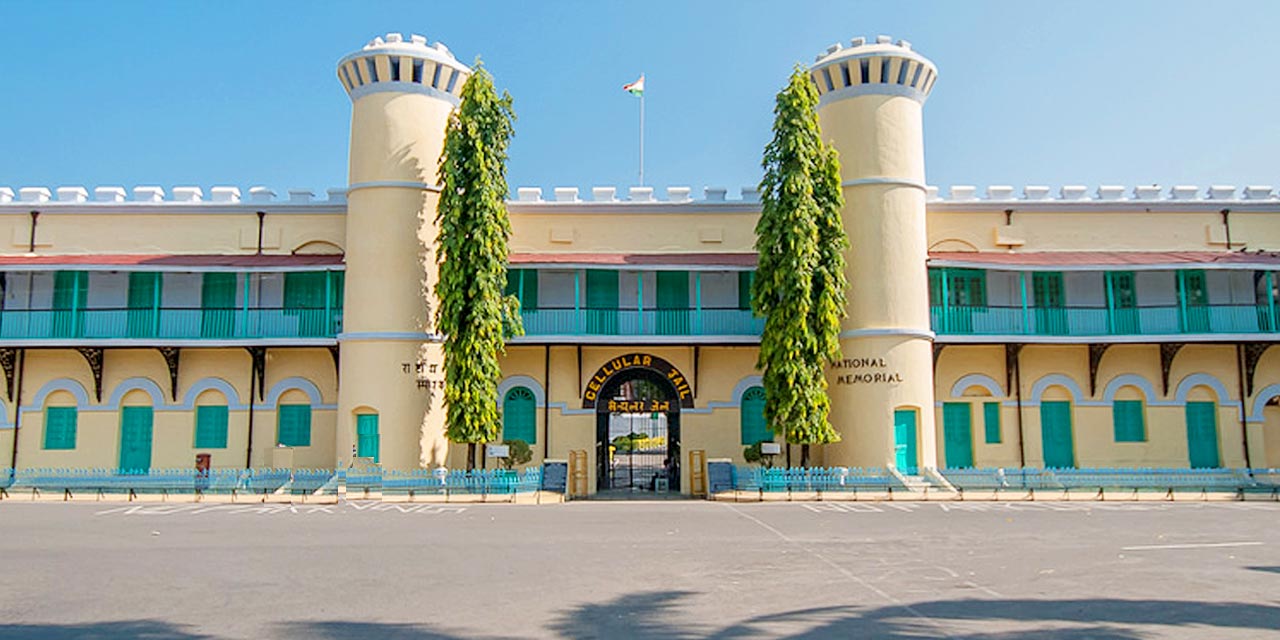
Let’s Visit Cellular Jail In Port Blair, Andaman
January 10, 2022 in Andaman and Nicobar, City Guide
Cellular village has seen many bloodsheds – it was made by the freedom fighters to be tortured here. Even before the jail’s construction, the island was a prison of India’s first war of independence of 1857. Cellular Jail In Andaman, reflects one of the murkiest chapters in colonial rule’s history. It is a mute witness of many heinous acts, and British soldiers put on the villagers. In 1906, the jail was constructed entirely and was named ‘cellular’ because cells were made for each prison rather than accommodating them in one documentary.
Initially, there were seven prolonged, puce-colored buildings with a central tower. Later, the building was subsequently damaged, leaving behind three wings intact. In the daily life of prisoners, executions were frequent, and many were made to undergo hard labor. Each cell of the prison is 13.5 feet high, 7 feet wide, and houses one convict in solitary confinement. Without a doubt, this structure is one of the most historically prominent buildings in India. For this reason and intent, cellular jail is a must-visit spot while on the trip to Andaman.
Getting there: To reach the cellular jail, one can take a taxi, rickshaw, bus, or minibusses from anywhere in the city.
Things to do & see in and around
Attending the sound and light show at the cellular jail in the evening is a must over a holiday in Andaman. It has been declared as the national memorial off. Lately, it houses freedom fighters’ photos and an exhibition gallery on the ground floor. The first floor of the building has an art gallery, Netaji Gallery, and a library on the freedom movement. A gallery dedicated to the first war of independence and a gallery of old photographs is also there in the museum. Right in the center of the jail, there’s swatantrya jyoti, erected in the memory of all freedom fighters.
Timings
- 09:00 Am to 12:30 pm, 01:30 pm to 04:45 pm (open all days except national holidays)
Timings of sound-light show
- Hindi: 06:00 pm & 07:15 pm, Tuesday, Thursday, Saturday, and Sunday
- English: 07:15 pm, Monday, Wednesday & Friday
The entry fee (sound-light show) for an adult is 50/- (INR)
Fee
- Entry fee (INR): Rs 30/-
- Camera: Rs 200/-
- Video camera: Rs 1000/-
- Film shooting per day with prior permission: rs 10000/-

Best time to visit
The best time to visit the cellular jail will be October to march. On average, the region witnessed an average temperature of almost 22° celsius, which is just the perfect to go for a sightseeing tour.
Visit MakeMyTrip for bookings. Also, have a look at our various monthly issues.

Travel to Andaman by Ship
January 10, 2022 in Andaman and Nicobar
The exotic Andaman Islands nestled in the southern tip of India are a great vacation spot any time of the year. The island paradise is home to historical sites, white-sand beaches, lush rain forests, and fantastic water adventures. While planning an Andaman trip in itself is an adventure, and taking a ship to Andaman will take it on a whole new level altogether. Here is all the information you need to take the sea route to reach Andaman.
Getting started
India has three ports to sail to Andaman – Kolkata, Chennai, and Vishakapatnam / Vizag. Each comes with different time durations. If you are not a resident of these cities, you’ll need to factor in costs for getting here. Depending on your ship’s schedule, you may also need to factor in costs for a minimum of 2 days’ stay in the city. Five ships are operating between the mainland of India and the island.
M. V. NICOBAR, M.V.NANCOWRY, M.V.AKBAR, V.HARSHAVARDHANA, and M.V.SWARAJ DWEEP.
Journey time
On average, you’ll need 55-70 hours when taking a ship to Port Blair, and the time varies depending on your location of origin.
- Chennai to Port Blair: About 60 hours
- Kolkata to Port Blair: About 66 hours
- Vishakapatnam to Port Blair: About 56 hours
- Distance by Sea (In Kilometers)
- Between Port Blair & Chennai: 1190
- Between Port Blair & Calcutta: 1255
- Between Port Blair & Visakhapatnam: 1200

Journey Cost
The journey fare on the ships ranges between Rs. 2000- Rs. 8000+ for tourists depending on your location and the type of stay you choose for your journey.
Here are your options on the type of ‘stay’ onboard
- Deluxe Cabin:- Two persons in one Cabin with T.V., Fridge on the top floor
- First Class:- Four persons in a one cabin
- Second Class:- Six Persons in one Cabin (Common toilet)
- Bunk Class:- Just like First Class train coach on the ground floor of the Ship
Procedure for purchasing ship tickets to Andaman
Direct ship ticket booking via STARS (Ship Ticket Advance Reservation System). Ship tickets to Andaman are available on a first-come, first-serve basis. There is one sailing from each port every week (may differ for Vizag). Most ticket bookings open a month in advance. You can either personally visit the port office in the cities from where you plan your journey or take the help of an expert tour operator who can purchase it for you at a great rate and right time. You’ll need two passport size photos, photo id proof, address proof, full advance payment, and the entry form duly filled out for submission.
- For booking ship tickets from Kolkata to Port Blair: Visit the office of the Shipping Corporation of India at Shipping Hosue,#13, Strand Road, Kolkata-17. You can also reach them via phone at (033)284456
- For booking ship tickets from Vishakapatnam to Port Blair: Booking of both cargo and passengers is made by an agent of the Shipping Corp M/S A.V. Bhanoji Rao Garuda Pattabiramaiah & Co. Ltd. At the private ticketing counter. You can visit them at Posr Boz no-17, Visakapatnam
- For booking ship tickets from Chennai to Port Blair: There are two locations in Chennai for ship ticket bookings depending on the ship you plan to take.
- For MV NANCOWRY and MV SWARAJDWEEP, go to the office of the Dy. Director (Shipping Services), Chennai adjacent to Gate No.1 of Chennai Port, Opposite Customs Office, Rajaji Salai, Chennai-1.
- For MV NICOBAR, MV AKBAR, and MV HARSHAVARDHANA, go to the Shipping Corporation of India(SCI) office at Madras(Chennai) Port Trust Rajaji Salai, Opposite Customs Office, Chennai-1. You can also reach them on the phone at (044)5231401
Seasickness and the ship journey
Although it may not sound like much to someone suffering from seasickness, the intensity of the problem varies according to the time of the year you are traveling.
- Months with very little seasickness: January, February, March, April, November
- Months with mild seasickness: May, October, December
- Months with average seasickness: June, July
- Months with high seasickness: August, September
- Ship travel to Andaman: Factsheet
The ships mentioned above are passenger ships and not cruise ships and hence have no entertainment options on board. You’ll be going abroad to enjoy the sea view mainly.
Carry reading material and indoor games to keep yourself entertained during the journey. A mobile loaded with movies is also a great way to pass your time.
Some ships offer limited choices in food, so it is advisable to carry biscuits, fruits, and even some pickles to add to your stash.
MV Akbar is the oldest ship among the lot.
In the 1950s, S.S. Maharaja was the only public mode of transportation to Port Blair. It made about 18 voyages a year or roughly one trip every three weeks!
Don’t forget to carry a strip of av mine tablets to help you through the journey.
Visit MakeMyTrip for bookings. Also, have a look at our various monthly issues.
