

Member Type Contributor


How Kullu Dussehra is celebrated?
October 16, 2021 in Fairs & Festivals, Himachal Pradesh
Kullu, the “Valley of Gods,” is one of the most breathtakingly beautiful parts of Himachal Pradesh. This serene hill town of Northern India is famous for attracting visitors from far and wide. Also known as “Kulanthapitha,” the valley has always been a favorite destination for travelers to experience the mystical land and rustic way of life.
The valley is also renowned for its grand Dussehra celebrations, the festival of a triumph of good over evil. Kullu Dussehra was declared an international event in 1972 and is witnessed by around 4-5 Lac people from across the globe.
Processions and Celebrations of Dussehra in Kullu
Dussehra in Kullu valley is a much-awaited and celebrated festival. This week-long festival starts with a procession of Lord Raghunath, along with other deities, carried on a Ratha across the town. The village gods and minor deities are also a part of this celebration. The center of the festivities is the Dhalpur maidan. The pleasant weather and breathtaking beauty of the valley, along with the celebrations, fill the visitors with eternal happiness and satisfaction. The festival gets merrier with dancing, drinking, and feasting for a week. The Kala Kendra festival is held at night, where several activities and cultural events take place. Thousands of people from all over the country and the world visit this place during Dussehra. The festival is very well organized, which only makes the experience worth remembering.
Last Day of Celebrations of Kullu Dussehra Festival
On the sixth day of the festival, an assembly of village Devtas takes place, which is a sight which one must watch. Sacrifices mark the last day of the celebrations; a fish, a crab, a rooster, a buffalo, and a lamb are sacrificed, and a huge bonfire is lit. This mega-festival witness the worshipping of around 250-300 idols from the adjoining villages of Kullu. The idol of Ragunath Ji is brought back to its original place through a grand procession. Various cultural processions from different countries are invited, almost like the processions during our national festivals. Thus one can see the difference between the Kullu Dussehra and the Dussehra being celebrated in different parts of the country. The grandeur and celebration at Kullu Dussehra is something that every visitor here will always treasure.

History of Kullu Dussehra – Legends of the Demi-Gods
The first Legend of Kullu Dussehra
This legendary festival has various myths, stories, and anecdotes attached; each tale beautifully captures the festival’s symbolic importance. There are two varying legends attached to the grand festival of Kullu Dussehra. The first one goes something like this. Maharishi Jamdagni, while returning from Kailash, carried a basket with images of eighteen different Gods. While he was crossing the Chanderkhani pass, a fierce storm scattered all the images across the Kullu valley. The people living in these hills saw these images taking forms of Gods. Thus, this beautiful place came to be known as the “Valley of Gods.” Furthermore, this is why the people living to worship these scattered images with great pomp and show.
The Second Legend of Kullu Dussehra
Another legend dates back to the 16th century. The origins of Kullu Dussehra can be traced back to the regime of Raja Jagat Singh, who was the ruler of Kullu at that period. He heard about a peasant who had treasured pearls of knowledge. So, he ordered the peasant to give those pearls to him or face death. The peasant who knew of the wickedness and greed of the Raja killed himself by jumping into the fire and then cursed the Raja. Out of guilt and self-disgust, Raja Jagat Singh saw worms instead of rice and blood in the pot of water. The Brahmin’s words, “Whenever you eat, your rice will appear as worms, and water will appear as blood,” echoed in his ears.

A panic-stricken Raja slowly began to fall ill. His disease could not be diagnosed by hakims, vaids, religious preachers, or courtiers. The spirit of the Brahmin continued to haunt him. Raja Jagat Singh finally sought help, and a holy brahmin (Pahadi Baba), Krishan Datt, then told him that the blessings of Lord Rama could cure him. He was asked that if he carried the idol of Lord Raghunath from Ayodhya to Kullu, the curse put on him by the peasant would be uplifted. Through many hardships, this finally happened, and the Lord Raghunath became the reigning deity of the Kullu valley. Interestingly, the weight of the deity increased when taken back to Ayodhya by the local people and decreased when taken towards Kullu. This very idol is the center of attraction in the Dussehra festival and is taken on a Ratha all across the hill town.
Visit Kullu Dussehra for more information. Also, have a look at our various monthly issues.

Mapping Diwali Celebrations Across India
October 16, 2021 in Fairs & Festivals
The Indian festival of Diwali is one of its most anticipated and widely celebrated festivals. Popular traditions mark it as the day Lord Ram defeated the demon, Ravana, and returned to his home city, Ayodhya. Southern parts of India call it Deepavali instead and celebrate the day Lord Krishna defeated the demon Narakasura. Irrespective of which mythological camp you fall in, Diwali or Deepavali is a time of joy and togetherness throughout the country. Moreover, in a diverse country, Diwali celebrations find resonance and retelling in multiple ways across the country.
The festival of light is celebrated across different religions and regions in India. The Hindus believe that Diwali is when Lakshmi, the Hindu Goddess of Prosperity, bless her people with wealth and happiness. The Jains celebrate the festival to mark the day when Lord Mahavira, the last of the 24 Tirthankaras, attained Nirvana. The Sikhs celebrate the festival as a remembrance to their teacher Guru Hargobind Ji, who was released from Mughal captivity in Gwalior on this day.
Following Diwali lights and stories across India
As you make your way across the country, Diwali celebrations and traditions take on intriguing manifestations. Each region focuses on a special mythological event or interpretation, with festivities dedicated to different deities.
Diwali in North India
The Indian festival of Diwali is one of its most anticipated and widely celebrated festivals. Popular traditions mark it as the day Lord Ram defeated the demon, Ravana, and returned to his home city, Ayodhya. Southern parts of India call it Deepavali instead and celebrate the day Lord Krishna defeated the demon Narakasura. Irrespective of which mythological camp you fall in, Diwali or Deepavali is a time of joy and togetherness throughout the country. Moreover, in a diverse country, Diwali celebrations find resonance and retelling in multiple ways across the country.

The festival of light is celebrated across different religions and regions in India. The Hindus believe that Diwali is when Lakshmi, the Hindu Goddess of Prosperity, bless her people with wealth and happiness. The Jains celebrate the festival to mark the day when Lord Mahavira, the last of the 24 Tirthankaras, attained Nirvana. The Sikhs celebrate the festival as a remembrance to their teacher Guru Hargobind Ji, who was released from Mughal captivity in Gwalior on this day.
The Indian festival of Diwali is one of its most anticipated and widely celebrated festivals. Popular traditions mark it as the day Lord Ram defeated the demon, Ravana, and returned to his home city, Ayodhya. Southern parts of India call it Deepavali instead and celebrate the day Lord Krishna defeated the demon Narakasura. Irrespective of which mythological camp you fall in, Diwali or Deepavali is a time of joy and togetherness throughout the country. Furthermore, in a diverse country, Diwali celebrations find resonance and retelling in multiple ways across the country.
The festival of light is celebrated across different religions and regions in India. The Hindus believe that Diwali is when Lakshmi, the Hindu Goddess of Prosperity, bless her people with wealth and happiness. The Jains celebrate the festival to mark the day when Lord Mahavira, the last of the 24 Tirthankaras, attained Nirvana. The Sikhs celebrate the festival as a remembrance to their teacher Guru Hargobind Ji, who was released from Mughal captivity in Gwalior on this day.
The eternal conflict between good vs. evil. Once it is time for the actual festival, Diwali celebrations in North India go on for five days, beginning with ‘Dhanteras’ and extending up to ‘Bhai Dooj.’
In the northern part of India, Diwali festivities revolve around Lord Rama and his triumph over Ravana. Lord Rama went into exile for fourteen years, during which the ten-headed demon, Ravana, abducted his wife, Sita. Lord Rama and his brother Laxman and beloved devotee Lord Hanuman fought an epic battle against Ravana and rescued Sita. Upon returning to Ayodhya, Lord Rama was welcomed by the village completely lit up with lamps to illuminate his path.
Diwali in North India starts with ‘Dhanteras,’ which is two days before the actual festival. It is a day when people buy gold, silver, or copper utensils, considered auspicious. Dhanteras is followed by ‘Chhoti Diwali,’ which finally culminates into Diwali and its grand celebrations.
Afternoons are spent decorating the houses, and the evenings are spent in devotion to Goddess Lakhsmi and Lord Ganesha. Homes are thoroughly dusted, cleaned, vacuumed, and turned inside out before decorations can begin! Families then come together to create beautiful rangolis, along with diyas, candles, and flowers placed all around the house. The light and color in the house seek to welcome the goddess Lakshmi and her blessings for wealth, prosperity, and peace in the family.
Special pujas dedicated to the goddess Lakshmi are an essential tradition in North India. During the Puja, families place a silver coin in a glass of milk that is then sprinkled in other house rooms for good luck. Families then come together to light diyas, exchange sweets, and burn crackers into the wee hours of the night.
The cities and towns of North India are iridescent at night! Each corner glows with mesmerizing light – from shops and markets to beautiful trees and once-lonely streets. Besides having to dodge crackers, you might also come across the staging of a Ram Lila in one of the street corners. It is a dramatic interpretation of the story of Lord Rama.
Diwali in East India
Diwali is a celebration of the triumph of good over evil in East India, but the mythological story here is a little different. Diwali celebrations – particularly in West Bengal – mark the day when Goddess Parvati took the form of goddess Kali to kill the demon Bakrasura. The festival is celebrated as Kali Puja in this country, and Goddess Kali rightly takes center stage in all festivities.

People in West Bengal and Assam perform Kali Puja on Diwali and offer prayers to their ancestors. In Bihar and Jharkhand, families observe Lakshmi Puja in the evening, and women make rangolis in their homes and temples.
The Rangolis in Eastern India is beautiful in its simplicity and elegance. Traditionally, the Rangoli was made with white rice paste and not colors. It is locally called ‘Alpona’ and decorated with red paste and small diyas in certain spots for a dash of warmth and color.
Some parts of eastern India also observe the tradition of Bali or sacrifice during the festival. A goat is sacrificed to the goddess on this day, which is cooked and feasted on later. The sacrifice is an old ritual and is considered extremely auspicious. It is no wonder why mutton curry is one of the most popular dishes during this time!
A common theme running throughout the Diwali celebrations in East India is the remembrance of ancestors. It is an occasion to honor the departed souls of loved ones. In Odisha, families pay respect to their ancestors by lighting earthen oil lamps on poles to guide them to heaven. In some parts of rural West Bengal, jute stems are burnt, and lights are placed on paths so ancestors might safely make their way to the afterlife.
Diwali in West India
Not one to be left behind, West India also celebrates Diwali and the arrival of Goddess Lakshmi in style. Making Rangolis is an integral and sacred part of Diwali celebrations across all states in western India. Families make intricate and colorful Rangoli patterns at the house entrance and in the puja area to welcome goddess, Lakshmi. Small footsteps of the goddess are made all over the house. The imprints of her footsteps are symbols of wealth entering the house along with the goddess.

Maharashtrians perform Lakshmi Puja in their homes and organize a feast known as “Faral.” There are also some places in the state where people perform rituals to worship their cattle. People’s houses are resplendent with rangolis and diyas, along with a kitchen overflowing with sweets and snacks! A fascinating tradition is the offering of a sweet called Naivedya to the goddess. It is a delectable treat made of coriander seeds and jaggery. It is also quite common for people to wake up early to bathe on Diwali after applying a powder made of gram flour called Uptan.
Gujaratis have a cause for double celebration! Not only is it Diwali, but the day also coincides with the Gujarati New Year and is considered immensely auspicious. Some houses in Gujarat leave a diya of ghee burning the whole night. The residues of the flame are collected to make kajal the next day. The women apply this kajal in their eyes to bring prosperity to the family in the coming year.
In Rajasthan, the famous temple of Nathdwara rings in Diwali with great religious fervor. The deity at the temple is washed with milk and adorned with gold ornaments. Also known as Govardhan Puja in many parts of Rajasthan and Gujarat, the ‘bhog’ prepared on this day is special for devotees.
The forts and palaces in Rajasthan are magnificent in their own right, but they look even more majestic lit up for Diwali celebrations. One can enjoy the display of fireworks or traditional dances that are specially arranged in the evening.
Diwali in South India
South Indians keep their Diwali celebrations simple and traditional. Celebrations involve meeting friends, family, and feasting on homemade delicacies. The festival is called Deepavali in this part of the country. In the south, Deepavali is a commemoration of Lord Krishna’s conquest over Narakasura, the powerful king of Assam. Deepavali in South India is celebrated across Tamil Nadu, Karnataka, Andhra Pradesh, Telangana, and Kerala.

Like all other parts of the country, the houses are spruced up one day before the main festival. In Tamil Nadu, the kitchen, in particular, is given a good scrubbing down. The stove is washed thoroughly and adorned with lime and kumkum. A massive vessel of water is placed on the stove for an oil bath the next day. People traditionally wake up early to bathe on the day of the festival, after which they apply an ayurvedic pasted called ‘Deepavali Legiyam.’ The Puja is dedicated to Lord Krishna. It marks the day of battle with Narakasura when Lord Krishna set free about ten thousand prisoners. Tamil Nadu also observes a unique tradition called ‘Thalai Deepavali,’ wherein newlyweds spend their first Deepavali after marriage in the bride’s maternal home.
While the celebrations are generally similar in the region, Karnataka’s narrative on Deepavali revolves around Goddess Lakshmi and Lord Vishnu. Lakshmi for wealth and prosperity and Lord Vishnu for his triumphant victory over Bali. It is considered lucky to buy gold on this day. People also celebrate by donating to the less fortunate. In Andhra Pradesh, many troops perform ‘Harikatha’ or the musical narration of the story of Lord Hari.
Diwali might be a festival diversely interpreted, but it brings people together across religious and regional lines – an occasion both of light and light-heartedness. In a country that takes its festivals seriously, Diwali celebrations are one of the grandest ways to experience the magic and madness of India.
Visit Diwali for more information. Also, have a look at our various monthly issues.

Where to see Ramlila performances across India?
October 16, 2021 in Fairs & Festivals
While it is exciting to participate in the Navratri celebration of our city, it is always more interesting to take a sneak peek at other places that are also celebrating the same festival. We have curated a list of the top four places across India where grand Ramlila performances take place.
The festive season in India is an elaborate package of rituals, customs, stories, recitals, and prayers that go on for days. Different regions across the country have their unique way of depicting each festival and honoring the deities. One such festival that is observed grandly is Dussehra. This 10-day festival marks the victory of Lord Ram over the demon king Ravana and is revered as the triumph of good over evil. Performances of Ramlila, a dramatic re-enactment of Ramayana, takes place during the nine days leading up to the 10th day, marking Dussehra when effigies of Ravana and his brothers Kumbhakarna and Meghanada are burnt. While it is exciting to take part in the customs of our city, it is always more interesting to take a sneak peek at other places that are also celebrating the same festival. We have curated a list of the top four places across India where you can savor the festival of Navratras.
Varanasi

Starting 475 years ago, the Chitrakoot ground in Varanasi is believed to be the venue of the first Ramlila. Millions of pilgrims, every year, visit the vast procession and performances held at Varanasi. The traditional setup for Ramlila is set at Ramnagar, located at the banks of river Yamuna. Kashi Naresh Maharaja Udit Narayan Singh initiated it in the year 1830 and since then has been operated by the Maharaja of Banaras along with Pt Laxmi Narayan Pandey and his family. The Ramnagar Ramlila is held for 31 days, and the location for each scene is different.
Lucknow
Lucknow, the city of Nawabs, is a pure example of culture and diversity. The Aishbagh, built by Asaf-Ud-Dowlah, is a popular spot for the celebration of Ramlila. Shri Ramlila Samiti is known to perform at this location, and people from all over the city collect during the festival of Navratri to watch the Ramlila performances. Prime Minister Narendra Modi visited the Aishbagh grounds during the celebration of Dussehra last year.
Ayodhya
The traditional celebration of Ramlila, which was abruptly stopped several years ago, will be finally resumed this year. Watching the stories of Lord Rama unfold at his birthplace has a different charm altogether. Different groups of actors and committees come to perform at this stage, and even Muslim youth participate in the celebration.
Almora
Nights come alive on the stages of Almora during the celebration of Navratri. Set in a musical format, the Ramlila style enacted here was developed by Uday Shankar during his stay in Almora. The Ramlila conducted in this city is surely a lifetime experience with a theoretical touch, music, and talented actors.

Delhi
Come to Delhi’s very own Ram Leela hosted by Shri Ram Leela Committee; this one is around 180 years old. It is, in fact, a celebration that was started by Mughal King Bahadur Shah Zafar and is the oldest in the city. You will find the best Ramlila performances across India. The performers parade down the lanes of Old Delhi before the show starts every day. It is quite a spectacle and not to be missed by residents and visitors alike. It is conducted at the Ramlila Maidan, opposite Zakir Hussain College.
Visit Ramlila for more information. Also, have a look at our various monthly issues.

Dussehra Celebration All Over India
October 16, 2021 in Fairs & Festivals
Dussehra, one of the main Hindu festivals, marks the victory of good over evil. It is celebrated on the tenth day of the month of Ashvin or Kartik, at the end of the nine-day festival of Navratri. Though the essence of Dussehra remains the same, the festival is celebrated all over India differently. Here is a look at some of the different shades of Dussehra across different regions of the country.
In the Southern States
Vijaya Dashami, Dasara, or Durgotsav is celebrated in a variety of ways in South India. The celebration ranges from praying to the Goddess Durga, Goddess Lakshmi, and Goddess Saraswati to lighting up temples and Mysore Fort.
Mysore
Known as Mysuru Dasara, Dussehra is the most celebrated festival of Mysore. The city celebrates Goddess Chamundeswari (another avatar of Goddess Durga), who defeated the demon Mahishasura on this auspicious occasion. The city is beautifully illuminated and looks no less than a fairyland. On the tenth day, a grand procession travels through the city from the Mysore Palace to the Bannimantap. The idol of Goddess Chamundeshwari rests atop an elephant adorned in a gold canopy.
Andhra Pradesh
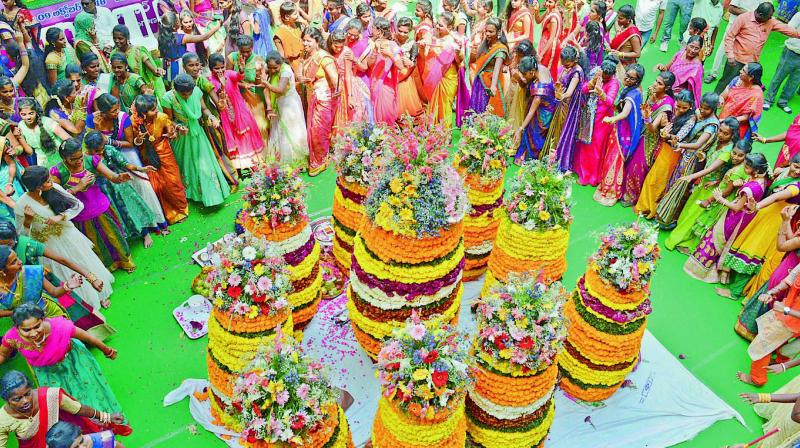
Placing huge idols of Goddess Durga Devi, praying to her nine different forms for nine nights, and Aayudha Pooja is some of the important events of Dasara in Andhra Pradesh. The festival is also celebrated by visiting different temples across the state, particularly the temple of Kanaka Durga Ammavaaru at Vijayawada and the Lord Venkateswara temple at Tirumala.
In the Northern States
In most North and West India, Dussehra is also known as Dasha-Hara, meaning Ten Days, and is celebrated in honor of Lord Rama. You can find hundreds of stages set up all across the city for Ram Leela – A beautiful rendition of the Ramayana that includes song, narration, dialogue, and recital. The sky-high effigies of Ravana, Meghanad, and Kumbhakaran are also burned in the open grounds.
Himachal Pradesh
In the Kullu region of Himachal Pradesh, Dussehra is celebrated with a large fair and parade, where at least half a million people gather.
Delhi
The capital city of India celebrates the triumph of Lord Rama in grand style. Artists enact Ramlila for a whole month preceding Dussehra. Temples are decorated beautifully with flowers and diyas & also, there are certain places where pandals of Goddess Durga are set up. All in all, Dussehra in Delhi is indeed the most lovely and extraordinary celebration of all time.
Rajasthan
In Rajasthan too, both Rama and Devi Durga are believed and celebrated by the Rajput warriors. Only the Gondi people, the scheduled tribes who speak the Dravidian language and are found in belts of Maharashtra, and Madhya Pradesh, celebrate Ravana.
In the Western States
In the western part of India, Dussehra is celebrated as Lord Rama’s victory over Ravana. The festivities take place over ten days. The idols of gods and goddesses are placed on the 1st day of Navratri and immersed in water bodies on the Dussehra or the 10th day. The devotees visit their friends and relatives and exchange sweets.
Gujarat
Gujarat’s Dussehra Celebration is a scene straight out of the movies. Dussehra is celebrated as Navratra in the city of Ahmedabad, and Garba is the prime attraction of the festival, which is a popular folk dance of Gujarat. Devotees fast all day long, and in the evening, after aartis, people clad themselves in the traditional attire and play Garba throughout the night. So next time, if you are in Gujarat during Dussehra, do yourself in ‘Kedias’ and ‘Lehenga-choli’ and dance to the beats of Garba and immerse yourself in the infectious energy of the city.
Maharashtra

The festivities start from the early morning and continue until night. People meet and greet each other and come together to celebrate the victorious day. Special winter delicacies are prepared to strengthen the immune system, and sweets are also distributed as a part of celebrations. In Maharashtra, this festival has some historical importance for Shivaji. He challenged the Mughal Empire back in the 17th Century and created his Hindu Kingdom in Western & Central India. He installed his soldiers to assist the farmers in agriculture and provided adequate irrigation to guarantee food supply. Now, post the monsoon season, and on Vijaya Dashami, these soldiers used to leave their villages and reassemble to serve the military and proceed to the frontiers for duty.
In the Eastern States
Dussehra is known as Bijoya Doshomi in West Bengal. This is the biggest festival in West Bengal. All through the Navratri, people go out of their house for pandal hopping and gorge on wonderful food (especially non-veg) when the rest of India restricts their diet. On Dussehra Celebration, the god idols are immersed in water that is marked by a great procession. The married women play “Sindoor-Khela,” where they greet each other with a touch of Vermillion. It is a mark of good luck and long married life. This ritual happens after greeting the Devi Durga idol with sweets and sindoor. After the immersion process, the younger people touch the feet of their elders, and the elders give sweets as a mark of their love and blessings.
Nepal
Apart from India and the places where Indians reside, there is another country where Dussehra is a major celebration. It is none other than Nepal. Many cultural rituals of Nepal match that of Hindus. In Nepal, this Vijaya Dashami is known as Dashain. Younger people visit the elders of the family and distant relatives come back home on this day. Even the students meet their school teachers in Dussehra. The elders bless the younger ones with a tilak on their forehead.
Visit Dussehra for more information. Also, have a look at our various monthly issues.

Top 4 Lakes To Visit In Leh Ladakh
September 6, 2021 in Leh Ladakh
1. Pangong Tso Lake : Ladakh Tourism

The most popular tourist attraction in Ladakh, Pangong Lake, is an endorheic (landlocked) lake situated 4350 meters. Also known as Pangong Tso, it is 12 kilometers long and extends from India to Tibet. Almost 60% of Pangong Lake lies in the Tibetan Autonomous Region. A unique feature is that it does not remain blue throughout the year or even the day. Instead, it changes colors from azure to light blue to green and grey too! It is as famous amongst tourists as Ladakh lake, where the Bollywood movie “3 Idiots” was shot.
Since the enthralling Pangong Lake falls on the Sino-Indian Actual Line of Control, an inner line permit is required to visit it. The Indian Nationals can quickly obtain individual permits while other foreign nationals need to get a group permit, with at least three persons in the group, accompanied by an accredited guide. The permit can be obtained at the tourist office in Leh for a small fee. Owing to its altitude, the Pangong Lake temperature ranges from -5°C to 10°C. As a result, it freezes entirely during winters despite its salinity. Read More.
2. Tso Moriri Lake, Leh Ladakh
Tso Moriri Lake is the largest high altitude lake in India, situated at 4,595m. Located between Ladakh and Tibet in the Changtang region, it is a twin to the Pangong Lake. This lake offers a scenic place of peace and tranquillity flanked by mountains, measuring about 28 km in length from north to south and 8 km wide. An inner line permit is required for visiting Tso Moriri.
The stunning Tso Moriri can be visited only during the summer months, starting from April when the lake starts to melt. May, June, July, and August are the peak tourist season. Tso Moriri remains inaccessible and entirely frozen from January to March.
Tso Moriri is a declared Ramsar site which means one cannot set up a tent or construct anything near the lake. It is also called the ‘mountain lake,’ owing to the peaks surrounding it, towering at the height of 2000 meters, shutting it off from the outside world. Several birds can be spotted at Tso Moriri, like the bare-headed goose, the great-crested grebe, the Brahmin duck, and the brown-headed gull. Himalayan hares are abundantly found here too. Read More.
3. Tso Kar Lake, Leh Ladakh
Tso Kar is a fluctuating salt lake located in the Rupshu Plateau of the scenic Ladakh Valley. It is popularly known as the White Lake owing to the white salt deposits it leaves on the shores. Tso Kar Lake is the most peaceful and calm of the three high-altitude lakes (Pangong Lake and Tso Moriri) and the smallest.
Tso Kar hosts varied flora and fauna, attracting a horde of bird watchers, especially during migration. The common birds found here are Brahmin ducks, bar-headed geese, and great crested grebe. The main attraction, however, is the black-necked crane. The black-necked cranes, known for their fidelity, come to Tso Kar to lay eggs. There are only a few yak sheds, a monastery, and a couple of nomadic families in the surrounding. The view of the lake at night in the moonlight is even more stunning.
Tso Kar lake Temperature & Best Time To Visit
The most comfortable time to go to Tso Kar is in June- July. Due to the high altitude, the temperature can go down to as low as -40 degrees Celcius during the winter months. During the summer months, the temperature at Tso Kar Lake rises to 30 degrees Celcius at times, with fluctuations during the day.
Where To Stay Near Tso Kar?
Tso Kar has the option of night camping although the number of tents isn’t significant. It would be better to make a booking in Leh to be safe. The tents are on the west end of the lake near the Manali-Leh road, about three km from the lake. Accommodation options are readily available at Leh. There are several hotels to suit almost every pocket or preference. Hence, it might be convenient to be based at Leh and take a day trip to the lakes.
Food At Tso Kar
Options for food at the lake are limited and basic and do not carry any significant food culture or specialty except popular and local preparation. One might find basic food at the tents set up here, but there aren’t any good eateries. It is best to carry your food for a trip to the lakes.
How To reach Tso Kar
Tso Kar is around 160 km from Leh. The most convenient mode of transport is to hire a taxi from Leh.
4. Yarab Tso Lake, Leh Ladakh

The holy Yarab Tso lake often referred to as “the hidden lake,” is the best-kept secret of Ladakh. Located near the Sumur Village, approximately 15 km from Diksit in the Leh Ladakh region, this gorgeous lake can only be reached by hiking uphill for 20 minutes.
Regarded as one of the holiest and high-altitude lakes in the Nubra Valley, Yarab Tso is highly revered among the region’s locals. It is advised not to wash your feet or try to swim in this enrapturing lake. Sit by the rocks, breathing in the unpolluted mountain air, relishing the sight of colorful prayer flags fluttering around the crystal clear aquamarine water, and experience the sense of calmness it brings.
How To Reach Yarab Tso
The Yarab Tso Lake can only be reached on foot, hiking for about 20 minutes from the Panamik Village near Sumur. To reach Panamik, hire a local taxi from either Leh or Ladakh.
For more information about Leh & Ladakh Tourism, visit https://leh.nic.in/tourism/
Also, have a look at our various monthly issues.

Tso Moriri Lake, Leh Ladakh
September 6, 2021 in Leh Ladakh
Tso Moriri Lake is the largest high altitude lake in India, situated at 4,595m. Located between Ladakh and Tibet in the Changtang region, it is a twin to the Pangong Lake. This lake offers a scenic place of peace and tranquillity flanked by mountains, measuring about 28 km in length from north to south and 8 km wide. An inner line permit is required for visiting Tso Moriri.
The stunning Tso Moriri can be visited only during the summer months, starting from April when the lake starts to melt. May, June, July, and August are the peak tourist season. Tso Moriri remains inaccessible and entirely frozen from January to March.
Tso Moriri is a declared Ramsar site which means one cannot set up a tent or construct anything near the lake. It is also called the ‘mountain lake,’ owing to the peaks surrounding it, towering at the height of 2000 meters, shutting it off from the outside world. Several birds can be spotted at Tso Moriri, like the bare-headed goose, the great-crested grebe, the Brahmin duck, and the brown-headed gull. Himalayan hares are abundantly found here too.
Flora & Fauna At Tso Moriri :
Flora: While the deeper parts of Tso Moriri don’t have much vegetation, the shallower parts are enriched with unique species of flora, which include Caragana and Astragalus, Potamogeton species, Carex, Primula, Pedicularis, among the popular mammals.
Fauna: Tso Moriri also prides itself in being home to various birds, mammals, and some carnivorous animals, including 34 species of birds, including 14 vulnerable water birds. Some notable species include Black-Necked Cranes, Bar Headed Geese, Brown-Headed Gulls, Tibetan Gazelle, Goa Antelope, Tibetan Ass, The Great Tibetan Sheep, Snow Leopard, and The Tibetan Wolf, among others.
Need to Know: The weather is quite unstable in this area, so it is always better to carry warm clothes.
Permits are required to travel to this lake. Tso Moriri is inaccessible by public transport; you should contact a tour operator at Leh who will arrange and include your permit in the package. You will need two photocopies of the relevant pages of your passport and visa. Once you have your permit, usually only valid for a maximum of seven days, make at least five copies before setting off, as checkpoints like keeping a copy when you log in.
How to Reach Tso Moriri :
Leh To Tso Moriri
The direct bus is available from Leh to Tso Moriri, run by Jammu and Kashmir State Road Transport Corporation(JKSRTC). Many bus stations are available, and tourists can take a taxi or ride motorcycles, which can be taken on rent. In all the cases, it takes 6 hours to reach Tso Moriri.
The route that is usually taken is Leh-Upshi-Debring- Puga- Tso Moriri.
Alternate Route: Leh- Upshi- Chumathang- Mahe-Puga- Tso Moriri.
Pangong To Tso Moriri
Direct Route: There is a route that goes directly from Pangong to Tso Moriri. It goes via Changthang (starting from Man). This route is only for Indian citizens, and one needs to avail of cab services or private vehicles to reach the destination.
The route is: Pangong- Man- Merak- Khaltse- Chusul- Tsaga La- Tsaga Village- Loma – Nyoma- Mahe- Sumdo- Tso Moriri
Indirect Route: There is a route that goes from Pangong to Tso Moriri, and that is a longer route compared to the direct route. Like the direct route, the only way to reach the destination is via cabs or private vehicles. This route is mainly for foreign tourists as they don’t have permission for the Changthang route. They have to take the route via Chumathang compulsorily.
The route is: Pangong- Lukung- Tangtse- Durbuk- Chang La- Sakti- Karu- Upshi- Kumdok- Kere- Chumathang- Mahe- Sumdo-Tso Moriri
Staying At Tso Moriri: Even though Tso Moriri is a declared wetland reserve and is prohibited from pitching tents around the lake, some camps and tents are set up a little further away. These can be booked for an overnight stay to enjoy the surreal view of the lake at sunrise. However, it is advised to plan a stay in the tents only if you are going in the summer months.
There are also many homestay options a little far away from Tso Moriri, but facilities like electricity, hot running water, etc., make it a little difficult to stay.
How To Obtain An Inner Line Permit To Visit Tso Moriri :
A travel agent or even your hotel in Leh can help in getting a permit. A typical Inner Line Permit would host only a 3-day validity. Ensure to have valid identification documents (Aadhar, Pancard, Voter ID, Driving License, Passport). And a sum of about INR 1000 for the entire procedure. Foreign visitors are expected to have a valid passport with a visa, or an OCI (Overseas Citizenship of India) card would do.
Travelers could also apply online for an Inner Line Permit by logging into the official website, https://lahdclehpermit.in/. Upon clicking on the ‘Issue’ button, press the ‘Domestic Clients’ section to proceed to the personal details page. It is essential to fill out personal identification details, such as Aadhar, Voter ID, or Passport verification. Once the entire session is complete, make sure to have a concrete copy of the permit. Either through a screenshot or a printout.
For more information about Leh & Ladakh Tourism, visit https://leh.nic.in/tourism/
Also, have a look at our various monthly issues.

Top 5 Hills & Valleys In Leh Ladakh
September 6, 2021 in Leh Ladakh
1. Umling La Pass, Leh Ladakh
 If you are a motorbike enthusiast, you would be surprised to know that Umling La is the world’s highest motorable road. It is filled with a lot of adventure and thrill. Umling La Pass is the most famous highest motorable road situated at an elevation of 19,300 feet, around 105 km from Hanle Village, located 275 km from Leh in the Ladakh district of Jammu and Kashmir. This fascinating pass stretches over 86 km, connecting two quaint villages lying on the Indo-China border, namely Chisumle and Demchok. Umling La Pass is a scenic place located in the most beautiful part of India. Situated at such a great height, this place is a must-visit for adventurous souls and nature lovers.
Apart from its altitude, the reason that makes Umling La Pass unique is the fact that this place is devoid of civilization and lies completely barren. It is spread prolifically and beckons people to explore its beauty. The continuous cold wind that blows here will make you feel refreshed, and the state of this place in its raw glory will make you awestruck. Since it is the highest motorable road, Umling La Pass is famous for motorbiking. You can take your motorcycle and have a ride through the Umling La. The picturesque landscapes and variegated rocky mountains will add to the experience of a motorbike and make the journey even more magnificent.
Best Time To Visit Umling La Pass
Situated at such a high elevation, the temperature in Umling La remains minus throughout the year. In the months of November to Mid-May, the roads are snowbound, as a result of which many people don’t visit Umlingla Pass in those months. In the month of June, the weather is clear. The road to Umling La is also kept open, which makes it an ideal time to visit.
Umling La Pass Permit
To travel to Umling La, you need a special Inner Line Permit (ILP), an official travel document issued by the Government of India to allow travel to the restricted area. This travel permit can be obtained in advance in Leh. Without this permit, you would not be allowed to travel to Umling La. So, make sure to obtain this permit well in advance for hassle-free travel.
How To Reach Umling La Pass
There are three ways in which you can reach Umling La.
Route 1: Leh to Hanle
This is a general route that people follow to reach Hanle. The total distance is 275 km, and it takes about 9-10 hours to reach the destination. To reach Hanle, the following route has to be followed:
Leh- Karu-Upshi-Kumdok-Chumathang-Mahe-Nyoma-Loma-Hanle
Route 2: Pangong Tso Lake to Hanle
There exists a direct route between Hanle, Tso Moriri, and Pangong Tso. One can exit Ladakh from Tso Moriri towards Manali-Leh Highway after visiting Hanle and Tso Moriri without returning to Leh. The following route has to be followed:
Pangong Tso-Man-Merak-Kakstet-Chusul-Tsaga La-Tsaga Village-Loma-Hanle
The overall journey culminates at 176 km and takes 8-9 hours. However, it must also be kept in mind that the above route is meant for Indian citizens as foreigners are not permitted to proceed beyond the Man-Merak Village route and must opt for alternative routes to reach Hanle.
Route 3: Hanle- Tso Moriri
After visiting Hanle, one can opt to go towards Tso Moriri through different routes. They are:
Hanle-Loma-Nyoma-Mahe-Sumdo-Tso Moriri
Hanle-Salsal La-Charchagan La-Tso Moriri
Hanle-Salsal La-Kyon Tso-Thitzorbit La-Nidar-Nyoma-Mahe-Sumdo-Tso Moriri
The total distance takes 161 km and about 8 hours to reach the destination in the first route. The latter two routes take less time, but permits through these routes are complicated to obtain. Hence, the first route is always preferred.
Vehicles To Opt For
Due to the journey, higher ground clearance vehicles are preferred, and 4*4 vehicles will surely add much-needed comfort and peace of mind. The road ahead of Hanle towards Photi La has some tricky sections in between, and then further to Umling La Pass, there could be few water crossings which could be nasty at times. The same goes for the route which goes via Ukdungle as well. Due to the above reasons, either a Sedan, Hatchback, or an SUV is preferred as all the vehicles above offer the required space and avoid any obstacle coming in the way, which is essential for the journey to Umling La Pass.
Accommodation Near Umling La
Since Umling La Pass is located very far from places in and around Ladakh, the closest accommodation would be available in Hanle Village. Many guesthouses and budget hotels are situated over there. To book the guesthouses/hotels, a person needs to contact the concerned Online Travel Agency(OTA) and reserve the rooms in advance to avoid overbooking.
Food At Umling La Pass
The nearest food joints that a person finds near Umling La Pass are Hanle Village, Koyul, and Demchok. A person mostly finds local dhabas in those regions or near army camps located at Umlingla Pass. If a person is staying in an accommodation in Hanle, they can request the guest house or the hotel in that region to pack some food for the journey ahead.
Acclimatization & Medical Facilities
Since Umling La Pass is far from significant places in Jammu and Kashmir, medical facilities may not be available in many places. The nearest care is available in Hanle Village or Rhongo Village, which is not very far from the former village. There are various army camps set up in that region. In case of an emergency, they may provide medical care as well.
Tips :
- Being at such a high altitude, the air is skinny. So, if you suffer from any heart condition or respiratory disease, you shouldn’t travel to Umling La.
- Pack enough clothes to keep you warm otherwise, the icy temperature here will freeze you to death.
- Carry extra supplementary oxygen with you as it will help you breathe when the air is skinny.
- Altitude Mountain sickness is pretty common here, so make sure that you are completely prepared before deciding to travel to Umling La.
- It is recommended to everyone to pack all the necessary food items for the journey to Umlingla Pass as dhabas or local restaurants may not be available in nearby places.
2. Taglang La, Leh Ladakh
The Tanglang La is a high mountain road located on the Leh-Manali highway just a few kilometers from Leh. At the height of 5,358 meters, it is the second-highest mountain pass after Khardung-La Pass and the 12th highest motorable pass. This popular spot in Ladakh is known for being the second-highest mountain located in the Zanskar range. The pass summit is breathtaking and is adorned with several prayer flags.
The Tanglang-La has in the past served as a trade route and a religious center. Known for its unique and dramatic landscape, the Taglang La pass provides a blissful experience in the Himalayan trails with greenery.
The pass provides for a highly thrilling adventure, but it can be nerve-wracking for first-time riders because of its unpredictable turns and the extreme cold, which can often dip to -35 degrees Celsius. At these temperatures, oxygen supply can get dangerously low, and riders and tourists also often fall sick while driving to this pass.
Best Time To Visit
The best time to visit the pass is April to June as the place is opened up for tourists by the Border Road Organisation (BRO). It can, however, not be passed during winters.
Tips :
- Keep in mind that this trip should be avoided if you suffer from respiratory or cardiac problems.
- The drive is gorgeous, but also extremely dangerous. So it is advised to have with you someone who knows the place or has been before & can drive on mountain roads. As the Highway is used every day by locals who want to reach Leh, and hence, the driving can be stressful and dangerous.
How To Reach Taglang La
The Leh-Manali highway leading to Tanglang-La is paved, i.e., the ice has been cleared for vehicles to pass, except a concise section unpaved, just north of the pass. However, the pass itself is well-paved.
The ascent is where it gets tricky – the road to the summit is asphalted, which means that it consists of 20km of loose stone road and a decreased oxygen level, half of that at sea level.
The Pass can only be reached via the Leh-Manali Highway, which provides a scenic, beautiful landscape to feast your eyes on from every angle.
3. Nubra Valley, Leh Ladakh

Nubra Valley lies in the union territory of Jammu & Kashmir, at a distance of around 140 Km from Leh. Located on the ancient Silk Route, the valley has Shyok and Nubra rivers snaking through it and some beautiful monasteries.
Most tourists travel to the Valley from Leh through Khardung La. The region is currently under military supervision because the road further leads to the Siachen base camp. And it happens to be the highest battlefield in the world. All foreign nationals need to get a protected area permit, and Indian travelers must obtain an Inner Line Permit to enter the Nubra valley. It would be best if you handed over the photocopies of your travel permits to the soldiers in the pass.
With arid mountains in the backdrop, Nubra Velly is famous for the Bactrian camel rides. Bactrian camels are of the rarest sort, having two humps, and were the primary source of transportation in the silk route. It is also famous for its Hippophae shrub, popularly known as Leh Berry.
In Diksit, you can buy some lovely Kashmiri or Tibetan artifacts, Pashmina shawls, woolen socks, almonds, apricots, apples, and other things that define Kashmir. Read More.
4. Zanskar Valley, Leh Ladakh

Located in the Kargil district to the east of Ladakh (around 105 km) lies the bewitching Zanskar Valley. Pronounced as Zahar or Zangskar locally. It is separated from Ladakh by the Zanskar mountain range, part of The Tethys Himalayas. Zanskar is known for raw landscape and is mostly traveled for trekking and river rafting.
The easiest way of reaching Zanskar is from Kargil through Suru Valley. The semi-desert region is flanked by snow-capped mountains and sparkling clean rivers along with distinct flora and fauna. It is cut off from the rest of the world for over nine months because of heavy snowfall in the region. The only way to reach Zanskar from December to February is to undertake the challenging Chadar Trek. Read More.
5. Magnetic Hill, Leh Ladakh

The famous Magnetic Hill of Ladakh is a cyclops hill. Here, vehicles defy the force of gravity and move upwards on the hill when parked at the marked location. To experience this phenomenon, park the car in neutral gear in the yellow box marked a few meters ahead of the Magnetic Hill road. From this point, the car starts moving at a speed of 20 km ph.
Even though there are some myths regarding the mysterious magnetic hill, the fact is that the layout of the area and the surrounding hills give it an optical illusion. The downhill road appears to be an uphill road that leads to the car slowly gaining momentum. It seems to be going uphill against gravity when it is rolling downhill. Read More.
For more information about Leh & Ladakh Tourism, visit https://leh.nic.in/tourism/
Also, have a look at our various monthly issues.
“Orchard of Ladakh” Nubra Valley Tourism
September 5, 2021 in Leh Ladakh
Nubra Valley lies in the union territory of Jammu & Kashmir, at a distance of around 140 Km from Leh. Located on the ancient Silk Route, the valley has Shyok and Nubra rivers snaking through it and some beautiful monasteries.
Most tourists travel to Nubra Valley from Leh through Khardung La. The region is currently under military supervision because the road further leads to the Siachen base camp, which happens to be the highest battlefield in the world. All foreign nationals need to get a protected area permit, and Indian travelers must obtain an Inner Line Permit to enter the Nubra valley. It would be best if you handed over the photocopies of your travel permits to the soldiers in the pass.
With arid mountains in the backdrop, Nubra Velly is famous for the Bactrian camel rides. Bactrian camels are of the rarest sort, having two humps, and were the primary source of transportation in the silk route. It is also famous for its Hippophae shrub, popularly known as Leh Berry.
In Diksit, you can buy some lovely Kashmiri or Tibetan artifacts, Pashmina shawls, woolen socks, almonds, apricots, apples, and other things that define Kashmir.
What Is The Best Time To Visit?
April to June and September-October is the best time to visit the Valley, owing to the clear skies and pleasant climate. April to June is the summer season in Nubra characterized by a bright sun. While September to June experiences a little chilly weather making it ideal for sightseeing. From October to March, the Valley remains inaccessible because Khardung La pass closes down during these months.
For more information about Leh & Ladakh Tourism, visit https://leh.nic.in/tourism/
Also, have a look at our various monthly issues.

Top 5 Buddhist Temples In Leh Ladakh
September 5, 2021 in Leh Ladakh, Pilgrimages
1. Shanti Stupa, Leh Ladakh

The Shanti Stupa in Leh is a magnificent white-domed Buddhist monument. It is located atop a steep hilltop at a dizzying height of 11,841 feet. It is a religious place for Buddhists as it holds the relics of Buddha, consecrated by the 14th Dalai Lama.
It is also popular amongst tourists as it offers a sweeping view of Leh and the nearby Changspa village. Shanti Stupa looks exceptionally beautiful during the whole moon night when the moonlight naturally illuminates it.
Shanti Stupa was constructed in 1991 by Japanese Buddhist Bhikshu Gyomyo Nakamura. The construction was jointly done by the Japanese and Ladakhi Buddhists to mark the completion of 2500 years of Buddhism and promote world peace. It is a part of the peace pagoda mission, which aims to spread peace through the preaching of Buddha. Shanti Stupa is a perfect getaway for both- those looking to obtain peace from offering prayers to God and those waiting to be mesmerized by nature’s wondrous beauty. Read More.
2. Thiksey Monastery, Leh Ladakh

Thiksey Monastery is a Tibetan-style monastery located 20km south of Leh, on Leh Manali highway. The twelve-story monastery is located on top of a hill, giving magnificent views of the town and the Indus valley below. The main highlight of Thiksey is the Maitreya Temple which houses a 15-meter high Maitreya Buddha statue. It covers two stories of the building and is the giant statue in Ladakh.
Thiksey consists of numerous white buildings arranged in hierarchical order, which stand out against the rocky golden brown hills. It resembles the Potala Palace in Lhasa, Tibet. Thiksey consists of 10 temples and is currently home to over 100 monks. The monastery houses Buddhist stupas, thangkas, swords, wall paintings, and statues. Other main attractions at Thiksey are Tara Temple, Lamokhang Temple, Assemnly Hall, Nunnery, Library, and the rooftop. The monastery also serves as a residential monastery for monks. Read More.
3. Shey Monastery & Palace, Leh Ladakh

Shey Monastery or the Shey Palace is an ancient monastery located 15km from Leh. It once served as the summer capital of Ladakh but is mostly in ruins now. Located on top of a hillock, it offers stunning panoramic views. The highlight of the Monastery is the 39ft tall Shakyamuni Buddha statue which is the second-largest Buddha statue in Jammu & Kashmir. Special permission needs to be taken to visit the Monastery.
Shey Monastery is often visited along with the surrounding Thiksey Monastery, Hemis Monastery, Stakna Monastery, and Matho Monastery. The monastery complex is adorned with various murals and rock carvings of Buddha. Four hundred meters away is another shrine that houses the Shakyamuni Statue in the sitting posture. The best time to visit the Monastery is during Shey Rhupla and Shey Doo Lhoo festival celebrated in July or August. In memory of his father, the Shey Palace was built in 1655 by Deldan Namgyal, the king of Ladakh.
Tips :
- The inner sanctum of the Monastery is generally closed.
- No photography is allowed inside the inner sanctum.
- BSNL and Airtel postpaid numbers work well here
- Shey Monastery can be visited while going to or returning from Pangong Lake.
- There is a 4km long hiking trail to Shey Monastery through Ladakh’s chorten fields.
How To Reach Shey Monastery & Palace
Shey Monastery is located on the Leh Manali highway towards the Thiksey Monastery route. It can be reached easily by hiring a taxi or on a bike. Some buses are also available from nearby places.
4. Hemis Monastery, Hemis
Hemis Monastery is a Buddhist monastery located 45 kms south of Leh. Built by the Ladakhi king Sengge Namgyal, it is ranked as one of the wealthiest monasteries in India. Hemis Monastery is most visited during the annual Hemis Festival, held every year in early June.
Hemis Monastery houses a spectacular copper statue of Lord Buddha along with stupas made of gold and silver, thangkas (a painting on cotton or silk depicting Buddhist deity), and murals. The vast courtyard and a picturesque verandah are adorned with colorful paintings of Buddhist Kalachakra. Hemis Monastery belongs to the Red sect or Dugpa Kargyupta order of Buddhism. All four sides of the Monastery are decorated with colorful prayer flags which flutter in the breeze and sends out prayers to Lord Buddha. It is also an institution for the teaching of Tantric Vajrayana.
Historical Significance
The history of Hemis Monastery goes way back to the middle ages. According to the legend, it is dated to the arrival of Naropa, a prominent Buddhist teacher, who arrived at some point in the 11th century. He was once the head of a monastery in Nalanda, from where he was forced to flee due to a sacking by an invading Muslim army. After that, he relocated to the Hemis Monastery and established the Kagyu school of Buddhism here. Written documentation by A. Grunwedel about the life of Naropa and his disciple Tilopa was later found in the neighborhood of the Monastery. It states that he met with Tilopa, a Tantric scholar, and assigned him to translate Marpa.
After its establishment, the Monastery went into oblivion for several centuries. In the 1630 Stagsang Raspa Nawang Gyatso founded it which was then re-established in 1672 by the Ladakhi king Sengge Namgyal. It is owned by Drukpa Lineage or the Dragon Order of Mahayana Buddhism. His Holiness, the Gyalwang Drukpa, is the supreme spiritual head of this sect.
Another very odd legend associated with this place is a lost Christian gospel discovered here in the 19th century. The gospel indicated that Jesus Christ spent a few years in India, studying and meditating as a Rabbi. After a few years, it was proved that the gospel was a hoax. However, there are still many who believes that there might be some truth in it.
The Architecture Of Hemis Monastery
Hemis Monastery is an awe-inspiring site covering a large rocky hill. It has Tibetan-style architecture, which is very colorful and attractive. Surrounding the beautiful Monastery is a few more building intermingled with sparse vegetation and trees. The Monastery itself is like a maze of buildings, courtyards, and alleys. It is divided into two main parts – the assembly hall, known as Dukhang, and the main temple, known as the Tshogkhang.
The walls of the main building have a serene white color. The entrance to the complex is through a big gate that reaches the rectangular courtyard. The courtyard is also the venue for all the functions and public celebrations. The place is wide and open and has two raised platforms and a sacred pole in the center. It has a raised dais with a richly cushioned seat and a Tibetan table containing ceremonial items such as holy water, uncooked rice, and incense sticks.
The walls are decorated with paintings of religious figures. The Hemis Monastery also houses several gold statues and a stupa decorated with precious stones. It also has a collection of thankas (paintings) displayed only once in 11 years during the Hemis Festival. On the north side of the Monastery are two assembly halls that can be accessed from the stairs. As in most Buddhist Monasteries, the wheel of life and guardian deities can be found here. It also houses a library of Tibetan religious books.
Hemis Festival
The Hemis festival is dedicated to Buddhist Lord Padmasambhava, whose actual name was Guru Rinpoche. He is a prominent figure within the ranks of the Buddhism leadership hierarchy. He is believed to have been born on the 10th day of the fifth month of monkey year. His life’s mission was to enhance the spiritual experience of all living beings in the world. This Hemis Festival at the Monastery is celebrated to acknowledge his life, memories, and contributions. The observance of various spiritual customs in the festival is believed to give strength and good health.
The festival takes place in the vast and picturesque courtyard of the Hemis Monastery in June /July for two days.
Musicians play traditional music in the courtyard, and next to them, a place is assigned for the Lamas to sit. Several masked dances are also held on this day. The famous thankas showcased once in 11 years during the Hemis festival were shown in 1980, 1991, 2002, and 2013. The next showcase is in the year 2024.
During the festival, the locals dress up in traditional Tibetan clothes. Men wear cummerbunds, and women wear vibrant headgears and jewelry. The Lamas perform make dance known as Chaam, accompanied by drums, horns, and cymbals. This Chaam dance is a sacred Tibetan dance performance and is a fundamental part of the tantric tradition. The festival is a major tourist attraction.
How To Reach Hemis Monastery
Both buses and private cars/jeeps are available for reaching Hemis. Two routes are available to reach by road- Srinagar-Leh highway and Manali-Leh highway. It would take an average of 1 hour to reach the Hemis Monastery from Leh.
Apart from that, you can also hire a bike (Royal Enfield) to reach the Monastery.
5. Likir Gompa, Leh Ladakh

The Likir Monastery is the oldest in Ladakh, located around 52 km from Leh in the scenic Likir village. Belonging to the Gelugpa sect of Tibetan Buddhism, the main attraction is a 75 feet large seated statue of Maitreya Buddha gilded in gold. There are also various paintings of guardian divinities, murals, and thangkas that adorn the walls of assembly halls.
The Monastery is the seat of Ngari Rinpoche, the youngest brother of the Dalai Lama. ‘Likir’ means ‘The Naga-Encircled,’ representing the bodies of two great serpent spirits- Nanda and Taksako. It is believed that these serpents had guarded the Monastery.
Currently, there’s a school inside the Likir Monastery run by the Central Institute of Buddhist studies and a library open to visitors where old manuscripts, volumes, and books on Buddhism and the teachings of Tsong Khapa are housed. A temple named Gonkhang is also present in the complex having images of Sakyamuni and Tsongkhapa. The annual Likir Monastery festival is the most enticing event, including Cham dance performed by lamas and an exhibition of monastery collection.
Architecture & Layout Of Likir Monastery
Likir Monastery, perched on a hill in Likir village, is one of the oldest and well-maintained monasteries in the region. The white-colored buildings with red roofs and a massive 75 feet tall statue of Buddha offer a scintillating view. With wall paintings, art and crafts, the Monastery perfectly showcases the principles and culture of Buddhism.
To the right of the central courtyard, there is the main assembly hall or Dukhang. Both sides of the entrance are painted with the Guardians of the Four Directions. There is also a painting of a Wheel of Life mandala held by Yama. The hall has six rows of seats for the lamas and a throne for the head. It also contains statues of Bodhisattva, Amitabha, three giant statues of Sakyamuni, Maitreya, and Tsong Khapa, the yellow-hat sect’s founder. The walls are lined with glass bookcases containing the Kandshur (the 108 volumes of the Buddha’s teachings) and the Tandshur (the 225-volume commentary on the Kandshur).
In the new Dukhang, which is around 200 years old, the left wall shows different ways in which lamas wear their robes while the right wall shows how lamas should behave in a gompa. There is also an image of Avalokitesvara with 1,000 arms and eleven heads. The head lama’s room, known as Zinchun, is on the first floor of the Monastery. When Dalai Lama visits Likir, he stays in this room. Images of various lamas characterize it. The most striking are the images of the 21 Manifestations of the White Tara, as each image is adorned with rich fabric.
How To Reach Likir Monastery
There are two primary routes to reach Likir Monastery by road- the Manali-Leh route (473 km) and the Srinagar-Leh route (434 km). The first route remains open from July to September, while the other remains open from June to October. Self-driving or hiring a taxi is the best option. Alternatively, you can hop on to local buses, which run from 5:30 AM to 3:30 PM between Leh and Likir
For more information about Leh & Ladakh Tourism, visit https://leh.nic.in/tourism/
Also, have a look at our various monthly issues.
Shanti Stupa, Leh Ladakh
September 5, 2021 in Leh Ladakh, Monuments
The Shanti Stupa in Leh is a magnificent white-domed Buddhist monument. It is located atop a steep hilltop at a dizzying height of 11,841 feet. It is a religious place for Buddhists as it holds the relics of Buddha, consecrated by the 14th Dalai Lama.
It is also popular amongst tourists as it offers a sweeping view of Leh and the nearby Changspa village. Shanti Stupa looks exceptionally beautiful during the whole moon night when the moonlight naturally illuminates it.
Shanti Stupa was constructed in 1991 by Japanese Buddhist Bhikshu Gyomyo Nakamura. The construction was jointly done by the Japanese and Ladakhi Buddhists to mark the completion of 2500 years of Buddhism and promote world peace. It is a part of the peace pagoda mission, which aims to spread peace through the preaching of Buddha. Shanti Stupa is a perfect getaway for both- those looking to obtain peace from offering prayers to God and those waiting to be mesmerized by nature’s wondrous beauty.
Structure Of Shanti Stupa :
The Shanti Stupa is constructed on two levels. The first level houses the gold embellished statue of the Buddha and the Dharmachakra (the wheels of life), where the devotees move the wheels while they pray to God for their prosperity.
The second level of the stupa depicts the life, nirvana (enlightenment), and the death of Buddha. You can take a round of the stupa, praying and enjoying the astonishing beauty of Ladakh.
The Architecture :
Buddhist stupas serve as a marker for a sacred space representing the grand Gautam Buddha’s burial mound. India has few of the oldest stupas of the Buddhist culture. The Shanti Stupa’s architecture imitates that of the much older stupas. Its architectural style is quite different from the typical Ladakhi architecture, making it a unique and popular attraction.
The Shanti Stupa is approached by a climb of 500 steps with Buddhist stone pyramids flanked on both sides. The structure is milk-white and is two stories tall with a dome on the top. The dome or the mound recalls a mound of dirt used to cover the Buddha’s remains. The square railing on top of the dome signifies a fence around the mound and is a marker of a sacred site.
Above the square edifice is a central pillar that holds an umbrella; this is called the ‘chhatra,’ representing the pivot of the universe – where the divine ascends from the heavens and becomes accessible to humanity. The walls of Shanti Stupa are painted with colorful reliefs that depict the milestones in the life of Gautam Buddha: his birth, his fight against devils, his victories over injustice, and his death. There is a vast meditation hall inside where you can sit, chant the Lord’s name, meditate and find your inner peace.
For more information about Leh & Ladakh Tourism, visit https://leh.nic.in/tourism/
Also, have a look at our various monthly issues.
