May is the month most travel magazines quietly skip when they talk about wildlife. The heat is real, the afternoons are long and still, and anyone who has sat in an open Gypsy at two in the afternoon in central India knows that the romance of the jungle can feel very far away. And yet this is the issue we wanted to make for May 2022, because the hot months are when many of India’s forests are at their most readable.
Why the heat matters
By May, the grass in most of the dry deciduous parks has burned down or been grazed short. The leaves have fallen from many trees. Waterholes have shrunk to a handful of reliable pools, and animals that spread out across the landscape in winter are now pulled toward the same few places. Naturalists have long said that summer is the season for sightings, and while no one can promise a tiger, the logic is sound: less cover, fewer water sources, more predictable movement.
This is also the first full summer in which many people feel comfortable travelling again after two difficult years. Forest departments have reopened zones, safari booking portals are busy, and the lodges around the better-known parks are hopeful. We think that is good news, but it comes with a responsibility. A crowded safari track in May, in heat that stresses animals as much as people, needs patience from visitors.
What is in this issue
We open with the parks that already have a place on most wishlists: Jim Corbett, the sanctuaries of Kerala, Ranthambore, and the wild corners of the North East and Sikkim. Alongside these, we have added four new pieces written for this month.
- A look at Ranthambore after the first real heat, and how the summer routine of the park changes what you see.
- Kaziranga at the edge of the monsoon, when the park is close to closing and the floodplain begins to change.
- A practical guide to which parks are open in May and which are about to shut for the rains.
- A short note on night safaris in Corbett, a topic many readers ask us about.
How to travel in the hot months
We would gently suggest a few habits. Book morning safaris where you can; the light is better and the heat is easier on everyone. Carry more water than you think you need, a cotton scarf, and a hat. Do not ask your driver to push closer to an animal, and do not reward the ones who do. Remember that a tiger resting in shade at midday is a tiger trying to survive the same heat you feel, and it deserves space.
Rules on safari timings, zone allocation and permits are set by each state’s forest department and can change from season to season. Please check the official booking portal for the park you plan to visit rather than relying on an old blog post, including ours. Where we mention typical closing dates or timings, treat them as a guide and confirm them before you travel.
A word on the monsoon closure
Most of India’s core tiger reserves close their core zones around the end of June for the monsoon, usually reopening in October. Some buffer zones stay open. That makes May and early June the last window of the season for many parks, and it is part of why we chose this theme. If you have been waiting for the right moment for a first safari, this may be it; if you cannot handle the heat, it may be wiser to wait for the cooler months after the parks reopen.
What a summer safari actually feels like
A typical May morning drive starts before sunrise. The first hour is cool enough to be pleasant, and it is often the best of the day: birds are loud, langurs are moving, and deer cluster near the edges of open meadows. By eight the light hardens. By ten the forest is quiet, and most drivers are already turning toward the gate. Afternoon drives start in serious heat and only begin to come alive in the last hour before closing, when animals move back toward water.
Many first-time visitors are surprised by how much time is spent waiting. A good guide will park near a waterhole and switch off the engine, and nothing may happen for twenty minutes. Then a sambar alarm call carries across the valley, the guide’s posture changes, and everyone in the vehicle suddenly understands why they came. Summer safaris reward this kind of patience more than any other season.
The animals beyond the tiger
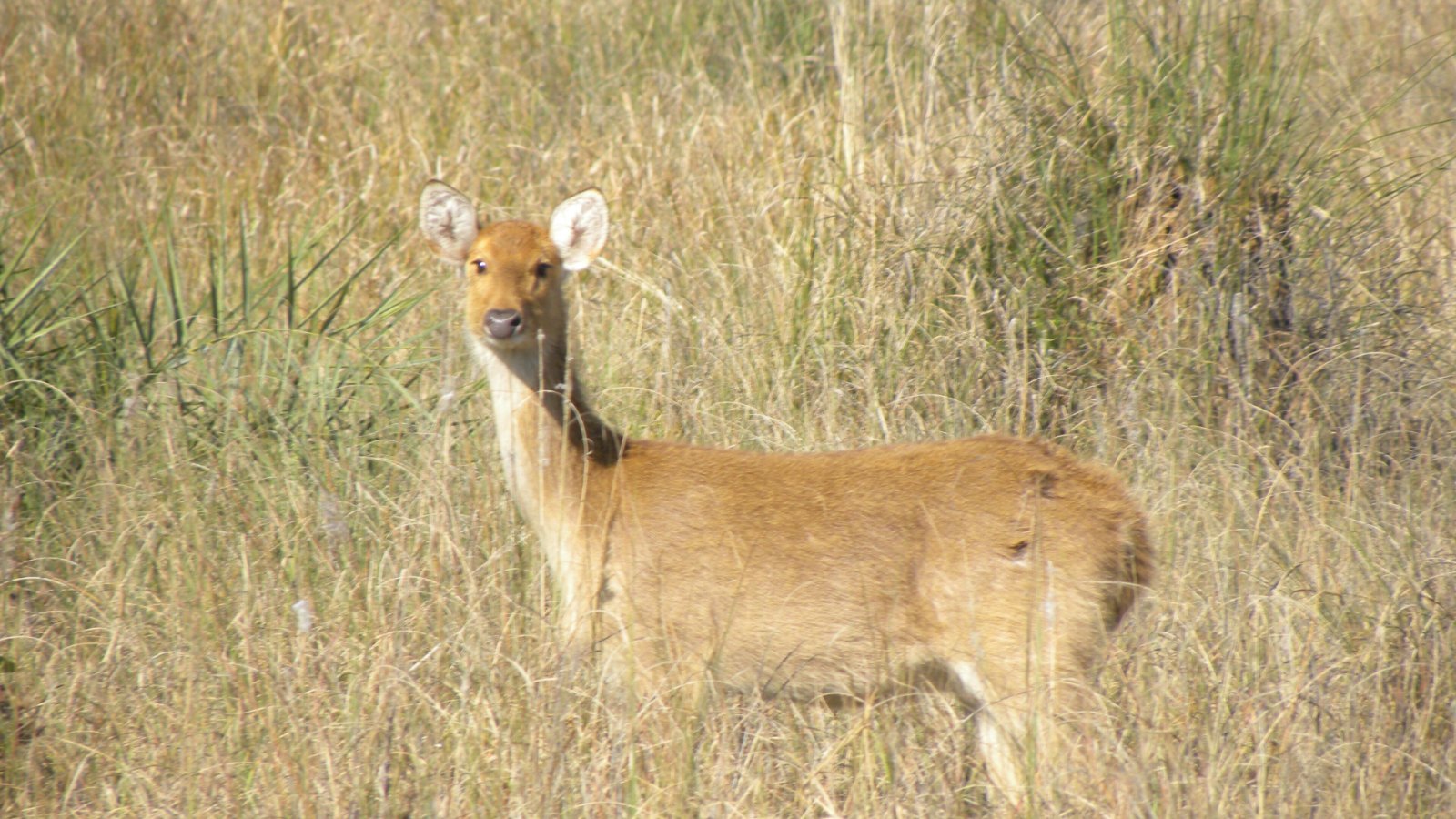
We have tried, in this issue, to avoid writing only about tigers. In the hot months you are also likely to see large herds of chital, sambar wallowing in shallow pools, wild boar, jackals, and in some parks sloth bears foraging for fruit and termites. Birdlife is different from winter, as many migrants have left, but resident species such as the Indian roller, the crested serpent eagle and various kingfishers are easy to find near water. In Kerala’s forests, elephants are the main draw, and in the North East the one-horned rhino is the animal most visitors remember.
Seeing a forest through its smaller lives makes a trip far more satisfying than a tiger count. It also takes the pressure off guides, who are too often judged by sightings alone.
Choosing where to go
If you have only one summer trip, think about how much heat you can manage and how far you can travel. Parks in the Himalayan foothills, such as Corbett, are a little more bearable than those in the plains of central India and Rajasthan, though they still get very hot. Kerala’s sanctuaries are humid rather than scorching and sit closer to the start of the southwest monsoon. The North East is already turning wet by May, which brings its own rewards and its own closures.
Whatever you choose, give yourself at least two or three drives. A single safari is a lottery; three or four give a forest time to show you something.
Looking ahead
Next month we turn to Sri Lanka, a country going through a very hard year. We will write about it with care, and with an eye on what travellers should know before they decide to go.
Thank you
As always, thank you for reading and for writing to us. Many of the questions in this issue came from your emails, and we hope the answers help you plan a trip that is good for you and gentle on the forests you visit.
Khushi Anand, Editor
More from Issue 37
- Jim Corbett National Park
- Wildlife Sanctuaries of Kerala
- Ranthambore National Park
- Haridwar Travel Guide
- Explore Wilds of the North East India
- Envelope Into The Wild Of Sikkim
- Night Safari in Jim Corbett
- Ranthambore After the First Heat
- Kaziranga at the Monsoon Edge
- Parks Open in May, and the Ones About to Close