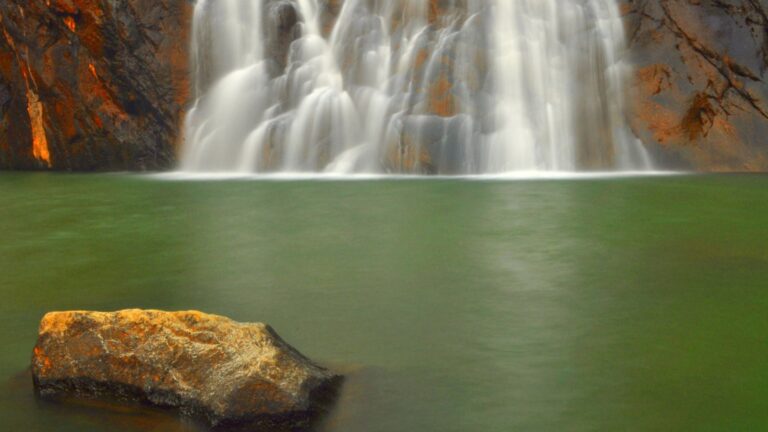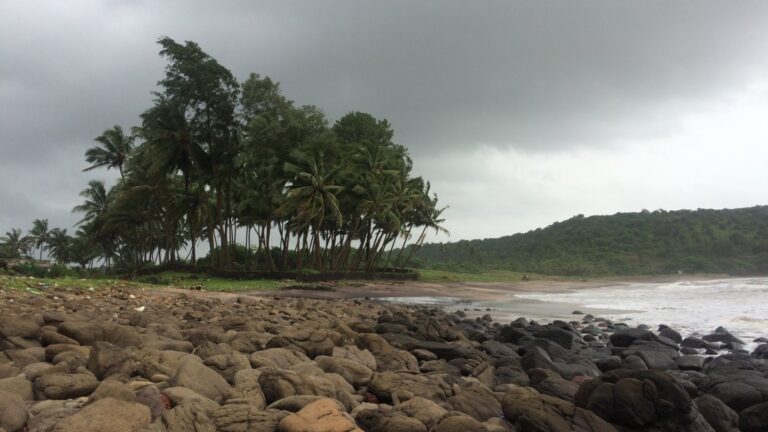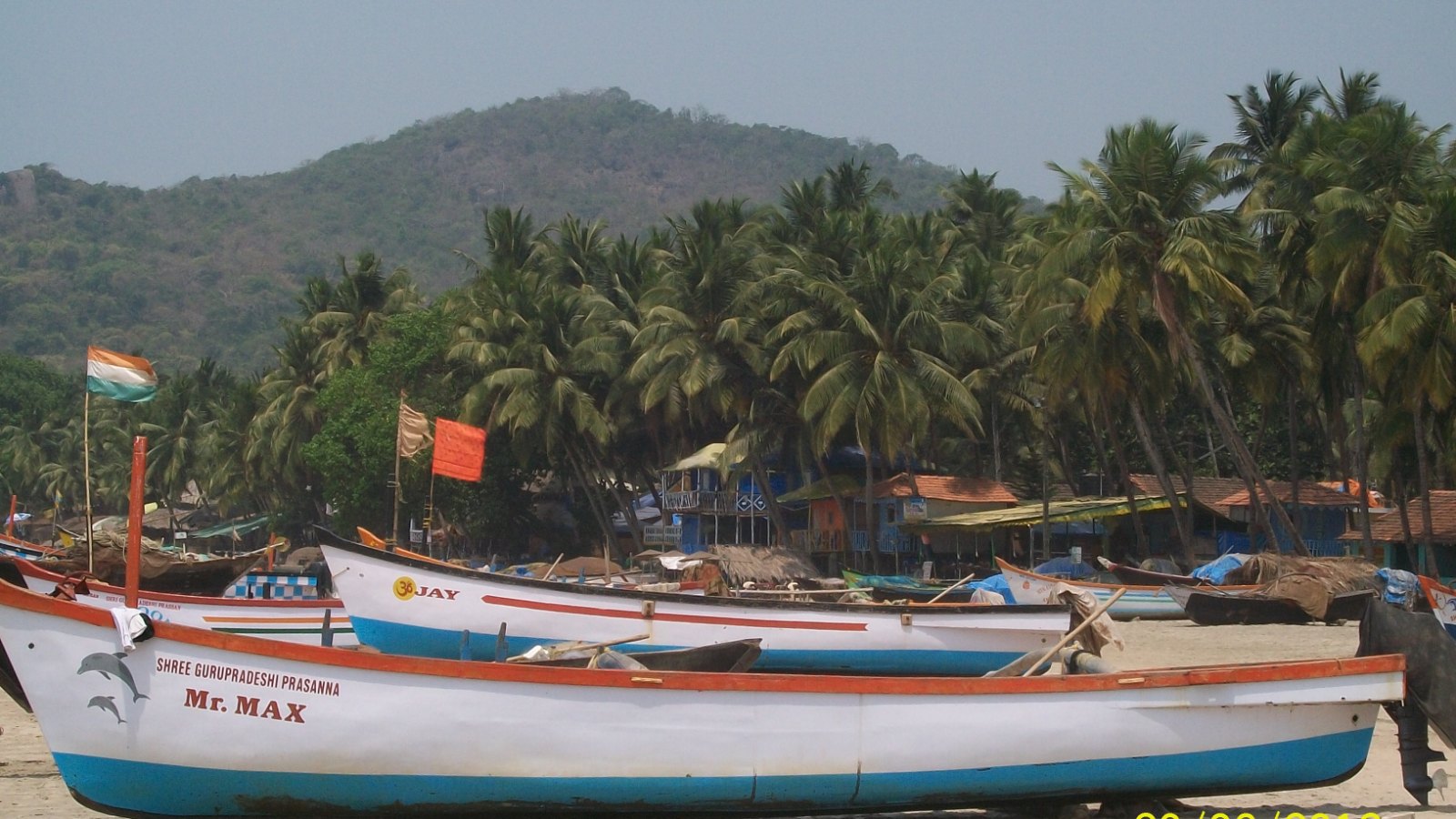
If you want to understand Goa in a single day, do not stay on one beach. Get on the road. The drive from Panaji, the small riverside capital, to Palolem, the crescent-shaped bay near the state’s southern edge, is roughly seventy kilometres, depending on the route you choose. On a quiet day you could cover it in about two hours. We suggest you take the whole day, or better still, two. Along the way you will pass through almost every Goa there is: the colonial city, the old churches, the temple country, the market towns, the fishing villages and the slow southern coves. This is our route, and the reasons we love it.
Morning in Panaji
Start early in Panaji, while the light is soft and the streets are still cool. Walk through Fontainhas and the neighbouring quarter of Sao Tome, where narrow lanes are lined with houses painted ochre, blue, green and deep red, many of them with tiled roofs, carved balconies and oyster-shell windows. Some of these houses are more than a century old, and several have been carefully restored as homes, guesthouses and small galleries.
Climb the zigzag steps to the Church of Our Lady of the Immaculate Conception, the white church that looks down over the city’s main square. Then walk down to the Mandovi, where the river is wide and the ferries and fishing boats come and go. Find a small café for a cup of tea and a plate of bread, either the round, slightly crusty pao or the pillow-soft poi that Goan bakeries turn out every morning. Then collect your car, taxi or scooter and head east along the river.
Old Goa: the city that was
About ten kilometres upriver lies Old Goa, once the capital of Portuguese India and, at its height in the sixteenth and seventeenth centuries, a large and wealthy city. Disease, the silting of the river and the shifting fortunes of empire emptied it over time, and the capital eventually moved downriver to Panaji. What remains is a group of grand churches and convents set among lawns and trees. They are now part of a UNESCO World Heritage Site.
The Basilica of Bom Jesus, with its weathered laterite facade, holds the relics of St Francis Xavier and is one of the most visited churches in India. Across the road stands Se Cathedral, a vast whitewashed building that is among the largest churches in Asia. Take your time here. Go inside, sit quietly for a few minutes, and notice how the air and the light change. Dress modestly, with shoulders and knees covered, and keep your voice low, because these are living places of worship and not just monuments.
Into the temple country around Ponda
From Old Goa, turn south-east towards Ponda. Within a short drive the landscape changes. The coast gives way to wooded hills, areca and coconut plantations and small villages, and the churches give way to temples. During the Portuguese period, many Hindu families are said to have moved their deities inland, beyond the area of direct colonial control, and this region became home to some of Goa’s most important temples.
Look out for the deepastambha, the tall, many-tiered lamp towers that stand in front of many Goan temples and are lit during festivals. The Shri Mangeshi and Shri Shantadurga temples are the best known and the busiest. A visit to a spice plantation here can also be worthwhile, as several farms welcome visitors to walk among pepper vines, nutmeg and cardamom. Our story Visit Ponda goes into the area in much more depth.
Midday in Margao
Continue south-west to Margao, the busy commercial hub of South Goa. It is not a pretty town in the postcard sense, but it is a real one. Walk around the covered market, where vendors sell spices, dried fish, chillies, sausages, sweets, bangles and household goods, and you will understand how much of everyday Goan life still revolves around trade. Around the town square and in the old residential streets you can still find large, gracious houses with wide verandas and balconies.
This is a good place for lunch. Look for a simple local restaurant serving a fish thali or fish curry and rice, which most Goans will tell you is the true taste of their state. Order whatever is fresh that day, and ask what the kitchen recommends. If you prefer vegetarian food, many places in Margao serve hearty Konkani vegetarian meals as well.
The southern villages
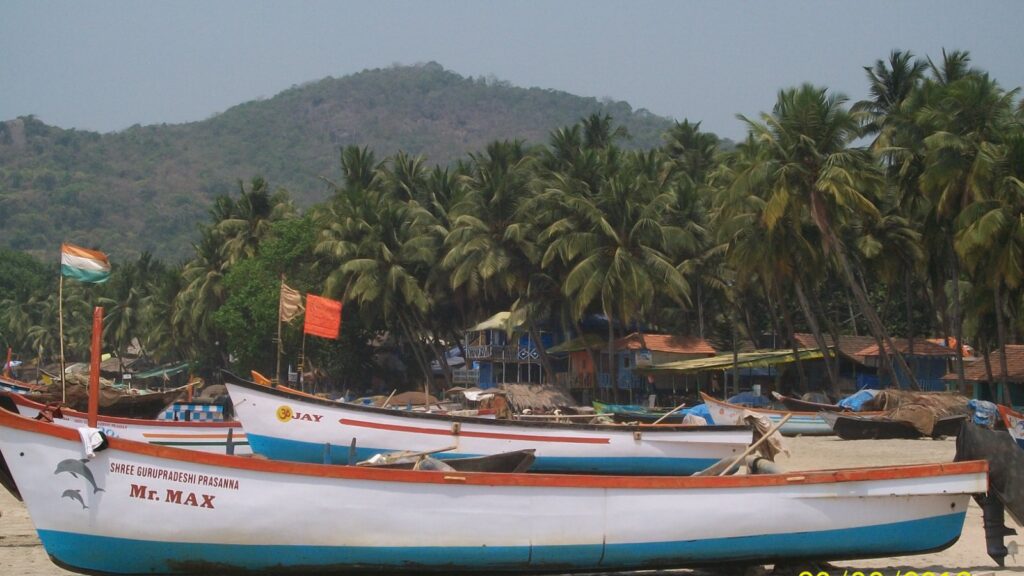
Leaving Margao, the road runs south through a gentler Goa. You will pass through villages where whitewashed chapels sit in the middle of green or golden paddy fields, depending on the season, and where old houses hide behind walls covered in bougainvillea. If you have time, take a short detour to the coast. The long beaches between Colva and Cavelossim are wide and open, and in the mornings you may see fishing boats being pulled up the sand.
Further south, around Cabo de Rama, the coast becomes rockier and more dramatic. The old fort here is mostly in ruins, but the views over the Arabian Sea from its walls are lovely, especially in the late afternoon. Roads in this part of Goa are narrower and quieter, so drive carefully and watch for cattle, cyclists and children walking home from school.
Evening in Palolem
You arrive at Palolem as the sun starts to drop. The beach curves in a gentle arc, fringed with coconut palms, and in the season it is lined with simple huts and shacks. On calmer days the water is often gentle enough for a relaxed swim, though you should always follow local advice and the lifeguards’ flags. Walk to the northern or southern end of the bay to watch the sunset. If you have energy left, kayaks are often available to rent, and small boats take visitors out in search of dolphins in the mornings. Choose operators who keep a respectful distance from the animals.
Palolem has become well known over the years, and it can be busy in peak season. If you want somewhere quieter, nearby Patnem and Agonda have a similar, slower feel.
Why this road explains Goa
In one drive you have moved from a riverside capital to a ruined colonial city, from temple hills to a market town, and from farming villages to a fishing coast. You have seen how Goa’s Portuguese past and its much older Konkani and Hindu traditions sit side by side. You have eaten its food and walked its streets. You have also seen that Goa is not one thing. It is many small places, each with its own pace.
Practical tips
- Distances in Goa are short, but traffic and narrow roads can slow you down, so allow plenty of time.
- If you hire a scooter, carry your licence and always wear a helmet. Avoid riding at night after drinking.
- Carry water, sunscreen and a hat; the midday sun is strong even in winter.
- Dress modestly for churches and temples, and remove your shoes where asked.
- Check opening times for churches and monuments locally, as they can change.
- Consider splitting the drive with a night in the south so that you can arrive in Palolem unhurried.
Take this road slowly, stop often, and let each stretch show you a different side of Goa.