
Dear readers,
There is a moment I keep returning to from a winter visit to western India. It was a little before dawn, and the White Rann of Kutch was so quiet I could hear the salt crust crackle under my feet. A few hours earlier, the same place had been full of people, music and car headlights: a full moon night at the height of the festival season. Now there was nobody. The sky went from black to grey to a pale, pearly pink, and the salt took on every colour the sky offered it.
That contrast, between the festival and the empty hour, is at the heart of this issue.
Why the desert, why now
February is festival time in India’s western deserts. Jaisalmer’s Desert Festival returns from 30 January to 1 February 2026, with its parades, folk music, camel events and that famous moustache competition. Across the border in Gujarat, the Rann Utsav is in the last weeks of its long winter season on the White Rann. Thousands of travellers make the journey, and with good reason. These festivals are joyful, generous showcases of cultures that have thrived in some of the harshest landscapes on the subcontinent.
We wanted to help you enjoy them. So you will find practical guides here: dates and planning notes, a realistic itinerary that takes in both deserts, honest advice on dune drives and camps. But we also wanted to look beyond the stage, at the everyday life that carries on around the festivals and long after they finish.
The people who live here
It is easy to forget, amid the spectacle, that both deserts are homes. Jaisalmer Fort is one of the very few great forts in India where people still live inside the walls, and that brings both charm and real conservation challenges. One of our writers spent a morning in its lanes, among families who have lived there for generations, and came back with a story about what it means to visit a monument that is also a neighbourhood.
In Kutch, the villages around the Rann are famous for embroidery, mirror-work, block printing, pottery and more. These are not souvenirs made for tourists; they are traditions that existed long before the tent city, and they will, we hope, outlast it. Buying directly from makers, and taking time to learn who made what, is one of the best things a traveller can do.
Our guest writer this month describes a night as a paying guest in a family haveli in Jaisalmer. It is a small story, and a lovely one, about hospitality and the generosity of strangers.
In praise of the quiet hour
If I could give you one piece of advice for a desert trip, it would be this: get up early at least once. The festivals are wonderful, but the deserts are at their most extraordinary when the crowds have gone. Sunrise on the Sam dunes, before the camels arrive. The White Rann at dawn, a few days after the full moon. A walk through Jaisalmer’s lanes as shopkeepers sweep their doorsteps and temple bells begin. These are the moments that stay with you.
We also want to gently encourage travelling with care. Deserts are fragile. Dune drives leave scars, plastic lasts for centuries in dry sand, and water is precious. None of that means you should not go. It means going thoughtfully, staying a little longer, spending your money locally and leaving the sand as you found it.
What we could not confirm
You will notice that our writers sometimes hedge. Festival programmes change, camp prices rise and fall, permit rules are revised and flight schedules come and go. Where we were not sure of a detail, we have said so rather than guess. Please check with official sources before you book, and if you find something has changed, write to us. Your letters make this magazine better.
Two deserts, two characters
What struck me most, putting this issue together, was how different the two deserts feel. The Thar around Jaisalmer is warm in colour and full of texture: rippled dunes, scrub, golden stone, villages built from the same sand-coloured rock as the fort. It is a landscape of forms and shadows. The Rann is the opposite. It is flat, pale and almost abstract, a place where the horizon disappears and the sky seems to take up most of the world. One feels intimate; the other feels infinite.
The festivals reflect those characters too. Jaisalmer’s celebration spills through the streets of a city with centuries of trade, war and song behind it. Rann Utsav, by contrast, has built a temporary city on the edge of an emptiness. Both are worth seeing. Both, I think, are best understood alongside the ordinary days around them.
A note for first-timers
If this is your first trip to either desert, do not try to see everything. Long distances, slow roads and early starts will tire you more than you expect. Choose fewer places, stay longer in each, and leave room for an afternoon doing nothing at all. Some of my favourite desert memories are of sitting on a rooftop with a cup of chai, watching the light change on stone walls, with nowhere particular to be.
And please talk to people. The camel handler, the embroiderer, the guesthouse owner, the driver who has made the long run between Jaisalmer and Kutch more times than he can count: each of them knows more about these deserts than any guidebook, including ours. Ask them where they would go on their day off, and you may find the best tip of your trip.
Thank you
Thank you to our writers and our guest contributor this month, and to every reader who has written to us with stories, corrections and ideas. Last month we took you into the snow; this month, into the sand. I hope this issue helps you find your own empty hour, wherever in the desert you find it.
With warm wishes from the editor’s desk,
Khushi Anand, Editor
More from Issue 82
- Issue 82 index: Desert Festivals
- Dune bashing in Jaisalmer
- Sam Sand Dunes, Jaisalmer
- Jaisalmer Fort
- Jaisalmer when the fort is still a neighbourhood
- The Rann at the edge of the tent city
- The hour the White Rann is empty
- Camels are optional
- Three nights, two deserts
- A guest night in a family haveli
- Desert Festival and Rann Utsav 2026 dates
A plantation stay that is not a resort brochure
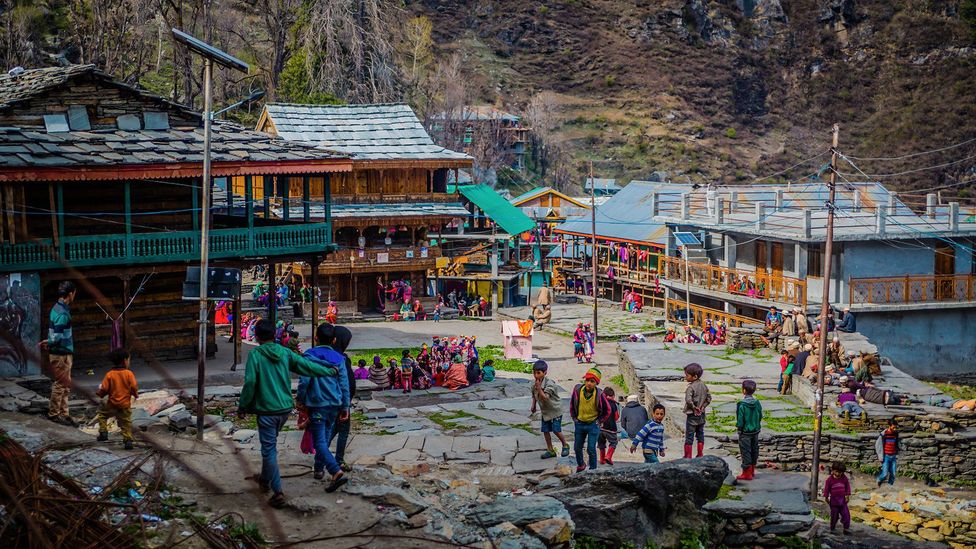
The Malana Village in Himachal Pradesh
Hornbill index
The Town You Sleep In
Why the base town shapes a monsoon waterfall trip more than any single fall, what to look for, and towns in Karnataka, Kerala and Goa worth considering.
One village ghat upriver
Train versus road that week
Markets before the 20th, not on it
Journeys Worth Discovering
Explore inspiring destinations, memorable journeys and travel stories from across India and beyond.
Explore destinations




