


September 2019
September 1, 2019 in Table of Content
The month of September focuses on Nepal, a nation between India and China, known for its temples and Himalayan mountains, which include the great Mt. Everest. Kathmandu, the capital, has a mazelike old quarter filled with Hindu and Buddhist shrines. A place filled with mostly religious places is good to get some peace in this intensified world for travelers.
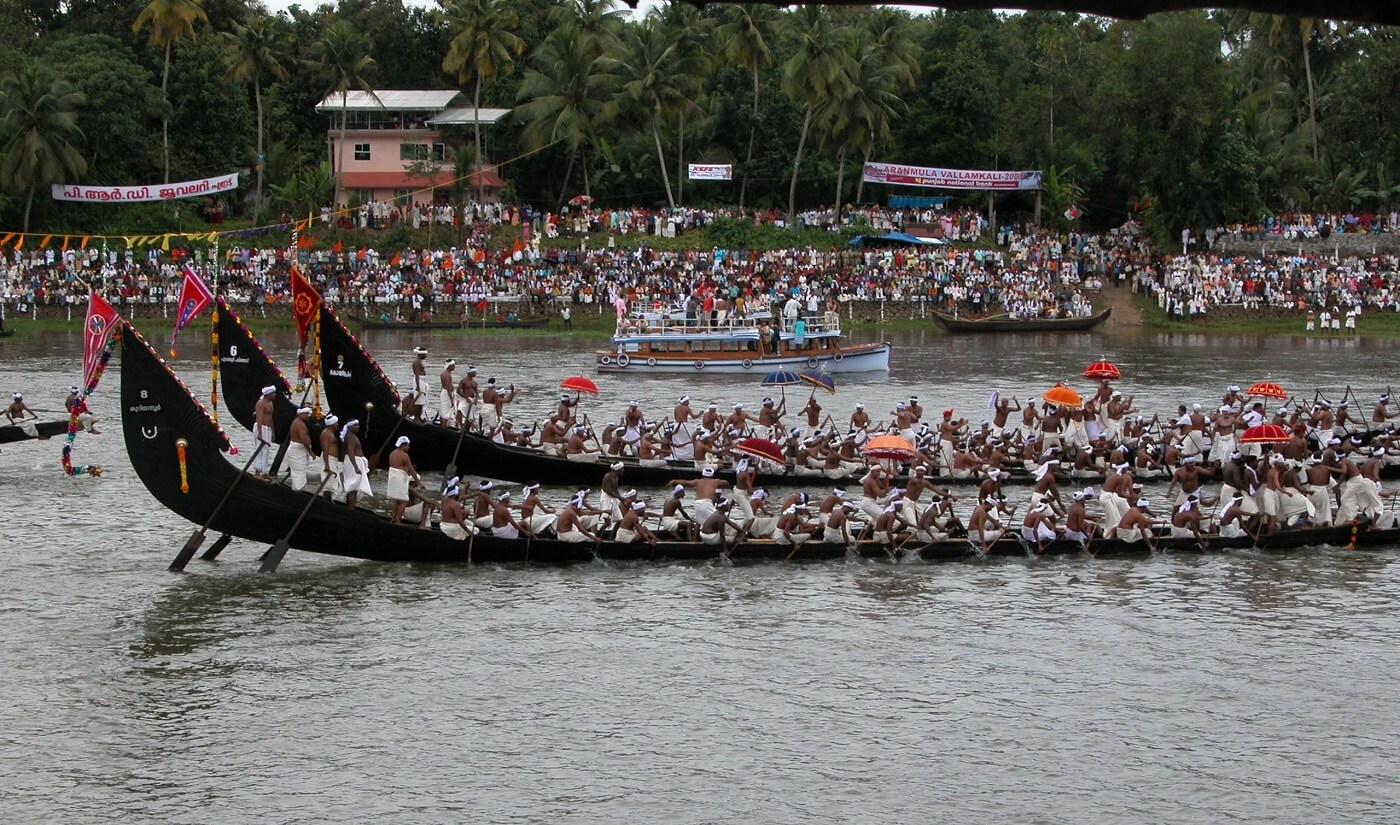
Nehru Trophy Snake Boat Race
August 1, 2019 in Fairs & Festivals
Boat races are a significant part of the culture and tradition of the Indian state of Kerala. It is an annual boat race that offers great excitement for the viewers. Nehru Trophy Boat Race is the most well-esteemed boat race held in India. Started in the year 1952, this event attracts viewers from far off corners of the world. It will be a significant experience to witness the huge boats cruising through the backwaters of Kerala.
The Nehru Trophy Boat Race is held every year on the second Saturday in the month of August. The drum beats along with the chanting of the boat songs known as Vanchipattu builds the environment for a perfect event. The frenzy of activities held during the boat race imparts a distinct character to the event. The celebration of this event also includes music and folk dance performances. This time of Nehru Trophy Boat Race is November 10, this year.
The Nehru Trophy Boat Race in Kerala is held on the Punnamda Lake in Alappuzha. The area is thronged by teeming millions who come to witness this spectacular event. The occasion attracts visitors from all across the world.
The participants in this race compete fiercely to come out as winners. The sight of the men rowing the Chundans or Snake Boats is admirable. All the rowers are willing to put in their best efforts to achieve glory for their villages. It is a matter of great pride for the villagers to achieve victory in this race. There is frenzied excitement in the air. The air reverberates with cheers and applause.
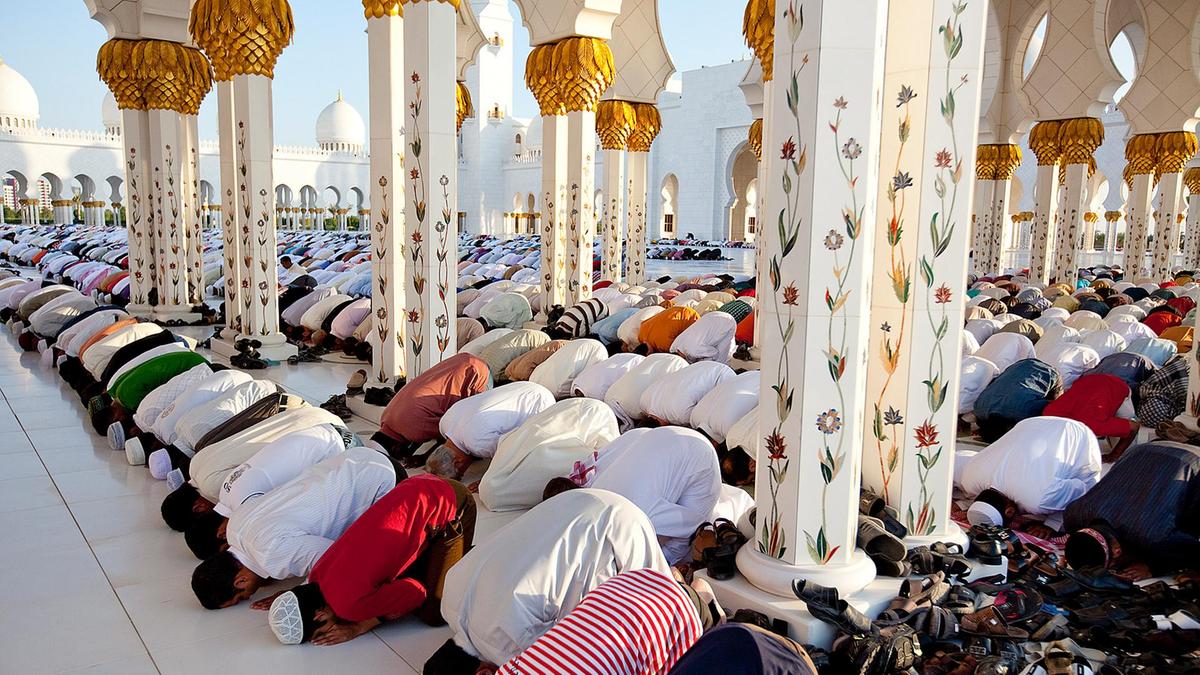
Bakri Id (Eid Al-Adha)
August 1, 2019 in Fairs & Festivals
Islam is the world’s second-largest religion, and Id-al-Adha or Bakri-Id is its festival of sacrifice. The festival coincides with the anniversary of the day when ‘Quran’ was declared complete. It is from when many Muslims undertake Haj to Mecca and people offer prayers in mosques. On the day of Id, the pilgrims reach the grounds of Mina where they sacrifice an animal each. It was here that Ibrahim is believed to have sacrificed his son. The pilgrims then shave their heads. The purpose is to be one with the millions of devotees who converge to Mecca each year for the Haj. The sacrificial meat is distributed after the ceremony among friends and family members. Special delicacies and sweets are prepared on the occasion.
According to legend, Allah commanded Ibrahim to sacrifice his son, Ismail, in order to test his faith. He agreed to do it but found his paternal feelings hard to suppress. So he blindfolded himself before putting Ismail on the altar at the mount of Mina near Mecca. When he removed his bandage after performing the act, he saw his son standing in front of him, alive. On the altar lay a slaughtered lamb. The origin of the festival comes from taking inspirations from this incident. To celebrate this event, Muslims sacrifice one animal, e.g. a bakr or goat for each family or a group of families. The sacrifice is followed by prayers at mosques, grand feasts, and merry-making. Muslims wear new garments, visit each other’s places and exchange good wishes. According to the Quranic text, the sacrifice of Abraham marked the end of the human sacrifices for the Semitic race and that surrendering one’s will and purpose completely and unconditionally is the only sacrifice that Allah requires.
In many parts, it is also called Bari-Id or Greater Eid as it lasts for four days when compared to three days celebration of Id-ul-Fitr. In Tamil, the term used is Bakr Eid Peru Naal, meaning Big Day of the Sacrifice. In Kerala and other parts of the world, Thakhir (Allahu Akbar) is recited which assert the greatness of God. Everybody in the Muslim community recites the Thakbir after draping themselves in white. Then they gather for public prayers in an open wide place- Id-Gah, which is a wide-open space. With the ending of the Id prayer, the leader delivers religious lectures to the devotees. Finally, the gathered masses hug each other warmly thus expressing loving brotherhood.
During the festival, Muslims dress in their finest clothing to perform prayers (Namaz) in any mosque. Bakri Id is celebrated by slaughtering one domestic animal (sheep, cow, or goat) in the name of Allah. Prayers are offered in the mosques and the sacrificial meat is then distributed after the Id prayers. Special delicacies are prepared and served among family and friends on the occasion.
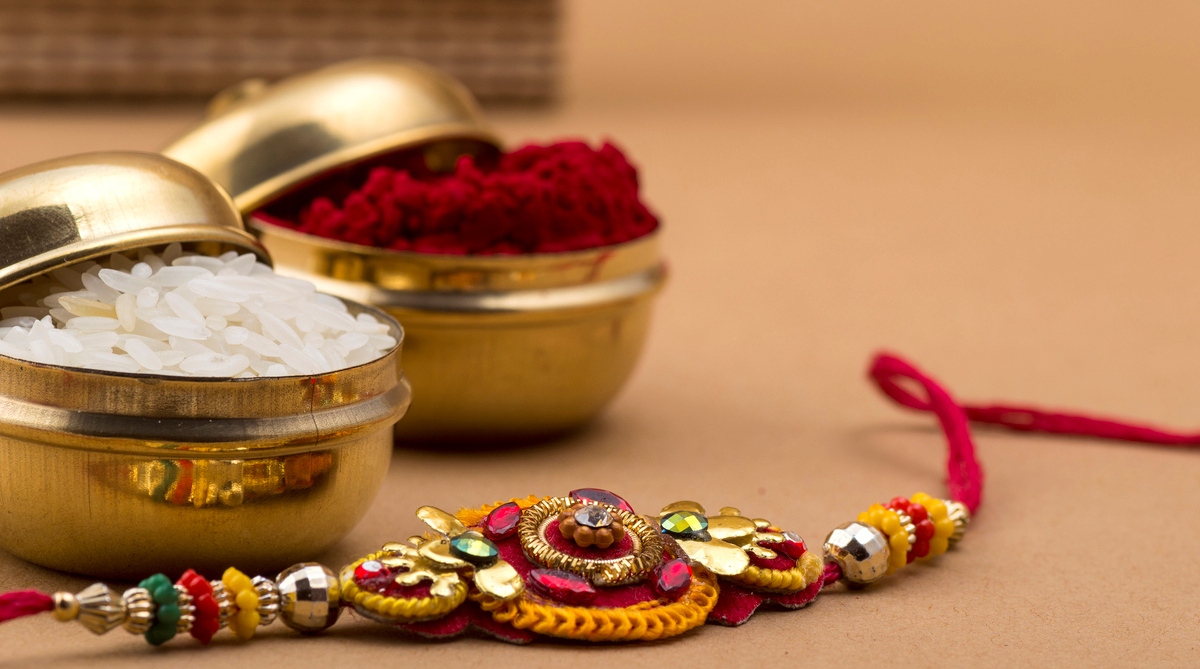
Raksha Bandhan
August 1, 2019 in Fairs & Festivals
The bonding between a brother and a sister is simply unique and is beyond description in words. The relationship between siblings is extraordinary and is given importance in every part of the world. However, when it comes to India, the relationship becomes all the more important as there is a festival called “Raksha Bandhan” dedicated to sibling love.
This is a special Hindu festival which is celebrated in India and countries like Nepal to symbolize the love between a brother and a sister. The occasion of Raksha Bandhan is celebrated on the full moon day of the Hindu lunisolar calendar in the month of Shravana which typically falls in the August month of the Gregorian calendar.
Meaning of Raksha Bandhan
The festival is made up of two words, namely “Raksha” and “Bandhan.” As per the Sanskrit terminology, the occasion means “the tie or knot of protection” where “Raksha” stands for the protection and “Bandhan” signifies the verb to tie. Together, the festival symbolizes the eternal love of brother-sister relationship which does not mean just the blood relationships only. It is also celebrated among cousins, sister, and sister-in-law (Bhabhi), fraternal aunt (Bua) and nephew (Bhatija) and other such relations.
Importance of Raksha Bandhan among various religions in India
Hinduism- The festival is mainly celebrated by the Hindus in the northern and western parts of India along with countries like Nepal, Pakistan, and Mauritius.
Jainism- The occasion is also revered by the Jain community where Jain priests give ceremonial threads to the devotees.
Sikhism- This festival devoted to the brother-sister love is observed by the Sikhs as “Rakhardi” or Rakhari.
Origin of Raksha Bandhan Festival
The festival of Raksha Bandhan is known to have originated centuries before and there are several stories related to the celebration of this special festival. Some of the various accounts related to Hindu mythology are described below:
Indra Dev and Sachi- According to the ancient legend of Bhavishya Purana, once there was a fierce battle between gods and demons. Lord Indra- the principle deity of sky, rains, and thunderbolts who was fighting the battle on the side of Gods were having a tough resistance from the powerful demon King, Bali. The war continued for a long time and did not come on a decisive end. Seeing this, Indra’s wife Sachi went to the Lord Vishnu who gave her a holy bracelet made up of cotton thread. Sachi tied the holy thread around the wrist of her husband, Lord Indra who ultimately defeated the demons and recovered the Amaravati. The earlier account of the festival described these holy threads to be amulets which were used by women for prayers and were tied to their husband when they were leaving for war. Unlike, the present times, those holy threads were not limited to brother-sister relationships.
King Bali and Goddess Lakshmi- As per an account of Bhagavata Purana and Vishnu Purana, when Lord Vishnu won the three worlds from the demon King Bali, he asked by the demon king to stay beside him in the palace. The Lord accepted the requested and started living with the demon king. However, Goddess Lakshmi, wife of Lord Vishnu wanted to return to his native place of Vaikuntha. So, she tied the rakhi around the wrist of a demon king, Bali and made him a brother. On asking about the return gift, Goddess Lakshmi asked Bali to free her husband from the vow and let him return to Vaikuntha. Bali agreed to the request and Lord Vishnu returned to his place with his wife, Goddess Lakshmi.
Santoshi Maa- It is said that the two sons of Lord Ganesha namely, Shubh and Labh were frustrated that they had no sister. They asked for a sister from their father who finally obliged to their sister on the intervention of saint Narada. This is how Lord Ganesha created Santoshi Maa through the divine flames and the two sons of Lord Ganesha got their sister for the occasion of Raksha Bandhan.
Krishna and Draupadi- Based on an account of Mahabharat, Draupadi, wife of Pandavas tied a rakhi to Lord Krishna while Kunti tied the rakhi to grandson Abhimanyu before the epic war. Yama and the Yamuna- Another legend says that the death God, Yama did not visit his sister the Yamuna for a period of 12 years who ultimately became very sad. On the advice of Ganga, Yama went to meet his sister the Yamuna who has very happy and performed hospitality of her brother, Yama. This made the Yama delighted who asked the Yamuna for a gift. She expressed her desire to see her brother again and again. Hearing this, Yama made his sister, Yamuna immortal so that he could see her again and again. This mythological account forms the basis of the festival called “Bhai Dooj” which is also based on the brother-sister relationship.
Reason for the celebration of this festival.
The festival of Raksha Bandhan is observed as a symbol of duty between brothers and sisters. The occasion is meant to celebrate any type of brother-sister relationship between men and women who may not be biologically related.
On this day, a sister ties a rakhi around the wrist of her brother in order to pray for his prosperity, health, and well-being. The brother in return offers gifts and promises to protect his sister from any harm and under every circumstance. The festival is also celebrated between brother-sister belonging to distant family members, relatives or cousins.

Parsi New Year
August 1, 2019 in Fairs & Festivals
Parsi New Year is a regional holiday celebrated on 17 August in India.
It is also known as ‘Jamshedi Navroz’ after the legendary King of Persia, Jamshed who started the Parsi Calendar and Navroz meaning ‘new day’.

History of Parsi New Year
Parsis follow the religion of Zoroastrianism, one of the oldest known monotheistic religions. It was founded by the Prophet Zarathustra in ancient Iran approximately 3500 years ago.
It was one of the ancient world’s most important religions for over 1000 years and was the official religion of Persia (now Iran) from 650 BCE until the rise of Islam in the 7th century.
When the Islamic armies invaded Persia, many Zoroastrians migrated, to places such as Gujarat in India and Pakistan. Nowadays there are an estimated 2.6 million Zoroastrians worldwide, with the Parsis (‘Parsi’ being Gujarati for Persian) in India being the largest single group.
In Iran and other parts of the Middle East, Zoroastrians celebrated the Persian New Year using the Fasli/Bastnai calendar, which fixed the first day of the year on the Spring Equinox, usually 21 March. To this day, this remains a popular festival, known as Nowruz, celebrated by many peoples and cultures in the region, despite not being Zoroastrians.
The Parsis however, observe the new year using the Shahenshahi calendar which does not account for leap years, meaning this holiday has now moved by 200 from its original day of the vernal equinox.
How is Parsi New Year celebrated?
Parsi New Year is celebrated in much the same way as Nowruz, with a focus on celebrating the renewal that a new year brings such as house cleaning, wearing new clothes, giving gifts and making charitable donations.
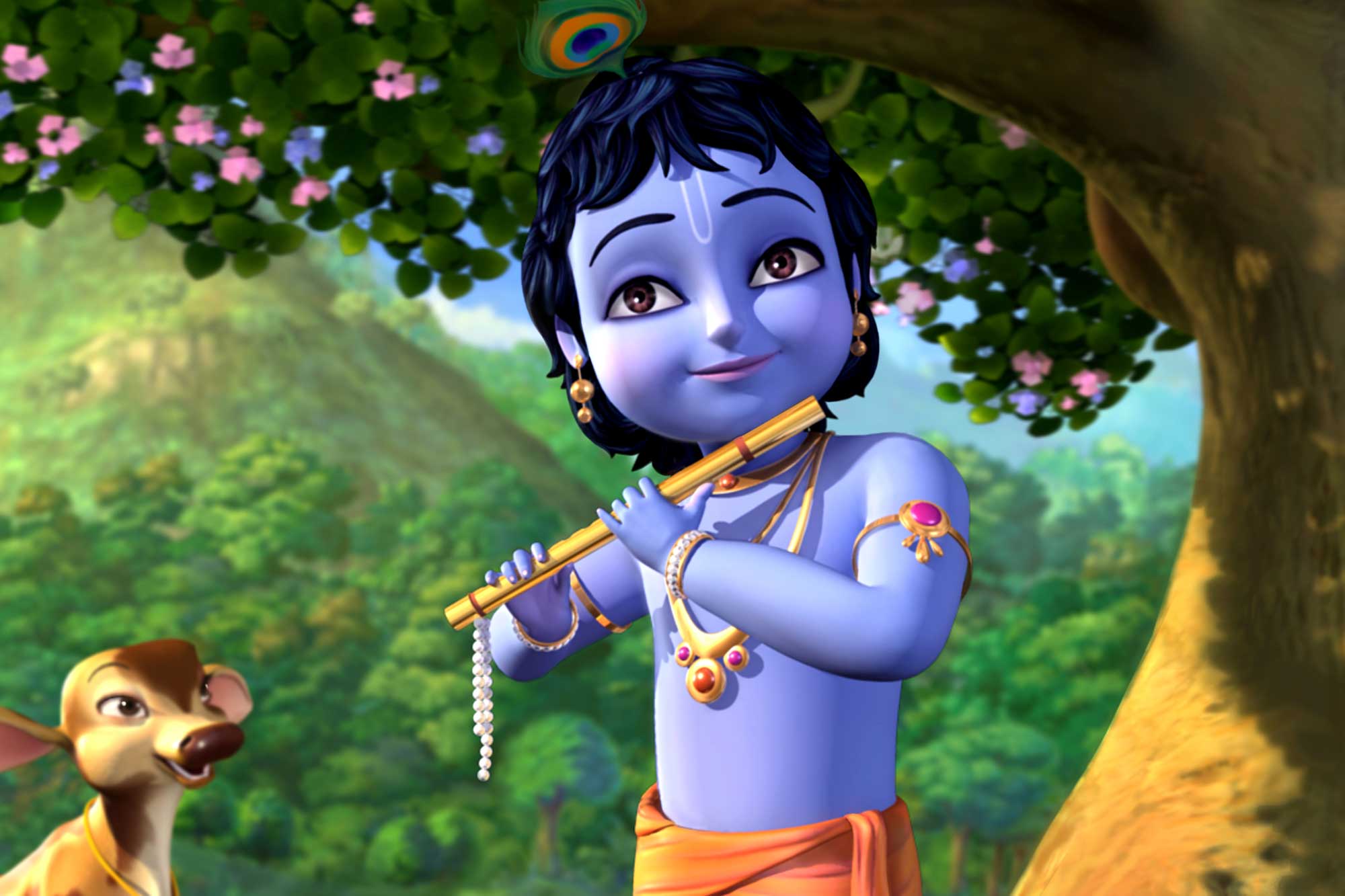
Krishna Janmashtami
August 1, 2019 in Fairs & Festivals
The birthday of Lord Krishna is celebrated as Krishna Janmashtami. It is an annual celebration which marks the birth of Lord Krishna who is considered to be an incarnation of Lord Vishnu, the eighth “Avatar” of Lord Vishnu.
Lord Krishna is one of the favorite deities of Hindus. All Hindus consider him as their hero, protector, teacher, and friend. The Krishna Janmashtami Celebrations are held throughout the country and also in various parts of the world.
The Krishna Janmashtami Festival is known by several names such as Krishnashtami, Gokulashtami, Srikrishna Jayanti, Sree Jayanti, or simply as Janmashtami. It is an occasion to celebrate the rich persona of Lord Krishna who took birth to dispel evil and spread the message of love and universal brotherhood.
Moreover, Krishna Janmashtami is an extremely rewarding devotional experience. The Janmashtami festival is celebrated with great joy and enthusiasm by people from all across the globe.
The auspicious day of Krishna Janmashtami (the day on which Lord Krishna took birth) is celebrated on the eighth day of the dark fortnight in the month of Bhadrapad according to the Hindu calendar. That’s why it is known as Janmashtami. It usually falls in the month of August or September.
The Janmashtami festivities are marked by elaborate celebrations which continue for the whole day. The performance of “Rasa Lila”, decorating “Jhakis”, fasting, Janmashtami songs, “Jagran”, playing “Dahi Handi”, distribution of gifts, are just some of the unique aspects of this extremely lively and vibrant Hindu Festival of Krishna Janmashtami.
Why is Krishna Janmashtami celebrated?
Krishna Janmashtami marks the birthday of Lord Krishna.
He was the eighth son of the princess Devaki and King Vasudeva.
It is believed that Lord Krishna was born on 18th July 3228 BCE and lived until 18th February 3102 BCE. His birthplace was Mathura which is located in present-day Mathura district of Uttar Pradesh. He belonged to the Vrishni clan of Yadavas from Mathura. (Source: Wikipedia)
King Kansa, the brother of Devaki, then ruled Mathura. He captured the throne by imprisoning his father, King Ugrasena. Kansa was a cruel ruler. He tortured the people of Mathura. Everybody wanted to get freed from the evil rule of Kansa.
There was a prophecy which had predicted that Kansa would die at the hands of Devaki’s eighth son. Hearing this prophecy, Kansa got afraid, and he locked Devaki and Vasudeva in a prison cell.
Kansa began to kill Devaki’s sons one after the other. When she was about to give birth to her eighth son, Lord Vishnu appeared to them and told them to take the son (Krishna) to Gokul to Nanda and Yashoda.
When Krishna took birth, Vasudeva took him to Gokul, crossing the Yamuna River and quietly placed the child beside Yashoda. He returned with Yashoda’s daughter.
Kansa thinking the child to be the eighth son of Devaki threw her on a stone, but she transformed herself into Yogmaya and warned Kansa that he would be killed at the hands of Krishna.
Later on, when Krishna grew up, he returned to Mathura and killed Kansa. Everybody in Mathura rejoiced at the killing of Kansa at the hands of Krishna and praised the Lord for freeing them from the evil rule of Kansa.
How Krishna Janmashtami is celebrated?
Lord Krishna is believed to be born at midnight on Janmashtami day. The celebrations reach their height during the midnight of the Janmashtami day.
The Janmashtami celebrations are special in places like Mathura, Vrindavan, Gokul, and Dwarika where Krishna spent most of his life.
The celebrations are marked by devotional songs, dances, Pujas, and Aarti. Temples are decorated, and people keep awake all night on Janmashtami. Krishna Janmashtami is celebrated in most parts of the country as well as abroad with great devotion, joy, and enthusiasm.
The Janmashtami festivities start before dawn and continue all day long until late midnight. Celebrations are marked with Kirtans in which devotees sing hymns in praise of Lord Krishna. Dance and drama (usually Rasa Lila) are a special part of the Janmashtami celebrations.
The deity of Krishna is decorated with flowers and garlands. The idol of Krishna is also bathed with a variety of auspicious liquids. Infancy Images and small idols of Krishna are placed in cradles in temples and homes. They are elaborately decorated with ornaments, flowers, and beautiful clothes.
Devotees usually fast on the day of Janmashtami. Prasad is distributed after the conclusion of the birth ceremony of Lord Krishna.
Let’s take a glimpse of the Janmashtami festivities in various parts of India:
Northern India
Janmashtami celebrations are at their peak in cities like Mathura, Gokul, and Vrindavan. People from all parts of India thronged to these places to take part in Janmashtami celebrations. Elaborate arrangements are made, and Krishna Temples are decorated with flowers and colorful lighting.
People gather in large numbers in temples and participate in festivities which continue the whole day of Janmashtami. Dancing, songs, drama performances, puja rituals, and Aarti are the hallmark of Janmashtami festivities. In Jammu, people take part in kite flying on this auspicious day.
Eastern India
In the eastern state of Odisha and West Bengal, people celebrate Krishna Janmashtami by fasting and all-day worship of Lord Krishna.
Purana Pravachana is organized from the Bhagavata Maha Purana. On the next day, people participate in the “Nanda Utsav” and offer sweets to each other.
Maharashtra
In Maharashtra and particularly in Mumbai and Pune, Janmashtami or Gokulashtami is celebrated as “Dahi Handi”.
It is an event in which a human pyramid is formed which tries to break an earthen pot filled with buttermilk, which is tied at a convenient height. The topmost person in the human pyramid tries to break the pot. The participants in “Dahi Handi” are called as Govinda Troops. Gifts and cash prizes are offered to these participants.
Southern India
People in South India celebrate Janmashtami with great joy and fervor. They decorate their houses. They sing devotional songs in praise of Lord Krishna. Verses of Bhagavad-Gita are also recited.
Lord Krishna’s idols are decorated. People offer sweets and fruits to Lord Krishna. Some of the important sweets are Seedai, and Verkadalai Urundai. Most people observe fast on this day. Young children are dressed like Lord Krishna.
Janmashtami Songs
Janmashtami Songs are an important part of the festival. People sing hymns and devotional songs in praise of Lord Krishna.
People gather in large number in temples around the country. They participate in religious festivities. Dancing, drama, and songs form an important part of their Janmashtami celebrations.
When is Janmashtami Celebrated
Janmashtami is celebrated on the eighth day of the dark fortnight in the month of Bhadrapad which usually falls in the month of August or September.
Devotees usually observe a fast on this day. Krishna Puja is performed during the Nishita Kala which is during the midnight on the day of Janmashtami as per Vedic time-keeping.
Janmashtami is an auspicious occasion to celebrate the birthday of Lord Krishna. It is a day to rejoice, dance and remembers the Supreme Lord Krishna who came to this Earth to give happiness to one and all.
August 2019
August 1, 2019 in Table of Content
The month of August focuses on Kerala, the land where the coconut palm is an enchanting kaleidoscope of deep-rooted cultures, traditions, and delightful sensations. The peak travel season after summer leads to fast bookings, although it doesn’t stop people from traveling across the country to Kerela.
- Travel further in Monsoon
- Kerala and Some Wonders
- Top 10 reasons to visit Kerala
- Embrace Your Destiny
- Sabarimala Temple
- Kalaripayattu : The Oldest Martial Art
- Wildlife Of Kerala
- Taste The Mouthwatering Meals Of Kerala!
- Must-Visit Places In Kerala
- Lifestyle Of Keralites
- Nehru Trophy Snake Boat Race
- Bakri Id (Eid Al-Adha)
- Raksha Bandhan
- Parsi New Year
- Krishna Janmashtami

Independence Day
July 29, 2019 in Fairs & Festivals
Independence Day is an annual observance celebrated every year on the 15th of August. India’s Independence Day is a day of great significance for the people of India. At this day India got freedom from the British rule after long years of slavery. It has been declared as the National and Gazetted Holiday all across India in order to independently commemorate the independence of the country from the British Empire on 15th of August in 1947.

It was not so easy for India to get freedom from the Britishers however; various great people and freedom fighters of India made it a truth. They had sacrificed their lives in attaining the freedom for their future generations without worrying about their comfort, rest and freedom. They planned and acted upon various Independence Movements including violent and nonviolent resistance to get complete freedom. However, later independence Pakistan was partitioned from India which was accompanied by violent riots. That horrible riot was the reason for mass casualties and dislocation of people (more than 15 million) from their homes.
At this day, all the national, states and local government’s offices, banks, post offices, markets, stores, businesses, organizations, etc become closed. However, public transport is totally unaffected. It is celebrated in the capital of India with big enthusiasm however it is also celebrated in all the schools, colleges and other educational institutions by the students and teachers including public community and society.
Aanayootto Festival
July 15, 2019 in Fairs & Festivals
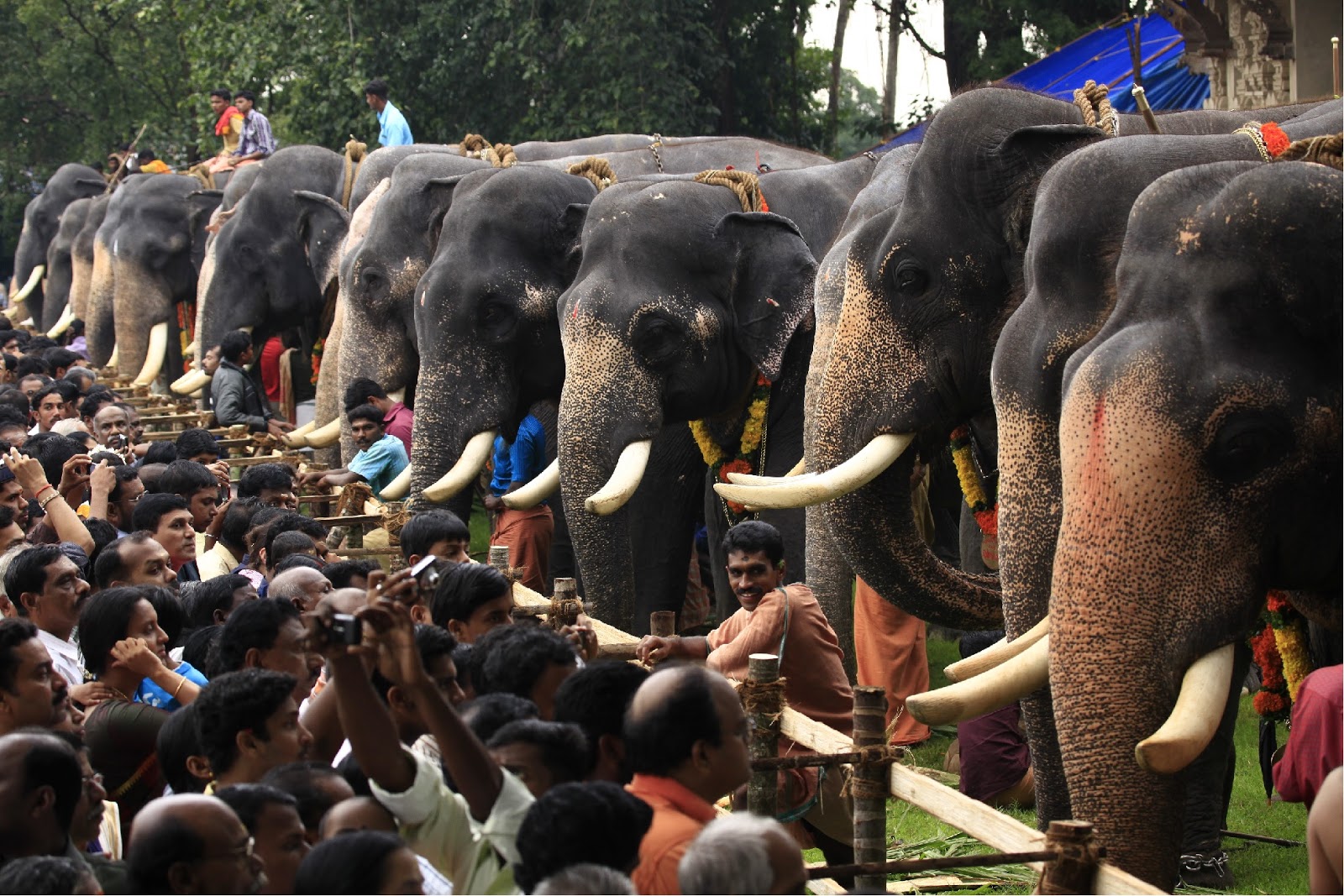
Elephants are an integral part of South Indian society. In fact, the elephants are hailed as sacred animals, which justify the almost mandatory presence of elephants in the South Indian temples. The Aanayoottoo Festival is celebrated in the precincts of the Vadakkunnathan temple in Thrissur Kerala.
Time of Aanayootto Festival in Thrissur
The Aanayootto Festival is held on the first day of the month of Karkkidakam according to the Malayalam calendar. This coincides with the month of July.
Description of Aanayootto Festival
It is a splendid treat to the eyes as nearly 50 unadorned elephants are positioned amid a multitude of people for being worshipped and being fed with a delicious feast. A large number of people throng the temple to feed the elephants. Every fourth year of `Aanayoottu,’ `Gaja Pooja,’ is conducted. It is believed that offering poojas and delicious feed to the elephants are a way to satisfy Lord Ganesha the god of wealth and wish fulfillment.
Vadakkunnathan temple, which is considered to be one of the oldest Shiva temples in south India, has been playing host to the Aanayottoo event for the past few years. The special feed, of the elephants, include sugar-cane leaves, coconut, jaggery and the sweet mix of Ganapathi pooja prasadam. The feeding session begins with the chief priest of the temple, offering the first feed usually to a cub elephant.

Amarnath Yatra
July 15, 2019 in Fairs & Festivals
Amarnath yatra is the most revered pilgrimage in Hinduism, one which every Hindu aspires to embark on once in his lifetime. This religious Yatra is organized every year to the great Himalayas, by the government of Jammu and Kashmir. The Amarnath tour is attended by thousands of domestic and international devotees. Interestingly, the main cave temple site is located at a height of 12,756 feet from the sea level and is around 141 km away from the state’s capital city, Srinagar. Though the Yatra is physically taxing, pilgrims put in a lot of effort to complete the holy tour of the scenic Amarnath cave… You can plan your Amarnath Yatra via two routes- Baltal to Amarnath Cave and Pahalgam to Amarnath cave.

The Legend for Amarnath Yatra
According to a popular legend, a pigeon which came-out from a hatched egg, heard the Amarnath Katha. Another popular variation has a parrot in place of the pigeon as the central character. While Lord Shiva was narrating the Amar Katha, the secret of life and eternity, to Goddess Parvati, she fell asleep but the parrot started making noises. Hence, Lord Shiva thought that Parvati was listening to the story. However, when he finished the narration, he realized that she was actually asleep and the parrot was listening all this while. This enraged the Lord, who threw his trident (Trishula) to kill the parrot. In order to escape the trident, it is believed that the parrot entered in the body of a lady, who was a sage’s wife and decided to grow inside her womb. The baby that was later born, was named Shuka, went on to become a famous sage. Post this incident, Lord Shiva ordained that anybody who’ll visit the Amarnath Cave will surely attain Moksha.
Religious Significance of Amarnath Yatra
According to the Hindu religious beliefs, the ice lingam shrinks and grows with the phases of the moon reaching massive dimensions from May to October. There are two other ice formations that represent Parvati and Shiva’s son ‘Ganesha’.
Amarnath Yatra Dates 2019
Amarnath Yatra Dates are decided by the Amarnath Shrine Board (SASB), the caretaker of holy cave. In 2019 yatra will starts from 2nd July to 15th August making it the best time to visit Amarnath.
How To Prepare for Amarnath Yatra
Special care needs to be taken during the preparation for Amarnath tour. Complete documentation and Medical fitness are paramount before embarking on the yatra.
Essential Documentation for Amarnath Yatra
Complete and proper documentation is a must before going to the yatra. It is imperative to register for the Yatra before devotees head for Amarnath. To get registered for holy sojourn:
- Take your medical fitness certificate from a doctor authorized by SASB (Amarnath Shrine Board), which certifies you are fit for the physically arduous Yatra.
- Essential documents you will need during the Yatra include (but not limited to) Voter ID, Driving License, Passport, etc for your identity.
Amarnath Yatra Physical Fitness Requirements
Physical fitness is essential and the main concern. If you have a great desire to embark on this yatra, you need to be physically fit and can prepare yourself by some easy but important activities like walking for at least 6 kilometers every day for almost 2 to 3 weeks before starting the journey. Deep breathing exercise will also help. If you happen to suffer from lung diseases, high blood pressure and cardiac disease, it is advisable to seek a doctor’s opinion, before proceeding to the holy voyage.
How to Reach Amarnath Shrine
Basically, two routes are decided for Yatra pilgrims – from Pahalgam and from Baltal. Though both these routes are well connected from all major cities, a higher percentage of pilgrims prefer to begin their journey from Srinagar, a major reason being the easy accessibility of Srinagar airport/railway station/Bus Stand. From here, one can hire a taxi for Sonmarg or Baltal, which is around 106 km from Srinagar airport. You can even start your journey from Pahalgam, about 92 km from Srinagar. Here are details about how to reach Amarnath.
1.Pilgrimage Yatra From Baltal To Amarnath cave
Amarnath via Baltal is the most popular route among Amarnath pilgrims since it is the shortest too. Baltal is only 14 km from the Cave, which can be covered by road and by helicopter. Helicopter service is especially for pilgrims who are short on time. Helicopter let you save a lot of time and physical effort. The exciting Helicopter ride covers most of the yatra between Nilgrad (Baltal) to Panjtarni and the remaining 6 km distance can be covered by trek with the help of wooden sticks
2.Pilgrimage Yatra From Pahalgam
Pahalgam, which was once famous in the Kashmir Valley for its natural beauty, has now turned into a base camp for pilgrims. Pahalgam base camp is just 96 km away from Srinagar and 47 km from the cave site. The first step of the yatra is at Chandanwari, 9,500 feet, around 16 km from the Pahalgam base camp. Then next step is Pissu top, 3 km away, located at 11,000 feet, followed by Shesnag around 9 km from Pissu top that is located at 11,730 feet. The next destination is Panjtarni, almost 12 km away from here, placed at 12,000 feet. Nevertheless, you can also cover this distance by helicopter or by road.
