

Member Type Contributor

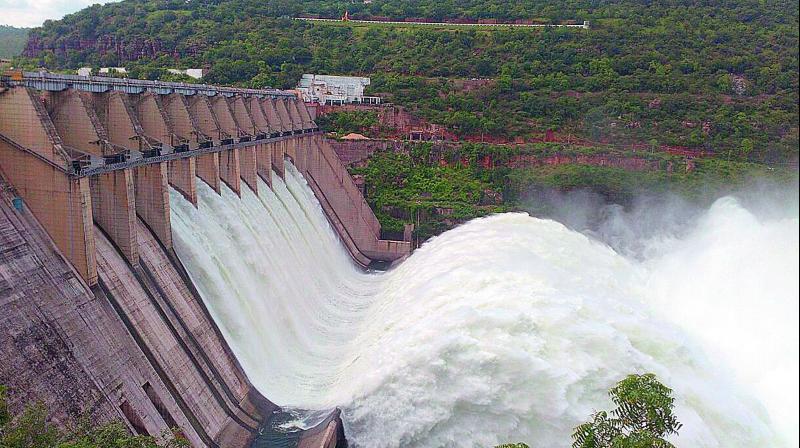
Nagarjuna Sagar Dam- Nagarjunakonda
April 25, 2021 in Andhra Pradesh
This important historical and archaeological site, Nagarjuna Sagar Dam, is set amidst one of the most picturesque surroundings. The region is endowed with a rich and vibrant past.
Nagarjuna Sagar Dam: This highest and largest masonry dam in the world is built over the mighty Krishna river and is indeed a marvel of civil engineering. It is named after Buddhist sage Acharya Nagarjuna, the revered Buddhist monk and founder of Mahayana Buddhism. The reservoir of the dam covers an area of about 380 sq. kms. and is one of the largest man-made lakes in the world.
Nagarjunakonda: This ancient Buddhist site is 24 kms. both from Macherla and Nagarjunasagar Project was one of the largest and most important Buddhist centers in South India. Acharya Nagarjuna shifted here from Amaravati and established the Madhyamika school, which attracted students even from far-off places like Sri Lanka and China. The unique museum built in the form of an ancient Buddhist vihara is perched atop a hill on the right side of the Nagarjunasagar canal. It preserves priceless archaeological relics and findings recovered from the valley area submerged under the waters of the reservoir. The Nagarjuna island can be reached by motor launch which departs from the small village of Vijayapuri on the banks of Nagarjuna Sagar.
Around Nagarjunsagar
Anupu
The relics of Buddhist University and stadium excavated at Nagarjunasagar have been reconstructed at Anupu, about 4 kms. from the dam site. The stadium is noted for its excellent acoustics and is a worth visiting site.
Ethipothala Falls (11 kms.)
These spectacular falls are 6 kms. from Macherla near Thallapalle village. The Chandravanka stream merges here with the Krishna river, plunging from a height of 21 meters amidst picturesque surroundings.
Srisailam (70 kms.)
This major Hindu pilgrim center is located on the banks of Swarnamukhi, amidst the scenic Rishabhagiri hills. The magnificent Malikarjuna Swamy temple atop the hill enshrines one of the twelve jyotirlingas existing in the country. Another important shrine is the fortified temple of Sri Parvata, which is regarded as one of the eighteen leading Shaktipeeths in the country. Srisailam is well connected by rail and road.
Nagarjunasagar -Srisailam Sanctuary (Project Tiger)
It covers an area of 3568 sq. kms. and is the largest Tiger Reserve’ in the country? The sanctuary is endowed with rich flora and fauna. Important tourist attractions of the Srisailam – Nagarjunasagar area lie within the sanctuary area. It is about 130 kms. by road from Hyderabad.
For more information, visit google. Also, have a look at our various monthly issues.

Places to visit near Hyderabad
April 25, 2021 in Andhra Pradesh
Golconda Fort (12 kms.)
Places to visit near Hyderabad include Golconda Fort (12 km.) The glorious remains of this once impregnable fort sprawl over a hillside about 1000 feet above the surrounding countryside. The forts name is derived from the Telugu word Golla Konda” meaning “Shepherd’s Hill”. Originally, it was a mud fort built by the Kakatiya kings of Warangal in 1143. The Qutub Shah dynasty held it from 1518 to 1687 and the first three Qutub Shahi kings rebuilt Golconda over 62 years.
The prosperous city was famous for its diamonds and hand-painted textiles. Attracted by the wealth and prosperity of Golconda, the Mughal emperor Aurangzeb conquered Golconda after an eight-month siege. The grandeur of this mammoth fort can be experienced from the top of the citadel. Within the fort are an armory, palaces, the store, courtyards, fountains, mosques, public, and private meeting halls, and temples. The fort is noted for its magnificent acoustics, the structural grandeur of its palaces, factories, and ingenious water supply system. A sound and light show is held here in the evenings.
Qutub Shahi Tombs: The graceful group of Qutub Shahi tombs, about 1 km. north of Golconda Fort’s Banjara Darwaja, were built by the Qutub Shahi dynasty.
Shilparamam (14 kms.)
The crafts village at Madhapur nestles amidst beautiful rocky formations by the hillside with natural1 slopes and wild vegetation. It was set up to preserve the dying art forms as well as to bring together the craftspersons and artists from every sphere. Annual festivals of arts and crafts are held in March. Cultural activities are organised during Dusschra festival (Oct. – Nov.) and Sankrant Sandadi (Jan.).
Osmansagar (Gandipet) (21 kms.)
The charming lake covering an area of 46 sq. kms., was built by Mir Osman Ali Khan in 1920, by barricading the water of the Musi river. Boating facilities are available here.
Balaji Temple: This famous shrine of Lord Balaji Venkateswara is located at Chilkur near Himayatsagar at Gandipet. It is said to be over five hundred years old and is built in Kakatiyan style. No ‘hundi’/cash offerings are accepted here.
Sanghi Temple (25 kms.)
The majestic temple complex dedicated to Lord Venkateswara is a favorite gateway point for the tourists visiting Ramoji Film City.
Keesaragutta (35 kms.)
The Hindu pilgrim center is known for Ramalingeswara and Lakshminarasimha shrines. According to mythological legends, Lord Rama came here during his exile and was captivated by its natural beauty.
Yadagiri Gutta (68 kms.)
Places to visit near Hyderabad includes Yadagiri Gutta (68 km.) It is famous for the shrine of Sri Lakshmi Narasimha Swamy perched atop a hillock. The presiding deity is believed to cure the incurable diseases of the devotees. Yadagiri Gutta is 85 kms. from Warangal.
Medak (96 kms.)
This historic site and famous Christian pilgrim center are named after ‘Methuku’, which means a particle of cooked rice. Originally, it was an important Buddhist site, but the town is now well known for its magnificent cathedral.
Medak Church: It is the single largest diocese in Asia and the second-largest in the world after the Vatican. The church was built by Rev. Charles Posnett in gratitude for the end of a famine that lasted for three years. Its construction started in 1914 and was opened on 25th December 1924. The imposing structure in Neo-gothic style is 173 feet high, while the length and width are 200 ft and 100 ft respectively. The tiles used here were brought from Italy, while the soundproof roof of the church is built of sponge material. The church is also noted for its stained glass windows depicting various Biblical and Christmas celebration scenes. It can accommodate about 5,000 people at a time.
Medak Fort: It was originally built in typical Hindu style during the reign of the Kakatiyas and was later constructed by the Qutub Shahis in Muslim architecture. The fort has wide ramparts with several natural bastions carved out of the boulders and rocks on the hillock. The huge Mubarak Mahal within is worth a visit.
Pocharam Wildlife Sanctuary: Places to visit near Hyderabad includes Pocharam Wildlife Sanctuary. It covers an area of 130 sq. kms., about 15 kms. from Medak. The low hills and small water pools attract large flocks of migratory birds. Animals seen here are panther, sloth bear, wild boar, chital, nilgai, hyena, etc. The best season to visit is from October – May. The sanctuary is 120 kms. from Hyderabad.
For more information, visit google. Also, have a look at our various monthly issues.

Warangal, The Historic Town
April 25, 2021 in Andhra Pradesh
The historic town earlier known as Orugallu, Warangal, The Historic Town, was the glorious capital of the great Kakatiyas during the 13th century A.D. It became an important center of Telugu culture and literature under the Kakatiya kings. The fort city is studded with magnificent monuments and temples depicting some of the finest forms of architecture in South India. Warangal, The Historic Town, is also well known for its durries (carpets) and rules.
Thousand Pillared: Temple: The star-shaped temple at Hanamkonda is a masterpiece ofKakatiya architecture and one of the most famous monuments of Andhra Pradesh. It was built in 1163, by Kakatiya king Rudra Deva and is dedicated to Lord Shiva, Vishnu, and Surya (Sun). The exquisitely carved pillars, splendid sculptures, and a huge six feet high Nandi are noteworthy.
Sri Bhadrakali Temple: The 8th-century shrine set atop a hillock near Thousand Pillar temple enshrines a 2.7 meters tall statue of the Goddess Kali. Other shrines in the temple complex are dedicated to Lord Shiva, Subramaniyam Swamy, Anjaneya, and Nava Grahas. The Dasara Navarathri festival is celebrated here for 9 days.
Warangal Fort: The foundation of this magnificent fort was laid in 1199, by king Ganapathi Deva and was completed in 1261, by his daughter Rudramadevi. It has 45 exquisitely carved towers and pillars. Within the fort is the temple of Mother Earth known as ‘Swayambhudevi Alayam’. Near the shrine is the famous Ekshila’, an ornately carved gateway resembling the gateway at Sanchi.
Khush Mahal: This elegant edifice near the fort was built by Shitabh Khan. It is a mute witness to the glorious past of Warangal. The idols excavated from the surrounding area are displayed here.
Around Warangal
Eturnagaram Sanctuary (80 kms.)
It sprawls along the banks of river Godavari and is one of the oldest sanctuaries of Andhra Pradesh. The key fauna includes tiger, leopard, sloth bear, chousingha, blackbuck, and many varieties of birds. Best season – October to May.
Kolunupuka (50 kms.)
The important Jain and Hindu pilgrim center was the capital of Kalyani Chalukyas in the 11th century and the birthplace of Renukacharya, a great beer shaancientiJainit has a number of ancient Jain beautiful temples adorned with beautiful sculptures.
For more information, visit google. Also, have a look at our various monthly issues.

Visakhapatnam – The ‘Jewel’ of the East Coast of India
April 25, 2021 in Andhra Pradesh
Vibrant Visakhapatnam – The ‘Jewel’ of the East Coast of India, is a harmonious blend of the magical past and bustling present. This breathtaking city of golden beaches, lush fields, verdant valleys, and splendid monuments is named after Visakha’, the God of Valour. Its antiquity can be traced back to emperor Ashoka (273 -232 BC) and was later ruled by the Andhra Kings of Vengi, the Cholas, and the Gangas. Visakhapatnam or Vizag has now emerged as a center important port, industrial well as a tourist center.
Ramakrishna Beach: This magnificent beach occupies the largest part of the seafront and is one of the most popular sites in the town. The Ramakrishna Mission is located nearby and there is also an imposing Kali Temple near the beach. An aquarium here is also worth visiting.
Lawson’s Bay: It is located to the north of Visakhapatnam and is considered ideal for swimming as well as surfing.
Rishikonda: The excellent beach resort 8 kms. from the town is located against the backdrop of lush Rishikonda hill on the Visakhapatnam- Bheemunipatnam beach road. The 14th-century temple of Sri Sapta Rusheswara is also located here.
Ross Hill (Kanyamarykonda): This highest hill on the Eastern Ghats is named after Mr. Ross, who built a house here in 1864, which was converted into a church.
Darga Konda: This magnificent hill has a mosque and a shrine dedicated to the Muslim saint Ishaque Madina, who is revered for his prophecies.
Sri Venkateswara Swamy Konda: The third important hillock of the city has a temple dedicated to Lord Venkateswara. According to the Telugu inscriptions, a British soldier Captain Blackmoor built this temple in 1886.
Kailasagiri: This charming hill on the seafront affords breathtaking scenic views especially towards Bheemli. A well-laid-out hill park sprawls over an area of 350 acres. teeming with enchanting flora and tropical trees. There are magnificent statues of Shiva Parvati, which are illuminated at night. The 40 mts. high Sankham, Chakram, and Namam are illuminated in the night and can be seen from most parts of the city.
Dolphin’s Nose: The massive dolphin-shaped promontory jutting into the sea is located in the southern part of the town. This most conspicuous landmark of Visakhapatnam is 174 meters high and has a very powerful lighthouse.
Visakha Museum: It is housed in a 150 years old “Dutch Bungalow” on the beach road.
Submarine Museum: This unique museum is housed in the INS Kusura, a Russian-built submarine, and is the first of its kind in Asia. It is located at the Ramakrishna Beach and was set up on 27th Feb 2001.
Other attractions are VUDA Park, Indira Gandhi Zoological Park, Mudsarlova Water Park, and Anthropology Museum.
Around Visakhapatnam – The ‘Jewel’ of the East Coast of India
Araku Valley (115 kms.)
The picturesque valley in the Eastern Ghats is popularly known as Andhra’s Ooty. It extends over an area of 36 sq. kms. and is rich in exotic flora and fauna. The valley is inhabited by 17 colorful tribes still untouched by modern civilization and is a favorite outdoor location for Telugu filmmakers.
Borra Caves (90 kms.)
The spectacular caves believed to be over 1 million years old are located on the way to Araku valley. These caves cover an area of over 2 sq. kms. and were formed as a result of the action of the waters of the Gosthani river on the limestone terrain. The fascinating stalagmite and stalactite structures in the caves are truly amazing.
Bheemunipatnam or Bheemli (24 kms.)
The historical town at the mouth of river Gosthani is said to be named after Bhima, one of the five Pandava brothers of the Mahabharata epic. He is believed to have killed demon Bakasura over here and installed an idol of Lord Narasimha at the temple atop the Narasimha hill. Bheemli was under the Dutch atop Occupation during the 17th century and has some relics of a Dutch fort and skull-and-century here has tombs embossed with the skull-and-crossbones motif of the sea pirates. The tranquil Bheemunipatnam beach is very safe for swimmers.
Simhachalam (16 kms.)
Simhachalam or the Lion’s Hill’ is famous for the 11th century Varaha Lakshmi Narasimhaswami temple, one of the most important shrines of Lord Vishnu. Lord Narasimha – a combination of the Varaha and the Narasimha incarnations of Vishnu is the presiding deity and the idol is always covered with sandal paste. During handanayatra Festival (Mar. – Apr), the sandal paste is removed and the real shape of the idol is visible. It is also one of the best-sculpted shrines in Andhra Pradesh.
For more information, visit google. Also, have a look at our various monthly issues.

The Hi-Tech Hyderabad City
April 25, 2021 in Andhra Pradesh

The Hi-Tech Hyderabad City, the city of traditions and technology was founded in 1591, by Mohammed Quli Qutub Shah, the fifth Qutub Shahi Sultan of Golconda. This magnificent city of minarets on the banks of the river Musi retains the medieval flavor and charm. It has also emerged as a major educational and industrial center as well as one of the IT capitals of India.
Charminar: The icon of Hyderabad was built in 159 1, by Mohammed Quli Qutub Shah to commemorate the end of the plague in the city. The imposing rectangular monument is built in Indo- Saracenic style and stands 53 meters high and 30 meters wide, with four grand arches, facing each of the cardinal points. The four corners of the building are adorned with columns with exquisitely carved minarets crowned by a bulbous dome. Each minaret towers to a height of 48.7 m. and has double balconies.
Lad Bazaar: This oldest and most popular shopping center of the city lies to the right of Charminar and is studded with colorful shops, famous for traditional bangles, bridal ware, heena, and cosmetics.
Mecca Masjid: The magnificent mosque near Charminar is named after the holy Mecca, as it has few bricks from Mecca. One of the rooms of the courtyard enshrines the hair of Prophet Muhammad and other Islamic relics.
Birla Mandir: The white marble shrine of Lord Venkateswara is set atop Kala Pahad hillock, towards the southern end of Hussain Sagar lake. It is decorated with intricate carvings depicting scenes from Ramayana and Mahabharta. There are also several splendidly sculpted marble statues of Hindu deities.
Naubat Pahad: Birla Planetarium and Alliance Francaise are set atop this rocky hill near the Birla Mandir. Sky shows are held at the planetarium.
Hussain Sagar: This huge lake was built by Hazrat Hussain Shah Wali, during the reign of Ibrahim Qutub Shah in 1562. Atop the rock at the center of the lake is the world’s tallest monolithic statue of Buddha, which is 17.5 m. high and weighs 350 tonnes. Boat trips around the statue can be made from Lumbini Park. The Tankbund on the eastern side of the lake is a popular promenade. A fine view of the statue can be enjoyed from here.
Lumbini Park: The well-laid-out park on the banks of Hussainsagar lake is one of the most populär amusement sites.
Salarjung Museum: This grand museum houses an extraordinary private collection of Mir Yusaf Ali Khan (Salar Jung III), a great connoisseur of art and the prime minister to Nawab Mir Osman Ali Khan, Nizam VII. It is one of the three national museums of India and has over 43,000 art objects collected from the world over.
Public Garden: This exquisite garden located in the busy Nampally area is said to be the largest of its kind in Asia. It is the oldest park in the city and is dotted with several majestic buildings.
Nehru Zoological Park: It extends over an area of about 1.2 sq. km. and is one of the largest zoos in India. Conducted tours in protected vans are taken to the Safari Park.
Other attractions of The Hi-Tech Hyderabad City include – a Natural History Museum, an Ancient Life Museum, an aquarium, and a children’s train ride.
For more information, visit google. Also, have a look at our various monthly issues.

Jamnagar “Chhoti Kashi”
March 24, 2021 in Gujarat

Jamnagar “Chhoti Kashi” was founded by Jam Raval in 1540 and was the capital of the former princely State of Navanagar. Famous cricketer Jam Ranjitsinhji hailed from the city and under his rule new parts of the city were developed as per European town planning principles. The town is also known as “Chhoti Kashi”, as it is studded with several Hindu and Jain shrines. Jamnagar “Chhoti Kashi”, is also known for pearl fisheries, a naval base, and tie & dye fabrics.
Lakhota Palace & Tank: The fortified palace amidst the lake can be reached by an arched stone bridge. It was built as a famine relief work in 1839 45 and has a fine collection of sculptures and pottery from Saurashtra. On the banks of the tank, near Khambhaliya Gate is another bastion-like structure called Bhujiyo Kotho.
Solarium or Ranjit Institute of Poly Radio Therapy: It was set up in 1933, by Jam Ranjitsinhji and was one of the only three such medical centers in the world during that time. TB, skin diseases and rheumatism, etc were cured through solar radiation. A slowly revolving tower provides day-long sunlight.
Around Jamnagar
Rajkot (92 kms.)
It was founded in the 16th century by Kunvar Vibhoji Jadeja and was the capital of the princely state of Saurashtra. Some of the attractions are – Karba Gandhi no Delo, the ancestral home of Gandhiji; Watson Museum & Library; Jagat Mandir; Rajkumar COllege, one of the oldest public schools of India; Lal Pari Lake & Randerda, etc.
Wankaner (50 kms.)
Famous for the Wankaner Palace, which has now been converted into a heritage hotel.
Dwarka (145 kms.)
The abode of Lord Krishna is one of the “Char Dhams” of Hindu pilgrimage. It is said that Lord Krishna settled and established his kingdom hereafter leaving Mathura. Archaeological1 excavations reveal that the present-day Dwarka is the sixth city on the site, the other five have submerged under the sea, which probably includes the Dwarawati of the Krishna Leela. It is also a fine beach resort
Dwarkadhish (Jagat Mandir): The sacred temple of Lord Krishna is an excellent architectural monument. The shrine consists of Nij Mandir and a multi-pillared Sabha Griha, that leads to the main sanctum, which is said to be 2,500 years old. A conical spire atop the temple rises to 157 m. that dominates the skyline.
Rukmani Temple: It is dedicated to Lord Krishna’s wife.
Nageshwar Mahadev: This important Shiva temple enshrines one of the twelve jyotirlingas of Lord Shiva.
For more information, visit google. Also, have a look at our various monthly issues.

Junagadh – The Ancient Fortified City
March 24, 2021 in Gujarat
Junagadh – The Ancient Fortified City, at the foothills of the sacred Girnar hill is resplendent with mythological legends. Its antiquity dates back to pre- Harappan times and was ruled by Mauryas, Kshatrapas, Guptas, Vallabhis, Chudasamas, Gujarat Magbara Sultans, and Babi Nawabs.
Uparkot or Upper Fort: This stronghold of Mauryas and Guptas has survived about 16 sieges in the last 1000 years. The fort wall around the town and the fort made Uparkot virtually inaccessible.
Maqbaras: The mausoleums of the Nawabs of Junagadh are a fine representation of Nawabi architecture.
Ashoka’s Rock Edict: A huge boulder inscribed with 14 edicts of emperor Ashoka (257-56 B.C) lies on the way to Girnar from Uparkot.
Girnar Hill (7 kms.): The sacred hill is an important pilgrim center for Hindus, Jains, and Muslims. The first set of Jain temples are at a height of610 m., and the main temple is dedicated to Lord Neminath. The shrines of Ambaji, Gorakhnath, and Guru Dattatraya are further up on the sacred mount. A shrine of Shiva and a Dargah is perched atop the hill. Millions of pilgrims participate in the fair of Bhavnath Mahadev temple.
Around Junagadh – The Ancient Fortified City
Sasan Gir Sanctuary (54 kms.)
Sasan Gir is the famous home of the Lion, the majestic king of the Jungles. It is the only place where the Asiatic lion can be seen in his natural habitat. Other animals inhabiting the Gir forest are panther, bear, antelope, fox, blackbuck, etc. A rich variety of birdlife can also be seen here.
For more information, visit google. Also, have a look at our various monthly issues.

Bhavnagar
March 24, 2021 in Gujarat
Bhavnagar was founded by Bhavsinhji Gohil in 1743 and was the capital of a princely state before the independence of India. Today, it is a flourishing port on the Gulf of Khambhat and an important commercial and industrial center.
Gaurishankar Lake: Beautiful picnic spot. There is a well-laid-out garden nearby.
Takhteswar Temple: It is perched atop a hill and affords a beautiful view.
Burton Museum: It was established in 1895 and exhibits a rich collection of old weapons, armor, and coins. The library has a rich collection of books.
Around Bhavnagar
Palitana (60 kms.)
It is one of the most important Jain pilgrim centers in the country. On the sacred Shatrunjaya hill, 863 exquisite temples were built over an impressive span of 900 years. The temple dedicated to Lord Adishwara, the Palitana Temples’s first Jain tirthankar a is considered to be the most sacred shrine on the hill. Other important temples are Kumarpal, Vimalshan. Choumukh etc. Near the shrine of Adishwara is a dargah ofAngar Pir, where untrue women offer miniature cradles. Palitana is well connected by rail and road.
For more information, visit google. Also, have a look at our various monthly issues.

Porbandar – The Ancient Port Town
March 24, 2021 in Gujarat

Porbandar – The Ancient Port Town is the birthplace of Mahatma Gandhi, the father of the nation. The present-day town was established by Rana Sartanji in 1785.
Gandhiji’s House & Kirti Mandir: Gandhiji was born in 1869, at his ancestral house Over here. Today, it is a national monument and open for public viewing. The adjacent house, called Kirti Mandir has a Gandhian library and a prayer hall.
Sudama Mandir: It is the only temple of Sudama, the childhood friend of Lord Krishna.
Other sites worth visiting in Porbandar – The Ancient Port Town are – Nehru Planetarium, Bharat Mandir, and Beach.
For more information, visit google. Also, have a look at our various monthly issues.

Vadodara, The Cultural City
March 24, 2021 in Gujarat

Vadodara, The Cultural City, of magnificent palaces, museums, splendid temples, lush gardens, shady avenues, and world-renowned institutions of learning is perhaps the de-facto cultural capital of Gujarat. It served as the capital of princely Gaekwads, the rule of Laxmi Vilas Palac Sayajirao Gaekwad III (1885- 1920), a great patron of art and learning is said to be the golden era of Vadodara.
Today, Vadodara, The Cultural City, on the banks of river Vishwamitri is a thriving industrial and commercial center and is also regarded as the ‘industrial capital’ of Gujarat.
Vadodara Museum & Picture Gallery: It was founded by Sayajirao III in 1894 and is one of the finest museums in Asia.
Maharaja Sayajirao University: This prestigious university was set up by Maharaja Sayajirao in 1840. The campus is noted for its architectural grandeur.
Sayaji Baug: The public garden with an excellent zoo is the heartthrob of Vadodara.
Nazarbaugh Palace: It was built in 1721 and is noted for the ‘Sheesh Mahal’ or mirror palace made in old classical style.
Kirti Mandir: It is adorned with murals painted by Nandlal Bose.
Dakshinamoorthy Temple: It was constructed by EME school in the cantonment area. The temple dedicated to Lord Shiva is set amidst five Danyan trees and is unique in concept and design.
Some other places of interest are – Tambekar Wada, SCKON Temple, Clock Tower, Khanderao Market, Sursagar Lake, Tapovan Complex, etc.
Around Vadodara
Ajwa& Nimeta (20kms.)
The twin gardens here are designed on the lines of the famous Brindavan Gardens of Mysore. There is also an amusement park and resort nearby.
Dakor (80 kms.)
This is the second most sacred town in Gujarat, after Dwarka, for the devotees of Lord Krishna. The nearest railhead is at Kheda 54 kms.
Kayavarohan (29 kms.)
The pilgrim site is associated with Lord Lakulish ((Shiva). The main attractions are the idol of Lakulish, a Shivalinga, and pictures showing various yoga forms.
Pavagadh (51 kms.)
The sacred hill of Pavagadh, near Champaner, is was Jain temples, a Kali temple, and a fort on the hill.
Suklatirth (87 kms.)
Own for the legendary shrine of Lord Vishnu, on the banks of river Narmada. An annual fair is held in November. The nearest railhead is at Bharuch, (16kms.).
For more information, visit google. Also, have a look at our various monthly issues.
