

Member Type Contributor


Surat -The Trade Hub of India
March 24, 2021 in Destinations, Gujarat
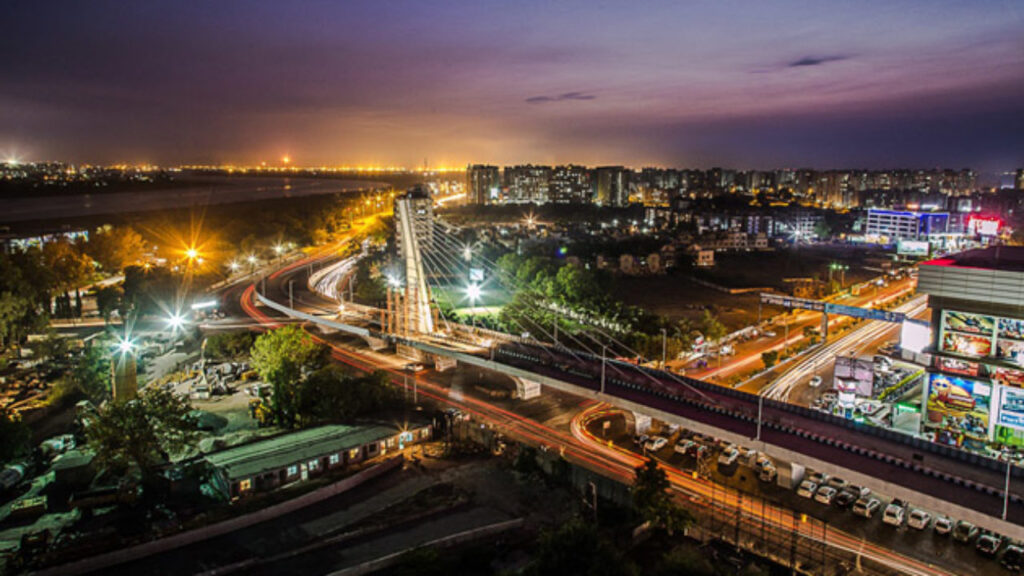
Surat -The Trade Hub of India, is a flourishing port city on the banks of river Tapti is one of the oldest trading centers of India. The British East India Company established its first warehouses in Surat in 1612. It is renowned for fine silks, exquisite brocades, and diamond business. The main attractions are -14th century Fort; Rangupavan, one of the biggest open-air theatres in the country; Sardar Patel Museum and Textile Market, etc.
Around Surat
Bardoli (31 kms.)
Gandhiji launched a farmers satyagraha in 1921-22, under the leadership of Sardar Vallabhbhai Patel from here. The Swaraj Ashram has become a site of pilgrimage.
Dumas (16 kms.)
An excellent seaside resort.
Hajira (28 kms.)
It is the ‘industrial capital’ of South Gujarat and a beautiful beach resort.
Ubharat (40 kms.)
The beautiful beach was the summer resort of the Gaekwads of Vadodara.
For more information, visit google. Also, have a look at our various monthly issues.

Somnath
March 24, 2021 in Gujarat
Somnath, the shrine eternal facing the blue expanse of the Arabian Sea is said to be as old as creation. Like a phoenix, it has risen seven times from ashes and depicts a saga of devotion and heroism. The legendary temple is believed to have been built by the Moon od- “Soma’ and enshrines one of the 12 jyotirlingas. The present temple structure was commissioned by Sardar Patel in the 1950s.
Bhalka Tirth: It is believed to be the site where Lord Krishna was struck by a stray arrow of a Bhil hunter. A reclining statue of the Lord marks the site where he breathed his last on the earth. Dehotsarg at
Triveni Ghat: It is believed to be the site of Krishna’s cremation.
Around Somnath
Ahmedpur Mandvi & Diu (77 kms.)
It is one of the finest beaches in the country. Across Ahmedpur Mandvi is the delightful island of Diu, which can be reached by ferry or a bridge. The nearest airport is Keshod (140 kms.) and the railhead is at Una (12kms.).
Chorwad (30 kms.)
This beautiful coastal town, 70 kms. from Junagadh is the only Palace Beach Resort’ in India. The summer palace of the Nawabs of Junagadh is now a luxurious resort. The nearest airport is at Keshod (35 kms.) and railhead at Veraval (25kms.).
For more information, visit google. Also, have a look at our various monthly issues.

Bhuj – The Jewel of the Kachchh
March 24, 2021 in Gujarat
Bhuj – The Jewel of the Kachchh, was the capital of the princely State of Kachchh. The old walled city can be entered through crenelated gateways and the maze-like streets bustling with activity are a good place for buying handicrafts items.
Aina Mahal: This beautiful palace with European influence was built in 1759, by Rao Lakhpatji.
Prag Mahal: This imposing palace was made by Rao Paragmalji II. It is built in Italian Gothic style and has large and wide verandahs and a 45 meters high bell tower.
Kachchh Museum: It is the oldest museum of Gujarat and was established in 1877, by Maharao Khengarji III. Located on the banks of Hamirsar lake, the museum has a rich collection of Kshatrapa Mumbai inscriptions, archaeological1 finds, arms and artifacts.
Other places to see in Bhuj – The Jewel of the Kachchh are – Cenotaphs, Snake Temple, Swami Narayan Temple, etc.
For more information, visit google. Also, have a look at our various monthly issues.

Ahmedabad – The Commercial Hub
March 24, 2021 in City Guide, Gujarat
Ahmedabad – The Commercial Hub and cultural nerve center of Gujarat is a fine blend of ancient heritage and vibrant present. Originally, a township named Karnavati was founded by King Karna Solanki in 1063 1093, on the banks of river Sabarmati, the present city was built by Sultan Ahmed Shah in 1411, on the ruins of Karnavati. Sir Thomas Roe, the British envoy to Jehangir’s court was so impressed by the glory of Ahmedabad that he referred to it as “the most handsome town in Hindustan, perhaps in the world”. The city gained an important position in the field of textiles and was referred to as the “Manchester of the East”. Today, this Gateway to Gujarat teems with splendid monuments, mosques, pavilions, and mausoleums.
Shaking Minarets: These two unique minarets at the Siddhi Bashir mosque are the most popular monuments of the city. The three-storeyed minarets are girdled by carved stone balconies and are designed in a way that when one minaret is shaken the other one vibrates too.
Jumma Masjid: This fine mosque set in the heart of the old city was built by Sultan Ahmed Shah in 1423.
Siddi Saiyad Mosque: The beautiful mosque built in Indo- Saracenic Style lies near the Lal Darwaza and is world-renowned for its exquisite stone window tracery.
Rani Sipri’s Mosque: This architectural masterpiece was built in 1514, by Rani Sipri. a queen of Mehmud Begarha.
Rauza of Shah Alam: The exquisite tomb and mosque commemorate a Muslim saint Shah Alam. It was built by AsafKhan, the brother of Mughal Empress Nur Jehan.
Hatheesing Temple: The ornately carved Jain temple dedicated to Lord Dharmnath, the 15th tirthankar was built in 1848, by Shri Kesarisimha Hatheesing Shah. It has 52 small shrines around the spacious courtyard.
Bhadra Fort: The foundation of the fort was laid in 1411. It had royal palaces and gardens and a chamber here was converted into the Bhadra Kali temple by the Marathas.
Gandhi Ashram: It was set up by Gandhiji in 1915, on the banks of river Sabarmati. This humble ashram became the beacon of freedom struggle. Hriday Kunj, the simple cottage of the Mahatama is now a national monument and houses a small Mahatma’s life is held here in the evenings.
Kankaria Lake: The beautiful polygonal lake was built by Sultan Qutb-ud-Din in 1451. The lake has an island garden with a summer palace known as Nagina Wadi.
Calico Textile Museum: This unique museum houses a rich and rare collection of antique textiles from17th century onwards.
Sarkhej Roza: It is about 8 kms. from the city and is known for its elegant architectural complexes. The important buildings are- the tomb of Ahmed Khattu Ganj Baksh, the mosque, the tombs of Mehmud Shah Begada and his queen, and the palace and pavilions, built around the tank of Sarkhej.
Adalaj Vav (19 kms.)
The famous stepwell (vav) located on the outskirts of Adalaj village was built in 1499, by Queen Rudabai. The intricately carved step well is built several stories in-depth and is a unique specimen of architecture.
Gandhinagar (25 kms.)
The capital city of Gujarat is the second planned modern city of India. The State government complex lies at the center around which are thirty self-sufficient sectors. A lot of Space has been provided for parks and gardens, which makes Gandhinagar, the greenest capital of the world.
Akshardham: This architectural wonder of the 20th century is the most famous temple of the Swaminarayan sect, one of the richest religious sects in the world. The temple complex sprawls across an area of 23 acres and the main shrine stands 108 feet tall amidst lush green lawns. About 6,000 tonnes of pink sandstone was used to create this giant edifice and no steel or any other metal was used in the building. The shrine houses a marvelously sculpted 7 ft. high gold-leafed statue of Lord Swami Narayan. There is also an amusement park, a museum, a picture gallery, and a library.
Indroda Park: It covers an area of over 168 hectares across the once barren ravines of the Sabarmati river. There is a deer park, campsite, botanical garden, a walk-in-aviary. whale skeleton enclosure, snake house, crocodile ponds, tortoise and turtle pits, and several other animal enclosures.
Ambaji & Kumbharia (178 kms.)
It is one of the most important pilgrim centers of Gujarat. The famous shrine of Goddess Ambaji, built over Arasur hill is one of the ‘Shakti Peeths’. The famous Kumbharia Jain temples are located nearby. The nearest railhead for Ambaji is Abu Rd. (19 kms.) in Rajasthan.
Lothal (80 kms.)
It was an important port town of the Harappan era, dating back to the 2nd century BC. A well Phannca City was discovered under the mound near Saragwala village in 1954. The mound was called Lothal, which means dead in the local dialect. The presence of a dockyard and terracottas showing an Assyrian and an Egyptian mummy indicates trade Tinks with Mesopotamia (Iraq) and Egypt.
Modhera (102 kms.)
The Sun Temple here is one of the finest monuments of Gujarat and the best example of Solanki temple architecture. The ornately carved temple was built in 1026-27 by Bhimadev I and is dedicated to Lord Surya or Sun God. It was destroyed by Mahmud of Ghazni. Adjacent to the temple is a huge ‘Sun Kund’ (Rama Kund) surrounded by steep- terraces with 108 smaller temples, the nearest railhead is at Mahesana (35 km.).
Patan (125 kms.)
This Jain and Hindu pilgrim center was a great center of art, culture, literature, and education under the Solankis. It is dotted with several Jain and Shaivite shrines. The Shastraling Lake built by King Siddhraj Jaising is surrounded by 1000 Shiva temples. Patan is also renowned as a Patola weaving center.
Taranga Hill (127 kms.)
The Jain pilgrim center amidst the hills of Taranga is known for the temple of Lord Ajitnath, the 22nd Tirthankara. It is also famous for its exceptional scenic surroundings and excellent architecture. Connected by rail and road.
For more information, visit google. Also, have a look at our various monthly issues.

Around Fatehgarh Sahib
February 23, 2021 in Punjab

The archaeological site north of Fatehgarh Sahib is said to have flourished 3,000 years ago and was known as Sangal-Dwip. It became an important settlement between Ist and 6th centuries, under the patronage of Kushans and the Guptas. The Sanghol Museum exhibits archaeological finds recovered from various sites of the State. A stupa and monastery here date back to the 1st-2nd century.
Sirhind
It was an important town during the reign of Tughlaqs and the Pathan Sur dynasty. The town flourished under the Mughals till 1709. It suffered immensely between 1709 and 1763. due to frequent clashes between the rising Sikh power and the Mughals. It is dotted with several mosques and mausolea, the important ones are – tombs offer Miran and Taj Bibi, of Ustad and Shagird, and the mosque of Saint Butcher Sanda.
Aam Khas Bagh
This royal palatial mansion is the main attraction of Sirhind. Its construction was started by Hafiz Khan during the rule of Akbar, as a serai (highway inn) for the weary travelers and a retreat for the royalty. Later, Jehangir and Shah Jahan further developed this graceful structure. It fell into ruins after the battles between Sikhs and Mughals and has now been restored and converted into a tourist complex.
Rauza Sharif
The mausoleum marks the burial site of Sufi saint Shaikh Ahmad Faruqui Sirhind.
For more information, visit google. Also, have a look at our various monthly issues.

Fatehgarh Sahib, Sacred Pilgrimage Site
February 23, 2021 in Punjab

The historic Sikh pilgrim center, Fatehgarh Sahib, Sacred Pilgrimage Site, is named after Baba Fateh Singh Ji, the younger son of Guru Gobind Singhji.
Gurudwara Fatehgarh Sahib: The beautiful white gurudwara marks the site where Zorawar Singh (9 years old) and Fateh Singh (7 years old), the two younger sons of Guru Gobind Singh Ji were entombed alive inside an enclosure of brick and cement. They preferred martyrdom instead of embracing Islam under the pressure of the Nawab of Sirhind. A large number of pilgrims visit the shrine throughout the year.
Gurudwara Jyothi Sarup: It is built on the site where Zorawar Singh, Fateh Singh, and their grandmother Mata Gujri were cremated.
For more information, visit google. Also, have a look at our various monthly issues.

The Wonderful ‘Patiala’ City
February 23, 2021 in City Guide, Punjab
The Wonderful ‘Patiala’ City, was founded in 1753, by Maharaja Ala Singh and named Patiala, literally the territory (pati) of Ala. In 1948, it became the capital of a new state, PEPSU (Patiala and East Punjab States Union), created by merging the princely states of East Punjab. The rulers of Patiala were great patrons of art and crafts, which made the city an important center of the Punjabi language and culture.
Qila Mubarak: The fort in the heart of the town was built in 1764, by Maharaja Ala Singh at the site of a kuchi-Garhi. The royal family also resided here and the residential area was known as ‘Qila Androon’ or the Inner Fort. The palaces are adorned with fine murals painted by artists from Kangra and Rajasthan. The Durbar Hall, to the right of the entrance, was built later and is noted for its beautiful ornament ceiling and fine murals. It houses a museum displaying a historic collection of weapons. The bustling bazaar around the fort is a treasure – trove for shoppers. The shopping list comprises of specialties of Patiala – exquisitely embroidered leather shoes (jutties),. tasseled silken braid (pirandis) and brightly embroidered phulkari fabrics etc.
Moti Bagh Palace: The magnificent palace in Indo-Saracenic style was completed in the early 20th century and is one of the largest residences in Asia. It is surrounded by beautiful terraced gardens and water channels. The main palace now houses the National Institute of Sports and Sports Museum.
Sheesh Mahal: The charming palace near a small lake was built during the reign of Maharaja Narinder Singh (1845-1862). Its interiors are beautifully embellished with pieces of glass and mirror (sheesh). An Art Gallery here displays antique paintings, bronzes, sculptures, and portraits of the Maharajas of Patiala. The World’s largest collection of medals, decorations, and orders of various countries are exhibited here.
Baradari Gardens: The graceful garden was laid out in the late 19th century, by prince Rajinder Singh. It also has a rock garden and a fern house.
Kali DeviTemple: It is located opposite the Baradari garden on Mall Road. The painted chamber of the shrine is a protected monument.
Gurudwara Dukh Niwaran Sahib: The famous gurudwara marks the site, where Teg Bahadur Ji rested on his way to Delhi to embrace martyrdom.
Bahadurgarh Fort (6 kms.): It was originally founded in 1658, by Nawab Saif Khan. The present structure was built by Maharaja Karam Singh of Patiala in 1837.
For more information, visit google. Also, have a look at our various monthly issues.

Anandpur Sahib ‘The City of Bliss’
February 23, 2021 in Punjab

The ‘City of Bliss’ set on the left bank of the river Sutlej with Naina Devi mountain in its backdrop is a major Sikh pilgrim center. It was founded in 1665, by Guru Tegh Bahadur Ji, near the ruins of an ancient place called Makhowal. Guru Gobind Singh ii, the tenth Sikh Guru (1666- 1708), spent about 25 years of his life over here, and under him, the town attained great importance. The annual Sikh festival of Holi Mohalla is the main event of Anandpur Sahib. The highlight of the celebrations is the spectacular display of martial traditions by the Nihangs.
Gurudwara Keshgarh Sahib: On the auspicious day of Baisakhi (13th April 1699). Guru Gobind Singh Ji founded the ‘Khalsa’ or the Army of Pure’over here. He baptized the first five Sikh volunteers to help him defend the faith and called them the Panj Piare” or the five beloved ones. The magnificent gurudwara is one of the Panj or five Takhts of the Sikh faith. It also enshrines 12 weapons of Guru Gobind Singhji.
Gurudwara Guru Tegh Bahadur Ji (Sis Ganj): The hallowed head of Guru Tegh Bahadur Ji was cremated here with full rituals on 16th November 1675. He was executed by the Mughals at Delhi and the head was brought here by Bhai Jaita.
Gurudwara Anandgarh Sahib: It was the fort and residence of Guru Gobind Singhji. The daily light and sound show held in the evening depicts scenes from the lives and the times of the Sikh Gurus.
Other important sites are Gurudwara Damdama Sahib, Guru ka Mahal, Gurudwara Thara Sahib, Gurudwara Mai Jito ji and Guru Teg Bahadur Museum etc.
Around Anandpur Sahib
Kiratpur Sahib (11 kms.)
The sacred city was founded in 1627, by Sri Hargobind Ji, the sixth Sikh Guru. It is also associated with Pir Budhan Shah, a Muslim saint known for his very long life. Sri Hargobind, Sri Har Rai, and Sri Har Kishan, the three Sikh Guru were cremated here.
Bhakra Dam (35 kms.)
It is considered to be the world’s highest straight gravity concrete dam. A large number of tourists visit the dam site, the huge reservoir named Gobind Sagar reservoir, and well laid-out gardens nearby.
For more information, visit google. Also, have a look at our various monthly issues.

Around Amritsar
February 23, 2021 in Punjab
It is believed to be the site of the Ashram of Maharishi Balmiki, the legendary sage who composed the great epic Ramayana. Sita, the consort of Lord Rama is said to have staved here and given birth to the twin sons, Luv and Kush. The pilgrim center has an ancient tank and many temples.
Tarn Taran (22 kms.)
The famous golden-domed Gurudwara at Tarn Taran was built by Sri Arjan Dev Ji, the fifth Sikh Guru. The water of the holy pool is said to possess miraculous powers, especially for those suffering from leprosy.
Wagah Border (28 kms.)
The spectacular ceremony of “Beating the Retreat” held every evening at the Wagah border near Attari has become an important tourist attraction on both sides of the Indo – Pak border. A number of buses ply between Amritsar and Attari.
For more information, visit google. Also, have a look at our various monthly issues.

Amritsar, the ‘Spiritual Capital of Punjab’
February 23, 2021 in Punjab

Amritsar, the ‘Spiritual Capital of Punjab’ is one of the most important Sikh pilgrim centers in the country. It was founded in 1577, by Guru Ram Das and was later named Amritsar, after the sacred pond – Amrit Sarovar or the ‘Pool of Nectar’.
Golden Temple Complex: The magnificent temple complex set in the ‘heart’ of Amritsar is the holiest shrine of the Sikhs. Its foundation was laid in 1588, by the fifth Sikh Guru Arjan Dev Ji on a small island in the waters of Amrit Sarovar and was consecrated on August 16, 1604. The temple was virtually destroyed in 1761, by Ahmad Shah Abdali, an Afghan invader. It was restored between 1803 and 1830 by Maharaja Ranjit Singh, a great Sikh ruler. The gurudwara complex is a fine blend of Hindu and Islamic architecture and is regarded as one of the most tastefully decorated shrines in the world. Darshani Deori, the northern gateway with two splendidly carved silver doors is the main entrance. Amritsar, the ‘Spiritual Capital of Punjab’, also houses the Central Sikh Museum.
The main shrine called Harmandar or Darbar Sahib is set in the middle of the sacred Amrit Sarovar pond. The original copy of Guru Granth Sahib, the holy book of Sikhs is kept covered under a jeweled canopy at the Darbar Sahib during the day and is returned ceremoniously to the Akal Takht at night. Maharaja Ranjit Singh covered the dome of the shrine in gold and embellished the interiors with lavish decorations. Guru-ka-Langar, the massive community kitchen overlooking the eastern entrance to the temple complex is a must-visit site.
Jallianwala Bagh: The beautiful walled garden near the Golden Temple complex is a major landmark in the history of India’s struggle for independence. The history of Martyr’s Memorial built in the shape of an eternal flame of liberty has become a pilgrim site for every Indian. On April 13, 1919, Gen. R. Dyer ordered firing on a peaceful gathering here. A section of the wall with bullet marks is still preserved. The exact number of deaths is still unclear, but the official figure show only 379 people killed and 1,200 injured. The small Martyr’s Gallery exhibits the pictures and newspaper reports as well as other first-hand accounts of this ghastly event.
Durgiana Mandir or Lakshmi Narain Temple: This important shrine dedicated to Goddess Durga resembles the famous Golden Temple.
Ram Bagh Garden: The small palace surrounded by a beautiful garden was built by Maharaja Ranjit Singh. It houses a museum displaying weapons dating back to Mughals and portraits of various dynasties of Punjab.
For more information, visit google. Also, have a look at our various monthly issues.
