

Member Type Contributor


Must-Visit Places in Kerala
August 1, 2019 in Kerala
Thiruvananthapuram

Thiruvananthapuram, literally the ‘Holy City of Anantha’_the thousand-headed mythological serpent on whom Lord Vishnu reclines. The clean and beautiful capital city of Kerala sprawls elegantly over seven low coastal hills. Its tree-lined avenues, massive buildings, ancestral homes, ancient temples, long sea coast and acres of palm trees and parks have a charm of their own. This ancient city was the spiritual center of Travancore kings since the 11th century and became their capital in 1750 when the Raja of Travancore shifted here from Padmanabhapuram (in Tamil Nadu). Today, it is a fine blend of traditions and modernity- an important seat of Ayurveda’, an ancient healing system as well as the ‘Space Research’, the final frontier of mankind.
Sri Ananthapadmanabha Swamy Temple:
The 16th-century shrine of Lord Vishnu as Sri Padmanabhaswamy or the ‘lotus navel’ is considered to be one of the most sacred 108 Vaishnavite shrines. It enshrines an 18ft. long image of lord Vishnu reclining on the coil of Sri Anantha, the sacred snake. A lotus grows from the navel of Lord Vishnu, upon which resides Lord Brahma. Its seven storeyed gopuram and fine pavilions lined with splendid stone carvings and Lnural are noteworthy. The sacred Padma Theertham tank nearby was rebuilt by Raja Marthanda Varma in 1733. The temple is open only to Hindus and strict dress code is enforced. The “Vetta” and “Arattu” processions are taken out twice a year from the here.
Kuthiramalika Palace Museum (Puthen Malika):
It is housed in a palace built by Maharaja Swathi Thimnal Balarama Varma in traditional Travancore style. Rare and priceless collections of the Travancore royalty are displayed here.

CVN Kalari Sangham:
This premier institute is engaged in the preservation of Kalarippayattu, an ancient martial tradition of Kerala. The spectacular training sessions are worth seeing. It also provides Kerala’s famous ayurvedic treatments.
Govt. Art or Napier Museum:
It is located on a large lush ground sprawling over an area of 80 acres in the heart of the city. The impressive museum building is built in traditional Kerala architecture with influences of Chinese and Mughal styles. It exhibits a fine collection of bronzes, ornaments, costumes, masks, ivory carvings, and musical instruments, etc. Sri Chitra Art Gallery and Zoological Park are located nearby.
Zoological Gardens:
The zoo set in a forest-like the landscape is one of the oldest and best ZOOS in India. It is a part of an impressive Botanical Garden.
Govt. Observatory:
It is set atop the highest point of the city and is one of the oldest observatories in the country. Panoramic view of the surroundings can be enjoyed from here.
Shankhumugham Beach:
The rain fringed beach adjacent to the airport is about 8 kms. From the city center. There is also a recreation club, the Matsya Kanyaka (a 35m. long sculpture of a mermaid), children traffic training park and a restaurant.
Veli Tourist Village:
This ideal picnic spot on the outskirts of the city is set along a sheltered lagoon, near the airport. It has an excellent waterfront park.

Other attractions: Science & Technology Museum & Priyadarshini Planetarium. Chacha Nehru Children’s’ Museum, Akkulam Lake & Boat Club, Indian School of Martial Arts, Vettukad or ‘Madre De Deus’ Church and Beema Palli, etc.
Around Thiruvananthapuram
Anjengo (10 kms.): This small historical town is set amidst Lakshadweep Sea and Anjengo Kayal. The British East India Company established a factory here in 1673 and also built a fort with the permission of Queen ofAttingal in 1695. The beach, relics of the fort and flagstaff. tombs of dutch and British are some places of interest.
Aruvikara (16 kms.): It is famous for the ancient Bhagavathi temple. The stream in front of the temple has large fishes, which are fed by the devotees.
Kovalam (12 kms.): The sheltered natural bay of Kovalam, flanked by two natural headlands is regarded as one of the finest beach resorts of the world. Its four famous beaches- Samudra, Ashok, Eve’s or Hawa and Lighthouse of Kovalam are located nearby and attract a large number of tourists from all over the world. The beautiful beaches are considered to be ideal for surfing and water-skiing. Kovalam is also a famous health and yoga center.

Neyyar Dam & Sanctuary (32 kms.): The dam-site enroute to Ponmudi is noted for its scenic beauty. The Neyyar Wildlife Sanctuary covers an area of 128 sq. Kms. In the Western Ghats. There is also a Lion Safari Park and a Crocodile Protection Centre.
Ponmudi (61 kms.): Ponmudi, an idyllic hill resort is known for its bracing climate, tea plantations, and scenic splendor. The deep forest trails are ideal for hiking and trekking.
Varkala (06 kms.): The charming seaside resort and pilgrim center is popularly referred to as ‘Southern Varanasi’. There are several sacred shrines and beautiful beaches at Varkala. It is also an important nature care center. Sree Janardhana Swami Temple The ancient shrine believed to be over 2, 000 y.ars old is one of the holiest temples of Lord Vishnu.
Alappuzha

Alluring Alappuzha, the “Venice of the East” is endowed with exceptional natural beauty and has emerged as a major tourist destination of the State. The serene Vembanad lake covering an area of 204 sq. kms. stretches from Alappuzha to Kochi and the Kayamkulam lake with an area of 59.57 sq. km. extends to the districts of Alappuzha and Kollam. These lakes are widely used for the inland water transport of Cargo and passengers in the region and provide a perfect introduction to the amazing backwaters of the State.
Nehru Trophy Boat Race:
It is held annually on the second Saturday of August at the Vembanad Lake and is the most important tourist event of Alappuzha. Boat sponsored by different villages competes fiercely in the competition. The highlights of this prestigious vent are “Chundun Vallam”, the 30feet long snake boats, with over 100 rowers, 4 helmsman and 25 cheerleaders decorated with colorful silk umbrellas. Tickets for the race are available on the day from numerous ticket stands on the way to the lake where race is held. the Punnamada Kayal is the starting point for the race.
Alappuzha Beach:
The beautiful beach with a distinct colonial ambiance has an old light outhouse and 1,000 ft. the long pier which was built in 1862, by Captain Hugh Crawford.

Mullakkal Rajarajeswari Temple:
This shrine of Goddess Rajarajeswari is set in the heart of Alappuzha town. The important festivals celebrated here are nine-days ‘Navratri’ and ‘Thaipooyakavadi’.
Around Alappuzha
Ambalapuzha (14 kms.): Sri Krishna Temple built in traditional Kerala architecture is one of the most important shrines of Kerala. It is also known for ‘Palpayasam’ a sweet milk porridge prepared every day as an offering to the deity and the ritual of Pallipana performed by Valans (sorcerers) once in every twelve years.

???Aranmula (20 kms.): This picturesque Hindu pilgrim center on the banks of river Pamba is famous for its rich culture and her?itage. It was declared ?as ?a ‘Heritage Village of India’? ?by the Indian? ?National Trust for Art & Cultural Heritage (INTACH). The main attractions are Parthasarathy Temple and Aranmula Vallomkalli, the famous Snake Boat Race held every year in the month of? Cchingam (Aug.-Sept.).
Mannarsala (32 kms.)?:? The ?charming? site near Haripad on the Alappuzha-? ?Kollam route is famous for the ancient temple of Sree Nagaraja, the King of Serpents.? ?Nagaraja, the presiding deity is said to be endowed with the form of Hari (Lord Vishnu) and spirit of Lord Shiva.??
Munnar

??This charming hill station perched at an altitude of 1600 m. ?a?midst lush undulating hills of Anamalai ranges is one of the most popular tourist destinations of Kerala. Munnar ? ?(literally? ?meaning three rivers) is set at the confluence of three mountain streams- ? ?Mudrapuzha, Nallathanni, and Kundala. It was once the summer capital of the British in South India and still? retains an aura of old-world elegance. The beautiful landscape is ?dotted with lakes?, r?reservoirs?, lush forests, and sprawling ? tea estates.? ?Pepper?, rubber and cardamom plantations ?lend a? distinct aroma to the cool and bracing climate of ?the hill resort. ?Anamudi(2695 m.), the highest peak in ?South India is located nearby and is an ideal spot for? ?trekking. The main attractions? ?of Munnar are Christ? ?Church and Tea Gardens.
?Around Munnar
?Devikulam (7 kms.)?:? ?Devikulam or the? ?’?Pond of Goddess’? ?is famous for its lovely lake, plantations and scenic beau. It is believed that Sita, the consort of Lord Rama, once bathed at the lake here. The lake is also ideal for trout fishing.

Top Station (32 kms.)?:? It is the highest point. on the Munnar-Kodai?kkanal road at the border of Tamil Nadu. ?Panoramic views of the scenic surroundings can be enjoyed ?from here. The area is also well? known for? Kurinji? flowers, which blooms once in twelve years.
Thattekad Bird Sanctuary (80 kms.): Thattekad or Dr. Salim Ali Bird sanctuary covers an area of 25 sq.? kms?.? ?between the tributaries of river Periyar. It has over 270 varieties of birds and is indeed a paradise for bird watchers. Malabar grey hornbills,?? crimson throated barbets, rose-billed rollers, sunbirds Malayan night herons, rusty-tailed flycatchers are some of the important bird species seen here. There is also a rich variety of butterflies at the sanctuary. Leopards and bears can also be sighted here. The sanctuary is 13 kms.? fro?m Kothamangalam.
Kochi

Captivating Kochi, the commercial capital and the most cosmopolitan city of Kerala is an excellent blend of traditions and modernity. Kochi, the “Queen of the Arabian Sea” is full of history, legends, and natural beauty. Since time immemorial, Arabs, Chinese, Dutch, British and Portuguese had trade relations with Kochi. The beautiful town considered to be one of the most attractive destinations in the world is also a shopper’s paradise. The shopping list comprises of antiques, wood carvings, wooden jewelry boxes, oil lamps, coir products, textiles, spices, and other handicraft items.
Chinese Fishing Nets:
These huge cantilevered fishing nets are the landmark of Malabar coast. The nets were introduced between 1350 and 1450 A.D., by traders from the court of Kublai Khan in China. They are set up on teak wood and bamboo poles and are mainly used during the high tide. The Vasco da Gama Square affords the best view of these nets, especially during the sun-set time.
Fort Kochi Beach:
The beautiful beach extends from Kamalakada to the entrance of Kochi harbor. Along the beach are many colonial bungalow’s.

St.Francis Church:
It was built in 1503, by Portuguese Franciscan friars and is believed to be the first church built by the Europeans in India. Vasco da Gama, the discoverer of the sea route to India, died in Cochin in 1524 and was initially buried here.
Vasco House:
This 16th-century building is one of the earliest residences built in Fort Cochin and is said to be the house of Vasco da Gama.
Willingdon Island:
It is set amidst mainland Ernakulam and the old town Mattancherry and was named after Lord Willingdon, one of the British Viceroys. Some of the finest hotels and trading centers of the city are located here.
Jewish Synagogue & Jew Town (Mattancherry):
It synagogue built-in 1568, is the oldest in the country. The township around the synagogue is known for spice trade and curio shops dealing in antiques as well as rare glass and beads.
Dutch Palace (Mattancherry):
It was built by the Portuguese and presented to the Raja of Kochi, Veera Kerala Varma in 1555, but was later taken over by the Dutch. The palace has fine murals depicting scenes from Ramayana, Mahabharta and other mythological figures. Royal costumes, palanquins, and other royal memorabilia are also exhibited here.

Bolghatty Island:
The scenic island located, in the Kochi Bay is known for the Bolghatty Palace built by a hotel run by the KTDC. The lush green landscape with great views of the backwaters makes it an attractive picnic spot. There is also a small golf course.
Vypin Island & Light House:
It is one of the most densely populated islands of the country. The lighthouse at Ochanthuruth affords an awe-inspiring view of the Kochi City and Aluva town. The Pallippuram Foll on the northern end of the Vypeen Island was built by the Portuguese in 1503. It is said to be the first fort built in India by the Europeans. Another attraction is the charming Cherai Beach.
Ernakulam:
The gateway to Kochi’is regarded as the commercial capital of Kerala’. Ther e are beautiful parks, children playgrounds, and beachside pavements. The Naval base and the Cochin Shipyard are also located here. The places of interest of Emakulam are Mangalavanam small bird sanctuary, Marine Drive-Park Avenue-Fine Arts Avenue, St. Francis Assisi Church (Naduvileppalli) and Siva Temple, one of the largest temples of the State.
Indira Gandhi Boat Race:
The famous snake boat race is held during Onam celebrations. It can be enjoyed by the Marine Drive promenade.

Around Kochi
Aluva (Alwaye) (25 kms.): The important pilgrim center and summer resort lie on the left bank of Periyar river. It is famous for the Mannapuram Shiva Temple and St. Dominic Syrian Church.
Kaladi (45 kms.): The beautiful pilgrim site on the banks of river Periyar is the birthplace of Adi Sankaracharya, the great Advaitha philosopher and Bhakti saint of 8th century. There are two main shrines one is dedicated to Adi Sankaracharya, as Dakshina Moorthi, while the other is of goddess Sharada, the patron deity of Sringeri Mutt.
Kodungallor (Crangnore) (32 kms.): The small historic port town was an ancient center of trade and commerce and had relations with the Jews, Phoenicians, Greeks, Romans and the Arabs. It was earlier known as Muziris to the Greeks and Romans. Pliny, the great traveler described it as the ‘first emporium in India’. St. Thomas, the Apostle is believed to have first landed at Muziris port in 52 AD. The first mosque in India was also built here. The unique mosque faces east unlike others which face Mecca in the west. Kodungallor has also known for the Kurumba Bhagavathi temple and its Bharani Festival in Mar.-Apr.

Tripunittura (9 kms.): This important cultural center, enroute to Kottayam was the seat of erstwhile Cochin Rajas. The main attractions here are-Sri Poomathreyesa Temple and Hill Palace Museum.
Edappally (10 kms. From Ernakulam):
Museum of Kerala History & Its Makers: It exhibits the rich historical legacy of Kerala. An image of the legendary sage Parasuram is set outside the museum.
M. N. F Gallery of Paintings & Sculptures: It is located next to the Museum of Kerala History and has a rich collection of original paintings of eminent Indian painters.
Lifestyle of Keralites
August 1, 2019 in Kerala
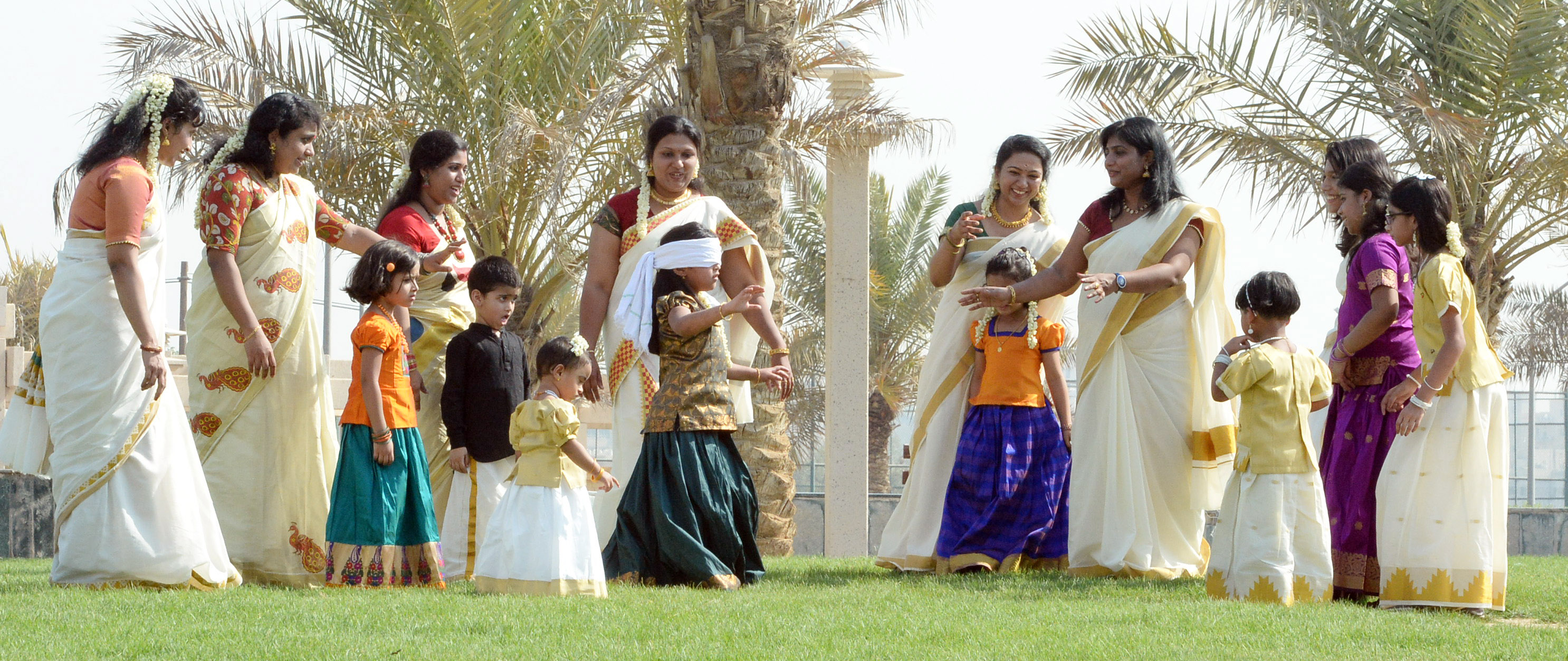
As it’s mentioned everywhere, everyone knows that the people of Kerala are down-to-earth, amiable and welcoming, which is now very rarely seen in India. Though the mother language is Malayalam, English is well-spoken and understood by almost everyone out there. Since they are natives of Kerala, they are known as “Keralites”. The Keralites also are very progressive in terms of cleanliness, healthcare and physical quality of life. These people emphasize much on education and make it a point to ensure that the younger generation knows the religious teachings of their culture. Most people are making it a point that their kids receive education at least till the primary level.
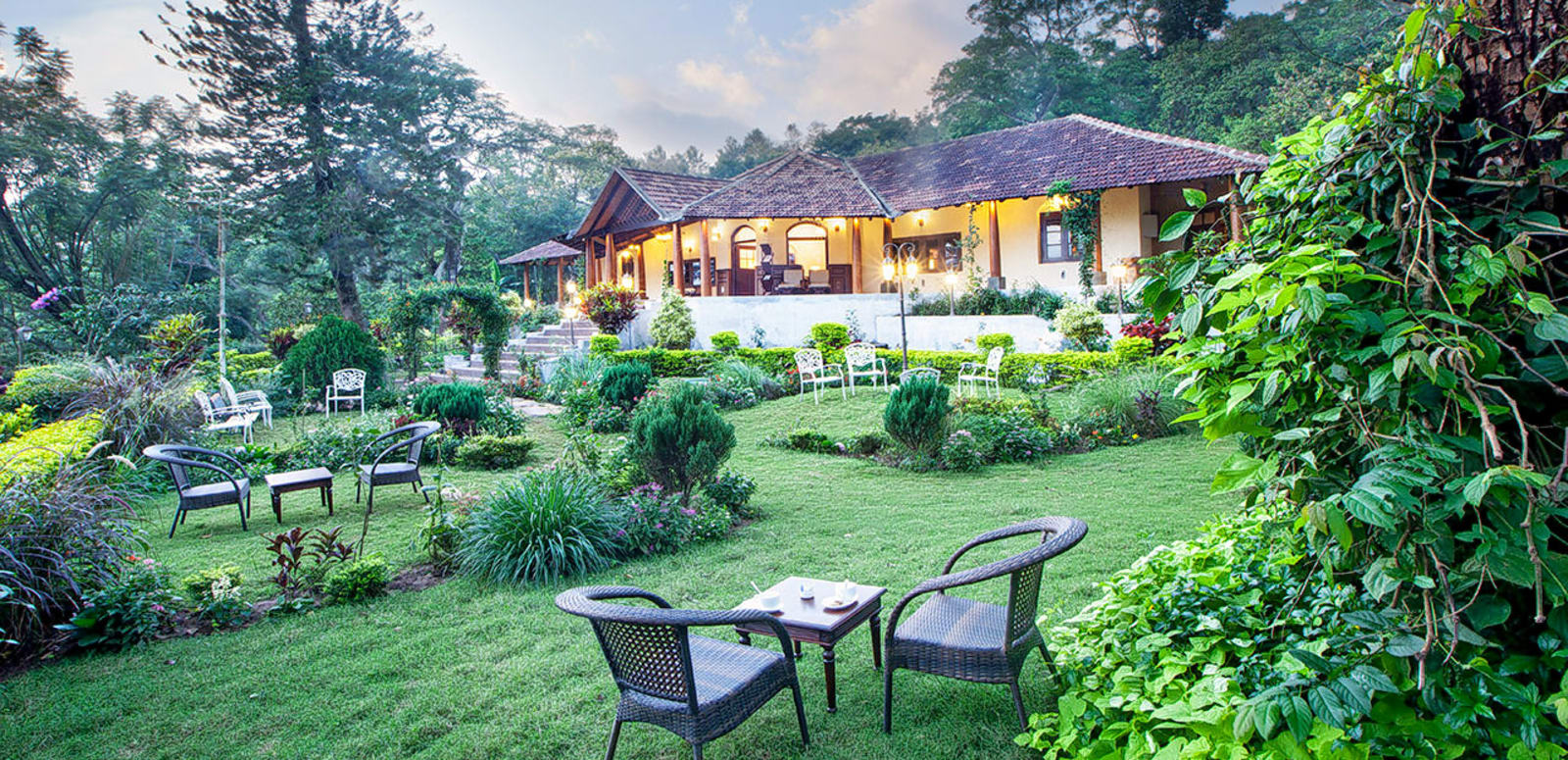
Well, there are numerous homestay options, where you can spend time with the locals and experience their culture and folklore personally. For an authentic rural experience, head to Kumbalangi Integrated Tourism Village, which is approx 14 kilometers (8.6 miles) from the Ernakulam Railway Station. Several homestays are available in this village. You can explore the paddy cultivation, indulge in farming, fishing, canoeing in mangrove forests, etc.
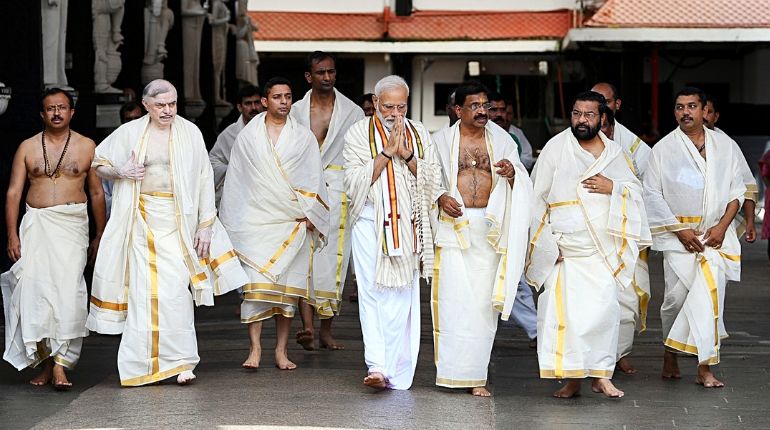
Regarding food, they are very particular about their health and are conscious about sticking to a balanced diet. Also, the natives of Kerala follow a very normal dress code. Even during special events and ceremonial occasions, they do not believe in flaunting off. The women dress up in the traditional unique ‘set mundu’, a graceful and elegant attire which requires the skillful draping of two pieces of cream-colored cloth with striped or zari border, somewhat similar to a sari (sans the pleats), worn over a matching blouse. The men mostly wear white ‘mundu’ with a kurta or shirt, or a cotton ‘lungi’ with a towel hanging from or worn around the shoulders. The men in cities wear pants and shirts while the sari is worn by all types of women. The younger generation prefers to follow fashion and wear anything from jeans to salwar kameez but by the passage of time, they too realize the importance of their state’s traditional attire.
Kerala has been one of the most cosmopolitan and peace-loving states in India. It has served as a melting pot of the cultures from the orient and the occident. This tolerance of diverse cultural values has persisted through the ages. Kerala’s culture represents the quintessence of the collective achievements of its people in the fields of religion and philosophy, language and literature, art and architecture, education and learning, and economic and social organization. In fact, throughout its history, the genius of Kerala has bloomed forth in all its vigor and vitality and has helped its people to reach the peak of excellence in all their endeavors.
Also, Kerala has an equitable climate throughout the year. It is better to have cotton and light clothes with yourself but if your itinerary includes hill stations or cold places like Munnar or Thekkady so we suggest you to pack woolen clothes. Also don’t leave to take your sunglasses, hats, and sunscreen on the marvelous Kerala beaches to get away from tan.
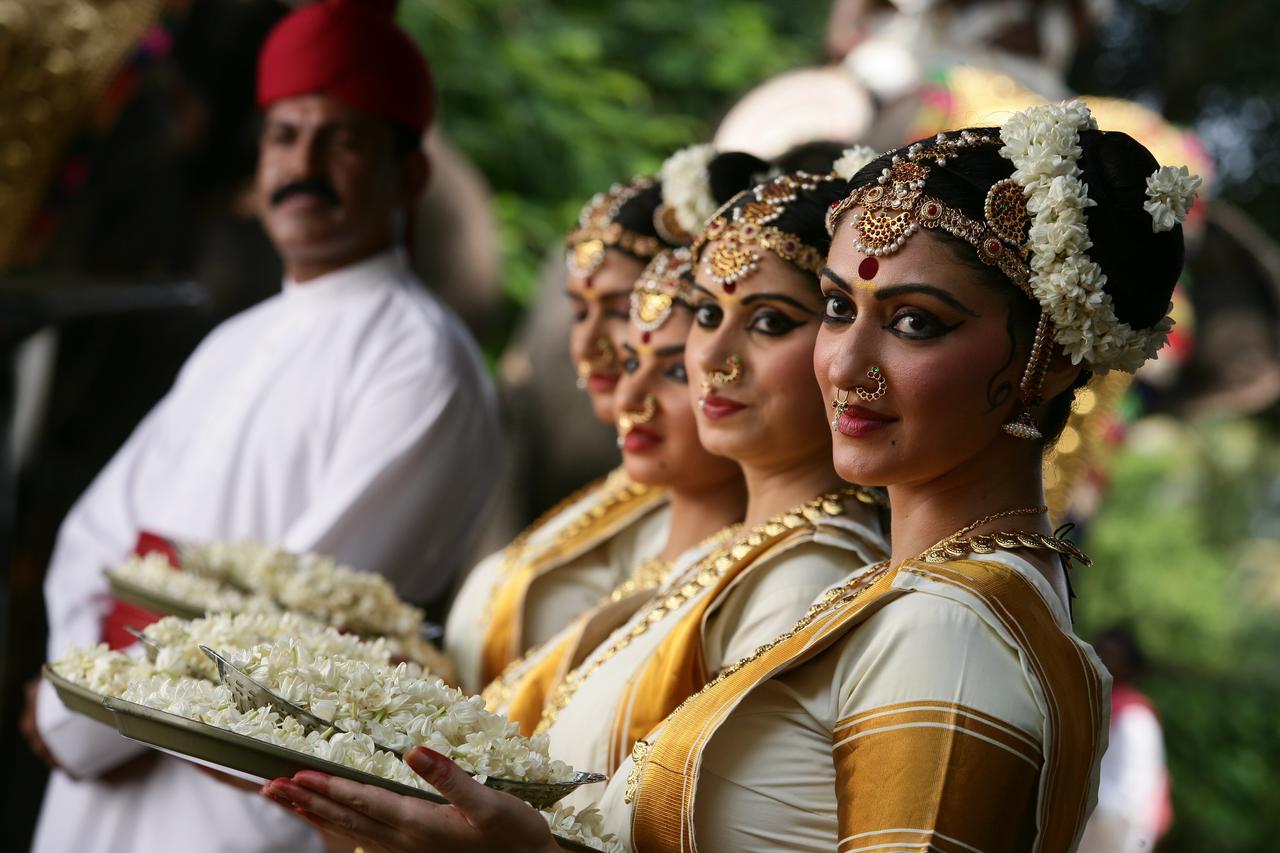
One thing, you’ll love there is Kerala has several famous shops selling textiles, gold ornaments and other handicrafts in cities like Kochi, Trivandrum, and Thrissur. Handicrafts such as mirrors, wooden boats, Chinese fishing net models, elephants made out of wood, etc are souvenirs you might want to take back. Khataisons and Surabhi on MG Road, Cochin are outlets that sell such handicrafts. Unlike the rest of India, there is very little scope for bargaining. Almost all the shops have fixed prices and you should try to get souvenirs from Kerala when you are returning from Kerala. Traditional Kerala settu mundu and kasavu saree is an ideal souvenir for woman and can be bought at Kasavukada, a brand name in Kerala Sarees.

Meghalaya’s Behdienkhlam Festival is all about colours and prosperity
July 16, 2019 in News
Behdienkhlam is probably one of the most famous festivals in Jowai, Jaintia Hills of Meghalaya. It is celebrated every year in July. One of the most colorful religious festivals, Behdienkhlam is celebrated by the Jaintia community in July. The people here invoke the gods for a good harvest after sowing for new crop, and rituals are also conducted to avert evil. This year, the festival will be held from July 14, and the festivities will go on for three days. The prime highlight of the festival is the football match between the local teams.

Significance of the festival
Behdienkhlam is a combination of three words, Beh (to get rid of), Dien (wood or log) and Khlam (plague). Together, these words become one and translate to ‘to get rid of the plague’. The prime objective of the festival is to pray to the Lord for good health and harvest. Folk dance performances are also organized here during this time and people from all over the country gather to witness this vibrant festival and be a part of the celebrations.
The legend
Behdienkhlam is celebrated with much enthusiasm all over the Jaintia Hills; however, to witness the glory of this festival, Jowai town (around 64 km from Shillong) is the best place. Legend has it that once upon a time, the town of Jowai was completely covered in thick forest and no human lived here. During that period, the place had five deities, among which four were stones and one was a river. If you ever visit Jowai, you’ll notice these four stones in four corners of the town. It is believed that once these five deities together wished to send humans in the region, and their prayers were heard when Mongolian tribes made this place their home.
So, after the forest was inhabited by humans, the eldest of all deities, U-Mokhai became happy and started a ceremonial dance that created much thunder and noise. This scared people and they started to leave the forest. Looking at this, U-Mokhai appeared in front of them and asked them to stay.

The celebration
The beginning of the festival happens with the sacrifice of a pig to Knia Pyrthat or thunder. This is then followed by the Wasan or priest, who walks along the main road to the point, where the forest begins while ringing a bell. Later, tribe people take fallen tree trunks from the sacred forest and leave them in the woods for a few days. These trunks are then collected and brought home.
This is the time when people celebrate by singing and dancing. On the last day of the festival, an interesting practice takes place wherein youth along with a priest visit every home in the town. They climb the roof of each house and then beat it with a bamboo stick, which they believe chases away the evil spirits.
If you ever visit the town during the Behdienkhlam Festival, you’ll get to witness the artistic skills of the people. Worth noting are several tall bamboo structures, which people decorate with colored paper and tinsel.
Report Courtesy: https://timesofindia.indiatimes.com/travel/things-to-do/meghalayas-behdienkhlam-festival-is-all-about-colours-and-prosperity/as70192677.cms

Janjehli in Himachal Pradesh to soon become an eco-tourism destination
July 16, 2019 in News
Janjehli will soon be developed as the most-favored eco-tourism destination in the country. Recently, Himachal Pradesh Chief Minister Jai Ram Thakur said that the state government is committed to developing Janjehli as one the best eco-tourism destinations in the country, as the said region has a massive scope of tourism because of its pristine settings, pleasant weather, and mesmerizing scenic beauty.

While presiding over the closing ceremony of the Janjehli Tourism Festival 2019 in Mandi district, he said that the festival was an effort to showcase the rich cultural diversity and natural beauty of this area. He added that Himachal Pradesh has many destinations apart from Kullu, Shimla, Manali, and Dharamshala that need to be developed from a tourism point of view. Doing this will help share the burden of those places that are already bearing the brunt of over-tourism, the minister mentioned.

As per the reports, while the state government is planning to develop Chanshal in Shimla district as a skiing and winter sports destination, Janjehli in Mandi district is set to become an eco-tourism spot, Pong Dam in Kangra district to turn into a water sports destination, and Bir-Billing in Kangra district will be turned into a paragliding spot.

Reportedly, as of now, to highlight Janjehli in the tourism circuit, a resort will be set up in Mandi district; plus, there are plans to set up a ropeway to the famous tourist place Shikari Mata Temple. As per the minister, such efforts will ensure wooing more and more tourists in the area.
Report Courtesy: https://timesofindia.indiatimes.com/travel/destinations/janjehli-in-himachal-pradesh-to-soon-become-an-eco-tourism-destination/as70229651.cms

5000 Indian pilgrims can now travel visa-free to Kartarpur in Pakistan every day
July 16, 2019 in News
Good news for Indian pilgrims; Indians having an Indian passport can now travel visa-free all seven days a week to Kartarpur. Both India and Pakistan have agreed to build a bridge on its side for the Sikh pilgrims wishing to visit Kartarpur. Those with an Indian passport and OCI (Overseas Citizenship of India) cards can take this opportunity to visit the Kartarpur gurudwara.

The two countries have agreed to allow 5000 Indian pilgrims, who can visit the gurudwara all seven days. Dr. Faisal, the spokesperson for Pakistan’s ministry said that both the countries have reached a consensus on 80% issues regarding the opening of the Kartarpur Corridor.
During the meet, the Khalistan issue was also raised by New Delhi, India.

In a press release from the Ministry of External Affairs India, it was mentioned that “Importance for ensuring a safe and secure environment for the pilgrims was underscored. In this context, concerns regarding individuals or organizations based in Pakistan who may try to disrupt the pilgrimage and misuse the opportunity to play with the sentiments of the pilgrims were shared.”
India has requested a consular presence in Kartarpur Sahib Gurudwara to assist the pilgrims. Pakistan too assured that there won’t be any anti-India activity.

India has also made a proposal to Pakistan of allowing 10000 Indian pilgrims to visit Pakistan to celebrate the 550th birth anniversary of Sri Guru Nanak Dev Ji under the 1974 Protocol. The anniversary will take place on November 2019.
Both India and Pakistan are working fast and hard to get over with the construction of the Karatrpur corridor. As of now, India is building a four-lane highway, along with a passenger bus terminal, to handle 15000 pilgrims every day. Both the works are expected to be completed in November this year.
Report courtesy: https://timesofindia.indiatimes.com/travel/destinations/5000-indian-pilgrims-can-now-travel-visa-free-to-kartarpur-in-pakistan-every-day/as70226538.cms

Rishikesh’s iconic Laxman Jhula closed temporarily
July 16, 2019 in News
All vehicular movement has been stopped at Rishikesh’s famous Laxman Jhula (Lakshman Jhula) bridge for the time being. An iconic landmark in the Yoga Capital of the World, the bridge is more than 90-years-old and is recognized worldwide. A suspension bridge, it is 450 feet long and flows over River Ganga. It is also believed to be the ‘First Jeepable Bridge of UP’, and its construction was initiated in 1927.

Now, a ban on all vehicular movement has been put in place by the state government, after a Public Works Department (PWD) report stated the “distressed condition” of the bridge. The immediate closure of the bridge has been announced, leaving tourists in dismay since it is the most popular site in the town. Other than the foreigners flocking to it, the bridge is immensely popular with the locals as well; several Bollywood movies have also been shot here.

Apart from its lure to the tourists, Laxman Jhula’s closure will add another two kilometers to those commuting between Tehri and Pauri Garhwal. Pedestrians will be allowed to use the bridge in a limited number albeit. The move to shut vehicular movement, as stated, was a call of the hour as Kanwar Mela is about to start, bringing in droves of pilgrims to the site and, thus increasing the chance of an accident.

The first suspension bridge in the state at the time of its construction, Laxman Jhula is now in need of immediate renovation. Uttarakhand CM Trivendra Singh Rawat stated that a new bridge would soon be built as an alternative to the iconic site, and help in bearing the traffic adequately.
Report courtesy: https://timesofindia.indiatimes.com/travel/destinations/rishikeshs-iconic-laxman-jhula-bridge-closed-temporarily/as70226847.cms

Call of the Wild
July 15, 2019 in North Eastern States, Wildlife & Nature
Kaziranga National Park – Assam
Kaziranga, the first National Park of Assam was declared as a World Heritage Site by UNESCO in 1985. The park is spread over 430 sq. kms. of lush, dense forest area on the southern banks of Brahmaputra and is the famous home of the great Indian One Horned Rhinoceros, which is today found only in few sanctuaries in India. Other animals found here are – elephant, bison, tiger, leopard, hog deer, and barasingha, etc. The lakes inside the park are home to about 5, 00 birds, which includes, cranes, flamingos, hornbills, ibis, cormorants, egrets, heron fishing eagles, etc. Fine forest lodges are available for stay. Best season to visit from November to April.

To reach here, the main Airport in Jorhat, 96 kms. far and if you want to take the Railway, the nearest railway station is Furkating, 75 kms away from Kaziranga. The easiest plan is to take the road Bokakhat that is 23 kms. away and the main gate lies at Kohora on NH 37, buses available from Guwahati, Tezpur, and Jorhat. Precise Address: Kanchanjuri, Assam, 784177.
Manas National Park – Near Guwahati
The scenic park on the banks of Manas River teems with a rich variety of wildlife and is only project Tiger Reserve in Assam. It also features on the Unesco’s list of World Heritage Sites. Key fauna – tiger, one-horned rhino, hispid hare, gaurs, pygmy hogs and rare golden langurs. A large number of migratory birds flock to Manas during the winters. Best season to visit from November to April. Accurate Address: Manas Road, Barangabari Gyati Village, Dist Baksa, Gobardhana, Assam, 781315.

Cole Park – Tezpur
The park first established by MrCole, a British Dy. Commissioner has two huge ornamental stone pillars and the sculptural remains of the Bamuni Hills. Nearby, at Da Parbatia are the ruins of 5th-6th century stone temples. Other architectural remains are, Agnigarh and Bamunihills, the Bhairavi and Mahabhairab temples, etc. Specific Address: Mahabhairab, Tezpur, Assam, 784001.

Nameri National Park – Near Tezpur
It covers an area of about 200 sq. kms. and extends into Arunachal Pradesh. Key fauna- clouded leopard, tiger, capped langur, etc. The park is also rich in birdlife and Jia Bhoroli river here is known for the golden mahseer fish. Correct Address: Sonitpur, Guwahati, Assam, 784001.

Orang National Park – Near Tezpur
The park is popularly known as mini Kaziranga and is a good place to view one-horned rhino, leopard, elephant, sambar, barking deer, tiger, etc. There is also a rich variety of bird species. Exact Address: Singari Bangali Gaon, Assam, 784110.

Namdapha National Park – Arunachal Pradesh
This unique border extends snow-clad peaks to the valley floors on the sea level. The vast biodiversity sustains a large variety of endangered flora and fauna and is the only natural habitat where tiger, leopard, clouded leopard and the snow leopard can be seen. Other Key fauna includes- endangered takin, hoolock gibbon, red panda, and capped langur, etc. The birdlife includes the great Indian Hornbill, the state bird of Arunachal. It has over 150 species of trees and has a rich wealth of medicinal and ornamental plants. The nearest airport is Dibrugarh (112 kms.), via Miao, its entry point. Best season to visit from October to April. Precise Address: Director, Namdapha Tiger Reserve, MV Road, Arunachal Pradesh, 792122.

Mouling National Park – Arunachal Pradesh
It sprawls over an area of 483sq. kms. in the Upper Siang District. The park is home to a rich variety of animal and birdlife. Key fauna- clouded bear and deer. It also has white-feathered wild duck breeding by Jeep from Yingkiong / Pasighat. Yinkiong and Jengging are the nearest bus stands. The nearest railhead is Murkongselek. Best season to visit from October to April. Exact Address: Jengging, East Siang, Arunachal Pradesh, 791102.

Mini Zoological Garden – Aizawl
The zoo at the Durtlang Hills is home to animals and birds found only in the hills of Mizoram. The Durtlang Hills affords a panoramic view of Aizawl and is a must-visit the site for the breathtaking view of the hills. Other attractive sites are- the Assam Rifles Centre, Raj Bhawan, the Assembly, and Secretariat. Specific Address: NH 44A, Lungverh, Mizoram, 796009.

Sipahijola Wildlife Sanctuary – Tripura
It is 25 kms. from Agartala and a delight for bird watchers. Large colonies of local and migratory birds sprawl over an area of 18.53 sq. km. Extraordinary animals seen here are, unique spectacled, monkey, crab-eating mongoose and Sharmila billi. There are also an orchid and botanical garden zoo and lake. Abasarika, the forest dark bungalow offers accommodation within the sanctuary. Correct Address: Uttar Charilam, Tripura, 799102.

Trishna Wildlife Sanctuary – Tripura
It is about 100 kms. from Agartala. The bison and golden langur are the main attractions. Local and migratory birds can also be seen here. Accurate Address: Rajnagar, Belonia – Bhabanipur Rd, Joychandrapur, Tripura, 799150.


Seven Wonders of 7 Sisters!
July 15, 2019 in North Eastern States
Arunachal Pradesh – Tawang Monastery
It’s also known as the Orchid State of India, also it is one of the richest parts in India as it is completely covered with lush greenery in the form of forests and meadows. However, Arunachal Pradesh is largely popular for the presence of Tawang Monastery within its boundaries. Largest of them all in India, this 17th-century monastery is located atop a hill in the valley of Tawang river. With more than 50 private buildings and a huge library, Tawang Monastery showcases the vibrant culture and folklore of the state. So, what do you think of traveling to this beautiful wonder of Arunachal Pradesh this season?

Assam – Majuli Island
Majauli, the world’s largest river island nestles amidst the waters of Brahmaputra. It covers an area of 866 sq. kms. comprising of forest and beach, but is fastly shrinking due to erosion. The scenic island is also an important center of Vaishnava culture and renowned for its Satras or Vaishnava monasteries, which were the centers for Assamese culture and religion. Upper Majauli is inhabited by Mishing and Deori tribes, who are known for making exquisite handlooms, especially the Mirizen shawls and blankets. The biodiversity of the island attracts a large number of migratory birds. The island has been proposed as the 21st UNESCO Heritage site. MAjauli is 20 kms. from Jorhat and can be reached by ferry at Nemati Ghat at Jorhat. Jorhat is regarded as the Tea Capital of the world and is also an important cultural center of the State.

Manipur – Loktak Lake
Ever wondered if having a chance to stand on water?
Well, the unique Loktak Lake of Manipur can just give you that chance. The largest freshwater lake of North-eastern India, it is famous for the floating vegetation found on it of various forms. These floating mass of vegetation is locally known as Phumdis and appear like floating islands on water. The Loktak Lake has a tourist boating center too, where you can get an absolutely worth it boat ride experience. Not only a breezy ride on this pristine lake while watching the sun go down in the distant mountain a splendid feeling but then you can actually get down at one of these phumdis to experience how it feels like standing and walking on these floating mass of land. Buying a half an hour boat ride ticket one can drop into the humble abode of the fishermen families staying on these phumdis, who depend on this lake for their livelihood. The simplicity of their living and the smile on their faces makes one realize that contentment is the real wealth.

A distant, bird’s view of the lake can be seen from the Sendra resort located at a hilltop near this lake. You can enjoy the breathtaking view and calming breeze of the lake while sipping on some hot beverage and snacks at the Sendra cafe. Another attraction of the lake is the Keibul Lamjao National Park, located on its southern shore. It is home to the endangered brow-antlered deer also known as Sangai deer or dancing deer of Manipur.
One can get a glimpse of the deers through binocular from the distant watchtowers of this park. Keibul Lamjao is the only floating national park in the world, the sad fact though is not much initiative is being undertaken for the upkeep and promotion of tourism for this unique attraction.
Meghalaya – The Root Bridges
If there is any place in India which deserves to be called the green beauty, then it is, unarguably, Meghalaya. Home to the highest rainfall-receiving place, the state of Meghalaya is covered with green lawns, thick woods and towering hills, which are definitely incredible.
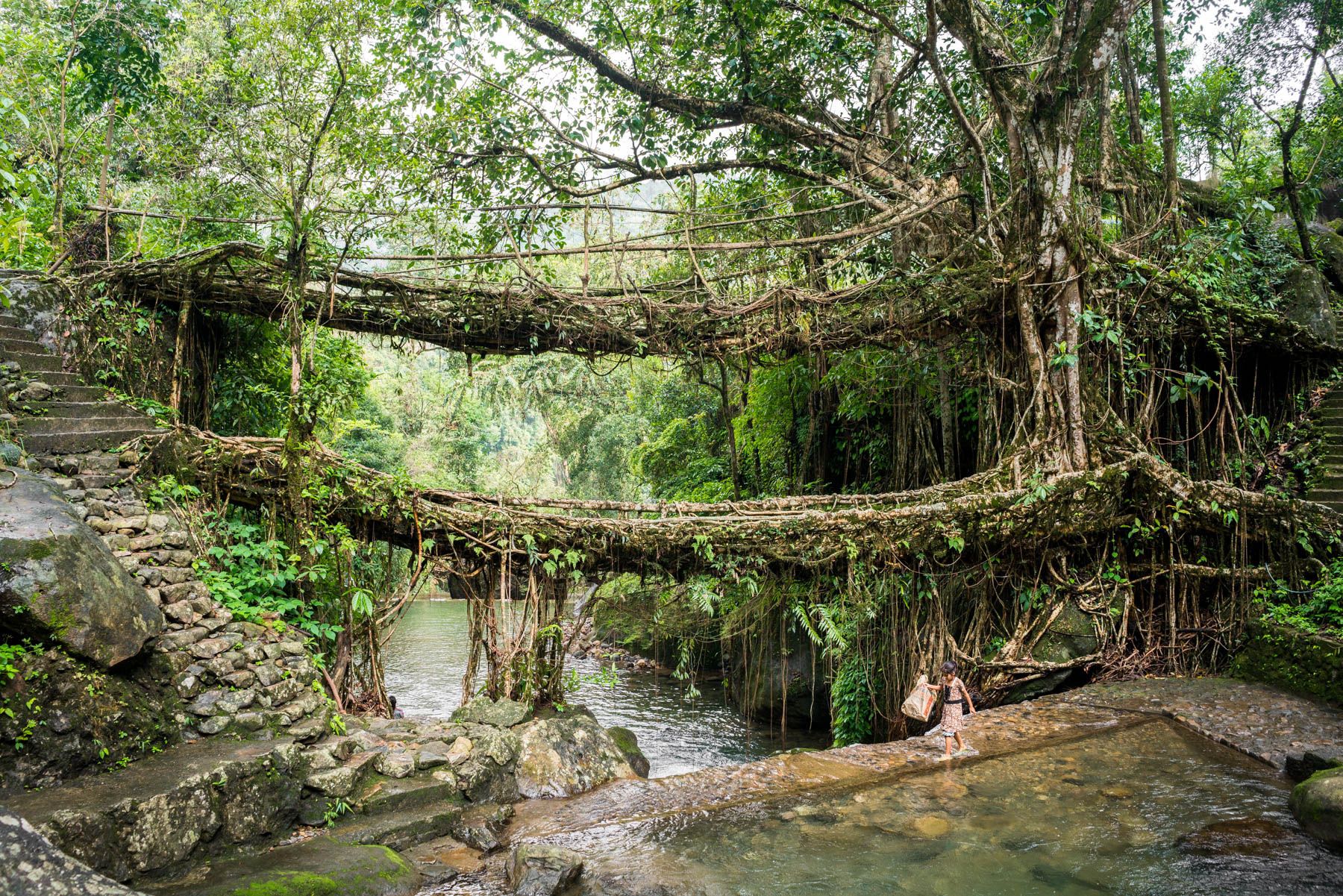
Cherrapunji (Sohra), the small hilly village 56 kms. from Shillong is the wettest place on earth and is one of the most visited tourist spots of North-Eastern India. It is quite interesting to note that Cherrapunji receives an average rainfall of40 inches annually, but it suffers from the water crisis. The scenic beauty of the region is enhanced by a number of gushing waterfalls. Other attractions are the festivals of Khasi tribals, oldest Theological College of the region (established in 1888), limestone caves, oranges, and honey.

Mawsynram, the picturesque village on a hill, about 3 kms. from Cherrapunji and55 kms. from Shillong is said to have broken the Cherrapunji’s record of the wettest place on earth for some time. However, in 2002 Cherrapunji received 12,262 m.m. of rainfall and regained its lost glory. Although the facts of Mawsyram receiving more rain have not been corroborated. The region teems with limestone caves with beautiful stalagmite and stalactite formations.

Mizoram – The Blue Mountain
Also known as Phawngpui, Blue Mountain, at an elevation of about 2157 m, is the highest peak of Lushai Hills and is home to rich flora and fauna. However, the major thing which makes it the wonder of Mizoram lies in its beautiful blue appearance at the time of dawn and dusk.

Nagaland – Dzukou Valley
If you think the valleys of Uttarakhand and Jammu & Kashmir are the most beautiful ones, then you really need to catch a glimpse of Dzukou Valley, which is the invaluable wonder of Nagaland. It is characterized by green vegetation and seasonal flowers, which cover its entire expanse, and is famous for nurturing the beautiful flower, Dzukou Lily. How about getting yourself to this world of flower fields?

Tripura – Ujjayanta Palace
Even though Tripura has several other tourist places in the form of ancient monuments and religious sites, the beauty and significance of Ujjayanta Palace are still unmatchable. Built-in the year 1901, this majestic beauty served as a legal residence to the royal family of the Manikya dynasty. However, today, it is has been converted into a state museum which houses things related to the art, culture, and lifestyle of Northeast India in the past. Surrounded by beautiful gardens and settled on the banks of charming lakes, Ujjayanta Palace seems like a residence in heaven. From beautiful location to commendable architecture, each and every bit of this majestic building is worthy of attention.


Seven Sisters
July 15, 2019 in North Eastern States
Arunachal Pradesh

Marvelous Arunachal, the land of the dawn-lit-mountains is the first place to greet the golden sun blazes into our country. This nature’s treasure trove has over 60 percent of its the area covered with evergreen forests interspersed with rivers, streams, gorges, and snowy peaks. Arunachal Pradesh, a naturalist’s dream has an amazing assortment of fascinating flora and fauna. A visit to this once ‘Hidden Land’ is an out of the world experience, as one comes across breathtaking spectacular nature in all her pristine glory.

Itanagar, the charming capital of Arunachal Pradesh is said to be named after the historic Ita Fort, dating back to the 14-15 century and identified with Mayapur. It is actually a twin town – Naharlagun, the older and Itanagar, the new official capital town The elegant Raj Bhavan, the official residence of the Governor, along with the wood frame buildings rising up the slopes of a lush hill presents a picture-postcard setting.
Buddhist Temple: The beautiful yellow-roofed shrine on a hill affords a fine view of the town. The Tibetan influence on the architecture of the shrine is clearly visible.
Jawaharlal Nehru Museum: It exhibits archaeological relics from the Ita Fort. There is also a fine collection of arts and crafts, jewelry, textiles, and tribal headgears of Arunachal Pradesh.
Other places of interest are, Ganga (Gyakat Sinki) Lake, PoloPark, Handicrafts Centre, Zoo, etc.
Assam

Alluring Assam, the ‘Home of the son of Lord Brahma or Brahma- Putra” is a land of myths, mysteries, lores, and legends. This sentinel of northeast India is joined to the mainland by a narrow strip of land and noted for its ruins and monuments, colorful people and festivals. The state endowed with stunning scenic beauty is dominated by the mighty Brahmaputra River and is the largest producer of timber and tea in the country. Assam is also dotted with oils fields and it produces about one-sixth of India’s petroleum and natural gas.

Guwahati, the ‘Gateway to the North East sprawling along the banks of Brahmaputra is the main industrial, commercial and communication center of the region. It was an important religious and political nerve center of ancient Assam and was earlier known by the names of ‘Kamrupa’ and ‘Pragiyotishpura’ or ‘the city of eastern lights’. Today, this bustling business city is associated with various products like tea, oil, forest produce, and handlooms, etc.
Kamakhya Temple: The sacred shrine of Goddess Kali is the most important temple of Assam and the main attraction of Guwahati. The temple with bee-hive shaped shikaras is perched on the Nilachal hill and is a fine example of Assamese architecture. It is one of the three most important tantrik temples in India. According to mythological legends, the ‘yoni’ of Shakti, an incarnation of Goddess Parvati fell over here and thus it is also known as ‘Yoni Pith’.
Assam State Museum: It has a rich collection of archaeological and ethnographic artifacts like stone sculptures and bronzes etc, dating back to the 7th century.
Nabagraha Temple: The temple of the ‘Nine Planets’ at the Chitranchal hill is an ancient seat of astrology and astronomy. The lingam inside the shrine is surrounded by nine representations of the planets.
Umananda Temple: The Shiva temple is set on the Peacock Island in Brahmaputra river and can be reached by boat from Umananda Ghat.
Srimanta Sankaradeva Kalashetra: The cultural center is named after Sankaradeva, a 15th-century Vaishnavite saint. It preserves and promotes the cultural identity of the Assam.
Assam State Zoo: This well-maintained zoo has a rich variety of animal life. There’s an also a fine botanical garden.
Manipur

Magnificient Manipur, actually meaning a “jewelry land” is studded with lush hills, emerald green valleys, turquoise lakes, and deep dark woods. Lord Irwin described it as the “Switzerland of India” while Nehru called it the “jewel of India”. Manipur is also proud of its rich culture and heritage. It epitomizes beauty and grace through Manipuri, the world-famous dance form and the equally captivating tribal dance noted for their colorful costumes. The exquisite handlooms and handicrafts of the Stae demonstrate the artistic and creative outlook of the Manipuri’s. Manipur is are also known for their rich sports and martial traditions. It is believed that the sport of Polo originated here, as Songol Kangjei (Manipuri Polo). Mukna Kangjei (wrestling Hockey), Yubi Lakpir (Manipuri Rugby) are some of the other popular indigenous sports of Manipur.

Imphal, the beautiful capital city nestling in the heart of an oval valley is said to be founded in 3rd century B.C, making it one of the oldest state capitals of the country. This mini-metropolis is a fascinating blend of Indian and multiple ethnocultural traditions and is emerging as an important tourist destination of the region.
The Old Royal Palace: It lies in the center of the town and has relics of an old fortress and a palace.
Shree Govindji Temple: The sacred shrine near the Royal Palace is dedicated to Lord Krishna, as Govindji. It has twin golden domes, a paved courtyard, and a great assembly hall. The image of the principal deity is carved out of a jackfruit tree in response to a dream which Rajarshi Bhagyachandra had in the 18th century. The presiding deity is flanked by the shrines of Krishna, Balaram, and Jagannath. Spellbinding Ras Leela dance performances are held at the shrine on special occasions.
Khwairamband Bazar or IMA Market: The unique shopping mall is the largest exclusive women’s market. There are over 3000 Imas (mothers), who run the stalls located on either side of the road. It is an excellent place to buy exquisite handloom and
handicraft goods, as well as fresh fruits, vegetables, fish and other grocery items.
Shaeed Minar: This memorial pillar is located at the Bir Tikendrajit Park in the center of the town. It was built in the memory of the indomitable spirit of the Meitei and tribal martyrs who laid their lives while fighting the British in 1891.
War Cemeteries: The cemeteries commemorate the British and Indian soldiers who laid their lives during the WorldWar-II.
Manipur State Museum: It is located near the Polo Ground and has a good collection of art, archaeology, natural history, geology, textiles, costumes, etc.
Central Khonghampat Orchidarium: It sprawls over an area of 200 acres along with the NH 39 and treasures the spectacular wealth of Manipur orchids.
Manipur Zoological Gardens: The z00 at Iroishemba on the Imphal-Kangchup Road is famous for the endangered Sangai or brow-antlered deer.
Langthabal: The historic site on a hill overlooking the Manipur University teams with relics of a palace, ceremonial houses, and temples.
Meghalaya
Meghalaya, literally meaning the abode of clouds is one of the most beautiful states of India. This virtual fairyland of lush rolling hills reminiscent of the Scottish moors receives plentiful rain. Its innumerable streams meandering through the hilly tracts, cascading waterfalls, and placid lake are a sight to behold. Meghalaya is the land of Khasis, Jaintias and Garo tribals, who have still preserved their unique heritage and culture. The pristine beauty, salubrious climate and unique vegetation of Meghalaya make it a paradise for nature lovers and botanists.
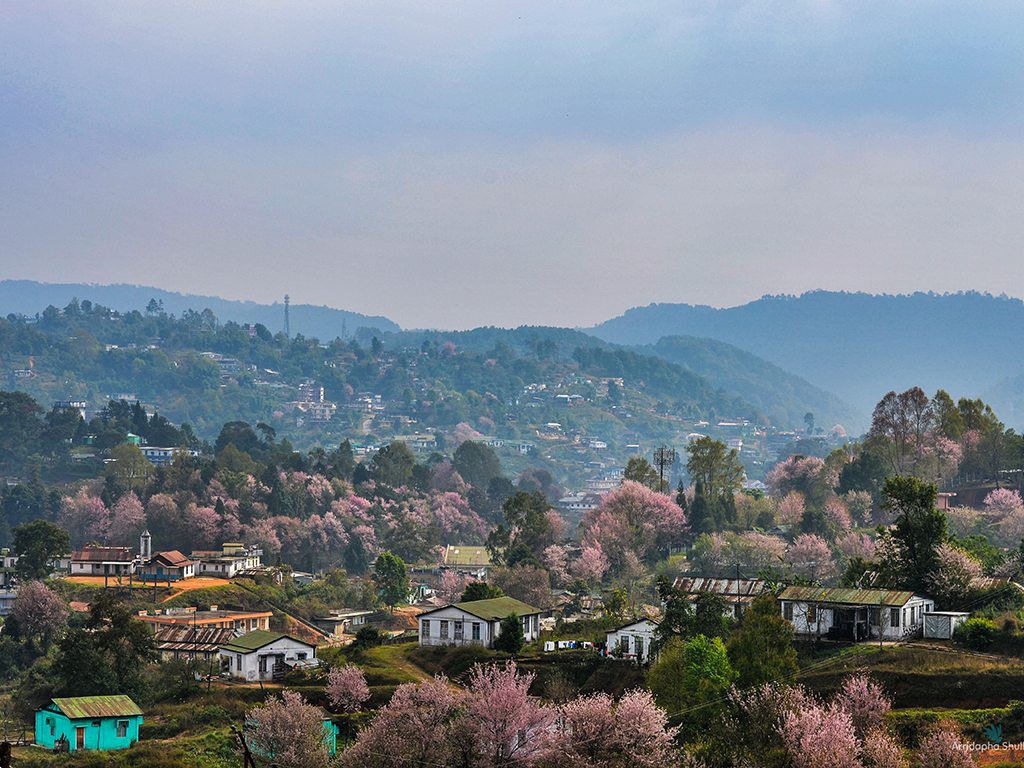
Scenic Shillong, the capital of Meghalaya is perched at an altitude of 1496 meters and is one of the finest hill resorts of India. This ‘Scotland of the East came under the reigns of British, by an agreement in 1863? with Syiem (King) of Mylliem. In 1874, Shillong became the capital of Assam and remained so until the creation of Meghalaya state in 1972.
Ward’s Lake: The horseshoe-shaped lake set in the heart of the town with an arched bridge over it has facilities for boating. A walk around the lake is quite pleasant.
Botanical Garden: It lies near Ward’s lake and has a rich section of indigenous and exotic plants. There is also a mini-aviary with rare and colorful birds.
Lady Hydari Park: It is noted for its nurseries and horticultural wealth. There is also a mini Z00 cum deer park. The Crinoline Falls nearby cascade through its jungle path. At the foot of the falls is a well maintained swimming pool.
State Museum: It lies within the premises of the State Central Library and has a fine collection of artifacts of Meghalaya and the other North Eastern States.
Shillong Golf Course: This excellent 18 hole course finds mention in international Directories of Golf Courses of repute.
Churches: Shillong is studded with numerous churches reminding the colonial heritage of the town. The most beautiful of them is the Cathedral of Mary Help of Christian.
Bara Bazaar: It is the oldest and most important market of Meghalaya and is mainly run by women, providing an insight into the State’s tribal culture.
Bishop and Beadon Falls: The falls at Mawprem, plunge down from the same ridge into a deep valley, providing a spellbinding view.
Mizoram

Misty Mizoram, the land of the Blue Mountain or the Hill people’s Land is virtually under the cover of magnificent mountains and deep gorges. It perhaps the most peaceful state of India as the Mizo society is practically free from divisions on the basis of caste, creed, and sex. The mizo’s code of ethics is based on “Tlawmngaihna”, which means be kind, selfless, and hospitable to others. It is also the second-highest literature of India and is witnessing multidimensional development. Mizos, are also known for their numerous folk and community dances and are perhaps the finest choir singers in theNorth East. The nimble-fingered craftsmen create exquisite handicraft and handloom articles. The beautiful remote Stae is also noted for its rich wealth of flora and fauna.

Aizawal, the attractive capital town of Mizoram is set on a ridge at an altitude of 4,000 ft. above sea level, overlooking the lush green Tlawng River valley to its east, while to its north are the beautiful craggy hills of Durtlang. The Tropic of Cancer passes through this tranquil hill resort.
Mizoram State Museum: It is set in the center of the town and houses historical relics, ancient costumes, textiles, exquisite artifacts and traditional implements Another museum is located at the Macdonald’s hill.
Bora Bazar: This main shopping area of Aizawl provides glimpses of Mizo lifestyle. Mizos in their traditional costumes trade their wares and women weaving shaws can be seen at work, at the Weaving Centre’.
Mini Zoological Garden: The 200 at the Durtlang Hills is home to animals and birds found only in the hills of Mizoram. The Durtlang Hills affords a panoramic view of Aizawl and is a must-visit site for a breathtaking view of the hills, Other attractive sites are, the Assam Rifles Centre, Raj Bhawan, the Assembly, and Secretariat.
Nagaland
Nagaland, the beautiful and vibrant land of blue-hued mountains and emerald expanses is predominantly inhabited by the Naga tribals. The intriguing world of Nagas is soaked in ancient rituals and ceremonies, their passion for music, dance, and pageantry is legendary. They also have a rich tradition of arts and crafts. The lush jungles of the state are home to a rich variety of flora and fauna. Nagaland is well suited for various adventure sports.

Kohima, this historical hill station nestles at a height of about 1,500 meters and is one of the prettiest places in the northeast. During World War two, the rampaging Japanese troops were halted here and forced to retreat.
War Cemetery: The memorial commemorates brave soldiers and warriors who laid their lives fighting the Japanese during World War Two. It is embellished by two tall crosses against the backdrop of seasonal roses and lush grasses.
Nagaland State Museum: It is housed in ancestral weaponry and provides an insight into the Naga culture, traditions, and history. The exquisitely carved gateposts, status pillars, statues, and Naga costumes, and jewelry are the main exhibits.
Catholic Cathedral: It is located at the Aradura hill and is one of the biggest cathedrals of the North-East and houses the biggest wooden cross in the country.
Zoological Park; Rare animals; birds and flora of Nagaland can be seen here. The main attraction is the endangered Blythe’s Tragopan pheasant and the golden langurs.
Kohima Village: It is said to be the second biggest village in entire Asia. According to a Naga legend, the present-day Kohima was founded here. At the entrance are exquisitely carved ceremonial gates, with the scimitar of horns of Mithun (Bos Frontalis), symbolizing bravery and valor.
Tripura

Tranquil Tripura tucked away in the extreme corner of the Northeastern states, amidst the river valleys of Myanmar and Bangladesh is endowed with amazing natural beauty and rich cultural-historical heritage. This ancient land of mysterious past has a unique tribal culture and fascinating folklore. The Rajmala chronicles of king Tripura and writings of other Mohammedan historians reflect the glorious past of the land. The state never came under British supervision and Maharaja’s successor ruled here till it acceded to the Indian Union on 15th October 1949.

Amazing Agartala, the capital of Tripura is set amidst scenic surroundings and is studded with a beautiful palace, lake, well laid out gardens and official buildings built in red brick. Maharaja Bir Bikram Singh built an airport over here in the 1930s.
Ujjayanta Palace: It is set in the heart of the town and was built by Maharaja Radha Kishore Manikya in 1901. The three-storeyed palaces resembling the Victoria Memorial of Kolkata is surrounded by beautiful Mughal inspired gardens. The places floodlit at night and is a sight to behold. It now houses the State Legislature.
Kunjaban Palace: The palace on the lush hillock was built in 1917 and is the official residence of the Governor of the State. In 1926, Rabindranath Tagore resided in the eastern apartment of the palace for some time and is said to have penned down many of his poems over here. The southern side of the palace known as Rabindra Kanan has been opened for public viewing.
Tripura Govt. Museum: It exhibits a fine collection of the archaeological finds of the region. The museum has 4 galleries – Archaeological, Sculpture, Painting, and Tribal Culture and has about 1645 artifacts.
Jagannath Temple: The 19th-century shrine is noted for its 4 storeyed shikhara or tower.
Purbasha: It showcases the traditional handicrafts of the region and is an excellent place to shop cane and bamboo handicrafts and handlooms.

Reasons to visit northeastern states
July 15, 2019 in North Eastern States
Meet tribal people and learn about their unique way of life:
Remote North East India has been cut off from the rest of the world for ages and so it’s one of the rare places in the world where you can meet authentic tribal people who live a very different way of life even in this modern age. North East India is one of the most culturally diverse areas of the world.

It is home to over 200 tribes including unique, fascinating tribes like the opium smoking, headhunter tribes in Nagaland and the facially tattooed, sun and moon worshipping Apatani tribe in Ziro Valley, Arunachal Pradesh.
One of the best ways to experience the vibrant and unique cultures of North East India’s intriguing tribal people is through one of the many amazing tribal festivals. Witnessing the riot of color, music and dance and even some sacrifices and unique rituals of a traditional tribal festival in North East India is sure to be an unforgettable experience.

Don’t worry, they don’t practice headhunting anymore. But it’s a fascinating experience to meet the tribal people and find out about their way of life. It’s best to take a tour with a local guide if you want to be made to feel welcome and to really understand their way of life.
See rare and endangered wildlife:
Because the region is so unspoiled and unexplored North East India is a refuge to many rare and endangered animals. There are many fantastic UNESCO listed national parks where animal lovers can take safaris and witness exotic animals in their natural habitat.

Kaziranga National Park in Assam, one of the most famous is Kaziranga National Park in Assam where close up sightings of engaged one-horned rhinos are pretty much guaranteed (even the Duke and Duchess of Cambridge visited here on their India tour).
Manas Wildlife Sanctuary, also in Assam, is home to more endangered species than any other sanctuary in India.
Or visit Nokrek National Park in Meghalaya to look out for red pandas, tigers, elephants, rare breeds of macaques and marbled cats.
Tibetan culture (without visiting Tibet):
North East India is nestled up against the border of Tibet and parts of the mountainous state of Arunachal Pradesh actually used to be part of Tibet. Visit the remote Tawang region where colorful Tibetan prayer flags flutter over the peaceful valleys.
You will experience the enchanting, serene and colorful Tibetan culture and religion carrying on peacefully in the historic monasteries, prayer wheels, and stupas. Be sure to enjoy delicious and authentic Tibetan food like momos and thukpas.

Explore unspoiled nature and stunning scenery:
North East India is home to some of the most stunning, diverse and unspoiled scenery in India.

From the snow-capped peaks of the soaring Himalayan mountains to the grassy plains of Assam and the steamy forests and majestic waterfalls of Meghalaya – North East India showcases unspoiled nature at its finest!

Experience a totally different and hassle-free side to India:
If the horror stories of dirt, hassle, and chaos put you off visiting India at all then, exploring North East India offers you the chance to experience a totally different side to India. This region is just so different that sometimes I could hardly believe I was still in India – the scenery, the food, the people, the culture everything is different.

Even though a lack of infrastructure makes traveling here a little bumpy and slow-moving at times, I found North East India a welcome escape from other parts of India. The chaos and hassle that you get in the more touristy parts of India disappear in the North East. No one tried to cheat me or touch me or even sell me anything. The people of North-East India where some of the friendliest and most genuine people I’ve ever met on my travel.
Get off the beaten track:
North East India is still unexplored, authentic and blissfully untouristy. In this increasingly globalized world, it can be pretty hard to really ‘get off the beaten track’ nowadays.

North East India is still totally authentic:
As the region has only just started to open up to tourism, restrictions on travel and permit requirements are becoming more relaxed but the region remains blissfully untouched by tourism and unexplored.
In fact, some parts of the mountains in Arunachal Pradesh have not even been mapped! Yes, this means that traveling here can be a bit bumpy and there are no luxury hotels but if an adventure is what you’re after then North East India is the place to come! There aren’t many places in the world with blank spaces on the map. There aren’t many places where people have hardly any idea that the modern world exists, where creatures have yet to be named and mountains yet to be climbed.

But North East India is still totally off the beaten track. It’s an amazing feeling to go somewhere hardly anyone else has gone but you’ll need to go now before everyone else does!
