

Member Type Contributor


Here’s the Northeast Indian Food Tour
July 15, 2019 in North Eastern States
Order any food from the street eatery in the northeastern states of India, you’ll notice that every food is packed up in different flavors and that too at a minimal price.

And you’ll be surprised to know that the street side food of northeastern India tastes better than any glamorous night out at a fine dining restaurant. The streets are overcrowded with food lovers eating delicious meals in the lanes packed with humble carts serving specialty dishes to them. So what are we waiting for? Let the culinary adventure begin!
Also, if you want to make these meals at your home, a recipe link is available just after the specified food!
Laksa from Assam

Standard street food in Assam, Laksa is a Malaysian origin spicy noodle soup that can stimulate your taste buds clearly. The unusual taste of this delicious broth actually comes from a blend of coconut milk, tamarind, flavored fish paste, and spices. Rice vermicelli is dunked into the steaming bowl, resulting in a healthy and good meal. Many versions of this truly addictive dish are sold on the streets of Assamese cities.
Recipe: https://food.ndtv.com/recipe-laksa-551120
Alu Muri in Meghalaya

An undoubtedly mouth-watering mix of boiled potatoes, puffed rice, papaya skin, oil, roasted spices, and tamarind sauce, Meghalaya’s Alu Muri is the ideal recipe for the Indian palate. A much-loved favorite of the locals, one can find this irresistible snack at prominent Alu muri stalls located at every nook and corner of Shillong.
Recipe: http://smittenshillong.blogspot.com/
Thenthuk from Arunachal Pradesh

Thenthuk is a hearty hand-pulled noodle soup made from meat stock, local hill vegetables, and freshly made noodles. It is similar in taste and texture to thukpa (Tibetan noodle soup). While thukpa is made from flat noodles, thenthuk uses hand-pulled or bite-sized pieces of flat noodles. Traditionally eaten to keep warm during the freezing winters of Arunachal Pradesh, this deliciously comforting dish warms your soul too!
Recipe: https://www.archanaskitchen.com/thenthuk-soup-recipe-tibetan-style-noodle-soup
Chikhvi in Tripura

A fragrant stir fry of bamboo shoots and sliced pork, Tripura’s chikvi is a dish that achieves the perfect balance of smokiness and lusciousness. It is made with stir-fried chopped bamboo shoots and sliced pork. Other ingredients added are soaked jack fruit seed, green papaya, green chilies, ginger paste, turmeric powder, rice flour paste, and fresh lime leaves. The pork and bamboo shoots, cooked in a blend of soaked green papaya seeds, green chilies, ginger, turmeric, rice flour, and fresh lime leaves, are succulent and beautifully spiced.
Recipe: http://www.tripura.org.in/cooking.htm
Smoked Pork Stir Fry in Nagaland

This may be one of the more exotic dishes on this list but Nagaland’s smoked pork stir fry is too good to be left out. The state has many versions of this smoked pork dish but the trademark item among the ingredients is the hottest chili in the world, Raja Mirchi or Bhut Jolokia (ghost chili). Adding fermented soybean (akhuni), fermented yam leaves (anishi) or bamboo shoot enhances the taste of the dish and brings out an intense smokiness that is unique and unusually delicious.
Recipe: http://reviewne.com/pork-with-bamboo-shoots-naga-style
Sanpiau from Mizoram

A very popular Mizo snack sold in the streets, Sanpiau is a type of rice porridge that is served with fresh coriander paste, crushed black pepper, zesty fish sauce, and finely powdered rice. Topped with pan-sizzled spring onions, this freshly spiced dish has an intoxicating aroma. For those with a fondness for tasty, spicy but simple food, this Mizo classic may be just right.
Recipe: https://worldofgoldenharvest.com/sanpiau/
Kelli Chana in Manipur

A herb-flavored spicy chickpea snack from Manipur, Kelli chana is usually served on a lotus leaf with the aroma of the leaf contributing to the taste of this delicious dish. Kelli chana apparently got its name from an old lady Kelli who used to sell the snack under a tree. The recipe soon became very popular.
Recipe: https://www.cookshideout.com/manipur-kelli-chana-spicy-chickpea-snack-recipe
Shapale in Sikkim

Similar to a large deep-fried momo or a samosa, the Tibetan-origin Shapale is essentially a meat pie. With a crunchy, doughy exterior and a gooey interior filled with minced chicken/meat, onions, and spices, Shapale is an anytime street snack in Sikkim. Add a touch of the fiery hot chili sauce to this savory pie and pair it with rutang soup (soup made from bony meats) for a truly delectable street food experience.
Recipe: https://www.yowangdu.com/tibetan-food/shapale-recipe.html

The Dance Culture of North East India
July 15, 2019 in North Eastern States
Seven Sisters is a land of undulating hills and plains with a luxuriant green cover and a wide variety of rare and exotic flora and fauna. Each of this state is more beautiful than the other, each with its own culture and beliefs, each having its own charm. Because of the inaccessibility of the region from the rest of the world, it has been lucky enough to maintain most of its natural diversity and has been untouched from the modernization. The dance forms are incredible and as vibrant as the people of northeastern states of India, actually, dance is an important aspect in the lives of people living in this part of the country and hence many age-old dance forms are still practiced and kept alive.
Mask Dance (Meghalaya)

It is part of religious and cultural traditions. The main purpose of this dance is to propitiate the deity, kill the evil king and protect the people from the wrath of natural calamities, diseases, and epidemics and ensure health, happiness, and prosperity for the people of the area.
Pung Cholom (Manipur)

It’s the love of Manipuri Sankirtana music and Classical dance. In this style, the dancers play the pung (a form of hand beat drum) while they dance and they need to be graceful and acrobatic at the same time. They use these acrobatic efforts without breaking the rhythm or flow of music.
Basanta Ras Leela (Manipur)

It’s a team performance, with its own unique costumes, aesthetics, conventions, and repertoire. The Manipuri dance drama is, for the most part, marked by a performance that is graceful, fluid, sinuous with greater emphasis on hand and upper body gestures. In this dance, Rasa Leela is depicted within the Manipuri classical way. The dance is performed holding dandi (sticks) and is often accompanied by folk songs and devotional music. The women characters are dressed like a Manipuri bride, in Potloi costumes, of which the most notable is the Kumil. A Kumil is an elaborately decorated barrel-shaped long skirt stiffened at the bottom and close to the top.
Satriya Nritya (Assam)

Sattriya Nritya is a major Indian classical dance. It is dance-drama performance art with origins in the Krishna-centered Vaishnavism monasteries of Assam.
Naga Dance (Nagaland)

Naga folk songs are both romantic and historical, with songs narrating entire stories of famous ancestors and incidents. This dance is martial and athletic in style.
Bamboo Dance (Mizoram)

Consisting of four people holding two crossed pairs of bamboo staves, it is one of the most famous dances in Mizoram, and a center of attraction during festive occasions.
Bihu (Assam)

Given that the festival of Bihu is celebrated across the globe in cities like London, New York by Assamese societies, it is well known by people of mainland India as well. Generally, Bihu is celebrated three times a year and during this time men and women together perform a dance by showing off various postures like squats, twirls, movements of hips, arms as well as wrists. That can take a lot of practice for you to come up with such fine moves. In this dance form, the females wear a Mekhala Chador and the male dancers wear a Dhoti Gamocha.
Hojagiri Dance (Tripura)

This is basically a folk dance of the Reang community in the state. The Hojagiri dance is a ceremony to satisfy the goddess Lakshmi in order to have a good harvest. The unique thing about this dance is that only the lower portion of the body moves to the rhythm of the music. The major highlight of this dance is the super cool acrobatic things like a bottle with a lighted lamp on top or balancing an earthen pitcher.
Walk further in Northeastern India
July 15, 2019 in North Eastern States
Shillong, the Scotland of the east…
Shillong, formerly called Yeddo or Lewduh, city, capital of Meghalaya state, northeastern India. The city is located in the east-central part of the state on the Shillong Plateau, at an elevation of 4,990 feet (1,520 meters).
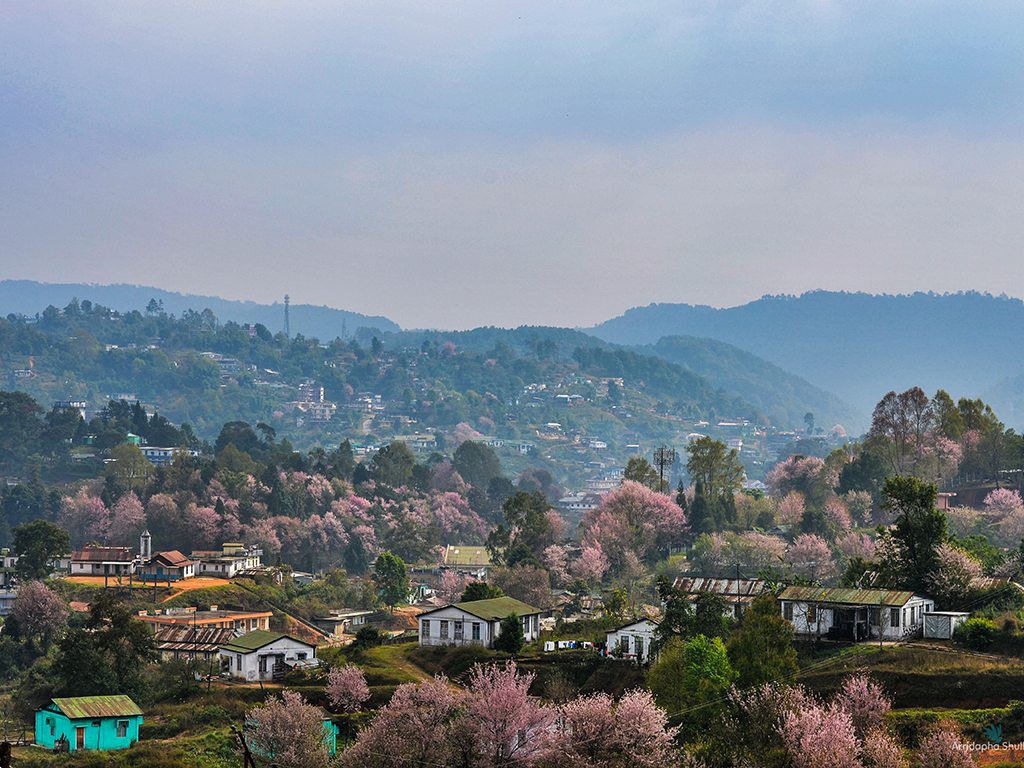
Shillong first became prominent in 1864, when it succeeded Cherrapunji as the district headquarters. In 1874 it was made the capital of the new province of Assam. An earthquake destroyed the city in 1897, necessitating its complete rebuilding. The North-East Frontier Agency’s headquarters were in Shillong until that region became the union territory of Arunachal Pradesh in 1972. In that year Shillong became the capital of Meghalaya, which had been newly created out of territory that was formerly within the state of Assam.
Shillong, a popular tourist destination, is at the core of one of the largest urban areas in northeastern India. It is an important trade center for agricultural products and has research stations focusing on a dairy farm, fruit, and milk production. It also has the Pasteur Institute and Medical Research Institute and is the home of North-Eastern Hill University (founded 1973). The Barpani hydroelectric station lies a few miles to the north. Traffic congestion is a problem in the city.
Khasi people have long lived in the Shillong region. Large-scale migrations to Shillong took place following the partition of India in 1947. The immigrants were mostly from the portion of Assam that became part of East Pakistan (now Bangladesh). Pop. (2001) city, 132,867; urban agglom., 267,662; (2011) city, 143,229; urban agglom., 354,759.
Guwahati
“Maharajadhiraja Shri Surendravarmana Kritam Bhagavata Valabhadra Swminayay Idam Guham”. These lines are from a rock inscription found in the Nilachal Hills, a few kilometers from Guwahati. It reads: “This cave (temple) of the illustrious Lord Balabhadra has been constructed by Maharajadhiraja Sri Surendra Varman.”
The inscription is estimated to date back to the 5th century AD, which makes it one of the earliest found in North-East India. Interestingly, it refers to a temple dedicated to Balabhadra, a god of the Vaishnavite pantheon, but the location of the temple—the Nilachal Hills—was largely the site with a Shaivite tradition. Notably, the inscription also helped historians establish the line of the Varman kings. (It mentions a “Surendra Varman”).
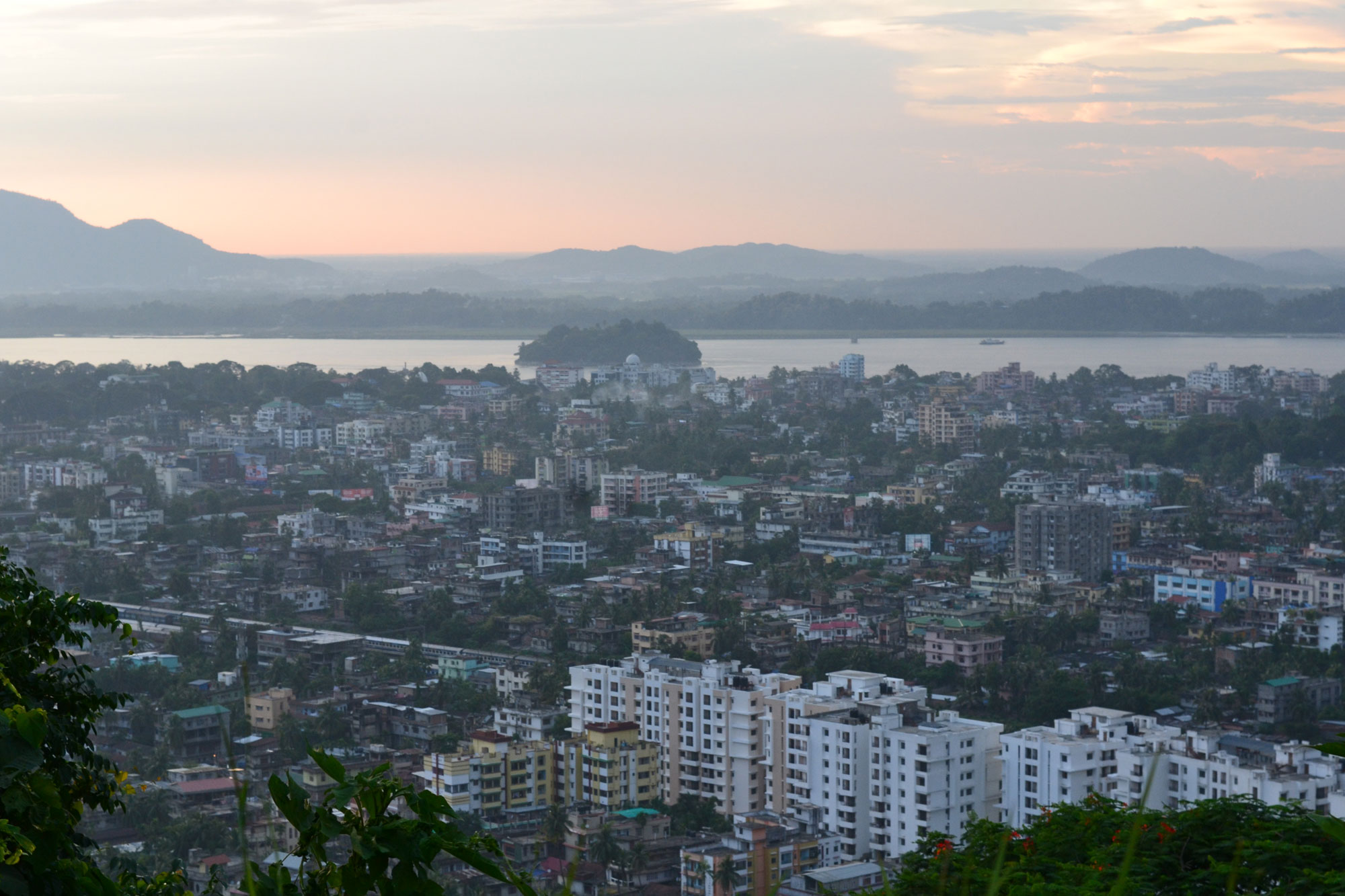
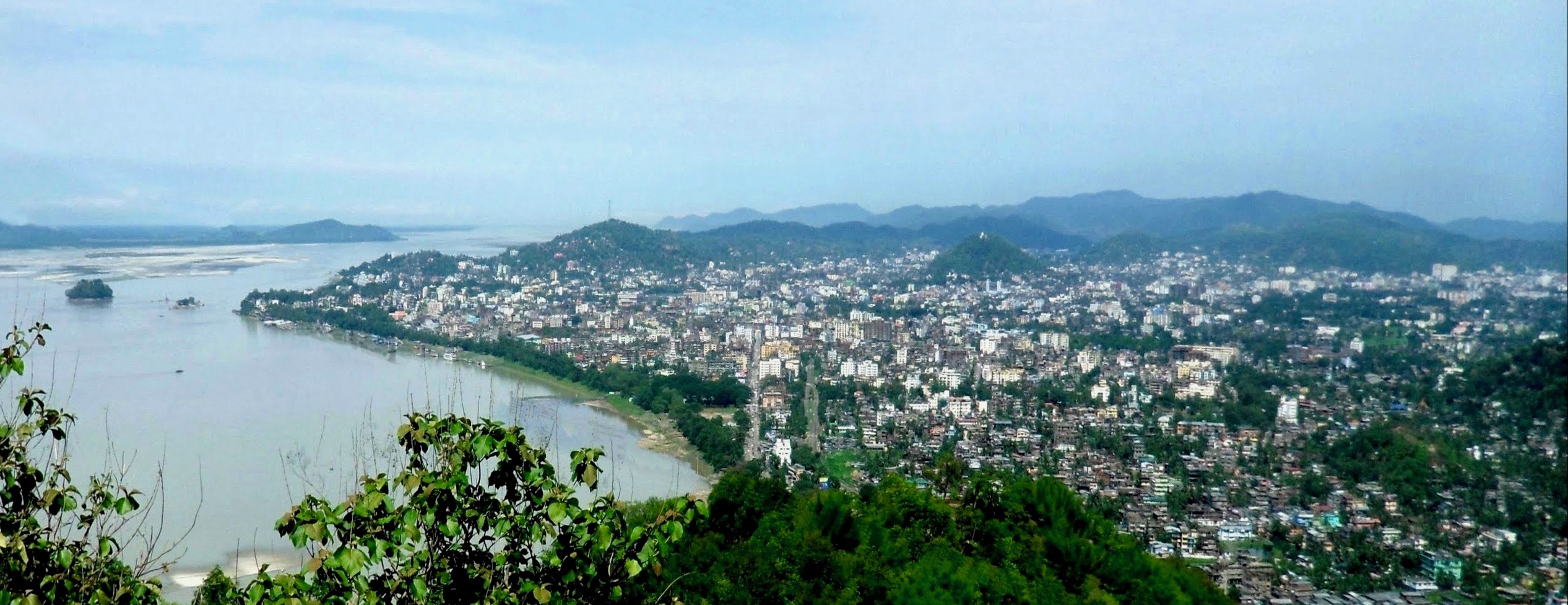
For the rest of us, though, it signaled something else—the existence of a city, Guwahati, for more than 1,500 years of recorded human history. The Nilachal rock inscription is incontrovertible proof that Guwahati has been home to a sizeable settlement for at least two millennia. The North-East has rarely figured in the imaginations of the bulk of Indian historians, and yet it has stood the test of time in its voyage through the ages.
The earliest description of the city of Guwahati cannot be distinguished from the mention of Pragjyotishpura kingdom, which, is estimated to date back far before the beginning of recorded history. As the legend goes, the kingdom of Pragjyotishpura was inhabited by the Kiratas and the Mleccha—generally depicted as addicted to meat and wine; their king Ghatak tall and powerfully built. Eventually, though, a king named Naraka defeated them and settled his own twice-born (Dvija, or Aryan) people in the region. (Today, about 5 km south of modern Guwahati, is a place surrounded by low-lying hills named Narakasur Gaon.)
Legend also has it that Naraka’s son Bhagadutta, a powerful ruler, organized the swayamvara of his daughter on a platform constructed in the middle of a large water body. Karna, the great warrior of the Mahabharata, won the tournament, but at his insistence, the princess’s hand was given to Duryodhana. The water body where this exchange is said to have taken place is called the Dighali Pukhuri today. In the epic tale of the Mahabharata, Bhagadutta fought for Duryodhana and the Kauravas in the final battle and later died an honorable death.
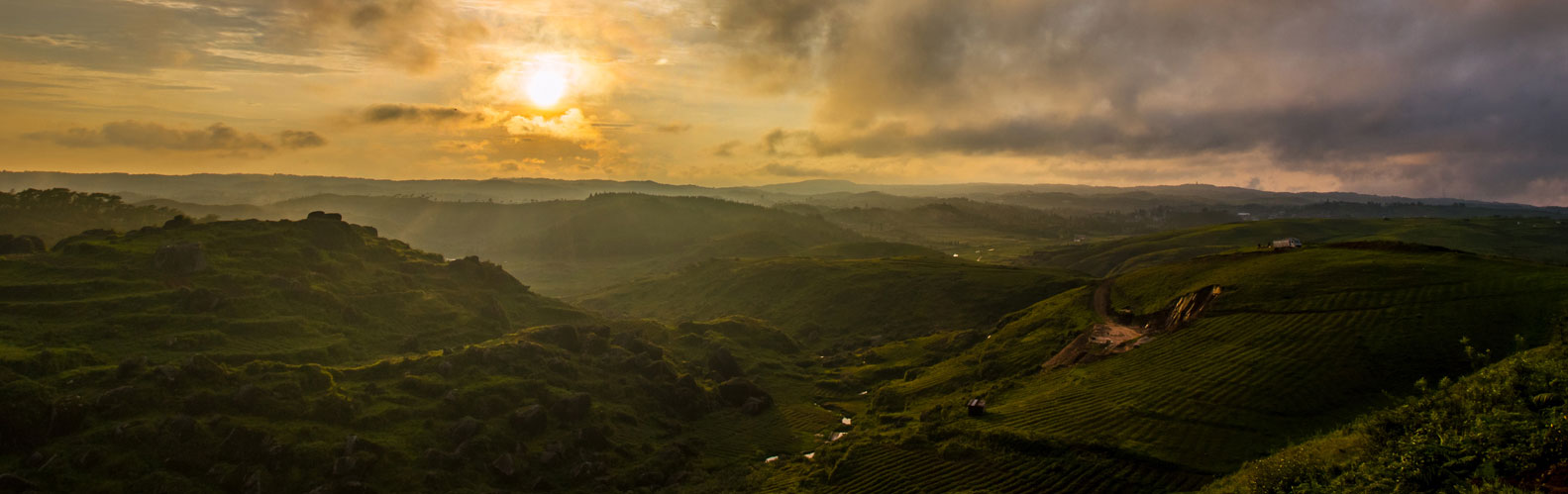
In recorded history, the Nidhanpur plate inscription of King Bhaskarvarman clearly mentions Naraka, his son Bhagadutta and his grandson Vajradutta as among the king’s ancestors. While genealogies in ancient times were often drawn in order to claim relations with a historical powerful ancestor and thereby legitimacy, the Nilachal rock inscription once again elucidates the past of the kingdom of Pragjyotishpura and the city now known as Guwahati.
Historians opine that after the death of King Bhaskarvaman, the old Guwahati was sacked (when was this?) by Salasthambha, one of Bhaskarvarman’s enemies, and it ceased to be of any prominence for the next three hundred years or so. The power vacuum perhaps leads to the growth of smaller but historically significant kingdoms like Beltola and Pandu.
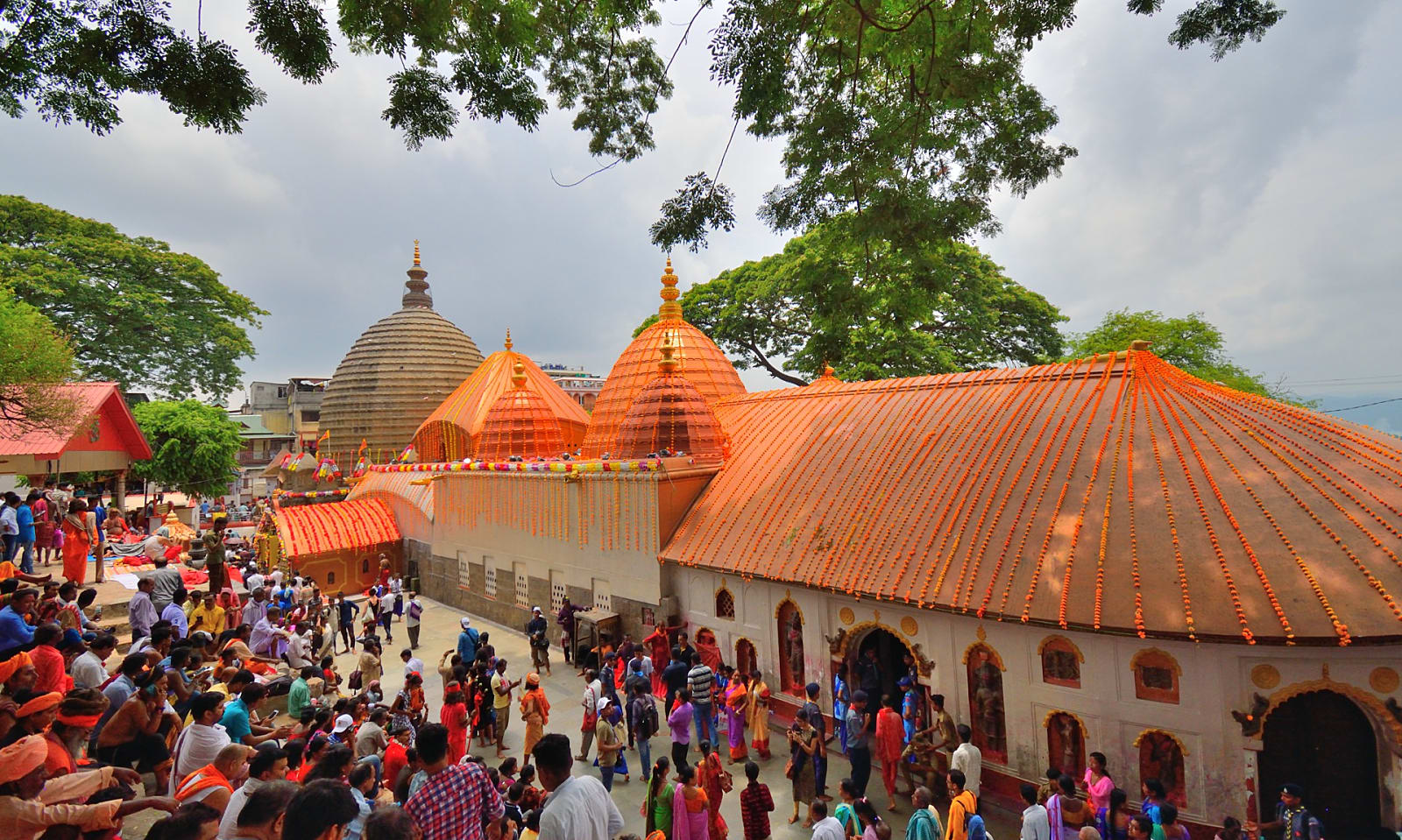
Guwahati itself was taken over by the Kachari rulers in later times, and subsequently, in the early medieval period, it passed into the hands of the Mohammedans. The Koch dynasty too held it for some time, which is evident from the fact that it was Chilarai–the younger brother of Nara Narayan, the king of the Kamata kingdom in the 16th century–who built the Kamakhya temple in its present form, which was later preserved and further strengthened by the Ahom kings in the latter half of the 17th century.
The Ahom kings finally dislodged all opposition and firmly established themselves in Guwahati when the viceroy of Lower Assam, the Borphukan, entrenched himself in Guwahati. When the administration passed onto the hands of the British, they modeled the city into its present form as the gateway to the North-East.
Mawsynram&Cherrapunji, the wettest places on earth!
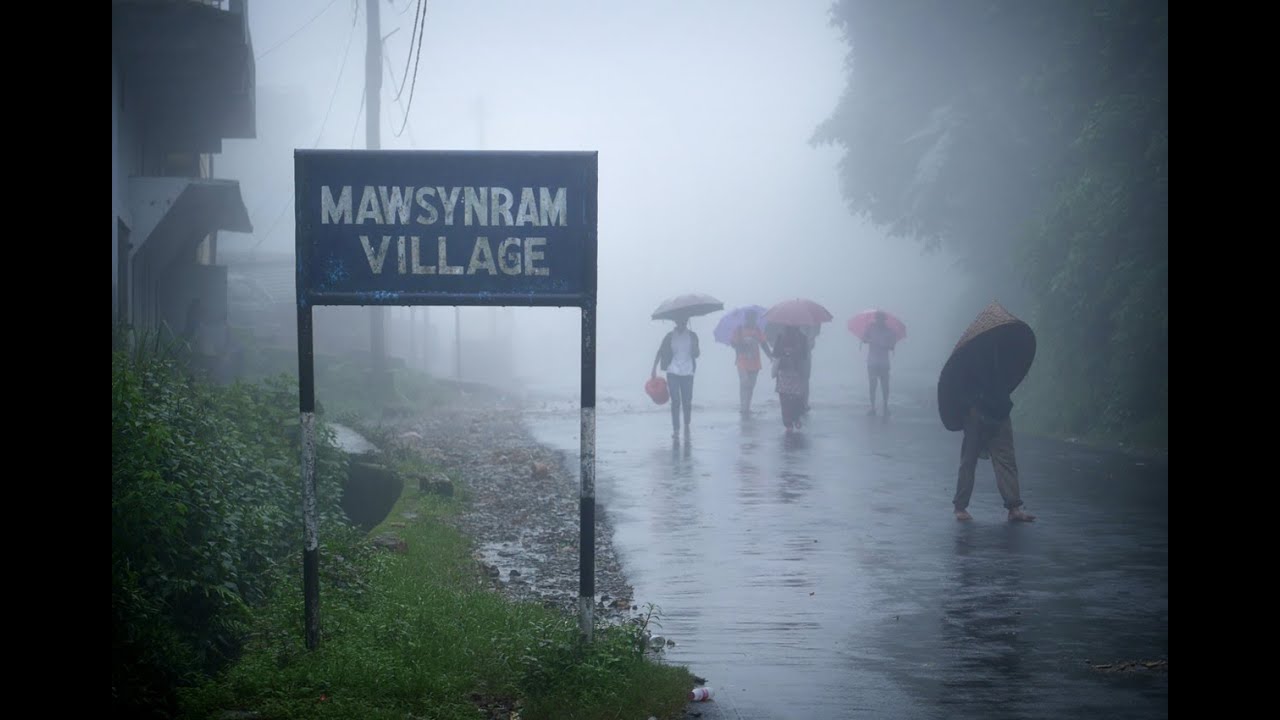
Slanting drops of rain slam the sodden earth like iridescent sheets of gunfire. They beat a steady drumroll on the houses scattered across the countryside. They glisten in the brown cows that stand as stock-still as the rocks. A pillar of cloud, like its biblical ancestor, leads the car I’m traveling in on a misty road that snakes into the distance. The wheels crunch over gravel and whirr through red mud as 26-year-old Rafe long, the Coldplay-loving taxi driver from Shillong, drives kamikaze-style to Mawsynram in the East Khasi Hills. Although I have a growing sense of kinship with Lord Cardigan, the luckless commander of the charge of the Light Brigade, I’m keen to visit the town that ousted Cherrapunji from the podium.
Shillong is still a charming town with its home-brewed brand of Western music, gracious cafés, and friendly people. But, the former capital of undivided Assam bursts at its seams, thanks to hordes of tourists who arrive to escape the heat of the plains and catch a glimpse of the monsoon. When you are done exploring its quieter suburbs crowded with clusters of pine and rhododendron, push on to discover the sacred groves at Mawphlang, the root bridges at Nongriat, Asia’s cleanest village at Mawlynnong, the underground caves at Mawjymbuin and the drizzly hills of Mawsynram.
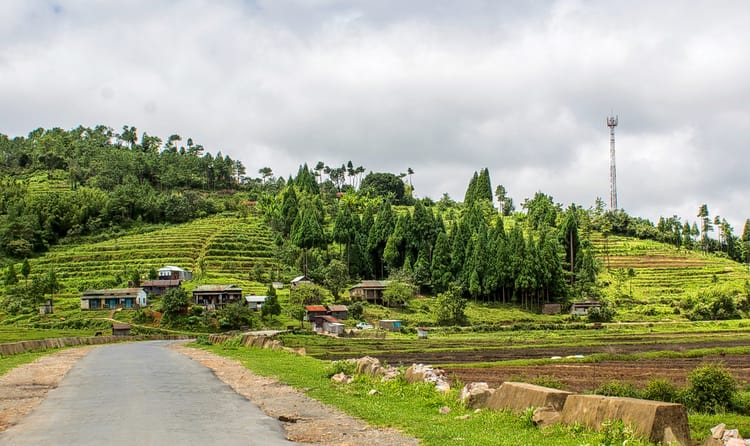
The road to Mawsynram is good, but the drifts of rain and spray from the innumerable gushing waterfalls that line it, and sometimes wash over it, lend poor visibility. Bamboo-splints divert water to the fields where farmers in wellingtons and knups — a tortoise shell-shaped shield made of grass and bamboo used as rain cover — are taking a bidi-break from turning over clods of earth. The countryside is an immodest green and frogs peep from under huge Jurassic-era ferns. Young men kick a ball covered in slush into the goalpost on a field. School kids scurry into classrooms, their socks surprisingly white and uniforms dry. Lunch is at Tyrsad — local rice with mashed potato and bland chicken gravy — in a lace-curtained roadside restaurant. “After this, we drive through forests,” says Rafe long. So, I decide to use the privy. It’s unbelievably clean, although its walls are swollen with damp and the water has a sheet of moss on it. We arrive at Mawsynram an hour later, fortified by steaming tea and vanilla cake.
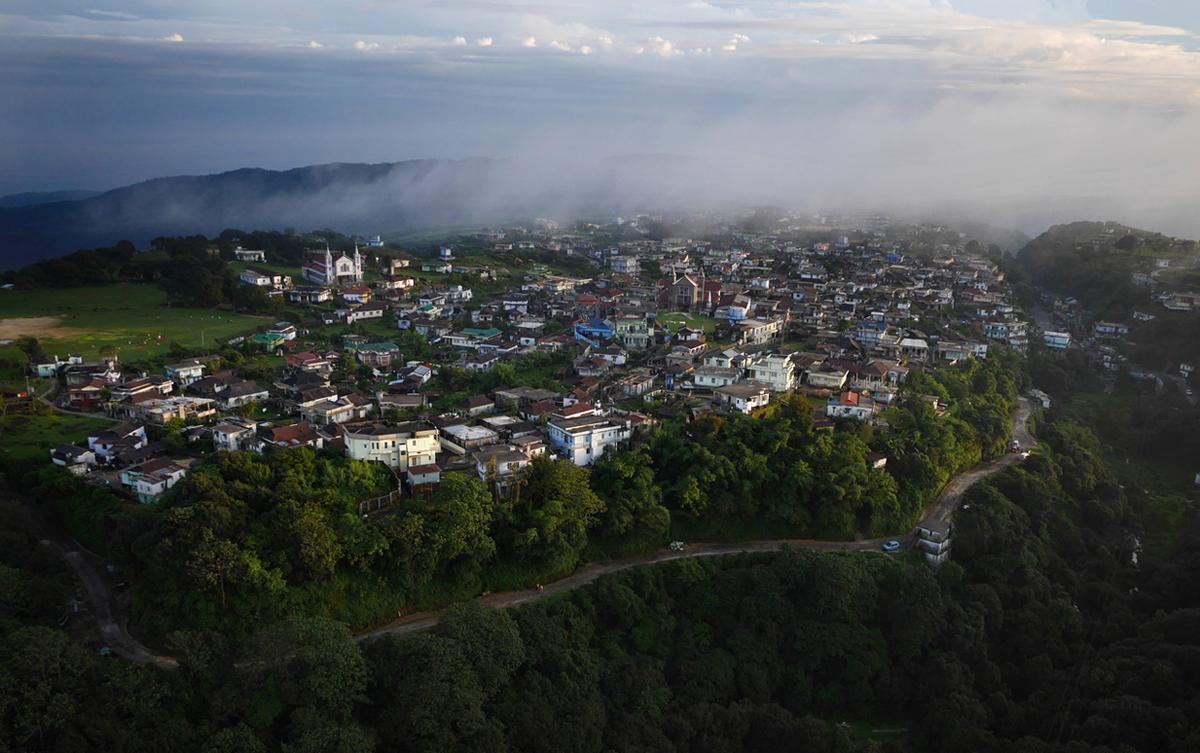
With nearly 11,861 mm of rain, the equivalent of nearly 40 feet, the monsoon that runs for nearly 10 months makes rains at other places seem like a child’s tearful outburst. The subtropical highland climate and the showery rain keep the temperature below 20 degrees C. Summer air currents from the steaming Bangladesh plains to the South swarm up the hills, but when they squeeze through them they are forced to drop the rains here. It was through the same route that Christianity came to Meghalaya when Reverend Thomas Jones introduced the Khasis to Presbyterianism in 1841. Other missionaries followed suit, clambering over from Bangladesh, resulting in the countryside sprouting churches of various denominations. Tussocks of grass are thrown over the town’s tin roofs to lessen the noise of the maddening drizzle. I climb down a hillside and lose my footing on the moss-lined steps. I come up drenched, clutching handfuls of wet grass, feeling like one of the characters in a Jack London novel who wants to lie down and let the wolves pick her bones. A woman stops by, holding an umbrella over my head. Her brother gives me his hand. And, her mother leads me to their home for vanilla cakes and tea.
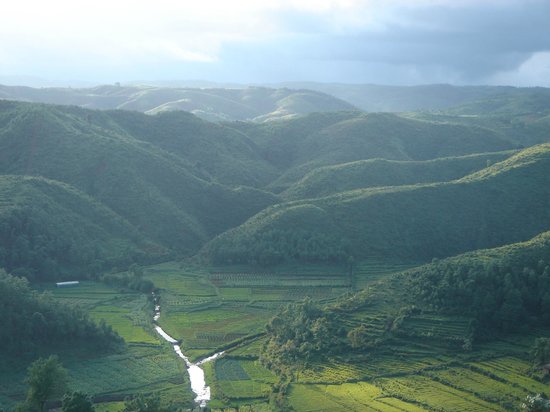
Cherrapunji, village, southern Meghalaya state, northeastern India. It is located on the Shillong Plateau about 35 miles (55 km) southwest of Shillong, the state capital.
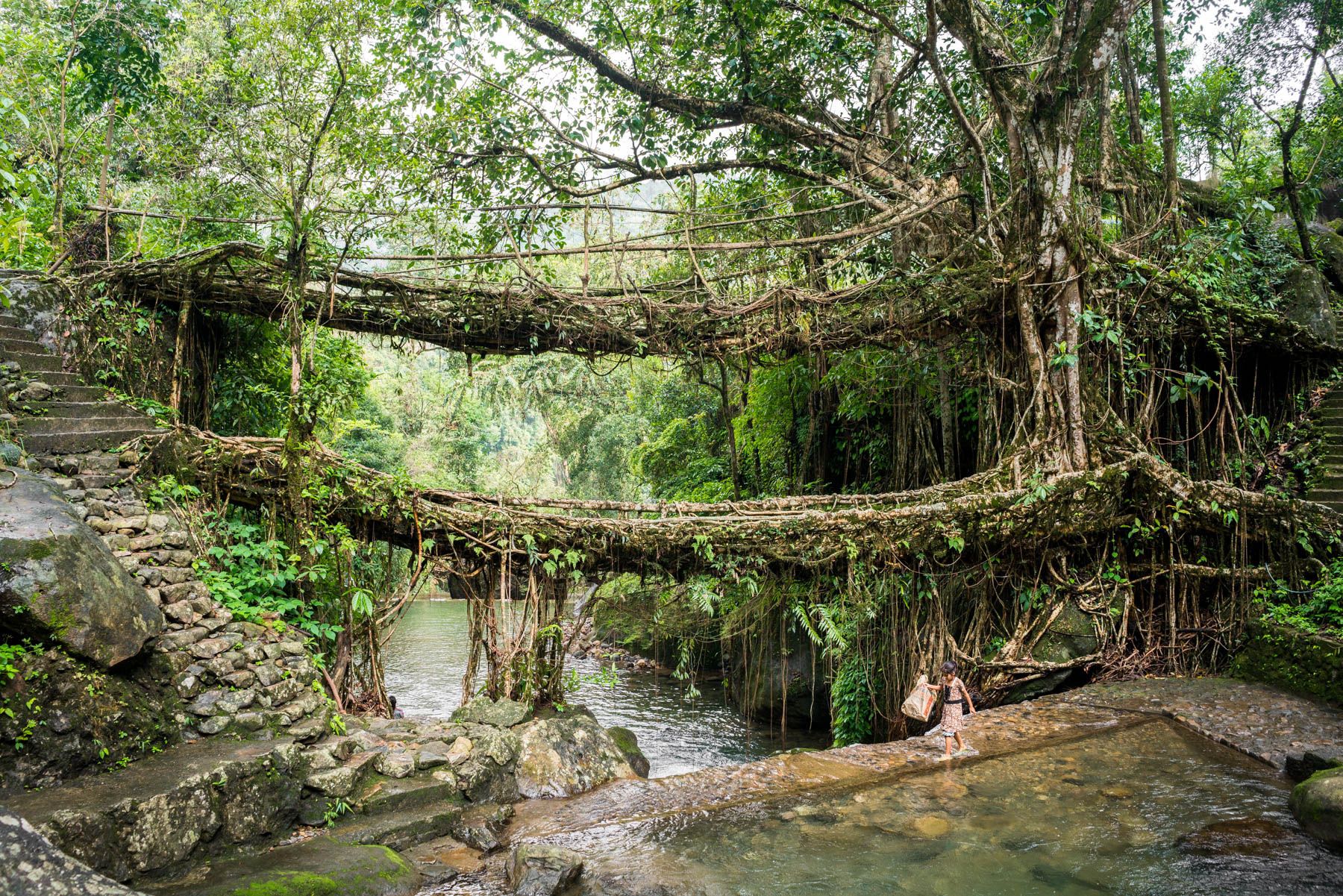
Cherrapunji is noted for having one of the world’s highest average annual precipitation levels, about 450 inches (11,430 mm). In addition, it had the greatest recorded total single-year rainfall, 1,042 inches (26,467 mm) in August 1860–July 1861, and one of the greatest recorded one-month total rainfalls, 366 inches (9,296 mm) in July 1861. The heavy precipitation results from the village’s location on the plateau’s southern edge, at which point the saturated summer monsoon air rises up the southern slope and cools rapidly, releasing enormous quantities of condensed water.
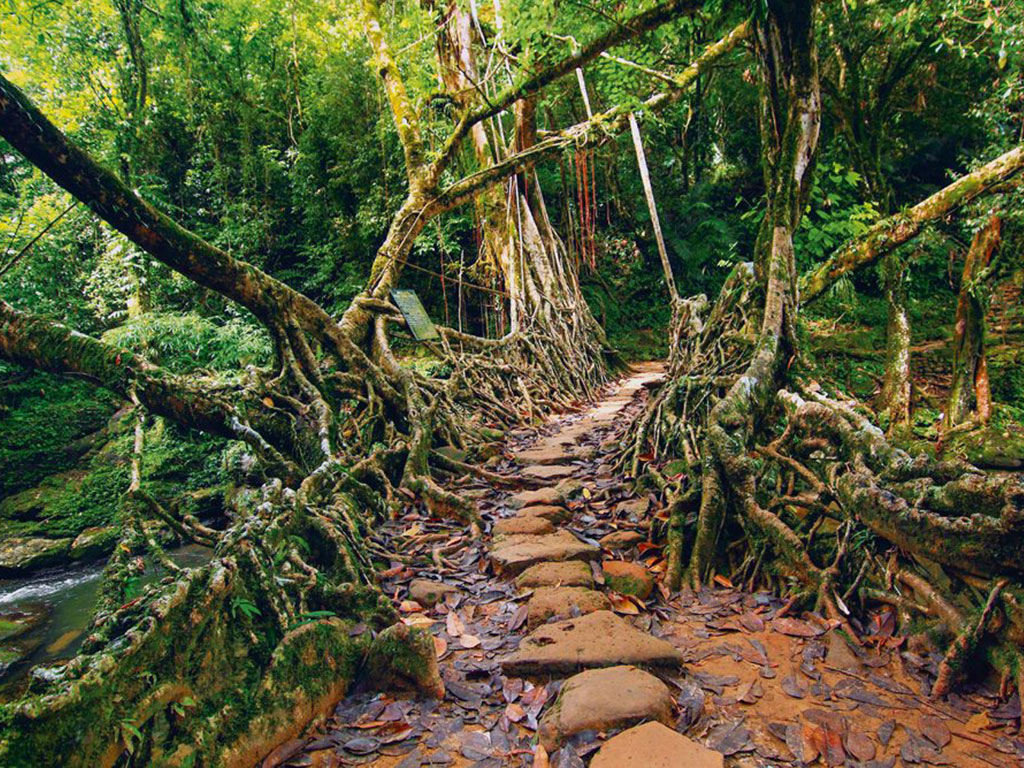
The village serves as a trade center for the area’s agricultural products. The Cera coal mine is nearby. Cherrapunji was the capital of the independent Khasi states until it was succeeded by Shillong in 1864. It is still inhabited mainly by Khasi peoples, who are largely Christian and who have a matriarchal social system. Pop. (2001) 10,086; (2011) 11,722.

Traffic troubles in Uttarakhand hills
June 14, 2019 in News
Dehradun: Serpentine queues of vehicles on national highways leading to Kedarnath, Badrinath, Nainital, Mussoorie, and many other hill stations have literally thrown life out of gear in Uttarakhand.
With temperatures soaring in the plains, people are rushing to the hills for respite and this sudden surge has led to a chaotic situation.

The Char Dhams – Yamunotri, Gangotri, Badrinath, and Kedarnath — attract a large number of visitors. This year so far, more than 17 lakh pilgrims have visited the spots. This rush has led to several problems, including non-availability of cash and fuel that top the list of tourists’ complaints. Many of them also grumbled about the lack of proper accommodation or, when available, of its exorbitant price.
“We traveled 45 km from Badrinath to Joshimath in nine hours. There is hardly any fuel available at petrol pumps and no rooms available for stay. Never come here in June. Restaurants are also running out of food and turning people away,” Vikash Malik from Ghaziabad wrote on Facebook.
Aman Kaushal, a pilgrim, said rooms along Char Dham routes were available but were charging as much as Rs 6,000 for a night, while only bedding was being offered for no less than Rs 1,000.
Rudraprayag District Magistrate Mangesh Ghildiyal, donning a kurta pajama and covering his face with a mask, traveled as a pilgrim for a few kilometers to cross-check complaints.“Yes, there are some issues as far as public facilities are concerned. We are looking into it,” Ghildiyal said.
The situation is no better in Nainital and Mussoorie — the two popular hill stations.
In Nainital, traffic moved at snail’s pace and long traffic jams were witnessed. Despite a high court order to the district authorities on the matter, the traffic situation has failed to improve this year.
Besides tourists from Delhi and the National Capital Region (NCR), people from nearby Bareilly, Moradabad, and Rampur in Uttar Pradesh also thronged the hill stations.

“The crowd is unmanageable and to add to the woes, locals are suffering as essential items like vegetables are being sold at higher rates,” said Rajshree, a Nainital resident.
Mussoorie also witnessed a messy situation as traffic was halted for hours and many tourists were forced to spend nights in vehicles due to lack of accommodation facilities.
Tourism Minister Satpal Maharaj told News18 the condition had worsened as tourists and pilgrims had arrived in larger numbers this year. While Transport Minister Yashpal Arya also echoed Maharaj’s thoughts, neither could elaborate on a plan to manage the situation.
Earlier this week, Chief Secretary UK Singh had instructed district magistrates to deploy additional forces to manage the crowd and ensure availability of enough cash, water, and fuel.
However, the situation has not improved and with the mercury on the rise, it’s hard days ahead for Uttarakhand and its residents.
Report courtesy: https://www.news18.com/news/india/traffic-jams-pricey-essentials-hit-uttarakhand-as-surge-in-tourists-throws-life-out-of-gear-in-hill-state-2183869.html

This man just dared to complete ‘the most dangerous swim’ in Antarctic waters
June 14, 2019 in News
Lewis Pugh, 48, just did something that even most adventurous souls wouldn’t dare! This former lawyer turned extreme swimmer completed ‘world’s most dangerous swim’ in the Antarctic Ocean, where the average temperate of the water mostly remains two degree Celsius. He began swimming at around 2 PM in the afternoon, off the coast of King Edward Cover close to Grytviken in South Georgia and completed the one-kilometer lap in 19 minutes exact. Just in his Speedo shorts, this man braved the icy cold waters of the ocean and completed a task considered impossible by many! He was also named National Geographic’s Adventurer of the Year in 2014.

Later he was quoted saying “I hate swimming in ice cold water. I swim in the water to carry a message.” Pugh being a United Nations Patron of the Oceans has devoted his entire life in spreading awareness about issues facing the oceans of the world and seeking help to protect them. The swimmer risked a lot of dangerous conditions including hypothermia during this task but thankfully nothing serious happened and he was able to complete without being harmed. Pugh described his swim in the Antarctic water as “the most beautiful I’ve ever seen.”

His team of supporters was present during that time and they used social media to stream live video of his swimming. During this endeavor, Pugh met two elephant seals in the middle of the journey. These sea animals weigh around 8,000 pounds and swimming through them was quite a risk which also resulted in the drop in swimming speed.
It got a little dramatic as maintaining body temperature in such cold water is quite difficult. But Pugh maintained his calm and displayed his physical strength. “There’s nothing more frightening than swimming past a beach with elephant and Antarctic fur seals. I was praying they would stay right there,” Pugh said following the swim.

This endeavor came as the UK Government plans to protect the South Sandwich Islands, where a little bit of fishing activity is allowed until now. However, the government is reconsidering and it might ban fishing completely in the region to protect the sea and marine life. Simon Reddy, director of the Pew Bertarelli Ocean Legacy Project in the United Kingdom, said, “This is one of the most unique and most pristine environments in the world”. He also said that around 10 percent of the world’s penguin population live here along with myriad endangered marine mammals.
Report courtesy: https://timesofindia.indiatimes.com/travel/things-to-do/this-man-just-dared-to-complete-the-most-dangerous-swim-in-antarctic-waters/as61654122.cms

Dudhwa National Park and Tiger Reserve
June 10, 2019 in Uttar Pradesh
The popular place on the Indo Nepal border lies in the district Lakhimpur- Kheri. Dudhwa Tiger Reserve Area consists of Dudhwa national park and Kishanpur Sanctuary. Well, the assorted range covers an area of 614 square kilometers and is one of the finest examples of the extremely diverse and productive “Terai” eco-system.

And as the name suggests the park is known for its Tigers but strangely, the major attraction of this park is not only Tigers, the twelve horned Swamp Deer are also observed here. The majestic herds are especially viewed in the grassy wetlands of the Sathania and Kakraha blocks.
Another fierce animal, one-horned rhinoceros were released from Assam and Nepal and guess what, now they have increased in number. Other animals seen here are Elephant, Jungle Cat, Fishing Cat, Jackal, Civet, Sloth, Bear, Crocodile, Python, Monitor Lizard, etc.


Dudhwa National park is also a great bird watching site since the marshlands attract a large number of migratory birds during the winters. One can also view colorful woodpeckers, barbets, kingfishers, bee-eaters, etc. It also boasts of probably the greatest number of owls and storks
The best time to visit here – Mid- November to Mid – June.
To learn more about Travel Viewpoint, visit the Archive Section for other issues, and for more insights, check out the Travel Viewpoint Facebook Page.

The Delightful Ayodhya
June 10, 2019 in Uttar Pradesh
The Atharva describes it as a city built by Gods and being prosperous as paradise itself. Other religions have also flourished here and relics of Buddhism, Jainism, and Islam can still be seen. Lord Buddha is said to have visited the place many times and Jains believe that five of the twenty-four Tirthankaras were born here, including Adhinath, the first Jain Tirthankara.

Notable Landmarks
Hanuman Garhi: The sacred shrine of Lord Hanuman is housed in a fortified structure, in the heart of the town. It can be reached by a flight of 76 steps and devotees believe that their wishes are fulfilled by the deity.
Kanak Bhawan: It was built in 1891, by Vishbhanu Kuvari and is one of the finest temples of the town. It enshrines beautiful images of Rama and Sita.
Nageshwarnath Temple: It is the only shrine of Lord Shiva in Ayodhya. According to legends the shrines were built by Kush, the son of Lord Rama.
Ramkot: This ancient citadel with temples and maths is the main site of pilgrimage in Ayodhya. A large number of devotees visit the site during the celebration of RAmnavmi, the birth anniversary of Lord Rama.
Sri Ramjanma Bhoomi: The makeshift shrine of Lord Rama is set of one of the most disputed religious sited in the world. It is said to be the birthplace of Lord Rama and it is discovered by Vikramaditya.
Ram ka Paidi: It is said to be the most impressive ghats on the river Saryu.
Guptar Ghat: The beautiful bathing ghats were built by the raja darshan Singh in the early parts if the 19th Century. A palace atop the ghats has a Sita Ram temple. Lord Rama is said to have entered the river on his final journey to heaven and his last rites were performed at the Swargadwar ghat.
Treta ka Thakur: The temple marks the site where Lord Rama is said to have performed the Ashvamedha Yagna.
Jain Shrines: Ayodhya is believed to be the birthplace of five Jain Tirthankaras. Kesari Singh, the treasurer of the Nawab of Faizabad built five temples to mark the sacred sites.

Faizabad: The historic town set on the left bank of the Ghaghara River was the first capital of Nawabs of Avadh. It developed during the reign of Safdar Jang, the second NAwab and the ton further prospered under his successor Shuja Ud Daula, who built the Chota Calcutt fort and much other magnificent building here. Bahu Begam, the wife of Shuja Ud Daula was a woman of great distinction and rank. Most of the Muslims building of Faizabad are attributed to her. From the date of Bahu Begam’s death in 1815, till the annexation of Avadh, the city of Faizabad gradually fell into decay. The glory of Faizabad finally eclipsed with a shifting of capital from Faizabad to Lucknow by Nawab Asaf Ud Daula. Today, Faizabad the district headquarter and os an important historical and religious center, It is a fine base to visit the sacred city of Ayodhya.
Reaching There
Airport- Amausi (Lucknow- 134 kms.) and Bumrauli (Allahabad- 166 kms.)
Railhead- Ayodhya lies on the Mughal Sarai and Lucknow Line.
Road- Well connected to main towns of the country.
To learn more about Travel Viewpoint, visit the Archive Section for other issues, and for more insights, check out the Travel Viewpoint Facebook Page.

Embrace Varanasi, the city of lights!
June 10, 2019 in Uttar Pradesh
Varanasi or Banaras, the ‘Abode of Lord Shiva’ is one of the oldest living cities in the world. Its place in Hindu mythology is virtually unrivaled and in fact, the microcosm of Hinduism. According to legends, the city was created by Lord Shiva himself and the Puranic literature dates its existence to at least three millennia. The early history of Varanasi is replete with hoary tales of plunder and destruction by conquers and a religious zealot. Kashi, the mythological name of its eternal city is said to be derived from the word ‘Kasha’, meaning shine or bright, as it was considered to be the ‘city of light’ or spiritual luminance. The present name is a combination of Varuna and Asi, the two tributaries of Ganga flowing along the northern and southern borders of the holy city. At Varani, Buddha and Mahavira preached and Shankaracharya wrote his commentaries on Hinduism.

Patanjali, the Sanskrit grammarian wrote Mahabhasya and Tulsidas composed Ramcharitamanas. And Kabir preached amity between religions. Varanasi is also an important center of education and has produced several world-renowned academicians, musicians, and artists. It is a famous center for fine arts and crafts. The Benarasi Silk sari with Zari brocading in gold and silver metal wires is priceless possession of any Indian women. It also has a rich repertoire of silver, brass, copper artifacts and trinkets as well as aromatic perfumeries. There are no Indian attractions like Varanasi. It is much more than just a mere city but is a way of life.
Places To Visit in Varanasi
The Ghats: The major attraction of Varanasi is 5 km. stretch of bathing ghats that line the western bank of river Ganga. About 100 big and small ghats were built during the 18th and 19th century, some of them have withered away, while most of the ghats have withstood the vagaries of time. High above the chain of stone steps of the ghats are pavilions and palaces, temples and terraces. Every ghat has its own religious significance, but bathing in the five most important ones- Assi, Dasashavamedha, Harishchandra, Panchanga, and Manikarnika in the same order on the same day absolves pilgrims from their sims.
Sri Kashi Vishwanath Temple: The ancient temple of Lord Shiva in the heart of Varanasi, enshrines the first of the twelve Jyotirlingas. Lord Shiva is worshipped here as Vishwanath or Visheswara, the ‘ Lord of the World’ and the shrines is the main center of devotion for the pilgrims visiting Varanasi. The temple has been a living embodiment of cultural traditions since time immemorial. The original temple was destroyed by Aurangzeb and was rebuilt in 1776, by Maharani Ahilya Bai Holkar of Indore. In 1835, the shikaras of the temple were gold plated by Maharaja Ranjeet Singh of Punjab and shrines also came to be known as golden temple. The shrine of Annapurna Bhavani dedicated to goddess Shakti is located nearby.

Gyanvapi Mosque: It lies adjacent to the Vishwanath temple and was built on the ruins of the original Vishwanath temple in the 27th century, by Aurangzeb. The foundation and rear of the mosque reveal rare specimens of the ancient temple art.
Alamgir Mosque: Aurangzeb destroyed the Vishnu temple here and built the mosque on its ruins, It is a blend of Hindu-Muslim architecture and religious sentiments and is also known as “Beni Madhav Ka Darera”
Bharat Mata Temple: This unique temple was gifted by two nationalist Baba Shiv Prasad Gupta and Durga Prasad Khatri and inaugurated in 1936, by Gandhiji. It enshrines one of the most perfect relief maps of the Indian subcontinent and Tibetan Plateau, carved out of Marble.
Tulsi Manas Temple: This beautiful modern temple dedicated to Lord Rama is said to be located on the same place where Tulsidas, the great medieval seer, and poet, lived and wrote the pic “Shri Ramcharitmanas”.
Durga Temple: The 19th-century shrine is one of the finest temples of Varanasi.
Banaras Hindu University: It was established in 1916, by Pandit Madan Mohan Malviya and is considered to be the largest residential university in Asia, sprawling over an area of about 2,000 acres. The New Vishwanath temple and the Bharat Kala Kendra located within the premises of the university are worth visiting.
Around Varanasi
Sarnath: It is considered to be the most important Buddhist pilgrim center after Bodh Gaya. Lord Buddha preached his first sermon at the fabled Deer Park over here after attaining enlightenment. later on, emperor Ashoka built magnificent stupas and other structures. The golden period of Sarnath was around 640 A. D. There were over 1500 priest, an imposing Stupa and a mighty Ashokan pillar. Sarnath is a treasure house of Buddhist antiquities ranging from the times of Ashoka to the 12th century A.D.
Dhamek Stupa is the 110 ft. high Stupa marks the site where Buddha delivered his first sermon. OIt was built around 500 AD and was rebuilt a number of timesThe geometrical and floral patterns on the stupa known as Dharmajika Stupa. It was dismantled in the 18th century by Jagat Sigh of Banaras. near the ruins of the stupa stands the majestic Ashoka Pillar surmounted by the superb capital with the Ashokan symbol of four back to back lions. The capital is now exhibited at Sarnath museum and is the national emblem of modern India.
Chaukhandi Stupa is an imposing mound of break work and is said to be originally built by emperor Ashoka.
Mulagandha Kuti Vihar, the elegant shrine was built in the 1930s, by the Mahabodhi Society. It houses excellent murals and frescoes done by Japanese artists and ancient relics of Buddha. The ancient Mulagandha Kuti temple is located among the brick ruins of Sarnath. Other interesting modern temples at Sarnath are Thai, Chinese, Tibetan, Burmese and Japanese monasteries.
Archeological or Sarnath Museum has a rich collection of Buddhist sculptures recovered from the ruins at Sarnath. The main attraction is the superb capital from the Ashokan p[illar depicting four back to back lions.
Central Institue of Higher Tibetan studies was set up by Dalai Lama in 1971 and is only one of its kind in the entire world.
Digambar Jain Temple, the sacred shrine was built in 1824 and is used to be the birthplace of Shreyanashnath, the 11th Jain Tirthankara.
Ramnagar Fort: The 17th Century fort overlooking the river Ganga is not far away from Assi Ghat. It was the residential palace of the former Maharaja of Varanasi and the personal collection of the erstwhile royalty can be seen here. Ramnagar is also known for the Ramlila, bases on Ramcharitramanas of Tulsidas and Dussehra celebrations.
Chunar: The historical town is famous for its impregnable fort, which is said to be originally built by the legendary king Vikramaditya of Ujjain, in memory of his brother Raja Bharithari, who had taken live samadhi here. The Fort witnessed several battles and was associated with Sher Shah Suri, who defeated Mughal emperor Humayun. In 1575, Akbar recaptured the fort and was presided over by the nawabs of Avadh. It passed into the hands of the British in 1764. The fort has a sundial and a huge wall. it affords a fine view of the Ganga. Chunar is also known for its sandstone, which has been used most famously in Ashokan Pillars.
Reaching There
Airport- Bapatpur airport is 22 kms. from Varanasi and 30 kms. from Sarnath.
Railhead- Well connected to main cities of the country.
Road- Varanasi lies on the Delhi-Kolkata NH2; NH7 to Kanyakumari and NH29 to Gorakhpur.
To learn more about Travel Viewpoint, visit the Archive Section for other issues, and for more insights, check out the Travel Viewpoint Facebook Page.

Greet Lucknow, the Nawabi Land!
June 10, 2019 in Uttar Pradesh
Lucknow, the land of “Nawabs” synonymous with lavish extravagance is well-known for its “Tehzeeb” or extreme delicacy and cultivated manners. Fine living is a radiation a social etiquette an integral part of life. The proverbial “Pehle Aap” after you is a legendary mannerism that echoes the inherent courtesy that a Lucknowi pays to every person regardless of station or rank.

The present-day city was established by Nawab Asaf-Ud-Daula when he shifted his capital from Faizabad to Lucknow in 1775. It emerged as an important political and cultural center, rivaling Delhi in its patronage to art literature. In 1856, the British annexed Awadh, exiling the last Nawab, Waajid Ali Shah, on grounds of misrule. Lucknow was one of the most volatile centers, during the Mutiny of 1857, as it was a key administrative and military center of the British East India Company.
Today, the modern city of Lucknow sprawls on both sides of river Gomti and is a fine blend of tradition and modernity. it still retains the legal ambiance and mannerisms, while adapting the needs of the modern world. Lucknow is also famous for its elaborate cuisine and “Chicken Kari” or exquisite shadow- work embroidery on fine muslin cloth.
Avadh as a region was formally known s the “United Provinces Of Agra and Oudh” in British India. earlier flourishing under the Sharqui Sultanate of Jaunpur and then the early Mughals, Avadh passed through the several hands between the mid 14th century and early 18th centuries, shaping out to be the cradle of north India aristocracy. Avadh is still identified as the cultural capital of north Indian societies.


It is in Avadh that Urdu as a language acquired finesse and perfection, kathak as a classical dance form took shape and regional theatre tradition contributed to lending a basic structure to Indian Cinema- the Mumbai film industry brand, in particular, The region is a vital link between tradition and modernity, the seat of a composite culture best known as Ganga- Jamani- Tahzeeb. Faizabad was the old capital of Avadh but later it all shifted to Lucknow. The city is still the capital of the state of UP. All the nawabs of Avadh ruled from Lucknow and were hence popularly referred to by the title- the Nawab of Lucknow. As proverbs go, even the drinking water tastes different in Avadh. This is not surprising this essebntial thirst buster is traditionally stored in clay vessels and often sipped in the height of summer heat after adding a handful of freshly plucked mint leaves. During winter, water offered in tall silver glasses embossed with twinning vine leaves have a sprinkling of fresh rose petals. One might conjecture that this s precisely why most people fortunate enough to find their way to this part of the lush green and fertile Gangetic plains chose not to leave subsequently making Avadh their home particularly after their first taste of the local food and water.
As per the Avadh tradition, there are always two ways of looking at things. and so it is with food. One way is to look at food as nature’s gift to mankind and the second what cultures and societies have made it out to be. God has endowed all mankind with a sense of good and bad therefore each culture, no matter how far removed from the other, is capable of creating menus that are unrivaled in taste, aroma and therapeutic properties. In the recorded history of the Indian subcontinent, which abounds the diversity of culture and ingredient, a blending that is hitherto unknown has taken place, leading to a high degree of refinement. The cuisine of Avadh is one such example. Furthermore, the economic strength of a culture and its journey across its boundaries once again add new tastes and fragrances to it. Competition of a healthy sort is a further stimulant to expanded and experimental cuisine. Examples of this are a dime a dozen in cosmopolitan cities like London and New York.
In brief, Lucknow, the capital of Uttar Pradesh, lies in the midst of the Heritage Arc. This bustling capital, famed for its Nawabi era art and marvelous and wondrous food, is a different mix of the ancient and the modern. It is a haven to the extraordinary monuments and masterpieces depicting a fascinating blend of ancient, colonial and oriental architecture.
Places To Visit in Lucknow
Asafi or Bara Imambara: This architectural wonder was built by Nawab Asaf Ud Daula in 1784, as a famine relief project. The central hall with a 20,000-tonne roof is said to be the largest room in the world, unsupported by pillars. It is also known for the “Bhul Bhulaiyan”, a series of the intricate labyrinth on the upper floor, which should be visited only with an authorized guide. The tomb of Asal- Ud- Daula is also located within the Imambara. To the left is the majestic Asafi Mosque.

‘Also called Asafi Imambara,
Chhota or Hussainabad Imambara: The beautiful structure near Rumi Darwaza was built between 1837- 1842 by Nawab Mohammad Ali Shah and has the tombs of its builder and his mother. It has a golden dome and numerous turrets and minarets. The exteriors are adorned with fine calligraphy, while the interiors have chandeliers, gilt-edged mirrors, colorful stucco, the king’s throne, and ornate tazias.
Kaiserbagh Palace Complex: Nawab Wajid Ali Shah built the grand palace complex between 1848 and 1850 with a view of creating the eight wonder of the world. The yellow building flanked by two Lakhi gates were once used as the royal “harem”.
In the center of the quadrangle is the beautiful “Baradari”.
Le Martiniere: This extraordinary structure beautifully blends Italian architectural style with the native Hindu and Muslim styles. It is perhaps the finest and the largest specimen of European funerary monument in the subcontinent and was built in 1793, by Major General Claude Martin, a French soldier and the richest European in Lucknow. The magnificent edifice has four octagonal towers with numerous rooms and the exteriors are beautifully decorated. It houses a fine school which was established way back in 1840.
Lucknow Residency: It was built between 1780- 1800, as the official residence of the British Resident. The Britishers residing in Lucknow took refuge over here for 87 days during the 1857 mutiny. Today, it is a mute witness to one of the bitterest battle of 1857, with gaping holes made by cannon balls.
Rumi Darwaza: This 60 ft. high ornate gateway was built by Nawab Asaf-Ud-Daula in 1784, under the famine relief project. It is said to be constructed on the lines of one of the gates of Constantinople.
Shah Najaf Imambara: The white domed mausoleum on the right bank of river Gomti is named after the sacred town of Najaf, near Baghdad. It has the tomb of Ghazi-Ud-Din Haider flanked by the tombs of his wives.
Sikandar Bagh: The charming summer house fortified by a high wall was a named after one of the wives of Nawab Wajid Ali Shah. It witnessed bloody battles during the Mutiny of 1857.
the summer house now has the national Botanical research institute and its garden is open for public between 6 AM and 5 PM.
State Museum / Zoo: The state museum is located within the zoo premises at Banarasi Bagh. It exhibits a fine collection of artifacts and memorabilia. The zoo has a rich variety of animals and is popular among kids.
Other places of interest: Clock Tower, Jama Masjid, Chhatar Manzil, Maqbara Saadat Ali Khan and Khurshid Zadi, Moti Mahal, Dilkusha Garden, Alambagh Palace, Bibiyapur Kothi, Charbagh Railway Station, etc.
The foremost shopping zones in the capital are Hazratganj (Sunday closed), Aminabad (Thursday closed), Chowk (Thursday closed), Narhi (Monday closed), Kaiserbagh (Thursday closed), Alambagh (Thursday closed), Aliganj (Wednesday closed), Indira Nagar (Wednesday closed), Gomti Nagar (Wednesday closed).
Prominent Shopping Malls are Wave, Fun Republic, Riverside Mall, Phoenix, Saharaganj, SRS City Mall and Vishal Mega Mart.

Lucknow is appreciated for its sarees, chikan embroidery, zari work, handicraft, leather purses, and handcrafted shoes, soft toys, sweets, and namkeen.
There’s a short list of all the Travel Agents that do a lot of work in making Lucknow a beautiful and elegant land to wander and explore for all the travelers.
- Directorate of Tourism, 4th-floor Paryatan Bhawan C-13, Vipin Khand, Gomti Nagar, U.P.
- Regional Tourist Office 1st floor Paryatan Bhawan C-13, Vipin Khand, Gomti Nagar, U.P.
- Tourist Reception Counter Amausi Airport
- Kumaon Mandal Vikas Nigam, Shahnajaf Road.
- Garhwal Mandal Vikas Nigam, R.C. Bahadur Marg.
Around Lucknow
Kanpur: The bustling city on the banks of river Ganga is one of the major industrial centers of North India. It is said to be founded by King Hindu Singh of the erstwhile state of Sachendi and later came under the British after the treaty of 1801, with Nawab Saadat Ali Khan of Awadh. The city emerged as one of the most important military stations of British and was one of the epicenters of 1857 war of Indian independence. Leading freedom fighters like Nan saheb, Tantiya Tope, Azimoolah Khan, and Brig. Jwala Prasad was closely associated with the city. Some of the attractions are Kanpur is the mound of Jajmau, the magnificent Shri Radhakrishna temple, Allen Forest Zoo, simple or J.K. temple, Jain Glass Temple, Jian Glass temple, Allen Forest Zoo, Phool Bagh, nan Rao park and the immpressiv4 Kanpur Memorial Church, etc.
Bithoor: The peaceful town on the banks of river Ganga is an important historic and pilgrim center. According to Hindu scriptures, Lord Brahma selected Bithoor for the creation of mankind. Bithoor came into prominence during the 18th century under the rule of Nawab Shuja-Ud-Daula. Almas Ali Khan, his administrator erected a mosque near Lakshman Ghat on the right bank of Ganga. It became the capital of the Pargana from 1811 to 1819 after the departure of the courts, the palace was assigned as a residency to Baji Rao, the deposed Peshwa. The palace of Nana Sahib was reduced to rubble by the British in 1857. Bithoor was earliest known as “Bhavan Ghaton ki Nagri” or the city of 52 ghats. Today, there are only 29 ghats and the Brahmavart Ghat is considered to be the holiest. It is said that Lord Brahma after creating mankind installed a “Shivlinga” here, which is worshipped as Brahmashwar Mahadev.

Reaching There
Airport- Directly linked by air.
Railhead- Well connected to main cities of the country.
Road- Well connected.
To learn more about Travel Viewpoint, visit the Archive Section for other issues, and for more insights, check out the Travel Viewpoint Facebook Page.

Allahabad is here…
June 10, 2019 in Uttar Pradesh
Allahabad, mainly known for its urban setting, is referred to as “Prayag” in the Puranic pieces of literature and it is set on the sacred confluence of three great Indian rivers that is Ganga, Yamuna and the mythological Saraswati. It is one of the oldest cities and holiest Hindu pilgrim centers of the country. As stated by Skand Purana, Lord Brahma the creator performed the Prakrishta Yagna here and considered it as ‘Tirth Raj’ or the ‘king of all the pilgrimage centers’. The town also finds remark in several ancient religious manuscripts like Vedas and great epics Ramayana and Mahabharat.

The present-day Allahabad city was founded by Mughal emperor Akbar in 1575. And it became an excellent cantonment during the British and played a meaningful role in India’s freedom struggle. Allahabad was also a major education center and nurtured a number of scholars, poets, writers, thinkers, statesmen, and leaders. A number of fairs and festivals are celebrated here providing an insight into the rich cultural heritage. The Kumbh fair held once in 12 years and it draws the attention of millions of pilgrims.
Places to visit in Allahabad
Triveni Sangam is the meeting junction of the three famous rivers Ganga- Yamuna- Saraswati. The confluence can be reached by boat and one can witness the meeting of the brownish waters of Ganga with the greenish Yamuna, while the legendary Saraswati is said to be underground and invisible. Priests assist devotees to perform puja and ritual ablutions in the shallow waters here.
Allahabad Fort: This imposing fort was built by Emperor Akbar in 1583. on the banks of the holy Sangam. Today is occupied by the armed forces and visitors are allowed access around the Patalpuri Temple and the ‘Akshaya Vat’ tree. Ashoka Pillar is another tourist attraction and this resorted polished 10.6 high pillar, dating back to 232 B.C. is set at the main gate of the fort.

Allahabad Museum: It has a fine collection of sculptures and terracottas dating back to the Gupta Period. The works o Haldar, Sajit Khastgir, Jamini Roy, Nicholas Roerich and Thankas of Tibetan Lamas are also exhibited here.
All Saints Cathedral: This finest Anglican Cathedral in Asia was designed in Gothic style by Sir William Emerson in 1870 and consecrated in 1887. Its impressive marble altar with intricate inlay and stained glasswork are outstanding and remarkable.
Anand Bhawan: It was the ancestral home of the Nehru family and now houses a fine museum, displaying the memorabilia of the Nehru Family.
Hanuman Mandir: The temple near the Sangam, enshrines a unique image of Lord Hanuman, in a reclining posture.
Other attractions are – Allahabad University, Jawahar Planetarium, Khusro Bagh, Mankameshwar Temple, Public Library, Shankar Viman Mandapam, Swaraj Bhawan, etc.

Reaching There:
Airport- Varanasi (147 kms.) and Lucknow (210 kms.)
Railhead- Well connected.
Road- It lies on NH2 and NH27.
To learn more about Travel Viewpoint, visit the Archive Section for other issues, and for more insights, check out the Travel Viewpoint Facebook Page.
