

Member Type Contributor


Setting up cafes at Yamuna riverfront is on the cards
August 1, 2019 in News
To boost tourism in the capital, the tourism department is planning to set up cafeterias at Yamuna riverfront and city forests. To turn this idea into a reality, the tourism department is in talks with the Delhi Development Authority (DDA).

Referring to this, an official said that the Delhi Tourism and Transportation Development Corporation (DTTDC) will have a proper business plan. The department will be requesting the DDA for land at Yamuna riverfront and in city forests or district parks, where they will be putting up cafeterias. Going forward, the department will be taking formal approval for the said purpose.
The official also mentioned that the non-availability of land or space has been a massive hurdle as the DDA does not the land of it’s now. And to implement such ideas, the department has to depend on other government agencies. And until departments and agencies collaborate, there is a very less chance to boost tourism in the region. The official also stated that once the plan moves ahead of approval stage, the DTTDC will be introducing cafeteria in Mehrauli Archaeological Park and also set up kiosks in regional parks under the jurisdiction of the DDA.
Although the idea is still in the planning stage, some experts are against this idea. They are of the idea that setting up a cafeteria at riverfront is not a good idea, as the riverfront is not for recreational activities. This is because it will be a strange kind of tourism as experiences of the people will not be complete just by being with nature, they will want to eat something, which will result in accumulation of trash.
Report Courtesy: https://timesofindia.indiatimes.com/travel/destinations/setting-up-cafes-at-yamuna-riverfront-is-on-the-cards/as70482753.cms

Visiting Taj Mahal in monsoons is always a good idea!
August 1, 2019 in News
The Taj Mahal is probably one of the most frequented monuments in the country. Given its Seven Wonders of the World status, people from across the globe visit the city of Agra to get a glimpse of this gorgeous structure. However, it is necessary to choose the best time for a visit summers are a strict no! Being a marble structure with lots of open space, the place gets more than just uncomfortable under the scorching summer sun. Thus, you can take our word and plan a trip to the Taj Mahal during the monsoons.

Monsoon rains mellow down the heat and turn the world all beautiful and green. Imagine witnessing this beautiful white marble structure with swollen, black clouds hovering over. The light rains only add to the experience and create a romantic atmosphere.
For the love birds living close to Agra and wanting to enjoy rains, a long drive to the Taj Mahal is a fun idea. Moreso, the monument is a symbol of love as Mughal emperor Shah Jahan had it built for his beloved wife Mumtaj.
The Taj Mahal, which is considered the classic and perfect example of Mughal architecture, experiences millions of visitors each year, irrespective of weather. According to 2011 government tourism statistics, the place recorded a remarkable footfall of 1.5 m people. One of the most interesting things to note here is that plenty of tourists to the Taj Mahal were somewhere between their second and seventh-or-more visits!
So, if you haven’t yet visited this man-made wonder, this is the right time to do so! Hop in, hold your partner’s hand and embark on that perfect monsoon trip to the Taj Mahal!
Report Courtesy: https://timesofindia.indiatimes.com/travel/destinations/visiting-taj-mahal-in-monsoons-is-always-a-good-idea/as70482170.cms

After Kolkata, Odisha gets GI tag for its own variety of Rasgulla!
August 1, 2019 in News
Odisha finally managed to secure a geographical indication (GI) tag for its beloved local version of Rasgulla. It now seems that the tug of war between West Bengal and Kolkata has resulted in a draw, with Odisha also being granted the GI tag for Odisha Rasagola, i.e., less than two years after West Bengal won the GI tag for its Rasgulla. The formal certification was issued by the Chennai-based GI registry on its website.

A GI refers to a name or distinctive sign that is used on a product i.e., usually owned collectively, and can be used to distinguish goods based on its geographical origin and unique characteristics. Also, the GI tag helps in marketing and branding of a local product and can draw penalties if someone is found copying outside that geographical region.
In 2017, West Bengal received GI tag for its variety of Rasgulla, which lead to many people believing that the sweet delicacy originated in West Bengal. This led to a fight between the two states both on social media and off it too. However, now Odisha Rasagola getting the GI tag seems to end the two-year-long battle.
The GI tag for the same product from both the states will now be recognized by two distinct texture and taste. While submitting the same before the GI registrar, the Odisha Small Industries Corp. Ltd, which received the GI tag, said “Odisha Rasgulla is very soft to feel, juicy and non-chewy inconsistency, and can be swallowed without teeth pressure. The Rasgulla prepared in other places is circular, a milk-white in color and spongy and chewy inconsistency.”
While West Bengal claimed that the idea of this delicacy was conceived by Nobin Chandra Das (birth 1845) at his Bagbazar residence in Kolkata, Odisha locals cite that their Rasgulla dates back to the 12th century when these were being offered at the Puri Jagannath Temple.
Report courtesy: https://timesofindia.indiatimes.com/travel/destinations/after-kolkata-odisha-gets-gi-tag-for-its-own-variety-of-rasgulla/as70451535.cms

Embrace Your Destiny
August 1, 2019 in Guest Posts

If life is a race, then who is winning?
There are many things around us that taught some incredibly valuable life lessons and will also help us in winning the game of our lives.
If you have no confidence in yourself then you are twice defeated in the race of life.
Try to keep in mind that it’s a long journey, a race, a game. It’s about staying focused, continuing to do good work, making you proud and winning. That’s all that matters.
Many shortcuts in life will help in making our dreams come true and getting succeeded but if shortcuts were the solutions of every problem then every IT professional who uses shortcut keys in keyboard would be the millionaire. Isn’t it true? But it’s not like that. In reality, shortcuts usually lead to disappointments rather than quicker success. The key to any long-term success is to take the required small steps rather than skip any of them. A person can achieve his goals by dedication, hard work, and self-confidence but you choose the easy way out then it would be tough for an individual to achieve success and fame. This would always be true whether the goals are relationship related or financial related. Every shortcut has a downfall and in this race, if you’ve fallen down then you must have enough strength to run again better and win. Your initial circumstances cannot decide the outcome. If you are determined to be successful and give it your all, you can live your dreams. All your visions can become a reality if you have the courage to chase them. Just by daydreaming about what can happen is not good at all. We need to take the first step and actually pursue what we want. If an individual understood the trick of life then nobody can put him down.

Kerala and Some Wonders
August 1, 2019 in Kerala
Athirapally Waterfalls
Located about 55 km northeast of the Kochi Airport, as you’ll begin on the journey to Athirapally Falls, you’ll realize that even the road down to the sight is breathtaking! Snake roads filled with an astonishing variety of flora and fauna – rubber trees, palm trees, coconut trees also small streams running amidst them, you’ll also notice that most of the roads in Kerala are scenic and make the journey even more enjoyable.

Approximately 80 feet high, being a part of the Chalakudy River, the access to the falls is steep and is a 2 km trek to the Athirapally Falls. As you walk higher and higher, the forest area is quiet and you can hear many kinds of birds singing and identify each bird from its voice. During monsoon, the trek turns slippery and is filled with little frogs jumping here and there. Walk around 15 minutes and you will hear the gigantic voice of the falls and lo! As you climb up, you will see the river flowing past large rocks and trees. The falls are so huge that for a minute you won’t believe that they can be so huge. You’ll also appreciate yourself, that the trek is worth it as you again go down towards the falls. You will find little children bathing in the river and a few steps ahead and the water goes down!
No wonder, the site has been a favorite with film directors for their locations. Mani Ratnam’s Raavan, Dil Se, Guru, and Iruvar have been shot here. It has been said that Abhishek Bachchan made that much-talked-about jump into the river here.
If one is on a vacation to Kerala, then a visit to the Athirapally Falls becomes a must-watch experience as it is a favorite destination for all those who love the magnificence of nature and beauty. Book a taxi that drives you to the falls and there are some good resorts also nearby, where you can halt for lunch or dinner. The ideal time to visit the Falls is during the monsoon when the rainwater is falling on the river, and fishermen are busy catching fish sitting by the river. Swimming here is not advised during this time, however, you can still find local villagers swimming in unknown waters.
There are many treks around the mountainous area to explore the falls and the guide rightly calls it the “Niagra of India”! You’ll don’t want to leave the place and want to enjoy the falls and the sound even after the sunsets. But as you start on the next journey, the falls and its beauty will remain on in the mind forever.
Chadayamangalam Para
The world’s largest bird sculpture and within it a rock theme park for adventure enthusiasts is what today pays tribute to the mythical bird from the Indian epic Ramayana – Jatayu.

Legend has it that Jatayu tried to save Sita (wife of Lord Rama) when Ravana, a demon king, was abducting her in his airborne chariot. Jatayu is said to have fought valiantly and fallen on these rocks, grievously injured.
The Jatayu Adventure Center (Jatayu Earth’s Center), at Chadayamangalam, 50 km from Thiruvananthapuram, is a unique combination of artistry, mythology, technology, culture, adventure, leisure, and wellness. The virtual reality museum and the theatrical magic that renders the story of Jatayu add to the magic of the destination.
A creation of Mr. Rajiv Anchal, this destination is sure to leave each visitor awestruck. The state of the art ropeway offers one a bird’s eye view of God’s Own Country just as the helicopter rides do as well.
The Jatayu Adventure Center offers the largest adventure park within a natural terrain. Paintball, valley crossing, bouldering, zip line, trekking, archery, rappelling, jumaring and wall climbing are among the myriad activities available here. The climbing activities are designed around the natural rock formations on the hillside. While you are relishing the adrenaline rush the park offers you make sure you explore the multi cuisines at the food court with a panoramic view and the age-old Siddha Cave Healing Center as well for a complete, wholesome experience.
Agastya Mala
The name ‘Agastya Mala’ actually refers to a 2000 meters tall peak located within the state of Kerala and Tamil Nadu. While it is not traditionally a hill station, Agastya Mala| is located in the Western Ghats mountain range and is also a part of the Agastya Mala Biosphere Reserve and the Neyyar Wildlife Sanctuary.

The Tamirabarani River originates from the eastern side of the hill range and flows perennially into the Tirunelveli district. The peak and its surroundings are known to have been the abode of the Hindu Sage Agastya from whom the Tamil language was born. The region was known to be a part of the Ayi Dynasty’s kingdom between 3rd century BC and 10th century AD. Today, Agastya Mala is a famous pilgrimage center for the Hindus and has a life-sized statue of Sage Agastat the top.
Being located in the Western Ghats, the Agastya Mala experiences a monsoon-influenced tropical highland climate. The summers can be warm and humid with showers from the southwest monsoons and winters are generally cool and dry. The summer starts in April till July when temperatures can rise to 35 degrees Celsius. Due to its unique location at the tip of the Southern-Indian peninsula, Agastya Mala experiences two seasons of monsoons, the South-West monsoons bring rains during May till July and the North-East monsoons bring rain during October and November. The months between October and January mark the winter season with temperatures hardly dropping below 16 degrees Celsius.
While the region is inhabited throughout the year, it is mostly inaccessible during the monsoons and due to the surrounding region being a part of the Neyyar Wildlife sanctuary and Agastya Mala Biosphere reserve. The tourist season in Agastya Mala starts during November and lasts till March.
Located at the tip of peninsular India and between the green hills of the Western Ghats, Agastya Mala (Agasthyarkoodam) is known for its lush green surroundings and the flora and fauna that the forests of Neyyar wildlife sanctuary houses. Tigers, Leopards, Sloth Bears, Elephants, Barking Deer, Sambhar Deer, Nilgiri Langur, Nilgiri Tahr and over 2,000 varieties of medicinal plants and other rare fauna are housed in the forests that surround Agastya Mala. Agastya Mala is also known to be a favorite location for the hikers and trekkers with passes issued especially by the Kerala Forest Department.
Vembanad Lake
Vembanad Lake emits the hues of sapphire and emerald. The sight of emerald green coconut fringes flanked by the sapphire led backwaters is a treat for eyes. With 96 km length and 14 km width, Vembanad Lake is recognized as the longest lake in India and the largest water reservoir in Kerala. Moreover, it is the heart of Kerala backwater. People from around the world come here for a boat ride and to spoil themselves in the scenic beauty of the backwaters.

Serene and tranquil backwater of Kumarakom turns into starlit affair during the festival of Onam and snake boat race. During these festivals, the backwater spring back to life as thousands of people gathers to cheer for their favorite Chundan Vallams to chase the title of the fastest. More than just a sports event this grand carnival calls the international as well as the domestic crowd to cheer up the participants getting involved in energetic activity.
Canoes and houseboats are best recommended to transverse the length and breadth of Vembanad Lake. Life at Vembanad Lake runs at a very slow pace. Vembanad Lake is the place known for its serenity, peace and the aquatic animals that breed here. Houseboat ride in Vembanad Lake will take tourist to the Kumarakom Bird Sanctuary and small islands where they can see paddy plantation, hyacinths, traditional style of fishing, and sightseeing experience that is truly exhilarating. Tourists can also spot fascinating yet beautiful avian species that are thriving in the temperate season. For photographers, the lake is nothing less than a bountiful ride that will show them the most pristine form of nature. Surroundings of the lake are too-good-to-be-true.
Edakkal Caves
A trip to Wayanad wouldn’t be complete without a visit to the Edakkal Caves. The caves have attracted historians and archaeologists around the world with its rich historical charm. The Edakkal Caves in Wayanad is one of the popular attractions of Wayanad district in Kerala. Edakkal means ‘a stone in-between’ and this can be seen in the structure of the caves. There is a stone that is wedged between two big boulders.

Located around 25 km from Kalpetta at an altitude of about 1200 meters above sea level, it takes a tough trek on the Ambukuthi Hills to reach the caves as the hill up gets steeper as you go higher. Some stalls sell refreshments on both sides of the stepped trek trail. On reaching the site, you may feel like being thrown to another world. The caves belong to the Stone Age when people used to write on the stone using sharp manmade tools. You can find these etchings that include images of humans, animals, religious symbols and other signs that were used by the ancient man those days. These rock etchings speak of the highly civilized people of the neolithic age and have attracted students and researchers around the globe.
It is interesting to know that in 1890 the then British Malabar Police Superintendent F. Fawcett on his way for hunting, had found rock tools on the site that were used by the ancient man. Being a pre-historic enthusiast, he explored the cave-site and found that the caves had etched rocks that belonged to the Neolithic Age. This discovery was the first among the ancient scriptures on a rock found in India. Later, the caves were taken over by the State Archaeology Department and declared it as a protected site.

Top 10 reasons to visit Kerala
August 1, 2019 in Kerala
Well, there are numerous reasons to visit Kerala but these are the most important one and by reading this you’ll get to know why Kerala should be your next travel destinations. And it’s obvious that in August, you should not miss the chance to have a visit to this beautiful land.
The Backwaters

The beautiful backwaters are the very essence of Kerala. A cruise on the lovely backwaters is a must for every visitor coming to this part of the world. Watercrafts traveling at a leisurely pace along narrow shady canals and palm-fringed lakes provides a close-up view of rural Kerala. Daily backwater tours are conducted by the District Tourism Promotion Council (DTPC). The most popular backwater tour is from Kollam, situated between Ashtamudi Lake and the Arabian Sea to Alappuzha on the edge of Vembanad Lake. Traditional kettvallams or ‘boat with knots’, earlier used for transport and cargo have been converted into exotic houseboats for leisure trips. These houseboats have all the comforts of a good hotel and are becoming very popular among tourists.
Wildlife and Bird Watching

With more than 25 wildlife sanctuaries and national parks, Kerala is an ideal place to spot wild animals, migratory birds, and raw nature while on a wildlife safari. Some familiar places are the Wayanad Wildlife Sanctuary, Parambikulam Tiger Reserve, Mangalavanam Bird Sanctuary, Mathikettan Shola National Park and Periyar Tiger Reserve.
Tour the Spice, Coffee and Tea Plantations

The spice, coffee and tea plantations in Kerala offer scenic views and delicious flavors. There are numerous coffee, tea and spice plantations spread across the state, with the best ones at Munnar, Wayanad, and Thekkady. You can taste different teas or enjoy a refreshing cup of coffee while soaking in the natural beauty.
Beach Happenings

Kerala claims many sprawling, pristine beaches with extraordinary views. Laze around, take a romantic stroll, indulge in water sports, and enjoy the mesmerizing sunsets. It’s all a perfect backdrop for photographs. The best beaches in Kerala are at Kovalam, Kappad, Kannur, Varkala, Cherai, Marari and Bekal.
Rich Art and Cultural Heritage

There’s more to Kerala than ‘just’ real beauty, though. Kerala has a well-preserved art and cultural heritage, such as Kalaripayattu (traditional folk art) and Kathakali (17th-century classical dance) which can be observed at Kerala Kathakali Center, Kerala Kalamandalam, Folklore Museum or Kadathanadan Kalari & Navarasa Kathakali Centre. Chakyarkoothu (comedy satire) can be witnessed at temples in Kerala. Mohiniyattam, a 16th-century classical dance, and Theyyam, a thousand-year-old form of prayer, are frequently staged in the temples of North Kerala in front of the village shrine. Greenix Village in Fort Kochi hosts Mohiniyattam dances, Theyyam performances, and kalarippayattu martial art.
Historical Legacy

God’s Own Country is brimming with antique treasures. Highlights comprise the 1568 Paradesi synagogue in Jew Town, Kochi, appreciated for its spectacular Chinese tiles, Belgian chandeliers, and period furnishings; Gothic-style Santa Cruz Cathedral Basilica at Fort Kochi; and the Dutch Palace (also known as Mattancherry Palace) in Kochi, highlighting murals and frescoes of scenes from the Mahabharata and Ramayana.
Strengthen and Relax with Ayurveda

Ayurveda, “The Science of Life” is India’s natural system of medicine. The contribution of Kerala to the theory and practice of Ayurveda is enormous. The celebrated Ashta VAidyans, who belonged to the Namboothiri community is still active in the field. The Kottakkal Arya Vaidya Sala, at Kottakkal, about 12 kms from Mallapuramm attracts patients from all over the country and abroad. The Kerala ayurvedic physicians have earned a high reputation in the field. Quality Ayurvedic treatment, including massage with herbal oils, is available at many hotels and resorts. The state has em, emerged as a popular destination for health motivated travelers.
Explore the Hill Stations
When you’ve had plenty of beaches, head up to the more relaxed hill stations. In Wayanad, you can spot an unusual diversity of flora and fauna, plus take a tour of the tea, coffee, rubber and spice plantations. Munnar is famous for its rolling tea gardens, the tea museum that portrays the history of tea farms in Kerala, and neelakurinji, a flower that blossoms once every 12 years. In Athirapally, observe the beauty of 80-foot high waterfalls. At Thekkady, go for a nature walk through the varied habitats or take the Jungle Jeep Safari to explore the diverse forest.
Enjoy Colorful Festivals
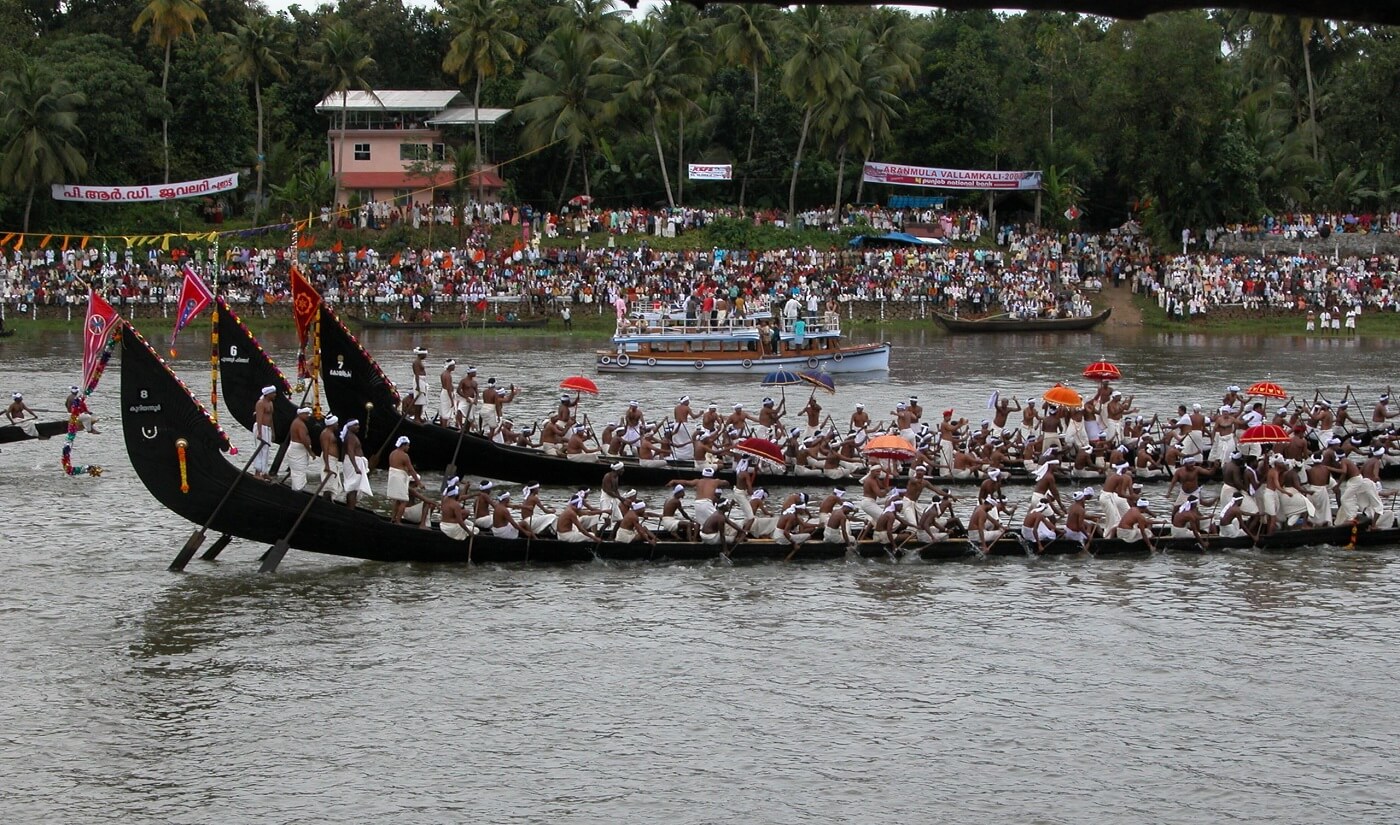
Kerala enjoys celebrations and enjoyment throughout the year. Make sure to observe one of the many festivals that the state holds annually. Highlights include the Kerala boat festival (July-September), which is all about team spirit; Onam (August-September), a 10-day harvest festival celebrated to welcome King Mahabali, who brought prosperity and happiness under his rule; and Theyyam (April-December), an 800 year old ritual dance of the gods, in which the mythological stories and tales of India are depicted. All of these festivals depict the state’s rich culture, tradition, and beliefs.
Picture-Perfect Photo Opportunities

Kerala is brimming with different scenery. Be prepared with your DSLR or smart-phone while cruising the backwaters, hiking in the hills, or relaxing on a beach. The sunsets are particularly magnificent.

Sabarimala Temple
August 1, 2019 in Kerala
 Sabarimala is one of the most important pilgrim centers of the State. The holy shrine nestles at an altitude of 914 meters in the rugged terrains of the Western Ghats, surrounded by dense forests teeming with exotic wildlife species. It is regarded as the third richest temple in India and considering the number of days it is open in a year, the shrine is perhaps the richest. The temple stays open from November to mid – January, in April and during the first five days of each month of the Malayalam calendar. Lord Ayyappa, the presiding deity is known as Sastha in the Puranas and is also referred as Harihara Puthran, as he is believed to be the son of Mohini (the female form of Lord Vishnu) and Lord Siva. Devotees of all religious faiths can worship here, but entry to the shrine is restricted for women between the ages of 10 and 50 years. Traditionally, the devotees who wish to undertake a holy pilgrimage to Sabarimala observe 41 days of penance, following strict celibacy. Morning and evening ablutions, growing of beard accompanied by daily prayers. The final 18 steps leading to the main sanctum are sheathed in panchaloha, an alloy of five metals. Each step represents a sin that a devotee renounces on setting a foot on it. Millions of pilgrims assemble here during the most arduous festivals called as ‘Vishu Vilakku’ in April, ‘Mandalapooja’, in the months of Vrichikam Dhanu (November – December) and ‘Makaravilakku’ in mid-January, coinciding with Sankramam.
Reaching There:

Sabarimala lies in Pathanamthitta district. The traditional route is from Erumeli (40 kms,) in Kottayam district. It is 51 kms. walk from Erumeli to Pampa. From Pampa, the trekking route goes via Neelimala, Appachimedu, and Sabaripeedom to Sannidhanam, the abode of Ayyapa. Other routes are from Vandiperiyar, Uppupara, and Chalakkayam via Plappally. These routes are famous for there scenic splendor and mythological value. Vehicular traffic is only up to Pampa, located 7 km. from the holy shrine. Pampa is 210 kms. from Kochi and 235 kms. from Thiruvananthapuram.

Kalaripayattu : The Oldest Martial Art
August 1, 2019 in Kerala
 ?Kalaripayattu, the oldest and most scientific martial art form in the world was perhaps developed in Kerala during the 11th century, which witnessed constant battles. The martial art form is taught at the Kalari (training school), which are also centers of indigenous medical practices and religious worship. The training starts with oil massage which makes the body flexible and supple. The trainees are first made to learn Chattom (jumping), Ottam (running), Marichil (some??sault), etc. And later on trained in skills of using weapons like daggers, swords, spears, urumi (a flexible metal sword), maces, the bow and arrow, wooden poles, etc. Finally, the students are given the knowledge of defeating an opponent by applying pressure to nerve points. Kalaripayattu education aims at the ultimate co-ordination of the mind and body. The two streams that emerged from Kalaripayattu are the “chavverpada” or the suicide squad and the “chekavan”, warriors who fight to the death.

Kalaripayattu is a thrilling and dangerous dance form that holds links with the dance forms of Kerala and martial arts. This makes it an integral part of the history of Kerala. Very fewer people know are aware of its role in inventing the world-famous Martial Arts. So on your next trip to Kerala, prep up yourself for a captivating Kalaripayattu!

Wildlife of Kerala
August 1, 2019 in Kerala
Periyar Wildlife Sanctuary is the first wildlife sanctuary in Kerala and it’s purposefully established on both the Indian and foreigner tourist trails and known for its scenic lake cruise. But if you dig deeper, perhaps on a trek with a tribal villager or an ex-poacher, Periyar’s hilly jungle scenery takes on a wild, magical feel. Bring warm, waterproof clothing.
Periyar Wildlife Sanctuary
?Mind striking Periyar, the ‘Pride of Kerala’ is one of the largest and most frequent sanctuaries in the country. The sanctuary created in 1934, by the old Travancore Stalo government, covers an area of 777 sq. kms. at the Cardamom Hills region of the Western Ghats. It was designated as a part of Project Tiger’ in 1973 and is southernmost tiger reserve of the country. The 26 sq. km. Periyar lake formed by the Mullaperiyar Dam across the Periyar river further enhances the beauty of the park. The innumerable little islets in the lake bear testimony to the inherent relationship between the terrestrial, aquatic and submarine life forms. Boat cruise on the waters of the lake is the best way to enjoy the pristine beauty of the park and view the wildlife from close quarters. Watching herds of wild elephants, gaur, sambar and wild pigs, etc., wander to the lake-side to quench their thirst is an unforgettable experience. The hot and dry months of March and April are the best time to view the wildlife by a boat cruise, as animals tend to spend a lot of time near the lake. The sanctuary is also well known for viewing all aspects of elephantine. Besides elephants and tigers, it is a haven for bison, sambar, wild boar, spotted deer, leopard, Malabar flying squirrel, stripe necked mongoose, black Nilgiri langurs, Nilgiri tahr, etc. There are also a rich variety of reptiles, amphibians, and birds. The park area is full of floral wealth, with over 1965 flowering plants including 171 grass species, 143 species of orchids and the only South Indian conifer Podocarpus Wallachianus. A summer palace of the erstwhile royalty of Travancore, overlooking the lake has been converted into a hotel and is a fine place to stay.
Reaching There:

Airport: Kochi (190 kms.).
Railhead: Kottayam (119 kms.).
Road: Kumily, on the north of the park boundary, is 4 kms. from Thekkadi. It is well connected by buses with Kottayam, Alappuzha, Kochi, Thiruvananthapuram, and Munar, etc. Thekkadi is at the center of the park where KTDC hotels and boat jetty are located. The wildlife data center lies near the boat jetty.
Besides this, more wildlife sanctuaries are spread all over the state. There are 25 above popular wildlife sanctuaries in Kerala housing fascinating and rare species of flora and fauna. Nestled in the elaborate forest of the majestic Western Ghats or Sahyadri Ranges in Kerala are 14 wildlife sanctuaries and two tiger reserves. Kerala also has 6 national parks containing protected and threatened species like the Indian Sloth-Bear, Lion-Tailed Macaque, Indian Bison, Bengal Tiger, Nilgiri Tahr, etc. There’s a list of some popular Wildlife Sanctuary
1. Wayanad Wildlife Sanctuary
?It is an integral part of the Nilgiri Biosphere Reserve. It was established in 1973 and covers an area of 344 sq. kms., bordering the famous Mudumalai Sanctuary in Tamil Nadu and Nagarhole and Bandipur sanctuaries ??in Karnataka. The key fauna includes elephant, spotted deer, gaur, sloth bear and a large variety of birds and reptiles. The best season to visit the sanctuary is from December to April.

Reaching There:
By Air: The sanctuary can be reached after landing at the Karipur International Airport at Kozhikode which lies around 125 kms from the sanctuary. KTDC buses are available for the journey from the airport to the forest. Otherwise private taxis and buses are available too.
By Rail: The nearest railway station from the wildlife sanctuary is Kozhikode(100km) which is well connected to all parts of the country.
By Road: Numerous express and deluxe bus service connect the sanctuary to the different towns and cities of Kerala and another nearby state. Some of the major distances from Wayanad from other towns are Calicut- 98 km, Kasargod- 216 Km, Trivandrum- 502 Km and Cochin- 286 Km.
2. Chinnar Wildlife Sanctuary
Chinnar Wildlife Sanctuary which is also under the attention of UNESCO for being announced as a World Heritage Site is situated in Tamil Nadu border at Rajamala Udumalpet Road (SH 17) in Idukki district. Chinnar which is extent above 90 sq.km is different from other sanctuaries because of its sharp scrub forest as it receives rain for only 48 days in the year and hence ideal for particular or unique vegetation. Beside thorny scrub forest, other highlights that enthrall tourists are famous sandalwood forests, waterfalls, nature walks, trekking or camping inside the sanctuary. Watchtowers are also created here for tourists to observe animals.

Reaching There:
By Road: Road journeys are considered as the best ways to reach Chinnar Wildlife Sanctuary. The wildlife sanctuary is well-connected to most of the major parts of Kerala and can be easily reached from popular Kerala tourist destinations like Munnar, Cochin, Ernakulam, and others.
By Train: Pollachi and Aluva railway stations are the nearest railway stations to reach Chinnar Wildlife Sanctuary. While the former is only 60km away from the sanctuary, the latter is around 200km away.
By Air: Coimbatore Airport; at a distance of 115km, and Kochi Airport at a distance of 208km are the two nearest airports to reach Chinnar Wildlife Sanctuary.
3. Idukki Wildlife Sanctuary
Idukki Wildlife SanctuaryIdukki Wildlife Sanctuary, 40 km from Thodupuzha, is nestled between two rivers Cheruthoni and Periyar is a wonderful sanctuary which is extent above 77 sq.kilometres enclosed a thick cover of evergreen forests or a huge range of wildlife. Idukki Wildlife Sanctuary offers tourist’s boat rides in the rivers which provide a scenic view of the surroundings and a glimpse of wildlife such as Sambhars, Wild Dogs, Jungle Cats, and Tigers, etc. Apart from breath-taking scenic wonders, a point that captivates tourists is trekking, but for the forest, trekking is possible only with prior permission from the forest department.

Reaching There:
By Road: The sanctuary is well-connected by overland ways with prominent cities in Kerala. Cochin is around 120km and Thiruvananthapuram is around 220km from the sanctuary. Visitors can make it to these two cities, and hire private vehicles to reach Idukki Wildlife Sanctuary.
By Train: Kottayam serves as the nearest railway station to the wildlife reserve. Upon arrival at Kottayam Railway Station, one can avail local transportation means to reach Idukki Wildlife Sanctuary.
By Air: Kochi International Airport and Thiruvananthapuram Airport are the two nearest airports to reach Idukki Wildlife Sanctuary. Coimbatore in Tamil Nadu can also be used as the nearest city for air journey to reach Idukki Wildlife Sanctuary.
4. Parambikulam Wildlife Sanctuary
It covers an area of 285 sq. kms, around the Parambikulam, Thunacadavu and Penuvaripallan dams and is a part of the neighboring Anaimalai Sanctuary in TamilNadu. Key fauna?gaur (bison), sambar, spotted deer, Nilgiri langur, lion-tailed macaque, sloth bear, etc. Thunakadavu is the sanctuary headquarters, which can be reached by road from Pollachi (40 kms. from Coimbatore and 49 kms. from Palakkad). Boat crevalle at the Parambikulam reservoir. Best Season Feb.- April.

Reaching There:
By plane: Coimbatore airport is the nearest international airport to Parambikulam – approximately 100 km (via Pollachi and Topslip). International flights to Singapore, Sharjah are available by Silk Air (A subsidiary of Singapore Airlines), Air Arabia and Srilankan Airlines. Domestic airlines fly to Chennai, Bangalore, Hyderabad, New Delhi, Mumbai, Ahmedabad, and other Indian cities.
By bus: There are only three bus trips to/ from Parambikulam daily. Two TNSTC buses start from Pollachi, and one KSRTC bus starts from Palakkad. TNSTC bus starts from Pollachi at approximately 6:15 AM and 3:15 PM. KSRTC bus start from Palakkad at approximately 8 AM. KSRTC bus touches Kozhinjampara and Pollachi enroute. The KSRTC bus starts the return journey from Parambikulam at approximately 12:30 PM, while the TNSTC buses start their return journey at approximately 8:45 AM and 5:45 PM. These timings are tentative, and it is best to confirm these timings from the bus stations before one finalizes the journey. Those who are traveling by bus and plan to go for a vehicle safari inside the tiger reserve should alight at Anappady and visit the Information Centre at Anappady to purchase tickets.
By train: Coimbatore Junction (85 km) and Palakkad Junction (100 km) are the nearest railway stations. At present, all train services in Pollachi-Coimbatore; Pollachi – Palani, Dindigul; Pollachi – Palakkad sections are stopped due to the Meter Gauge to Broad Gauge conversions.
5. Thattekad Wildlife Sanctuary
Thattekad or Dr. Salim Ali Bird sanctuary covers an area of 25 sq kms, between the tributaries of river Periyar. It has over 270 varieties of birds and is indeed a paradise for bird watchers. Malabar grey hornbills, crimson throated barbets, rose billed rollers, sunbirds, Malayan night herons, rusty tailed flycatchers are some of the important bird species seen here. There is also a rich variety of butterflies at the sanctuary. Leopards and bears can also be sighted here. The sanctuary is 13 kms. from Kothamangalam.

Reaching There:
By Train: Aluva is the nearest railway station that connects with Bangalore through an extensive railway network. At the railway station, the local transportation system helps in easily moving in and around the city.
By Air: Cochin is the nearest airport to reach Thattekad Bird Sanctuary from Bangalore. At the airport, there are cabs and taxis available for hire to drive the visitors to the bird sanctuary from the airport.
By Road: Thattekad Bird Sanctuary is well-connected to Bangalore through road. The stretch is 554 km long. Apart from the self-owned vehicle, one can also reach the bird sanctuary through private taxis and cabs available in Bangalore for hire.

Taste the mouthwatering Meals of Kerala!
August 1, 2019 in Kerala
Kerala experiences a rich history in food and cuisine and so the food culture is totally different from the rest of the country. The cuisine of the Malabar region has a different flavor, borrowed from the traders who regularly visited the region. Kerala menu has an abundance of coconut, rice, tapioca and spices like black pepper, cloves, cinnamon, and ginger. The Portuguese introduced cassava, now widely consumed in Kerala. The region is also famous for its Sadhya, served at the Hindu festival Onam and consisting of boiled rice and a host of vegetarian dishes on a banana leaf. Kerala cuisine also highlights a lot of seafood like fish, prawns, mussels, and crabs because of its long coastline. Here’s a list of some of the famous cuisine of Kerala which you all must try while visiting!
1. Ela Sadya
Ela Sadya is the king of all-vegetarian Kerala food! With more options than you’d ever have seen on your platter, Sadya is prepared and served during religious and ceremonial occasions like festivals, weddings, and more. This royal lunch combination of dishes like pachadi, kichadi, pulissery, olan, sambar, varavu, thoran, aviyal, payasam, served with hot steaming rice on a banana leaf can give the enormous thali of Chokhi Dhani a run for its money any day!

2. Puttu and Kadala Curry
A famous breakfast recipe out of the many Kerala dishes, Puttu is a cylindrical steamed rice cake that is cooked in a mold with grated coconut. It can be served with ripe bananas, grated coconut, and kadala curry (the Keralite version of ‘Kala Chana’! Don’t be fooled by the simple appearance of this dish; Puttu can be very flavorsome!

3. Erissery (Pumpkin and Lentil Stew)
A hit in every kitchen of Kerala, this curry is made from either raw plantains or sliced yams. It is typically prepared by boiling slightly sweet pumpkins with salt, chilies or pepper, dried lentils, grated coconut, turmeric powder, cumin seeds, and garlic, and is served on a bed of rice once cooked. A favorite Kerala food item on the menu of religious festivals like Onam, Erissery provides the perfect culinary for foodies who are always on the lookout for new flavors!

4. Idiyappam with Curry
Also known as Noolappam in Kerala cuisine, Idiyappam is made of rice flour, salt and water with a number of thin strands or sevai entwined together to make the lovely texture that this dish bears. It is this texture that makes it versatile. You can have it with all kinds of curries, but it tastes best with Egg Curry.

5. Appam with Ishtu (Stew)
A staple element of Kerala cuisine made from fermented rice flour, coconut milk, coconut water, and a teensy bit of sugar, Appam is essentially a thin pancake with crispy edges. These crepe-like bowls are best enjoyed with Ishtu, a kind of stew that has been originally derived from the European stew and is made from coconut milk, cinnamon, cloves and shallots, and sometimes also mango pieces and vegetables. The aroma of spices with the sweet fragrance of coconut milk is enough to lure foodies to the kitchen!

6. Idli Sambar
Perhaps the most popular among Kerala food, idli sambar are fondly eaten in not just all households in Kerala, but everywhere else in India! The perfect combination of fermented rice cakes and a deliciously tangy curry of aromatic spices and vegetables like lentils. Apart from being a favorite of foodies for its taste, idli sambar is also universally accepted for the health benefits it bears.

7. Dosa Ghee Roast with Kerala Style Sambar
Listed among the ‘World’s 50 Most Delicious Foods’, dosa and sambar in Kerala cuisine make up for a deadly combination! Made from fermented rice and lentils, the ghee roast dosa is first cooked to perfection in pure ghee and then roasted till it gets as crisp as it can.

8. Parippu Curry (Dal Curry)
Though unexpected, it is actually one of the most delicious of Kerala food recipes. The Dal Curry served in Kerala is made from small gram and ghee with a considerable amount of spices and chilies. Don’t skip on this one by mistaking it for your typical ‘Ghar ki dal’!

9. Kerala Style Prawn Curry
This traditional food of Kerala is a must-try for all prawn lovers! The traditional prawn curry of Kerala is sprinkled religiously with chili and pepper, other than salt and turmeric, and is then cooked in whole coconut milk and jaggery before it is finally garnished with curry leaves. In fact, trying this exotic seafood dish is one of the best things to do in Kerala. One can have it hot with steaming rice or chapattis for a trip to heaven!

10. Chatti Pathiri
A layered pastry made in North Malabar and Malabar regions of Kerala, Chatti Pathiri is similar to the Italian lasagna. The difference is that, in the Keralite version, flatbreads or pancakes made out of flour, eggs, oil, and water are used instead of cheese sheets. The filling is the best part of these sugary Kerala dishes! Chatti Pathiri is filled with sweetened beaten eggs, nuts and raisins, and is seasoned with cardamom. You’ll surely forget your western versions of crepe pancakes and pastries once you bite into this one!

11. Nadan Kozhi Varuthathu (Spicy Chicken Fry)
Served with onion, spices, garlic, and vinegar on a banana leaf, Nadan Kozhi Varuthathu is fried chicken made with a generous amount of spices. One can have it with chapattis, Kerala Porotta (a layered flatbread made from maida flour), appam or rice. It also serves as popular street food in the list of Kerala dishes served with dosa. Have Nadan Kozhi Varuthathu on your next trip to Kerala and you’ll forget KFC for sure!

12. Palada Payasam
A delicacy amid the main food of Kerala that’s now won the hearts of foodies all over the country, Palada Payasam is a sweet rice kheer prepared with the palate. The dish is usually prepared and served during auspicious occasions and festivals like Onam. Among the many varieties of payasam, Palada Payasam is the most popular and is made out of basic ingredients like rice ada, milk, sugar, and ghee.

13. Ada Pradhaman
Another of those lip-smacking varieties of payasam one can have in Kerala, Ada Pradhaman chiefly contains pieces of rice batter (ada) and sweet coconut milk in which they are served. It is the favorite dessert dish in the list of Kerala food and one spoonful is all you need to fall in love with it!

14. Ethakka Appam (Banana Fritters)
Pazham Pori or Ethakka Appam are both different, but equally delicious varieties of banana fritters that serve as a traditional tea time snack in the households of Kerala. They’re simply ripe bananas coated with plain flour and deep-fried in oil and serve as an integral part of Kerala cuisine. Make sure you don’t leave Kerala without trying some of these with your dose of evening tea or coffee.

