
When people imagine Navratri in Gujarat, they often picture the largest events: vast grounds, towering lights, thousands of dancers moving in giant circles. Those events are real and often spectacular. But for many Gujaratis, Navratri is something smaller and closer to home. It happens in the courtyard of a housing society, in the square of a neighbourhood, in a lane outside a temple. This piece is about that side of the festival, and how a visitor might, with care, experience it.
The society garba
In Gujarat’s cities, many people live in housing societies, groups of apartment blocks or houses with a shared compound. During Navratri, many societies organise their own garba in that compound. Residents put up decorations and lights, set up a small shrine to the goddess with a garbo lamp, and gather every night to dance.
Society garba has a particular character. Everyone knows everyone. Grandparents sit on plastic chairs at the edge and watch, or join the slow inner ring. Children run in and out. Teenagers form a fast outer circle. Families take turns organising the aarti, the prasad or the snacks. The music may be live or recorded, and the night may end earlier than at large events, out of consideration for neighbours.
The neighbourhood square
In older parts of cities, such as the pols of Ahmedabad’s walled city, Navratri may be celebrated in a small square or at a community gate. These celebrations can be very traditional, with songs passed down over generations and dancing that is more about devotion than display.
Why it matters
For a visitor, a society or neighbourhood garba can offer something the large grounds cannot: intimacy and a sense of belonging. You see how the festival works as a community ritual. You meet people. You are taught steps by someone’s aunt. You are pressed to eat something. You go home feeling you have been a guest, not a spectator.
Being invited
The most important point: society and family celebrations are private. They are organised by and for residents. You should go only if you are invited, by a resident or by the organisers. Do not simply walk in because you hear music, and do not bring a large group without asking.
If you have friends, colleagues or relatives in Gujarat, it is worth asking whether they celebrate in their society and whether you might join for an evening. If you are staying in a homestay, your host may be able to introduce you. Some hotels and tour operators may offer to arrange such visits; if they do, ask how it is arranged and whether residents have genuinely agreed.
How to be a good guest
- Arrive with your host, not alone.
- Greet the elders first.
- Watch before you join.
- Join the slowest ring if you are a beginner.
- Ask before taking any photographs.
- Do not take over the space; you are one of many.
- Offer to contribute, through sweets for prasad or a small donation if that is the custom.
- Leave when your host leaves, or when the music ends.
Contributions and money
Society celebrations are usually funded by residents, through contributions to cover decorations, sound, the shrine and food. As a guest, you are not expected to pay, but it can be gracious to bring sweets or offer a small contribution through your host. Ask your host what would be appropriate; do not hand cash directly to people without understanding the custom.
The shrine and the aarti
At the centre of most society celebrations is a shrine to the goddess, often with a garbo lamp. The evening frequently begins with an aarti. If you are present for it, stand quietly, join in if invited, and accept prasad if offered. Do not touch the shrine or lamp unless invited. Remove your footwear if others do.
Children and families
Society garba is often very family-friendly, and many families find it a gentler introduction to Navratri for children than a large ground. If you are travelling with children, the earlier part of the evening, when the aarti takes place and the slower rings dance, may suit them best.
The ticketed ground
None of this is to dismiss the large ticketed events. They are part of modern Navratri, many are well organised and devotional, and for visitors without local connections they are often the most practical option. They offer live music, space for thousands and a remarkable spectacle. Many visitors enjoy going to one large event and spending other evenings at smaller celebrations.
If you go to a ticketed event, check how tickets or passes are sold, whether there is a dress code, what can be carried in, and how you will get home. Our news page in this issue covers this in more general terms.
Temple grounds
Some temples host garba in their compounds, open to devotees. These can feel more traditional and more devotional than large events. Dress modestly, follow the temple’s rules, and be prepared for crowds on important nights.
Respecting residents
Even open neighbourhood celebrations take place where people live. Do not block gates or driveways. Keep noise down when leaving. Do not wander into homes or private spaces. Carry your rubbish away.
When there is no invitation
If you do not receive an invitation, do not worry. You can still have a deeply meaningful Navratri at open community or temple celebrations or at a well-run ticketed event. The spirit of the courtyard, of joining humbly, learning from others and treating the festival as worship, can be carried anywhere.
What you take away
Visitors who have been welcomed into a society garba often say it was the highlight of their trip. Not because it was the biggest or the most beautiful, but because, for an evening, they were part of a community celebrating together. That is, perhaps, what Navratri has always been: not a show, but a courtyard full of neighbours, dancing for the goddess and for each other.
A thank-you
If you are lucky enough to be invited, send a message of thanks the next day. If you come back another year, let your hosts know. Courtyard friendships, formed in a circle at midnight, have a way of lasting.
More from Issue 77
- Navratri in Gujarat — issue index
- Editor’s letter: Navratri & Garba
- Garba without treating the city as a backdrop
- Ahmedabad nights and a quiet morning after
- Vadodara if Ahmedabad is full
- What to wear, and what not to film
- A first-timer’s nine nights, not all nine
- Food between the circles
- A family courtyard, not only the ticketed ground
- Dates, tickets and temple timings
- One village garba
- The photograph of the circle, not the selfie

Around Pune

Bhuj – The Jewel of the Kachchh
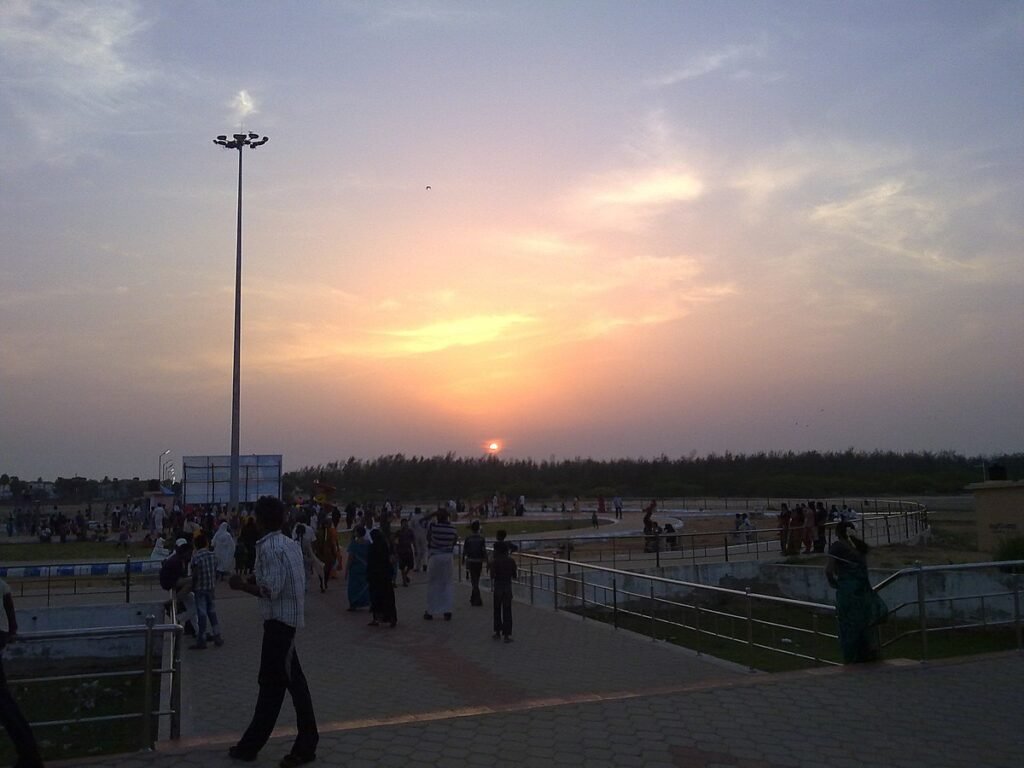
Nagapattinam – A Small Town
The Town You Sleep In
Why the base town shapes a monsoon waterfall trip more than any single fall, what to look for, and towns in Karnataka, Kerala and Goa worth considering.
One village ghat upriver
Train versus road that week
Markets before the 20th, not on it
Journeys Worth Discovering
Explore inspiring destinations, memorable journeys and travel stories from across India and beyond.
Explore destinations




