
Every October the same question arrives in the inbox: where can we go for Diwali that is not a city, not a crowded temple town, and not a hill station that has turned into a shopping street with a view? It is a fair question. Diwali in 2025 falls on Monday, 20 October in most calendars, and the long weekend around it pushes a great many families toward the hills at once. The roads up fill, the hotel rates climb, and the quiet you went looking for is replaced by the same malls, the same loudspeakers and the same traffic you left behind.
It does not have to go that way. A hill Diwali can still be the slow, cold-evening, lamp-in-a-window festival that many of us remember from childhood. You just have to choose where, and how, with a little more care than usual.
What “not a mall” actually means
When we say a hill Diwali that is not a mall, we do not mean a place with no shops. Hill towns need their markets and their markets need the festival season. We mean a place where the festival is still something that residents do for themselves, in their homes, temples and lanes, rather than something staged for visitors along a promenade.
In practice that usually means three things. The town is small enough that you can walk from one end to the other. People actually live there through the winter, so Diwali is a household festival rather than a seasonal event. And the main street is not the only thing worth seeing. If a place passes those three tests, you are likely to find a gentler Diwali there.
Look a little beyond the famous names
The best-known hill stations in the north, the ones within an easy drive of Delhi and Chandigarh, tend to be the busiest over the Diwali weekend. That does not make them bad choices, but it does mean you will be sharing them with a lot of people who had the same idea.
Often the better move is to go one ridge further. In Uttarakhand, the quieter settlements of the Kumaon hills, in the country around Almora, Binsar and the smaller villages along the ridges, have long been favoured by travellers who want mountain views and village life without a mall road. In Himachal, the older cantonment and orchard towns, and the villages above the main highways, offer something similar. In the south, the smaller tea and coffee estates in the hills of Kerala, Tamil Nadu and Karnataka are a different kind of retreat, where Diwali may be celebrated a little differently, and where homestays sometimes invite guests to join the family lamp lighting.
We are deliberately not naming individual hotels or homestays. Availability changes every year and we would rather you ask the local tourism office or a trusted host than trust an old list.
Choose a homestay, not a resort
The single most important choice for a hill Diwali is where you sleep. A large resort will usually throw a party: a buffet, a DJ, perhaps a fireworks display on the lawn. Some families love that, and there is nothing wrong with it. But if you want the quieter festival, look for a homestay or a small family-run guesthouse.
In a homestay, Diwali happens around you. The house is cleaned and decorated in the days before. There may be rangoli on the threshold, a puja in the evening, sweets made in the kitchen, and lamps along the walls and windows. If you are respectful and interested, many hosts are happy to include guests, though you should never assume an invitation. Ask, and accept a polite no.
The weather is part of the festival
Late October in the hills is one of the loveliest times of year. The monsoon has usually cleared, skies tend to be clear, and on good days the high Himalayan peaks can be visible from the ridges. Days are often pleasantly warm in the sun, while evenings and nights can be cold, especially at higher altitude. Pack warm layers, a shawl or jacket for the evening puja, and good shoes for steep lanes.
That cold is part of the pleasure. A diya burning on a stone wall in the crisp mountain air, with woodsmoke drifting up from the valley, is a quieter kind of beauty than any light show.
Getting there without the worst of the traffic
The roads to the hills are often at their worst on the Friday and Saturday before Diwali and on the day after Bhai Dooj, when everyone drives home together. If you can, travel a day or two earlier and stay a day or two later. Leaving before dawn helps. So does taking a train to the nearest railhead and then a shared or private taxi for the last stretch. We look at that choice in more detail elsewhere in this issue.
Book early. Small homestays have only a handful of rooms and fill up weeks ahead of the festival. Confirm your booking directly a few days before you go, and ask about the last stretch of road, which can be narrow and slow.
A quieter evening
On Diwali night itself, plan to stay put. Hill roads in the dark, with festival traffic and the occasional celebration, are not where you want to be. Instead, eat with your hosts or at a small local place, walk the lanes in the early evening when the lamps are being lit, and then sit outside, wrapped up, and watch the valley.
You may hear firecrackers, even in a quiet town. Many hill communities are increasingly mindful of noise, smoke and the risk of fire on dry slopes, and some places encourage a quieter celebration. Rules vary from state to state and year to year, so check what is permitted where you are going. Wherever you are, be careful with lamps near dry grass, wooden buildings and pine needles.
Respect what you are a guest in
A hill town in festival week is a community in its own celebration. Dress modestly at temples, ask before photographing people or their homes, and keep your music to yourself. Buy your sweets, flowers and lamps from local sellers rather than bringing everything up from the city. Carry your rubbish down with you; small hill towns struggle to manage the waste that arrives with festival crowds.
If you do all that, you will likely be welcomed. And you will come home with a memory of Diwali as it used to feel: a cold night, a warm house, a few lamps, and mountains standing quietly in the dark.
Planning checklist
- Book a small homestay or guesthouse several weeks ahead.
- Travel a day before the rush and return a day after it.
- Pack warm layers for cold evenings.
- Check local rules on firecrackers and fire safety.
- Ask your host before joining a family puja.
- Buy locally and carry your waste back down.
A hill Diwali that is not a mall is not hard to find. It simply asks that you leave the main road, slow down, and let the festival come to you.
More from Issue 78
- Diwali getaways index
- Editor’s letter: Diwali Getaways
- A hill Diwali that is not a mall
- Varanasi can wait — this is the small-town version
- One courtyard, one diya, one neighbour
- Fireworks, smoke and the towns that skip them
- Train versus road that week
- A guest week in a family house
- Markets before the 20th, not on it
- Closures and surge fares
- A less-lit town worth the detour
- What to carry for a night of lamps
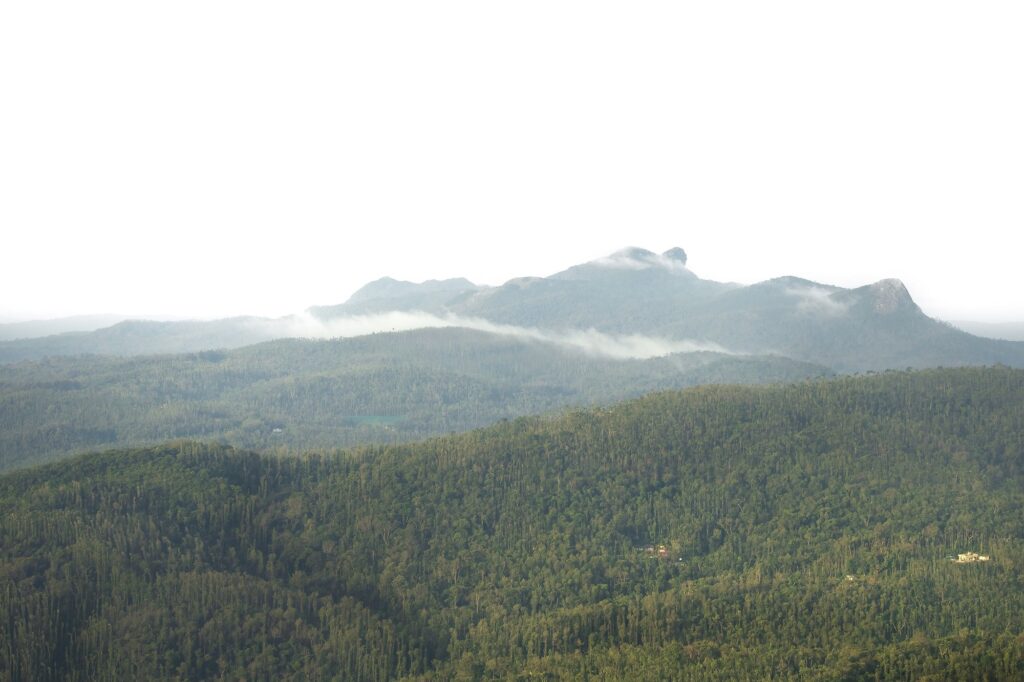
Chikmagalur Beyond the Viewpoint

Ganga Dussehra
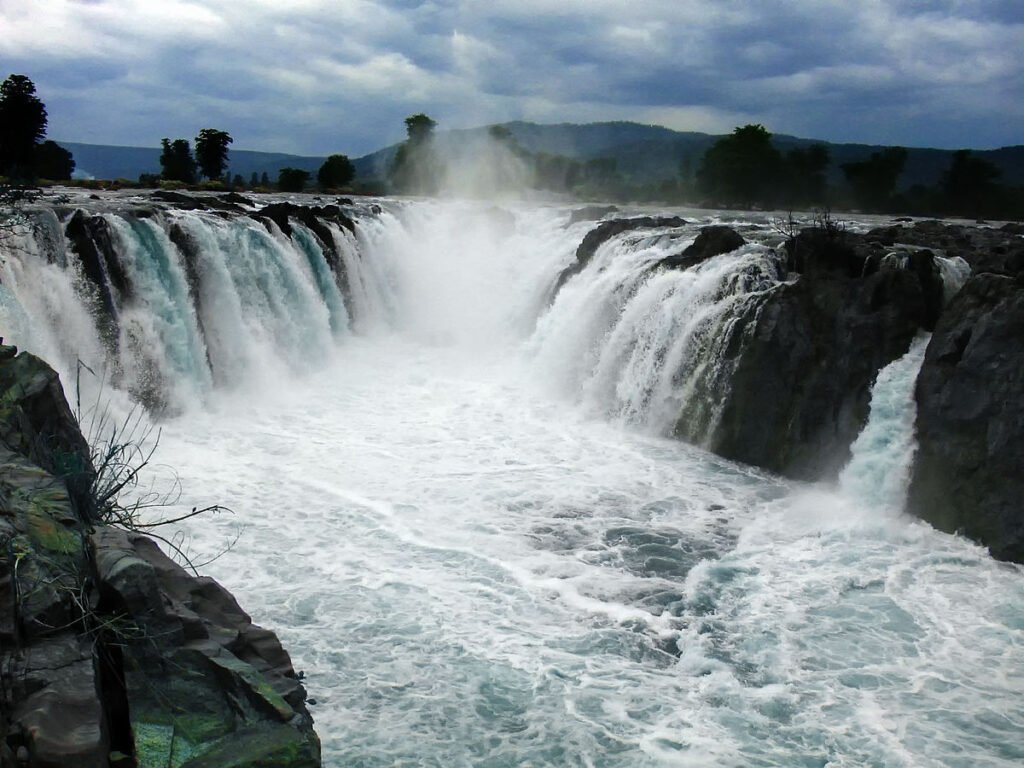
Hogenakkal ‘smoking rock’
The Town You Sleep In
Why the base town shapes a monsoon waterfall trip more than any single fall, what to look for, and towns in Karnataka, Kerala and Goa worth considering.
One village ghat upriver
Train versus road that week
Markets before the 20th, not on it
Journeys Worth Discovering
Explore inspiring destinations, memorable journeys and travel stories from across India and beyond.
Explore destinations




